Essex Fertilizer Plant Explosion Exposes Urgent Need for IoT Safety Systems in Chemical Production
Essex fertilizer blast proves reactive safety fails. IoT sensors enable predictive protection.
Summary
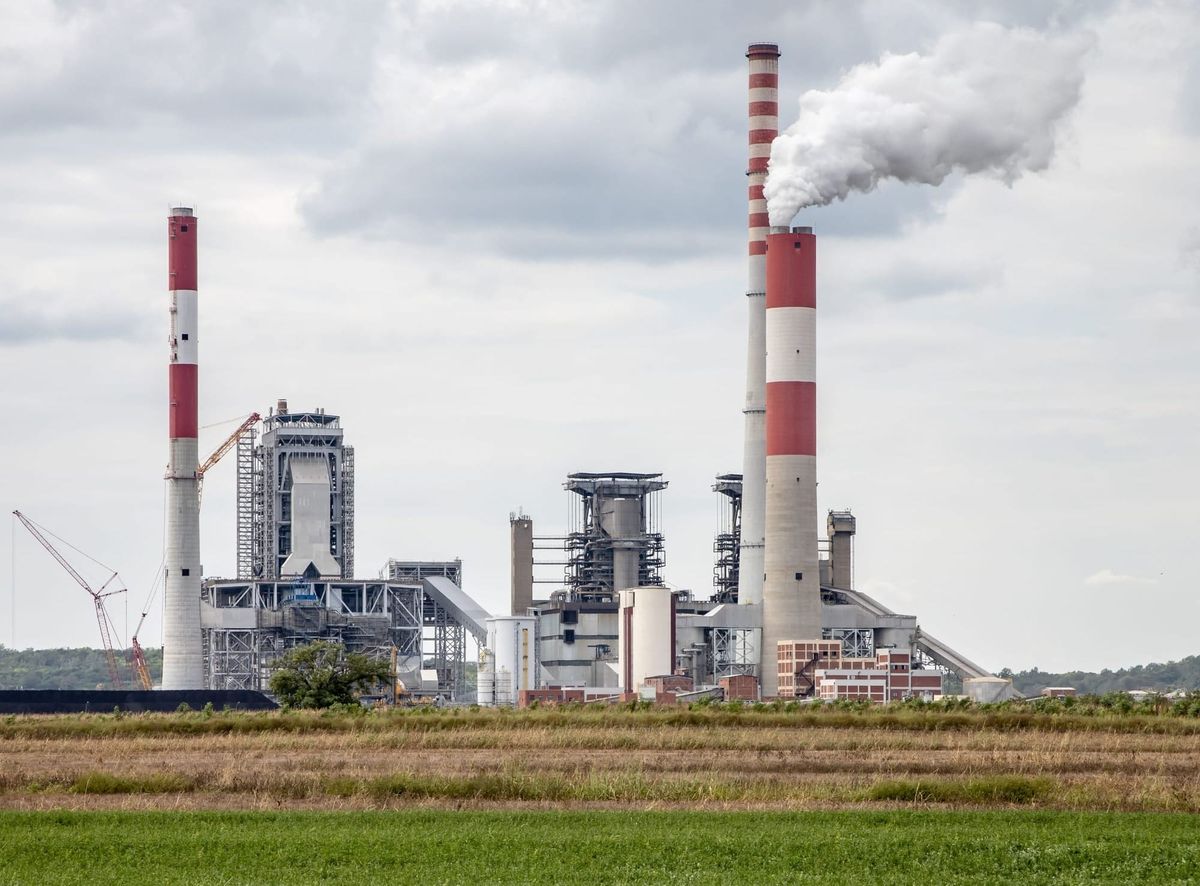
The catastrophic explosion that tore through an Essex industrial site on July 24, 2026, triggered when a fire spread to a store of fertilizer, sending a ball of flames into the air and shaking buildings 15 miles away, is not an isolated anomaly but a stark, empirical validation of the thesis that drives this briefing. With more than 100 firefighters responding and a major incident declared, the event echoes the 2013 West Fertilizer plant disaster in Texas, where 30 tons of ammonium nitrate exploded, killing 15 and injuring 252. The Essex blast, captured on footage that showed a mushroom cloud towering into the sky and witnessed by residents who described the sound as "like a bomb" and as loud as a "sonic boom," underscores the acute, persistent danger of uncontrolled fertilizer fires escalating into detonations.
For the investor, this event crystallizes the core investment case: the integration of IoT monitoring sensors with industrial safety systems is transitioning from a niche operational upgrade to a foundational competitive necessity, and a regulatory / safety imperative. The sensor-enabled plant, particularly when augmented with edge analytics and AI-driven anomaly detection, offers a quantifiable and widening moat against operators relying on legacy, reactive safety and maintenance protocols. The opportunity is not uniformly distributed across the IoT value chain: the highest margin positions reside in industrial software and analytics platforms, where switching costs are steepest and data gravity is strongest, rather than in commoditizing sensor hardware.
The sector is not overvalued in aggregate, but selective exposure is critical. First, the total addressable market for IoT in the chemical industry, estimated at USD 24.58 billion in 2024, is projected to grow at an 8.35% compound annual growth rate (CAGR) to USD 50.58 billion by 2033, with the safety and predictive maintenance sub-segments outpacing this average. Second, the economic case is already proven at the plant level: predictive maintenance, enabled by continuous sensor data, reduces overall maintenance costs by 18 to 25 percent and cuts unplanned downtime by as much as 50 percent, with documented annual savings ranging from USD 1.5 million to USD 7.5 million per facility. Third, the primary risk is not technical failure of the sensors themselves but cybersecurity vulnerabilities inherent in networked safety systems, where false data injection attacks on measurement layers can steer industrial processes toward dangerous states; this risk is high in likelihood and potentially catastrophic in impact, yet it remains inadequately addressed by current industry practice.
The investment implication is clear: prioritize companies with proven capabilities in industrial data management, AI-based process optimization, and cybersecurity for operational technology, while approaching pure-play sensor hardware manufacturers with caution given intensifying margin pressure and the threat of substitution from inherently safer process design.
2. Background
Fertilizer and chemical production facilities operate under conditions that are uniquely demanding for both equipment and personnel. The synthesis of ammonia, the production of phosphoric acid, and the manufacture of polymers involve high temperatures, extreme pressures, and corrosive atmospheres. The consequence of failure is severe: studies indicate that nearly three out of every ten major industrial accidents worldwide are linked to the chemical sector. Traditional safety and maintenance paradigms in this industry have been reactive. Leaks are detected when they become visible or olfactory; equipment degradation is identified through scheduled inspections or, too often, only upon failure. This approach is no longer sufficient either operationally or economically. The advent of the Industrial Internet of Things (IIoT) has introduced a paradigm shift: continuous, real-time monitoring of process variables, equipment health, and environmental conditions, enabled by a proliferation of sensor types, robust wireless communication protocols, and increasingly sophisticated analytics. The fundamental proposition is the conversion of previously invisible or intermittently observed physical states into a continuous stream of digital data that can be acted upon preemptively.
3. Key Players or Stakeholders
The IoT ecosystem in the chemical and fertilizer sector is stratified into three primary layers: sensor hardware, communications infrastructure, and analytics/software platforms. Each layer has distinct competitive dynamics and investment implications.
- Sensor Hardware: This segment is dominated by large, diversified industrial automation conglomerates. Key public companies include Honeywell International (NASDAQ:HON), Emerson Electric (NYSE:EMR), Siemens AG (ETR:SIE), ABB Ltd. (SWX:ABBN), and Endress+Hauser (privately held). These firms provide the core sensing technologies: electrochemical, infrared, and photoionization detectors for gas; pressure and temperature transmitters; vibration monitors; and acoustic emission sensors. The market for toxic and combustible gas detectors alone was valued at USD 4.00 billion in 2025 and is projected to reach USD 6.60 billion by 2032, a CAGR of 7.4 percent. However, this layer faces commoditization pressure. Differentiation is increasingly found in the reliability and calibration stability of sensors in aggressive chemical environments, a point where companies like Endress+Hauser have made significant investments in digital sensor technologies that resist moisture and corrosion.
- Communications Infrastructure: This layer provides the backbone for sensor data transmission. Cisco (NASDAQ:CSCO) and Rockwell Automation (NYSE:ROK) are prominent here. The critical technical consideration is the choice of wireless protocol. WirelessHART and ISA100.11a have emerged as the de facto standard industrial wireless mesh network protocols for process automation, forming a duopoly. Hybrid gateways that support both protocols are becoming standard procurement for plants with mixed installed bases. The emergence of private 5G networks, as recently deployed by NTT Data at Celanese's Texas facilities, represents a significant infrastructure upgrade, offering lower latency and higher bandwidth for advanced IoT applications, though ATEX certification for hazardous areas remains a key requirement.
- Analytics and Software Platforms: This is the highest-margin and most defensible segment. Companies in this layer, including AspenTech (NASDAQ:AZPN), AVEVA (LSE:AVV), and OSIsoft (acquired by AVEVA for USD 5 billion), provide the data historians, asset performance management software, and digital twin platforms that transform raw sensor data into actionable intelligence. The global chemical software market was valued at USD 12.8 billion in 2025 and is projected to reach USD 24.3 billion by 2033, a CAGR of 8.4 percent. The competitive moat here is substantial: switching costs for industrial software are extremely high, and the value of accumulated process data increases over time, creating a powerful data gravity effect. New entrants face significant barriers in the form of long sales cycles, the need for deep domain expertise, and the challenge of displacing entrenched incumbents.
4. Technical or Operational Considerations
The technical core of the IoT-enabled safety system in a chemical plant is a multi-layered architecture of sensing, communication, and analysis.
- Sensor Technologies: The sensor suite deployed in a modern chemical facility is diverse. Gas detectors are paramount for safety and include electrochemical sensors, prized for high sensitivity and selectivity to specific toxic gases; infrared sensors, which are reliable for detecting hydrocarbons and carbon dioxide; and photoionization detectors (PIDs), used for volatile organic compounds. Pressure and temperature transmitters are ubiquitous for process control. Vibration monitors and acoustic emission sensors are critical for predictive maintenance of rotating equipment such as compressors and pumps. Distributed fiber optic sensing is an emerging technology that offers the potential for continuous, real-time monitoring of temperature and chemical changes across long distances, such as along pipeline networks, providing a more comprehensive safety picture than discrete point sensors. The integration of these sensors with industrial control systems (DCS, PLC, SCADA) is well-established, but the emerging paradigm is the use of edge computing to perform initial data processing and anomaly detection locally, reducing latency and bandwidth requirements.
- Reliability and Calibration: The aggressive chemical environment poses a significant challenge to sensor reliability. High temperatures, corrosive atmospheres, and vibration can cause sensor drift, leading to false positives or, more dangerously, false negatives. Advanced sensor technologies now address this. For instance, digital sensors with non-contact data transmission, such as Endress+Hauser's Memosens 2.0 technology, eliminate the effects of moisture and corrosion, and store calibration data internally, enabling predictive maintenance of the sensors themselves. This represents a critical technical advancement that directly improves the operational benefit of the sensor network.
- Operational Benefits: The operational case is robust. Predictive maintenance, driven by continuous sensor data, is the primary value driver. The documented benefits include an 18 to 25 percent reduction in overall maintenance costs, a reduction in unplanned downtime of up to 50 percent, and a shift in maintenance work from urgent, reactive tasks (43 percent of total) to planned, proactive activities. Furthermore, AI-based anomaly detection, when combined with digital twins of the entire plant, allows for real-time safety intervention. This combination can predict potential leaks, pressure surges, or exothermic reactions before they occur, preventing incidents and improving process yield. The ultimate benefit is enhanced worker safety, achieved through continuous gas leak detection, confined space monitoring, and the integration of safety data with worker wearables and location tracking systems.
5. Economic and Market Dynamics
The economic and market dynamics of this sector are characterized by strong growth, a clear cost-benefit case, and distinct value distribution across the value chain.
- Market Sizing and Growth: The global IoT in the chemical industry market is undergoing rapid expansion. Valued at USD 24.58 billion in 2024, it is anticipated to reach USD 50.58 billion by 2033, growing at a CAGR of 8.35 percent. Other analyses project similar trajectories, with one forecasting a CAGR of 12.1 percent from a USD 1.7 billion base in 2023 to USD 4.3 billion by 2030 for a more narrowly defined IoT segment. The fertilizer sub-segment is a significant contributor to this growth, driven by the need for efficient irrigation and precise chemical application. The wireless gas detection market, a critical safety sub-segment, is projected to grow from USD 2.19 billion in 2025 to USD 3.53 billion by 2033, a CAGR of 6.2 percent.
- Cost-Benefit Analysis: The economic rationale for investment is compelling at the plant level. The capital expenditure for sensor deployment is typically recouped within one to three years through operational expenditure savings. These savings accrue from multiple sources: reduced maintenance labor and materials, decreased energy consumption through process optimization, extended equipment life, and avoided costs from accidents and unplanned shutdowns. For instance, an AIoT-based guidance system implemented in an existing chemical plant improved economic performance by 28.52 percent while also reducing emissions. Chemical companies using advanced analytics, IoT sensors, and predictive maintenance have become as much as 10 percent more efficient. The strategic imperative is further reinforced by regulatory pressure (OSHA PSM, EPA RMP, EU Seveso III), which increasingly mandates rigorous safety management and reporting, and by insurance premium reductions offered to operators who can demonstrate proactive risk mitigation.
- Pricing and Margin Dynamics: The margin profiles across the value chain are not uniform. Sensor hardware manufacturers operate in a competitive market with pricing pressure, though they benefit from the recurring revenue of replacement sensors and calibration services. Communications infrastructure providers see steady but moderate margins. The highest margins are captured by analytics and software platform providers (e.g., AspenTech, AVEVA). Their products are high-value, have low marginal cost, and benefit from high customer switching costs. The acquisition of OSIsoft by AVEVA for USD 5 billion is a testament to the strategic value and margin potential of industrial data management platforms.
6. Material Risks
| Risk Category | Specific Risk | Likelihood | Potential Impact | Credible Mitigations |
|---|---|---|---|---|
| Technical | Sensor drift, false positives/negatives in aggressive chemical environments | High | Significant (operational disruptions, safety incidents) | Redundant sensors, regular automated calibration, AI-based data validation, use of advanced digital sensors with internal diagnostics |
| Technical | Cybersecurity vulnerabilities in connected safety systems, including false data injection attacks | High | Catastrophic (process upset, physical damage, human harm) | Network segmentation, zero-trust architectures, encryption, AI-based anomaly detection for cyber-physical attacks, regular security audits, adherence to IEC 62443 standards |
| Economic | High upfront capital costs; uncertain ROI in mature facilities with legacy infrastructure | Medium | Significant (delayed adoption, project failure) | Phased deployment targeting highest-value assets first, use of wireless sensors to reduce installation costs, clear ROI modeling based on specific plant data |
| Operational | Alarm fatigue and operator desensitization due to high false alarm rates | Medium | Significant (missed critical alerts) | AI-based false alarm filtering, contextual alerting, operator training, human factors engineering in control room design |
| Operational | Reliance on skilled personnel for data interpretation and system maintenance | High | Significant (underutilization of system) | Investment in workforce training, development of user-friendly analytics dashboards, partnerships with system integrators |
7. Implications for the Technically Informed Investor
- Investment Thesis: The IoT-enabled industrial safety and monitoring sector in fertilizer and chemical production is fairly valued in aggregate but presents select opportunities with superior risk-reward profiles. The most favorable sub-segment is industrial analytics and software platforms. Companies like AspenTech and AVEVA possess wide moats due to high switching costs and the compounding value of proprietary process data. Their recurring revenue models and high margins justify a premium valuation. In contrast, the sensor hardware segment, while growing, faces commoditization and margin pressure. The most attractive hardware plays are those with differentiated technology, such as advanced digital sensors or specialized gas detection, and a strong services and consumables revenue stream.
- Forward-Looking Guidance: The technology adoption curve is accelerating. Key catalysts to monitor include the deployment of private 5G networks in chemical plants, which will enable more sophisticated real-time analytics and edge computing applications. The integration of digital twins with IoT sensor data is another critical trend, creating a virtual representation of the physical plant that can be used for predictive maintenance, operator training, and process optimization. Quantum sensing, while still nascent, could eventually offer unprecedented sensitivity for gas detection and process monitoring, but this is a longer-term (5-10 year) horizon. Consolidation is likely, particularly in the software space, as larger industrial players seek to acquire data and analytics capabilities to compete with pure-play software vendors.
- Critical Assumptions and Indicators: The investment view assumes continued regulatory pressure for enhanced safety and environmental monitoring, sustained growth in chemical production, and no major technological disruption that fundamentally alters the cost structure of sensing or data analysis. Key indicators to monitor include quarterly sensor sales growth for major hardware vendors, the frequency and severity of major industrial accidents in the chemical sector (as a driver for regulatory action), and announcements of new cybersecurity standards or regulations for industrial control systems. The single most important indicator to track is the adoption rate of predictive maintenance and digital twin solutions, as this signals the transition from pilot projects to mainstream operational practice.
8. Regulatory Landscape
Regulation is a primary driver of IoT adoption in this sector. In the United States, the Occupational Safety and Health Administration's (OSHA) Process Safety Management (PSM) standard and the Environmental Protection Agency's (EPA) Risk Management Program (RMP) mandate comprehensive safety programs for facilities that handle hazardous chemicals. In Europe, the Seveso III Directive imposes similar requirements for major-accident hazard prevention. These regulations do not explicitly mandate the use of IoT sensors, but they create a powerful incentive for their adoption as a means of demonstrating compliance, managing risk, and maintaining a robust safety culture. The trend in regulation is toward more stringent requirements, including greater emphasis on cybersecurity for operational technology, as evidenced by recent guidance that integrates cybersecurity with major accident prevention responsibilities. This regulatory tailwind is a durable driver of investment in IoT-based safety systems.
References
[1] Market Data Forecast. (2025). IoT in Chemical Industry Market Size, Share and Trends, 2033.
[2] For Insights Consultancy. (2024). IoT in Chemical Industry Market Trends by Technology, Application, and Region - Global Forecast to 2030.
[3] The Business Research Company. (2025). Internet Of Things (IoT)-Enabled Fertigation Valve Global Market Report 2025.
[4] IIoT World. (2025). Predictive Maintenance Cost Savings: Case Studies.
[5] Indian Chemical News. (2025). Industrial Internet of Things (IIoT): Unlocking efficiency in chemical manufacturing.
[6] IEEE Xplore. (2025). A PUF-Based Security Framework for Fault and Intrusion Detection.
[7] Control Global. (2024). False process sensor data can be catastrophic but are not adequately addressed.
[8] Market Publishers. (2025). Wireless Gas Detection Market - Global Industry Size, Share, Trends, Opportunity, and Forecast.
[9] Endress+Hauser. (n.d.). Memosens 2.0: Cutting-edge sensor technology reloaded.
[10] SEG. (2025). Episode 272: How Distributed Chemical Sensing Could Rewrite the Rules of Risk Management.
[11] Digital Strategy, European Commission. (2025). NTT Data deploys private 5G at Celanese plants in Texas, United States.
[12] AIChE. (2025). Smart Manufacturing in Chemical Engineering: Integrating Industry 4.0 with Green Chemistry.
[13] DataHorizon Research. (2025). Chemical Software Market (By Deployment, Solution Type, End-User Industry, and Region) — Global Market Size, Share, Growth, Trends, Statistics Analysis Report.
[14] AIDIC. (2018). Confidence Governance for Chemical Plant Process Control AI. Chemical Engineering Transactions, Vol. 67.