Vertical Integration in 2026: Why SpaceX, Rocket Lab, Boeing, and MP Materials Are Rebuilding the Industrial Firm
Why advanced manufacturers are bringing critical supply chains in-house, and where selective integration creates control, learning, and resilience.


Where the Firm Ends: Vertical Integration in the New Industrial Economy
Vertical integration is returning, but not in its 20th century form
For much of the past half-century, industrial strategy appeared to move in one direction: specialize, outsource, and coordinate through global supply networks. The vertically integrated factory, epitomized by Ford’s River Rouge complex, which once combined steelmaking, glass, tires, power generation, and vehicle assembly, came to look like an artifact of an earlier manufacturing age [1].
That judgment is being reconsidered. Aerospace manufacturers are bringing critical work back inside corporate boundaries; automakers are investing in batteries, software, charging, and direct distribution; space companies combine vehicle design, manufacturing, launch operations, and recurring services; and critical-mineral producers are moving downstream into refined materials and components.
This is not simply “reshoring,” nor is it a rejection of specialization. It reflects a more precise strategic calculation: When performance depends on tightly coupled technologies, difficult-to-contract knowledge, or scarce inputs, ownership can become a mechanism for accelerating learning and controlling risk.
Vertical integration is not merely owning more of a supply chain. It's a decision about where to place the boundary of the firm, and which technical, commercial, and informational feedback loops are too important to leave between organizations.
The many forms of vertical integration
Vertical integration occurs when a company assumes responsibility for activities located upstream or downstream from its original position in a value chain. Yet the strategy has several distinct forms, each with different implications.
Backward integration moves upstream. A vehicle manufacturer that begins producing batteries, motors, semiconductors, or raw materials is backward-integrating into its supplier base. Forward integration moves toward the customer, such as a manufacturer establishing its own distribution, maintenance, financing, or direct-sales network. Balanced integration combines both directions, placing the core manufacturing operation between internally controlled inputs and customer channels [2].
The degree of ownership matters as much as direction. Full integration brings most or all of an activity inside the company. Tapered integration combines internal production with external sourcing at the same stage: a firm may manufacture some motors itself while continuing to purchase others. Research suggests that this hybrid can preserve internal technical competence while providing access to outside innovation, competitive benchmarks, and surge capacity [3].
Quasi-integration relies on long-term contracts, joint ventures, minority investments, exclusivity provisions, or dedicated capacity rather than outright ownership. Such arrangements can secure supply and align incentives without requiring a company to acquire every relevant asset.
Finally, integration can be achieved organically by building a new capability or inorganically through acquisition, such as Rocket Lab's acquisition of optical and laser companies (Mynaric and Optical Support). These are implementation routes rather than separate strategic types, but they produce different risks: internal development is slower, while acquisition can import mature capabilities alongside cultural and integration problems.
 Rocket Lab
The strategic logic, and the hidden costs
Classical theories of the firm emphasize that contracts cannot specify every future contingency. Ownership assigns residual decision rights: the authority to determine how an asset will be used when contracts are incomplete [4]. This becomes particularly valuable when production requires highly specialized equipment, proprietary process knowledge, extensive qualification, or rapid adaptation between engineering disciplines.
In advanced manufacturing, integration can create three forms of advantage.
The first is control. Internal ownership can improve supply assurance, production scheduling, traceability, quality management, and protection of intellectual property. The second is coordination. Engineers can resolve design-for-manufacturing problems without negotiating across contractual boundaries or waiting for formal supplier change processes. The third—and often least appreciated—is learning. Process data from the factory can flow directly into product design, while field performance can inform materials selection and manufacturing parameters.
This makes vertical integration an information architecture as much as an ownership structure. Its value rises when learning is cumulative and system performance depends on interaction among components. Research on successive technological cycles suggests that integrated firms may rationally maintain expensive capabilities because those capabilities support systemic innovation across multiple generations of products [5].
But ownership does not eliminate economic friction; it relocates it. Supplier margins may disappear, yet corporate overhead, fixed costs, internal transfer-pricing disputes, and managerial complexity take their place. Captive operations can lose external price signals and become protected from competition. Large investments may lock a company into yesterday’s technology or leave it with excess capacity when demand falls.
Integration can also weaken an ecosystem. A firm controlling a scarce input may restrict competitors’ access, raise their costs, or gain visibility into commercially sensitive information. These foreclosure risks are central to contemporary antitrust analysis [6].
The question is whether internal ownership solves a coordination, learning, or resilience problem more effectively than contracts, partnerships, and competitive sourcing.
Why aerospace, space, and automotive are integrating selectively
The strongest case for integration often appears where products are technically interdependent and failure is expensive.
SpaceX, for example, describes itself as designing, manufacturing, and launching rockets and spacecraft [7]. That combination links engineering choices directly to factory operations and flight experience. A launch provider that also builds its vehicle can incorporate telemetry, refurbishment findings, and mission requirements into subsequent designs without relying exclusively on supplier negotiations.
Commercial aerospace offers a different illustration. Boeing completed its reacquisition of Spirit AeroSystems in December 2025, stating that the transaction was intended to strengthen safety, quality, production, and supply-chain stability [8]. The move can be interpreted as a recognition that outsourcing a major structure does not outsource responsibility for the performance of the complete aircraft.
Automotive integration spans an even wider continuum. Tesla reports that it designs, develops, manufactures, sells, and leases its vehicles while operating direct customer, service, and charging infrastructure [9]. Other automakers continue to rely extensively on specialist suppliers but are integrating selectively into batteries, software, power electronics, recycling, and other areas where differentiation or supply security may justify ownership.
These cases point toward a broader principle: The optimal boundary of the firm often follows the bottleneck rather than the conventional industry map. When engines are scarce, integrate engines. When software determines product performance, internalize software. When material availability constrains production, move toward the material source.
 John D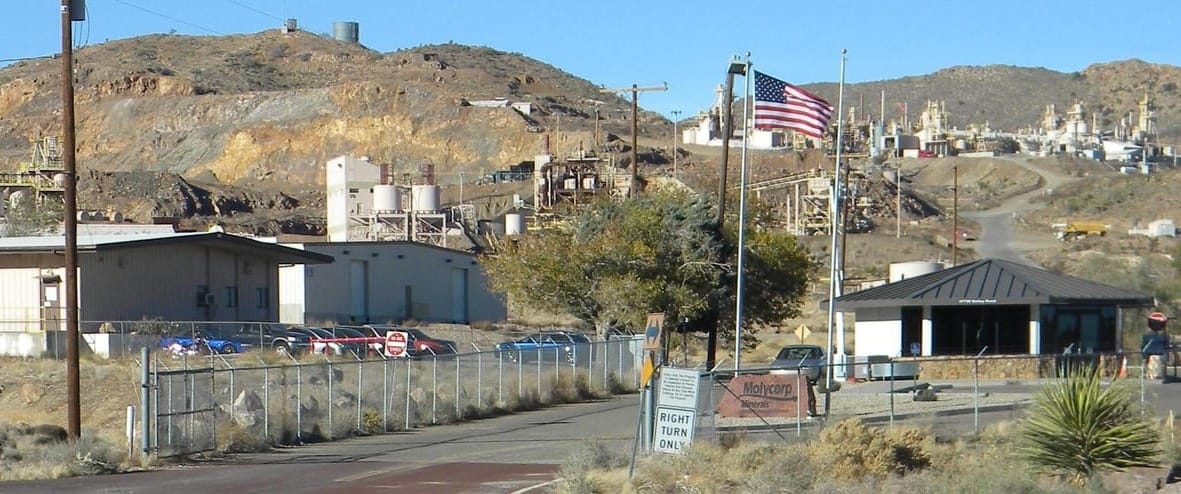
MP Materials and the integration of a strategic bottleneck
MP Materials provides an especially instructive example because the rare-earth value chain is not a single industrial activity. It includes mining, beneficiation, chemical separation, oxide production, metal and alloy conversion, magnet manufacturing, component integration, and eventually recycling. The U.S. Department of Energy treats these as distinct stages, each requiring specialized capital, chemistry, process knowledge, and quality control [10].
MP began with the Mountain Pass rare-earth mine in California and has progressively moved downstream. Mountain Pass now produces separated and refined rare-earth products, while the company’s Independence facility in Texas converts refined materials into magnetic precursor products and neodymium-iron-boron permanent magnets. MP reported that commercial-scale magnet manufacturing began in December 2025; in the first quarter of 2026, it produced 917 metric tons of separated neodymium-praseodymium products, 63 percent more than in the corresponding 2025 period [11].
This is forward integration from the perspective of a miner and backward integration from the perspective of magnet-dependent manufacturers. More importantly, it connects stages whose technical economics are mutually dependent. Magnet specifications influence alloy composition; alloy requirements influence oxide purity; separation yields and ore characteristics affect material availability and cost.
MP is constructing a closed technical feedback loop from geology to component performance.
Its expansion also demonstrates how public policy can supplement corporate integration. A 2025 agreement with the U.S. Department of Defense included preferred equity, financing, a ten-year price-floor commitment for NdPr products, and long-term magnet-purchase assurances. MP’s planned 10X facility is expected to begin commissioning in 2028 and would bring the company’s estimated U.S. magnet capacity to approximately 10,000 metric tons [12].
Those arrangements functionally resemble a form of quasi-integration between producer and strategic customer: ownership remains primarily corporate, but price risk, demand risk, and capacity investment are partially coordinated. MP subsequently selected Northlake, Texas, for 10X and stated that the facility would use materials processed at Mountain Pass [13]. Its existing agreement to supply U.S.-sourced materials, alloys, and finished magnets to General Motors provides a commercial downstream anchor [14].
Yet MP’s model is selective. The company is not integrating into electric-motor or vehicle production. It is concentrating ownership around the rare-earth stages where supply concentration, technical qualification, and process interdependence are greatest. That distinction is essential: the objective is to integrate the bottleneck sufficiently to make the broader ecosystem viable.
 John D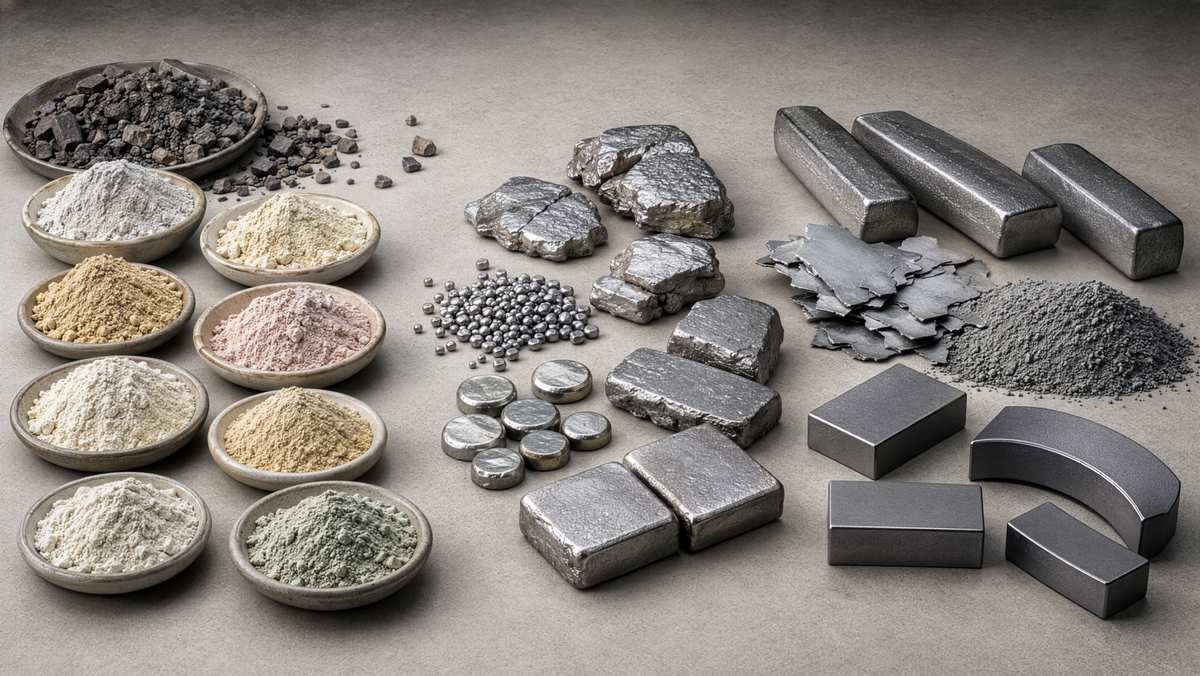
The next industrial boundary
Over the next five years, vertical integration is likely to expand around technologies that combine supply scarcity with rapid technical change: critical minerals, batteries, advanced semiconductors, aerospace structures, propulsion, industrial software, robotics, and specialized testing infrastructure.
The prevailing model, however, seems to be selective integration surrounded by strategic outsourcing. Companies will internalize activities that accelerate learning, protect mission-critical supply, or determine system performance while retaining external suppliers where scale economies, modular standards, and competitive markets remain strong.
The strategic test is straightforward: Do not ask how much of the value chain a company owns. Ask whether it owns the feedback loops, bottlenecks, and decision rights that determine whether its system can improve.

References
[1] Ford Motor Company. (n.d.). Company timeline: The River Rouge Complex. Ford Motor Company.
[2] Harrigan, K. R. (1984). Formulating vertical integration strategies. Academy of Management Review, 9(4), 638–652.
[3] Rothaermel, F. T., Hitt, M. A., & Jobe, L. A. (2006). Balancing vertical integration and strategic outsourcing: Effects on product portfolio, product success, and firm performance. Strategic Management Journal, 27(11), 1033–1056. https://doi.org/10.1002/smj.559
[4] Grossman, S. J., & Hart, O. D. (1986). The costs and benefits of ownership: A theory of vertical and lateral integration. Journal of Political Economy, 94(4), 691–719. https://doi.org/10.1086/261404
[5] Helfat, C. E., & Campo-Rembado, M. A. (2016). Integrative capabilities, vertical integration, and innovation over successive technology lifecycles. Organization Science, 27(2), 249–264. https://doi.org/10.1287/orsc.2015.1045
[6] U.S. Department of Justice, & Federal Trade Commission. (2023). Merger guidelines. U.S. Government.
[7] Space Exploration Technologies Corp. (n.d.). Company and mission overview. SpaceX.
[8] The Boeing Company. (2025, December 8). Boeing completes acquisition of Spirit AeroSystems. Corporate press release.
[9] Tesla, Inc. (2026). Annual report for the fiscal year ended December 31, 2025 (Form 10-K). U.S. Securities and Exchange Commission.
[10] U.S. Department of Energy. (2022). Rare earth permanent magnets: Supply chain deep dive assessment. U.S. Department of Energy.
[11] MP Materials Corp. (2026). Quarterly report for the period ended March 31, 2026 (Form 10-Q). U.S. Securities and Exchange Commission.
[12] MP Materials Corp. (2025, July 10). MP Materials announces transformational public-private partnership with the Department of Defense to accelerate U.S. rare earth magnet independence. Corporate press release.
[13] MP Materials Corp. (2026, February 26). MP Materials selects Northlake, Texas, as the site of “10X,” a new U.S. rare earth magnet manufacturing campus. Corporate press release.
[14] General Motors Company. (2021, December 9). General Motors and MP Materials enter long-term supply agreement for U.S.-sourced rare earth magnets. Corporate press release.