Inert-Anode Chemistry and the ELYSIS Smelter in Québec: Can Alcoa and Rio Tinto Deliver Carbon-Free Aluminum by 2027
ELYSIS proved inert-anode smelting at 450 kA in 2025. Whether Rio Tinto's 2027 Arvida plant follows is the harder question.

Inert-Anode Chemistry and the Alcoa / Rio Tinto (ELYSIS) Smelter in Canada, 2027: Technology Readiness, Economics, Regulation, and Strategic Significance
1. Summary
The single most important finding of this report is that the ELYSIS joint venture has demonstrated inert-anode aluminum smelting at a genuinely commercial cell amperage (450 kA) for the first time anywhere in the world, but the "2027" first-production target for the separate Arvida industrial-scale demonstration plant should be read as a company-stated milestone carrying execution risk. [1][2][5]. That finding now sits inside a primary aluminum market transformed by conflict-driven supply loss in the Persian Gulf, which has sharpened the strategic value of secure North American low-carbon capacity while simultaneously raising the opportunity cost of capital devoted to unproven technology [36][37].
1.1 Key Findings
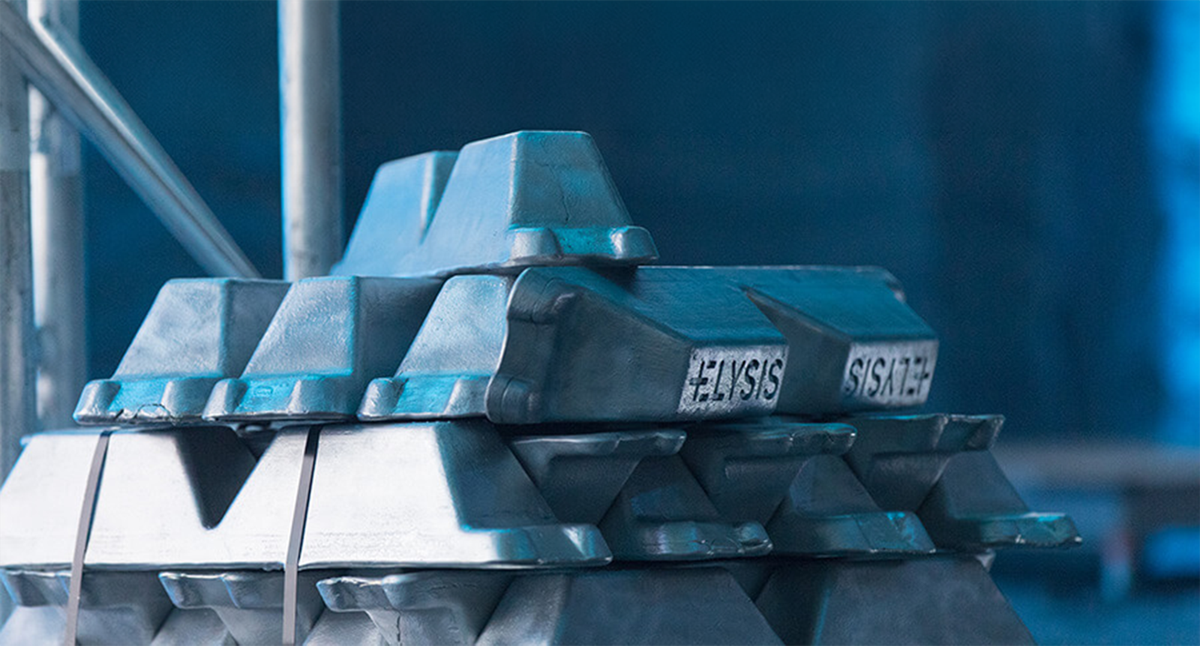
ELYSIS, a joint venture between Alcoa Corporation (NYSE:AA) and Rio Tinto (NYSE:RIO), started up a 450 kA inert-anode cell at the end of an existing potline at Rio Tinto's Alma smelter in Saguenay-Lac-Saint-Jean, Québec, in November 2025. This is the technology's headline demonstrated milestone and represents operation at an amperage typical of modern full-scale smelters [1][2]. The distinct, forward-looking Arvida demonstration plant is a ten-pot facility designed to operate at 100 kA per cell with a nameplate capacity of up to 2,500 tonnes per year, with first production targeted by 2027; it is owned by a new joint venture between Rio Tinto and the Government of Québec (through Investissement Québec) under the first ELYSIS technology licence, with total investment of US$285 million (CAD$375 million) [3][4]. As of the most recent available disclosure, no public reaffirmation, revision, or construction-progress update on the 2027 Arvida target has been issued since the November 2025 Alma announcement. That silence should be treated as an absence of evidence rather than as confirmation.
The core electrochemical proposition is sound and well understood: replacing the consumable carbon anode of the Hall-Héroult process with an inert (oxygen-evolving) anode eliminates direct process CO2 (which arises from carbon-anode consumption of roughly 400 to 450 kg of carbon per tonne of aluminum) and eliminates perfluorocarbon (PFC) emissions associated with anode effects, substituting oxygen as the anodic product [9][10]. The persistent and still-incompletely-resolved engineering challenge is anode material durability: candidate cermet and metallic-alloy systems corrode and dissolve into the highly aggressive cryolite bath, contaminating the metal with iron, nickel, and copper, which constrains use in the most demanding purity applications [12][13][14].
Several of ELYSIS's headline performance claims rest on proponent disclosure and are not independently corroborated in the peer-reviewed literature. These include the claim that inert anodes last "more than 30 times longer" than carbon anodes, an estimated 15 percent reduction in operating costs, and the potential, per the Center for Climate and Energy Solutions, that Rio Tinto and Alcoa have said the technology could eliminate the equivalent of 6.5 million metric tonnes of greenhouse gas emissions annually in Canada, an impact the companies compare to removing 1.8 million cars from the road (figures variously stated as 6.5 and 7 million tonnes in company communications) [1][2][8].
The strategic context has shifted decisively in favor of secure, low-carbon primary aluminum since early 2026, though for reasons more geopolitical than regulatory. Chinese primary output reached 45.02 million tonnes in 2025, up 2.4 percent and marginally above the country's self-imposed 45-million-tonne capacity cap, within global production of approximately 73.8 million tonnes [19][41]. Russian primary metal has been barred from new London Metal Exchange warrant since April 13, 2024, and from EU import since February 26, 2026 [35][43]. The EU Carbon Border Adjustment Mechanism (CBAM) entered its definitive phase on January 1, 2026, though its near-term financial bite is small and its long-term trajectory is now under active revision [22][23][44]. Most consequentially, Iranian missile and drone strikes on Gulf smelting assets in March 2026 removed a large share of non-Chinese supply from the market and exposed the concentration risk that had been latent in the industry's structure for two decades [36][37].
1.2 Principal Strategic Implications
For investors and corporate strategists, ELYSIS is a long-dated technology option embedded within two large, cash-generative incumbents rather than as a near-term standalone value driver. The economic case is contingent: the value of eliminating carbon-anode supply chains and carbon-price exposure is meaningful, but the dominant cost in aluminum smelting remains electricity (roughly 30 to 40 percent of operating cost and approximately 12,500 to 15,000 kWh per tonne), and inert anodes do not by themselves reduce that energy intensity unless paired with wettable-cathode and cell-redesign advances [15][24]. Evidence from 2026 suggests the near-term commercial pull for low-carbon metal is coming less from carbon policy, which has softened in Canada and slowed in the European Union, and more from physical scarcity and supply-security concerns [34][44][37].
For defense and industrial-base analysts, the convergence of Québec hydropower, a North American technology and intellectual-property base, and demonstrated physical vulnerability in Gulf supply creates a credible and newly urgent pathway to secure, low-carbon primary aluminum within the integrated Canada-United States industrial base. Aluminum is formally recognized as a defense-critical and energy-critical material, and North America is structurally short of primary metal [30][31]. That logic is complicated, however, by the unresolved status of the United States-Mexico-Canada Agreement following the July 2026 review, which the United States declined to extend in the agreement's current form [6].
For electrochemical scientists and process engineers, the central open questions are no longer "does it produce metal" but "for how long, at what purity, and at what cell voltage." The 450 kA demonstration answers the amperage-scaling question in principle; it does not yet answer the multi-year durability, current-efficiency, and metal-purity questions that determine commercial viability [2][15].
1.3 Scope, Method, and Limitations
This report synthesizes primary disclosures (company press releases, government statements, regulatory filings), peer-reviewed and technical literature on inert-anode electrochemistry and materials, intergovernmental and government data (US EPA, US DOE, European Commission, US Congressional Research Service), and reputable trade and financial reporting. Where a claim rests solely on a proponent (Alcoa, Rio Tinto, ELYSIS, or RUSAL), this is flagged explicitly. ELYSIS and its competitors treat anode composition and performance data as trade secrets, so independent verification of core performance metrics is limited; several quantitative claims are therefore reported as proponent-stated.
Information in this report is current as of September 8, 2026. Readers should note that an unusually large share of the regulatory and trade material in Sections 6 and 7 rests on provisions with known expiry or revision dates: the current United States Section 232 tariff structure is temporary through December 31, 2027 [6][42]; the USMCA is under negotiation with no settled outcome [6]; and the European Commission has proposed amending the CBAM free-allocation phase-out schedule, a proposal not yet in force [44]. Market, price, and production figures in Section 5 are drawn from a period of exceptional volatility and should be verified against current data before being relied upon for decisions.
 John D
2. Contextual Background
2.1 The Hall-Héroult Process and the Carbon-Anode Problem
Primary aluminum is produced almost universally by the Hall-Héroult process, invented independently in 1886 and substantially unchanged in its fundamentals since. Alumina (Al2O3) is dissolved in a molten cryolite (Na3AlF6) based electrolyte at roughly 960 degrees Celsius, and a large direct current is passed between a carbon anode and a cathode (the molten aluminum pad atop a carbon-lined cell). The aluminum ion is reduced to metal at the cathode; oxygen is liberated at the anode but immediately reacts with the carbon anode to form carbon dioxide [9][10].
This carbon-anode reaction is the source of the process's intrinsic direct emissions. The process consumes over 400 kg of carbon anode per tonne of aluminum, generating process CO2 on the order of 1.5 tonnes per tonne of aluminum from anode consumption alone [9][10]. A second, more pernicious category of direct emission is the perfluorocarbons: tetrafluoromethane (CF4) and hexafluoroethane (C2F6), produced during "anode effects" when alumina concentration in the bath falls and fluorine reacts with the carbon anode. These gases are extraordinarily potent. Under IPCC AR4 values as tabulated by the GHG Protocol, CF4 and C2F6 carry 100-year global-warming potentials of 7,390 and 12,200 respectively, and per US EPA's IPCC AR5 reference their atmospheric lifetimes are 50,000 years (CF4) and 10,000 years (C2F6); the EPA notes that for CF4, the 100-year GWP exceeds its 20-year GWP precisely because of that extreme persistence [17][18]. The industry has sharply reduced PFC intensity since 1990 through better process control, but the gases cannot be technically eliminated while carbon anodes are used [16].
The critical analytical distinction, which much promotional material blurs, is between direct (Scope 1) process emissions and indirect (Scope 2) electricity-related emissions. An inert anode addresses only the former. A smelter running on coal-fired power will still carry an enormous electricity-related carbon footprint even with a perfect inert anode. This is why the Québec pathway, anchored on near-zero-carbon hydropower, is the natural home for the technology: it addresses the residual direct emissions that hydropower alone cannot touch.
2.2 Origins, Structure, and Mandate of the ELYSIS Joint Venture
ELYSIS was launched on May 10, 2018, as a joint venture between Alcoa and Rio Tinto, headquartered in Montréal with a research facility (the Industrial Research and Development Centre) in Québec's Saguenay-Lac-Saint-Jean region. The underlying inert-anode technology was developed by Alcoa and had been operating at various scales at the Alcoa Technical Center near Pittsburgh since 2009 [7][8]. The 2018 announcement was attended by Canadian Prime Minister Justin Trudeau, Québec Premier Philippe Couillard, and Apple (NASDAQ:AAPL), with executives of all parties present, signaling unusually high political and corporate profile for a metallurgical research venture [7].
The original capitalization structure is instructive. The parties announced a combined initial investment of CAD$188 million toward a two-phase project then valued at CAD$558 million. Canada and Québec each committed CAD$60 million; Apple provided CAD$13 million and technical support, having helped facilitate the Alcoa-Rio Tinto collaboration; and Alcoa and Rio Tinto agreed to invest CAD$55 million in cash over three years plus contributing intellectual property and patents [7][8]. The provincial government of Québec took a 3.5 percent equity stake, with the remaining ownership split evenly between Alcoa and Rio Tinto [7]. By later disclosures, ELYSIS had secured more than CAD$650 million in total funding, roughly 70 percent private and 30 percent public [8]. The venture's mandate is explicitly to develop and license the technology, and to sell proprietary anode and cathode materials, for both retrofits of existing smelters and new greenfield facilities [7][8].
Leadership has evolved. Rio Tinto's Vincent Christ was named the founding chief executive in 2018; as of the 2025 milestone, François Perras is President and Chief Executive Officer of ELYSIS [7][2]. The relevant operating executives at the parents are William F. (Bill) Oplinger, President and Chief Executive Officer of Alcoa, and Jérôme Pécresse, Chief Executive of Rio Tinto Aluminium and Lithium [1].
2.3 The 2027 Arvida Demonstration in Context: From Pilot Cells to Industrial Scale
It is essential to separate three distinct technical stages, which press coverage frequently conflates. First, the pilot stage: ELYSIS achieved aluminum production using a 100 kA inert-anode cell in November 2021 and has iterated on that size at its research centre, producing research quantities of metal used in demonstration products [2].
Second, the commercial-amperage single-cell demonstration: in November 2025 ELYSIS started up a single 450 kA cell at the Alma smelter, the same current level used in modern full-scale potlines. This is the headline breakthrough and the strongest evidence that the technology can scale in amperage [1][2].
Third, the multi-cell industrial demonstration plant at Arvida: announced in June 2024 under the first ELYSIS technology licence, this is a ten-pot plant designed at 100 kA per cell with capacity up to 2,500 tonnes per year, targeted for first production by 2027 [3][4].
The Arvida plant's purpose is distinct from the Alma cell. The Alma installation proves a single cell at high amperage; Arvida is intended to prove a multi-cell operation under sustained industrial conditions, generating operating data on reliability, efficiency, and durability across a small potline [2][4]. Notably, the Arvida demonstration runs at 100 kA, a lower amperage than the 450 kA Alma cell, reflecting the difference between proving an integrated multi-cell line and proving peak single-cell amperage. Alcoa holds the right to purchase up to 40 percent of the metal produced at Arvida over the first four years through an offtake agreement [4].
The 2027 target should be treated critically. The original 2018 plan envisaged a commercial technology package beginning in 2024, a date that has since slipped to a maturity goal of "by the end of the decade" as stated by Chief Executive Perras in November 2025 [2][7]. The history of inert-anode development, spanning decades of unmet timelines across the industry, justifies skepticism toward any specific near-term date. Preliminary assessment suggests that the absence of any public construction milestone for the Arvida plant through the first three quarters of 2026 is consistent with schedule pressure.
2.4 Why Québec and Canada: Hydropower, Industrial Base, and Policy
Québec hosts one of the world's most advantaged primary-aluminum industrial clusters. The province's installed hydropower capacity exceeds 40 gigawatts, operated predominantly by the state-owned utility Hydro-Québec,
delivering firm, dispatchable, near-zero-carbon baseload power at among the most competitive industrial tariffs in North America [28][29].
Rio Tinto's Saguenay-Lac-Saint-Jean hub alone includes a refinery, five smelters, research facilities, and dedicated hydropower assets such as the 448 MW Isle-Maligne plant, producing close to 1.5 million tonnes of aluminum per year [29].
Aluminum smelting is among the most electricity-intensive industrial processes on earth, and firm hydropower provides exactly the 24-hour baseload that continuous electrolysis requires, something intermittent wind and solar cannot supply without storage [28]. Rio Tinto's conventional but modern AP60 technology, when paired with Québec hydropower, yields a carbon intensity of approximately 1.6 tonnes CO2e per tonne of aluminum, against approximately 3.2 tonnes for the older Arvida technology it replaces and approximately 10.9 tonnes for the global industry average [28]. Layering ELYSIS inert anodes on top would address the residual direct process emissions that hydropower cannot remove. Canada is also the largest aluminum supplier to the United States, accounting for 56 percent of US aluminum imports in 2024, embedding the Québec cluster directly within the North American industrial base [19].
3. Key Players and Stakeholders
3.1 Alcoa Corporation
Alcoa is the technological progenitor of the ELYSIS process; the inert-anode technology was developed at its Technical Center near Pittsburgh and had run at various scales since 2009 [7][8]. Alcoa retains a 48.25 percent effective stake in ELYSIS (half of the non-Québec equity) and markets its share of ELYSIS metal, which has been used in demonstration applications including automotive wheels and certain Apple products [11]. Alcoa's complementary technology roadmap includes the ASTRAEA metal-purification process and a "Refinery of the Future" program, the former being directly relevant to the metal-purity limitations of inert-anode metal [11]. Alcoa also supplies low-carbon metal commercially today under its EcoLum brand, defined as primary aluminum produced with less than 4.0 tonnes CO2e per tonne (Scope 1 and 2) [11].
Alcoa's upstream position has been affected by the 2026 supply disruptions described in Section 5.1. The company reduced its 2026 alumina production guidance to a range of 9.5 to 9.6 million tonnes [45].
Analysts should note that alumina supply constraints affect the economics of any smelting technology equally, inert-anode or conventional, and therefore do not differentiate ELYSIS competitively.?
3.2 Rio Tinto
Rio Tinto is ELYSIS's co-equal owner and the licensee operating the physical demonstrations, hosting the Alma 450 kA cell and building the Arvida demonstration plant [1][4]. Rio Tinto's strategic logic is to reinforce its position as a low-carbon aluminum leader in North America, leveraging its hydro-powered Québec smelters [4].
The company's parallel conventional investment has now moved from plan to execution. Rio Tinto began commissioning its US$1.5 billion AP60 smelter expansion at Complexe Arvida in March 2026, announcing the milestone on May 29, 2026, with completion expected by the end of 2026 when all 96 new pots are operating. The expansion adds approximately 160,000 tonnes per year of primary capacity for a total of approximately 220,000 tonnes produced with AP60 technology, and is expected to reduce carbon emissions by approximately 290,000 tonnes per year relative to the older Arvida smelter, whose potrooms were scheduled to close in June 2026 [28]. This sequencing is important: Rio Tinto is scaling a proven advanced conventional technology now while incubating ELYSIS for the next decade. Evidence suggests the two are complementary rather than competing, since the AP60 expansion establishes the modern potline infrastructure and casting capacity into which inert-anode cells could eventually be retrofitted.
3.3 The ELYSIS Joint Venture and Its Leadership
ELYSIS is a Canadian technology company whose business model is licensing and proprietary materials sales rather than primary metal production at scale [7][8]. It issued its first technology licence to Rio Tinto for the Arvida plant in 2024 [3]. Its president and chief executive is François Perras; technical work is split between Alcoa's Technical Center (anode and cathode materials manufacture) and Rio Tinto's technology teams in France and Québec (commercial-scale cell design) [2][8]. The venture directly employed about 100 people at launch with a stated potential to create more than 1,000 jobs by 2030 while securing 10,500 existing Canadian aluminum jobs, a figure originating from the Prime Minister's office and therefore a proponent and government projection rather than an independent estimate [8].
3.4 Public Stakeholders: Governments of Canada and Québec, Hydro-Québec, Investissement Québec
The Government of Canada and the Government of Québec are both founding funders and continuing backers [1][8]. Québec's participation is channeled through Investissement Québec, the provincial investment arm, which is the equity co-owner (alongside Rio Tinto) of the Arvida demonstration-plant joint venture, investing CAD$140 million (US$106 million) against Rio Tinto's CAD$235 million (US$179 million) [3][4]. Hydro-Québec, the state-owned utility, is the indispensable enabling stakeholder through its provision of low-cost, low-carbon firm power, though it is not a direct equity participant in ELYSIS [28][29]. The Government of Canada has also supported the adjacent AP60 expansion through the Strategic Innovation Fund [28].
3.5 Strategic Backers and Customers: Apple, Cable and Automotive Offtakers
Apple is the highest-profile strategic backer, having facilitated the original Alcoa-Rio Tinto collaboration, invested CAD$13 million in the first phase, provided technical support, and used ELYSIS metal in certain products [7][11]. On the customer side, Alcoa announced a supply agreement with Nexans (Euronext Paris:NEX) on January 31, 2024, under which Alcoa stated that Nexans would be the first cable manufacturer worldwide to use metal from the ELYSIS process, qualifying the metal across Nexans facilities in Western Europe and Scandinavia for low-, medium-, and high-voltage cable [11]. Automotive offtake is represented by Audi's use of ELYSIS metal in e-tron GT wheels, and consumer-goods demonstration by Ball Corporation (NYSE:BALL) and Unilever (NYSE:UL) in packaging applications [11]. These are at present qualification-scale and demonstration arrangements rather than large recurring commercial offtake, reflecting the technology's pre-commercial status.
3.6 Competitors and Alternative Technology Developers
The most direct competitor is RUSAL (a subsidiary of EN+ Group; both are sanctioned-exposed Russian entities). RUSAL has pursued inert anodes for over a decade and claims to have been the first to use inert anodes in industrial production, marketing metal under the ALLOW INERTA brand from its Krasnoyarsk smelter [13][32]. RUSAL claims, with TÜV Austria verification under ISO 14067, specific emissions of 0.01 tonnes CO2e per tonne (Scope 1 and 2) for inert-anode metal produced using hydropower, and purity above 99 percent [32]. These claims are proponent-and-certifier reported; the certification covers carbon footprint methodology, not independent validation of anode longevity or metallurgical purity at full commercial scale, and RUSAL's industrial pilot has comprised a small number of cells [32]. RUSAL's commercial position in Western markets has deteriorated sharply since 2024 for reasons unrelated to technology, as discussed in Section 7.4.
Adjacent metal-electrowinning developers include Boston Metal (privately held; backed by Breakthrough Energy Ventures and ArcelorMittal), whose molten oxide electrolysis targets steel primarily, using an inert anode at roughly 1,600 degrees Celsius to produce iron and oxygen; the company is also developing the process for other metals [25]. Norsk Hydro (OSE:NHY) is developing HalZero, a fundamentally different route that converts alumina to aluminium chloride before electrolysis, keeping chlorine and carbon in a closed loop and emitting oxygen; Hydro aims for industrial-scale pilot volumes by around 2030, supported by a NOK 141 million (US$13.2 million) Enova grant toward an approximately NOK 400 million test facility in Porsgrunn announced in March 2023 [26]. Programs also exist in China, Iceland, and elsewhere, generally at laboratory or early pilot stage [3]. The competitive picture is therefore a small, persistent global cohort, with ELYSIS and RUSAL the two most advanced inert-anode programs and Hydro pursuing a distinct chemistry.
 John D
4. Technical and Operational Considerations
4.1 Inert-Anode Electrochemistry and the Oxygen-Evolution Reaction
In a conventional Hall-Héroult cell, the net reaction consumes the carbon anode: 2 Al2O3 + 3 C to 4 Al + 3 CO2. In an inert-anode cell, the anode does not participate chemically; the net reaction becomes 2 Al2O3 to 4 Al + 3 O2, liberating oxygen at the anode instead of CO2 [9][10]. The thermodynamic consequence is significant: the oxygen-evolution reaction has a higher decomposition voltage than the carbon-consuming reaction, meaning that, all else equal, an inert-anode cell requires more electrical energy per tonne unless the cell is redesigned to recover that penalty [15][9].
This is the crux of the energy debate. The carbon anode, by reacting with oxygen, provides a chemical assist that lowers the electrical energy requirement; remove it and the cell must supply more electrical work. The industry's long-standing thesis, articulated as far back as the US Department of Energy's 1998 Inert Anode Roadmap, is that the energy penalty can be more than offset by combining inert anodes with wettable (drained) cathodes that reduce the anode-cathode distance and thus the ohmic voltage drop, potentially yielding net energy savings of 20 to 30 percent relative to current practice [15][27]. That projected saving is conditional on a successful integrated cell redesign and is not delivered by the inert anode in isolation.
4.2 Anode Materials: Cermets, Metallic Alloys, Corrosion, and Metal Contamination
The defining materials-science challenge is finding an anode that is electrically conductive, mechanically robust, and sufficiently resistant to dissolution in molten cryolite while evolving oxygen at high current density. Three broad material families have been investigated: ceramics (for example tin oxide, SnO2), metallic alloys (such as Cu-Ni-Fe), and cermets (ceramic-metal composites, prototypically nickel ferrite, NiFe2O4, with NiO and a metallic Cu-Ni phase) [12][13][14]. The electroactive surface of any viable inert anode must be an oxide with semiconducting properties, and because all oxides have finite solubility in the aggressive fluoride electrolyte, a perfectly inert anode is thermodynamically impossible; the engineering goal is to minimize dissolution to commercially tolerable rates [10].
The corrosion behavior is well-characterized in the literature and is unforgiving. SnO2-based anodes can suffer catastrophic corrosion exceeding 1 cm per year at low alumina concentrations [14]. NiFe2O4-based cermets are more durable but still corrode at rates measured in centimeters per year under industrial conditions (for example, 2.71 to 6.46 cm per year depending on sintering atmosphere in one study) [12]. Lower-temperature operation in modified KF-AlF3 baths and saturated alumina conditions reduces but does not eliminate dissolution [12][13].
The consequence of dissolution is metal contamination. As the anode corrodes, iron, nickel, and copper enter the bath and are co-deposited or carried into the aluminum pad, contaminating the product. Laboratory studies report iron concentrations of roughly 300 ppm in the electrolyte and metal contamination on the order of approximately 0.1 weight percent in deposited metal for optimized cermet compositions [13][14]. This is the central reason ELYSIS and RUSAL guard composition data as trade secrets, and why downstream purity matters so much, as discussed in Section 4.4.
4.3 Bath Chemistry, Wettable Cathodes, and Cell Design
The bath chemistry must balance competing demands: high alumina solubility, low anode dissolution, adequate electrical conductivity, and a melting point compatible with available materials. Lower-temperature fluoride baths (Na3AlF6-K3AlF6-AlF3 or KF-AlF3 systems near 900 to 960 degrees Celsius) favor anode survival but can reduce alumina solubility and complicate operation [12][13]. The wettable cathode, typically titanium diboride (TiB2), is the essential complement: by creating a cathode surface that the molten aluminum wets, the unstable liquid-metal pad can be drained and the anode-cathode distance reduced by half or more, cutting the ohmic voltage drop and recovering the energy penalty of oxygen evolution [15][27]. TiB2 cathodes have demonstrated multi-month survival in liquid aluminum in laboratory tests [27]. The combination of a durable inert anode with a wettable cathode in a vertical-electrode configuration is where the largest capital and operating benefits are projected, and also where engineering risk concentrates [27].
4.4 Energy Consumption, Current Efficiency, and Product Purity
Global primary smelters consume an average of approximately 13,990 kWh per tonne, with the most advanced commercial cells at 12,200 to 12,500 kWh per tonne [24]. The inert-anode and wettable-cathode combination is projected to cut this by 20 to 30 percent in mature designs, but this depends on integrated cell redesign and is not yet demonstrated at commercial scale [15][27]. Current efficiency (the fraction of current that produces metal rather than being lost to back-reaction and other losses) must be maintained at the high levels (above 90 percent) of modern Hall-Héroult cells for the economics to work, and sustaining this in oxygen-evolving cells under industrial conditions is an open question that the multi-cell Arvida demonstration is designed to probe [2].
Product purity is the binding constraint on end markets. Metal contaminated with iron, nickel, and copper at the levels associated with cermet dissolution may be acceptable for some construction, cable, and packaging applications but problematic for the most demanding aerospace alloys (for example AA7075) and high-quality can sheet, where tight compositional control is required [13][30]. This is why Alcoa is developing the complementary ASTRAEA purification process: the strategy is that inert-anode metal may require downstream purification to access premium markets [11]. The November 2025 disclosures describe the Alma cell as producing commercial-quality metal but do not provide independently verified compositional data [1].
4.5 Scale-Up Engineering: From the 450 kA Cell to the Arvida Demonstration
The 450 kA Alma cell demonstrates that the electrochemistry and cell hardware can be operated at the current level of a full-scale modern pot, a non-trivial achievement [1][2]. Scaling amperage raises challenges in current distribution, thermal balance, magnetohydrodynamic stability of the metal pad, anode mechanical integrity under thermal and electrical stress, and oxygen management and offtake. Perras has characterized the next phase explicitly as a multi-year, multi-cell testing program designed to prove the resilience, efficiency, and durability of the technology under full industrial conditions [2]. The Arvida plant, with ten cells at 100 kA, tests the different problem of integrating multiple cells into a functioning line with shared alumina supply and casting, using the adjacent existing smelter's infrastructure [4]. The apparent amperage step-down from 450 kA (single cell) to 100 kA (ten-cell line) underscores that these are complementary, not sequential, demonstrations of distinct engineering questions.
4.6 Technology-Readiness Assessment and Key Operational Risks
On a technology-readiness-level framework, the inert-anode process can be assessed as having advanced to roughly TRL 6 to 7 with the 450 kA single-cell demonstration in a relevant industrial environment, but with multi-cell, multi-year industrial validation (TRL 7 to 8) still ahead and full commercial deployment (TRL 9) targeted only by the end of the decade on ELYSIS's own timeline [2]. This is an inference based on the public record; ELYSIS does not publish a formal readiness assessment.
The principal operational risks are:
(1) anode service life under sustained industrial conditions, the make-or-break variable, with the claim of longevity more than thirty times that of carbon anodes being proponent-stated and not independently verified [1][8];
(2) metal purity adequate for premium markets without excessive downstream purification cost [11][13];
(3) current efficiency and cell voltage delivering competitive energy consumption [15];
(4) capital cost of new cells and of any retrofit, historically estimated at US$1 million to US$2 million for a retrofit cell and US$1 billion to US$2 billion for greenfield projects in older studies, though these figures are dated and should be treated as indicative only [27];
(5) schedule risk against the 2027 Arvida target, given the technology's history of timeline slippage [7][2].
4.7 Comparative Technical Landscape
The table below summarizes the principal low- or zero-direct-emission primary-aluminum and adjacent technologies.
| Technology / Developer | Approach | Anodic product | Stage (as of September 2026) | Notes |
|---|---|---|---|---|
| ELYSIS (Alcoa / Rio Tinto) | Inert anode, Hall-Héroult-compatible | Oxygen | 450 kA single cell live since November 2025; Arvida ten-cell 100 kA demonstration targeted 2027, no public progress update since | Most advanced Western program; anode composition undisclosed [1][2][4] |
| RUSAL ALLOW INERTA | Inert anode (ceramic and metal alloy) | Oxygen | Industrial pilot at Krasnoyarsk; small number of cells; commercial slabs produced | Claims 0.01 t CO2e/t (Scope 1 and 2), TÜV-verified; excluded from EU market from February 2026 [13][32][43] |
| Norsk Hydro HalZero | Alumina-to-chloride, closed-loop electrolysis | Oxygen | Test facility at Porsgrunn; pilot volumes targeted around 2030 | Different chemistry; oriented to greenfield capacity [26] |
| Boston Metal molten oxide electrolysis | Molten oxide electrolysis | Oxygen | Primarily steel; modular cells at approximately 1,600 degrees Celsius | Adjacent, not primary-aluminum focused [25] |
| Conventional Hall-Héroult (carbon anode) | Carbon anode | CO2 plus PFCs | Universal incumbent | Approximately 12,500 to 15,000 kWh/t; over 400 kg carbon/t [9][24] |
| Rio Tinto AP60 (advanced conventional) | Carbon anode, high-efficiency cell | CO2 plus PFCs | Commissioning at Arvida since March 2026, completion expected end-2026 | Approximately 1.6 t CO2e/t with hydropower; the near-term benchmark ELYSIS must beat [28] |
5. Economic and Market Dynamics
5.1 Global Primary Aluminum: Supply, Demand, Concentration, and Pricing
Global primary aluminum production reached approximately 73.8 million tonnes in 2025, up from approximately 73 million tonnes in 2024, representing a five-year low in growth rate [40]. China remains dominant across the value chain. Chinese primary output reached a record 45.02 million tonnes in 2025, up 2.4 percent year-on-year and marginally above the 45-million-tonne capacity cap Beijing imposed in 2017, with smelters operating at approximately 97 percent of capped capacity [41]. First-half 2026 Chinese output was 22.34 million tonnes, up 2.24 percent year-on-year [41]. The cap is now the binding constraint on Chinese growth, and analysts have noted that tighter energy, environmental, and carbon policies have further reduced the attractiveness of new Chinese smelting investment [41].
The defining market event of 2026 was the loss of Gulf supply. On March 28, 2026, Iranian missile and drone attacks struck Emirates Global Aluminium's Al Taweelah smelter in Abu Dhabi and Aluminium Bahrain's smelter in Bahrain, with EGA confirming significant damage and injuries to employees at both sites [36]. Estimates indicate the strikes took approximately 3 to 3.2 million tonnes of combined annual smelting capacity offline; including Qatalum's 40 percent gas-related curtailment, Wood Mackenzie projected total 2026 output losses of 3 to 3.5 million tonnes, or 4 to 5 percent of global supply [37]. The disruption was compounded by restrictions in the Strait of Hormuz: ANZ analysis indicates that approximately 75 percent of Gulf smelting capacity depends on imported alumina and bauxite transiting the strait, so even undamaged facilities faced feedstock-driven curtailment [37].
Price response was immediate and sustained. Three-month LME aluminium had already broken through US$3,000 per tonne at the start of 2026, peaking at approximately US$3,325 on January 29 [39]. Following the March strikes the three-month contract climbed to approximately US$3,492 and then US$3,506 per tonne, with cash offers reaching US$3,585 [38]. Prices approached US$3,750 per tonne in early June, the strongest level since 2022. Goldman Sachs raised its full-year 2026 average forecast to US$3,200 per tonne from US$3,100, and its 2027 forecast to US$2,750 from US$2,700 [39].
Conditions have since partially normalized. EGA restarted the Al Taweelah alumina refinery on July 10, 2026, and has since indicated a firm timeline of full smelter production in the first quarter of 2027, with restoration costs of approximately US$400 million [38]. ING revised its 2026 deficit estimate to approximately 1.2 million tonnes as Middle East recovery outpaced expectations, aided by Chinese exports rising 16 percent year-on-year in May to 630,000 tonnes [40]. As of August 28, 2026, three-month LME aluminium closed at US$3,241 per tonne with cash at US$3,222, the earlier backwardation having dissipated [38]. Evidence suggests the market has moved from acute crisis to structural tightness rather than to resolution: LME inventories remain historically low, and Norsk Hydro's Alunorte refinery reduced alumina production to 50 percent of capacity on natural gas constraints in August 2026 [38][45].
5.2 Smelter Cost Structure and the Inert-Anode Value Proposition
Electricity is the dominant variable cost in primary aluminum, consuming roughly 12,500 to 15,000 kWh per tonne and accounting for approximately 30 percent of operating cost in Canada, around 35 percent in China, and 40 to 45 percent in power-price-exposed markets such as Australia [24]. The carbon anode is the second major consumable, at over 400 kg per tonne plus the cost of an on-site or purchased carbon-anode plant [9][10]. The inert-anode value proposition rests on four pillars:
(1) elimination of carbon-anode supply and the associated anode plant capital and operating cost;
(2) elimination of direct CO2 and PFC emissions and thus exposure to carbon pricing;
(3) a potentially saleable oxygen byproduct; and
(4) productivity gains from longer-lived anodes and, with cell redesign, higher amperage on the same footprint [1][2][9].
ELYSIS states an estimated 15 percent reduction in operating costs and inert-anode longevity more than thirty times that of carbon anodes; both are proponent figures that this report does not treat as verified [2][8].
The table below presents an indicative cost structure for a hydro-powered smelter. Figures are approximate and synthesized from the sources cited rather than drawn from a specific company disclosure.
| Cost component | Conventional Hall-Héroult (indicative) | Inert-anode pathway (qualitative effect) |
|---|---|---|
| Electricity (approximately 12,500 to 15,000 kWh/t) | Approximately 30 to 40 percent of operating cost | Unchanged or slightly higher per tonne unless paired with wettable cathode and cell redesign [15][24] |
| Carbon anode and anode plant (over 400 kg/t) | Major consumable | Eliminated; replaced by inert-anode material supply [9][10] |
| Alumina feedstock | Largest single raw material | Unchanged; exposed to the 2026 supply disruptions independently of anode technology [37][45] |
| Carbon-price exposure (Scope 1) | Regulatory liability, trajectory now flatter in Canada | Largely eliminated, but the avoided cost is smaller than 2025 projections implied [34] |
| Oxygen byproduct | None | Potential new revenue stream, unquantified in public disclosure [1] |
5.3 Capital Requirements and Public Co-Funding
ELYSIS has been built on blended public and private capital: an initial CAD$188 million within a CAD$558 million two-phase plan, growing to more than CAD$650 million total [7][8]. The Arvida demonstration plant adds US$285 million (CAD$375 million), split between Rio Tinto (CAD$235 million) and Investissement Québec (CAD$140 million) [3][4]. These figures are for demonstration. Full commercial deployment across the global smelter fleet would require capital orders of magnitude larger, and historical estimates put greenfield inert-anode projects in the US$1 billion to US$2 billion range per facility, with the important caveat that such figures are dated and uncertain [27]. For scale comparison, Rio Tinto's conventional AP60 expansion at the same site cost US$1.5 billion for approximately 160,000 tonnes per year of incremental capacity [28].
5.4 The Low-Carbon Premium, Offtake Agreements, and Demand Signals
A low-carbon premium for primary aluminum exists but remains modest and volatile relative to the base metal price, and it has been substantially overshadowed during 2026 by the movement in the underlying London Metal Exchange (LME) price. The principal published benchmark is the Platts (S&P Global Commodity Insights) Low-Carbon Aluminum Price, assessed as a premium on top of the LME cash price, with a United States version launched January 2, 2024; the premium was reported in the range of approximately US$5 to US$20 per tonne in mid-2022 [11]. Against a base price that moved by more than US$700 per tonne within a single quarter of 2026, a premium of that magnitude is not currently the primary driver of producer economics. Preliminary findings indicate this may change as CBAM obligations accumulate, as discussed in Section 6.2, with one industry analysis framing embedded carbon as potentially becoming an aluminium trade premium on the order of EUR 75 per tonne of CO2 as the mechanism matures [46].
The prevailing market definition of low carbon, used by Platts, Fastmarkets, and referenced by the International Aluminium Institute, is a maximum of 4 tonnes CO2e per tonne of aluminum on a Scope 1 and 2 basis; the LME's developing sustainable-metals premium framework uses a higher aluminum threshold (8 to 10 tonnes CO2e per tonne) [11]. Demand signals are nonetheless strengthening: the Nexans cable qualification, Audi and Apple usage, Alcoa's EcoLum brand, and the 2025 Alcoa-Ball-Unilever consumer packaging collaboration all indicate that brand owners are positioning for a future in which embedded carbon is a procurement-relevant factor [11].
5.5 Commercialization Economics and Sensitivity to Power Price and Carbon Cost
The commercial case is most sensitive to two external variables, and the balance between them has shifted since 2025.
First, power price. As electricity dominates cost and inert anodes do not reduce energy intensity by themselves, the technology is economic only where firm low-cost power is available, which is precisely Québec's advantage and a structural constraint elsewhere [24][28]. A new smelter requires a long-term power contract at roughly US$40 per MWh to be viable, a level increasingly contested by artificial-intelligence data centers willing to pay upward of US$115 per MWh, which is a growing competitive threat to all new smelting capacity [24][30].
Second, carbon cost. The value of eliminating Scope 1 emissions scales directly with the prevailing carbon price and the reach of border-carbon measures. This variable has weakened in Canada. The revised federal benchmark holds the headline industrial carbon price at CAD$95 per tonne in 2026 and reaches only CAD$130 per tonne by 2035, against the previously legislated path toward CAD$170 by 2030 [34]. Under the earlier trajectory, a Québec smelter eliminating roughly 1.5 tonnes of direct process CO2 per tonne of aluminum would have been avoiding a rapidly escalating liability; under the revised path, that avoided cost grows far more slowly. Traded credit prices are in any case often well below the headline benchmark [33][34].
The net inference, which follows from the cost structure rather than from any company forecast, is that the investment case for inert anodes has rotated. In 2024 and 2025 it rested substantially on anticipated carbon-price escalation. In late 2026 it rests more on operating-cost reduction, productivity, supply-security positioning, and optionality against a future tightening of trade-linked carbon measures. Analysts modeling ELYSIS economics on a straight-line CAD$170-by-2030 carbon price will overstate the value of the Scope 1 abatement.

6. Regulatory Landscape
6.1 Canadian Federal and Québec Carbon Policy
Québec operates a cap-and-trade system (SPEDE) linked with California under the Western Climate Initiative, with joint quarterly allowance auctions. Recent auction settlement prices have clustered in the high US$20s per tonne, with the most recent joint auction settling at approximately US$27.94 per tonne in early 2026 and 2025 auctions in the roughly US$25.87 to US$28 range [33].
At the federal level, the picture changed significantly in May 2026. Environment and Climate Change Canada published a revised carbon pollution pricing benchmark, effective May 15, 2026, that holds the headline industrial price at CAD$95 per tonne in 2026 (unchanged from 2025), raising it to CAD$100 in 2027, CAD$115 in 2030, then by CAD$3 per year to CAD$130 in 2035, with an inflationary escalator to CAD$140 by 2040 [34]. This replaces the previously legislated path toward CAD$170 per tonne by 2030. The federal consumer fuel charge had already been set to zero effective April 1, 2025, leaving industrial carbon pricing through the Output-Based Pricing System as the operative instrument for smelters [34].
Provincial fragmentation compounds the softening. Alberta has maintained a freeze at CAD$95 per tonne for 2026 rather than following the previous federal schedule, and Saskatchewan removed its industrial carbon price entirely [34]. For an inert-anode smelter, the elimination of Scope 1 process emissions still removes Canada’s Output‑Based Pricing System (OBPS) and SPEDE compliance liability outright, converting a regulatory cost into avoided cost. Evidence suggests, however, that the magnitude of that avoided cost over the 2026 to 2035 window is now roughly a third smaller than the pre-2026 trajectory implied, and this should be reflected in any discounted-cash-flow treatment of the technology.
6.2 The EU Carbon Border Adjustment Mechanism and Trade-Linked Carbon Measures
The EU CBAM entered its definitive, financially binding phase on January 1, 2026, after a transitional reporting phase that ran from October 2023 through December 2025; aluminum is one of the six covered sectors [22][23]. Importers above a 50-tonne annual threshold must purchase and surrender CBAM certificates priced against EU Emissions Trading System allowances [23][44].
Three implementation details qualify the mechanism's near-term commercial effect and should not be overlooked. First, timing: although liability began accruing on January 1, 2026, certificate sales do not open until February 1, 2027 through a centralised EU platform, with the first annual declaration covering 2026 imports due by September 30, 2027 [44]. Second, market design: unlike ETS allowances, CBAM certificates will not be freely tradable instruments; member states will sell them without quantitative limits, and certificates will be assigned to individual declarants rather than traded between companies, with a proposed fixed platform fee of EUR 0.05 per certificate [46]. Third, and most important, magnitude: because the obligation phases in as EU free allowances phase out, only approximately 2.5 percent of the gross carbon cost is payable on 2026 imports, rising steeply through 2030 and toward full application by 2034 [44].
That 2034 endpoint is now itself under revision. On July 17, 2026 the European Commission proposed slowing the phase-out of free EU ETS allocation for CBAM sectors and extending it to 2038 [44]. This proposal is not yet law, but if adopted it would defer full CBAM application by four years, further flattening the near-term value of low-carbon differentiation. Separately, a December 17, 2025 legislative proposal would expand CBAM's product scope to steel- and aluminium-intensive downstream products from January 1, 2028 and strengthen anti-circumvention rules, including by treating pre-consumer scrap as a CBAM precursor [23][44]. The United Kingdom is set to implement its own border mechanism from 2027 [22].
CBAM remains a powerful long-term structural advantage for near-zero-carbon metal sold into the European Union, but that its cash effect before roughly 2030 is small and its terminal schedule is contested.
6.3 United States Policy: Tariffs, USMCA, and Clean-Manufacturing Incentives
United States trade policy toward aluminum has been restructured twice in 2026 and remains unsettled. Section 232 tariffs were raised to 25 percent in March 2025 (eliminating prior country exemptions and tariff-rate quotas, including for Canada) and then to 50 percent in June 2025 [6]. Following a February 2026 Supreme Court ruling that the International Emergency Economic Powers Act did not authorize certain tariffs, the administration replaced those tariffs with a Section 122 surcharge while Section 232 metal tariffs remained in force [6].
A proclamation issued June 1, 2026, effective June 8, 2026 and temporary through December 31, 2027, then restructured the regime [42]. The standard rate reverted to 25 percent, with reduced rates available for trade-deal countries, USMCA-qualifying goods from Canada and Mexico, and products made with at least 85 percent United States-melted or smelted metal [42]. For Canada and Mexico under USMCA, the duty applies only to the non-United States content of covered goods, subject to a minimum effective rate of 15 percent [42]. Section 232-covered products are exempt from the broadly applicable Section 122 import surcharge, currently set at 10 percent [42]. Rates revert to the standard Proclamation 11021 structure on January 1, 2028, a scheduled step-up that should inform medium-term procurement and capital planning [42].
The larger uncertainty is structural. In July 2026 the USMCA partners met for the agreement's scheduled review, and the United States administration declined to extend USMCA in its current form; the partners are continuing to discuss whether to modify and extend the agreement, allow it to expire, or terminate it [6]. Canada has implemented counter-tariffs on United States goods on a three-tier 50, 25, and 15 percent structure effective September 8, 2026 [6]. Canada nonetheless remained the dominant supplier of aluminum to the United States, at 56 percent of imports in 2024 [19]. For a Québec producer contemplating a multi-decade technology investment, the unresolved trade framework is a significant and currently unquantifiable risk.
6.4 Critical-Minerals and Critical-Materials Designations
Aluminum is formally recognized across United States agencies as strategically essential: the Department of Defense recognizes it as essential to the military industrial base and the Department of Energy as critical to the energy supply chain, and it appears on critical-materials lists [30][31]. The United States is structurally short of primary aluminum: even at full capacity, domestic smelters meet only about one-third of primary demand, leaving the country roughly 4 million tonnes short of unwrought metal annually [30]. These designations create policy momentum in permitting, energy access, and federal financial support. On March 25, 2024 the Department of Energy's Office of Clean Energy Demonstrations selected Century Aluminum (NASDAQ:CENX) for up to US$500 million under the Industrial Demonstrations Program to build the first new United States primary smelter in 45 years, support that low-carbon producers can in principle leverage [19][30].
6.5 Standards, Certification, and IP Licensing
Certification frameworks are maturing but not yet standardized. There is no single binding definition of low-carbon aluminum; market practice converges on 4 tonnes CO2e per tonne (Scope 1 and 2) per Platts, Fastmarkets, and International Aluminium Institute references, while the LME's developing premium uses 8 to 10 tonnes CO2e per tonne [11]. RUSAL's ALLOW INERTA carbon footprint was verified by TÜV Austria under ISO 14067, illustrating the role of third-party verification, though such verification addresses methodology rather than independent performance validation [32]. ELYSIS's commercial model is fundamentally an intellectual-property licensing model: it grants smelter technology licences (the first to Rio Tinto for Arvida) and sells proprietary anode and cathode materials, so the strength and enforceability of its patent portfolio is central to its value [3][7][27].
7. Geopolitical and Strategic Dimensions
7.1 Aluminum as a Defense and Industrial-Base Input
Aluminum is a foundational defense material. High-strength alloys such as AA7075 are used extensively in missile systems, and aluminum contributes to electromagnetic shielding, radar, and electronic-warfare components, as well as airframes and ground vehicles [30]. Secure access to primary aluminum, and particularly to high-purity metal suitable for aerospace alloys, is therefore a national-security concern. This connects directly to the metal-purity limitations discussed in Section 4.4: a domestic, low-carbon primary source is strategically valuable only insofar as it can meet defense-grade specifications, potentially via downstream purification [30][11]. The March 2026 strikes underscored the point in an unusually direct way, since Iran's Revolutionary Guard Corps cited the targeted firms' ties to United States military and aeronautics customers as a rationale, and both EGA and Alba are major suppliers to the global aerospace sector [36].
7.2 Concentration of Primary Production and Supply-Chain Exposure
Chinese production of approximately 45 million tonnes, more than half of global output, remains the dominant supply-chain risk fact for Western planners [19][41]. This concentration gives Chinese capacity policy, energy costs, and export decisions outsized influence over global prices and availability [20][41].
An assessment made in 2025, that Chinese exports had likely peaked following removal of the 13 percent export tax rebate in December 2024, has not been borne out in 2026. Chinese exports of unwrought aluminium and semi-finished products rose 18.6 percent year-on-year to 643,000 tonnes in July 2026, and rose 16 percent year-on-year in May, in part filling the gap created by Gulf outages [40][45]. The practical implication is that Western buyers displaced from Gulf supply have in several cases substituted Chinese metal, deepening rather than reducing structural dependence. This is a revision to the prior view and should be treated as the current base case unless Chinese domestic demand strengthens enough to absorb the surplus.
7.3 Conflict-Driven Supply Disruption: The 2026 Gulf Shock
The events of March 2026 constitute the most significant physical disruption to aluminum supply in decades and warrant treatment as a category distinct from sanctions or trade policy.
Five leading Gulf smelters accounted for approximately 6.16 million tonnes of supply, roughly 8 percent of the global total, and the Middle East accounts for approximately 9 percent of global aluminium production and nearly 20 percent of supply originating outside China [37]. That production is overwhelmingly export-oriented, concentrated toward Japan, South Korea, the European Union, and the United States, precisely the economies least able to substitute quickly [37].
The disruption operated through two mechanisms simultaneously, which distinguishes it from a conventional single-point outage. Physical damage removed capacity directly: EGA's Al Taweelah alumina refinery suffered severe structural damage and an uncontrolled power loss that forced potline shutdowns from March 28, 2026 [37]. At the same time, restrictions in the Strait of Hormuz severed inbound alumina and bauxite flows, with Wood Mackenzie estimating that Hormuz disruption could cut up to 60 percent of alumina supply reaching Middle Eastern smelters, making curtailment inevitable even at undamaged facilities [37]. Gulf production fell 44 percent to 293,000 tonnes at the trough, and EGA's Al Taweelah smelter was operating at approximately 18 percent of capacity as of mid-2026 [45].
Three strategic conclusions follow. First, the industry's tolerance for concentrated, logistically exposed supply has been tested and found wanting; regional physical premiums escalated sharply across Rotterdam, United States Midwest, and Japanese benchmarks, and buyers reported concern about physical availability rather than price alone [37]. Second, the episode has accelerated a bifurcation between LME and Shanghai Futures Exchange pricing that points toward separate Western and Asian supply ecosystems [37]. Third, and most relevant to this report, the shock has strengthened the strategic rationale for North American primary capacity that is simultaneously low-carbon, geographically secure, and free of maritime bottleneck exposure. Québec's position, with domestic hydropower and land-border access to the United States market, is close to the ideal case on that criterion.
7.4 Sanctioned Supply, Market Realignment, and Exchange Dynamics
Russian aluminum sanctions have reshaped exchange dynamics. Following United States and United Kingdom action in April 2024, the LME suspended delivery of Russian metal produced on or after April 13, 2024 [35]. As of March 2024, Russian-origin aluminum constituted approximately 91 percent of LME approved warehouse stocks [35].
The European Union has since gone further. Under the sixteenth sanctions package, the EU banned imports of Russian primary aluminium following a transitional quota of 275,000 tonnes, with the ban taking full effect on February 26, 2026; a residual exemption of up to 50,000 tonnes for contracts signed before February 2025 runs to December 31, 2026, after which all Russian aluminum imports into the EU are prohibited [43]. The Commission has noted that EU dependence on Russian aluminium had already fallen from 16 percent in 2020 to 6 percent in 2024 [43]. The net effect is a durably bifurcated market in which Western consumers seek non-Russian, low-carbon metal through bilateral contracts, precisely the position a Québec hydropower and ELYSIS supply chain is designed to occupy. It also effectively forecloses RUSAL's ALLOW INERTA product from the European market irrespective of its technical merits, removing ELYSIS's most advanced competitor from its most carbon-sensitive addressable market.
7.5 North American Supply Security and the Energy Advantage
North America's structural primary-aluminum shortfall, combined with Canada's role as the largest United States supplier and Québec's hydropower endowment, creates a coherent strategic logic: the lowest-carbon, most secure incremental primary supply for the United States market is Québec hydropower metal [19][30][28]. Rio Tinto's AP60 expansion at Arvida, now in commissioning and adding approximately 160,000 tonnes per year, is the near-term expression of that logic, described by the company as the first major primary aluminium project in the West in more than a decade [28]. ELYSIS is the next-decade option layered on top.
Two constraints qualify this. The binding physical constraint on replicating the model elsewhere is firm low-cost power, increasingly contested by data-center demand [24][30]. The binding policy constraint is the unresolved USMCA framework and the temporary nature of current tariff relief, which together make the commercial terms of Canada-United States metal trade uncertain beyond 2027 [6][42].
7.6 Technology Leadership and Intellectual Property as Strategic Assets
Inert-anode technology leadership is itself a strategic asset. The two most advanced programs are Western (ELYSIS) and Russian (RUSAL), placing the contest for the defining process innovation in aluminum since 1886 squarely along geopolitical lines [13][32]. Control of the intellectual property, materials supply, and licensing of a successful inert-anode process would confer durable advantage analogous to control of a foundational manufacturing process. With RUSAL's route to European markets now closed by sanction, ELYSIS's principal remaining competitive risk in the Western sphere is technical failure or delay rather than displacement by a rival [43]. This reinforces the case for treating ELYSIS as a strategic asset within the Canada-United States industrial base rather than a purely commercial venture [7][27].
8. Strategic Recommendations
8.1 For Investors and Corporate Strategists
Treat ELYSIS as a long-dated, embedded technology option, not a near-term earnings driver. The credible commercial-maturity horizon is by the end of the decade on the proponent's own account, and the 2027 Arvida date is a demonstration milestone, not a commercial-scale date [2]. Exposure to Alcoa and Rio Tinto already embeds the option at no incremental cost, and the parents' parallel execution of the AP60 expansion indicates prudent hedging [28].
Revise carbon-price assumptions downward. Models built on the previously legislated CAD$170-by-2030 Canadian trajectory will overstate the Scope 1 abatement value by a substantial margin; the operative path now reaches CAD$130 by 2035 [34]. Similarly, CBAM-derived value should be discounted for the February 2027 certificate-sales start, the approximately 2.5 percent phase-in factor applying to 2026 imports, and the pending proposal to extend free allocation to 2038 [44].
The benchmarks that would justify revaluing the option upward are: disclosure of independently verified anode service life and metal-purity data from the multi-cell program; sustained multi-month operation of the 450 kA cell at competitive current efficiency and cell voltage; and a firm, financed commercial deployment decision, meaning a first commercial potline rather than a demonstration.
The thresholds warranting skepticism: continued absence of Arvida construction milestones through 2026 and into 2027; explicit slippage of the 2027 date; or disclosure that metal purity requires costly downstream purification to reach premium markets [2][11].
For corporate strategists in metals and downstream manufacturing, the 2026 Gulf shock is the more actionable near-term signal. Supply-security diversification away from bottleneck-exposed sources now carries a demonstrated, quantified justification, and Québec metal serves both the security and the carbon objective simultaneously [37][28].
8.2 For Defense and Industrial-Policy Analysts
Prioritize firm, low-cost, low-carbon power access as the true binding constraint on North American primary-aluminum security, ahead of the smelting technology itself [24][30].
Treat the March 2026 Gulf strikes as a scoping event for industrial-base planning. The episode demonstrated that aerospace-linked smelting capacity is a deliberate targeting choice and that alumina logistics through a single maritime bottleneck constitute a single point of failure for roughly 1/5 of non-Chinese supply [36][37]. Contingency analysis that assumed price disruption should be revised toward physical availability disruption.
Recommend that critical-materials policy explicitly couple support for low-carbon primary capacity with the purity question: a domestic low-carbon source that cannot meet aerospace-grade specifications without expensive purification is only a partial solution [30][11].
Use the ongoing USMCA negotiation and the Section 232 framework as levers to stabilize the integrated Canada-United States aluminum supply chain rather than fragment it, given Canada's 56 percent share of United States imports and the scheduled January 1, 2028 reversion to higher tariff rates [6][19][42].
8.3 For Electrochemical Scientists and Process Engineers
Focus independent scrutiny on the three unresolved variables: long-duration anode dissolution rate under industrial current density, resulting metal contamination by iron, nickel, and copper against end-use specifications, and the cell-voltage and current-efficiency trade-off that determines net energy consumption [12][13][15]. The most informative future disclosures will be compositional analyses of metal from sustained multi-cell operation and measured wear rates. These should be demanded before accepting the thirty-times-longevity and 15 percent cost-reduction claims, which remain proponent-reported [1][8].
Pursue the wettable-cathode and vertical-electrode integration as the locus of the projected 20 to 30 percent energy saving, recognizing that the inert anode alone does not deliver it [15][27]. Note also that the relevant efficiency benchmark is rising: AP60 at approximately 1.6 tonnes CO2e per tonne with hydropower is the technology ELYSIS must displace, not the 10.9-tonne industry average [28].
8.4 Cross-Cutting Watch Items and Leading Indicators
- Any ELYSIS disclosure of verified anode life, current efficiency, or metal purity from the multi-cell program, and any construction milestone at the Arvida demonstration plant [2][4].
- Confirmation, revision, or silent lapse of the 2027 Arvida first-production date [4].
- EGA's Al Taweelah smelter restart against its stated first-quarter 2027 full-production timeline, and the pace of Alba and Qatalum normalization [38][45].
- Alumina supply conditions, including the duration of the Alunorte curtailment and Alcoa's revised production guidance [45].
- Passage or rejection of the July 17, 2026 European Commission proposal to extend ETS free allocation to 2038, and the December 2025 CBAM scope-expansion proposal targeted at January 1, 2028 [44][23].
- CBAM certificate prices from the February 1, 2027 sales opening, and the first annual declaration cycle due September 30, 2027 [44].
- The outcome of USMCA negotiations and the scheduled January 1, 2028 reversion of Section 232 rates [6][42].
- Implementation of Canada's revised industrial carbon price trajectory and whether provincial fragmentation widens [34].
- Chinese export volumes and whether output remains pinned at the 45-million-tonne cap [40][41].
- Effect of the full EU prohibition on Russian aluminum from January 2027 on non-Russian low-carbon demand and premiums [43].

References
- ELYSIS. 2025. "ELYSIS Achieves Breakthrough with Commercial-Size Cell: A First in Aluminium Production Using the Inert Anode Technology." Press release, November 13. Montréal: ELYSIS.
- Canadian Institute of Mining, Metallurgy and Petroleum. 2025. "ELYSIS Achieves Commercial-Size Cell Milestone." CIM Magazine, November.
- Rio Tinto. 2024. "Rio Tinto to Install Carbon-Free Aluminium Smelting Cells Using First ELYSIS Technology Licence." Media release, June 28.
- Fastmarkets. 2024. "Rio Tinto to Install Zero-Carbon Smelting Technology ELYSIS at Demonstration Plant in Quebec." July 3; and Alcoa Corporation, "Alcoa Announces Agreement on Industrial-Scale Demonstration of ELYSIS Carbon-Free Smelting Technology," June 2024.
- Rio Tinto. 2025. "ELYSIS Achieves Breakthrough with Commercial-Size Cell." Media release, November 13.
- U.S. Congressional Research Service. 2026. "Section 232 Tariffs on Steel and Aluminum" (IN12519), July 7; and "US-Canada Trade Relations" (IF12595). Washington, DC: Library of Congress.
- Rio Tinto and Alcoa Corporation. 2018. "Rio Tinto and Alcoa Announce World's First Carbon-Free Aluminium Smelting Process." Media release, May 10 (SEC Form 6-K exhibit).
- Office of the Prime Minister of Canada. 2018. "Alcoa and Rio Tinto Announce World's First Carbon-Free Aluminum Smelting Process." News release, May 10; ELYSIS, "What Is ELYSIS?"; and Center for Climate and Energy Solutions, "Alcoa, Rio Tinto and Apple Work with Canada to Erase Aluminum Smelting Emissions."
- Climate Technology Centre and Network. 2016. "Inert Anode Technology for Aluminium Smelters." November 8.
- Light Metal Age. "Decarbonizing the Primary Aluminum Industry," citing Lassagne et al.
- Alcoa Corporation and Nexans. 2024. "Alcoa to Supply Nexans with Low-Carbon Aluminum, Including Metal from ELYSIS Technology." Business Wire, January 31; S&P Global Commodity Insights, Platts Low-Carbon Aluminum Price methodology and assessments (2022, 2024); Fastmarkets and International Aluminium Institute low-carbon definitions; and Alcoa, Ball Corporation, and Unilever, "First Use of ELYSIS Carbon-Free Smelting Technology in Consumer Personal and Home Care Packaging," November 6, 2025.
- Cao, D., et al. "Corrosion of NiFe2O4-10NiO-Based Cermet Inert Anodes for Aluminium Electrolysis." Transactions of Nonferrous Metals Society of China.
- "Anodic Corrosion Behavior of NiFe2O4-Based Cermet in Na3AlF6-K3AlF6-AlF3 for Aluminum Electrolysis." Metallurgical and Materials Transactions B (2015).
- "Studies on the Corrosion and the Behavior of Inert Anodes in Aluminum Electrolysis"; and "Nickel Ferrite as Inert Anodes in Aluminium Electrolysis: Part I."
- U.S. Department of Energy. 1998. Inert Anode Roadmap. Washington, DC: DOE Office of Industrial Technologies, February.
- Marks, J., et al. 2005. "New Developments in International and US Programs for PFC Reductions in Aluminium." Taylor and Francis.
- U.S. Environmental Protection Agency. "Aluminum Industry." Fluorinated Gas Partnership Programs; and Greenhouse Gas Protocol, "Global Warming Potential Values," February 2016 (IPCC AR4 values).
- "Quantification of Perfluorocarbons Emissions During High Voltage Anode Effects." Journal of Cleaner Production; and U.S. EPA, "Understanding Global Warming Potentials" (IPCC AR5 GWP and lifetime tables).
- Investing News Network and U.S. Geological Survey. 2025. "Top 10 Aluminum-Producing Countries" (citing USGS Mineral Commodity Summaries 2025); and International Aluminium Institute primary aluminium production data.
- Home, Andy. 2025. "As China Nears Peak Aluminum Production, What Next?" Reuters, via MINING.COM.
- Home, Andy. 2025. "Is Battle for LME Aluminum Stocks Noise or Signal?" Reuters, via MINING.COM.
- International Carbon Action Partnership. 2026. "EU CBAM Enters Compliance Phase and Outlines Path Ahead."
- European Commission, Directorate-General for Taxation and Customs Union. 2026. "Carbon Border Adjustment Mechanism" (definitive period guidance and implementing acts); and Akin Gump, "EU Carbon Border Adjustment Mechanism: Financial Obligations Commence Amid Proposed Scope Expansion," December 2025.
- AL Circle, The Aluminum Association, and Shanghai Metals Market. 2025-2026. "Coal vs Renewables: The Electricity Cost Battle Influencing Aluminium Production Pattern"; "Energy Powers Aluminum Production"; and "Power Costs in the Production of Primary Aluminum."
- MIT News. 2024. "Making Steel with Electricity"; and Boston Metal, "Zero CO2 Steel by Molten Oxide Electrolysis."
- Norsk Hydro. 2023. "HalZero: Zero-Emission Electrolysis from Hydro"; and "Hydro's HalZero Technology Reaches a New Milestone," March 2023.
- Keniry, J. 2001. "The Economics of Inert Anodes and Wettable Cathodes for Aluminum Reduction Cells." JOM 53; Light Metal Age, "Inert Anode and Wettable Cathode Technology"; and Padamata et al., "Wettable TiB2 Cathode for Aluminum Electrolysis: A Review," Journal of Sustainable Metallurgy (2022).
- Rio Tinto. 2026. "Rio Tinto Commissions $1.5 Billion AP60 Smelter Expansion in Quebec." Media release, May 29 (SEC Form 6-K exhibit); and Mining Weekly, "Rio Tinto Commissions Low-Carbon Aluminium Smelter Expansion in Québec," June 1, 2026.
- EnergyTech. 2025. "Rio Tinto Prioritizing $1.2B Upgrade to Quebec Hydro Powering Aluminum Production."
- The Aluminum Association. 2025. "Aluminum Is a Critical Material" and "Energy Powers Aluminum Production"; SFA (Oxford), "Critical Minerals in Defence and National Security"; and U.S. Department of Energy Office of Clean Energy Demonstrations, Industrial Demonstrations Program selection, March 25, 2024.
- U.S. Department of Defense and U.S. Department of Energy. Critical-materials designations, as summarized by The Aluminum Association.
- RUSAL and S&P Global Commodity Insights. 2023-2025. "Russia's Rusal Says Inert Anode Cell Aluminum Vastly Reduces Carbon Footprint"; and "RUSAL Confirms an Unprecedentedly Low Carbon Footprint for ALLOW INERTA Aluminium" (TÜV Austria, ISO 14067).
- California Air Resources Board. 2025-2026. California-Québec Joint Auction Settlement Results; and Gouvernement du Québec, Ministère de l'Environnement, SPEDE auction reports.
- International Carbon Action Partnership. 2026. "Canada Publishes New Carbon Price Trajectory," May 27; Environment and Climate Change Canada, revised federal carbon pollution pricing benchmark, effective May 15, 2026; and CBC News, "Alberta to Maintain Industrial Carbon Price Freeze for 2026," September 17, 2025.
- London Metal Exchange and Mining-Technology. 2024. "LME Bans Russian Metal Following New US, UK Sanctions."
- Exiger. 2026. "Iran Strikes Gulf Aluminum Smelters, Disrupting Global Supply." April 1.
- Wood Mackenzie and ANZ Bank analysis, as reported in Discovery Alert. 2026. "Aluminium Supply Shock: Gulf Smelter Damage and Hormuz Closure"; "Middle East Conflict Disrupts Aluminium Supply for Asia's Renewable Energy," May 21; and "Strait of Hormuz Aluminium Supply Disruption: 2026 Crisis Explained."
- AL Circle. 2026. "LME Aluminium Price Eases to $3,248/t: Is EGA Q1'27 Restart Update Driving the Decline?" August; "Aluminium Prices Ease as EGA Restarts Al Taweelah Alumina Refinery," July 14; and Tacto, "Aluminium Price Today: Price, Trends and Forecast 2026," August 28.
- AL Circle. 2026. "Goldman Sachs Lifts Aluminium Outlook as EGA-Alba Damages Trigger Market Shock," June; and International Aluminium Journal, "Strong Start for Metal Prices in 2026."
- IndexBox. 2026. "ING Revises Aluminium Market Outlook as Middle East Supply Recovers," July 14; and AL Circle, "Global Aluminium Capacity to Grow with an Additional 20.9 Mt Coming by End-2026," July 30.
- National Bureau of Statistics of China, via Mysteel and AL Circle. 2026. "NBS: China's 2025 Primary Aluminium Output Rises 2.4 Per Cent Y-o-Y," January 20; and AL Circle, "Aluminium Nears 46Mt, Exceeds 45Mt Cap? Production Growth Tests China's Green Transition," August.
- PwC Canada. 2026. "US Tariffs on Steel, Aluminum and Copper Imports from Canada (June 2026 Update)," June 17; Thompson Hine, "President Trump Modifies Section 232 Tariffs on Aluminum, Copper and Steel Imports," June 10; and GHY International, "U.S. Adjusts Section 232 Tariffs on Aluminum, Steel and Copper."
- European Commission. 2025. "Questions and Answers on the Sixteenth Package of Restrictive Measures Against Russia," February 24; and Kpler, "Which Russian Commodities Does the EU Still Import, and for How Much Longer?" November 11, 2025.
- One Click LCA. 2026. "EU CBAM Guide: Carbon Border Adjustment Mechanism Rules, Costs, and Deadlines" (noting the July 17, 2026 Commission proposal); Clearscope, "CBAM Definitive Period: What Changed on January 1, 2026," July 5, 2026; and Compliance and Risks, "Omnibus Amendment to the CBAM Regulation: What to Expect in 2026 and Beyond."
- Kedia Advisory, via Investing.com. 2026. "Aluminium Drops As EGA And Alba Maintain Upbeat Restart And Ramp-Up Expectations," September.
- AL Circle. 2026. "EU CBAM After H1 2026: Is Carbon Becoming Aluminium's New EUR 75/tCO2 Trade Premium?" August.