

How Fog Computing Powers Remote Agricultural IoT, Smart Farms, and Automated Indoor Farming
Fog computing helps remote farms process sensor data locally, reduce cloud dependence, and maintain resilient IoT automation.
Drone-deployed mesh networks combine UAVs, HAPS, and satellite backhaul to restore emergency communications after disasters.
A speculative vacuum-splitting warp drive model exploring zero-integral stress-energy, negative energy limits, and QEI constraints.
Not yet replacing GPUs. Photonic interconnect has arrived and is scaling fast. Photonic tensor cores are 24 to 36 months behind on a good trajectory.
A lab emitter radiates 10⁻²⁷ watts. LIGO detects black hole mergers at 10⁴⁹ watts. That 76-order gap is why gravitational wave communication is TRL 1.
The chemistry has worked since the 1920s. The energy efficiency is 9 to 16%. The cost is 5 to 8x fossil. Airlines, defense, and Porsche are buying it.
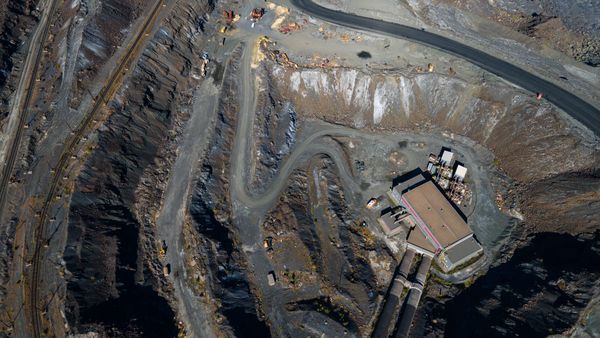
Sangdong is entering production as a major non-China tungsten source, with real value tied to ramp-up, recovery, and allied processing.
Every F-35 contains 418 kg of rare earths. US-bound magnet shipments fell 93% in May 2025. China did not need to fire a shot.
LFP cells cost USD 36/kWh in China. Nissan needs USD 65/kWh to break even on solid-state. That gap is the investment thesis, compressed to one number.
Not yet in full. Quantum clocks and gravimeters are already on submarines. A complete BEC-based IMU to replace GPS is 7 to 10 years out at minimum.
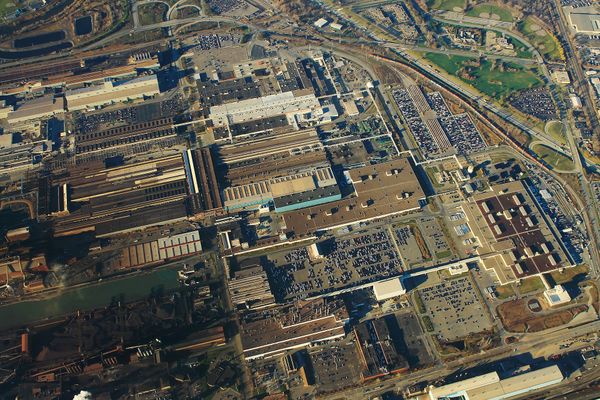
Local production, adaptive reuse, and shared infrastructure are reshaping communities after industrial decline.
China controls 94% of NdFeB production. A Virginia-class submarine contains 9,000 pounds of rare earths. Carbon nanotubes are one answer being tested.