From Hacker House to Cooperative Federation: A Practical Model for Community-Owned Infrastructure
How a hacker house can grow into a cooperative network of shared housing, businesses, land, tools, software, and productive assets.

A Minimum-Viable Strategy for Building Community-Owned Productive Infrastructure
Quick Summary
The conventional image of an intentional community begins with land. A group identifies a rural property, raises substantial capital, constructs housing, installs renewable-energy infrastructure, establishes agricultural systems, and then attempts to populate the resulting settlement with people capable of living and working together.
Due to the economic conditions of today, this sequence is financially unrealistic.
A custom-built ecovillage can easily require millions of dollars before its social model has been tested. It requires the existence of a relatively large founding group whose members possess significant capital reliable incomes, useful skills, and sufficient interpersonal trust to pool capital into an illiquid collective asset. Even where those conditions exist temporarily, the project must still survive ordinary failures: members leave, businesses underperform, construction exceeds budget, agricultural systems require more labor than expected, interpersonal conflicts emerge, and essential infrastructure deteriorates.
A more practical model begins at the opposite end of the problem.
Instead of asking how ten or fifty people can finance a finished cooperative settlement, it asks what two to four committed people can build with the resources they already possess.
The answer may be surprisingly modest: a cheap fixer-upper house, a shared workshop, a backyard garden, reliable internet, several computers, basic automation equipment, and a small pool of savings. Yet if these assets are deliberately organized, they can form the first node of something considerably larger.
The minimum viable cooperative technology community is a productive household that is capable of generating the financial, technical, and institutional capacity required to create another productive household.
Over time, several such nodes can form a federation. The strategic objective is not a single self-sufficient compound but an expanding network of community-controlled homes, workshops, businesses, research systems, agricultural experiments, and eventually larger parcels of productive land.
The cooperative innovation is sequencing.
1. The Capital Problem Is an Institutional Design Problem
Many cooperative and intentional-community proposals fail before they begin because their entry requirements are incompatible with the population they intend to serve.
If ten prospective members must each contribute $100,000 or $200,000, the resulting institution may be cooperative in its governance but economically inaccessible to most working people. The structure has solved the problem of collective ownership only for those who could already afford substantial private assets independently.
This is an ongoing issue with many Cohousing communities. If joining the group requires half a million in cash, or a multi decade financing loan; it's not inclusive, it becomes a cooperative in name only; and a gated community in functionality.
Cooperative Technology Villages must be designed so that ownership of productive land and infrastructure becomes accessible to people who could not individually afford those assets. If cooperative membership requires wealth comparable to purchasing a private homestead outright, the cooperative has failed its primary economic purpose.
A serious cooperative model should accomplish the opposite. Its purpose should be to enable people with relatively limited individual capital to obtain access to assets and capabilities that would be very difficult to acquire alone.
This requires abandoning the assumption that the first group must finance the final form of the institution.
A group of two to four people might instead accumulate $20,000, $40,000, or $60,000 and purchase an inexpensive existing property in a low-cost market. The house need not be architecturally impressive. In fact, cosmetic unattractiveness may be an advantage if it reduces acquisition cost without introducing catastrophic structural liabilities.
The ideal first asset is not a dream homestead. It is an underutilized platform: 2-4 bedrooms, a functional kitchen, broadband internet, ordinary electrical service, a basement or garage, a backyard, and enough physical space to experiment.
The strategic question is whether the property can lower the participants' cost of living while increasing their productive capacity.
1.5 - Types of Membership
All members participate in the wider federation to different degrees, but they share access to a common institutional layer: research, data, open-source software and tooling, mutual aid, shared knowledge, collaborative projects, and the broader cooperative network. What changes from one member type to another is mainly their relationship to property, governance, production, and equity.
- On-Site Founder
An on-site founder lives at one of the physical nodes and participates directly in both the strategic and day-to-day development of the institution. They hold equity in the residential asset, benefit directly from shared housing and infrastructure, and contribute to local production such as gardening, maintenance, workshops, automation, or property management. They can also participate in digital businesses, research, software, investing, or other remote economic activity. This is the most integrated membership role because the member participates simultaneously in governance, ownership, residence, and production. - Off-Site Founder
An off-site founder participates in the strategic direction of the cooperative and hold equity in one or more assets without living at the physical node. Their participation can be primarily financial, organizational, technical, or digital. They may contribute professional income, capital, research, software development, business operations, investment analysis, or other remote work. This model allows founding members to remain geographically distributed while still helping build and govern the institution. - Off-Site Ally
An off-site ally is part of the wider federation without necessarily sharing ownership of the original node. They may own their own house, farm, workshop, business, or other productive asset and choose to cooperate with the network while retaining independent ownership. Allies can participate in federation-level governance, mutual aid, shared research, open-source development, joint purchasing, agricultural experiments, technical projects, or remote digital production. Some may eventually invest in shared assets, while others may remain independent but closely affiliated nodes within the federation. - Potential Recruit / Developing Member
A potential recruit is someone exploring deeper participation in the network and building the skills, savings, and relationships necessary to become a more permanent member. They may be seeking affordable housing while gradually building equity in real estate, or they may primarily want access to practical learning opportunities such as gardening, home repair, IoT automation, digital work, open-source software, research, or cooperative business development. The objective is to create a pathway into ownership and productive participation rather than requiring every new member to arrive with substantial capital or an established professional skill set.
Shared Membership Layer
Regardless of category, members and affiliated participants can benefit from a common pool of research, data, software, technical documentation, open-source tools, training materials, mutual aid, institutional knowledge, and collaboration opportunities. The federation therefore does not require everyone to live together, own the same property, or perform the same kind of work. It creates several pathways through which people can contribute to—and benefit from—the same growing network.
2. The Hacker House as a Productive Cooperative
The first property can be understood as a modern version of a workshop household.
Residents live there, but residence is only one function. The same building may simultaneously serve as a digital business headquarters, research office, small fabrication space, training environment, food-production experiment, server rack and technological laboratory.
Most conventional households consume economic resources without deliberately building productive capacity.
A cooperative hacker house should progressively do both.
One room may accommodate a renting resident, reducing the property's carrying cost. Optionally; this rent could be established via a real-estate equity arrangement. A basement or garage can become a shared workshop instead of each participant independently purchasing tools. A backyard can begin as an ordinary vegetable garden and gradually become an instrumented agricultural testbed. Cheap microcontrollers, soil sensors, irrigation controls, energy meters, cameras, temperature probes, and open-source software can introduce sophisticated monitoring without requiring expensive commercial automation.
The digital layer is particularly important because it allows the economic ambitions of the community to exceed the limitations of its physical property.
A small urban or semi-rural house does not need to contain a factory or commercial farm to become economically productive. Residents can operate software businesses, publishing platforms, research services, consulting practices, investment operations, open-source projects, media or e-commerce businesses, or other geographically distributed enterprises.
The property therefore provides a low-cost physical base while the digital economy provides access to customers and collaborators far beyond it.
This combination is central to the model. The community participates in the modern global economy it from a position of lower costs and greater ownership.
3. Self-Reliance Should Be Built Marginally
The same incremental logic should govern food, energy, and infrastructure.
A common failure in technologically ambitious homesteading is to pursue autonomy through large upfront capital expenditures. A group imagines that it requires solar panels, batteries, hydroponics, aquaponics, a greenhouse, rainwater capture, electric vehicles, and extensive automation before the project can properly begin.
This requires resilience to be akin to a luxury product. The minimum-viable approach is more disciplined.
The first agricultural intervention may be a garden; costing hundreds rather than tens of thousands of dollars for a fully automated greenhouse. The group purchases inexpensive staple calories from the local economy while growing foods that are comparatively expensive, perishable, or rewarding to cultivate locally. Tomatoes, herbs, peppers, greens, berries, squash, potatoes, and other suitable crops can provide both economic savings and practical experience.
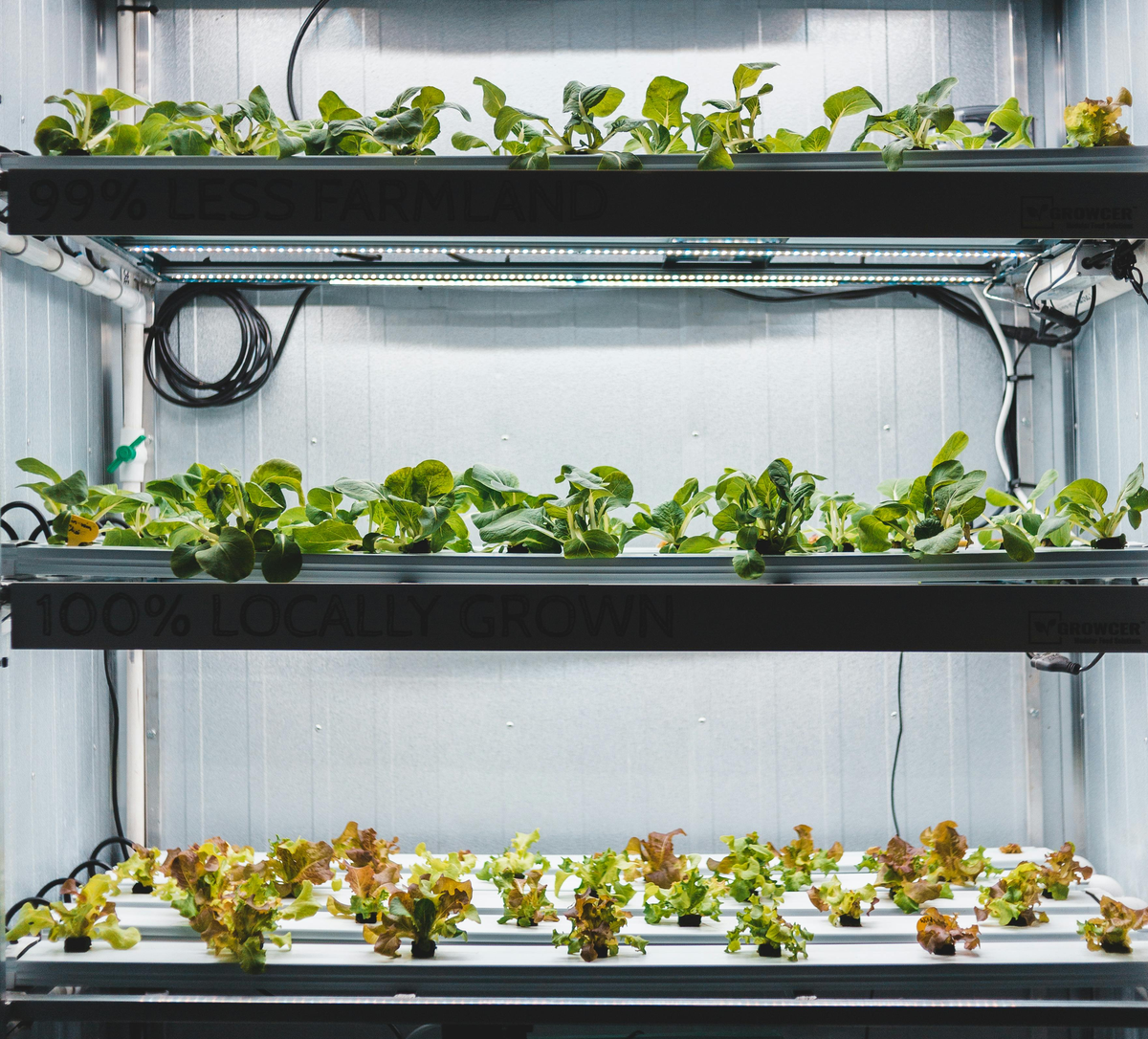
Only after establishing the traditional garden should the group consider a hoop house, greenhouse, hydroponic installation, aquaponics system, or more advanced controlled-environment agriculture.


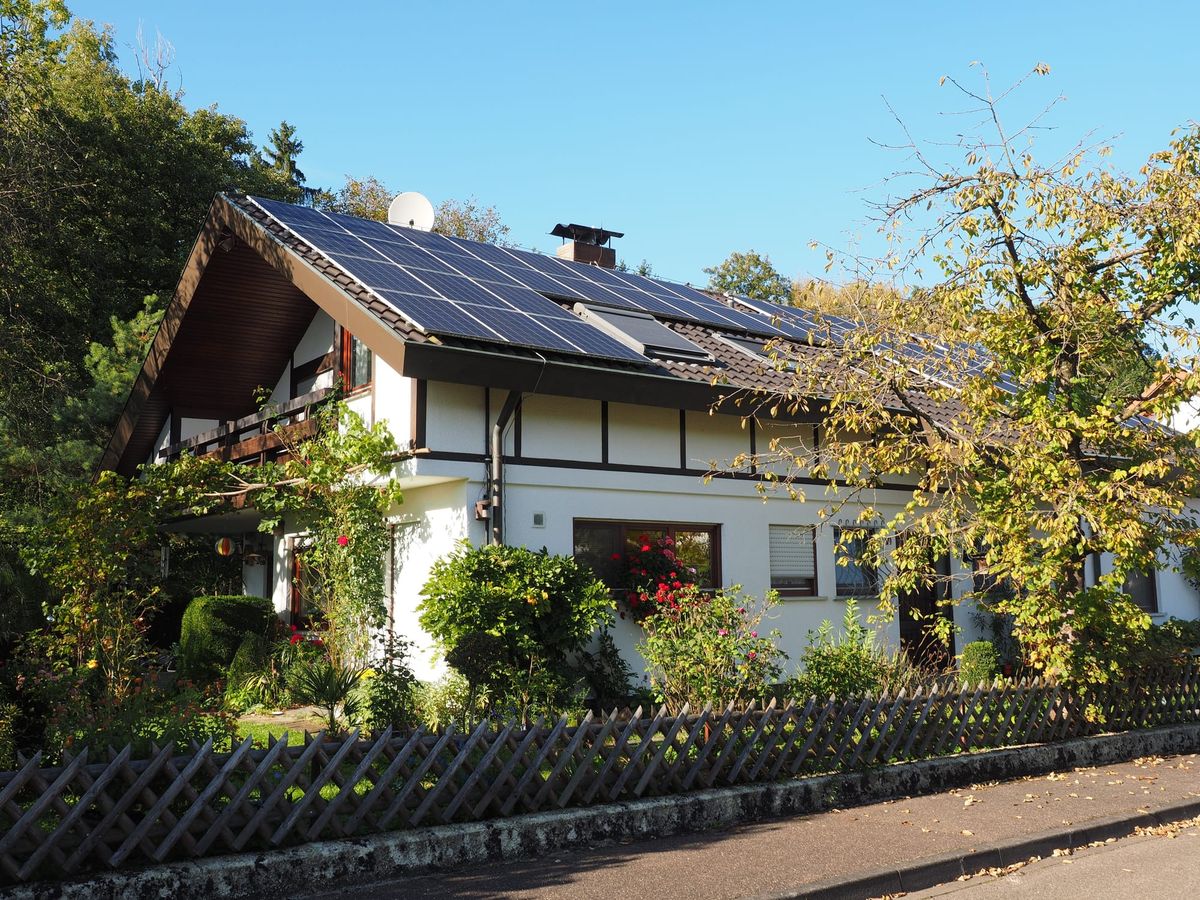
Energy development should proceed similarly. A structurally sound roof, safe electrical system, functioning plumbing, weatherization, and cash reserves generally deserve priority over photovoltaic capacity. Actual energy consumption should be measured before deciding what solar system is appropriate. Grid electricity can remain a redundancy layer while on-site generation is gradually expanded.
Self-reliance becomes a long-term cumulative project rather than an expensive feature purchased at inception.
4. The First Objective Is Lower Required Cash Burn
The most useful measure of success for the first node is the amount of external cashflow each resident requires to maintain a stable and productive life.
Housing costs can decline through shared ownership and room income. Food expenditure can decline through bulk purchasing, shared cooking, gardening, preservation, and reduced waste. Tools and workshop equipment can be shared. Utilities can decline through efficiency improvements and eventually renewable generation. Transportation can be partially shared. Digital businesses can generate external revenue from infrastructure that serves multiple residents.
The resulting economic model is cumulative.
A household that once required four individuals to independently finance four sets of rent, internet service, appliances, tools, storage, transportation, and workspaces can increasingly substitute shared productive infrastructure.
This does not eliminate private space or personal finances. Cooperative ownership is valuable precisely because it allows selective sharing where sharing produces true efficiencies.
The long-term objective is a household in which residents possess greater access to land, tools, food production, knowledge, digital infrastructure, and productive assets while requiring less external cash simply to remain housed and economically functional.
5. The First Node Must Produce the Second Node
A single inexpensive property can reduce housing costs and provide a useful base of operations, but its strategic importance emerges only when it begins contributing to the acquisition of additional productive assets. The long-term model therefore depends on more than simply owning a cheap house. The first node must gradually become part of a financial system in which savings, professional income, business revenue, rental cash flow, reduced household expenditures, and accumulated property equity reinforce one another.
Consider a first property whose operating costs decline over time. A spare bedroom may generate rental income, while residents continue earning wages or professional income outside the property. A digital business can produce revenue without requiring a large physical footprint. A garden may reduce a portion of food expenditures, shared tools can eliminate unnecessary household duplication, and incremental renovations can improve both the usefulness and the market value of the property. None of these measures is likely to transform the group's finances on its own. Their importance comes from accumulation: several modest efficiencies and revenue streams can gradually produce a meaningful surplus.
The treatment of that surplus is critical. If every improvement in the group's financial position is absorbed by higher personal consumption, the institution remains static. A portion of the savings and income generated by the first node should instead be retained deliberately as next-node capital. This creates a common pool dedicated to expansion rather than ordinary household spending. Over time, contributions from wages, rental income, business profits, cost savings, and other sources can build a reserve large enough to support another acquisition without requiring the founders to recreate the entire original capital pool from scratch.
Once the group has accumulated perhaps $50,000, $75,000, or $100,000 in liquid capital alongside a demonstrated operating history, its strategic position changes considerably. The next acquisition might be another inexpensive house, a property with additional acreage, a dedicated workshop, or a larger cooperative homestead. The exact asset is less important than the fact that the group now approaches it with more than enthusiasm and personal savings. It has experience managing property, records of actual expenses, established income streams, shared equipment, known working relationships, and a clearer understanding of which investments reduce costs or increase productive capacity.
This is the point at which the first node begins functioning as more than a residence. The second asset is financed partly by the economic system that developed around the first one. Rental income may contribute to the capital pool, business revenue may finance improvements, accumulated equity can strengthen the group's balance sheet, and lower living expenses can increase individual saving capacity. The organization begins to reproduce capital internally rather than depending entirely on new injections of founder money.
The resulting process can be understood as an institutional flywheel: shared property lowers certain fixed costs; lower costs create room for productive activity and savings; productive activity generates additional income and capabilities; retained surplus becomes expansion capital; expansion capital acquires additional productive assets; and those assets further increase the institution's capacity to generate savings, revenue, and resilience. Each cycle is imperfect and subject to setbacks, but the direction of development is cumulative.
This makes the objective broader than simply increasing the number of properties under common ownership. A poorly managed second house can create more liabilities than productive capacity, just as an expensive greenhouse or workshop can consume capital without generating proportional value. Expansion should therefore occur only when a new asset clearly improves the network's economics, capabilities, or resilience. In some cases, the best next investment may not be another house at all; it could be a workshop, a revenue-producing business, agricultural equipment, or a larger reserve that improves the group's ability to withstand failure.
What ultimately matters is the emergence of capital reproduction at the institutional level. The founders begin with modest personal savings, but the long-term organization should become progressively less dependent on repeated sacrifices from those same individuals. If the first node can help finance the second, and the first two together can help finance the third, the project begins to develop an internal mechanism for growth. At that point, cooperative ownership becomes more than a method of sharing a house. It becomes a means of converting accumulated income, knowledge, labor, and property into an expanding base of collectively useful assets.
6. Federation Is More Practical Than Centralization
The long-term form of the project does not need to converge on a single large communal estate. In many cases, a distributed network of smaller properties and participants may be more resilient, easier to finance, and more adaptable than attempting to place every resident, business, workshop, agricultural system, and investment activity on one site. Different properties can serve different functions according to their location, physical characteristics, ownership structure, and the people already connected to them.
One property might function primarily as a residential hacker house and digital operating base, while another provides several acres for agricultural experimentation, sensor deployment, or small-scale food production. A member who lives elsewhere may still contribute professional income, software development, research, administration, or investment analysis without needing to relocate. A participant in another country could eventually establish an independent local counterpart suited to a different legal and economic environment. Other aligned households or organizations might remain separately owned while cooperating through shared technology, research, procurement, training, governance templates, and mutual assistance.
This arrangement is better understood as a federation than as a conventional commune. Membership in the wider institution would not require every participant to have the same relationship to land, housing, work, or capital. A person could work in a digital enterprise without residing at a physical node; a collaborator could provide access to agricultural land without transferring ownership of the property; a resident could participate in housing and community operations without joining an investment activity; and a technically skilled contributor could maintain software or automation systems from hundreds of miles away. The network can therefore incorporate useful people and assets without requiring everyone to reorganize their lives around a single location.
That flexibility substantially reduces the organizational burden associated with intentional communities. Centralized projects often require a large number of decisions to be resolved simultaneously: where everyone will live, how all property will be owned, which members are permitted to work remotely, how income will be shared, how land will be allocated, and what happens when individual priorities change. A federated model allows many of those relationships to develop gradually. It can connect assets and participants that already exist, while reserving deeper forms of collective ownership for situations where they provide a clear practical advantage.
Over time, the network itself becomes a form of infrastructure. Each node can contribute something different: housing capacity, rental income, agricultural space, workshop equipment, technical expertise, digital services, professional income, local relationships, or institutional knowledge. Because these resources remain distributed, the failure or departure of any one participant does not necessarily destabilize the entire organization. The network can also expand without requiring every new member to fit into a single property or governance structure.
A larger cooperative homestead may eventually emerge within this system, perhaps on five, ten, twenty, or more acres. Such a property could support more substantial food production, renewable-energy systems, shared workshops, additional housing, storage, and experimental infrastructure. By that stage, however, the acquisition would be undertaken by a group with operating history, accumulated capital, known working relationships, property-management experience, established businesses, and tested technical systems. The larger property would therefore represent an expansion of an existing institution rather than an attempt to create one from scratch.
That sequencing may be one of the strongest sources of resilience in the model. Instead of concentrating financial, social, and operational risk in a single early-stage project, the federation grows by linking smaller successes together. The eventual cooperative village becomes part of a broader network of productive nodes, each capable of supporting the others while retaining enough autonomy to adapt, specialize, and survive independently.
7. The Model Is Fundamentally an Institution-Building Strategy
The deeper value of the minimum-viable framework lies in the fact that the community itself can become a compounding asset. Each practical project undertaken by the group produces more than its immediate material output.
Rather than solely focusing on capital gains; members who participate in hands-on projects develop skills in specialized areas and can further their careers.
A garden produces food, but it also develops agricultural knowledge, seasonal planning experience, familiarity with local growing conditions, and an understanding of how much labor is actually required to maintain a productive system.
A renovation improves a building, but it simultaneously develops construction skills, procurement knowledge, cost estimates, tool inventories, and the ability to evaluate future properties with more due diligence. An automated irrigation system may initially be little more than a collection of inexpensive sensors, microcontrollers, valves, and software, yet building and maintaining it develops technical competence that can later be applied to greenhouses, energy systems, water management, or products offered to outside customers.
The same accumulation occurs on the organizational side. Renting a spare bedroom forces the group to develop basic property-management procedures and expectations around shared space. Serving the first online customer creates experience with pricing, deadlines, contracts, delivery, and revenue generation. Disagreements test whether decision-making processes are sufficiently clear, while the departure of a participant tests whether ownership, responsibilities, intellectual property, and financial contributions were documented well enough to survive changes in membership. Even mundane operational problems become forms of institutional learning when they are recorded rather than repeatedly rediscovered.
When linking all of these concepts, tools, and institutional knowledge together: the synthesis is a dense package of useful resources. Under an open-source framework, this contributes to the global commons.
Over time, these experiences create a body of practical competence that is difficult to purchase directly. The group begins to accumulate not only financial capital and physical assets, but also procedures, supplier relationships, repair skills, technical documentation, governance norms, business knowledge, and an increasingly realistic understanding of what it can and cannot operate effectively. The first property may build equity, but its greater strategic contribution is that it teaches the organization how to acquire, renovate, maintain, finance, and govern property. A successful second acquisition is therefore important for more than the additional real estate it provides: it demonstrates that the process can be repeated.
This distinction is central to the long-term model. A mature cooperative technology village might eventually include housing, agricultural land, workshops, renewable-energy systems, digital businesses, open-source software, investment activities, research infrastructure, and several forms of shared productive equipment. Yet simply possessing those assets would not guarantee a durable institution. Their long-term value depends on whether the organization has developed the capacity to operate them, replace them, finance new ones, train additional members, resolve disputes, preserve knowledge, and reproduce its model elsewhere.
The most important form of capital is therefore the organization's growing ability to combine modest amounts of money, labor, knowledge, property, and social trust into increasingly sophisticated productive systems. Once that capacity exists, the physical village becomes one expression of the institution rather than its only possible form. A house can become a node; several nodes can become a local network; a local network can eventually support larger cooperative properties; and successful properties can provide capital, expertise, and personnel for additional communities.
Seen this way, the long-term objective is larger than constructing a single successful settlement. It is to develop a repeatable institutional process through which ordinary people can progressively acquire productive assets, learn to govern them, and use the resulting surplus and expertise to establish additional nodes. The durable achievement would therefore be the creation of an organization capable of reproducing the conditions that made the first community possible, and eventually, of helping create additional communities without requiring each new group to begin again from nothing.
Conclusion
A realistic cooperative technology settlement does not need to begin with fifty acres, a professionally designed master plan, extensive agricultural infrastructure, and millions of dollars in committed capital. In fact, requiring those conditions at the beginning would place the project beyond the reach of many of the people cooperative ownership is supposed to benefit. A more credible starting point may consist of only two to five committed participants, several 10-20k dollars in combined savings, an inexpensive three-bedroom house in need of light repairs, a garage or basement filled gradually with used tools, a small vegetable garden, reliable broadband, several computers, inexpensive sensors, and enough financial discipline to preserve and reinvest whatever savings the arrangement creates.
Such a beginning may appear unimpressive when compared with renderings of a finished ecovillage containing large solar arrays, greenhouses, workshops, laboratories, agricultural acreage, and purpose-built housing. From an institutional perspective, however, a modest first property can contain many of the elements necessary for long-term development. It establishes a physical node under the control of the participants, provides a place where people can live and work together, creates opportunities to share tools and reduce duplicated expenses, and gives the group a controlled environment in which to experiment with gardening, automation, property management, remote work, digital enterprise, and cooperative decision-making. Most importantly, the property creates the possibility of accumulating equity and financial surplus rather than requiring every dollar of housing expenditure to leave the community permanently.
The first node should therefore be evaluated by how effectively it increases the capabilities of the people using it. A modest garden that reduces grocery spending by 15% while teaching agricultural skills may be more useful than an expensive greenhouse installed prematurely. A garage workshop assembled from used equipment may contribute more to the community's practical resilience than a professionally designed makerspace financed with debt. A spare bedroom that produces several hundred dollars of monthly recurring income can be more strategically valuable than converting the same room into a specialized facility before the organization has sufficient cash flow. Even inexpensive automation systems can begin building technical knowledge that later transfers into larger agricultural, energy, building-management, and monitoring systems.
The development process is therefore cumulative. The group acquires an inexpensive productive property and first makes it safe, stable, and financially manageable. It then improves the property's usefulness through repairs, shared infrastructure, food production, workspace, technological experimentation, and income-generating activities. As operating costs decline and external income increases, some portion of the resulting surplus is retained rather than absorbed entirely into consumption. That retained capital can eventually support another acquisition, a larger workshop, agricultural land, additional housing, or some other asset that expands the productive capacity of the network.
The process can be summarized as a repeating institutional sequence:
1. acquire one inexpensive productive asset
2. stabilize it
3. increase its usefulness
4. reduce its operating burden
5. develop businesses and practical capabilities within it
6. connect it with other people and properties
7. retain a portion of the resulting surplus
8. and use that accumulated capital to acquire the next node.
The value of this sequence is not in any individual property but in the possibility that each stage makes the next one easier to achieve.
Over time, a network built in this manner may begin to resemble a much more ambitious and influential cooperative technology village. Several inexpensive houses can provide residential capacity and rental income. Allied properties can supply agricultural land or workshop space. Digital enterprises can connect geographically dispersed members and generate revenue independent of local land productivity. Larger properties can eventually support renewable-energy systems, more substantial agriculture, fabrication facilities, research activities, and additional residents. Separate nodes can specialize while sharing knowledge, software, financing mechanisms, procurement networks, and governance practices.
The difference is that this larger system would emerge from demonstrated capabilities rather than from a large speculative capital raise. Instead of constructing an institution from the top down and hoping that a viable community subsequently forms around it, the physical infrastructure grows alongside the relationships, businesses, technical competence, and governance systems required to operate it. Each expansion is therefore supported by a larger base of experience than the one before it.
This bottom-up approach also changes the meaning of scale. Growth does not necessarily require transforming the original property into an increasingly large communal estate. The first house may remain useful indefinitely as housing, a digital-business headquarters, a training site, or an income-producing property even after a larger cooperative homestead has been acquired elsewhere. New properties can become additional nodes rather than replacements for the old ones, allowing the institution to accumulate a distributed portfolio of productive assets while avoiding excessive dependence on any single location.
The central proposition of the model is straightforward: Begin with the smallest asset capable of increasing those capacities and helping finance the next one, while the institution itself develops the capacity to produce capital, knowledge, and trust. This makes the early stage less visually impressive, but it also makes participation possible for people who do not begin with extraordinary wealth.
The Cooperative Technology Village is ultimately an institutional process, rather than a particular piece of land. Its defining capability is the conversion of modest individual resources (savings, labor, professional income, technical skills, existing property, relationships, and accumulated knowledge) into progressively more capable forms of shared infrastructure and ownership. If that process can be repeated successfully, the resulting organization can grow from a single inexpensive house into a network of homes, businesses, workshops, agricultural systems, digital platforms, research programs, and larger cooperative properties without requiring the founders to possess the resources necessary to build the final vision on the first day.
The long-term achievement, then, would not simply be the construction of one successful village. It would be the creation of a recursive institution capable of turning one viable node into several, and several nodes into a durable cooperative economic network.
Historical and Future Considerations:
From MONDRAGON to an Open Cooperative Commons
There is an important historical precedent for the idea that a cooperative institution can begin with relatively modest resources and gradually develop into an economic ecosystem far larger than any of its original participants could have constructed individually. MONDRAGON, based in Spain's Basque Country, traces its origins to the work of José María Arizmendiarrieta, who arrived in the industrial town of Mondragón in 1941. His early emphasis was on developing people. A vocational school began operating in the 1943–44 academic year with only twenty-one students. Several of the young workers influenced by that educational project later created ULGOR in 1956, the industrial cooperative that became the foundation of the wider Mondragón cooperative movement. A cooperative financial institution, Caja Laboral Popular, followed in 1959 and helped provide financing and institutional support for the creation of additional cooperatives.
The result, seventy years later, is an interconnected system of autonomous cooperative enterprises and supporting institutions. MONDRAGON comprises ~90 autonomous cooperatives and employing more than 71,000 people.
Its innovation ecosystem also includes technology centers, educational institutions, and mechanisms for creating new businesses.
A Cooperative Technology Village operating under free and open-source software principles could extend this logic. Its contribution to the broader social economy is the accumulation of open institutional knowledge. Every problem solved by one node can potentially reduce the difficulty of establishing the next. Software for cooperative accounting, property management, energy monitoring, garden automation, shared purchasing, member onboarding, voting, maintenance scheduling, research management, or local inventory systems could be published under appropriate open-source licenses. Hardware designs, sensor configurations, agricultural experiments, construction checklists, governance templates, training materials, procurement databases, and operating procedures could likewise be documented and released into a common knowledge base.
A private enterprise has an incentive to keep its operational knowledge proprietary because that it represents competitive advantage. A FOSS-oriented cooperative network can deliberately treat a substantial portion of its accumulated technical and institutional knowledge as shared infrastructure. One community's solution to inexpensive greenhouse monitoring, for example, could become another community's starting point. A property-management workflow developed for five cooperative houses could be adapted by an unrelated emergent group managing three. A governance system refined through years of practical disagreements could spare another cooperative from repeating the same institutional mistakes.
The effect is cumulative. Node Zero must discover how to acquire property, structure ownership, renovate inexpensively, share tools, manage residents, automate basic systems, operate digital businesses, maintain financial records, govern common assets, and retain surplus for expansion. If the useful portions of that experience are documented as software, templates, datasets, manuals, case studies, and open standards, the cost of cooperative formation can decline as the network becomes more experienced. Institutional knowledge begins behaving somewhat like open-source software itself: each participant can use what already exists, adapt it and return improvements to the commons.
Contribution to the Social Economy
This is where the model could contribute to the wider social economy. The objective is to develop a pathway for people who possess more willingness than wealth, to progressively become owners of productive assets.
A prospective member may initially possess little capital but an income, skills, or simply a willingness to learn. Cooperative ownership allows those different forms of contribution to be combined over time rather than requiring every participant to arrive with enough money to independently purchase a house, workshop, acreage, solar installation, and business infrastructure.
The broader social value comes from turning participation into a pathway toward ownership. An artist who could not justify buying a workshop may gain access to collectively owned tools. An apprentice without a technical background may acquire practical skills by working alongside more experienced members. An individual who can't afford a house may gradually build equity through a cooperative housing arrangement. A student capable of software development may contribute tools that increase the productivity of properties they do not personally inhabit. Different members contribute different forms of capital; financial, technical, professional, physical, intellectual, or social, and the institution converts those contributions into assets that become progressively more useful to the group.
The federation can compound assets internally while simultaneously externalizing knowledge into the commons.
 John D
 John D
 John D
 John D