SR-72 "Son of Blackbird" in 2026: Is It Real? The Evidence
No evidence the SR-72 has flown. We weigh Lockheed's filings, $1.8B in unnamed classified losses, and TBCC limits to assess its 2026 status.

1. Bottom Line Up Front
As of September 28, 2026, no public statement or documentary evidence shows that an SR-72 flight research vehicle has flown. Our best-supported assessment is that the SR-72 now exists, at most, as a company-funded and possibly classified technology line, not as a funded program of record. This view rests on three assumptions: that a Mach 6 air-breathing flight campaign could not have run for years without leaving a budget, workforce or test-range trace; that DARPA's 2025 description of reusable hypersonics as still immature is candid; and that Lockheed Martin would not describe a successful program in the loss-disclosure language it has used since 2021.
First, Lockheed never made the "2025" first-flight benchmark on the record. The claim goes back to one unattributed sentence in a November 2018 general-news article saying a prototype would fly "before 2025" [1]. The named-official timelines were 2018 for the start of demonstrator work (2013), a 2023 demonstrator flight (2013 to 2014 coverage) and "early 2020s" (2017), and in 2018 an executive said "unequivocally" that the aircraft "has not been built" [2][3][4][5].
Second, the classified Aeronautics losses are real and exactly documented, with cumulative losses of about $1.8 billion across two contract phases as of December 31, 2025 [6]. Lockheed does not name the program, though, and the disclosed features (a fixed-price incentive fee structure with options for later phases, software-driven problems, multiple customers and expected production) fit a near-production classified aircraft at least as well as a hypersonic demonstrator.
Third, no public program has shown reusable, runway-launched turbine-to-scramjet flight. The public record ends at 210 seconds of expendable scramjet flight (X-51A, 2013), rocket-powered reusable Mach 5 flight (Talon-A2, 2024 to 2025) and a Mach 1.21 turbine flight on the F100-powered Quarterhorse Mk 2.1's third test flight (Hermeus, May 2026) [7][8][9]. Fourth, the demand signal is weak. The Air Force Research Laboratory (AFRL) halted its Mayhem hypersonic ISR-and-strike effort because "the operational pull is not clear enough" [10], and the Pentagon's hypersonic research request fell from $6.9 billion in FY2025 to $3.9 billion in FY2026 [11]. For investors, the SR-72 does not drive Lockheed's valuation. The exposure that matters is the fixed-price classified-program risk now on the balance sheet.
 Stefano D’Urso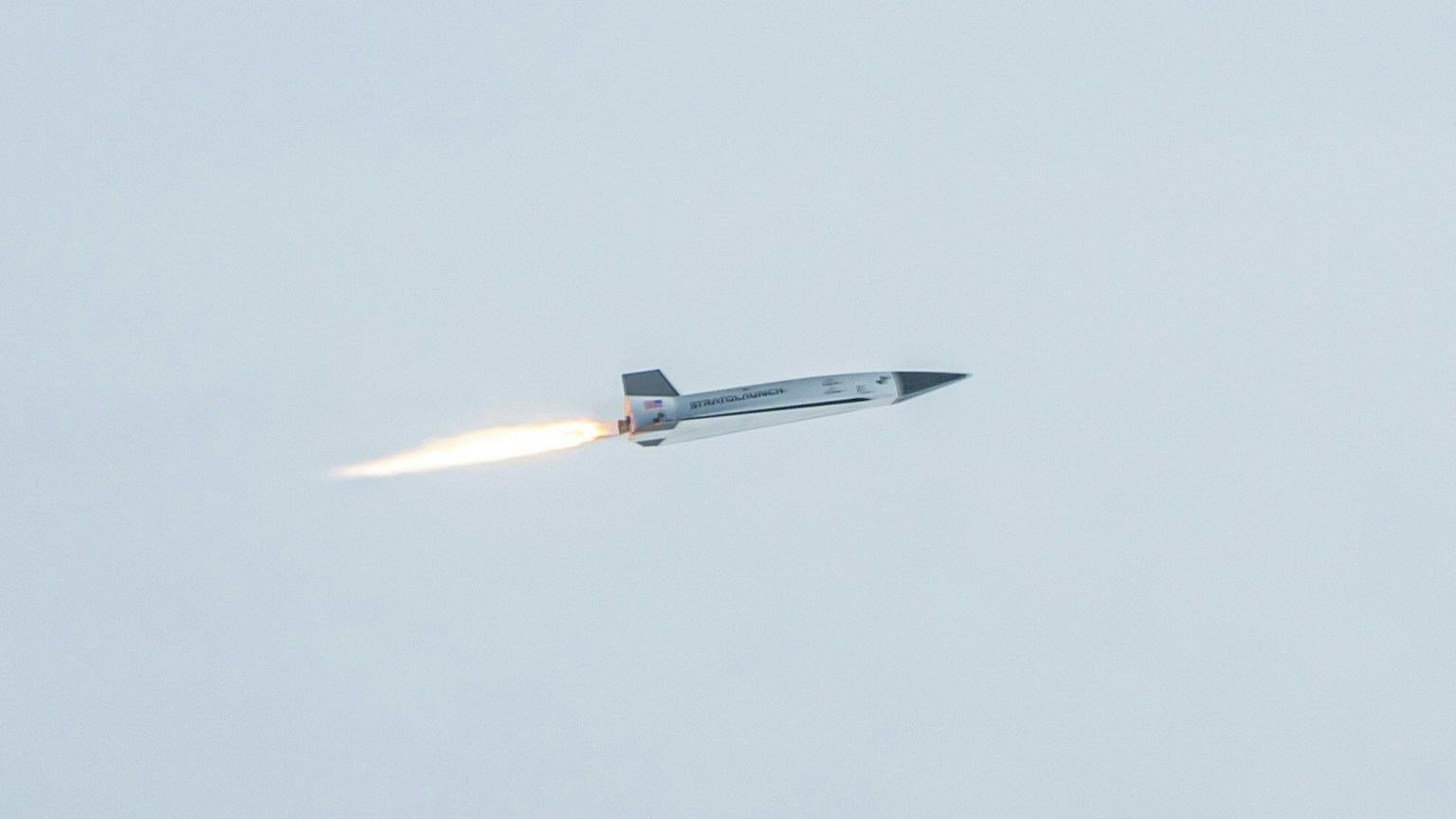
2. Background
2.1 The evidentiary frame.
This report sorts claims into three tiers.
Tier (a) covers on-the-record statements by Lockheed Martin, the Air Force, NASA or DARPA.
Tier (b) covers documentary evidence: SEC filings, contract awards, budget documents and facility signals.
Tier (c) covers media reporting, alleged sightings, concept art and fiction, including the "Darkstar" of Top Gun: Maverick (2022). Tier (c) material is used here only as evidence of corporate messaging. The Darkstar was a film prop whose resemblance to Lockheed's concept art prompted foreign commentary [12], and it tells us nothing about real hardware.
2.2 The 2013 reveal and the stated roadmap.
Aviation Week first reported the SR-72 on November 1, 2013, describing a Skunk Works plan for an "affordable" Mach 6 ISR and strike aircraft [2]. At the time Lockheed hypersonics program manager Brad Leland described an optionally piloted flight research vehicle (FRV) about the size of an F-22, with one full-scale engine, able to fly for several minutes at Mach 6. Demonstrator development could begin as early as 2018 and the operational aircraft was aimed at 2030, in line with an Air Force roadmap that wanted a hypersonic strike weapon by 2020 and penetrating ISR by 2030 [13]. Coverage in 2013 and 2014 also quoted Leland saying Lockheed and Aerojet Rocketdyne had "developed a way to work with an off-the-shelf fighter-class engine like the F100/F110," and gave a demonstrator flight by 2023 [3].
2.3 Propulsion partnership and the NASA study.
Lockheed's turbine-based combined cycle (TBCC) work with Aerojet Rocketdyne has been reported as dating to 2006 [14]. It followed documented government contracts: a $40 million DARPA Falcon subtask (2006 to 2009), an $8.4 million DARPA/AFRL Mode Transition (MoTr) task (2009 to 2010) and a $0.7 million AFRL AVIATR task order (2012 to 2013) [15]. In December 2014 NASA issued Task Order NNC15TA03T, firm fixed price at $892,292, for a "parametric design study to establish the viability" of a TBCC system combining "near-term turbine engine solutions and a very low Mach ignition Dual Mode RamJet" in the SR-72 concept [15]. NASA separately paid Aerojet Rocketdyne $1,099,916 for mode-transition research [15]. The scale is the point: these tier (b) documents total under $51 million over eight years, which is study money, not aircraft development. L3Harris Technologies (NYSE:LHX) closed its purchase of Aerojet Rocketdyne on July 28, 2023 [16], in an all-cash deal announced at $4.7 billion including net debt [17].
2.4 Executive statements, 2016 to 2018.
In March 2016 then-CEO Marillyn Hewson said of hypersonics, "This could forever change our ability to deter and respond to conflict" [18]. That is a broad statement about the technology, not SR-72. In June 2017 Skunk Works chief Rob Weiss told Aviation Week, "I can't give you any timelines or any specifics on the capabilities" [15], and he also said "the technology is mature" [14]. In 2017 Orlando Carvalho, then executive vice president of Aeronautics, said the Palmdale team was "doubling down on our commitment to speed" and that "security classification guidance will only allow us to say the speed is greater than Mach 5" [4]. At AIAA SciTech in January 2018, Jack O'Banion, vice president of strategy and customer requirements at Advanced Development Programs, said that "without the digital transformation, the aircraft you see there could not have been made," adding that the engine "would have melted down into slag if we had tried to produce it five years ago" [4]. Carvalho then told FlightGlobal, "I can tell you unequivocally that it has not been built," and said O'Banion's words had been taken out of context [5]. Read precisely, O'Banion was talking about digital design capability in front of a concept image, and Carvalho denied that any aircraft existed.
2.5 The missed 2025 benchmark.
We found no primary or trade-press source in which a named Lockheed official promised a flight in or by 2025. The earliest source is a Business Times article of November 23, 2018 stating that "Lockheed Martin said a prototype of the SR-72 is scheduled to fly before 2025," with no named speaker, venue or link [1]. The CNBC article it links to gives only a 2030 operational expectation [18]. Later outlets restated the claim as "by 2025" without sourcing it [19]. Lockheed has said nothing on the record about the SR-72 since then. Secondary outlets report that SR-72 material was removed from the company website in 2018, which we could not verify from a primary source [20].
Five explanations compete, and an unacknowledged flight is the weak but plausible. A Mach 6 FRV would need range time and would leave infrastructure signatures, and DARPA's February 2025 solicitation for Next Generation Responsive Strike (Next RS) asks for technologies "that close the gap between the state-of-the-art in reusable hypersonics and the level of technical maturity required" to begin a design program "later this decade" [21]. That wording is hard to square with a government customer already flying a Mach 6 reusable TBCC aircraft, although a compartmented program could in principle sit outside DARPA's view. Cancellation of a program of record is also hard to support, because the tier (b) record never shows one being established. The evidence best fits delay combined with absorption. Lockheed pitched a demonstrator that the government never funded at scale, and the government's reusable hypersonic ISR-strike requirement moved first to AFRL's Mayhem and then to DARPA's Next RS, while Lockheed probably continues internally funded or classified enabling work that cannot be observed.
3. Key Players
3.1 Lockheed Martin and Skunk Works.
Lockheed is the only company publicly tied to the SR-72 name. Its Aeronautics segment reported first-half 2026 sales of $15.07 billion and operating profit of $1.38 billion, out of company sales of $38.08 billion [22]. The company also produced the air-launched ARRW boost-glide weapon, for which the Air Force requested $387.1 million in FY2026 after skipping FY2025 funding [23]. That makes Lockheed's hypersonic revenue today primarily a missile business.
3.2 L3Harris (via Aerojet Rocketdyne).
L3Harris took on Aerojet Rocketdyne's combined-cycle heritage in the 2023 acquisition [16]. No SR-72 revenue has been disclosed, and any TBCC work would be too small to separate within the segment.
3.3 Adjacent competitors and suppliers.
Northrop Grumman (NYSE:NOC) builds the scramjet for the Air Force's Hypersonic Attack Cruise Missile (HACM) [24]. It is also widely reported, without official confirmation, to fly the RQ-180 stealth ISR aircraft, the platform most often cited as the Air Force's chosen answer to penetrating ISR [25]. RTX (NYSE:RTX) is the HACM prime through Raytheon, whose contract value reached nearly $1.4 billion through a $985 million 2022 award and a $407 million 2023 award, according to DefenseScoop, and which, according to GAO, projects it "will significantly exceed its cost baseline" [24][26]. RTX's Pratt & Whitney F100 also powers Hermeus's Quarterhorse Mk 2.1 [27]. Boeing (NYSE:BA) built the X-51A [7]. Leidos (NYSE:LDOS) was prime on Mayhem under a $334 million-ceiling contract and partnered with Stratolaunch on the Pentagon's MACH-TB test program [10][8]. Kratos Defense & Security Solutions (NASDAQ:KTOS) was on the Mayhem design team [28]. Hermeus and Stratolaunch are private. We found no documentary link between GE Aerospace (NYSE:GE) and the SR-72, although DARPA's Next RS interest in a 30,000 to 38,000 lbf high-Mach turbine built on "an existing core" is clearly relevant to large engine makers [21].
 John D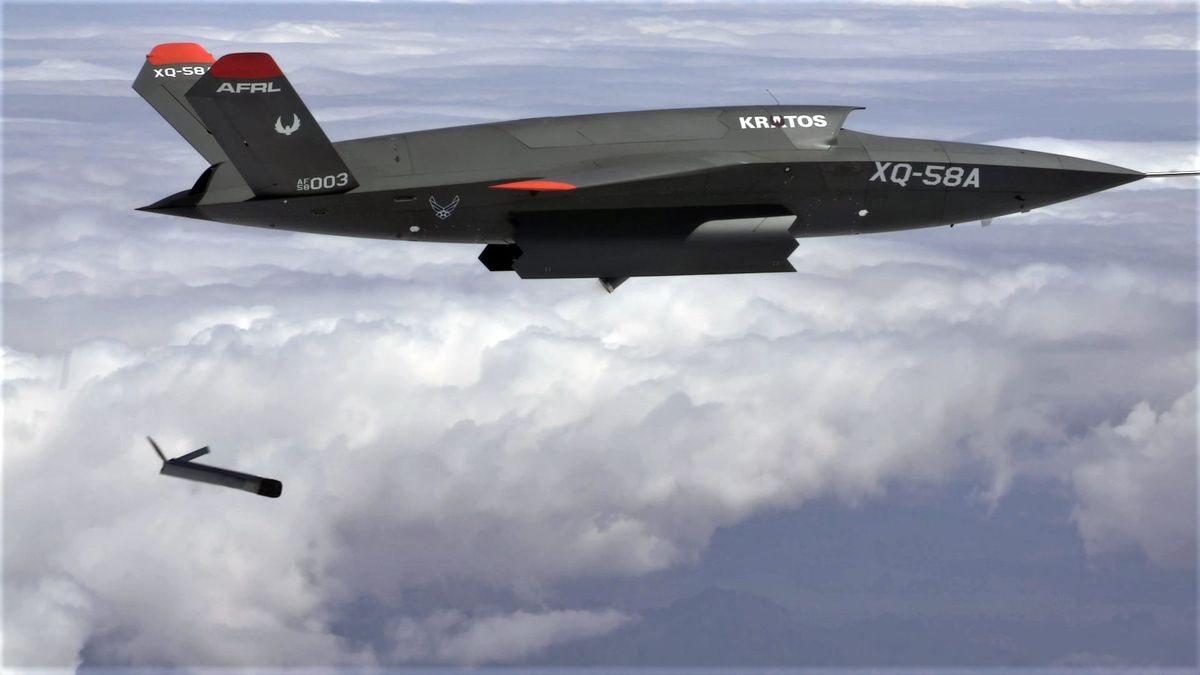
4. Technical and Operational Considerations
4.1 Mode transition and the thrust gap.
The TBCC problem is at root a thermodynamic one. NASA's 2014 task order text says current turbine technology "is suitable for speeds up to Mach 2.5," beyond which inlet air temperature forces lower compressor pressure ratios and thrust falls [15], while scramjets "only begin to operate at speeds above Mach 4" [29]. Between the turbine's ceiling and the point where a ramjet takes over, the vehicle has too little thrust exactly where drag peaks near the transonic-to-supersonic range. This is why NASA funded Lockheed to study a "very low Mach ignition" dual-mode ramjet, and why DARPA's 2025 Next RS notice still seeks "continuous powered operation of a Turbine Based Combined Cycle (TBCC) propulsion system over the entire flight envelope" and a high-Mach turbine able to transition "without the need for water injection" [15][21]. We read DARPA's wording as the strongest tier (a) evidence available that the transition problem has not been solved at a maturity suitable for a program, at least in any unclassified government program. No public vehicle has flown a turbine-to-ramjet-to-scramjet handover. The SR-72 concept requires it twice on every sortie, once accelerating and once descending, on the same airframe many times over.
4.2 Thermal management and materials.
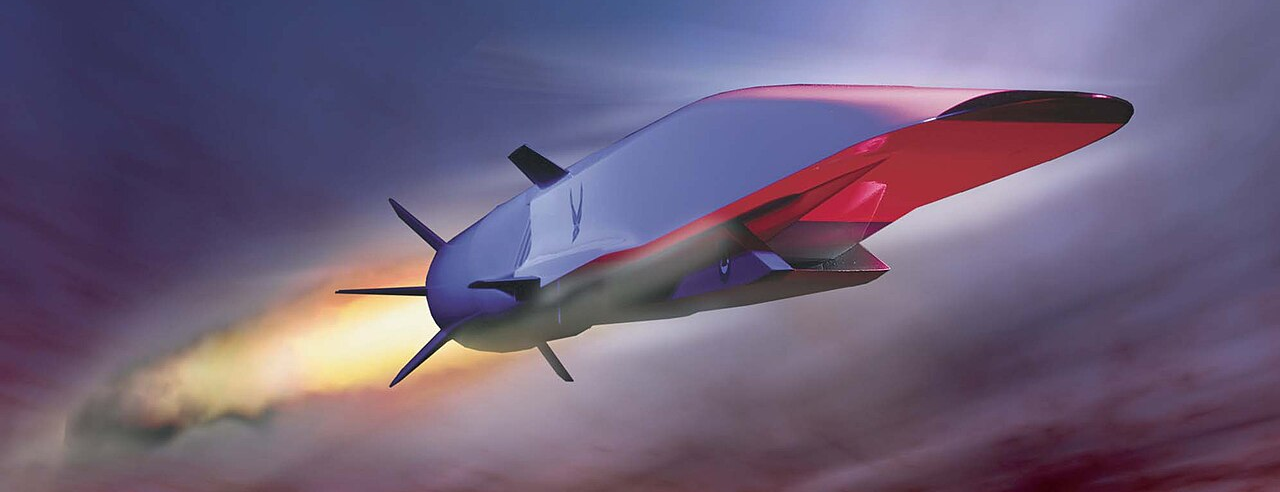
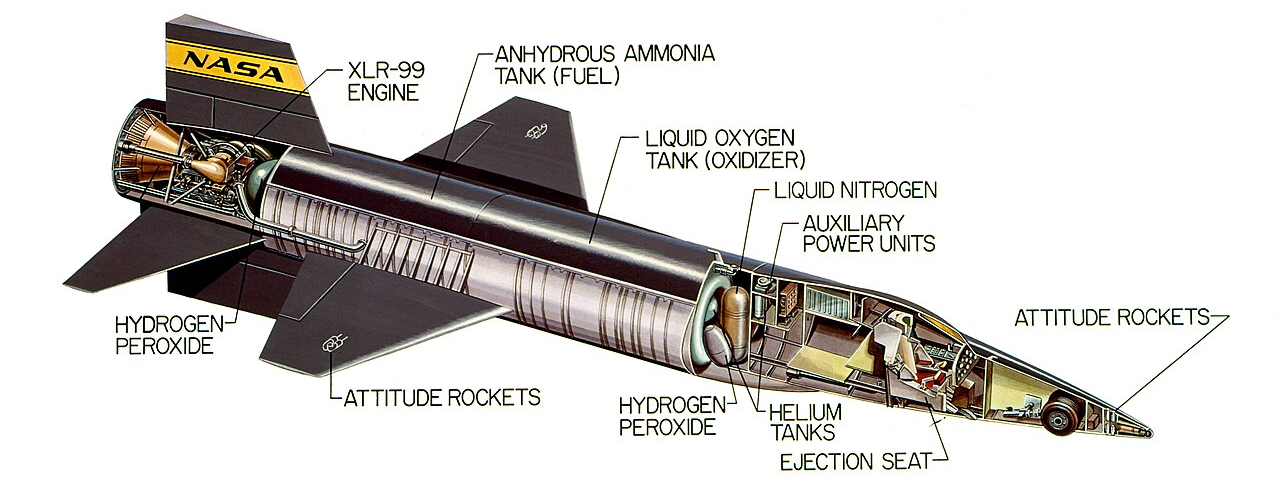
X-51A burned JP-7 and used it to cool the scramjet, reaching Mach 5.1 with 210 seconds of scramjet burn before an intended ocean impact [7][30]. Its thermal design only had to last one flight. An SR-72 would have to hold Mach 5 to 6 for tens of minutes, then land and fly again, which pushes leading-edge materials, fuel heat-sink capacity and structure through repeated full thermal cycles. According to SpaceNews, Talon-A2's flights were the first reusable hypersonic testing the United States had conducted since the X-15 program ended in 1968 [31]. It flew above Mach 5 in December 2024 and March 2025 and landed on a runway at Vandenberg [8][31], but it is air-launched and rocket-powered [32], so it shows reusable thermal protection and recovery, not air-breathing cruise. DARPA's naming of "structures and materials" and "thermal management systems" as open Next RS areas in 2025 supports the inference that the reusable thermal problem is still open [21].
4.3 Inlet and fuel.
In a shared-inlet TBCC design the inlet has to feed a turbine at subsonic and low-supersonic speeds, then close off that path and start a supersonic combustor without unstart. The 2013 concept described a shared inlet and nozzle with separate flow paths [13]. We found no public flight data on a shared-inlet mode switch at operational scale. On fuel, X-51A showed that endothermic hydrocarbon fuel works in an expendable scramjet [30]. A reusable aircraft also needs that fuel to be the main heat sink throughout a long cruise, which adds fuel-system coking and thermal-stability demands that no one has demonstrated publicly.
4.4 Airframe manufacturing and digital engineering.
O'Banion's 2018 point that digital design and additive methods allow complex engine and cooling geometries is plausible and is the most technically specific statement Lockheed has made [4]. Digital engineering speeds up design iteration. It does not remove the need for high-enthalpy ground testing or flight testing, and HACM, designed by "model-based system engineering" in a digital ecosystem, has still slipped a year and cut planned flight tests [23][24]. The HACM experience suggests digital methods compress design timelines more than they compress test timelines.
4.5 Sensors and communications.
At Mach 5 to 6, radomes and optical windows reach high temperatures, and the plasma sheath and boundary-layer heating degrade sensing and datalinks. DARPA's inclusion of "power generation" and "high-speed weapon separation" among open Next RS areas [21] adds two constraints particular to ISR and strike. A reconnaissance aircraft needs onboard power for sensors, and a strike aircraft has to release weapons into hypersonic flow. We found no public demonstration of either for a reusable air-breathing vehicle, so this is where SR-72 requirements go furthest beyond anything shown publicly.
4.6 Mission niche: penetrating ISR.
The case for speed is survivability and timeliness in anti-access airspace. The competing options are already funded or fielded: a reportedly operational stealth ISR platform (RQ-180) [25], proliferated satellite constellations and expendable hypersonic vehicles. The Air Force's own actions weigh against a reusable Mach 6 ISR aircraft. AFRL gave Mayhem no FY2024 funding beyond its conceptual design review and said the operational pull did not justify "a more complete design package suitable for an acquisition program" [10], and Leidos described the design as an "expendable" hypersonic multi-mission platform [33]. The niche that survives is short-notice, sub-hour revisit of a fixed point that satellites cannot schedule and stealth aircraft cannot reach in time. That niche is narrow.
4.7 Mission niche: time-sensitive strike.
Hypersonic missiles address prompt strike at a lower program cost per capability and are further along: HACM received an $802.8 million FY2026 request and ARRW has been revived [23][34]. A reusable strike aircraft makes sense only if its sortie rate and cost per engagement beat those of expendable missiles over a campaign, and no public cost model supports that yet. On the evidence, the Air Force has chosen the missile route for strike and stealth or space for ISR, with the reusable hypersonic aircraft left as a DARPA demonstrator goal "later this decade" [21].
5. Economic and Market Dynamics
5.1 What the filings disclose.
The table below reconstructs the Aeronautics classified-program loss history from Lockheed's filings.
The mid-2025 10-Q attributes $730 million of the pre-2025 losses to the initial phase and $95 million to later phases [38]. The Q3 2025 10-Q lists the drivers of the 2025 charge: "software development performance degradation and integration findings," learnings from "another program specifically relevant to the program," "significant changes in test plan resulting from customer discussions," "safety-critical and other necessary design and engineering changes in response to certain observed performance degradation and a discrete event," and "complete schedule realignment" [39]. The same filing states that Lockheed "and our industry team will continue to incur advanced procurement costs," and that their recoverability depends on "the customer's decision regarding the funding of future phases" [39]. Pre-contract costs in inventory, "primarily the classified contracts, F-35 program and F-16 program at Aeronautics and Sikorsky programs," rose from $1.5 billion to $1.9 billion in the first half of 2026 [22].
5.2 Reconciling the secondary figures.
The circulating numbers are reporting artifacts. A 2024 claim of about $335 million "since 2022" [40] mixes partial-period losses. The "$1.7 billion" in a 2026 commentary [41] roughly matches the filed $1.8 billion cumulative figure. Lockheed's own Q4 2025 release refers to a "net impact of $395 million," which is the year-over-year difference between the $950 million and $555 million charges, not a cumulative loss [42]. Breaking Defense's "$2 billion" for 2024 combines the $555 million Aeronautics loss with a separate $1.4 billion Missiles and Fire Control classified loss [43]. The only authoritative cumulative figure is about $1.8 billion as of December 31, 2025, unchanged through June 28, 2026 [6][22]. By our arithmetic, the 2024 year-end cumulative of $825 million less the $555 million recognized in 2024 leaves about $270 million recognized before 2024. That is consistent with the 2021 $225 million charge being on the same program, whose 2021 description matched ("classified fixed-price incentive fee contract that involves highly complex designs and systems integration") [44], but Lockheed has not said so.
5.3 Do the characteristics point to a hypersonic aircraft?
Weakly at most. Lockheed does not identify the program, and Defense Daily's direct question about whether it is the SR-72 got no answer [45]. Several disclosed features argue against a Mach 6 demonstrator. In 2021 CEO James Taiclet referred to "all the customers" who would use the system and said it "will ultimately turn into a production program" [44]. The contract has fixed-price options for later phases, with an "industry team" buying advance procurement, which is how a production program is structured and not how a one-off research vehicle is [39]. The 2025 drivers were mostly software and integration problems, not propulsion or thermal ones [39]. The features that are consistent with a hypersonic aircraft (Skunk Works management, which Inside Defense reported [46], extreme design complexity and a "discrete event" in testing) are just as consistent with other classified aircraft. In our judgment the filings fit an advanced classified aircraft nearing production, and they do not establish, and in their production framing count somewhat against, an SR-72 identification. Every public claim tying these losses to the SR-72 is tier (c) inference.
5.4 Budget context.
The Congressional Research Service reports that DoD's hypersonic research request fell to $3.9 billion in FY2026 from $6.9 billion in FY2025 and that DoD "has not established any programs of record for hypersonic weapons" [11]. GAO had earlier counted 70 hypersonic efforts expected to cost almost $15 billion across FY2015 to FY2024 [47]. No publicly identified budget line funds a reusable hypersonic ISR aircraft. The closest items are Mayhem's unfunded follow-on task orders and DARPA's Next RS technology solicitations [10][21].
5.5 What a program of record could mean.
Using stated assumptions, suppose an SR-72-class development program worth $4 billion to $6 billion over six years, or $0.7 billion to $1 billion a year. That would be about 2% to 3% of Aeronautics' annualized sales of about $30 billion and about 1% of company sales against Lockheed's July 2026 full-year outlook of $79.75 billion to $81.75 billion [22][48]. At Aeronautics' first-half 2026 operating margin of 9.2% [22] and a 16% tax rate, it would add roughly $0.25 to $0.30 per share a year. That compares with the $3.04 per share hit from the single Q2 2025 charge [37]. A later production run of 20 aircraft at a hypothetical $300 million each would add about $6 billion over a decade, which is also small against the record $230 billion backlog Lockheed reported in July 2026, a figure that includes the multi-year THAAD interceptor contract [48]. The payoff is asymmetric. Development on fixed-price terms has already cost Lockheed about $1.8 billion on one classified program [6], while the revenue upside from any hypersonic aircraft is small and far off. Hewson's 2016-era claim that a demonstrator could be built for under $1 billion [20] should be read as a sales pitch.
6. Risks
The largest risk is a recurrence of fixed-price classified losses. Lockheed warns it "may need to record additional losses in future periods" on the Aeronautics program [6], and the $1.9 billion of pre-contract costs depends on a customer decision about future phases [22][39]. We rate a further charge within 24 months as moderately likely given the program's history of charges in 2021, 2024 and 2025. The impact would be material to quarterly EPS but not to the franchise. Mitigations include the contract restructuring Taiclet described as under discussion ("Part of it is potential contract restructuring") [49], the corrective-action measures management has described, and a quiet first half of 2026 [22].
Demand risk for a reusable hypersonic aircraft is high and has largely materialized. Mayhem's defunding and the 43% fall in the hypersonic research request [10][11] show a customer that prefers expendable missiles, stealth and space. The main mitigation is DARPA's Next RS, which keeps a reusable-aircraft path open and could turn Lockheed's TBCC know-how into a competitive award around 2028 to 2030 [21].
Technical risk is high but falls mostly on the government and whoever wins a future demonstrator. Mode transition, reusable thermal protection and hypersonic weapon separation have not been demonstrated publicly (Section 4). Disclosure risk is ever-present, because classification keeps investors from judging program health until a charge is taken. That is the real mechanism behind the SR-72 mystique, and it is also why the filings are the basis for analysis.
7. Implications for the Technically Informed Investor
Do not own or trade Lockheed Martin on an SR-72 thesis. The evidence supports neither a hidden flying aircraft nor a funded program of record, and even a successful program would add only about 1% to company revenue at thin development margins. Treat the classified Aeronautics program as a separate, measurable liability. Each 10-Q is worth reading for changes in the approximately $1.8 billion cumulative loss, the accrued balance ($495 million at year-end 2025), pre-contract inventory ($1.9 billion at mid-2026) and any disclosed restructuring of fixed-price options [6][22]. A signed restructuring or the exercise of a production-phase option would be the clearest sign that the risk is falling.
For exposure to reusable hypersonics, the investable signals are government actions: a DARPA Next RS demonstrator award, a High Mach Gas Turbine development contract, or a hypersonic program of record in a budget justification [21][11]. Until one appears, air-breathing hypersonic exposure goes through missile programs such as HACM (RTX and Northrop Grumman) and test services such as MACH-TB (Leidos), where money is actually being spent [24][8]. Hermeus's plan for a hypersonic Quarterhorse Mk 3 with its Chimera TBCC engine before 2030, backed by a Defense Innovation Unit contract whose ceiling Aerospace Testing International reported in May 2026 at $219 million, should be judged by its first flight beyond the F100's supersonic envelope, which has not happened; its demonstrated result so far is Mach 1.21 [9][50]. We would change our assessment of the SR-72 if any of the following appeared: an official acknowledgment, a named budget line, a Lockheed filing that tied a classified loss or award to a hypersonic aircraft, or DARPA or AFRL retracting their descriptions of reusable hypersonics as immature.

References
[1] Villasanta, Artie. 2018. "U.S. Pushes Hard To Build SR-72 Hypersonic Fighter." Business Times, November 23, 2018. https://www.btimesonline.com/articles/105181/20181123/u-s-pushes-hard-build-sr-72-hypersonic-fighter.htm
[2] Norris, Guy. 2013. "Skunk Works Reveals SR-71 Successor Plan." Aviation Week & Space Technology, November 1, 2013. https://aviationweek.com/skunk-works-reveals-sr-71-successor-plan
[3] Fox News. 2013. "Lockheed Martin's Skunkworks to Build Successor to SR-71 Blackbird." November 4, 2013. http://www.foxnews.com/tech/2013/11/04/lockheed-martin-skunkworks-to-build-successor-to-sr-71-blackbird.html
[4] Sandboxx. n.d. "The SR-72 Timeline: From Initial Design to 'Top Gun's' Darkstar." Sandboxx News. https://www.sandboxx.us/news/the-sr-72-timeline-from-initial-design-to-top-guns-darkstar/
[5] The National Interest. n.d. "The SR-72: Going Hypersonic (And Being Loaded With Missiles)?" https://nationalinterest.org/blog/reboot/sr-72-going-hypersonic-and-being-loaded-missiles-163650
[6] Lockheed Martin Corporation. 2026. Form 10-K for the Fiscal Year Ended December 31, 2025. U.S. Securities and Exchange Commission. https://www.sec.gov/Archives/edgar/data/936468/000162828026004195/lmt-20251231.htm
[7] Air Force Materiel Command. 2013. "X-51A Waverider Achieves History in Final Flight." May 2013. https://www.afmc.af.mil/News/Article-Display/Article/153475/x-51a-waverider-achieves-history-in-final-flight/
[8] Stratolaunch. 2025. "Stratolaunch Successfully Completes Reusable Hypersonic Flight and Recovery with Talon-A2 Vehicle." Press release, May 5, 2025. https://www.stratolaunch.com/news/stratolaunch-successfully-completes-reusable-hypersonic-flight-and-recovery-with-talon-a2-vehicle/
[9] Hermeus. 2026. "Hermeus Achieves Its First Unmanned Supersonic Flight." Press release, May 26, 2026. https://www.hermeus.com/article/hermeus-achieves-its-first-unmanned-supersonic-flight
[10] Trevithick, Joseph. 2024. "Future Of Mayhem Hypersonic Strike-Recon Aircraft Program Murky." The War Zone, February 2024. https://www.twz.com/news-features/future-of-mayhem-hypersonic-strike-recon-aircraft-program-murky
[11] Congressional Research Service. 2025. Hypersonic Weapons: Background and Issues for Congress. R45811. https://www.congress.gov/crs-product/R45811
[12] The National Interest. n.d. "Why China Thought Top Gun's Incredible SR-72 Darkstar was Real." https://nationalinterest.org/blog/buzz/why-china-thought-top-guns-incredible-sr-72-darkstar-was-real-207648
[13] Airforce Technology. 2013. "Lockheed Martin Unveils SR-72 as Successor to SR-71 Spy Plane." https://www.airforce-technology.com/features/feature-lockheed-martin-unveils-sr-72-successor-sr-71-spy-plane/
[14] Task & Purpose. 2017. "Skunk Works Just Revealed New Details About The SR-71 Blackbird's Ultra-Secret Successor." https://taskandpurpose.com/tech-tactics/sr-71-blackbird-successor/
[15] GlobalSecurity.org. n.d. "SR-72 Hypersonic Vehicle." https://www.globalsecurity.org/military/systems/aircraft/sr-72.htm
[16] L3Harris Technologies. 2023. "L3Harris Completes Aerojet Rocketdyne Acquisition." Press release, July 28, 2023. https://www.l3harris.com/newsroom/press-release/2023/07/l3harris-completes-aerojet-rocketdyne-acquisition
[17] Aerojet Rocketdyne Holdings. 2022. Schedule 14A (DEFA14A), Exhibit 99.1, joint press release of December 18, 2022. U.S. Securities and Exchange Commission. https://www.sec.gov/Archives/edgar/data/40888/000119312522307850/d409467ddefa14a.htm
[18] CNBC. 2018. "Lockheed Martin Starts Production of Its Experimental Supersonic Plane." November 16, 2018, as syndicated by NBC Bay Area. https://www.nbcbayarea.com/news/national-international/lockheed-martin-starts-production-of-its-experimental-supersonic-plane/166412/
[19] Episkopos, Mark. 2021. "Lockheed Martin's Mysterious SR-72 Could Enter Service in the 2030s." The National Interest, December 3, 2021. https://nationalinterest.org/blog/reboot/lockheed-martins-mysterious-sr-72-could-enter-service-2030s-197320
[20] Kazianis, Harry J. 2026. "The Lockheed Martin SR-72 'Son of Blackbird': It Could Hit Mach 6 and 80,000 Feet But No One Really Knows If It Exists." 19FortyFive, August 2026. https://www.19fortyfive.com/2026/08/the-lockheed-martin-sr-72-son-of-blackbird-it-could-hit-mach-6-and-80000-feet-but-no-one-really-know-if-it-exists/
[21] Trevithick, Joseph. 2025. "New Hypersonic Strike-Recon Aircraft Effort Eyeing Prototype Development By 2030." The War Zone, February 20, 2025. https://www.twz.com/air/new-hypersonic-strike-recon-aircraft-effort-eyeing-prototype-development-by-2030
[22] Lockheed Martin Corporation. 2026. Form 10-Q for the Quarterly Period Ended June 28, 2026. U.S. Securities and Exchange Commission. https://www.sec.gov/Archives/edgar/data/0000936468/000162828026049411/lmt-20260628.htm
[23] Air & Space Forces Magazine. 2025. "HACM Flight Tests Expected in Fiscal '26 After Yearlong Delay." https://www.airandspaceforces.com/hacm-flight-tests-fy26-yearlong-delay/
[24] DefenseScoop. 2025. "GAO Warns That Air Force's Hypersonic Cruise Missile Program Is Behind Schedule." June 11, 2025. https://defensescoop.com/2025/06/11/gao-report-air-force-hacm-hypersonic-cruise-missile-behind-schedule/
[25] Simple Flying. 2026. "Lockheed's SR-72 Hypersonic Successor To The Blackbird Still Hasn't Flown & Here's Why." https://simpleflying.com/lockheed-sr-72-hypersonic-succesor-blackbird-still-hasnt-flown-why/
[26] Air & Space Forces Magazine. 2025. "One Hypersonic Missile's Delay May Explain Comeback of Another." https://www.airandspaceforces.com/one-hypersonic-missiles-delay-may-explain-comeback-of-another/
[27] Hermeus. 2026. "Hermeus Flies Newest Supersonic Plane, Delivering Its Second Successful First Flight in Nine Months." Press release, March 2026. https://www.hermeus.com/article/hermeus-flies-newest-supersonic-plane-delivering-its-second-successful-first-flight-in-nine-months
[28] Calspan. 2023. "Calspan Teams with Leidos on AFRL Mayhem Hypersonic Program." January 11, 2023. https://calspan.com/company/news/calspan-teams-leidos-afrl-mayhem-hypersonic-program
[29] Congressional Budget Office. 2023. U.S. Hypersonic Weapons and Alternatives. https://www.cbo.gov/publication/58924
[30] Space.com. 2013. "Air Force's X-51A Hypersonic Scramjet Makes Record-Breaking Final Flight." May 2013. https://www.space.com/20967-air-force-x-51a-hypersonic-scramjet.html
[31] SpaceNews. 2025. "Pentagon's Hypersonic Milestone: Stratolaunch Reusable Vehicle Breaks Mach 5." May 2025. https://spacenews.com/pentagons-hypersonic-milestone-stratolaunch-reusable-vehicle-breaks-mach-5/
[32] AvGeekery. 2025. "Talon A-2 Hypersonic Aircraft Exceeds Mach 5 In Successful Test Flights." https://avgeekery.com/talon-a-2-hypersonic-aircraft-exceeds-mach-5/
[33] New Atlas. 2022. "AFRL's Hypersonic Mayhem Drone Project Goes to Leidos." https://newatlas.com/aircraft/afrl-mayhem-hypersonic/
[34] Grosswald. 2026. "AUKUS Hypersonic vs Russia and China: HyFliTE and HACM." https://www.grosswald.org/hyflite-aukus-powers-advance-hypersonic-capabilities-through-252m-testing-initiative/
[35] Lockheed Martin Corporation. 2021. "Lockheed Martin Reports Second Quarter 2021 Results." Exhibit 99.1, Form 8-K. U.S. Securities and Exchange Commission. https://www.sec.gov/Archives/edgar/data/936468/000093646821000069/ex991q22021.htm
[36] Lockheed Martin Corporation. 2025. Form 10-K for the Fiscal Year Ended December 31, 2024. U.S. Securities and Exchange Commission. https://www.sec.gov/Archives/edgar/data/936468/000093646825000009/lmt-20241231.htm
[37] Lockheed Martin Corporation. 2025. "Lockheed Martin Reports Second Quarter 2025 Financial Results." July 22, 2025. https://news.lockheedmartin.com/2025-07-22-Lockheed-Martin-Reports-Second-Quarter-2025-Financial-Results
[38] Lockheed Martin Corporation. 2025. Form 10-Q for the Quarterly Period Ended June 29, 2025. https://investors.lockheedmartin.com/static-files/ca4e0809-bd88-4942-ac1f-42cc8be9ce3e
[39] Lockheed Martin Corporation. 2025. Form 10-Q for the Quarterly Period Ended September 28, 2025. U.S. Securities and Exchange Commission. https://www.sec.gov/Archives/edgar/data/936468/000162828025045693/lmt-20250928.htm
[40] Army Recognition. 2024. "Lockheed Martin's SR-72: New Hypersonic Successor to Iconic SR-71 Blackbird Still Progresses." https://armyrecognition.com/news/aerospace-news/2024/lockheed-martins-sr-72-the-hypersonic-successor-to-the-sr-71-blackbird-still-progresses
[41] 19FortyFive. 2026. "The SR-72 Could Hit Mach 6 But Keeps Missing Deadlines and May Never Fly Anywhere." February 2026. https://www.19fortyfive.com/2026/02/the-sr-72-could-hit-mach-6-but-keeps-missing-deadlines-and-may-never-fly-anywhere/
[42] Lockheed Martin Corporation. 2026. "Lockheed Martin Reports Fourth Quarter and Full Year 2025 Financial Results." Exhibit 99.1, January 29, 2026. U.S. Securities and Exchange Commission. https://www.sec.gov/Archives/edgar/data/936468/000162828026003970/ex991q42025.htm
[43] Breaking Defense. 2025. "Lockheed Hit by $2B in Charges on 2 Classified Programs." January 2025. https://breakingdefense.com/2025/01/lockheed-hit-by-2b-in-charges-on-two-classified-programs/
[44] Tirpak, John A. 2021. "Lockheed Martin Takes $225 Million Loss on Secret Aeronautics Program." Air & Space Forces Magazine, July 26, 2021. https://www.airandspaceforces.com/lockheed-martin-225-million-loss-secret-aeronautics-program/
[45] Defense Daily. 2025. "Lockheed Martin Takes Fixed Price, Production Lot Charges on 'P958' Program." https://www.defensedaily.com/lockheed-martin-takes-fixed-price-production-lot-charges-on-p958-program/air-force/
[46] Inside Defense. 2025. "Lockheed Takes $950M Loss on Classified Program." July 2025. https://insidedefense.com/share/224749
[47] U.S. Government Accountability Office. 2021. Hypersonic Weapons: DOD Should Clarify Roles and Responsibilities to Ensure Coordination across Development Efforts. GAO-21-378. https://www.gao.gov/products/gao-21-378
[48] Lockheed Martin Corporation. 2026. "Lockheed Martin Reports Second Quarter 2026 Financial Results." PR Newswire, July 23, 2026. https://www.prnewswire.com/news-releases/lockheed-martin-reports-second-quarter-2026-financial-results-302833219.html
[49] Breaking Defense. 2025. "Lockheed Records $1.6B in Losses, Mostly Linked to Continued Strife on Classified Aero Program." July 2025. https://breakingdefense.com/2025/07/lockheed-records-1-6b-in-losses-mostly-linked-to-continued-strife-on-classified-aero-program/
[50] Aerospace Testing International. 2026. Reporting on the Hermeus Quarterhorse program and Defense Innovation Unit contract modification. May 28, 2026.