How to Build a Self-Contained Wastewater Treatment IBC Tote System: A 150 GPD Design Guide
A hybrid MBBR plus UF train fits a 275-gal IBC footprint, draws 2 kWh/day, and meets NSF/ANSI reuse grade. Aeration energy is the binding constraint.

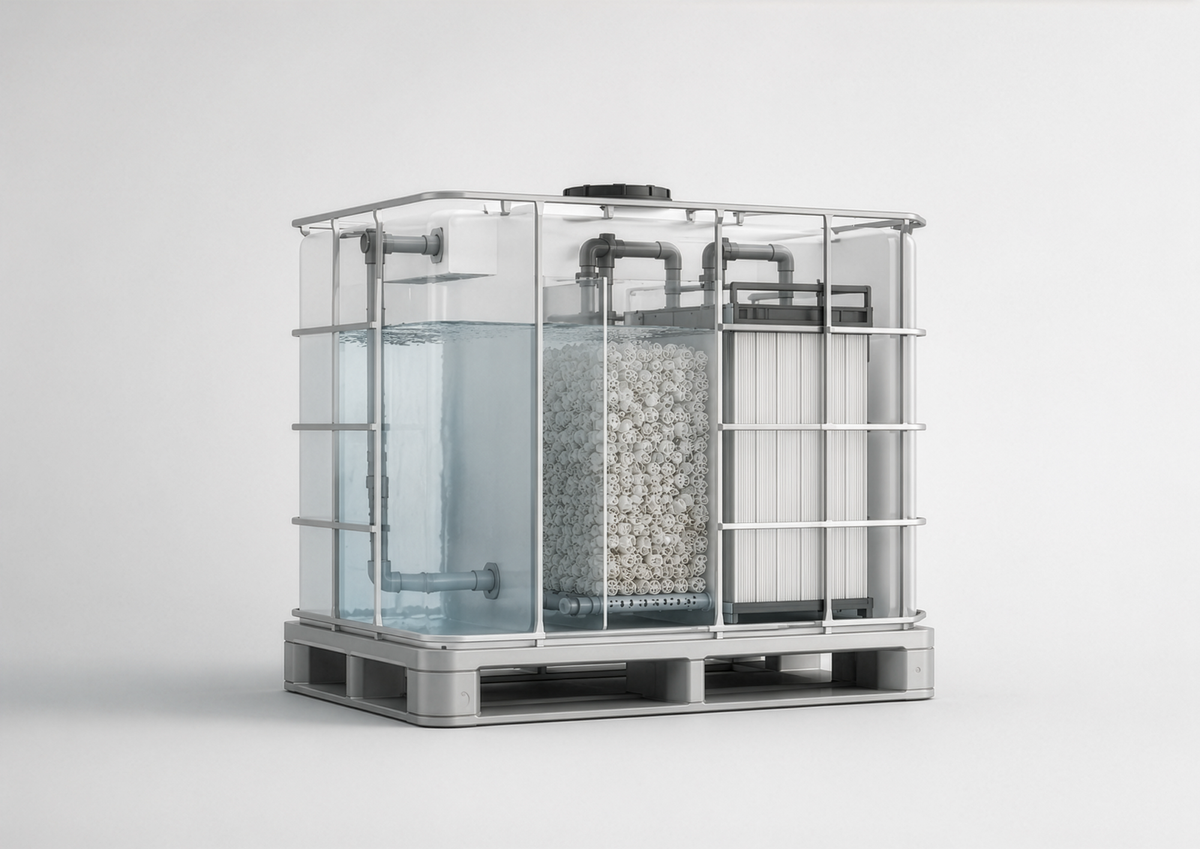
Pallet-Scale Containerized Biological Water Treatment: A Design Foundation for a 150 GPD Self-Contained Bioreactor
TL;DR
• A 150 gal/day (568 L/day) bioreactor sized for a 48×40 in. GMA pallet is technically feasible using a hybrid moving-bed biofilm reactor (MBBR) or membrane bioreactor (MBR) core, but the dominant binding constraints are aeration energy (driving 53–68% of total MBR power per peer-reviewed studies), membrane fouling control, and cold-weather nitrification stability, not the physical footprint.
• Targeting NSF/ANSI 350 Class R reuse criteria (CBOD₅ ≤10 mg/L median, turbidity ≤2 NTU median, E. coli median <14 CFU/100 mL) is the most useful design anchor for the U.S. market; ISO 30500 Category A (≤10 mg/L TSS, ≤50 mg/L COD, ≥70% total-nitrogen and ≥80% total phosphorus reduction, ≤100 CFU/L E. coli, <1 viable helminth ovum/L) is the better international/non-sewered anchor.
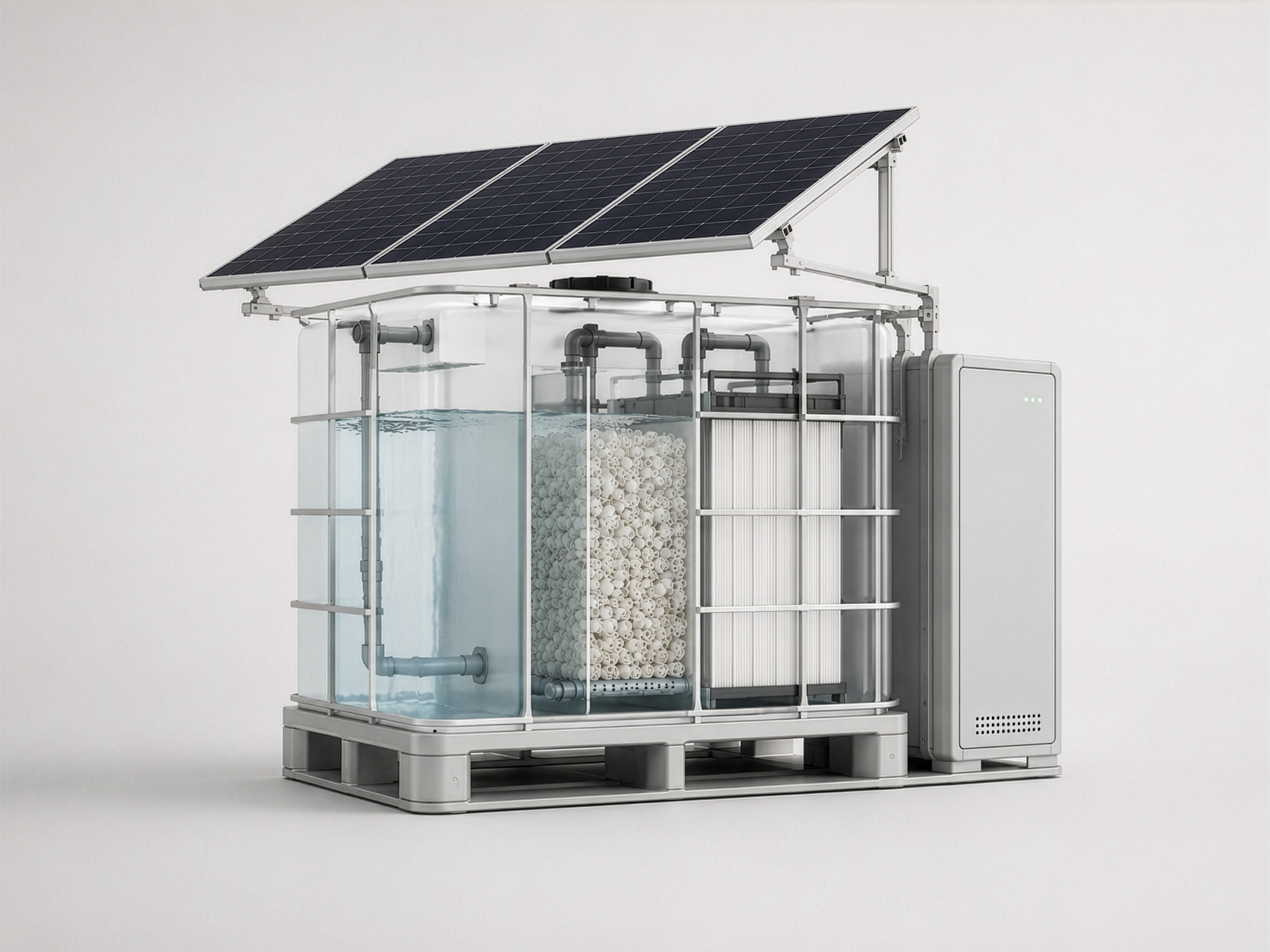
• A hybrid MBBR + flat-sheet ultrafiltration train powered by a Hiblow-class linear blower (~71 W), with UV polishing at ≥40 mJ/cm², fits within a single 275-gal IBC footprint, draws roughly 1.5–3.0 kWh/m³ treated, and is solar-supportable with ~800 W of PV plus ~4 kWh of LiFePO₄ battery for continuous aeration.
Key Findings
- Design load is small but the strength is normal-to-medium. Domestic wastewater at 150 GPD corresponds to roughly 2–3 occupants at typical U.S. per-capita generation (Clean Water Services in its 2019 East Basin Master Plan reports an actual residential average of 55 gpcd, down from prior 67 gpcd design values). Influent BOD₅ for medium-strength municipal wastewater is ~190–220 mg/L, TSS ~210 mg/L, TKN ~40 mg/L, TP ~7 mg/L (Tchobanoglous et al., Wastewater Engineering: Treatment and Resource Recovery, 5th ed., 2014). Combined household greywater is typically 100–400 mg/L BOD with substantially lower nitrogen (5–50 mg/L TN) than blackwater (Morel and Diener 2006).
- Effluent standards drive different design points. NSF/ANSI 40 (Class I) requires CBOD₅ ≤25 mg/L (30-day average) / ≤40 mg/L (7-day average) and TSS ≤30 / ≤45 mg/L for rated capacities 400–1,500 GPD. NSF/ANSI 350 Class R for unrestricted reuse tightens this to BOD ≤10 mg/L median, turbidity ≤2 NTU median, and E. coli median <14 CFU/100 mL. California Title 22 disinfected tertiary requires a 7-day median total coliform ≤2.2 MPN/100 mL plus a 5-log virus inactivation (CT ≥450 mg·min/L with 90-min modal contact, per Cal. Code Regs. tit. 22, §60301.230). ISO 30500:2018 Category A sets ≤100 CFU/L E. coli, <1 viable helminth ovum/L, and ≥70% TN / ≥80% TP reduction (verified in Varigala et al. 2020 and Trotochaud et al. 2020 reproducing the ISO 30500 tables).
- MBR and MBBR are the only credible cores at pallet scale. Conventional activated sludge with secondary clarification cannot meet ≤2 NTU turbidity without filtration, and a gravity clarifier of meaningful surface overflow rate (~16–32 m³/m²·d per WEF MOP 8) cannot fit in a 13.3 ft² pallet footprint. MBR provides an absolute solids/biomass barrier; Kubota's flat-sheet membrane sheets use 0.4 µm maximum (0.2 µm average) chlorinated polyethylene pores (Kubota Membrane SP-Series brochure 2019), sustained at flux of 15–25 LMH. MBBR with Kaldnes K1/K3 carriers (500 m²/m³) or K5 (~800 m²/m³ protected surface area, per AnoxKaldnes; Rusten et al. 2006) handles 5–15 g BOD/m²·d for carbon removal and 0.5–1.5 g NH₄-N/m²·d for nitrification at 15–20 °C (Ødegaard 2006).
- Aeration is the single largest energy line item. Fine-bubble disc diffusers reach 25–35% SOTE in clean water, but α-correction in MBR mixed liquor depresses field standard aeration efficiency to roughly 1.5–3 kg O₂/kWh (Rosso, Larson, and Stenstrom 2008). The Hiblow HP 80 (80 L/min at 3.6 psi continuous, 71 W, 36 dBA, per the Hiblow HP-80 spec sheet distributed through Southern Pipe & Supply and Air Pumps Online, "the HP-80 is a linear pump that produces 80 LPM of air for 500–600 gallon aerobic septic systems… 120V A/C, 71 watts") is the de-facto blower for 500–600 GPD aerobic septic systems and is well-matched to this duty.
- Energy intensity is dominated by membrane scour. Brepols et al. ("Energy Efficient MBR Process") report that "the majority of about 65% [of total MBR power] goes for aeration systems in order to control fouling of the membrane surface (air scouring)," with a separate study finding 68.0% (flat-sheet) and 53.0% (hollow-fiber) of total power attributed to air scouring. Full-scale municipal MBR average specific energy consumption is 0.8–1.1 kWh/m³ in peer-reviewed compilations; the Delphos, Ohio Enviroquip MBR plant reached 1.59 kWh/m³ after optimization from 5.38 kWh/m³ (Wastewater Digest). Highly optimized large MBRs achieve <0.4 kWh/m³ (Tao et al., presented in Vienna). For 150 GPD scale, 1.5–3 kWh/m³ is a realistic planning band.
- IBC totes are the natural building block. A 275-gal caged IBC measures 48 × 40 × 46 in. (1219 × 1016 × 1168 mm), weighs ~132 lb empty and ~2,425 lb full of water, sits on a GMA pallet base, and exerts ~181 PSF when full, which is within standard warehouse floor ratings of 250–500 PSF (Repackify and IBC Minneapolis sizing references).
- Cold-weather operation degrades nitrification disproportionately. Arrhenius θ ≈ 1.06–1.10 for suspended-growth nitrification means rates roughly halve from 20 °C to 10 °C; at 4 °C nitrification rates can fall by a factor of 5 from 20 °C values. MBBRs maintain better cold performance: θ as low as 1.024–1.026 has been reported for membrane-aerated biofilms (Frontiers in Microbiology, 2023), and Salvetti et al. (2006) propose θ = 1.149 between 4 °C and 1 °C for low-temperature nitrifying MBBR design.
Details
1. Design Basis and Influent Characterization
Per-capita generation and loads (combined domestic wastewater). Modern U.S. residential per-capita flow is 38–70 gpcd, trending lower than legacy 80–100 gpcd design values (Clean Water Services 2019 East Basin Master Plan; Integrated Water Services 2020). Per-capita BOD₅ loads cluster around 80 g/cap·d in U.S. data, 47.3 g/cap·d in Sivas, Turkey (Karpuzcu, Water Science & Technology), and 33 g/cap·d in Tehran (Mesdaghinia et al. 2015, PMC4374509), with TSS roughly equal to BOD₅ and TKN ~7–14 g/cap·d. For a design population of 2–3 (≈150 GPD), expected daily mass loads are: BOD₅ ≈ 0.10–0.17 kg/d, TSS ≈ 0.10–0.17 kg/d, TKN ≈ 0.02–0.03 kg/d, TP ≈ 0.003 0.004 kg/d.
Translating to concentrations at 568 L/d gives BOD₅ ≈ 180–290 mg/L, TSS ≈ 180–290 mg/L, TKN ≈ 35–55 mg/L — consistent with the Metcalf & Eddy "medium-strength" domestic wastewater band (Tchobanoglous, Stensel, Tsuchihashi, and Burton 2014).
Greywater-only design. Mixed household greywater typically reports BOD₅ 100–400 mg/L and TN 5–50 mg/L (Boyjoo, Pareek, and Ang 2013, Water Research; Morel and Diener 2006, SANDEC/Eawag report). Kitchen-only greywater can reach BOD₅ 100–1,850 mg/L and COD up to 1,500 mg/L (review by Khalil and Liu 2024, Discover Water).
Blackwater-only loads. Wahyuni et al. (Bandung fecal-sludge characterization) report per-capita BOD of 14–505 g/cap·d (mean 175.5) and ammonia 1.6–3.1 g/cap·d, reflecting concentration without flush dilution; undiluted blackwater concentrations regularly exceed 1,000 mg/L BOD₅ and 200 mg/L NH₄-N.
2. Effluent Targets - Numeric Cross-Reference Table
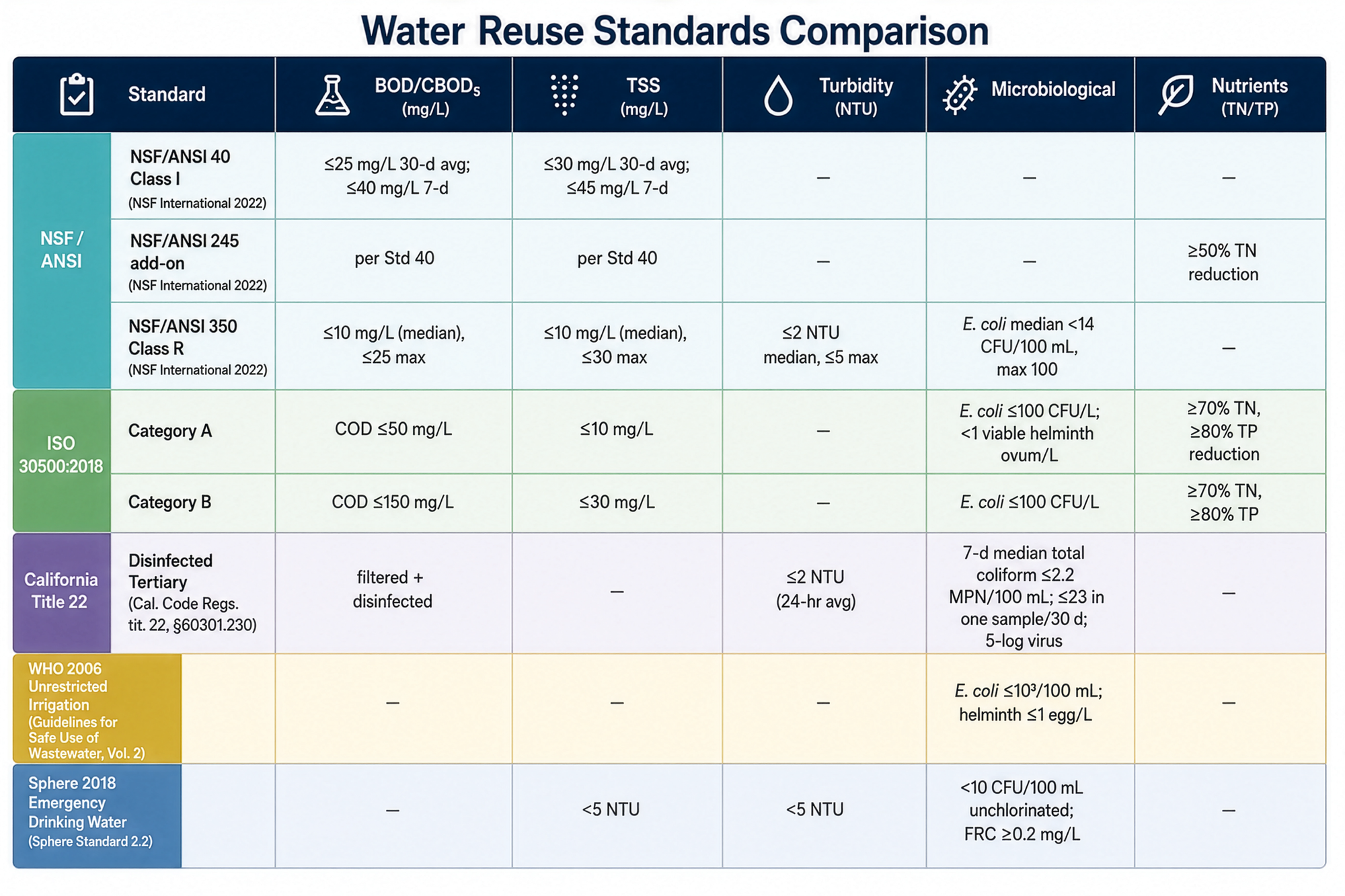
| Standard | BOD / CBOD5 / COD | TSS | Turbidity | Microbiological | Nutrients |
|---|---|---|---|---|---|
| NSF/ANSI 40 Class I (NSF International 2022) | ≤25 mg/L 30-day avg; ≤40 mg/L 7-day | ≤30 mg/L 30-day avg; ≤45 mg/L 7-day | — | — | — |
| NSF/ANSI 245 add-on (NSF International 2022) | per Std 40 | per Std 40 | — | — | ≥50% TN reduction |
| NSF/ANSI 350 Class R (NSF International 2022) | ≤10 mg/L median; ≤25 mg/L max | ≤10 mg/L median; ≤30 mg/L max | ≤2 NTU median; ≤5 NTU max | E. coli median <14 CFU/100 mL; max 100 | — |
| ISO 30500:2018 Category A | COD ≤50 mg/L | ≤10 mg/L | — | E. coli ≤100 CFU/L; <1 viable helminth ovum/L | ≥70% TN; ≥80% TP reduction |
| ISO 30500:2018 Category B | COD ≤150 mg/L | ≤30 mg/L | — | E. coli ≤100 CFU/L | ≥70% TN; ≥80% TP reduction |
| California Title 22 disinfected tertiary | filtered + disinfected | — | ≤2 NTU 24-hour avg | 7-day median total coliform ≤2.2 MPN/100 mL; ≤23 in one sample/30 d; 5-log virus | — |
| WHO 2006 unrestricted irrigation | — | — | — | E. coli ≤10³/100 mL; helminth ≤1 egg/L | — |
| Sphere 2018 emergency drinking water | — | <5 NTU | <5 NTU | <10 CFU/100 mL unchlorinated; FRC ≥0.2 mg/L | — |
The design target adopted herein is NSF/ANSI 350 Class R for U.S. deployment, with ISO 30500 Category A as the cross-check for non-sewered/international applications.
3. Treatment Process Comparison at Pallet Scale
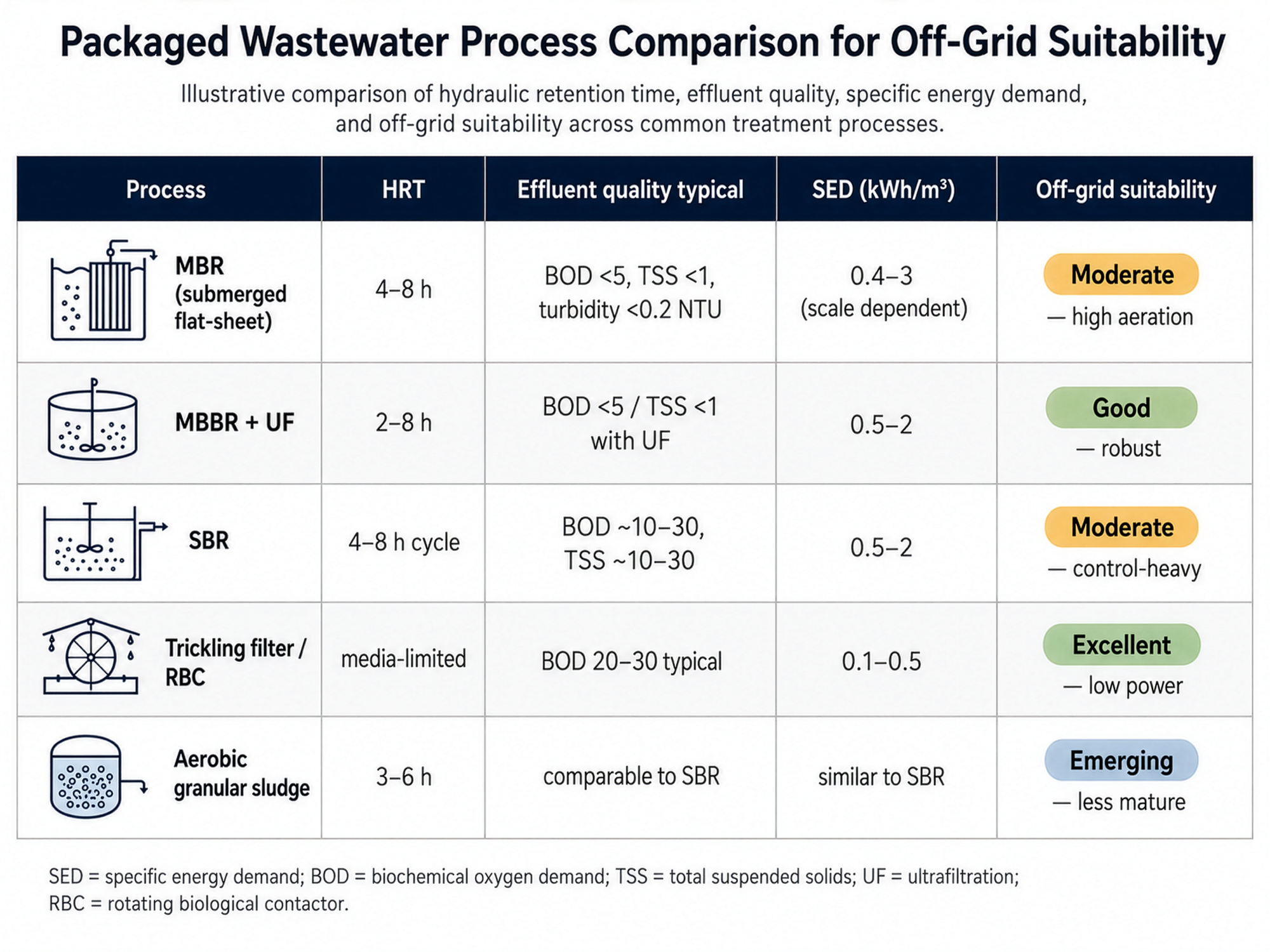
| Process | HRT | Effluent Quality Typical | SED (kWh/m³) | Off-Grid Suitability |
|---|---|---|---|---|
| MBR (submerged flat-sheet) | 4–8 h | BOD <5, TSS <1, turbidity <0.2 NTU | 0.4–3 (scale dependent) | Moderate — high aeration |
| MBBR + UF | 2–8 h | BOD <5 / TSS <1 with UF | 0.5–2 | Good — robust |
| SBR | 4–8 h cycle | BOD ~10–30, TSS ~10–30 | 0.5–2 | Moderate — control-heavy |
| Trickling filter / RBC | media limited | BOD 20–30 typical | 0.1–0.5 | Excellent — low power |
| Aerobic granular sludge | 3–6 h | Comparable to SBR | similar to SBR | Emerging — less mature |
Selected configuration: Anoxic compartment → aerobic MBBR (K3 or K5 media, 50% fill, ~150 200 L effective volume) → submerged ultrafiltration (Kubota flat-sheet 0.4 µm nominal pore, ~1.5–2 m² active area for 15–25 LMH operating flux at 568 L/d ≈ 24 L/h) → UV polishing (40 mJ/cm² reduction equivalent dose).
MBBR sizing. At a surface-area loading rate (SALR) of 7 g BOD/m²·d (typical normal-rate municipal MBBR design; Ødegaard 2006; Rusten et al. 2006 Aquacultural Engineering 34:322–331), removing 0.15 kg BOD/d requires ~21 m² of effective biofilm surface. K3 carriers (500 m²/m³) at 50% fill in a 0.10 m³ reactor provide 25 m² — comfortable margin. For nitrification at 1.0 g NH₄ N/m²·d, removing 0.025 kg NH₄-N/d requires 25 m² of carrier area at 15–20 °C; below 10 °C the SALR must be reduced 40–60% per Hinkton (2024) MBBR design guidance.
MBR sizing. At sustained flux of 15 LMH, treating 24 L/h requires 1.6 m² of membrane area; at conservative 10 LMH, 2.4 m². A Kubota Type 510 cartridge (0.8 m² effective area) or Type 515 cartridge (1.45 m² effective area) maps directly (Kubota Membrane Lineup brochure).
4. System Architecture and Process Flow
Process train: 3 mm rotary screen → equalization (~150 L; 25–30% of daily flow per WEF MOP 8) → anoxic mixing zone (~50 L; internal recycle for nitrate return) → aerobic MBBR with fine-bubble diffusers (~150 L liquid + carrier) → submerged UF compartment → UV reactor → 100 L treated water storage.
UV at 40 mJ/cm² is the U.S. EPA UVDGM-validated dose covering 4-log virus, 3-log Cryptosporidium, and 3-log Giardia inactivation (Health Canada Guidelines for Canadian Drinking Water Quality - UV Disinfection technical document). Where chlorine is the secondary disinfectant, a 450 mg·min/L CT contact tank with 90-min modal contact time meets California Title 22 disinfected-tertiary virus-inactivation requirements.
5. Bill of Materials (Indicative)
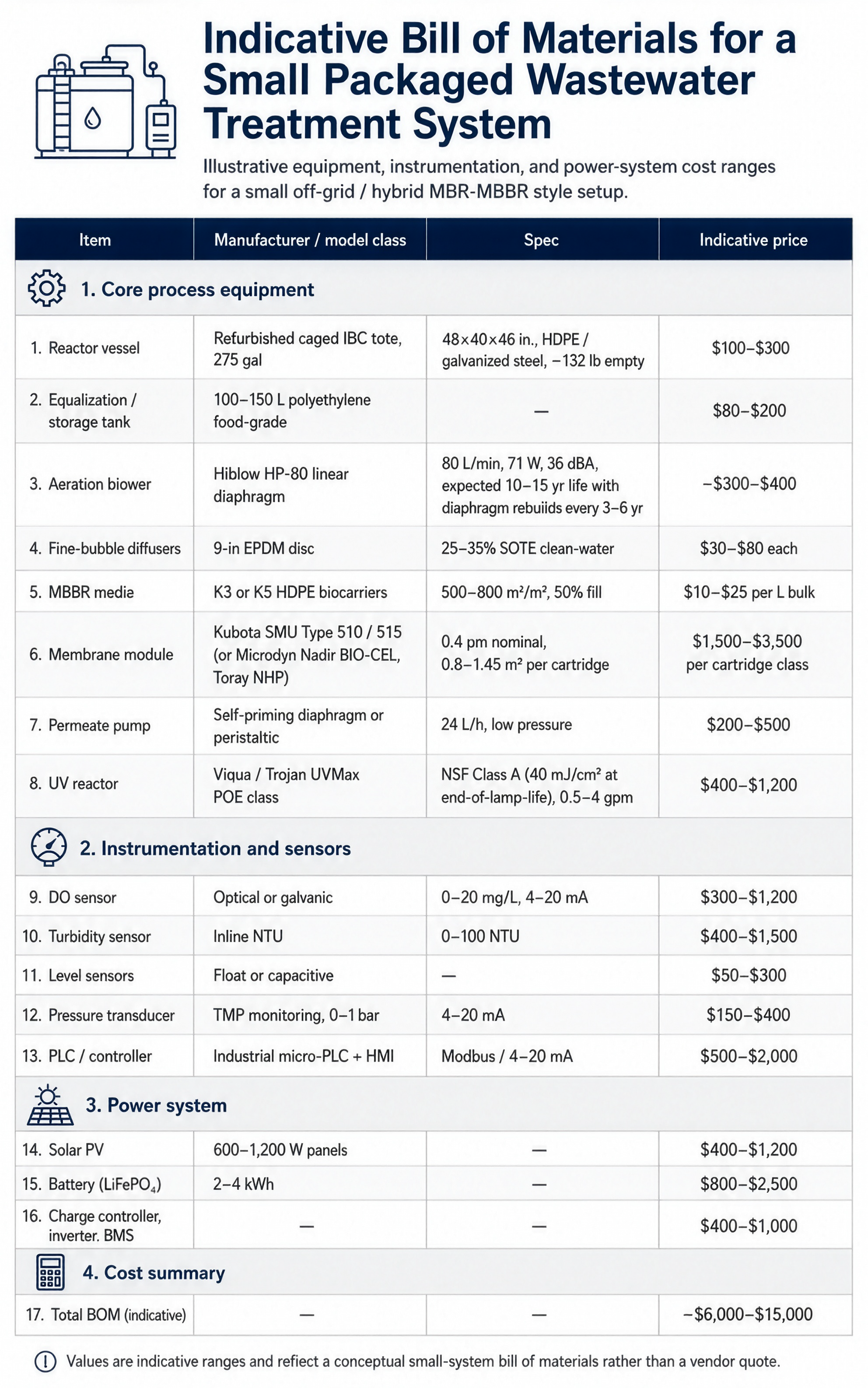
| Item | Manufacturer / Model Class | Spec | Indicative Price |
|---|---|---|---|
| Reactor vessel | Refurbished caged IBC tote, 275 gal | 48 x 40 x 46 in.; HDPE / galvanized steel; ~132 lb empty | $100–$300 |
| Equalization / storage tank | 100–150 L polyethylene | Food-grade storage tank | $80–$200 |
| Aeration blower | Hiblow HP-80 linear diaphragm | 80 L/min, 71 W, 36 dBA; expected 10–15 yr life with diaphragm rebuilds every 3–6 yr | ~$300–$400 |
| Fine-bubble diffusers | 9-in EPDM disc | 25–35% SOTE clean-water | $30–$80 each |
| MBBR media | K3 or K5 HDPE biocarriers | 500–800 m²/m³, 50% fill | $10–$25 per L bulk |
| Membrane module | Kubota SMU Type 510/515, Microdyn Nadir BIO-CEL, or Toray NHP | 0.4 µm nominal; 0.8–1.45 m² per cartridge | $1,500–$3,500 per cartridge class |
| Permeate pump | Self-priming diaphragm or peristaltic | 24 L/h, low pressure | $200–$500 |
| UV reactor | Viqua / Trojan UVMax POE class | NSF Class A; 40 mJ/cm² at end-of-lamp-life; 0.5–4 gpm | $400–$1,200 |
| DO sensor | Optical or galvanic | 0–20 mg/L, 4–20 mA | $300–$1,200 |
| Turbidity sensor | Inline NTU | 0–100 NTU | $400–$1,500 |
| Level sensors | Float or capacitive | Level monitoring | $50–$300 |
| Pressure transducer | TMP monitoring, 0–1 bar | 4–20 mA output | $150–$400 |
| PLC / controller | Industrial micro-PLC + HMI | Modbus / 4–20 mA | $500–$2,000 |
| Solar PV | 600–1,200 W panels | Solar generation array | $400–$1,200 |
| Battery (LiFePO4) | 2–4 kWh | Battery storage | $800–$2,500 |
| Charge controller, inverter, BMS | Power electronics package | Charge control, inversion, and battery management | $400–$1,000 |
| Total BOM (indicative) | — | Approximate total system bill of materials | ~$6,000–$15,000 |
6. Physical Layout and Packaging
A 275-gal IBC tote (48×40×46 in., 1219×1016×1168 mm) maps exactly to the GMA pallet footprint. Full weight of water alone is ~2,300 lb (1,040 kg); GMA pallets are rated for 2,800–4,600 lb static load depending on construction. Center of gravity sits ~23 in. above the pallet deck, within forklift tilt tolerances. Adding ~30 in. of vertical superstructure (blower, UV, control panel, PV-tie electronics) keeps overall height ≤76 in., compatible with standard 53-ft dry-van trailer clearance and 8-ft ISO container internal height. Freight class for sealed dry equipment at ~12–14 lb/ft³ shipped empty is approximately NMFC 60-85.
7. Energy, Consumables, Operations
Aeration demand. Process oxygen requirement is roughly 1.5 kg O₂ per kg BOD removed plus 4.57 kg O₂ per kg NH₄-N nitrified (Tchobanoglous et al. 2014). For 0.15 kg BOD + 0.025 kg NH₄-N, AOR ≈ 0.34 kg O₂/d. Field SAE at α ≈ 0.5 with fouled fine-bubble diffusers ≈ 2 kg O₂/kWh, giving ~0.17 kWh/d for biological aeration alone, well within the Hiblow HP-80 nameplate (71 W × 24 h = 1.7 kWh/d).
Membrane scour. Specific aeration demand per membrane area (SADm) of 0.3–0.5 Nm³/m²·h drives most MBR energy. For 1.5 m² of membrane that is 0.45–0.75 Nm³/h, easily covered by the same blower.
Total SED. Combining biological aeration + membrane scour + permeate pumping + controls + UV → 1.5–3 kWh/m³ for 150 GPD scale, i.e., 0.85–1.7 kWh/d. Design point: 2 kWh/d total continuous load (~85 W average).
Solar/battery sizing. At a 4 peak-sun-hour design site, ~600 W of PV produces ~2.4 kWh/d; 800 1,000 W is recommended for cloud reserve. Battery capacity of 2× daily load (≈4 kWh) gives one day of autonomy.
Sludge production. Observed yield Yobs ≈ 0.3–0.5 kg VSS / kg BOD removed at SRT 15–30 d (Tchobanoglous et al. 2014); at 0.15 kg BOD/d, sludge produced ≈ 50–80 g VSS/d dry, or ~5–8 L/d slurry at 1% TS. Operationally this accumulates and is pumped out at 3–6-month intervals.
Membrane cleaning. Maintenance cleaning every 4–8 weeks with 500–1,000 mg/L NaOCl, recovery cleaning every 6–12 months with 1,000–2,000 mg/L NaOCl plus 2 g/L citric acid at pH 2 (Hinada MBR cleaning guidance; Le-Clech, Chen, and Fane 2006, Journal of Membrane Science 284:17–53). Annual chemical demand is modest (<5 L of 12% NaOCl plus <1 kg citric acid per year).
8. Monitoring and Smart Integration
Required instrumented parameters: influent flow (turbine or magmeter), reactor DO (1.5–3 mg/L setpoint), TMP (alarm at >0.4 bar), MBBR liquid level, permeate turbidity (alarm at >2 NTU), UV intensity (alarm at <70% of design irradiance). A 4–20 mA / Modbus PLC layer with cellular telemetry enables remote operation. Predictive maintenance models can use TMP slope (dP/dt) to schedule chemical cleans before fouling becomes irreversible. Digital-twin and real-time control concepts for small water systems (Eggimann et al. 2017, Environmental Science & Technology 51:5279–5290) remain at TRL 5–7 for decentralized scale; near-term, the highest-value application is online energy and flux benchmarking against the design SED envelope.
9. Performance, Limitations, Failure Modes
Membrane fouling. The classic three-stage TMP profile is well-characterized: (1) initial rapid conditioning, (2) gradual increase, (3) TMP "jump" - beyond which only chemical cleaning recovers permeability (Le-Clech, Chen, and Fane 2006). Operational triggers: TMP >0.3–0.4 bar or specific flux <10 LMH/bar.
Cold-weather slowdown. With Arrhenius θ = 1.08 (textbook value, Tchobanoglous et al. 2014), a drop from 20 °C to 10 °C cuts the maximum nitrification rate by ~54%. Reported MBBR θ values span 1.024 (membrane-aerated biofilm; Stricker et al. 2023, Frontiers in Microbiology) to 1.149 (Salvetti et al. 2006 for 1 °C operation). Mitigation: insulate the IBC, heat-trace the influent line, and oversize MBBR media surface area by ~50% for installations below 12 °C ambient.
Biomass washout. In suspended-growth systems low SRT (<5 d) or hydraulic peaks cause washout. MBR's absolute retention prevents washout; MBBR's biofilm fixity does the same. Intermittent loading (typical residence) is well-tolerated by MBBR but causes filament/foam in conventional activated sludge.
Underloading. At 25% of design flow, oxygen demand drops but air-scour requirement does not, yielding poor energy intensity. VFD blower control or duty-cycled aeration mitigates.
Captured failure modes: Hiblow diaphragm failure (rebuild every 3–6 yr per vendor), membrane abrasion from carrier contact (separate UF compartment recommended), UV lamp end-of-life (annual replacement at ~9,000 h), fine-bubble diffuser clogging (3–5 yr design life).
10. Productization and Deployment
U.S. certification pathway. NSF/ANSI 40 + NSF/ANSI 245 (nitrogen) cover treatment performance; NSF/ANSI 350 Class R covers the reuse claim. NSF International states that NSF/ANSI 350 is "referenced in the International Plumbing Code (IPC) and the Uniform Plumbing Code (UPC), and required in many U.S. states"; the 2015 IRC, IPC, UPC and IgCC each require NSF/ANSI 350 compliance for non-potable reuse equipment. Risk-based reuse frameworks have been adopted in Colorado, California, Minnesota, Washington, and Hawaii as of April 2024 (NSF International / NOWRA 2024 presentation by Derek DeLand).
 John D
International. ISO 30500:2018 (revised 2025) provides the non-sewered sanitation framework, developed with Bill & Melinda Gates Foundation support under the "Reinvent the Toilet" program. South Africa identically adopted it as SANS 30500:2019 via Department of Trade and Industry Notice 275 of 2019 (published 17 May 2019), per the ANSI/ISO 30500 participant training booklet — "South Africa was one of the first countries in the world to identically adopt the standard as SANS 30500 in 2019" (Infrastructure News, December 2022).
Use cases:
• Off-grid residence/cabin: primary application; 2–3 occupants, dual-plumbed for non-potable reuse meeting NSF/ANSI 350.
• Remote workforce camp: 4–6 persons with intermittent loading; pair with surge buffer.
• Disaster recovery/humanitarian: deploy to Sphere Standard 2.1 (15 L/person/d minimum, ≥0.125 L/s flow rate at each water collection point) with chlorination to FRC ≥0.2 mg/L; treated greywater for hygiene re-use
Recommendations
- Adopt a hybrid MBBR + flat-sheet UF + UV-C train as the reference design. MBBR provides robust biological treatment with low operator-skill demand; UF guarantees turbidity <0.2 NTU; UV at 40 mJ/cm² covers virus and protozoa.
- Size to ISO 30500 Category A and NSF/ANSI 350 Class R simultaneously. These two together open the U.S. and international regulatory routes. Decision threshold: if the unit will be deployed primarily outside North America or for humanitarian applications, prioritize ISO 30500 testing; for U.S./Canada market entry, prioritize NSF/ANSI 350 certification first (this gates code-recognized residential reuse plumbing).
- Design for 2 kWh/d nominal continuous load, 800 W PV, 4 kWh LiFePO₄. Move to grid-tied operation if measured SED exceeds 2.5 kWh/m³ during 90-day commissioning.
- Stage the build: (a) bench prototype with a single 275-gal IBC, Hiblow HP-80, manual valving; (b) instrumented pilot with PLC and remote telemetry; (c) certification-ready unit. Stage gates: (a) BOD removal ≥90%, TSS ≤30 mg/L; (b) turbidity ≤2 NTU sustained for 4 weeks; (c) full NSF/ANSI 40 26-week protocol with Class I pass.
- Cold-climate variant: add ≥50 mm closed-cell foam insulation around the IBC, heat-trace influent and recycle lines, and oversize MBBR media area by 50% if minimum ambient temperature is below 10 °C. Re-evaluate if mean monthly liquid temperature drops below 8 °C.
- Reject UV-only disinfection if turbidity routinely exceeds 5 NTU. UV dose escalation is non-linear in turbid water; add a chlorine residual tank (450 mg·min/L CT) if the reuse application requires Title 22-equivalent virus inactivation.
Caveats
• All cost figures are indicative ranges drawn from publicly listed vendor pricing in 2024–2025. Actual landed cost depends heavily on procurement scale and region; certification testing (NSF/ANSI 350 alone) typically adds $50,000–$150,000 of one-time cost beyond hardware.
• NSF/ANSI 40, NSF/ANSI 245, NSF/ANSI 350, ISO 30500, and California Title 22 are copyrighted standards; the numeric thresholds cited here are reproduced from authoritative secondary sources (Varigala et al. 2020; Trotochaud et al. 2020; ANSI Sanitation summary; NSF International product documentation; eztreat.net NSF test reports; California State Water Resources Control Board summaries). Designers and certifiers must consult the licensed standards for definitive section text.
• Reported MBR energy intensities span more than an order of magnitude. Lower-bound figures of <0.4 kWh/m³ (Tao et al., Vienna) apply to optimized large municipal plants; 0.8–1.1 kWh/m³ is the full-scale average per IWA reviews; small package units realistically operate at 1.5–3 kWh/m³. The conservative band used here for solar sizing should be validated by metered pilot data.
• Arrhenius θ values for nitrification reported in the literature range from 1.024 (membrane aerated biofilm) to 1.172 (suspended growth at 5–20 °C). The intermediate textbook value θ = 1.08 used here underpredicts cold-weather rate loss at the low end.
• Greywater-only operation typically yields influent nitrogen below the floor at which a 70% TN reduction can be reliably demonstrated for ISO 30500 (because influent N is already low). Designers should document this as "compliance by influent characterization" rather than treatment performance.
• The pallet-fit constraint is binding: a single 275-gal IBC consumes the entire 48×40 in. envelope. Auxiliary tanks, blower, controls, and PV must mount vertically on or above the IBC, raising the center of gravity and complicating forklift handling. Alternative: accept a two-pallet (48×80 in.) shipping envelope for production units.

 John D
 John D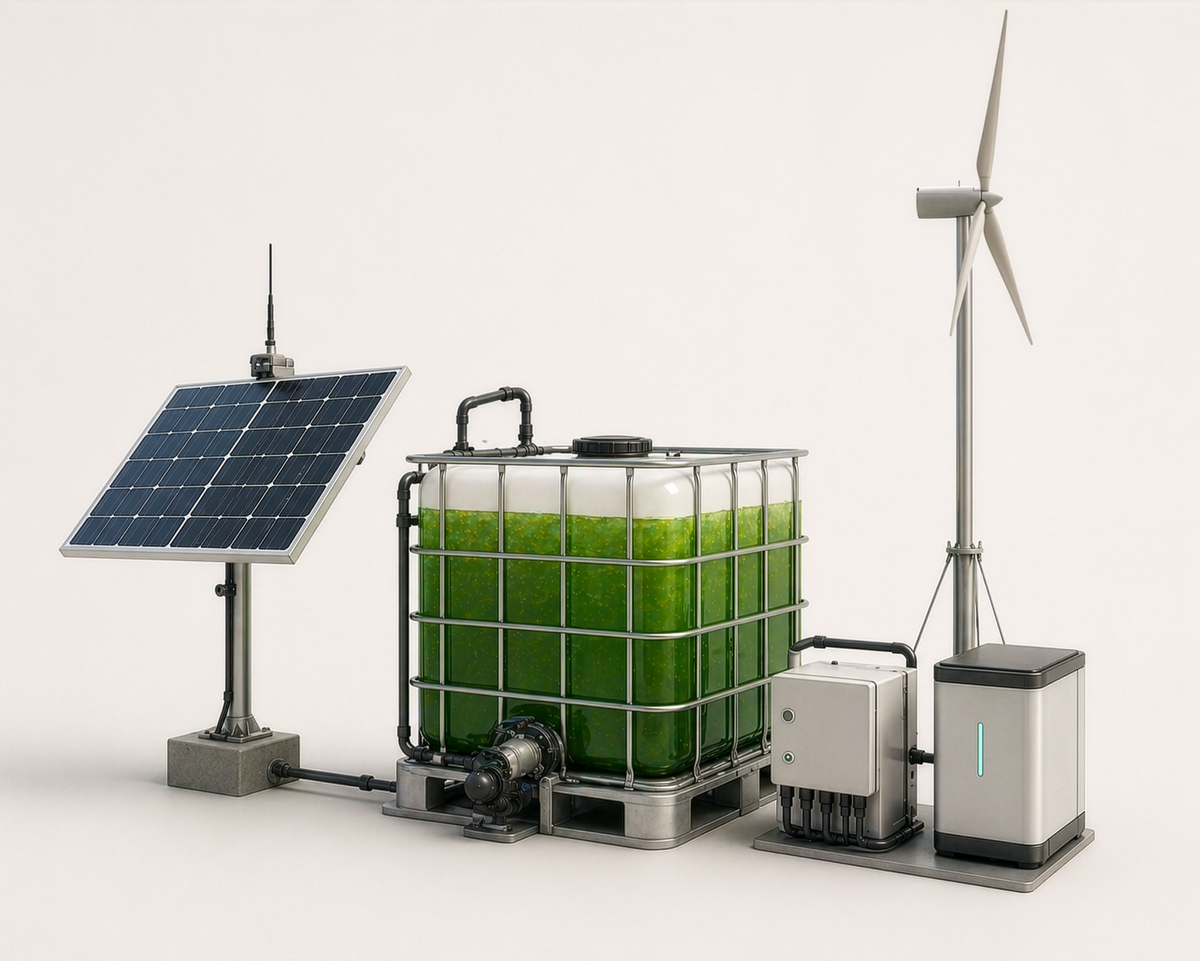
Citations
Aquasust. (n.d.). K1 K2 K3 K4 K5 MBBR media: A comprehensive guide. https://www.aquasustfactory.com/news/k1-k2-k3-k4-k5-mbbr-media-a-comprehensive-gui-84877861.html
Bio-Fil. (n.d.). Design considerations — moving-bed reactors. https://www.bio-fil.es/facilities/moving-bed/design-considerations-mbbr/
California Code of Regulations, Title 22, § 60301.230 — Disinfected tertiary recycled water. (n.d.). Legal Information Institute. https://www.law.cornell.edu/regulations/california/22-CCR-60301.230
Eckhoff, D. W., & Jenkins, D. (1972). Relationship between the observed cell yield coefficient and mean cell residence time in the completely mixed activated sludge process. Water Research, 6(11), 1341–1351. https://doi.org/10.1016/0043-1354(72)90056-5
Hem, L. J., Rusten, B., & Ødegaard, H. (1994). Nitrification in a moving bed biofilm reactor. Water Research, 28(6), 1425–1433.
Hiblow HP-80 linear septic air pump. (n.d.). SepticStop. https://septicstop.com/products/hiblow-hp-80-linear-septic-air-pump
Hinkton. (n.d.). Surface area loading rate in MBBR: Complete guide for wastewater treatment. https://hinkton.com/blog-detail/surface-area-loading-rate-in-mbbr-complete-guide-for-wastewater-treatment
Kim, J. H., Guo, X., & Park, H. S. (2008). Comparison study of the effects of temperature and free ammonia concentration on nitrification and nitrite accumulation. Process Biochemistry, 43(2), 154–160. https://doi.org/10.1016/j.procbio.2007.11.005
Kubota Corporation. (n.d.). Membrane solution lineup. https://www.kubota.com/products/solutions/lineup/index.html
Kubota Membrane Europe. (2019). SP series membrane specification brochure. https://www.kubota-membrane.com/uploads/2020/01/15/2019%20SP%20Brochure.pdf
Mannucci, A., Munz, G., Mori, G., Lubello, C., & Oleszkiewicz, J. A. (2015). Applicability of the Arrhenius model for ammonia oxidizing bacteria subjected to temperature time gradients. Frontiers of Environmental Science & Engineering, 9(6), 988–994. https://doi.org/10.1007/s11783-014-0751-0
NSF International. (n.d.). Residential wastewater treatment systems. https://www.nsf.org/water-systems/onsite-wastewater-water-reuse-systems/residential-wastewater-treatment-systems
Repackify. (2026). IBC tote dimensions: 275 & 330 gallon sizes, weights, specs. https://www.repackify.com/blog/ibc-tote-dimensions-and-sizes
Sahondo, T., Hennessy, S., Sindall, R. C., Chaudhari, H., Teleski, S., Lynch, B. J., Sellgren, K. L., Stoner, B. R., Grego, S., & Hawkins, B. T. (2020). Field testing of a household-scale onsite blackwater treatment system in South Africa. Science of the Total Environment, 700, 135469. https://doi.org/10.1016/j.scitotenv.2019.135469
SludgeHammer. (n.d.). NSF 245 vs NSF 40: Wastewater treatment standards. https://sludgehammer.net/blog/nsf-245-vs-nsf-40/
Trotochaud, L., Hawkins, B. T., & Stoner, B. R. (2020). Non-biological methods for phosphorus and nitrogen removal from wastewater: A gap analysis of reinvented-toilet technologies with respect to ISO 30500. Gates Open Research, 3, 559. https://doi.org/10.12688/gatesopenres.12931.2
U.S. Environmental Protection Agency. (2012). An overview of methods and criteria for demonstrating product performance [Webinar presentation]. https://www.epa.gov/sites/default/files/2015-06/documents/nsf_epa_webinar_ww_standards_03_2012_r1.pdf
Wastewater Digest. (n.d.). Energy efficiency of MBR. Wastewater Digest. https://www.wwdmag.com/utility-management/article/10919318/energy-efficiency-of-mbr
Welling, C. M., Sasidaran, S., Kachoria, P., Hennessy, S., Lynch, B. J., Teleski, S., Chaudhari, H., Sellgren, K. L., Stoner, B. R., Grego, S., & Hawkins, B. T. (2020). Field testing of a household-scale onsite blackwater treatment system in Coimbatore, India. Science of the Total Environment, 713, 136706. https://doi.org/10.1016/j.scitotenv.2020.136706
Zhu, S., & Chen, S. (2023). Temperature dependence of nitrification in a membrane-aerated biofilm reactor. Frontiers in Microbiology, 14, 1114647. https://doi.org/10.3389/fmicb.2023.1114647