Kazakhstan Tungsten Mining: Market Impact, Resource Endowment, and Strategic Supply Chain Realignment
Analysis of Kazakhstan's 2M-tonne WO₃ reserves, new mines, and their effect on global tungsten supply amid China's export curbs.
1. Summary
Kazakhstan possesses one of the world's largest undeveloped tungsten endowments, with total forecasted resources estimated at approximately 2 million tonnes of tungsten trioxide (WO₃) and proven reserves concentrated in a handful of large deposits [1][7][8]. After three decades of post-Soviet dormancy, the sector is undergoing a rapid reawakening driven by two convergent forces: China's tightening export controls on tungsten products, imposed in February 2025, and the resulting price surge of over 200 percent in ammonium paratungstate (APT) export prices from China between January 2025 and January 2026 [14][15]. Two major development tracks are now in motion. The Boguty mine, operated by Jiaxin International Resources (HKEX:JXI), commenced phase I commercial production in April 2025 with a target annual processing capacity of 3.3 million tonnes of ore [3][18]. Simultaneously, the Severniy Katpar joint venture between U.S.-backed Cove Kaz Capital Group (70 percent) and Kazakhstan's state mining company Tau-Ken Samruk (30 percent) is advancing the Northern Katpar and Upper Kairakty deposits, which together contain 1.4 million tonnes of JORC-compliant WO₃ resources and are projected to produce 12,000 tonnes per annum at full development, equivalent to approximately 15 percent of current global mine production [9][10][13]. Collectively, these projects position Kazakhstan to become the world's second-largest tungsten producer outside China [8][15], with profound implications for global supply chain concentration, pricing dynamics, and the strategic calculus of Western defense and industrial procurement.
The analysis that follows examines Kazakhstan's tungsten resource base, the technical and operational parameters of its principal projects, the market and pricing implications of new production entering a tightly supplied global market, the regulatory and geopolitical architecture within which these developments are embedded, and the material risks confronting investors, operators, and off-takers.
2. Resource Base and Geological Context
2.1 Deposit Inventory and Classification
Kazakhstan has approximately 12 explored tungsten deposits, with total reserves exceeding 2 million tonnes of WO₃ [8]. This figure is a forecasted resource estimate rather than a fully audited proved reserve [16]. The discrepancy between Kazakh national estimates and USGS reporting underscores a critical data gap.
The two largest and most economically significant deposits are Upper Kairakty (Verkhnekayraktinskoye) and Northern Katpar (Severnoye Katparskoye), located in the Karaganda region of central Kazakhstan, approximately 160 kilometers south of the city of Karaganda [15][8]. Upper Kairakty is classified as a unique deposit, ranking among the world's top three tungsten deposits by resource magnitude, with reported reserves of 1.2 million tonnes of WO₃ and 39,600 tonnes of molybdenum [12]. Northern Katpar, though smaller, holds approximately 90,000 tonnes of tungsten and 13,000 tonnes of molybdenum [12][8]. The combined JORC-compliant mineral resources for the two deposits total 1.4 million tonnes of WO₃, representing approximately 70 percent of Kazakhstan's estimated total tungsten resources [3][9]. A third notable deposit, Boguty in the Almaty region, is the fourth-largest tungsten deposit globally by mineral resources and has been the first to reach commercial production in the current development cycle [2][18].
2.2 Grade and Metallurgical Characteristics
The grade profile of Kazakhstan's tungsten deposits presents both opportunities and challenges. Upper Kairakty, despite its enormous resource tonnage, features low grades of valuable components: WO₃ at 0.133 percent and molybdenum at 0.005 percent [12]. This low-grade characteristic necessitates substantial volumes of ore extraction to achieve profitable operation, implying elevated capital intensity for mining and processing infrastructure and higher unit operating costs relative to higher-grade operations elsewhere. Northern Katpar, with approximately 90,000 tonnes of contained tungsten, is considered medium in reserves but may offer more favorable grade characteristics, though specific grade data are not consistently reported across sources [8]. The Boguty deposit, which has advanced to production, has demonstrated sufficient grade to support a 3.3 million-tonne-per-annum processing operation [18].
A critical metallurgical constraint, identified by Tau-Ken Samruk, is the lack of adequate beneficiation technologies in Kazakhstan that suit the specific characteristics of the deposits [12]. The Beijing Institute of Mining and Metallurgy developed an improved ore beneficiation technology for the Northern Katpar deposit, which involves the by-production of copper, bismuth, and molybdenum concentrates [12]. This reliance on Chinese-developed processing technology introduces a strategic complication for projects that are otherwise positioned as alternatives to Chinese supply.
3. Key Players and Project Portfolio
3.1 Severniy Katpar Joint Venture: Cove Kaz Capital Group and Tau-Ken Samruk
The most consequential development in Kazakhstan's tungsten sector is the Severniy Katpar joint venture. In November 2025, Kazakhstan's national mining company Tau-Ken Samruk and U.S.-based Cove Capital signed an agreement for the joint development of the Northern Katpar and Upper Kairakty deposits [12][13]. The agreement, formalized during President Kassym-Jomart Tokayev's visit to the United States, is part of a strategic bilateral agreement on critical minerals [13]. Under the terms, Cove Kaz Capital Group (a Kazakhstani subsidiary of Cove Capital) acquired a 70 percent controlling interest in Severniy Katpar LLP, with Tau-Ken Samruk retaining the remaining 30 percent [9][13].
Cove Capital has committed to invest at least USD 1.1 billion in the project's development, covering the construction of two processing plants and a metallurgical plant [13][21]. The U.S. International Development Finance Corporation has issued letters of interest exploring up to USD 700 million in debt financing and project development funding for the project [7][6]. Additional U.S. government support, reportedly up to USD 1.6 billion in potential federal financing, has been signaled [15][6]. The project is expected to create approximately 2,000 jobs over its implementation period [13][21].
Feasibility studies completed in April 2023 reported total JORC-compliant mineral resources of 1.4 million tonnes of WO₃ [9][10]. Anticipated annual production is approximately 5,000 tonnes at Northern Katpar and 7,000 tonnes at Upper Kairakty, for a total of 12,000 tonnes per year, projected to account for approximately 15 percent of current global tungsten mine production [9][10][15]. Site preparation commenced in July 2026, with core drilling scheduled for August 2026 and the definitive feasibility study underway [9][10]. The timeline to full production remains uncertain; earlier plans had envisioned construction start within two years and extraction within three and a half years from the agreement date [3].
3.2 Boguty Project: Jiaxin International Resources
The Boguty tungsten mine, located in the Almaty region, represents the first new tungsten production in Kazakhstan in the post-Soviet era. The deposit was discovered in 1941 and explored systematically by Soviet geological surveys between 1969 and 1974 [16]. Jiaxin International Resources Investment Limited, listed on both the Astana International Exchange and the Hong Kong Stock Exchange (HKEX:JXI), operates the project [2]. According to Frost & Sullivan, Boguty was the world's largest open-pit tungsten mine in terms of mineral resources of WO₃ as of December 31, 2024 [2][18].
The company commenced trial production in November 2024 and achieved phase I commercial production in April 2025, with a target annual mining and processing capacity of 3.3 million tonnes of tungsten ore [18][3]. Phase II commercial production is targeted for the first quarter of 2027 [18]. Analyst projections indicate concentrate production of approximately 5,000 tonnes in 2025, rising to over 12,000 tonnes by 2030, representing a compound annual growth rate of 19 percent [18]. The Boguty project benefits from its location near the A2 highway, providing access to both Almaty and the Khorgos crossing on the Chinese border [18].
3.3 State-Owned Enterprise: Tau-Ken Samruk
Tau-Ken Samruk JSC, established in 2009, consolidates the state's mining assets and is part of the Samruk-Kazyna Sovereign Wealth Fund [8]. The company is engaged in the discovery, exploration, mining, processing, and sale of solid minerals [12]. Beyond the Severniy Katpar joint venture, Tau-Ken Samruk plans to implement 12 investment projects in the Karaganda region totaling approximately KZT 750 billion, with about 3,800 jobs expected to be created by 2029 [13]. The company's strategic role extends beyond commercial operation to include the stewardship of Kazakhstan's mineral resource sovereignty and the negotiation of terms that balance foreign investment with domestic value retention.
4. Technical and Operational Considerations
4.1 Mining Methods and Infrastructure Requirements
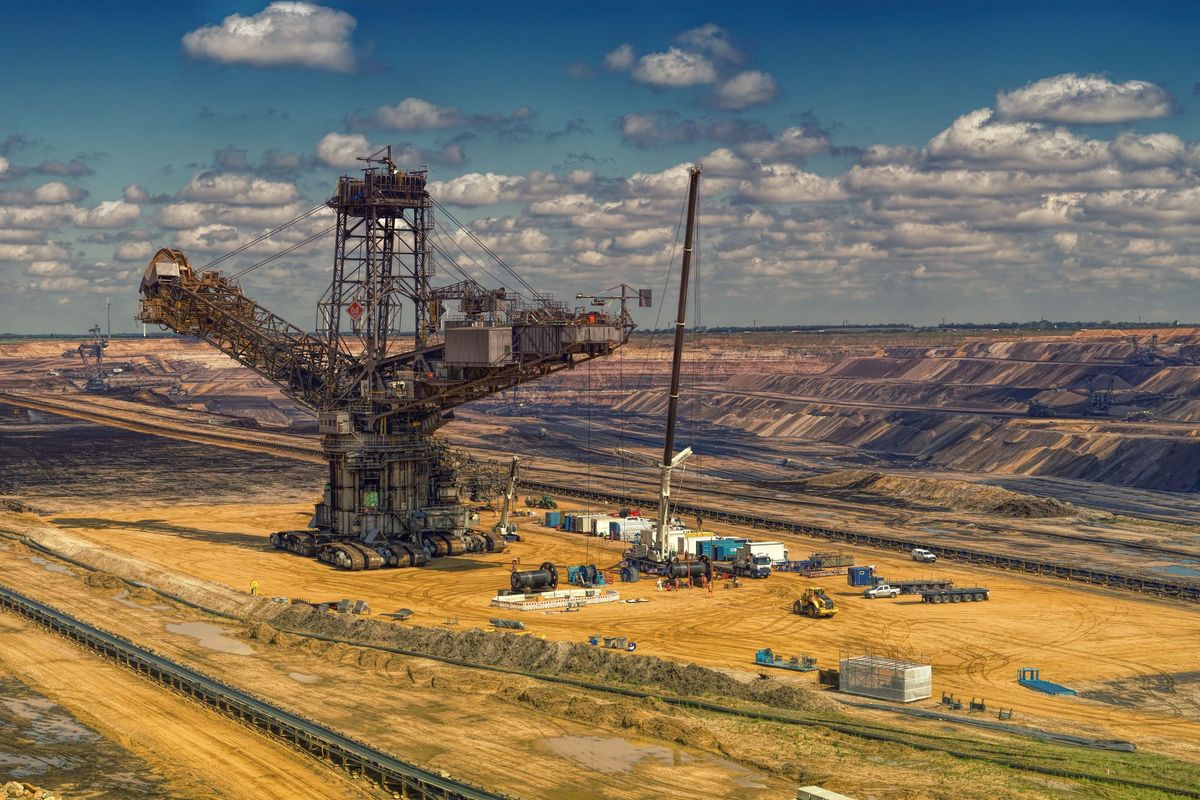
Both the Severniy Katpar and Boguty projects are designed as open-pit operations [9][18]. Open-pit mining is appropriate for the large, disseminated tungsten deposits characteristic of the region, but it entails substantial upfront capital expenditure for stripping, haulage, and processing infrastructure. The Severniy Katpar project alone requires an estimated USD 1.1 billion investment, covering two processing plants, a metallurgical plant, and associated infrastructure [8][13]. The Boguty project's phase I capacity implies a comparable scale of investment, though specific capital cost figures are not consistently reported across sources.
A key technical differentiator for the Severniy Katpar project is the explicit contractual condition prohibiting the export of raw materials and semi-finished products; production is to be focused exclusively on deep processing and high-value-added processing [13]. This mandates the construction of downstream refining capacity, including hydrometallurgical facilities capable of producing ammonium paratungstate, tungsten powder, and ultimately tungsten carbide [8][12]. The project envisions the establishment of a high-tech tungsten deep-processing facility, with production focused on APT, a high-value-added metallurgical product in strong global demand [21][13].
4.2 Beneficiation and Processing Technology
The beneficiation of Kazakhstan's tungsten ores presents significant technical challenges. The low grades of the Upper Kairakty deposit (WO₃ at 0.133 percent) necessitate the processing of large volumes of ore to achieve economically viable concentrate production [12]. The Beijing Institute of Mining and Metallurgy has developed an improved ore beneficiation technology for the Northern Katpar deposit that enables the by-production of copper, bismuth, and molybdenum concentrates [12]. This technology is presumably tailored to the specific mineralogy of the deposit, which includes scheelite and wolframite mineralization with associated sulfide minerals.
The Boguty project has integrated an ore sorting system into its existing mining flowsheet, a technological upgrade that can pre-concentrate ore and reject waste material before further processing, thereby improving plant feed grade and reducing downstream processing costs [2]. The project has also achieved zero discharge of production wastewater, indicating adherence to environmental management standards [18].
4.3 By-Product Recovery
Both the Northern Katpar and Upper Kairakty deposits contain significant molybdenum by-product credits: approximately 13,000 tonnes at Northern Katpar and 39,600 tonnes at Upper Kairakty [12]. By-products such as molybdenum, bismuth, and copper concentrates are expected to contribute to project economics [8]. The recovery of these by-products can materially improve unit economics, particularly given the low primary WO₃ grades, by spreading fixed costs across multiple revenue streams.
 John D
5. Economic and Market Dynamics
5.1 Global Tungsten Supply Concentration and China's Export Controls
The global tungsten supply chain is among the most concentrated of any critical mineral. China accounts for approximately 83 percent of global tungsten production, with an even higher share in downstream processing [7][14]. The United States has not mined tungsten commercially since 2015 and relies on imports and recycling [14]. This concentration creates acute supply vulnerability, which was dramatically illustrated when Beijing imposed export licensing controls on tungsten products, including APT, in February 2025 [15]. By late 2025, shipments had effectively stopped. Data from China's General Administration of Customs showed the combined annual export volume of APT powder and tungsten carbide powder fell approximately 41.7 percent year on year in 2025, to roughly 3,877 tonnes [15]. In January and February 2026, APT exports dropped to zero, and China recorded a net import of 1,363 tonnes of tungsten metal content, compared with a net export of 545 tonnes a year earlier [15]. The country responsible for nearly four-fifths of global tungsten supply had become a net importer of it.
The price impact has been dramatic. Fastmarkets' assessment of tungsten APT 88.5 percent WO₃ min, FOB main ports China, was USD 1,138–1,200 per metric tonne unit on January 14, 2026 [14]. Since the beginning of 2025, the export APT price in China had risen by over 200 percent from USD 335–345 per metric tonne unit on January 8, 2025 [14]. This price rally has coincided with renewed stockpiling by Western defense and industrial buyers and with the classification of tungsten as one of just 12 "defense-critical raw materials" by NATO in December 2024, and as one of the "highest risk" minerals on the U.S. draft critical minerals list released in August 2025 [14].
5.2 Kazakhstan's Projected Market Impact
The entry of Kazakhstani tungsten production into global markets is projected to have a material impact on supply dynamics. The Severniy Katpar project's full production of 12,000 tonnes per annum represents approximately 15 percent of current global tungsten mine production [10][15]. The Boguty project is projected to contribute over 12,000 tonnes by 2030 [18]. Collectively, these projects could add approximately 24,000 tonnes of annual production capacity, equivalent to roughly 30 percent of current global mine output, though this figure is a modeled projection assuming full development timelines and sustained production rates, neither of which is assured.
Analyst estimates from China International Capital Corporation project that Kazakhstan's tungsten supply increment could reach 3,600, 4,600, and 5,700 metal tonnes in 2025, 2026, and 2027 respectively, accounting for 4.4 percent, 5.4 percent, and 6.6 percent of global primary tungsten supply, and contributing over 50 percent of non-Chinese supply increments over that period [20]. These figures, which are modeled projections, suggest that Kazakhstan will be the primary source of new tungsten supply outside China in the near term.
5.3 Downstream Processing and Value Addition
A critical uncertainty is the extent to which Kazakhstan will capture value beyond raw concentrate production. The Severniy Katpar joint venture agreement explicitly prohibits the export of raw materials and semi-finished products, mandating deep processing within Kazakhstan [13]. The project envisions the production of APT, a high-value-added intermediate, and eventually tungsten powder and tungsten carbide [8][12]. This downstream integration is consistent with Kazakhstan's stated goal of strengthening industrial sovereignty rather than limiting itself to raw material exports [7].
However, the technical and commercial viability of domestic downstream processing remains to be demonstrated. The capital requirements for hydrometallurgical refining are substantial, and the operational expertise required for APT and tungsten powder production is concentrated in China. The Boguty project's processing plant, which opened in November 2024 with Chinese investment (Xiamen Tungsten reportedly invested USD 300 million), produces 65 percent tungsten concentrate [21][8]. The progression from concentrate to APT to tungsten powder to carbide represents a ladder of increasing value capture and technical complexity.
6. Regulatory Landscape
6.1 Subsoil Use and Mining Legislation
Kazakhstan's mining sector is governed primarily by the Law on Subsoil and Subsoil Use, which came into effect on June 29, 2018 [17]. The law distinguishes between hydrocarbons and solid minerals, with uranium subject to separate regulation [17]. The granting of subsoil use rights, including exploration and mining licenses, is administered by the Ministry of Industry and Infrastructure Development and, for strategic deposits, may involve direct government negotiation. The legal framework is based on a civil law system, and there are no overlaps of jurisdictions in mining regulation [17].
6.2 Taxation and Fiscal Regime
The mineral extraction tax (MET) for solid minerals, including tungsten, is determined by the Tax Code. A 0 percent tax rate on mineral extraction may be applied for a period of 60 months (five years) from the start of industrial mining, provided that specified conditions are met [17]. This tax incentive is designed to encourage new mine development and reduce the initial fiscal burden on capital-intensive projects. Beyond the MET, projects are subject to corporate income tax, value-added tax, and various local taxes and royalties. The Severniy Katpar project is projected to generate approximately USD 1.5 billion in tax proceeds to the budget over its implementation period, depending on production and price [13].
6.3 Export Controls and Domestic Processing Requirements
Export of minerals, including tungsten, is permitted in Kazakhstan, subject to export control regulations and applicable customs duties [17]. However, the Severniy Katpar joint venture agreement contains an explicit and strategically significant condition: a ban on the export of raw materials and semi-finished products [13][19]. Production from the project will be focused exclusively on deep processing within Kazakhstan. This condition, which has been reported as a prohibition on the American company Cove Capital exporting tungsten from the republic, represents a significant departure from the typical resource extraction model and aligns with Kazakhstan's industrial policy objectives [19]. The ban effectively forces the project to develop domestic downstream processing capacity, capturing value addition within Kazakhstan and potentially creating a vertically integrated tungsten industry.
7. Geopolitical and Strategic Dimensions
7.1 The U.S.-China Critical Minerals Competition
Kazakhstan's tungsten sector is situated at the intersection of two structural trends: the militarization of the global economy and the technological rivalry between the United States and China [7]. Tungsten is used in armor-piercing ammunition, missile systems, aerospace alloys, mining drills, cutting bits, coatings (tungsten hexafluoride) for semiconductor manufacturing, and equipment for nuclear and defense industries [7][14]. Its strategic importance has been codified by NATO (December 2024), the U.S. Department of the Interior (August 2025 draft critical minerals list), and the U.S. Department of Defense [14].
The U.S. response to supply concentration has been multifaceted. The Trump administration, according to multiple reports, was directly involved in negotiating the terms of the Severniy Katpar agreement with President Tokayev [15]. Commerce Secretary Howard Lutnick signed a memorandum of understanding with Kazakhstan's Ministry of Industry and Construction at the C5+1 summit in November 2025 [15]. The U.S. International Development Finance Corporation has issued letters of interest for up to USD 700 million in financing [7][6]. A federal procurement rule taking effect on January 1, 2027, will bar tungsten sourced from China, Russia, Iran, and North Korea from a range of U.S. defense applications, creating a regulatory deadline that amplifies the urgency of alternative supply development [19].
7.2 Kazakhstan's Strategic Positioning
Kazakhstan finds itself in a delicate geopolitical position. The country borders Russia and maintains close economic ties with China, while simultaneously seeking to diversify its economic relationships and attract Western investment [22]. The tungsten deals with U.S. companies represent a calculated hedging strategy: Kazakhstan can leverage its resource endowment to attract investment, technology transfer, and geopolitical support from both sides. As one analysis noted, greater American investment could provide Kazakhstan with additional leverage in its relations with Moscow and Beijing [22].
The country's historical pattern has been to export raw materials, with nearly all tungsten ores and concentrates reportedly exported to China in the past [5]. The new agreements, with their explicit prohibitions on raw material exports and requirements for domestic processing, represent a departure from this pattern. Whether Kazakhstan can successfully execute this transition to downstream value addition remains to be seen, but the intent is clear: to use tungsten as a vehicle for industrial upgrading and strategic autonomy.
7.3 China's Counter-Moves
China retains significant influence over Kazakhstan's tungsten sector through multiple channels. The Beijing Institute of Mining and Metallurgy developed the beneficiation technology for the Northern Katpar deposit [12]. Xiamen Tungsten, a Chinese company, had previously negotiated a USD 755 million investment in developing facilities at the Northern Katpar and Verkhneye Kayraktinskoye deposits, with plans including two mining and processing plants and a unified hydrometallurgical complex [8]. While those plans did not materialize in their original form, Chinese technical and financial engagement remains substantial. The Boguty project, which commenced production in 2024, involved significant Chinese investment [21]. China's position as the dominant consumer and processor of tungsten concentrates gives it continued leverage over Kazakhstani production, even as new projects seek to redirect supply to Western markets.
8. Risk Matrix
The following risk matrix identifies the principal material risks facing Kazakhstan's tungsten industry, assessed on likelihood and potential impact, with credible mitigations.
| Risk | Likelihood | Impact | Mitigations |
|---|---|---|---|
| Project execution delays – Both Severniy Katpar and Boguty face potential delays in construction, commissioning, and ramp-up to full production. The Severniy Katpar project has only recently commenced site preparation, with full production still several years away. | High | High | Phased development approach; parallel processing plant construction; retention of experienced engineering, procurement, and construction management contractors; contingency funding provisions |
| Cost overruns – Capital intensity is substantial (USD 1.1 billion for Severniy Katpar alone). Inflation, currency fluctuations, and supply chain disruptions could inflate costs. | High | High | Fixed-price engineering, procurement, and construction contracts; hedging of currency and commodity exposures; staged capital commitments tied to milestones |
| Technical processing challenges – Low-grade ores (0.133 percent WO₃ at Upper Kairakty) and lack of proven beneficiation technology in Kazakhstan create operational risk. Reliance on Chinese-developed technology introduces strategic vulnerability. | Medium | High | Pilot plant testing; technology transfer agreements; development of in-country metallurgical expertise; by-product recovery to improve economics |
| Price volatility – Tungsten prices have experienced extreme volatility, with APT prices rising over 200 percent in one year. A price correction could render marginal projects uneconomic. | Medium | High | Long-term off-take agreements with fixed or floor pricing; vertical integration into downstream products; hedging programs; cost-competitive mine design |
| Geopolitical disruption – The U.S.-China competition could intensify, potentially subjecting Kazakhstani tungsten to trade restrictions, sanctions, or counter-measures. China could restrict technology exports or exert pressure on Kazakhstan. | Medium | High | Diversification of technology partners; diplomatic hedging; compliance with international trade regimes; development of indigenous technical capacity |
| Export ban enforcement – The ban on raw material exports from Severniy Katpar, while aligned with Kazakh industrial policy, creates a "captive" processing requirement that may reduce operational flexibility and increase capital requirements. | Medium | Medium | Phased development of downstream capacity; partnerships with established downstream processors; offtake agreements for intermediate products |
| Regulatory and fiscal changes – Kazakhstan's tax and regulatory regime could change, potentially increasing the fiscal burden on mining projects or altering subsoil use terms. | Low | Medium | Stabilization clauses in investment agreements; engagement with host government; diversification of investment portfolio |
| Environmental and social risks – Tungsten mining and processing generate solid and liquid wastes requiring special storage measures [23]. Water resource impacts and ecological disruption are material concerns. | Medium | Medium | Adoption of international environmental standards; zero-discharge processing; community engagement and benefit-sharing; closure and rehabilitation planning |
| Workforce and skills shortages – Kazakhstan lacks a deep pool of experienced tungsten mining and processing professionals. Expatriate staff will be required initially, with gradual replacement of local staff [13]. | Medium | Medium | Training and development programs; partnerships with Kazakh technical universities; gradual localization of workforce |
| USGS resource classification gap – The discrepancy between Kazakh national estimates and USGS reporting creates uncertainty for investors and may affect financing and off-take negotiations. | Low | Medium | Completion of JORC- or NI 43-101-compliant resource audits; transparent disclosure of resource and reserve estimates |
9. Strategic Recommendations
For Corporate Strategists and Investors
- Adopt a portfolio approach to Kazakhstani tungsten exposure. The two major development tracks (Severniy Katpar and Boguty) have different risk profiles, ownership structures, and timelines. Severniy Katpar, with its U.S. government backing and explicit domestic processing requirement, offers strategic alignment with Western supply chain diversification but carries higher execution risk and longer timeline. Boguty, already in production with Chinese involvement, offers nearer-term cash flow but greater exposure to Chinese supply chain dynamics. A balanced portfolio should consider both.
- Secure long-term offtake agreements with floor pricing. Given the extreme price volatility demonstrated over the past two years, offtake agreements that provide price protection while allowing upside participation are essential for project bankability. Defense and aerospace off-takers, facing regulatory deadlines (January 2027 U.S. defense procurement rule), may be willing to accept premium pricing for supply security.
- Monitor the downstream value chain closely. The value capture opportunity extends beyond concentrate production to APT, tungsten powder, and tungsten carbide. Investors should assess whether Kazakhstani projects can compete with Chinese processors on cost and quality, and whether the domestic processing requirement creates a competitive moat or a cost disadvantage.
For Policymakers and Government Agencies
- Accelerate resource classification under international standards. The absence of comprehensive JORC- or NI 43-101-compliant resource and reserve estimates for Kazakhstan's tungsten deposits creates uncertainty for investors and limits the country's ability to attract development capital. A systematic program of resource certification would enhance credibility and reduce financing costs.
- Support technology transfer and indigenous capability development. Kazakhstan's tungsten industry currently relies on Chinese-developed beneficiation technology. Diversifying technology sources and building domestic metallurgical expertise should be a priority, both for strategic autonomy and for capturing downstream value.
- Align regulatory incentives with strategic objectives. The five-year mineral extraction tax holiday is a useful incentive. Consider additional incentives for downstream processing investment, such as accelerated depreciation for hydrometallurgical facilities, reduced customs duties on imported processing equipment, and research and development tax credits for process innovation.
- Manage geopolitical balancing carefully. Kazakhstan's position between the U.S. and China requires deft diplomacy. The country should seek to maximize the benefits of competition (investment, technology, market access) while avoiding over-commitment to either side. Transparent, rules-based investment frameworks and adherence to international norms will reduce the risk of retaliatory measures.
For Defense and Industrial Procurement Planners
- Treat Kazakhstani tungsten as a critical supply source but not a complete solution. Even at full development, Severniy Katpar and Boguty combined would supply approximately 30 percent of current global mine production. Supply diversification requires multiple sources, including recycling, domestic production (where feasible), and development of projects in other jurisdictions (notably Uzbekistan and Rwanda).
- Engage early with project developers on product specifications. The transition from concentrate to APT to tungsten powder involves significant process development. Defense and industrial end-users should work with Kazakhstani developers to ensure that product quality meets the exacting specifications required for aerospace, defense, and semiconductor applications.
- Support financing de-risking through government-backed instruments. The involvement of the U.S. International Development Finance Corporation and other development finance institutions is critical for project bankability. Continued and expanded use of political risk insurance, loan guarantees, and direct lending can reduce the cost of capital and accelerate development timelines.
10. Conclusion
Kazakhstan's tungsten industry is poised for a transformative expansion that could reshape global supply dynamics and reduce the extreme concentration that has characterized the market for decades. The country's resource endowment is substantial, with approximately 2 million tonnes of forecasted WO₃ resources and two of the world's largest undeveloped deposits now advancing toward production. The external impetus for this transformation is unmistakable: China's February 2025 export controls triggered a supply shock that sent prices soaring and galvanized Western efforts to secure alternative sources. The U.S. government's direct involvement in negotiating the Severniy Katpar agreement, the commitment of over USD 1 billion in private investment, and the potential for additional development finance support underscore the strategic importance attached to this initiative.
Yet the path to production is fraught with risk. Technical challenges in beneficiating low-grade ores, the absence of proven domestic processing capacity, the capital intensity of the required infrastructure, and the geopolitical cross-currents between the U.S. and China all pose difficulties to project timelines and economics. The export ban on raw materials, while aligned with Kazakhstan's industrial policy objectives, adds a layer of complexity and capital requirement that may test the financial and operational capabilities of the project sponsors.
The most likely outcome, based on the available evidence, is a gradual ramp-up of production over the next five to seven years, with Kazakhstan emerging as a significant but not dominant supplier of tungsten concentrates and, eventually, intermediate products. The country is unlikely to displace China as the world's largest tungsten producer, but it can become a second source, reducing the supply concentration that has long characterized the market. For investors, the opportunity lies in the structural demand for supply diversification; the risk lies in the execution challenges that have historically plagued large-scale mining projects in the region. For policymakers, the imperative is to create a stable, transparent, and investment-friendly environment that enables the sector to realize its potential while managing the geopolitical tensions that inevitably accompany the development of strategic mineral resources.

References
- "Kazakhstan at a Critical Minerals Crossroads: Tungsten and Middle Power Resource Sovereignty." The Diplomat, February 27, 2026.
- Jiaxin International Resources Investment Limited. Listing Document. Hong Kong Stock Exchange, 2025.
- Jiaxin International Resources Investment Limited. "Commencement of Commercial Production." HKEX Announcement, April 2025.
- "Cove Kaz Capital Group Begins Site Preparation at Northern Katpar." BusinessWire, July 9, 2026.
- "Central Asia's Tungsten Test: Can Kazakhstan, Uzbekistan Redraw US-China Critical Minerals Map?" Fastmarkets, January 21, 2026.
- "Special Envoy Gor Applauds DFC Effort to Strengthen U.S. Tungsten Supply via Kazakhstan Partnership." U.S. Embassy in Kazakhstan, February 11, 2026.
- "Kazakhstan Strengthens Its Position in the Global Critical Minerals Industry." Samruk-Kazyna Press Release, July 16, 2026.
- "KAZAKHSTAN-TUNGSTEN-DEPOSITS-INVESTMENTS." ICE (Italian Trade Agency), April 10, 2025.
- "Cove Kaz Capital to start site work at Kazakhstan's Severniy Katpar." Mining Technology, July 13, 2026.
- "Tau-Ken Samruk and Cove Capital agree on tungsten deposit development in Kazakhstan." ICE (Italian Trade Agency), November 10, 2025.
- "Tau-Ken Samruk National Mining Company plans to implement 12 investment projects in the Karaganda region." Tau-Ken Samruk JSC, 2026.
- "Tungsten race puts Kazakhstan between US and China." Aju Press, June 29, 2026.
- "Kazakhstan, U.S. sign major $1.1bn deal on critical minerals." Associated Press, February 17, 2026.
- "First tungsten processing plant opened in Kazakhstan." TASS, November 2, 2024.
- "Trump Administration Secures Deal with Kazakhstan for Tungsten." Institute for Energy Research, July 2, 2026.
- "Kazakhstan's critical minerals ambitions may still be a distant dream." NewsBase, November 26, 2025.
- "Mining 2026 - Kazakhstan." Chambers Global Practice Guides, January 27, 2026.
- "Kazakhstan Mining Investment Law Overview." Zhonglun Law Firm, March 5, 2025.
- "Kazakhstan has banned an American company from exporting tungsten from the republic." Fakti.bg, March 12, 2026.
- "China International Capital Corporation: Global tungsten supply shortage expected to persist through 2027." Finance Eastmoney, November 13, 2024.
- "Chinese company invests $300 mln in launch of Kazakhstan's first tungsten plant." Interfax, November 2, 2024.
- "Why Trump Is Suddenly Eyeing Kazakhstan: The Answer Lies In A Little-Known Metal And America's China Strategy." News18, June 30, 2026.
- Jiaxin International Resources Investment Limited. Environmental, Social and Governance Report 2025. HKEX, June 2026.