AI Bubble or Infrastructure Supercycle? A Strategic Assessment of the AI Capex Boom
Is AI a bubble or infrastructure boom? A strategic breakdown of AI capex, data centers, NVIDIA, cloud, power, and end-users.


TLDR: AI is an infrastructure supercycle with bubble-like pockets.
The strongest platforms, semiconductor suppliers, and power providers survive and compound. The weakly financed players, overbuilt data-center projects, marginal AI clouds, and low-differentiation model providers face consolidation, write-downs, or bankruptcy.
AI Bubble or Infrastructure Supercycle? A Strategic Assessment of the Two Arguments
The AI bubble debate is often framed badly. One side argues that AI companies are burning cash, data centers are expensive, and current revenue cannot justify the infrastructure boom. The other side argues that AI is foundational infrastructure, and that the apparent losses are simply the cost of laying down the tracks before the network is fully monetized.
Both arguments contain truth. The more accurate position is not “AI is a bubble” or “AI is not a bubble.” The more accurate position is:
AI is real infrastructure demand, but the financing cycle around AI infrastructure can still become bubble-like.
That distinction matters. A technology can be historically important while large portions of the investment cycle still overbuild, misprice risk, or destroy capital. Railroads became foundational. Telecom fiber became foundational. Cloud computing became foundational. But each of those cycles also included bankruptcies, stranded assets, bad financing, overcapacity, and investor losses.
The “Yes, It Is a Bubble” Argument:
The strongest bubble argument is not that AI is useless. That is too simplistic. The stronger argument is that the industry may be committing capital faster than downstream monetization can rationally support.
The scale of AI infrastructure spending is now enormous. Alphabet raised its 2026 capital expenditure guidance to $180–$190 billion, citing “unprecedented internal and external demand for AI compute resources,” while also warning that higher depreciation, data-center operations, and energy costs will pressure the income statement. Meta raised its 2026 capex guidance to $125–$145 billion, citing higher component pricing and additional data-center costs for future capacity. Microsoft reported $31.9 billion in Q3 FY2026 capital expenditures, with roughly two-thirds going to short-lived assets such as GPUs and CPUs. Amazon’s free cash flow fell sharply in 2025 because of a $50.7 billion year-over-year increase in property and equipment purchases, primarily reflecting AI investment.
The bubble case says this is not normal investment discipline. It says the industry is extrapolating too much future demand into present commitments. Data centers take years to permit, power, cool, finance, and build. GPUs depreciate quickly. Model architectures change quickly. Custom silicon may reduce dependence on Nvidia over time. Power interconnection queues and grid constraints can delay projects. If demand growth slows, if utilization is lower than expected, or if inference prices fall faster than usage rises, the economics can deteriorate.
There is also a circular-financing concern. OpenAI has reportedly signed a $300 billion compute deal with Oracle over roughly five years. Microsoft’s commercial remaining performance obligation includes large AI commitments, and earlier in FY2026 Microsoft said roughly 45% of its commercial RPO balance came from OpenAI. Nvidia is selling hardware into a market where many buyers are also dependent on future AI revenue expectations. This does not mean the revenue is fake, but it does mean the ecosystem has become interdependent.
The “bubble” argument also points to weak-link risk. A Microsoft, Alphabet, Amazon, or Meta can absorb massive capex because each has a cash-generating core business. Oracle, CoreWeave-style AI clouds, debt-financed data-center developers, and frontier AI labs have less room for error. If one major counterparty misses revenue expectations or delays payment obligations, the failure could cascade through leases, cloud contracts, GPU orders, and project finance.
The most convincing version of the bubble case is therefore:
AI demand is real, but the capex curve may be too steep, too concentrated, too debt-dependent, and too dependent on a small number of frontier-model customers.
The “No, This Is Infrastructure” Argument:
The strongest infrastructure argument is that this is not a zero-revenue speculative mania. AI usage is already translating into real revenue, real backlog, and real physical demand.
Nvidia reported Q1 fiscal 2027 revenue of $81.6 billion, up 85% year-over-year, with data-center revenue of $75.2 billion, up 92%. Broadcom reported Q1 FY2026 AI revenue of $8.4 billion, up 106% year-over-year, driven by custom AI accelerators and networking. Alphabet reported Google Cloud revenue up 63% to $20 billion, with cloud operating income tripling year-over-year and Google Cloud backlog reaching $462 billion. OpenAI reportedly passed $25 billion in annualized revenue by the end of February 2026, while Anthropic expects a major revenue surge and potentially its first quarterly operating profit.
The physical world also supports the infrastructure thesis. The International Energy Agency projects global data-center electricity consumption roughly doubling from 485 TWh in 2025 to 950 TWh in 2030, with AI-focused data-center electricity consumption tripling over that period. The U.S. Energy Information Administration expects U.S. electricity demand to see its strongest four-year growth period since 2000, driven largely by large computing centers and data centers. That is hard to square with the claim that the entire boom is imaginary.
The infrastructure argument also says critics misunderstand accounting. A profitable hyperscaler can show pressured free cash flow because it is buying land, transformers, servers, chips, networking gear, cooling systems, and power capacity ahead of future revenue. That is not the same thing as a failed business model. Capex is front-loaded; monetization arrives later as capacity comes online. Microsoft explicitly separates short-lived GPU/CPU assets from long-lived data-center assets that it expects to monetize over 15 years and beyond.
The strongest version of the infrastructure case is:
AI is becoming a compute utility. The current capex boom reflects a race to build scarce infrastructure before demand is fully served. Early-stage losses or free-cash-flow pressure do not prove a bubble; they may simply reflect the cost of building the network.
Strategic Synthesis: Real Technology, Bubble-Like Financing Risk
The cleanest synthesis is that AI is not a fake technology bubble in the narrow sense. But the AI infrastructure financing cycle has bubble-like characteristics.
The railroad analogy is appropriate, but it should be used carefully. Railroads were real. They transformed commerce. They became national infrastructure. But many railroad investors still lost money because the buildout was overleveraged, politically distorted, overbuilt in some corridors, and mispriced by speculators. The technology won; many balance sheets did not.
AI may follow a similar pattern. The long-term demand for compute, automation, simulation, drug discovery, coding assistance, digital agents, search, advertising optimization, logistics, robotics, and scientific modeling is likely real. But the market may still overbuild specific data-center regions, overpay for GPUs, overfinance weak cloud intermediaries, and assume that every model provider can sustain high margins.
Rather than debating whether AI has a "real utility" or not, the key question is:
Who captures the value, who finances the infrastructure, and who absorbs the depreciation if revenue arrives slower than expected?
Nvidia and Broadcom are selling into the buildout. Utilities and grid-equipment providers are selling into the power bottleneck. Hyperscalers are converting capex into cloud capacity. Frontier labs are converting compute into model revenue. Enterprises are converting model access into productivity. End-users are trying to convert AI into lower costs, faster R&D, better software, better discovery, or better margins.
Those are not the same investment. They sit at different layers of the stack, with different risk profiles.

Investment Layer 1: AI Providers and Model Labs
This includes OpenAI, Anthropic, Google DeepMind/Gemini, xAI, Mistral, Cohere, and other model providers.
These companies are closest to the visible AI product. They sell subscriptions, APIs, enterprise seats, coding agents, model access, workflow automation, and specialized domain tools. Their upside is enormous because they can become the operating layer for knowledge work. If AI agents become embedded into coding, customer service, research, legal work, finance, analytics, and enterprise operations, the model provider can become a tollbooth on digital labor.
But this is also one of the riskiest layers. Training costs are high. Inference costs are high. Competition is intense. Models can become commoditized. Open-source models can pressure pricing. Enterprise customers may switch providers. Consumer users may be expensive to serve. Regulatory, copyright, safety, and data-security issues remain unresolved.
Anthropic’s reported near-profitability is important because it suggests enterprise-focused AI can potentially support real economics. But even there, compute remains a huge expense: Reuters reported that Anthropic agreed to pay SpaceX $1.25 billion per month for compute capacity through May 2029, with termination provisions. That shows both sides of the situation: demand is real enough to support massive compute deals, but the cost base is also enormous.
Strategic read: AI providers offer maximum upside but also maximum model-risk, margin-risk, and competitive-risk. They are not the same as infrastructure companies. They are closer to software-platform bets with unusually heavy compute costs.
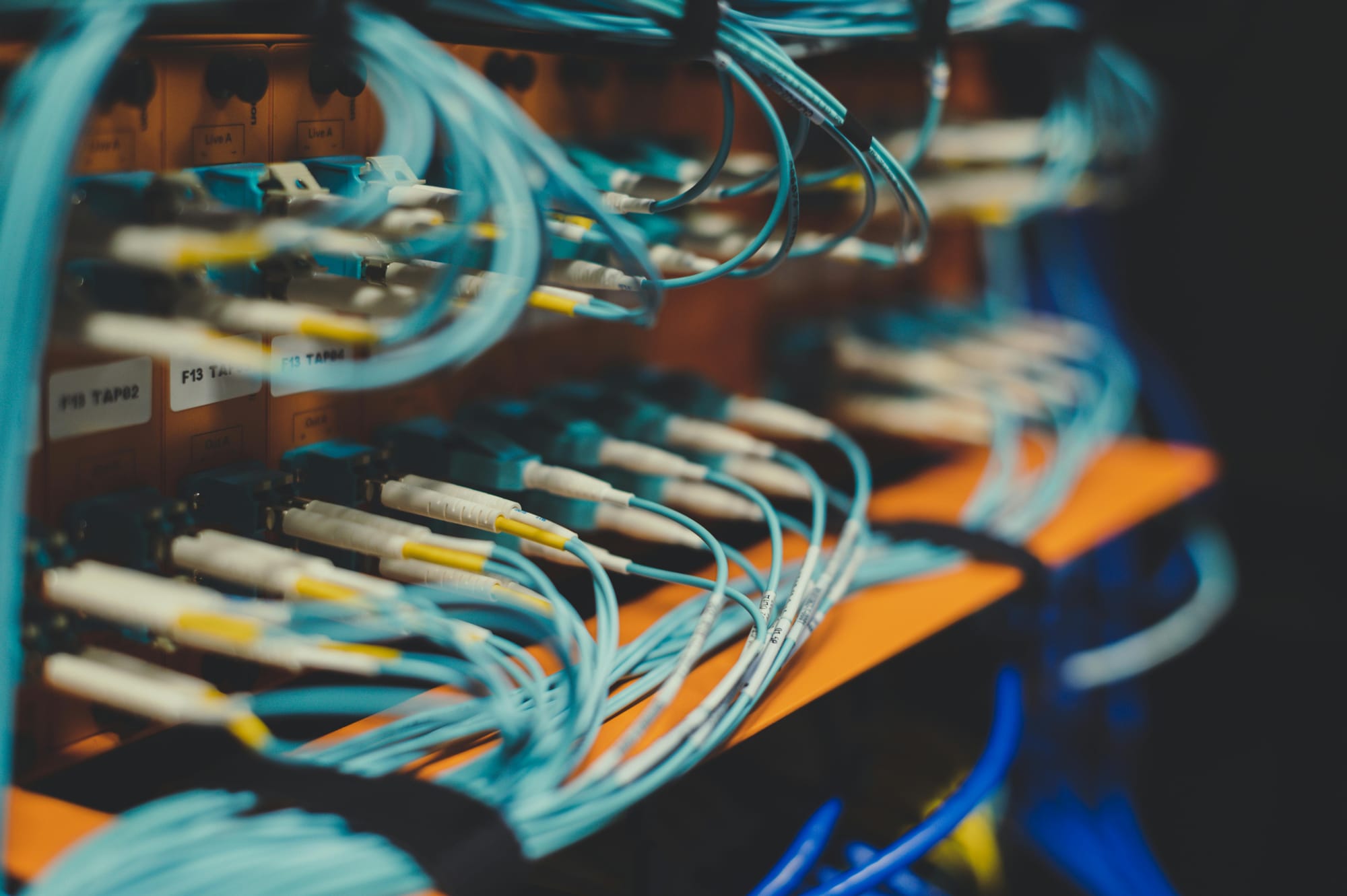
Investment Layer 2: Cloud Compute and AI Infrastructure Operators
This includes AWS, Microsoft Azure, Google Cloud, Oracle Cloud Infrastructure, CoreWeave-style AI cloud firms, and colocation/data-center operators.
This layer sells compute capacity rather than just models. The cloud provider does not necessarily need to own the best model. It can sell GPUs, TPUs, CPUs, storage, networking, managed databases, inference endpoints, training clusters, and enterprise AI services. This is why the cloud layer can be more durable than the model layer: even if the winning model changes, the compute still has to run somewhere.
The risk is capex discipline. Cloud compute providers must buy expensive hardware before they fully monetize it. If demand remains supply-constrained, this is excellent. If too much capacity comes online at once, utilization drops and pricing weakens. Cloud providers also face depreciation risk because GPUs and AI servers age quickly.
The hyperscalers are better positioned because they have profitable legacy businesses. Alphabet can fund AI through search, YouTube, cloud, and subscriptions. Microsoft can fund AI through Azure, Office, Windows, LinkedIn, GitHub, and enterprise software. Amazon can fund AI through AWS, advertising, retail logistics, and internal chip development. Oracle is more exposed to the AI cloud pivot and large customer concentration, which is why it is often named as a possible weak link.
Strategic read: Cloud compute is the “railroad operator” layer. It can be extremely valuable, but only if capacity utilization, pricing, and contract quality justify the buildout.
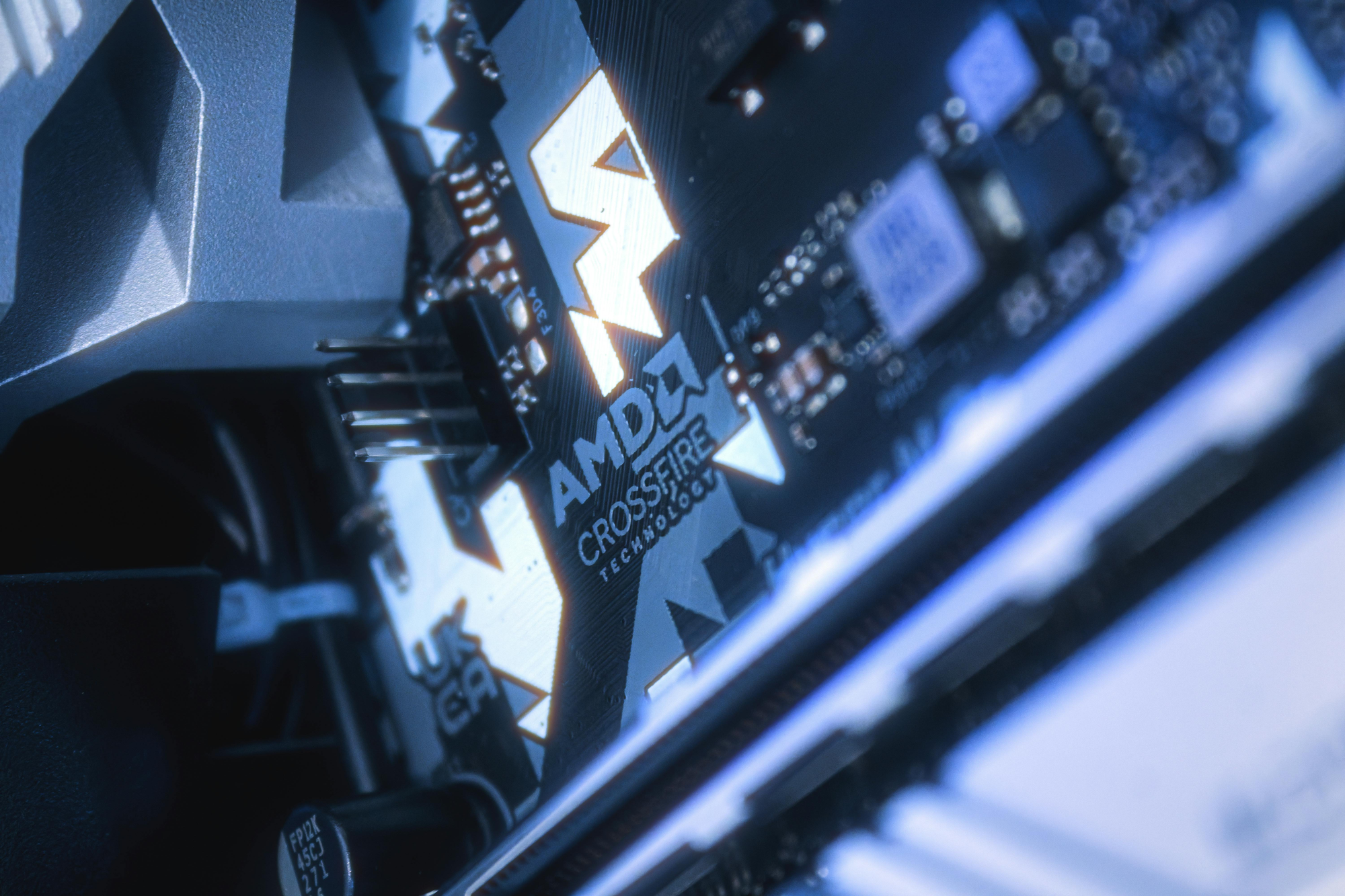
Investment Layer 3: Hardware Designers, Fabricators, Memory, and Semiconductor Infrastructure
This is the “steel mill” layer of the AI buildout. It includes Nvidia, AMD, Broadcom, Marvell, TSMC, Samsung, SK Hynix, Micron, ASML, Applied Materials, Lam Research, Tokyo Electron, Arista, Vertiv, Schneider Electric, and other networking, cooling, power, and semiconductor-equipment suppliers.
This layer is attractive because it monetizes the buildout directly. Nvidia sells the GPUs and networking. Broadcom sells custom accelerators and AI networking. TSMC fabricates advanced chips. SK Hynix, Samsung, and Micron sell HBM and DRAM. ASML and other equipment companies enable the fabs. Vertiv and Schneider sell data-center power and cooling systems.
This is why Nvidia has been such a powerful investment vehicle. It does not need to know whether OpenAI, Anthropic, Google, Meta, or xAI wins the model race. It sells picks and shovels into the race itself. Nvidia’s Q1 FY2027 data-center revenue of $75.2 billion shows how directly it is monetizing the buildout.
But hardware is not risk-free. Semiconductor booms can become cyclical. If data-center customers over-order, if custom silicon takes share, if HBM supply catches up, if GPU refresh cycles slow, or if AI inference becomes more efficient, hardware revenue growth can decelerate. SK Hynix says HBM demand exceeds capacity, but it also notes that new capacity takes more than a year to come online, which means today’s shortage can eventually become tomorrow’s normalization.
Strategic read: Hardware suppliers are the cleanest near-term beneficiaries of AI infrastructure. But the more they are priced as permanent monopoly winners, the more vulnerable they become to cyclicality, substitution, and capex pauses.
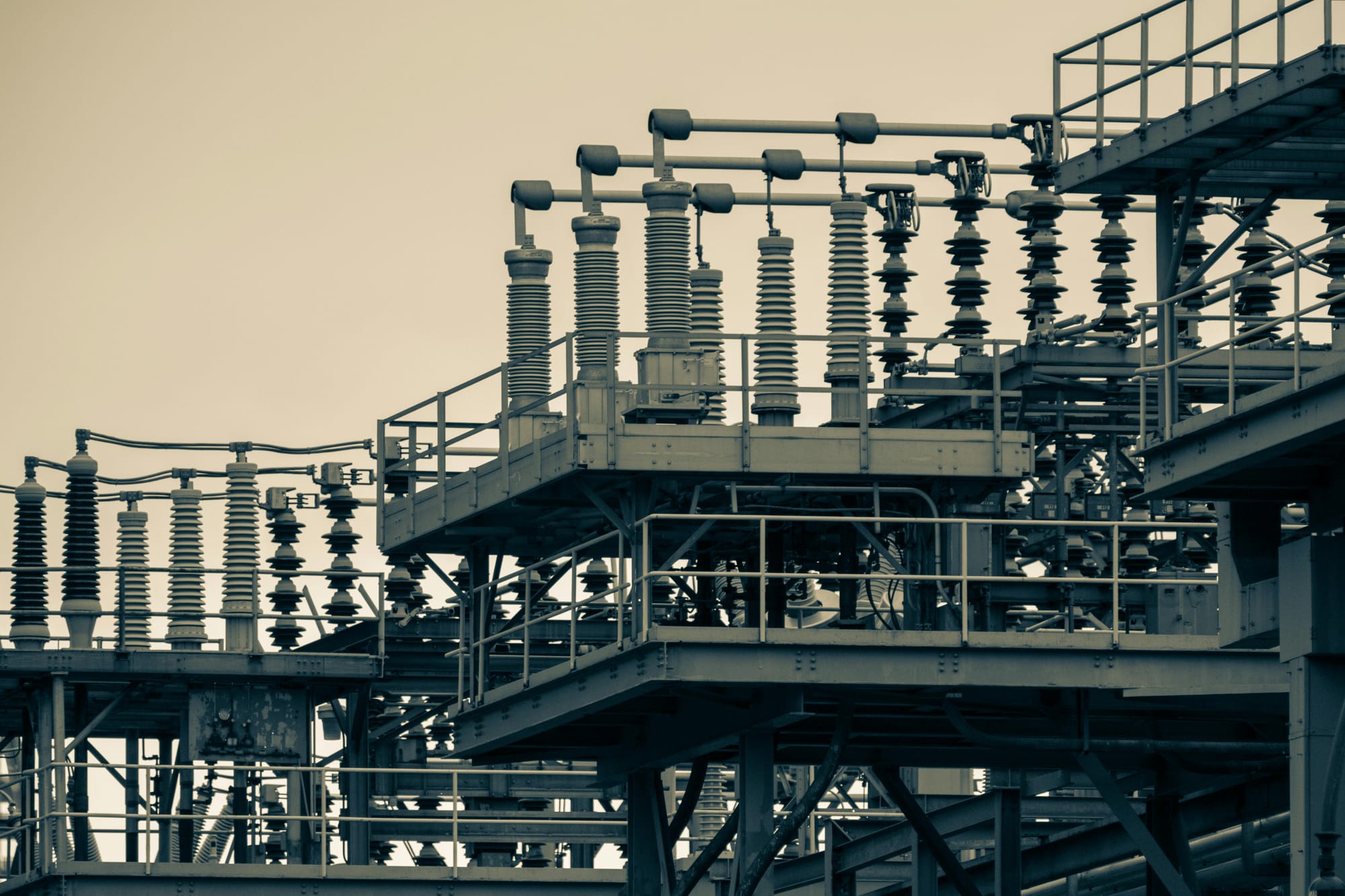
Investment Layer 4: Electricity, Utilities, Grid Equipment, and Physical Infrastructure
This is the least glamorous but possibly most strategically important layer. AI data centers require power, land, water, cooling, transformers, substations, transmission lines, backup generation, switchgear, batteries, and grid interconnection.
The power layer is different from the model layer because it is not primarily exposed to which AI company wins. If AI data centers are built, they need electricity. The IEA projects data-center electricity consumption roughly doubling by 2030, and Deloitte estimates U.S. AI data-center power demand could grow from 4 GW in 2024 to 123 GW by 2035.
This creates opportunities for regulated utilities, independent power producers, nuclear operators, natural gas infrastructure, grid-equipment suppliers, transformer manufacturers, battery-storage companies, and power-management firms. It also creates bottlenecks. Data centers are 24/7 loads. They can stress local grids. They require long permitting timelines. They may face local opposition over power prices, water use, noise, emissions, and land use.
Utilities are often lower-upside than AI software or semiconductor companies, but they may offer more stable exposure to the physical demand trend. However, regulated utilities have their own risks: rate-case politics, capital intensity, debt, construction delays, allowed return on equity, fuel costs, and public backlash if data centers raise local electricity prices.
Strategic read: Power is the “hidden bottleneck” layer. It may be one of the most durable AI infrastructure exposures, but returns depend heavily on regulation, geography, grid capacity, and capital structure.
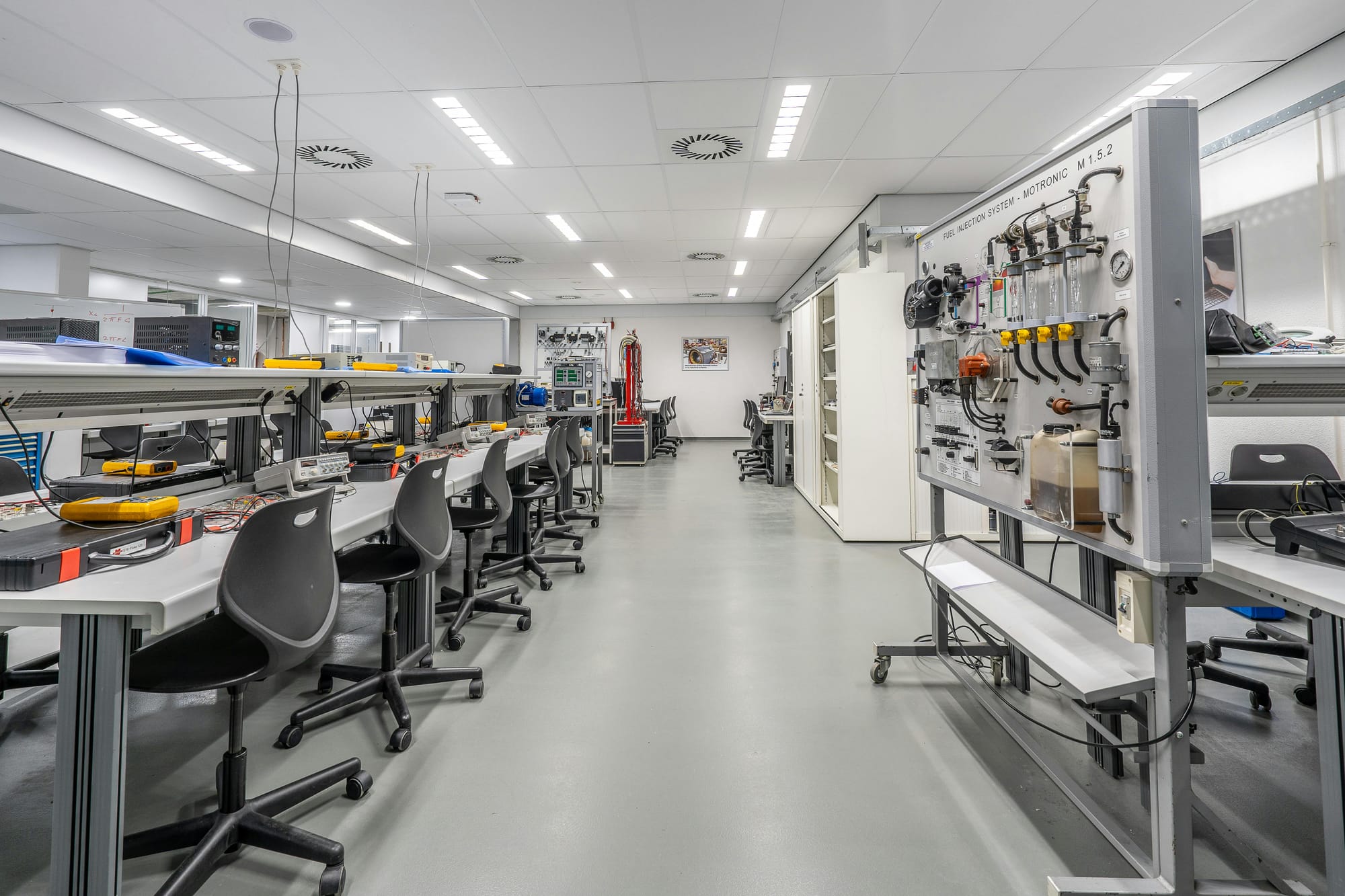
Photos by Mahavir Shah and Mike van Schoonderwalt on Pexels
Investment Layer 5: End-Users of AI — Drug Discovery, Simulation, Manufacturing, Finance, and Industrial R&D
This layer is fundamentally different. End-users do not necessarily sell AI. They use AI to improve their own margins, research speed, decision-making, design cycles, or product pipelines.
Pharma is a good example. AI can help with protein structure prediction, molecular docking, target discovery, toxicity screening, trial design, literature review, and laboratory automation. AlphaFold 3 can predict structures and interactions across proteins, nucleic acids, small molecules, ions, and modified residues, which is directly relevant to biological modeling and drug discovery. Bristol Myers Squibb recently partnered with Anthropic to bring Claude to more than 30,000 employees, including for drug discovery, research, and delivery workflows.
End-user AI investing requires patience. In drug discovery, AI can improve parts of the workflow without magically removing clinical-trial risk. A better molecule still has to pass biology, toxicity, human trials, regulation, reimbursement, and commercial adoption. The payoff cycle can take years. AI may increase the number of shots on goal, reduce failure earlier, improve candidate quality, and lower some costs, but it does not eliminate the core uncertainty of medicine.
In addition to AI utilization in biotech, there has been an emerging initiative in Denmark for early investment into quantum supercomputing; but that is beyond the scope of this discussion.
 Matt Swayne
Simulation-heavy sectors may see faster feedback loops. Materials science, chip design, aerospace engineering, logistics, weather modeling, robotics, energy systems, and industrial digital twins can benefit from AI-driven simulation and optimization. Unlike drug discovery, some simulation use cases can produce measurable engineering or operational improvements faster.
Strategic read: End-users may capture the largest long-term productivity gains, but the gains are indirect. The winning investment may not be “the AI company”; it may be the pharma, manufacturer, defense contractor, insurer, bank, or industrial company that uses AI better than competitors.
The Core Difference Between These Investment Categories
AI providers sell intelligence directly. Highest upside, highest model and margin risk.
Cloud compute providers sell the infrastructure that runs intelligence. High upside, high capex and utilization risk.
Hardware and semiconductor suppliers sell the tools needed to build the infrastructure. Strong near-term monetization, but cyclical and vulnerable to substitution.
Electricity and utility providers sell the physical input that makes compute possible. More stable, geographically constrained, regulation-heavy.
End-users apply AI to improve existing businesses. Less direct AI exposure, but potentially stronger long-term productivity capture.
That is the main point for a strategic investor: “AI exposure” is not one thing. Nvidia, Microsoft, Oracle, Constellation Energy, TSMC, Broadcom, Recursion, Bristol Myers, and a grid transformer manufacturer are not making the same bet. They are exposed to different parts of the value chain.
 John D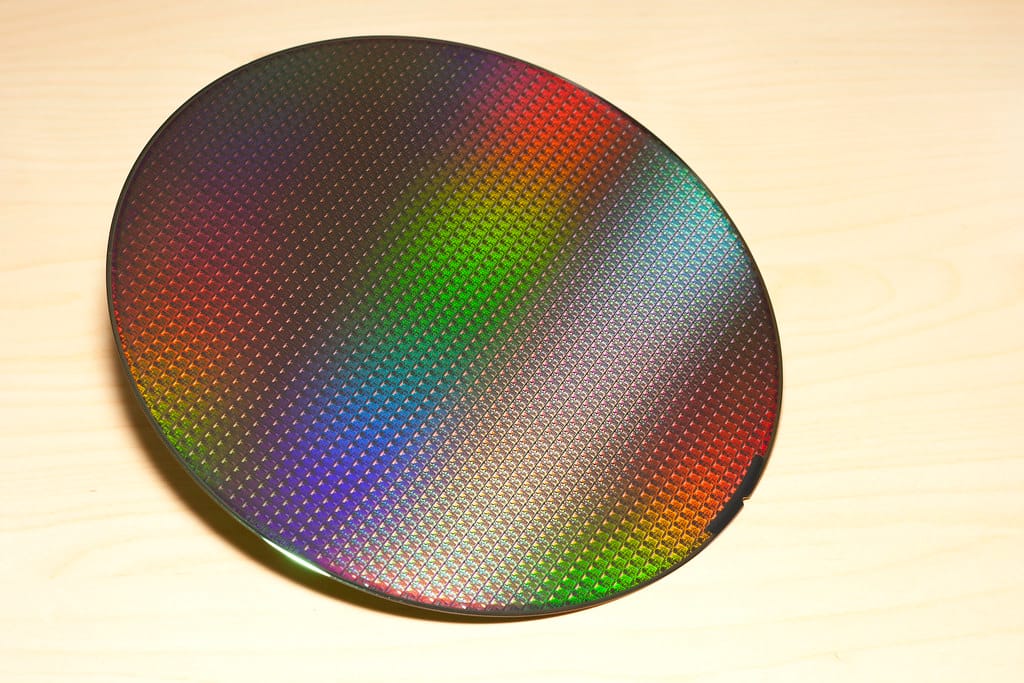
Final Strategic Assessment
The answer is not “yes, bubble” or “no, infrastructure.” The best answer is:
AI is an infrastructure supercycle with bubble-like pockets.
The infrastructure thesis is strongest where there is measurable demand: cloud backlog, AI revenue, HBM shortages, GPU sales, power demand, and data-center electricity growth. The bubble thesis is strongest where commitments are debt-heavy, customer-concentrated, dependent on future demand, or priced as if exponential growth will continue smoothly.
The likely outcome is not total collapse. The likely outcome is dispersion. The strongest platforms, semiconductor suppliers, and power providers survive and compound. The weakly financed players, overbuilt data-center projects, marginal AI clouds, and low-differentiation model providers face consolidation, write-downs, or bankruptcy.
The technology can be enormously useful, and the market can still overpay. That is the truth of most industrial revolutions.