Dangote Fertiliser at Lekki: Unlisted, Gas-Dependent, and Exporting 77% of Its Urea | Greenview, NNPC, NGX, AFC
Dangote Fertiliser exports about 77% of its urea and has no listing filing; for investors, gas supply and a $7B expansion set the risk

Dangote Fertiliser at Lekki: Urea Capacity, Gas Feedstock, Listing Prospects, and Nigeria's Role in West African Fertilizer Supply
1. Summary
The Dangote Fertiliser complex in the Dangote Industries Free Zone at Ibeju-Lekki, Lagos State, works technically and, on available evidence, economically. Its configuration is standard world-scale gas-to-urea technology from top-tier licensors [1][2]. The best company-linked evidence of performance comes from Reuters' 10 November 2025 report on the thyssenkrupp Uhde Fertilizer Technology licensing deal, which described four new 4,235 tonne-per-day units that would raise Dangote's annual output to more than 8 million tonnes from 2.65 million tonnes, implying utilization near 88 percent of the 3 million tonne nameplate [3]. That figure is an inference from a licensor-linked statement rather than an audited production disclosure; neither Dangote Fertiliser Limited nor its holding company, Greenview Fertiliser Corp., publishes operating statistics.
Gas is the variable that determines whether this asset earns a cost-curve advantage or suffers chronic underutilization. Nigeria's regulator, the Nigerian Midstream and Downstream Petroleum Regulatory Authority (NMDPRA), sets a price band for gas-based industries of 0.90 to 2.18 USD per MMBtu effective 1 April 2026, which, if Dangote's contracts fall within it, places the plant among the lowest-cost urea producers globally [4][5]. The weakness is physical and institutional rather than geological: the plant depends on a spur off a single trunk line operated by state-owned NNPC Limited and an isolation installation owned by NNPC Gas Infrastructure Company (NGIC) [6]. In September 2025 the PENGASSAN union ordered gas cut to the Dangote complex, after which the union stated that one fertilizer train was fully shut and the other was running at 60 percent [6][7].
Dangote is primarily a seaborne exporter, not a regional supplier. AfricaFertilizer data show that Nigeria exported 3.09 million tonnes of urea in 2024, of which 53 percent went to Brazil and only 22 percent to African markets [8], and Dangote management states that the company exports about 77 percent of its output [9]. West Africa's binding constraints (prilled-urea tender specifications, road bottlenecks, freight costs on small parcels, and farmer affordability) mean that Dangote volumes reach ECOWAS farmers mainly as an ingredient in Nigerian NPK blends [8].
The listing is not investable and should be treated as an option, not a catalyst. Aliko Dangote said in June 2025 that the fertilizer business would soon list on the Nigerian Exchange (NGX) [10], then said on 20 September 2026 that it would list in 2028 [11], then on 29 September 2026 said he hoped to list in 2027 without naming a venue [12]. No offer size, structure, prospectus, or Securities and Exchange Commission (SEC) Nigeria filing has been identified. The more consequential near-term event is the 7 billion USD expansion to 9 million tonnes per year in Nigeria plus a 3 million tonne plant at Gode, Ethiopia: licensors are contracted and Africa Finance Corporation (AFC) has committed 600 million USD [3][13][14], but the bulk of the financing, the incremental gas supply, and construction progress remain undocumented.
For the investor, the absence of direct public exposure is itself the central finding. The Dangote refinery IPO now closing on the NGX does not convey fertilizer economics [15], Dangote Cement has no disclosed stake in the fertilizer business, and the cleanest available expression of the thesis is the inverse one: Dangote's planned tripling of Nigerian capacity is a medium-term bearish supply factor for Atlantic Basin urea exporters.
2. Background
Nitrogen fertilizer is natural gas in solid form. Steam methane reforming converts methane and steam into hydrogen and carbon dioxide; the hydrogen is combined with atmospheric nitrogen over an iron catalyst in the Haber-Bosch loop to make ammonia; and ammonia is reacted with the carbon dioxide recovered from reforming to make urea melt, which is then granulated or prilled for shipment. Gas is both the feedstock and the fuel. A 2026 Council of the European Union document puts natural gas at 70 to 80 percent of nitrogen fertilizer production costs [16], and the producer association Fertilizers Europe puts it at typically 60 to 80 percent [17].
Two technical facts: First, because each tonne of urea requires roughly 0.57 tonnes of ammonia, gas cost differences between regions translate almost directly into cash-cost differences at the plant gate, so a producer paying around 2 USD per MMBtu holds a structural advantage over one paying 10 USD per MMBtu that no operational excellence can close. Second, granular and prilled urea are not perfectly substitutable in trade: Brazil, the United States, and most large import markets prefer granular product, whereas many West African public tenders still specify prilled urea [8], which partly explains why a granular-only producer like Dangote looks across the Atlantic rather than across its land borders.
3. Asset Profile
3.1 Ownership and financing
Dangote Fertiliser Limited (DFL) is a wholly owned subsidiary of Greenview Fertiliser Corp., which AFC identifies as the holding company for the Dangote Group's fertilizer businesses [13]. Greenview sits within the privately held Dangote Industries Limited, controlled by Aliko Dangote. The expansion is being executed through a separate free-zone vehicle, Dangote Fertiliser FZE, which signed the February 2026 gas agreements [18][19] and for which Engineers India Limited was appointed project management and EPCM consultant [20]. The beneficial ownership chain above Greenview, and whether third parties hold minority interests, is not publicly disclosed.
The company and the Nigerian federal government report that the original complex cost 2.5 billion USD [1][21]. No independent source was identified that documents the original construction financing syndicate, so this report does not attribute it. Expansion financing is better documented: AFC announced on 15 June 2026 a 600 million USD facility to Greenview as a cornerstone commitment to a 7 billion USD programme, describing it as a redeployment of capital from its fully repaid 300 million USD foundational loan to Dangote Industries [13]. At the Cairo signing of the refinery's 4 billion USD loan on 31 March 2026, Afreximbank President George Elombi described the bank as the single largest financier of the Dangote Group and said it had invested about 15 billion USD in the group since 2015 [22]; its disclosed 2025 and 2026 syndications, however, are for the refinery, not the fertilizer company. The gap between 600 million USD committed and 7 billion USD required is the most important unanswered financing question.
3.2 Configuration, licensors, and contractors
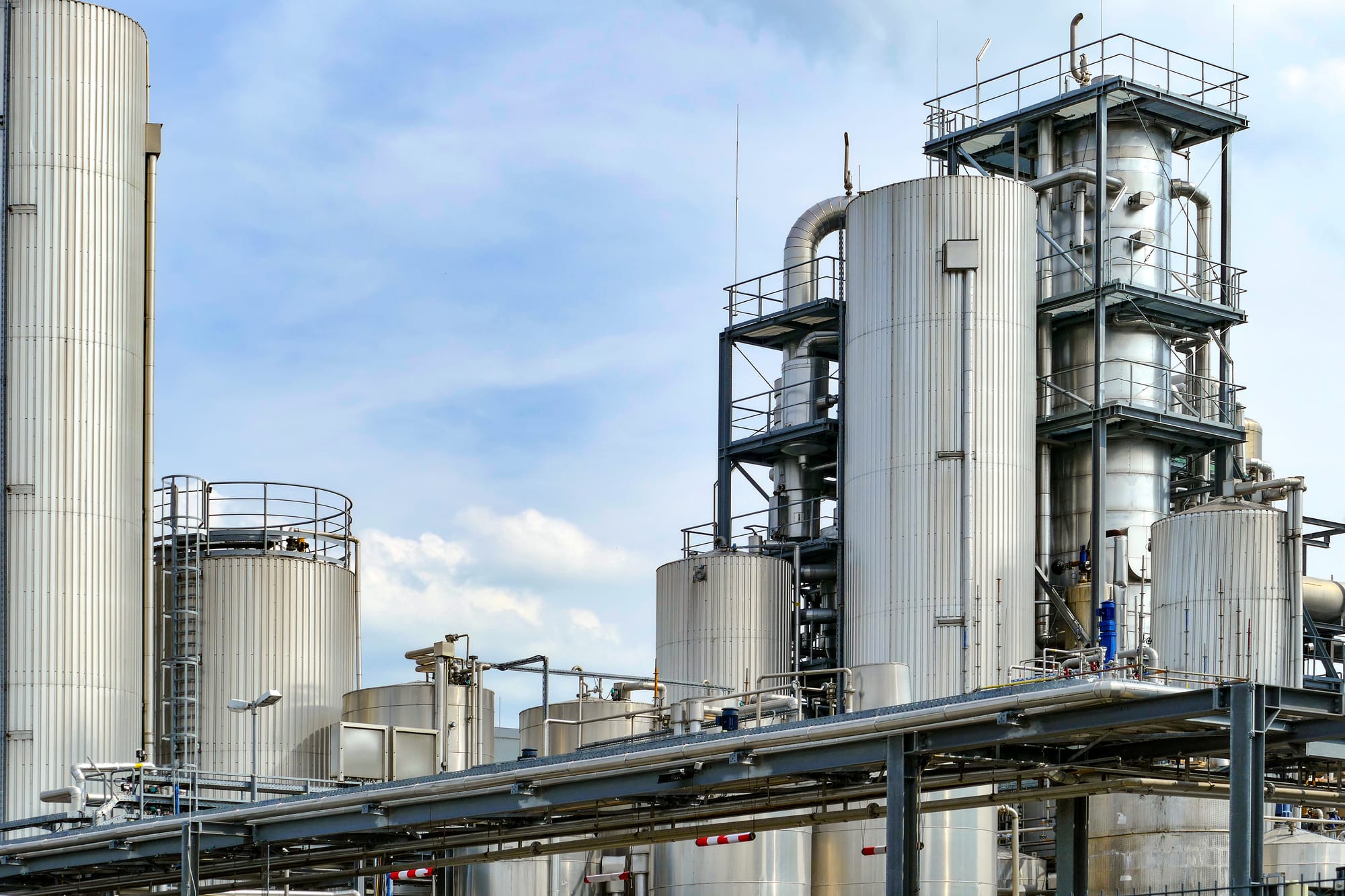
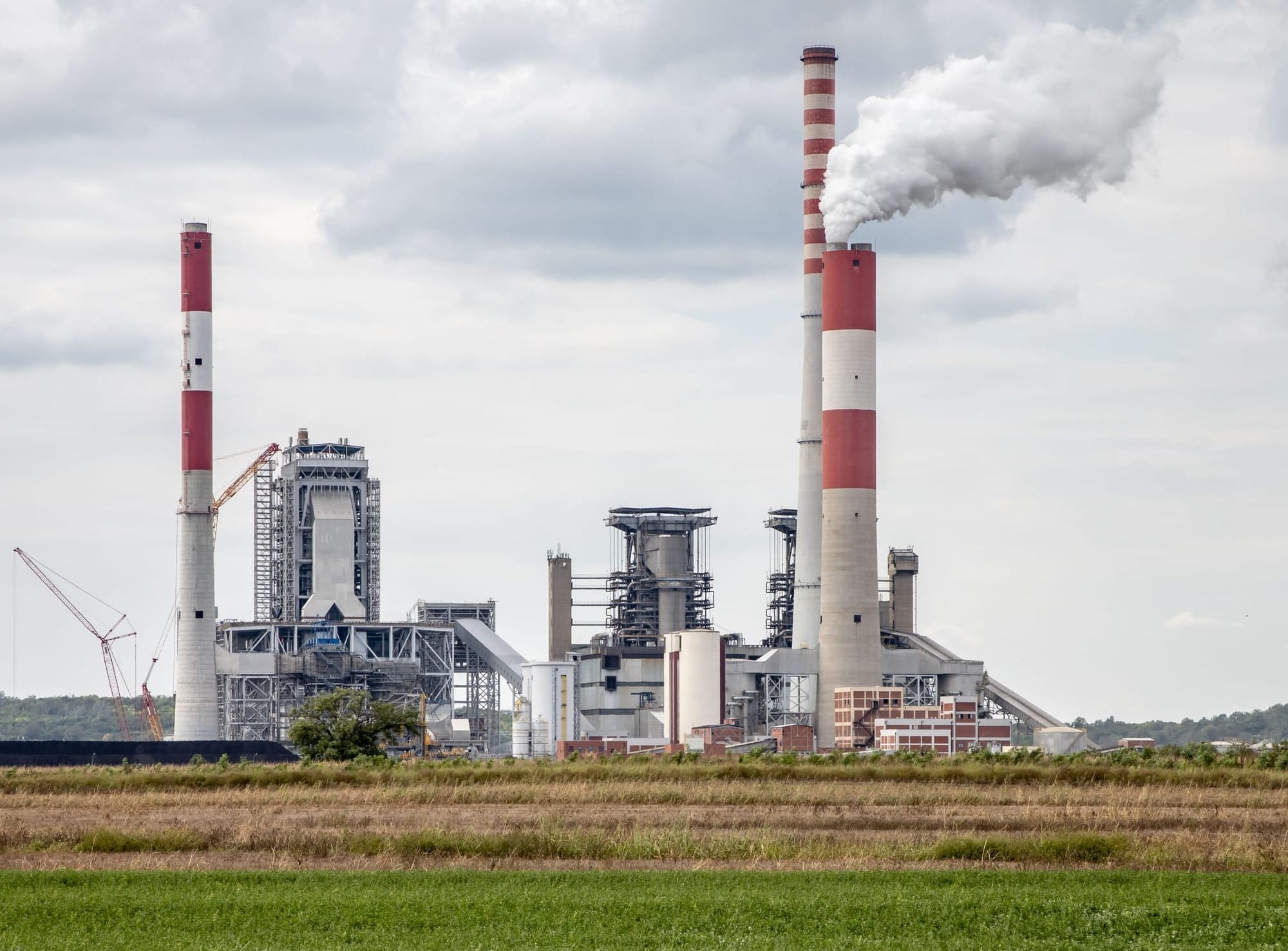
The company's corporate brochure describes the complex as two 2,200 tonne-per-day ammonia plants on Haldor Topsoe technology, two 4,000 tonne-per-day melt urea plants on Saipem's Snamprogetti technology, and two 4,000 tonne-per-day granulation plants on Uhde technology, on 500 hectares, designed for 3 million tonnes per year in two trains of 1.5 million tonnes [2]. Saipem was the EPC contractor and lists more than 4,400 tonnes per day of total ammonia and more than 7,700 tonnes per day of total urea production, two 30,000 tonne ammonia storage tanks, two 75,000 tonne urea storage buildings, and a marine terminal for ammonia and urea ship loading [23]. A technical paper by a former Dangote production manager gives the urea trains as 2 x 3,850 tonnes per day and notes BASF technology for CO2 capture in the ammonia plants [24]; the difference from the brochure's 4,000 tonne-per-day figure likely reflects guaranteed versus design capacity, and both reconcile with the 3 million tonne nameplate at roughly 360 to 390 operating days. Nigeria's Fertilizer Technical Working Group records Train 1 starting in 2021 and Train 2 in 2022 [25].
3.3 Demonstrated production, utilization, and exports
The nameplate of about 3 million tonnes per year is consistent across company, licensor, contractor, and lender sources and can be treated as verified [1][2][13][23]. Actual output is not disclosed. The most credible company-linked figure is the 2.65 million tonne run rate cited in connection with the November 2025 thyssenkrupp Uhde licensing deal, which implies utilization of about 88 percent; Dangote's own statement on the deal gave the existing granulators as producing 3,850 tonnes per day each, matching the technical paper [3][24]. A New Telegraph estimate of 750,000 tonnes in the first quarter of 2026, which annualizes to full nameplate, is unsourced and should be treated as weak [26].
National data bound the estimate. AfricaFertilizer's validated 2025 edition reports Nigerian urea production of 3.46 million tonnes in 2022, 3.66 million tonnes in 2023, and 4.18 million tonnes in 2024, with only Dangote and Indorama operating in 2024 [8]. Given Indorama's 2.8 million tonne nameplate [27], a Dangote share of roughly 2.2 to 2.7 million tonnes in 2024 is plausible, but no source splits the national total by producer.
On exports, MoneyCentral reported in December 2025 that Dangote had raised urea exports to about 77 percent of current output, with the remainder sold domestically [9]. Aliko Dangote said in June 2025 that Nigeria exports 37 percent of the company's fertilizer to the United States [10]. National Bureau of Statistics data cited by New Telegraph show Dangote exported ~200 million USD of urea in the first half of 2025 against Indorama's ~283 million USD, indicating that Dangote was not the larger exporter in that period [28].
3.4 Gas feedstock: the pivotal variable
Physical supply is concentrated. Argus reports that the 514 km Escravos-Lagos Pipeline System, operated by NNPC, carries gas from the western Niger Delta to the Lagos and Ogun industrial hub, and that Dangote's urea plant and refinery are both supplied via a spur line off that system, including an above-ground isolation installation owned by NGIC [6]. The fertilizer plant therefore shares a chokepoint with the 650,000 barrel-per-day refinery, and both are exposed to the integrity and politics of a state-owned midstream operator.
Contracted volumes are public but prices are not. In March 2022, NNPC and its SPDC joint venture partners, with the Gas Aggregation Company of Nigeria as aggregator, signed a Gas Supply and Aggregation Agreement to deliver over 70 MMscf/d from the Tunu Central Processing Facility to Dangote Industries for fertilizer [29]. In February 2024, Nairametrics reported that SPDC would build a dedicated upstream facility to supply 100 MMscf/d to the fertilizer and petrochemical plant for 10 years [30]. In February 2026, Dangote Fertiliser FZE scaled up its gas sales and purchase agreement with NNPC Gas Marketing and NGIC at the launch of NNPC's Gas Master Plan 2026, but the parties disclosed neither volumes nor delivery schedules [18][19][31]. By the author's estimate, assuming roughly 33 MMBtu of feed and fuel per tonne of ammonia and about 1,000 Btu per standard cubic foot, the existing 4,400 tonne-per-day ammonia capacity needs on the order of 140 to 150 MMscf/d at full rates. On that assumption the disclosed 170 MMscf/d of contracts plausibly covers current operations, while the four planned 2,500 tonne-per-day ammonia trains would require roughly an additional 300 to 350 MMscf/d that has not been shown to be contracted.
Pricing sits under the Petroleum Industry Act (PIA) 2021, which requires the NMDPRA to set an annual Domestic Base Price (DBP) for the strategic sectors (power, commercial, and gas-based industries), with Domestic Gas Delivery Obligations on upstream producers as the companion supply mechanism [5]. For 2026 the DBP is 2.18 USD per MMBtu, commercial users pay 2.68 USD, and gas-based industries such as ammonia and urea producers price by statutory formula within a floor of 0.90 USD and a ceiling equal to the DBP [4][5]. The framework is dollar-denominated, which suits an exporter earning dollars but means the gas bill is not a naira hedge. Whether Dangote's legacy contracts sit inside the band, and whether they index to urea prices, is not disclosed; this report assumes they sit inside it, which is the most favorable plausible case.
The interruption record is thin but instructive. The best-documented event is the PENGASSAN action of late September 2025, in which the union directed its NGIC branch to cut gas over refinery layoffs; the union stated one fertilizer train was fully shut and the other at 60 percent, the National Industrial Court issued an injunction on 29 September, and the strike was suspended on 1 October [6][7][32]. The direct loss was days, not months, but the precedent matters: the supply chain is vulnerable to actors with no commercial relationship to the fertilizer business. No documented fertilizer plant turnaround was identified for 2022 to 2026.
3.5 Cost-curve position
No independent cost data for Dangote are public, so the following reasoning rests on stated assumptions. Assuming about 22 MMBtu of gas per tonne of urea (feed and fuel), gas cost at the 2026 band would be about 20 USD per tonne at the 0.90 USD floor and about 48 USD per tonne at the 2.18 USD ceiling. On the same assumption, a US Gulf producer paying 3 to 4 USD per MMBtu would incur roughly 65 to 90 USD per tonne, and a European producer paying 10 to 12 USD per MMBtu roughly 220 to 265 USD per tonne. Middle East and North African producers on regulated or legacy gas contracts likely sit near Dangote's range; Russian producers enjoy low domestic gas prices but face sanctions-related logistics frictions and escalating EU tariffs. On this basis, Dangote plausibly sits in the first or second quartile of the global cash-cost curve, with Europe forming the marginal, price-setting tail.
Logistics strengthen the position for Atlantic markets. Lekki is closer to Brazil and the US Gulf than Arabian Gulf producers are, and the plant's dedicated jetty avoids the Hormuz and Suez chokepoints [23], an advantage that became visible in 2026. Offsetting factors include free-zone and port charges, potentially higher maintenance costs for imported spares, and the absence of the long-term bulk offtake relationships that larger producers enjoy. MoneyCentral put Dangote's sales in the mid-320s USD per tonne FOB Nigeria in December 2025 [9], which at the assumed gas cost leaves a wide cash margin. A 66 percent EBITDA margin forecast attributed to Fitch for 2022 to 2025 is consistent with that inference, but no primary rating report was identified to verify it.
3.6 Expansion pipeline
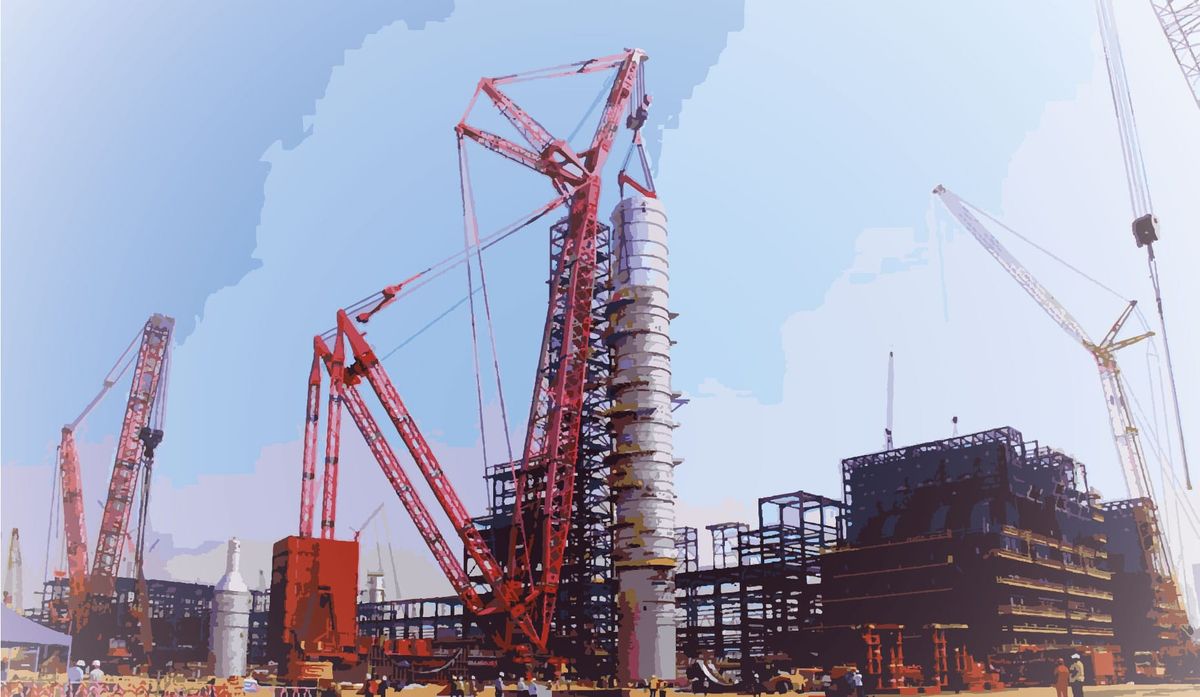
The Nigerian expansion is contracted at the licensing and engineering level but not demonstrably under construction. In November and December 2025, Dangote awarded Topsoe licenses for ammonia technology covering four 2,500 tonne-per-day units at Lekki [33], Saipem licenses and process design for six urea melt units of 4,235 tonnes per day each, four in Nigeria and two in Ethiopia [14][34], thyssenkrupp Uhde Fertilizer Technology licenses for granulation [3], and Engineers India Limited as project management and EPCM consultant [20]. The company states this will take Nigerian capacity from 3 to 9 million tonnes per year [13]. AFC's 600 million USD is the only disclosed debt commitment, the gas supply for the new trains is not quantified, and no EPC construction contract, construction milestone, or commissioning date for the Lekki trains was identified. The status is therefore licensed, partially financed, and backed by an unquantified gas agreement, not under construction.
The Gode, Ethiopia project is further along institutionally but riskier on feedstock. Ethiopian Investment Holdings (EIH) and Dangote signed a shareholders' agreement on 28 August 2025 for a 3 million tonne urea complex, 60 percent Dangote and 40 percent EIH, at a stated 2.5 billion USD [35], later raised to more than 4 billion USD to include a 110 km pipeline, a 120 MW power plant, a packaging facility, and a 2 million tonne NPK blending plant [36]. In March 2026, Dangote signed a reported 4.2 billion USD, 25-year gas supply agreement with China's GCL Group, sourcing from the Calub field [37][38]. A groundbreaking has occurred and operation is expected around 2029 [39], and Saipem holds a FEED letter of intent [34]. The key caveat is that the Calub and Hilala fields were discovered in the 1970s and remain undeveloped, and Ethiopia had previously revoked rights from Poly-GCL over delays [40]. Founder and group statements of a 12 million tonne group target, including a plant in an unnamed third African country, should be treated as aspiration; no independent source was identified that corroborates them.
 John D
4. Supply, Demand, and Pricing
4.1 Dangote in Nigerian, West African, and global supply
At about 2.65 to 3 million tonnes per year, Dangote accounts for roughly 60 to 70 percent of Nigerian urea output [3][8] and roughly 1.3 to 1.5 percent of world urea production, which the International Fertilizer Association (IFA) reports reached 201 million tonnes in 2024, up 3 percent year on year [41]. In the African context the scale is large: AFC's chief executive stated in June 2026 that Africa's 1.5 billion people consume just 6 million tonnes of urea annually [13]. Nigeria's own apparent urea consumption was about 1.1 million tonnes in 2024, alongside 733,985 tonnes of NPK blends produced by 72 active blenders using local urea and imported ammonium sulphate, potash, and DAP [8]. An IFDC presentation to the WTO put total West African fertilizer consumption at 3.5 to 4 million tonnes of product per year since 2017, with nitrogen accounting for about 60 percent of nutrients and urea for about 40 percent of finished products [42]. Nigerian urea capacity alone, about 6.5 million tonnes before Indorama's third line [8][27], therefore exceeds total regional fertilizer consumption.
4.2 Where Dangote volumes actually go
Trade data confirm that the regional supply narrative is weaker than the export narrative. Of Nigeria's 3.09 million tonnes of urea exports in 2024, 1.64 million tonnes (53 percent) went to Brazil, 677,101 tonnes (22 percent) to African countries, and 769,682 tonnes (25 percent) elsewhere, with African volumes nearly tripling from 2023 [8]. The Nigerian Fertilizer Technical Working Group attributes the outward orientation to low and fragmented West African demand that raises freight costs, tender specifications for prilled urea, road transport bottlenecks, and higher profitability outside Africa, while noting significant informal overland exports of urea and NPKs to Niger that official statistics do not capture [8].
4.3 Pricing mechanism and recent history
Urea trades against benchmarks assessed by price reporting agencies (Argus, CRU, ICIS, Profercy), principally granular FOB Middle East, FOB Egypt, CFR Brazil, and barge NOLA, with India's import tenders acting as periodic price-discovery events. These are assessments of reported deals and offers, not exchange prices, and bilateral contract terms, including Dangote's, are opaque. Nigerian granular is typically sold FOB Lekki or Onne and competes most directly with Egyptian and Algerian product into Brazil and the Americas; the available evidence suggests Dangote prices at or modestly below Egyptian equivalents after freight, though no price reporting agency differential series was available for this report.
Price history in 2026 shows how volatile the revenue line is. Argus reported Middle East granular sold in the high 410s USD per tonne FOB in early January 2026 [43]. The Strait of Hormuz disruption then drove urea from about 400 USD per tonne to over 850 USD per tonne in April before it fell back to 453 USD per tonne in June [44]. Trade press reported the lowest West Coast offer in India's May 2026 tender at 358 USD per tonne CFR for Egyptian and Nigerian goods, though no independent source was identified for that specific figure. By mid-August, India's tender lows were reported at 390.25 USD per tonne CFR East Coast and 393.65 USD per tonne CFR West Coast, with Middle East prices under pressure from about 400 USD per tonne FOB [45]. The practical reading is that Dangote's realized prices likely ranged from the low 300s to well above 700 USD per tonne FOB within a single year, while its gas cost, on the assumptions in Section 3.5, stayed below 50 USD per tonne.
5. Key Players
Gas supply runs through state-owned NNPC Limited and its subsidiaries NNPC Gas Marketing Limited and NNPC Gas Infrastructure Company, which operates the Escravos-Lagos system and the isolation installation feeding Lekki [6][18]. Upstream molecules have come from the NNPC-SPDC joint venture, in which TotalEnergies (EPA:TTE) is a partner, with the Gas Aggregation Company of Nigeria as aggregator [29]. The NMDPRA sets the price band and the Nigerian Upstream Petroleum Regulatory Commission administers upstream obligations [5].
Regional competitors are Indorama Eleme Fertilizer and Chemicals in Port Harcourt, a subsidiary of the privately held Singapore-based Indorama Corporation, and Notore Chemical Industries at Onne. Indorama's third line (2,300 tonnes per day of ammonia and 4,000 tonnes per day of urea, built with Toyo Engineering technology) has been commissioned, lifting capacity from 2.8 to 4.2 million tonnes per year on a 1.25 billion USD IFC-led financing package [27][46]. Notore, with about 0.5 million tonnes of nameplate capacity, was recorded by the national working group as not operating in 2024 [8]. Combined, Nigerian urea capacity would exceed 13 million tonnes per year if Dangote's expansion is completed, which would make Nigeria a structurally surplus exporter.
Lenders and financiers include Africa Finance Corporation, a multilateral development finance institution, at the fertilizer level [13], and Afreximbank and Access Bank (NGX:ACCESSCORP) at the group and refinery level, the two having acted as co-mandated lead arrangers of the refinery's 4 billion USD loan [22][47]. Technology and engineering counterparties are the privately held Danish licensor Topsoe [33], Saipem (BIT:SPM) [14][34], thyssenkrupp (ETR:TKA) through its Uhde Fertilizer Technology unit [3], and Engineers India Limited (NSE:ENGINERSIN), a state-controlled Indian firm [20]. In Ethiopia, the counterparties are Ethiopian Investment Holdings, the state's sovereign investment arm [35], and China's GCL Group [37]. Named offtakers and traders moving Dangote cargoes are not publicly disclosed; this report identified none.
6. Geopolitical and Policy Dimensions
Nigerian gas policy cuts both ways. The Petroleum Industry Act's dollar-denominated, regulated band delivers cheap feedstock, but it also suppresses upstream incentives to supply the domestic market, which is why the Domestic Gas Delivery Obligation exists and why industrial users have historically faced curtailment [5]. NNPC's Gas Master Plan 2026 aims to raise supply and attract more than 60 billion USD of investment [48], but the expansion's additional gas demand of several hundred MMscf/d would compete with power generation, which carries political priority.
The FX regime is central to both economics and listing. The naira's devaluations since 2023 made Nigerian urea exports more competitive and inflated their naira value [49], and Dangote's pitch to investors explicitly invokes a dollarised business framework and proposed dollar dividends [9][50]. That pitch implicitly concedes the main obstacle: portfolio investors have experienced periods of impaired repatriation from Nigeria, and a naira-denominated NGX listing promising dollar dividends would require structural and regulatory solutions that have not been published.
Global trade shifts have widened Dangote's export window. The 2026 Hormuz disruption stranded Gulf supply and drove buyers toward non-Gulf origins, including Nigeria [44]. The EU's tariff on Russian and Belarusian nitrogen fertilizers rose from 40 to 60 EUR per tonne on 1 July 2026 and is scheduled to rise to prohibitive levels, up to roughly 315 to 430 EUR per tonne, by 2028, displacing Russian urea to other markets, including Brazil, where it competes with Dangote [51]. Chinese export policy is the swing factor, and sources conflict: some trade press describes a 3.3 million tonne export quota for 2026 [52], while a review of the Ministry of Commerce document identifies 3.3 million tonnes as an import tariff-rate quota [53], and CRU had forecast 5.9 million tonnes of Chinese exports for 2026 [54]. The safe interpretation is that Chinese exports remain policy-managed and can reopen quickly when domestic prices fall.
ECOWAS trade policy formally permits duty-free movement of originating goods, but in practice regional distribution is constrained by road checkpoints, insecurity in northern Nigeria and the Sahel, and national subsidy schemes that buy through tenders whose specifications favor prilled urea [8]. No Nigerian export ban or domestic supply mandate on urea was identified, but the risk of one in a domestic food-price crisis is non-trivial given Nigeria's history of policy intervention in staple inputs.
 Liam L
7. Material Risks
Gas supply interruption is the highest-likelihood, highest-impact risk. Contracted volumes appear adequate for current operations [29][30], but the single-spur architecture, NGIC's control of the isolation point, and the demonstrated willingness of unions to use gas as leverage make multi-day outages likely over any multi-year horizon [6][7], and pipeline vandalism in the Niger Delta adds a further failure mode. The impact of a prolonged outage would be severe because the plant has no alternative feedstock. Mitigation would come from upstream diversification through the SPDC dedicated facility and the scaled-up NNPC agreements, but the latter's volumes are undisclosed [19], and the expansion roughly triples exposure.
Gas price reset risk is moderate in likelihood and moderate in impact. The NMDPRA revises the DBP annually [5], and political pressure to raise producer netbacks to unlock supply could push gas-based industry pricing toward or above the ceiling. Even a doubling to around 4 USD per MMBtu would leave Dangote competitive with the US Gulf on the assumptions in Section 3.5, so this risk compresses margins rather than threatens viability.
FX convertibility and repatriation risk is moderate in likelihood and high in impact for any minority investor. Export earnings are in dollars, but dividends to NGX shareholders, intercompany flows, and Central Bank of Nigeria rules on export proceeds determine what a minority holder actually receives. Mitigation would require a published, regulator-approved dollar dividend mechanism; none exists.
Governance and related-party risk is high in likelihood and moderate to high in impact. The fertilizer company shares gas infrastructure, a jetty and free zone, management, and lenders with the refinery and Dangote Industries [6][22], and the founder's control after any listing would be overwhelming: the refinery IPO leaves him with about 84 percent [15][55]. Pricing of shared services, gas allocation between refinery and fertilizer plant during shortages, and capital allocation to Ethiopia are all potential conflicts that only a prospectus with audited segment accounts could resolve.
Expansion execution risk is high in likelihood and moderate in impact. Six world-scale trains across two countries, a greenfield gas field and pipeline in Ethiopia's Somali region, a 7 billion USD budget of which only 600 million USD of debt is publicly committed, and an already-escalated Gode budget point to cost and schedule overruns [13][36][40]. Founder claims of 20 million USD in daily fertilizer revenue within 40 months and 3 to 4 billion USD in dividends, for which no independent source was identified, do not reconcile with the stated capacity: 12 million tonnes at 400 USD per tonne yields about 4.8 billion USD of annual revenue, whereas 20 million USD per day implies about 7.3 billion USD.
Listing failure or delay is highly likely in the sense that the timetable has already moved from soon (June 2025) to 2028 and back to 2027 within weeks [10][11][12]. The impact on the asset is nil; the impact on investors is that the option remains unexercisable. The refinery IPO's execution, including an SEC-approved extension to 27 October 2026, is the best evidence that the group can complete a listing [15][56], and its aftermarket performance will shape any fertilizer offer.
Urea price downturn risk is moderate in likelihood once Hormuz flows normalize and Chinese exports reopen [44][54]. Dangote's low gas cost means it would remain cash-positive at prices that close European capacity, but the expansion's returns would fall sharply. Counterparty risk is low to moderate because buyers are typically traders on letters of credit, but offtaker identities are undisclosed. Security and logistics risks at Lekki are lower than in the Niger Delta, but congestion on the Lekki corridor and marine infrastructure shared with a 650,000 barrel-per-day refinery create operational interdependence.
8. Implications for Investors
There is no direct public-market route into Dangote Fertiliser today, and every indirect route conveys little of its economics. Shares in Dangote Petroleum Refinery and Petrochemicals FZE, whose 2.15 trillion NGN offer of 4.1 billion shares at 525 NGN (about 3.3 percent of enlarged capital) closes on 27 October 2026 with NGX listing expected in late 2026, convey refinery economics only [15][55][56]; the refinery is a separate issuer from Greenview and its fertilizer subsidiary. What it does convey is correlated exposure to the same gas spur, the same governance, and the same FX regime, plus an observable test of how the group treats minority shareholders. Dangote Cement (NGX:DANGCEM) is liquid but has no disclosed interest in the fertilizer business; its value as a proxy is limited to group-level sentiment and to how the dollar-dividend promise is executed.
Credit exposure is closer to the asset but still diluted. AFC and Afreximbank, both of which issue Eurobonds, carry Dangote risk on their balance sheets [13][22], but as diversified multilateral lenders their paper reflects their whole portfolios. No traded Dangote Fertiliser or Greenview bond was identified.
The cleanest expression of the thesis is indirect and directional. If Dangote's expansion is delivered, roughly 6 million tonnes of additional low-cost granular urea would enter Atlantic trade around 2028 to 2030, pressuring margins for exporters selling into Brazil and the United States, including Egyptian and Algerian producers, Fertiglobe (ADX:FERTIGLB), and, at the margin, US and European producers such as CF Industries (NYSE:CF), Nutrien (NYSE:NTR), and Yara (OSE:YAR) through lower benchmark prices. This is forward reasoning from current evidence and assumes the expansion is financed, supplied with gas, and built broadly on schedule. Investors in those names should treat verifiable Lekki construction milestones and new gas contracts as negative signals for medium-term nitrogen prices.
The catalysts to watch, in order of informational value, are a prospectus or SEC Nigeria filing for Greenview or DFL, which would convert the listing from intent to process and reveal audited production, gas costs, and related-party arrangements; disclosure of contracted gas volumes for the four new trains; an EPC construction award and financial close on the remaining expansion debt; the refinery's post-listing trading and first dividend, as a governance test; and gas-field development milestones at Calub for Gode. The thesis fails if gas for the expansion cannot be secured at band prices, if FX rules prevent dollar distributions to minority holders, or if the listing arrives only after the expansion has consumed the balance sheet, leaving new shareholders to fund execution risk at a valuation set at peak 2026 prices.
West African food-security and procurement planners form a legitimate second audience, because the evidence shows that Nigerian surplus capacity is not translating into regional supply [8]. For them, the actionable finding is that tender specifications permitting granular urea, larger consolidated cargoes, and support for blending capacity would do more to capture Dangote and Indorama volumes than any new plant.
 Liam L

References
[1] Dangote Fertiliser Limited. n.d. "Dangote Fertiliser Limited." Accessed October 2026. https://fertiliser.dangote.com/.
[2] Dangote Fertiliser Limited. 2021. "DFL Corporate Brochure." https://fertiliser.dangote.com/wp-content/uploads/2021/07/DFL-Corporate-Brochure.pdf.
[3] AllAfrica. 2025. [Report on Dangote Fertiliser's granulation technology licence from thyssenkrupp Uhde Fertilizer Technology, citing Reuters]. November 11. https://allafrica.com/stories/202511110075.html.
[4] BusinessDay. n.d. "Nigeria Raises Gas Price for Power Companies to $2.18/MMBtu." https://businessday.ng/energy/oilandgas/article/nigeria-raises-gas-price-for-power-companies-to-2-18-mmbtu/.
[5] Legal500. n.d. "The Nigerian Midstream and Downstream Petroleum Regulatory Authority (NMDPRA) Establishes 2026 Domestic Base Price and Wholesale Pricing Framework for Natural Gas for the Strategic Sectors." https://www.legal500.com/intelligence/nigeria/energy-and-natural-resources/the-nigerian-midstream-and-downstream-petroleum-regulatory-authority-nmdpra-establishes-2026-domestic-base-price-and-wholesale-pricing-framework-for-natural-gas-for-the-strategic-sectors.
[6] Argus Media. 2025. "Union Action Forces Shutdown of Dangote Refinery." https://www.argusmedia.com/en/news-and-insights/latest-market-news/2736654-union-action-forces-shutdown-of-dangote-refinery.
[7] S&P Global Commodity Insights. 2025. "Nigeria's Dangote Refinery Still Operating despite Mass Strikes." September 30. https://www.spglobal.com/commodity-insights/en/news-research/latest-news/shipping/093025-nigerias-dangote-refinery-still-operating-despite-mass-strikes.
[8] IFDC and AfricaFertilizer. 2025. "Nigeria Fertilizer Statistics Overview." Muscle Shoals, AL: International Fertilizer Development Center. https://ifdc.org/wp-content/uploads/2025/11/Nigeria-Fertilizer-Statistics-Overview.pdf.
[9] MoneyCentral. 2025. "Dangote Fertilizer Ramps Up Urea Exports to 77% of Output ahead of Dollar-Yield IPO." December. https://moneycentral.com.ng/markets/article/dangote-fertilizer-ramps-up-urea-exports-to-77-of-output-ahead-of-dollar-yield-ipo/.
[10] BusinessDay. 2025. "Dangote to List Fertiliser Business on NGX." June. https://businessday.ng/news/article/dangote-to-list-fertiliser-business-on-ngx/.
[11] BusinessDay. 2026. "Dangote Confirms 2028 IPO for Fertiliser Business." September. https://businessday.ng/news/article/dangote-confirms-2028-ipo-for-fertiliser-business/.
[12] bne IntelliNews. 2026. "Nigeria's Dangote Hopes to List Fertiliser Business in 2027." September. https://www.intellinews.com/nigeria-s-dangote-hopes-to-list-fertiliser-business-in-2027-471948/.
[13] Africa Finance Corporation. 2026. "AFC Backs US$7 Billion Dangote Fertiliser Expansion to Strengthen Africa's Food Security." June 15. https://www.africafc.org/news-and-insights/news/afc-backs-us-7-billion-dangote-fertiliser-expansion-to-strengthen-africas-food-security.
[14] Breakbulk. n.d. "Saipem Secures Deal for African Urea Projects." https://breakbulk.com/articles/saipem-secures-deal-for-african-urea-projects.
[15] Dangote Petroleum Refinery and Petrochemicals FZE. 2026. "Dangote Refinery IPO." Accessed October 2026. https://ipo.dangote.com/.
[16] Council of the European Union. 2026. [Council document on fertilisers and EU farming competitiveness]. ST 9437 2026 INIT. Brussels. https://data.consilium.europa.eu/doc/document/ST-9437-2026-INIT/en/pdf.
[17] Fertilizers Europe. n.d. "Energy Cost." Accessed October 2026. https://www.fertilizerseurope.com/industry-competitiveness/energy-cost.
[18] TheCable. 2026. "Dangote Group Signs Gas Supply Agreement with NNPC Subsidiaries." February. https://www.thecable.ng/dangote-group-signs-gas-supply-agreement-with-nnpc-subsidiaries/.
[19] Ecofin Agency. 2026. "Dangote Industries Locks In Gas Supply for Industrial Expansion in Nigeria." February 2. https://www.ecofinagency.com/news/0202-52483-dangote-industries-locks-in-gas-supply-for-industrial-expansion-in-nigeria.
[20] EnviroNews Nigeria. n.d. "Dangote Group Contracts Saipem, EIL, Others for Fertiliser Expansion in Nigeria, Ethiopia." https://www.environewsnigeria.com/dangote-group-contracts-saipem-eil-others-for-fertiliser-expansion-in-nigeria-ethiopia/.
[21] Federal Government of Nigeria (@NigeriaGov). 2022. Post on X, March. https://twitter.com/NigeriaGov/status/1505987096670052356.
[22] Dludla, Siphelele. 2026. "Afreximbank Backs Dangote Refinery with $2.5bn in Landmark $4bn Loan Deal." Business Report, March 31. https://businessreport.co.za/2026-03-31-afreximbank-backs-dangote-refinery-with-25-billion-in-landmark-4-billion-loan-deal/.
[23] Saipem. 2022. "Gas Monetization." Milan: Saipem. https://www.saipem.com/sites/default/files/2022-11/Gas%20Monetization.pdf.
[24] Baboo, Prem. 2023. "Environmental Protection in Fertilizer Plants." UreaKnowHow. https://ureaknowhow.com/wp-content/uploads/2023/11/2023-Baboo-Environmental-Protection-in-Fertilizer-Plants.pdf.
[25] IFDC and AfricaFertilizer. 2024. "Nigeria Fertilizer Statistics Overview, 2024 Edition." Muscle Shoals, AL: International Fertilizer Development Center. https://ifdc.org/wp-content/uploads/2024/06/EN_Nigeria-Fertilizer-Statistics-Overview-2024-Edition-1.pdf.
[26] New Telegraph. n.d. "Fertiliser: Nigeria Floods Global Markets with N380bn Urea Shipment." https://newtelegraphng.com/fertiliser-nigeria-floods-global-markets-with-n380bn-urea-shipment/.
[27] International Finance Corporation. n.d. "Indorama Eleme Fertilizer III: Environmental and Social Review Summary." Project 47723. https://disclosures.ifc.org/project-detail/ESRS/47723/indorama-eleme-fertilizer-iii.
[28] New Telegraph. n.d. "Indorama Leads Dangote by 29.3% in N748bn Urea Export." https://newtelegraphng.com/indorama-leads-dangote-by-29-3-in-n748bn-urea-export/.
[29] TheCable. 2022. "NNPC, Dangote Sign Gas Supply Deal to Increase Local Production of Fertiliser." March. https://www.thecable.ng/nnpc-dangote-sign-gas-supply-deal-to-increase-local-production-of-fertiliser/.
[30] Nairametrics. 2024. "Shell to Supply 100 Million Cubic Feet of Gas per Day to Dangote Fertilizer Plant." February 4. https://nairametrics.com/2024/02/04/shell-to-supply-100-million-cubic-feet-of-gas-per-day-to-dangote-fertilizer-plant/.
[31] BusinessDay. n.d. "Dangote, NNPC Seal Gas Supply Deals to Fuel Refinery, Cement Expansion." https://businessday.ng/energy/article/dangote-nnpc-seal-gas-supply-deals-to-fuel-refinery-cement-expansion/.
[32] IndustriALL Global Union. 2025. "Strike Suspended after Conciliation at Dangote Refinery." https://www.industriall-union.org/strike-suspended-after-conciliation-at-dangote-refinery.
[33] BCInsight. 2026. "Dangote Planning Two Massive New Ammonia-Urea Complexes." CRU Group, January 27. https://www.bcinsight.crugroup.com/2026/01/27/dangote-planning-two-massive-new-ammonia-urea-complexes/.
[34] Energy Capital & Power. n.d. "Saipem Secures Contracts for 6 Urea Units in Nigeria and Ethiopia." https://energycapitalpower.com/saipem-secures-contracts-for-6-urea-units-in-nigeria-and-ethiopia/.
[35] Ethiopian Investment Holdings. 2025. "Official Statement: Ethiopian Investment Holdings and Dangote Group Sign Landmark Shareholders Agreement for $2.5 Billion, 3 Million Metric Tons Urea Fertilizer Production Complex in Gode, Ethiopia." August. https://eih.et/official-statement-ethiopian-investment-holdings-and-dangote-group-sign-landmark-shareholders-agreement-for-2-5-billion-3-million-metric-tons-urea-fertilizer-production-complex-in-gode-ethiopia/.
[36] Fertilizer Daily. 2026. "Dangote Raises Ethiopia Fertilizer Plant Investment to $4B as Scope Expands." May 21. https://www.fertilizerdaily.com/20260521-dangote-raises-ethiopia-fertilizer-plant-investment-to-4b-as-scope-expands/.
[37] Ecofin Agency. 2026. "Dangote Secures $4.2 Billion Gas Deal to Power Ethiopia Fertilizer Project." March 18. https://www.ecofinagency.com/news-agriculture/1803-53873-dangote-secures-4-2-billion-gas-deal-to-power-ethiopia-fertilizer-project.
[38] Channels Television. 2026. "Dangote Strikes $4.2bn Gas Deal to Power Fertiliser Complex." March 17. https://www.channelstv.com/2026/03/17/dangote-strikes-4-2bn-gas-deal-to-power-fertiliser-complex/amp/.
[39] Africanews. 2026. "Ethiopia Bets on Dangote Fertiliser Plant to Boost Food Security." May 18. https://www.africanews.com/amp/2026/05/18/ethiopia-bets-on-dangote-fertiliser-plant-to-boost-food-security/.
[40] Ecofin Agency. 2025. "Dangote Commits $2.5bn to Ethiopia Fertilizer Project as Gas Supply Questions Loom." August 29. https://www.ecofinagency.com/news-industry/2908-48267-dangote-commits-2-5bn-to-ethiopia-fertilizer-project-as-gas-supply-questions-loom.
[41] IFA Market Intelligence Service. 2025. "Medium-Term Fertilizer Outlook 2025-2029: Public Summary." Paris: International Fertilizer Association, July 2. https://api.ifastat.org/reports/download/14325.
[42] IFDC. 2022. [Presentation on West African fertilizer markets to a WTO agriculture round table]. Geneva: World Trade Organization. https://www.wto.org/english/tratop_e/agric_e/round_table_101122_ifdc_e.pdf.
[43] Argus Media. 2026. "Middle East Granular Urea Sold in High $410s/t FOB." January. https://www.argusmedia.com/en/news-and-insights/latest-market-news/2772719-middle-east-granular-urea-sold-in-high-410s-t-fob.
[44] World Trade Organization. 2026. [Data blog on fertilizer prices and trade during the Strait of Hormuz disruption]. July 10. https://www.wto.org/english/blogs_e/data_blog_e/blog_dta_10jul26_451_e.htm.
[45] AFC. 2026. "Weekly Markets Update." August 17. https://getthewordout.com.au/wp-content/uploads/gravity_forms/6-992670958cdce89bca6c350e836e8b95/2026/08/AFC-MR-Wkly-Mrkts-Update-260817FA.pdf.
[46] Quantum Commodity Intelligence. 2026. "Indorama Commissions Third Nigerian Urea Train." https://www.qcintel.com/ammonia/article/indorama-commissions-third-nigerian-urea-train-69404.html.
[47] The Guardian (Nigeria). 2026. "Afreximbank Leads $4b Financing for Dangote Refinery, Commits $2.5b." https://guardian.ng/business-services/afreximbank-leads-4b-financing-for-dangote-refinery-commits-2-5b/.
[48] Discovery Alert. n.d. "Nigeria Gas Industrial Expansion 2026 Impacts." https://discoveryalert.com/nigeria-gas-industrial-expansion-2026-impacts/.
[49] News.ng. 2025. "Nigeria's Fertiliser Exports Surge in Q1 2025 amid Global Demand and Naira Weakness." https://news.ng/nigerias-fertiliser-exports-surge-in-q1-2025-amid-global-demand-and-naira-weakness/.
[50] Nairametrics. 2025. "Dangote to List 10% Refinery Stake on NGX, Pay Dividends in US Dollars." December 12. https://nairametrics.com/2025/12/12/dangote-to-list-10-refinery-stake-on-ngx-pay-dividends-in-us-dollars/.
[51] Kpler. n.d. "Which Russian Commodities Does the EU Still Import, and for How Much Longer?" https://www.kpler.com/blog/which-russian-commodities-does-the-eu-still-import-and-for-how-much-longer.
[52] Fertilizer Daily. 2026. [Article on China's 2026 urea export quota and the nitrogen price floor]. September 18. https://www.fertilizerdaily.com/20260918-china-urea-export-quota-2026-nitrogen-price-floor/.
[53] FertiAxis. n.d. "China Urea Export Policy." https://fertiaxis.com/insights/china-urea-export-policy/.
[54] BCInsight. 2026. "CRU Fertilizers' Top Calls for 2026." CRU Group, January 26. https://www.bcinsight.crugroup.com/2026/01/26/cru-fertilizers-top-calls-for-2026/.
[55] Level. 2026. "Dangote Refinery IPO 2026." https://level.africa/dangote-refinery-ipo-2026/.
[56] bne IntelliNews. 2026. "Nigeria's Dangote Says Refinery IPO Subscriptions Span 51 African Countries." https://www.intellinews.com/nigeria-s-dangote-says-refinery-ipo-subscriptions-span-51-african-countries-477266.