DIY Push Sickle-Bar Mower: Open-Hardware Plans / Recycled Salvage
Open-hardware plans for a push sickle-bar mower: salvage-first BOM, honest physics, and why a ~$120 electric-assist build beats a $4,000 BCS.

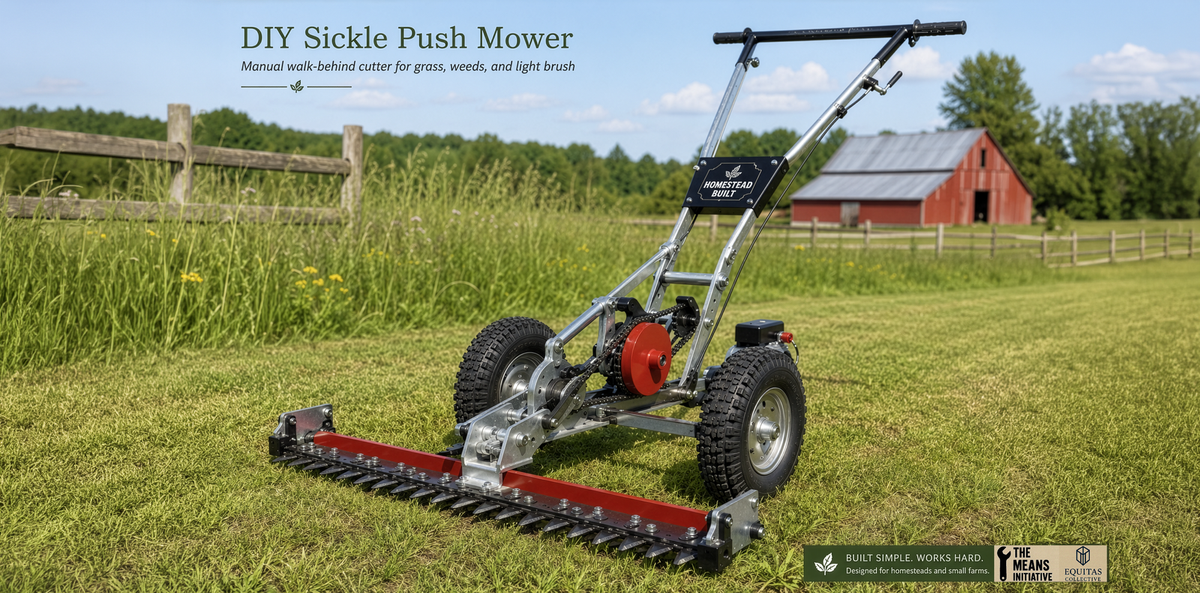
A repair-first, FOSS design study for off-grid makers
Why Your DIY Sickle-Bar Mower Should Be Electric: Open-Hardware Plans, Salvage BOM, Real Physics
TL;DR
- A pure human-powered, ground-driven reciprocating sickle mower is mechanically buildable but marginal-to-impractical for real grass: walking-speed wheel rpm is far too low (~75–95 rpm) to reach the ~1,600–2,000 strokes/min a sickle needs, forcing a large (10–20×) step-up that converts your forward push into heavy pedaling-like drag, so we recommend building the frame/cutterbar as a push chassis but driving the crank with a small electric motor (salvaged cordless-tool or 12 V DC), with wheels used mainly for support and height control.
- The cheapest credible path to "sickle-bar cutting" is salvage: a used Jari or vintage cutter-bar mower ($150–$480) or a junked hedge-trimmer cutter head bolted to a wheeled frame beats fabricating a knife from scratch; a DIY electric-assist build lands roughly $120–$300 versus $3,400–$4,000 for a new BCS sickle-bar + walk-behind tractor.
- Sickle-bar cutting does what reel and rotary mowers cannot, it shears tall, wet, weedy, and light-brush growth (saplings up to ~1.5 in/38 mm) at near-ground level with low power and no thrown debris, but the dominant hazard is an exposed reciprocating knife (a shear/amputation risk comparable to a hedge trimmer), which must drive every guarding and lockout decision.
Build an Open-Source Sickle-Bar Mower for ~$120 (vs. $4,000 Commercial)
Key Findings
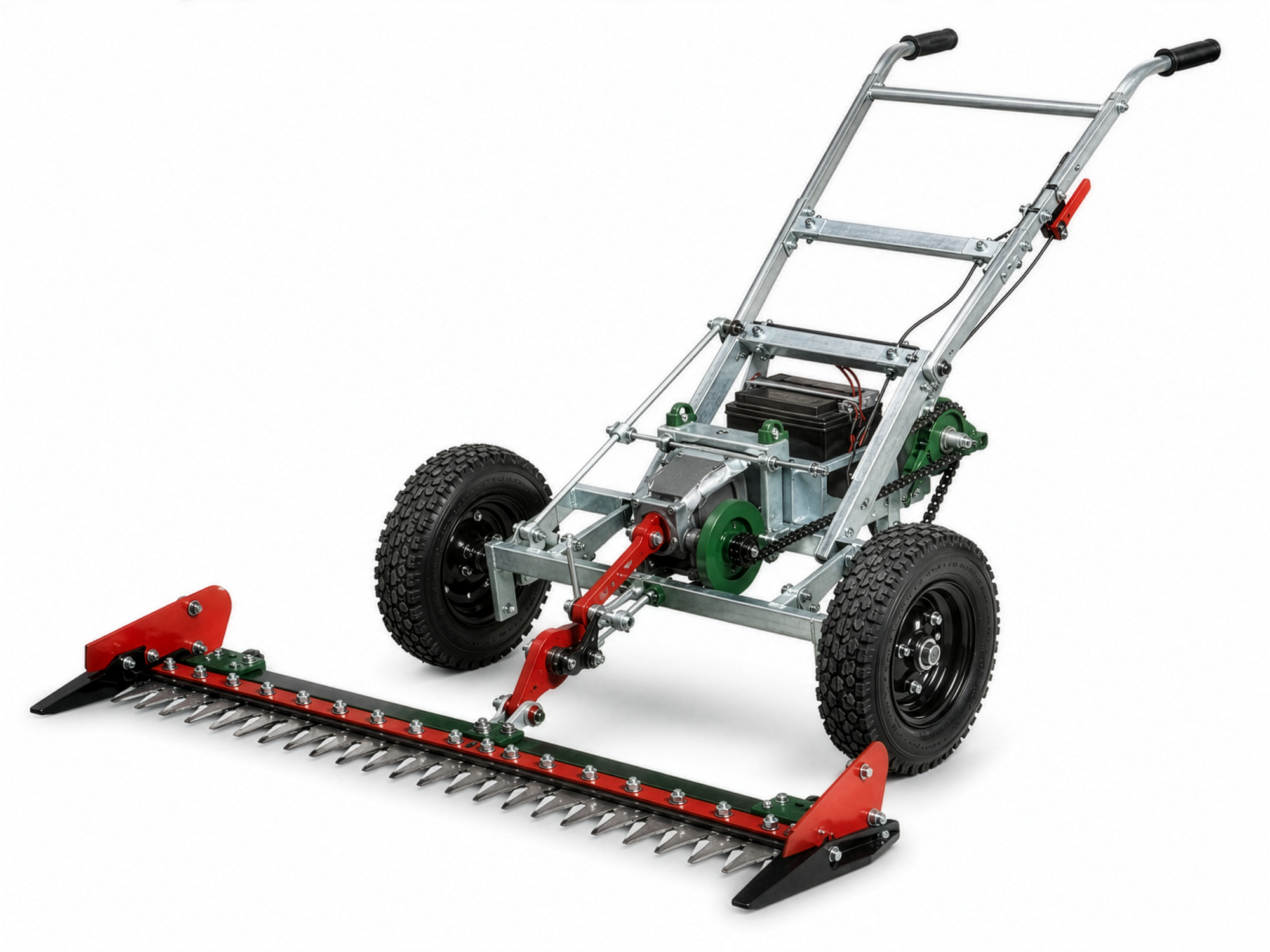
1. How a sickle bar cuts. A sickle (cutter) bar cuts by a scissors/shear action, not by impact like a rotary blade. A reciprocating "knife" (a steel bar carrying riveted or bolted triangular sickle sections) slides back and forth across stationary guards (fingers) that hold replaceable ledger plates. Grass is trapped between the moving section edge and the fixed ledger and sheared. Per Tillers International, "Each knife section is generally about three inches wide. Mower guards are spaced about every three inches along the cutterbar" (≈76 mm). Clearance between section and ledger must be roughly the thickness of a matchbook (~0.030 in / 0.75 mm) or it "won't cut worth a dang," exactly like scissors with a loose pivot
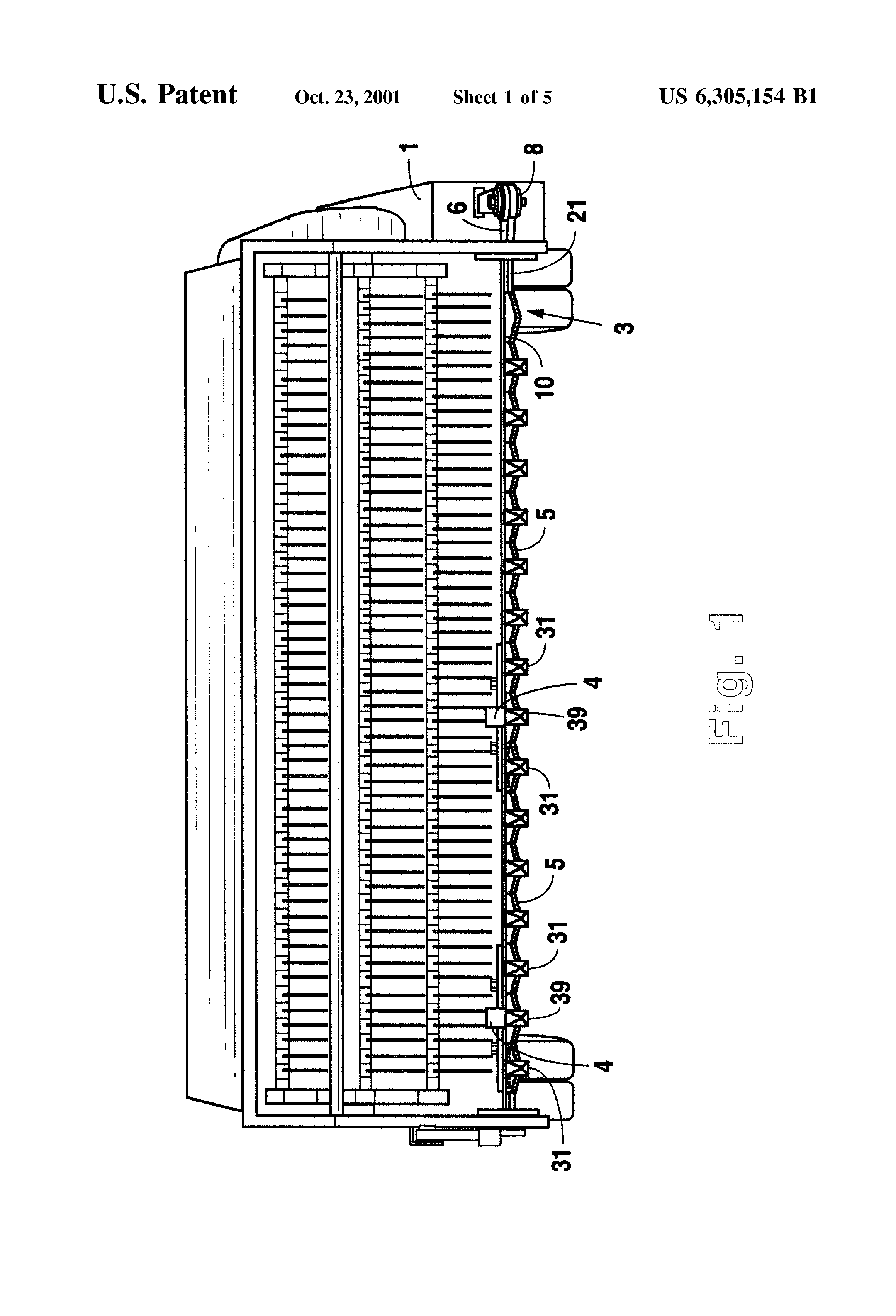
2. Stroke, pitch, frequency. Industry sickle systems use a stroke roughly equal to the guard spacing (~3 in / 76 mm) and, per US Patent 6,305,154B1, "the driving mechanism moves the sickle bar in a reciprocating motion at a speed of approximately 1,650 strokes per minute." Tillers International similarly notes a "normal pitman-driven knife speed ranges from 1,600 to 2,000 strokes per minute." "High-speed" cutting systems push further, the same patent specifies a system "driven at a speed of between 2200 to 2700, and ideally at approximately 2475 strokes per minute" using a ~2-inch stroke. The reciprocation is produced from rotary input by a pitman (crank-slider) rod, a wobble joint, or a Scotch yoke. A pitman shaft turning at ~825 rpm with one full back-and-forth per revolution yields ~1,650 spm. Cut quality depends far more on sharpness, register, and ledger condition than on raw speed.

Patent: US 6,305,154 B1 (Expired)
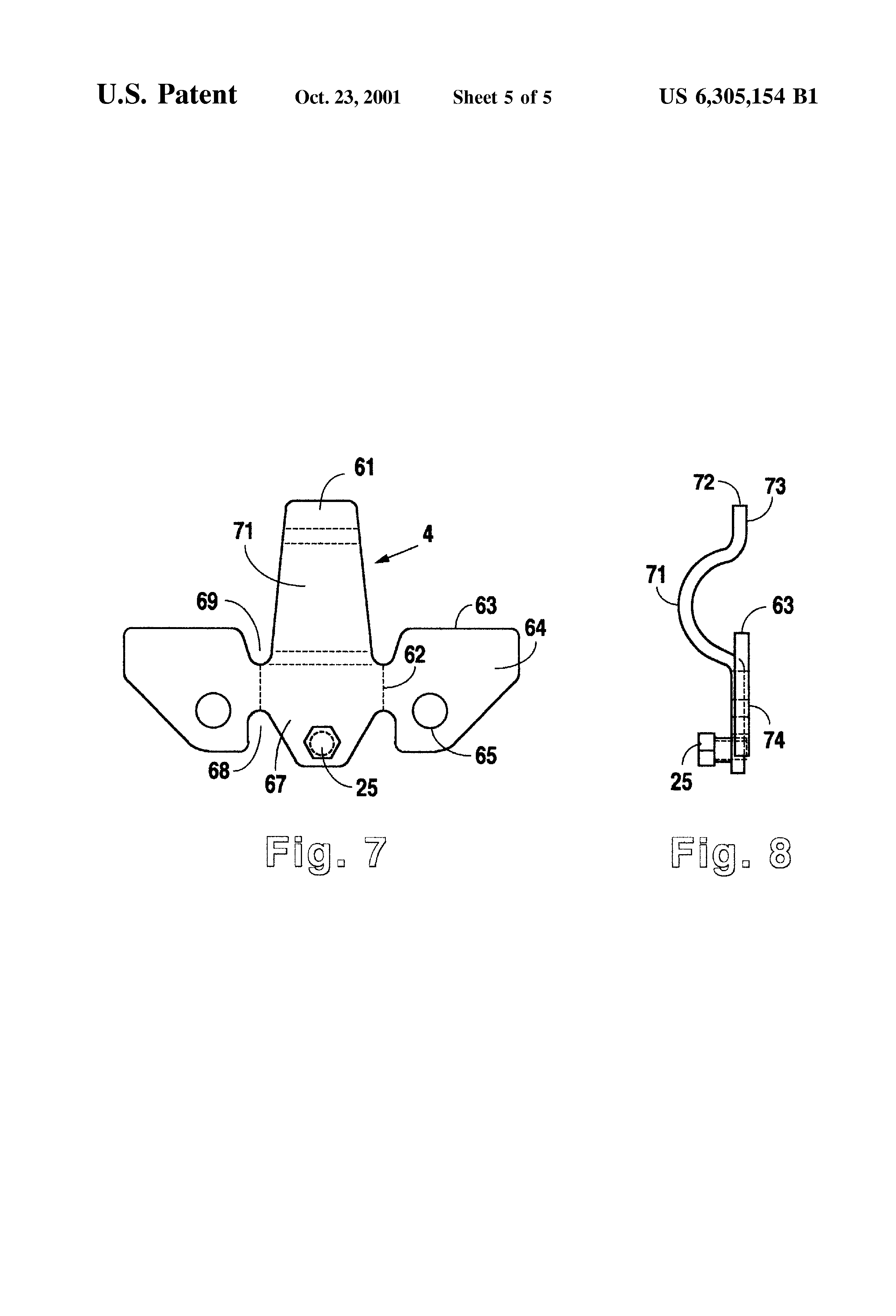
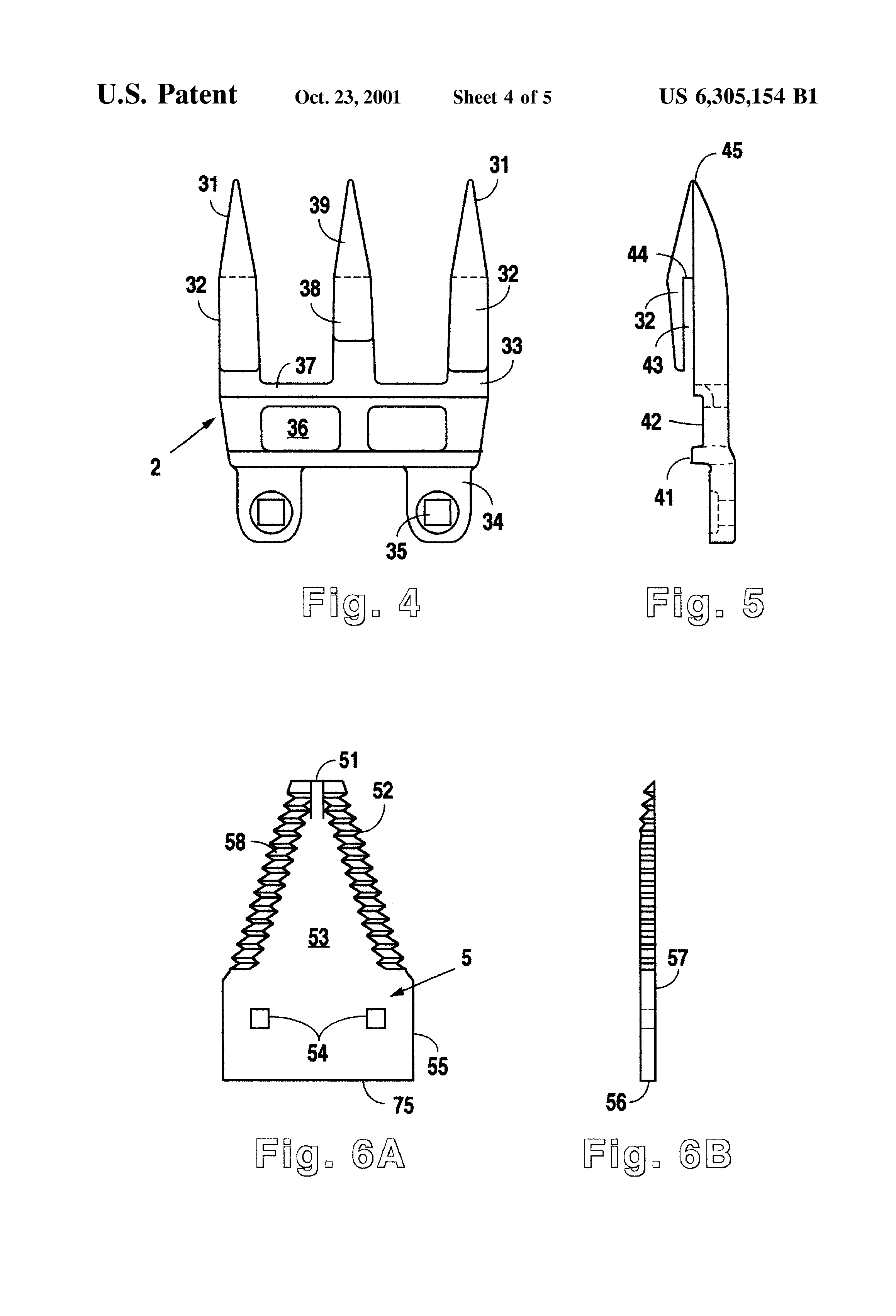
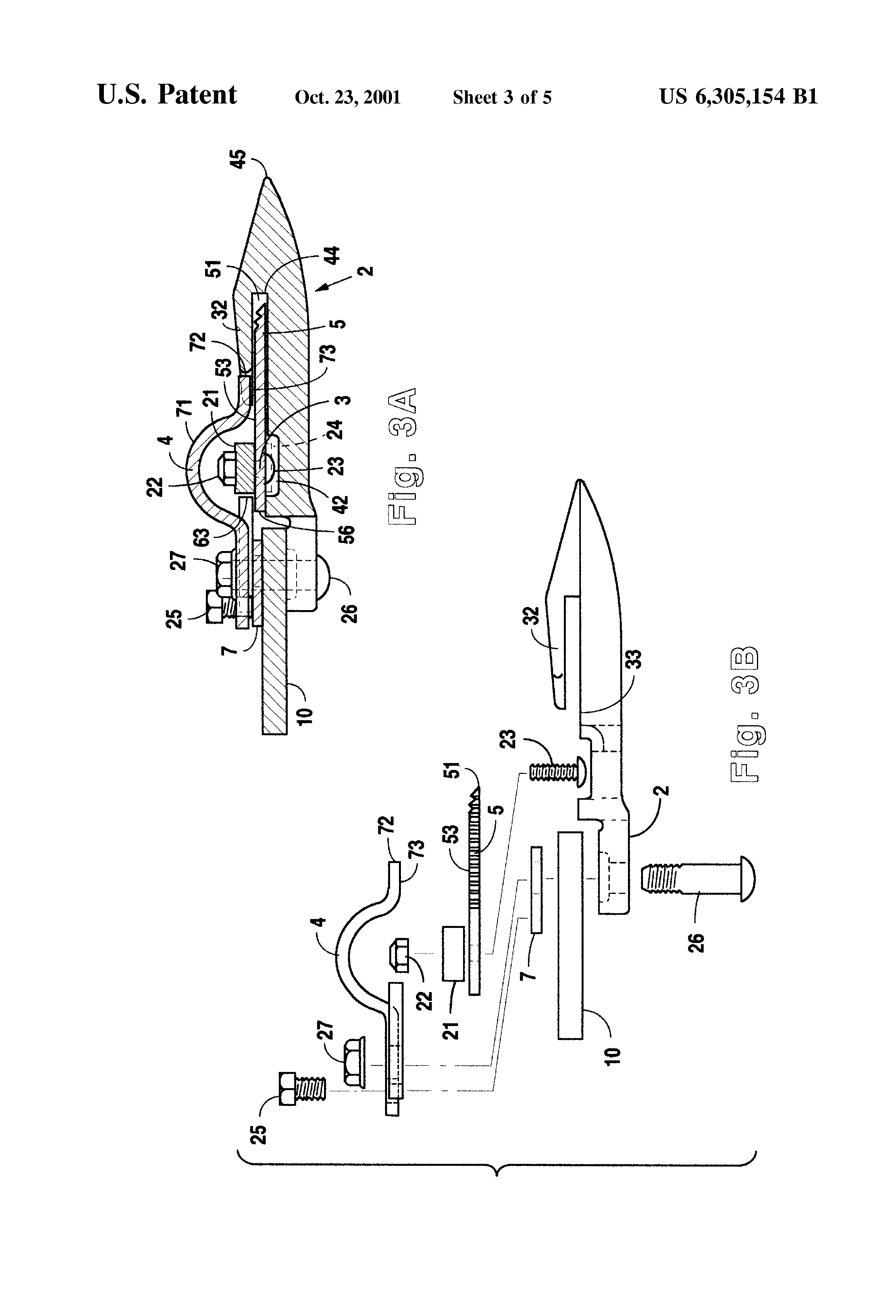
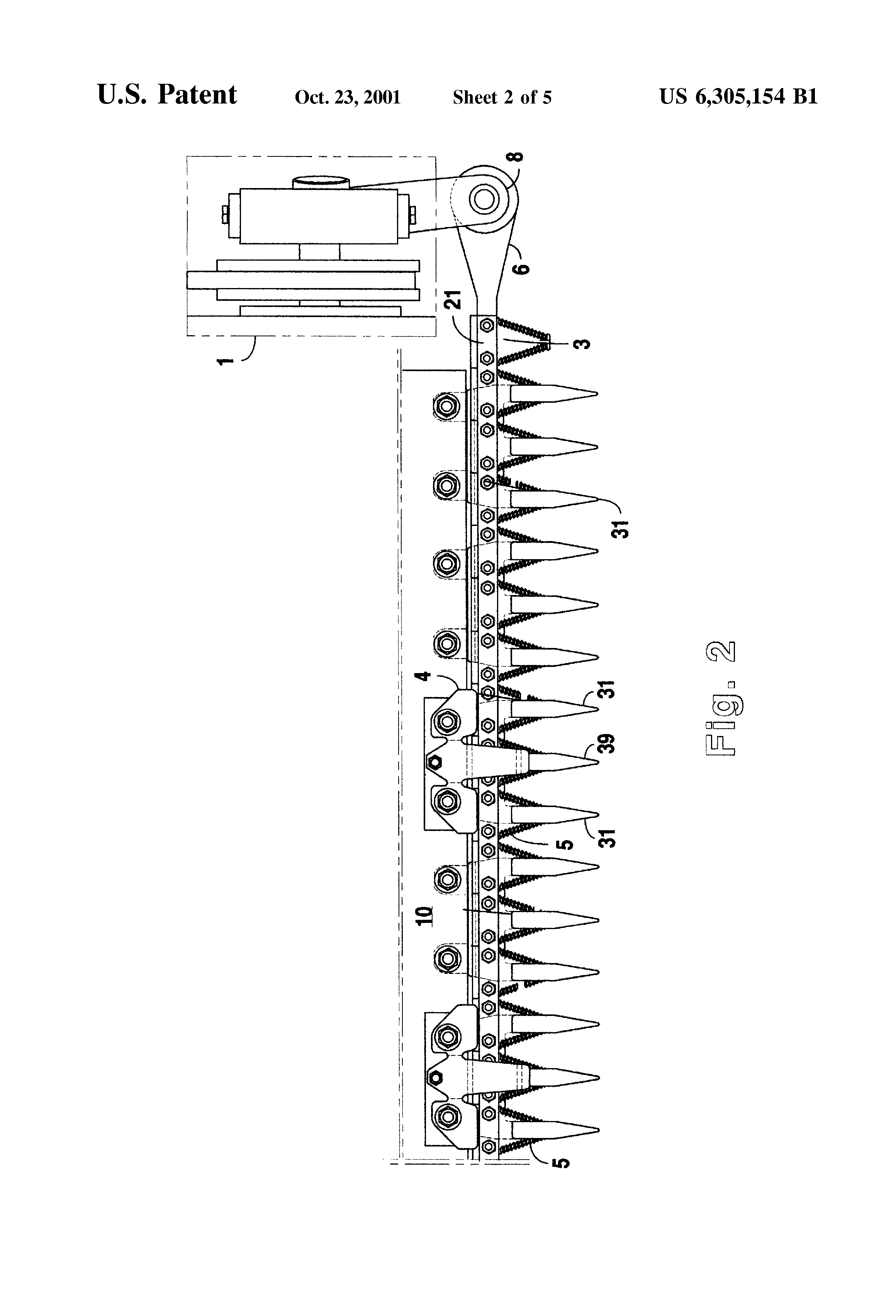
3. Why not reel or rotary? A reel/cylinder mower only cuts short, dry, maintained turf and jams in tall or wet grass; a rotary needs high tip speed and throws debris. The sickle bar shears tall grass, weeds, wet grass, and light brush at low power. Per Earth Tools (the largest US BCS dealer): "you can figure a cutter bar requires half the horsepower of any rotary mower; therefore the same size motor can run a mower twice the width in a cutter bar than a rotary mower." It leaves stems whole (good for hay), cuts under fences and around pond edges, and throws no stones. Its weaknesses: it clogs in already-cut or matted material, needs frequent sharpening/adjustment, and vibrates.


4. The crux: driving reciprocation from a push wheel.
- Wheel rpm is the killer. At a normal walking pace of ~1 m/s (3.6 km/h), a 200 mm (≈8 in) diameter wheel (circumference ≈0.63 m) turns at ~1.6 rev/s ≈ 95 rpm; a 250 mm wheel ≈ 76 rpm. To reach even a modest 1,000 spm you need a crank at ~1,000 rpm, i.e. a step-up of ~10–13×; for a proper 1,650 spm, ~17–22×.
- That step-up is the problem. A ground-drive wheel can only deliver torque proportional to (your push force × wheel-to-ground traction). Stepping rotational speed up by 15× steps torque down by 15× at the crank; but the cutting + inertial load at the crank is large, so the reflected drag at the wheel becomes enormous, the wheel slips, and the operator effectively has to "pedal" the cutter through the grass by pushing.
- The historical record confirms this. Ground-driven horse mowers solved the problem with mass, gearing, and animal power, not human effort. The Tillers International study Estimating Sicklebar Mower Draft (Harrigan, Roosenberg et al., Michigan State University / Tillers International) measured two ground-driven McCormick-Deering #7 mowers weighing 850–900 lb on steel wheels, in which "each rotation of the drive wheels provided twenty-five rotations of the flywheel (fifty cutting strokes)." They were pulled by ~4,000 lb ox teams at 3.1 mph (≈1,640 spm), and crop cutting resistance alone accounted for 47% of the total ~400 lbf draft. A walking human supplies neither the traction mass nor that sustained draft force.
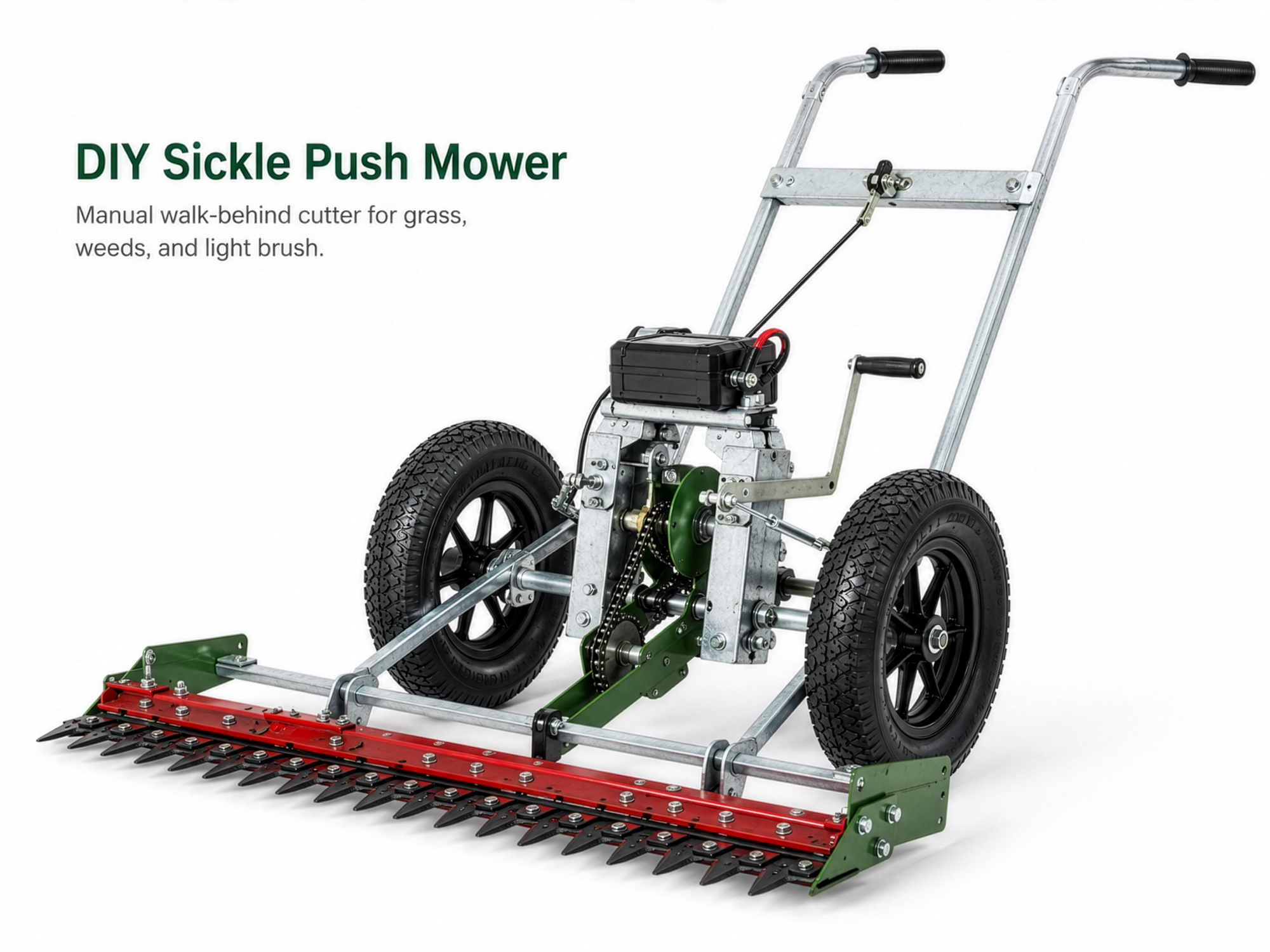
- Verdict: Pure-push ground drive is a fine demonstrator and works in light, sparse, dry growth at slow pace, but for real lawn/weed/hay cutting it is impractical. The pragmatic open-hardware answer is electric assist: a small motor spins the crank at the right rpm independent of ground speed; the wheels just carry and guide the bar.
5. Force and energy estimates. Published lawn-grass data give a static shear energy of ~3.9 mJ/mm²; with an average stem cross-section (~2.6 mm diameter, ~5.3 mm²) that's ~20.6 mJ per stem of pure shear. Real cutting is several times higher because of friction, stem acceleration, and bending; agricultural impact-cutting studies note static shear is "less than 5% of total energy," but a true shear-type sickle avoids most acceleration losses, so a few hundred mJ per stem is a reasonable working figure. For a 600 mm bar cutting dense lawn (~10,000 stems/m² → ~6,000 stems/m of travel) at 0.5 m/s, the cutting power is on the order of tens to low-hundreds of watts, within a small electric motor's range and roughly consistent with a person's sustained output, but only if transmission losses and inertial reversals don't dominate.
- Inertial load dominates at speed. Reversing a ~0.5–1 kg knife twice per cycle at 1,650 spm produces large peak accelerations (Scotch-yoke peak accel = rω², with r≈38 mm and ω≈173 rad/s → ~1,100 m/s², ~110 g). This is why real machines use a flywheel to store/return energy each stroke and why double-action bars (two knives moving oppositely) exist to cancel vibration.
- Scotch yoke vs pitman. A pitman/crank-slider (a simple rod from a crank pin to the knife head) is what virtually every historic and commercial sickle mower uses, cheap, tolerant, forgiving of misalignment, and easy to build with a rod-end or a bolt-and-bushing. A Scotch yoke (crank pin riding in a slotted yoke) gives pure sinusoidal motion, is very compact, and is easy to fabricate, but the slot wears fast under high side-load and is best below ~200 rpm, wrong for a 1,000+ rpm sickle unless well-lubricated and hardened. Recommendation: build a pitman.
6. Prior art that matters.
- Allen Scythe (John Allen & Sons of Oxford, England, 1935–1973): the canonical walk-behind reciprocating-knife mower. Per The Old Lawnmower Club (profile MP014), "More than 250,000 examples were manufactured between 1935 and 1973," with at one time "27 different implements and 13 optional extras" available. It used a ~2–4 ft bar driven by a Villiers two-stroke through a worm drive and enclosed crank to a spring-steel oscillating arm; wheels driven via hub ratchets. A 2026 Hackaday-documented build replaced its engine with an electric motor, the clearest modern open template for an electric-assist reciprocating mower


- Jari / Monarch walk-behind sickle mowers (Jari = Jacob A. Ronning, Inc., Mankato, Minnesota; 1948–2018, relaunched briefly). Per Green Industry Pros, the relaunched "Jari Mowers offers a self-propelled walk-behind sickle mower," though as of 2013 it had "just 17 dealers in the U.S." Widely available used (~$150–$480) and an excellent salvage donor for a cutter bar, knife, and drive head. (Note: Jari/Simplicity/Montgomery-Ward sickle sections are a non-standard "2 in wide × 2-13/16 in long with 3/16 in holes on 1-3/8 in centers," so verify section compatibility before buying replacements.) Green Industry Pros
- BCS / Grillo walk-behind tractors with single- and double-action cutter bars are the modern commercial reference (and parts source).
- Permies.com "wheelbarrow sickle mower": a maker bolted a salvaged cordless hedge trimmer (which already has a reciprocating double-blade cutter) to a wheelbarrow/stroller frame for a ~$50 small sickle-bar mower; arguably the single most replicable, cheapest open design and the one this whitepaper most recommends as a starting point.
- Open Source Ecology / Farm Hack / L'Atelier Paysan / Low-Tech Magazine: the surrounding FOSS-hardware ecosystem (Creative Commons designs, salvage ethos, scythe workshops), but none publish a finished push-sickle design, a gap this paper can fill.
7. Commercial comparison (what you're competing against).
- New BCS sickle-bar implement only (Earth Tools): single-action grease-drive 30 in ≈ $1,235, 45 in ≈ $1,335, 53 in ≈ $1,385; oil-bath single-action 30 in ≈ $1,805 up to 53 in ≈ $2,071; double-action 47–71 in $2,850–$3,420, plus a walk-behind tractor (cheapest BCS 710 ≈ $2,137, MSRP $2,250) → ~$3,400–$4,000 complete.
- Self-contained European gas scythe mower (AL-KO ~87 cm): ~$1,500.
- Used vintage Jari / Allen Scythe: ~$150–$480.
- Manual reel push mower: ~$80–$200.
- String trimmer / brush cutter: ~$60–$300.
- Austrian hand scythe outfit (blade + snath + stones): ~$200–$330 (Scythe Supply ~$200–$230; One Scythe Revolution itemized ~$310–$327); for many off-grid users this is the real low-tech competitor and is hard to beat on cost, silence, and reliability.
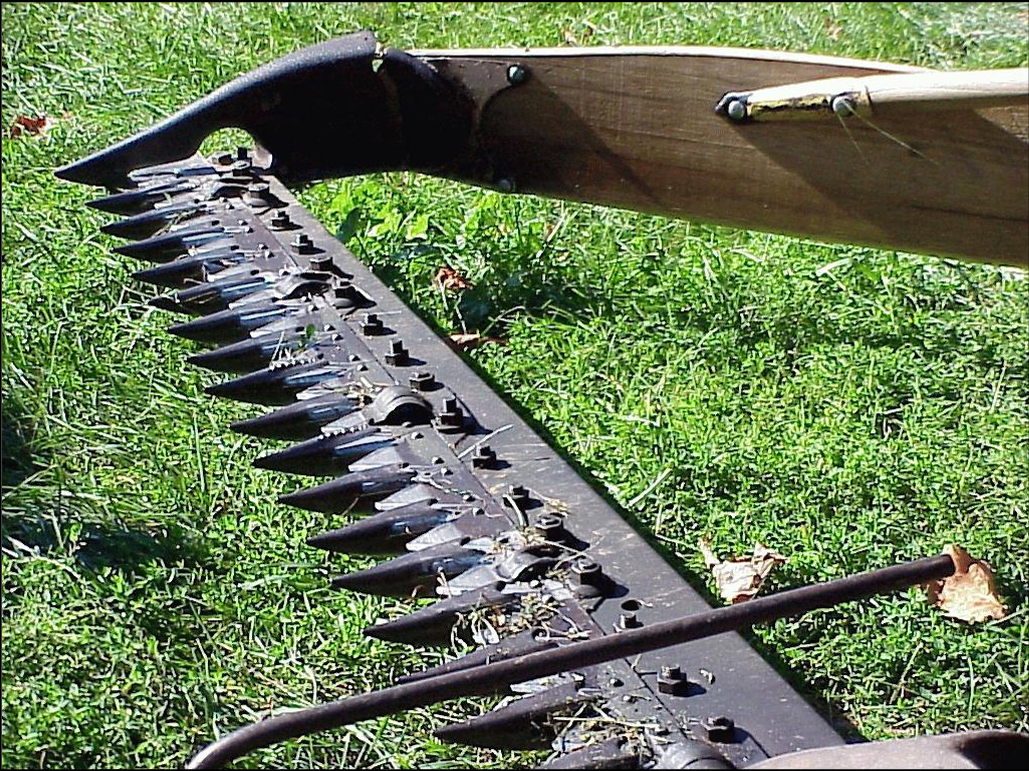
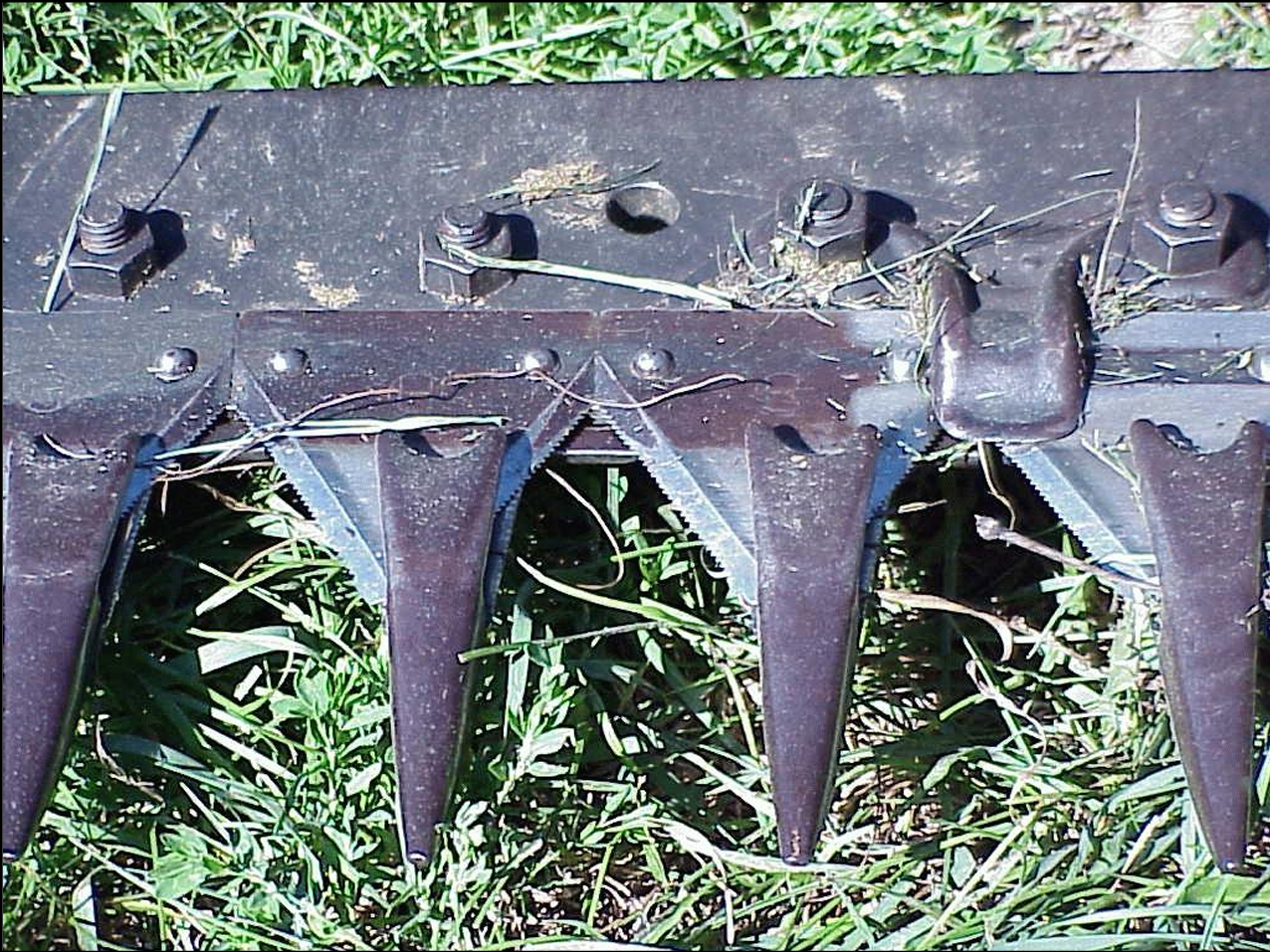
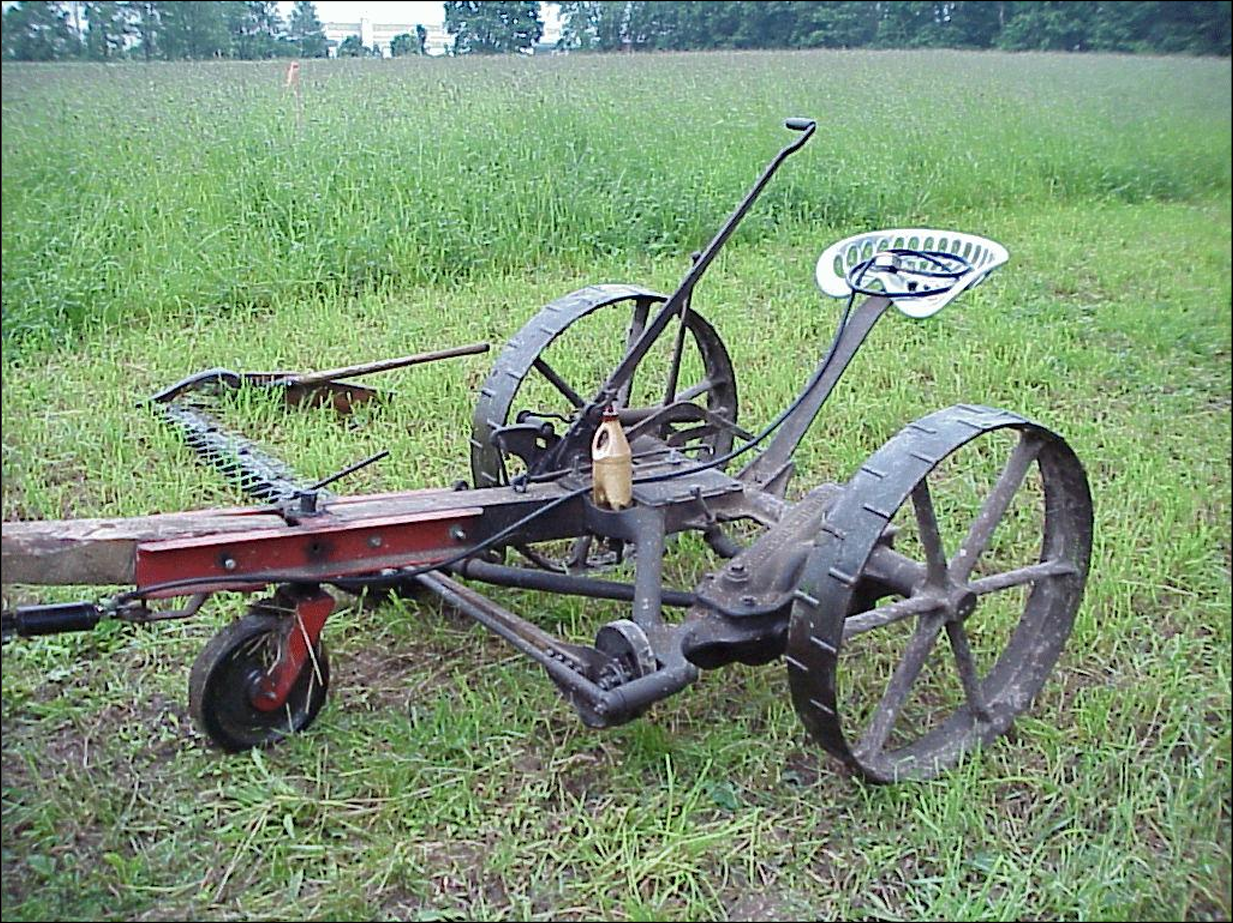
Crop resistance accounted for nearly one-half of the draft force required in mowing. | Guards protect the knives from impact damage, guide the crop into the knives and hold a stationary ledger plate.
Details
Specifications (recommended electric-assist build)
- Cut width: 450–600 mm (18–24 in) salvaged or fabricated bar (a hedge-trimmer head is typically 450–600 mm).
- Stroke: ~38–50 mm on a true sickle bar (matching guard spacing of the donor); hedge-trimmer heads typically ~20–40 mm.
- Blade frequency: 1,000–1,800 spm (crank ~1,000–1,800 rpm).
- Drive: salvaged 18–20 V cordless-tool brushless motor or 12 V DC motor, belt/chain or direct to a pitman crank with a small flywheel.
- Wheels: two 200–250 mm (8–10 in) mower/wheelbarrow wheels for support + height; not driven.
- Frame: ¾ in galvanized pipe and fittings, square steel tube, salvaged bed-frame angle iron, or dimensional lumber.
Bill of materials with prices and salvage alternatives (estimates, USD)
| Item | New Est. Price | Salvage / Free Alternative |
|---|---|---|
| Cutter bar + knife (donor) | Used Jari / cutter-bar mower: $150–$480; new BCS bar: $1,235+ | Junk hedge trimmer (electric/gas): often free–$30; scrap sickle mower bar |
| Sickle sections (replacements) | CountyLine 10-pack: $15.99 (~$1.60 each); Sloan box of 25: $54.99 standard / $63.69 Versatile | Reuse donor sections; hacksaw blades or hardened scrap as DIY knife stock |
| Complete replacement knife assembly (5–7 ft) | ~$150–$230 (Sloan Express) | Salvage from donor mower |
| Guards / fingers + ledger plates | A few dollars each at farm stores | Salvage from donor bar |
| Frame: 3/4 in galvanized pipe, 10 ft | ~$25–$30 (Home Depot); EMT 3/4 in ~$10 | Salvaged bed-frame angle iron, scrap tube, scrap lumber |
| Pipe fittings (tees / elbows / flanges) | $3–$8 each | Salvage |
| Wheels (8 in mower) x2 | $6–$20 each | Old mower, stroller, or bike wheels |
| Wheelbarrow wheel | $15–$38 (Harbor Freight) | Salvage |
| Bearings: 608 skate x4–8 | ~$1–$2 each; 10-pack ~$8–$12 | From skateboards, old printers, or fans |
| Pillow-block bearing (5/8 in) | ~$8–$15 each | — |
| Bronze bushing | $2–$6 | Salvage |
| Pitman / connecting rod stock + rod-end (heim) | Rod-end: $5–$12; bolt + bushing: ~$2 | Scrap steel, bolt-and-bushing pivot |
| Crank disc | From scrap plate / pulley | Old pulley, sprocket, or flywheel |
| Chain + sprockets / V-belt + pulleys | Belt + pulley: $10–$25 | Salvage from bicycle: chain, freewheel, sprockets |
| Handle | Pipe ~$10; broomstick ~$5 | Salvaged bike/mower handle, broomstick |
| Fasteners, lock nuts, cotter pins, grease | $15–$25 assorted | Salvage jar |
| Subtotal (mechanical, salvage-heavy) | ~$60–$150 | Depends heavily on donor parts and local scrap availability |
Optional electric-assist upgrade path (USD)
| Item | New Est. Price | Salvage |
|---|---|---|
| Motor: 12 V DC / wheelchair / brushless | Wheelchair or geared DC motor: ~$30–$80; small 12 V DC motor: ~$15–$40 | Cordless-drill motor; old wheelchair/scooter motor; cordless hedge-trimmer motor with its own drive |
| Battery: 12 V SLA or salvaged 18–20 V tool pack | SLA 7–12 Ah: ~$20–$35 | Salvaged tool battery; old UPS battery; old car battery |
| PWM speed controller | $8–$20 (10–40 A PWM module) | — |
| Automotive relay + switch + wiring | $10–$20 | Salvage |
| ESC (if brushless) | $15–$40 | — |
| Electric subtotal | ~$60–$150 | Depends on motor and battery salvage availability |
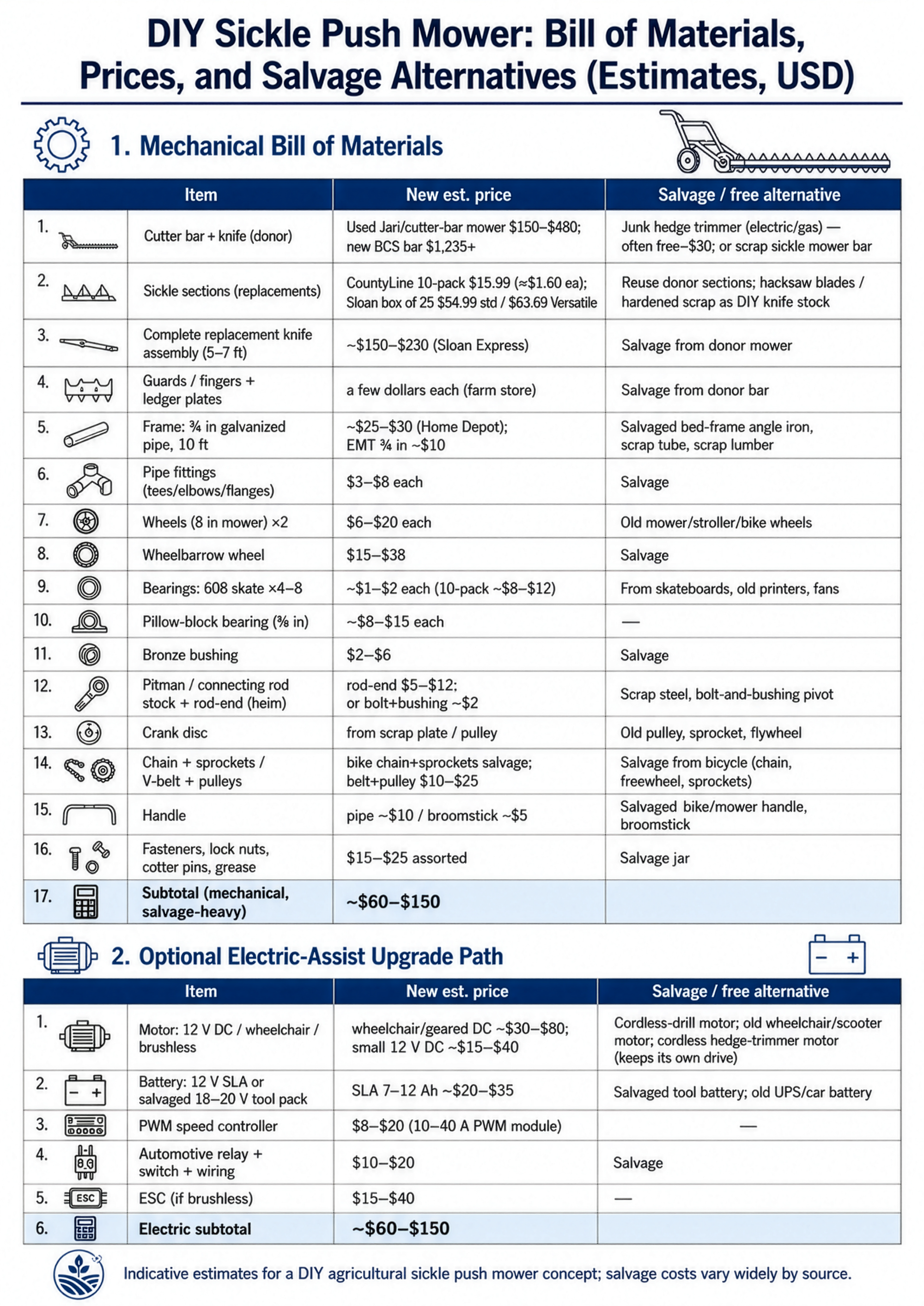
Total electric-assist DIY build: ~$120–$300, versus ~$3,400–$4,000 for a new BCS outfit.
Tools
- Measuring: ruler/tape, square, calipers (manual fallback: ruler + feeler gauge for blade clearance).
- Cutting: angle grinder with cut/grind discs - manual fallback hacksaw + files.
- Drilling: power drill + bits; manual fallback hand drill/brace.
- Holding: bench vise (essential for knocking out rivets and fitting sections), clamps.
- Wrenches/sockets, screwdrivers, hammer (for guard alignment), files (for sharpening sections - flat and round/half-round).
- Electric path: soldering iron, multimeter, wire strippers, heat-shrink/crimps.
- Consumables: cut/grind discs, drill bits, files, thread locker, anti-rust paint/primer, grease.
Safety and standards
- Dominant hazard: the reciprocating knife is dangerous and sharp- treat it exactly like a hedge trimmer or sickle-bar mower. Forum users repeatedly warn never to put your fingers between the guard and a section, because "when you lift up the cutter bar the blade often slides to the bottom and can cut off fingers."
- Other hazards: linkage pinch points (crank, pitman, sprockets); stored energy in a flywheel (it keeps spinning after power off); flying debris (less than rotary but possible); vibration (use double-action or a counterweight/flywheel; limit run time); and on the electric path, low-voltage DC battery short-circuit/fire (fuse the battery, insulate terminals), and motor pinch.
- PPE: safety glasses/face shield, hearing protection (gas engine), sturdy boots, no loose clothing. Use cut-resistant gloves only for handling a de-energized blade. Keep gloves away from a powered blade, which can grab and pull them in.
- Lockout / blade restraint: before any adjustment, disconnect the battery / remove the spark-plug wire; insert a wooden block or clamp to physically restrain the knife; let the flywheel stop completely. Add a dead-man switch so the blade stops when the handle is released.
- Guarding principles: shield the crank/pitman/sprockets; fit an end skid and a blade guard for transport; keep the operator behind the handle and the bar ahead and to the side. These are general machine-guarding and reciprocating-mower practices; the builder must verify local regulations and standards.
Recommendations
- Start with salvage, not fabrication. Source a junk cordless/electric hedge trimmer (free–$30) or a used Jari/cutter-bar mower ($150–$480). The hedge-trimmer route gives you a finished reciprocating cutter head and its motor in one piece; the permies.com wheelbarrow build proves a working small sickle mower for ~$50.
- Build the wheeled chassis first from ¾ in pipe or salvaged angle iron: two support wheels, an adjustable-height skid, and a handle. Mount the cutter bar ahead and to one side, 25–75 mm off the ground.
- Drive the crank electrically. Use the donor's own motor, or a salvaged 12 V/18–20 V motor + PWM controller + fused battery. Target 1,000–1,800 spm. Add a small flywheel to smooth the load and a dead-man switch.
- Treat ground drive as an experiment, not the main design. If you want to attempt pure-push, use large-diameter, high-traction wheels, a 12–20× chain/sprocket step-up from a bicycle drivetrain, and a flywheel, though expect it to work only in light, dry, sparse growth. Document it as a learning build.
- Tune relentlessly: sharp sections, correct register, ledger plates square and ~0.75 mm clearance, plenty of oil on the bar. A dull/loose sickle causes major issues.
Benchmarks that change the recommendation
- If you can source a complete working used sickle mower under ~$250, buy it. Fabrication rarely beats that on cost or reliability.
- If your need is occasional light clearing on a small plot, an Austrian hand scythe (~$200–$330) is quieter, lighter, and more reliable than any DIY machine, build the powered mower only if area/repetition justifies it.
- If pure-push testing shows wheel slip or unsustainable push force (it will, in dense grass), commit to electric assist immediately.
Caveats
- The engineering verdict is a reasoned judgment, not a tested result: the conclusion that pure-push ground drive is impractical rests on first-principles rpm/torque reasoning plus the historical record (the Tillers International draft study shows ground-driven mowers needed ~850–900 lb of machine on steel traction wheels and ~4,000 lb ox teams supplying ~400 lbf of draft, with crop resistance alone ~47% of that). It is not based on a built-and-measured human-push prototype; a determined builder with a very efficient drivetrain and light, dry grass may achieve more than predicted.
- Force/power numbers are order-of-magnitude estimates from published shear-energy and rotary-mower studies; sickle (shear) cutting energy is lower than rotary impact cutting, but real loads depend heavily on grass species, density, moisture, sharpness, and clearance.
- Prices vary by region and date and are 2025–2026 estimates; salvage availability is highly local. Some Chinese-import walk-behind sickle mower prices could not be precisely confirmed.
- Safety/standards content is guidance, not certification: there is no consumer-product standard tailored to a DIY push sickle mower; the builder is responsible for verifying local machinery-guarding and safety regulations.
- Stroke-vs-crank-rpm relationship: sources state ~1,650–2,000 spm at a pitman shaft of ~825–950 rpm; confirm the cycle definition (strokes per revolution) for your specific donor mechanism before sizing the drive (note the Tillers ground-driven example used a 25:1 wheel-to-flywheel ratio giving 50 strokes per wheel revolution.)
Taylor & Francis. (n.d.). Scotch yoke. Taylor & Francis Knowledge Centers. Retrieved May 29, 2026, from https://taylorandfrancis.com/knowledge/Engineering_and_technology/Mechanical_engineering/Scotch_yoke/
McRandal, D. M., & McNulty, P. B. (1978). Impact cutting behaviour of forage crops I. Mathematical models and laboratory tests. Journal of Agricultural Engineering Research, 23(3), 313–328. https://doi.org/10.1016/0021-8634(78)90104-X
Wartgow, G. (2013, April 22). Long live the sickle for heavy-growth areas. Green Industry Pros. https://www.greenindustrypros.com/mowing-maintenance/mowing/article/10926041/jari-mowers-jari-sickle-mower-common-applications-dealers