IQM Quantum Computers Oyj: History, Position, and Prospects
TL;DR
IQM Quantum Computers Oyj is a Finnish full-stack superconducting quantum hardware maker that, on 2 July 2026, became the first European quantum company to list on a major US exchange (Nasdaq ADSs under IQMX; Nasdaq Helsinki ordinary shares under the same code from 3 July 2026), entering public markets with audited 2025 revenue of EUR 31.3 million, reported cash of EUR 309.4 million as of 2 July 2026, and backlog that reached EUR 102.1 million by 3 August 2026 [1][2][4][6][8].
IQM's differentiator is a delivered on-premises hardware business selling customer-owned systems into publicly funded European HPC centers, but that business is small, project-lumpy, policy-concentrated, and recognized over 1.5-to-2-year installation cycles; its device fidelities (median 99.5 percent two-qubit on the 20-qubit Garnet processor) are credible and independently referenced yet trail the best trapped-ion figures, and its fault-tolerance roadmap rests on error-correction results that remain numerical rather than hardware-demonstrated at logical scale [4][6][7][9][11][12][13].
The de-SPAC left IQM well capitalized versus its burn (runway guided into Q2 2028), but it carries standard recent-de-SPAC hazards: an undisclosed redemption outcome, a 12.5-million-share warrant overhang at USD 11.50, one-year lock-ups, ESOP dilution, and business-combination projections that must never be carried as performance [1][5][6][7].
Key Findings
IQM occupies a defensible but narrow niche. Among listed quantum peers it is the only one whose revenue comes overwhelmingly from selling physical, customer-owned machines rather than metering cloud access: of EUR 31.3 million in 2025 revenue, EUR 30.6 million was on-premises system sales, with cloud usage contributing EUR 0.3 million [4]. This is a scientific-instrument model, closer to selling a supercomputer than to cloud software, and it produces large, uneven contracts recognized against installation and acceptance milestones over 1.5 to 2 years [7]. The commercial base is real, revenue grew 91 percent in 2025, but it is small and concentrated in EuroHPC and national-laboratory procurement, so demand durability tracks political budget cycles rather than commercial return on investment [4][15][17][20].
Technically, IQM is a credible superconducting builder that cannot win on raw fidelity. Its best independently referenced system-level result is a median two-qubit gate fidelity of exactly 99.5 percent on the 20-qubit Garnet processor, with 20-qubit GHZ entanglement [9]. That sits at or slightly above the superconducting peer benchmark (Rigetti's Cepheus-1-108Q at 99.1 percent median two-qubit fidelity) but well below the best trapped-ion figures (IonQ's reported fidelity exceeding 99.99 percent) [9][30]. IQM's strategic answer is not fidelity leadership but deliverable, HPC-integrated systems, in-house fabrication throughput, and an error-correction architecture co-designed with its hardware.
Financially and structurally, IQM is stronger than most quantum de-SPACs but not de-risked. It holds EUR 309.4 million in cash, has repaid its only term debt, and guides to a runway into Q2 2028 [6][7]. Yet FY2026 revenue guidance of EUR 42 to 47 million depends heavily on fourth-quarter acceptance of its first 150-qubit system, the redemption outcome and residual sponsor warrant forfeiture were not disclosed in closing releases, and the fault-tolerance milestones that justify the USD 1.8 billion valuation all lie ahead [3][6][7].
Details
1. Contextual and scientific background
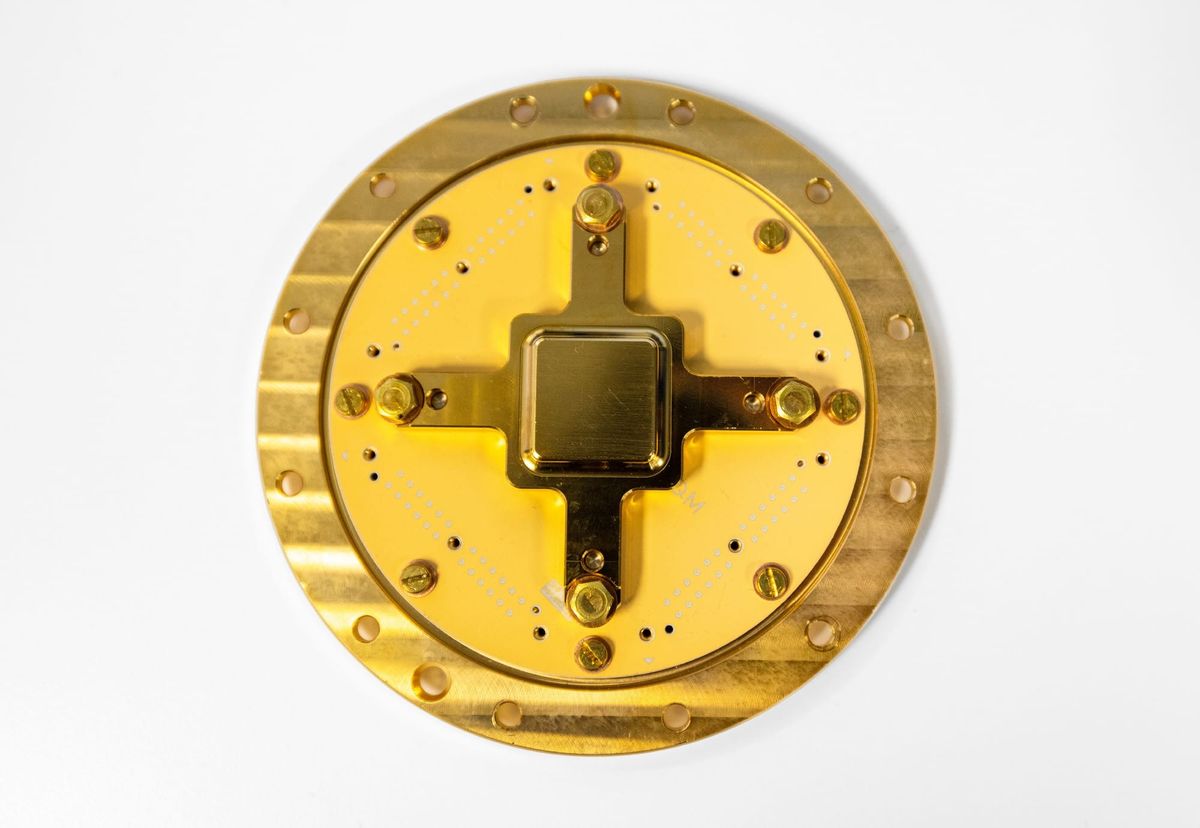
1.1 The transmon modality in competitive context. IQM builds flux-tunable transmon qubits coupled through tunable couplers, cooled to near 10 millikelvin in dilution refrigerators and driven by room-temperature microwave and flux electronics [9]. The modality offers fast (tens-of-nanoseconds) gates and semiconductor-style microfabrication, at the cost of shorter coherence than trapped ions and heavy wiring and calibration burdens that grow with qubit count. On the 20-qubit Garnet processor, nearest-neighbor connectivity via tunable couplers raises the transmon count from 20 computational qubits to 50 tunable transmons and requires 76 control lines (3.8 per qubit), a scaling pressure addressed through three-dimensional flip-chip integration [9].
The modality choice is decisive against the competitive set. Trapped-ion leader IonQ (NYSE:IONQ) has reported two-qubit gate fidelity exceeding 99.99 percent with all-to-all connectivity, albeit with slower gates [30]. Neutral-atom vendor Infleqtion (NASDAQ:INFQ) offers high qubit density; photonic and spin-qubit approaches remain earlier in commercial maturity. Among superconducting peers, Rigetti Computing (NASDAQ:RGTI) reported 99.1 percent median two-qubit fidelity on its 108-qubit Cepheus-1 system [30]. IQM's demonstrated device fidelities therefore sit at or above the superconducting benchmark but below the best ion figures, which is why its strategy leans on delivery, integration, and co-designed error correction rather than fidelity supremacy.
1.2 Institutional lineage. IQM was founded in 2018 as a spin-out of Aalto University and the VTT Technical Research Centre of Finland, by Jan Goetz, Mikko Möttönen, Kuan Yen Tan, and Juha Vartiainen [31]. The scientific lineage runs through Möttönen's Quantum Computing and Devices group at Aalto, and the company retains a tight academic coupling, with much of its performance literature co-authored with university collaborators [9][31]. It is headquartered in Espoo, Finland, maintains major operations in Munich, and reported over 400 employees globally at listing [8].
1.3 Corporate and financing history through listing. Private financing escalated from a EUR 39 million Series A1 in 2020, to a EUR 128 million Series A2 in 2022 led by World Fund (with a EUR 35 million European Investment Bank venture loan), to a Series B of more than USD 300 million (about EUR 275 million) in September 2025 led by Ten Eleven Ventures with expanded participation from the Finnish state investor Tesi [21][22]. The company states it raised more than USD 600 million privately before listing [21]. The public listing was executed as a business combination with Real Asset Acquisition Corp. (formerly Nasdaq:RAAQ), announced 22 February 2026, declared effective on Form F-4 on 5 June 2026, approved at RAAQ's extraordinary general meeting on 25 June 2026, and closed on 1 July 2026, with RAAQ merging into IQM US LLC and IQM surviving as public parent at a pre-money equity value of approximately USD 1.8 billion [1][3][5].
2. Key players and stakeholders
2.1 Leadership and governance. Co-founder Jan Goetz became sole CEO effective 1 January 2026, ending a co-CEO structure held with Mikko Välimäki since February 2024; Välimäki advised through 31 March 2026, and Søren Hein was appointed COO and Deputy CEO [23]. Möttönen serves as Chief Scientist and remains an Aalto professor; Kuan Yen Tan is CTO; Juha Vartiainen is a co-founder in an operating role [31]. Sierk Poetting chairs the board, Jan Kürschner is CFO, and Sylwia Barthel de Weydenthal is CCO; Alex Doll of Ten Eleven Ventures joined the board with the Series B [6][17][21][23].
2.2 Post-combination shareholder register. Existing IQM shareholders did not cash out and collectively retained approximately 81.1 percent of the company in the no-redemption scenario modeled in the registration materials, rising to 84.6 percent at 50 percent redemptions and 88.3 percent at maximum redemptions [5]. Finnish institutional capital (Tesi, and pension insurers Varma and Elo) remained invested, alongside World Fund, Ten Eleven Ventures, Tencent, MIG, Bayern Kapital, the EIC Fund, and strategic holders including the Schwarz Group and Winbond [16][21][22]. The precise post-closing beneficial-ownership percentages for each named holder were not resolved to a primary filing in this research and should be read from the beneficial-ownership section of the 424B3 or the first Form 20-F; this remains an unresolved point rather than a settled figure.
The total number of shares admitted to trading on Nasdaq Helsinki on 3 July 2026 was 262,462,360 on a one-share-one-vote basis [8]. That count rose to 263,039,597 on 16 July 2026 after a net warrant exercise tied to a Kreos Capital warrant agreement, and to 263,223,216 on 29 July 2026 after 183,619 new shares were registered under the ESOP 1 employee option plan for an aggregate subscription price of EUR 74,393.80 [6]. Each ADS represents one ordinary share, issued through BNY as depositary [1].
2.3 Named customers and deployment partners. IQM's deployments are concentrated in European public HPC and research institutions. Verifiable installations and orders include VTT in Finland (5-, 20-, and 50-qubit systems delivered, with a 150-qubit system contracted for 2026 and a 300-qubit system, comprising two 150-qubit processors, for 2027) [20]; the Leibniz Supercomputing Centre in Munich (the 20-qubit Q-Exa/Euro-Q-Exa system integrated with SuperMUC-NG) [32]; CINECA in Italy (a Radiance 54-qubit system named NOX integrated with the Leonardo supercomputer) [17]; CESGA in Spain, IQM's first Spanish installation, with Telefónica [18]; Galaxy Systemy Informatyczne in Poland, described as IQM's first private-enterprise sale (a 54-qubit system for Q4 2026 delivery) [19]; and the US Department of Energy's Oak Ridge National Laboratory, which took IQM's first US delivery in June 2026 [6][20]. In July 2026 CSC in Finland selected IQM's Halocene H4 150-qubit system for the LUMI AI Factory, a EUR 33 million contract jointly funded by the EuroHPC Joint Undertaking, Finland, Czechia, Norway, and Poland, with delivery expected in 2027 [15]. The company also reports deployments or engagements in South Korea, Taiwan, and Japan [19].
The aggregate installed-base figures IQM reports have shifted across disclosures and should be treated cautiously: listing materials cited 23 systems sold with 18 delivered, an April 2026 account cited 21 sold to 13 customers, and the H1 2026 report cited 26 sold and 17 delivered [1][6][19]. These are self-reported and not reconciled to a single audited installation schedule, so the precise installed base is unresolved; the directionally robust claim is that IQM has delivered more on-premises superconducting systems than any competitor it names [1][6].
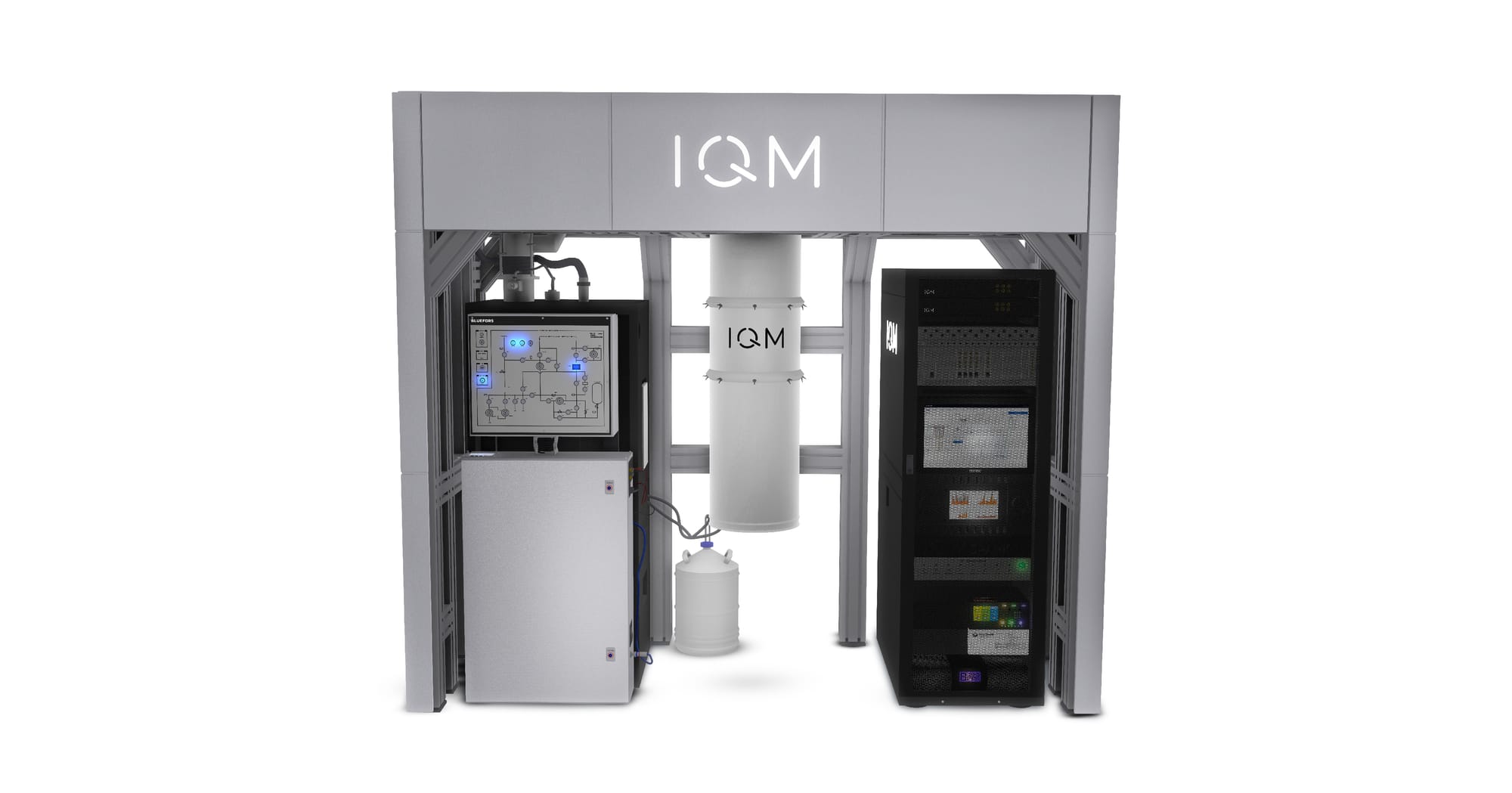
2.4 Upstream supply chain. The stack depends on a small set of specialized suppliers. Dilution refrigeration is provided by Bluefors XLD-class cryostats, a Finnish supplier, cooling the QPU below 10 millikelvin with cascaded attenuation and filtering [9]. Superconducting film deposition and Josephson-junction fabrication are performed in IQM's own facility in Espoo, using flip-chip three-dimensional integration to separate routing and qubit chips, which reduces external-foundry dependency relative to some peers [9]. Signal readout uses traveling-wave parametric amplifiers, and control electronics are room-temperature microwave and flux systems [9]. The concentration of critical inputs, particularly dilution refrigeration and parametric amplifiers, is material both to throughput and, as Section 5 shows, to export-control exposure.
2.5 Competitive set. Comparables are IonQ, with record Q2 2026 GAAP revenue of USD 80.1 million (up 287 percent year over year), remaining performance obligations of USD 485.0 million, and cash, equivalents, and investments of USD 3 billion as of 30 June 2026 [30]; Rigetti Computing, with roughly USD 569 million in cash and Q1 2026 revenue of USD 4.4 million [30]; and D-Wave Quantum, an annealing and gate-model vendor [30]. Quantinuum (NASDAQ:QNT) and Infleqtion listed in 2026; their ticker and exchange assignments are recent and should be confirmed against exchange records before reliance. IBM and Google remain the scaling and error-correction pace-setters. IQM's revenue base exceeds Rigetti's but is a fraction of IonQ's, and its cash position is intermediate among the superconducting peers [30].
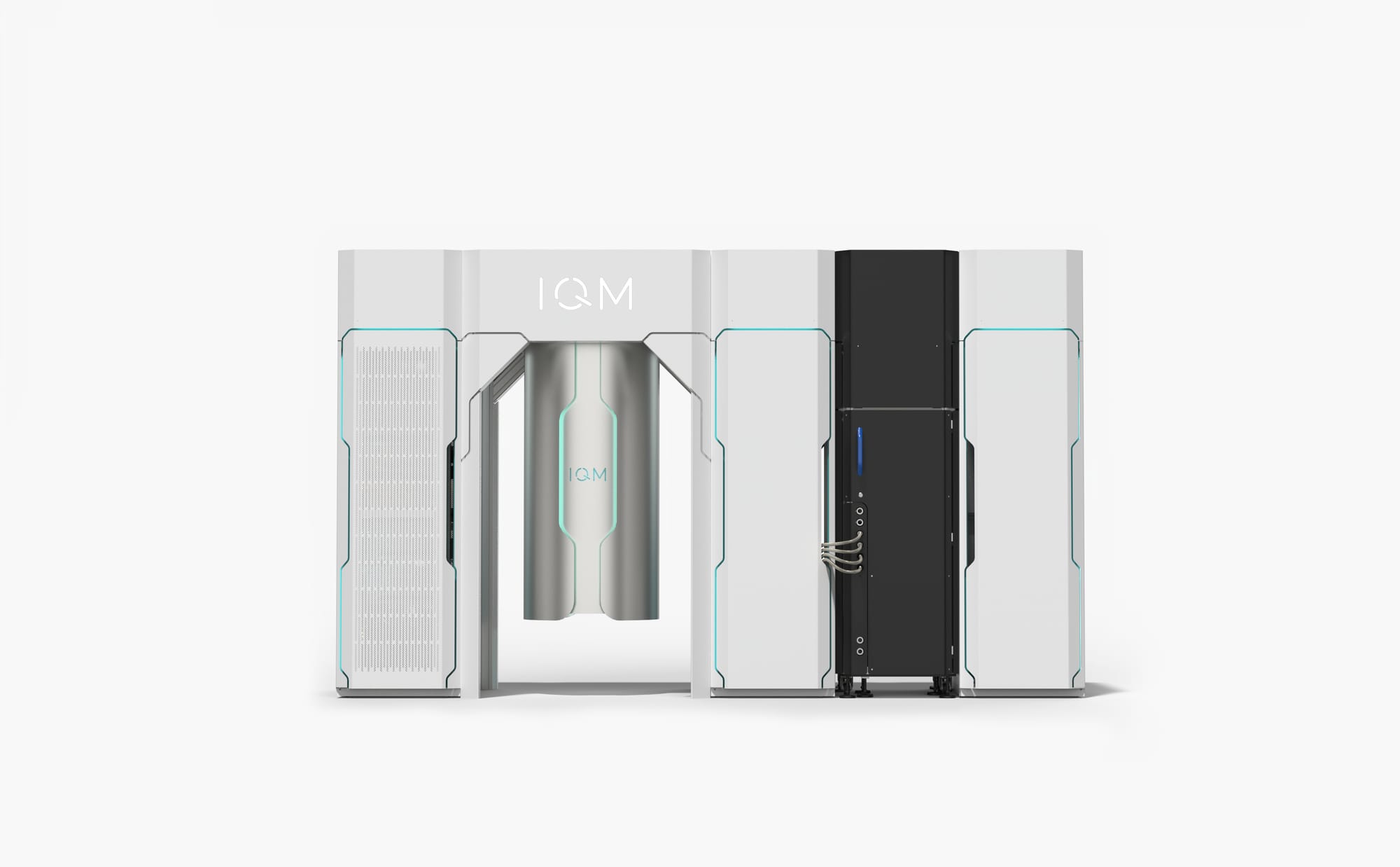
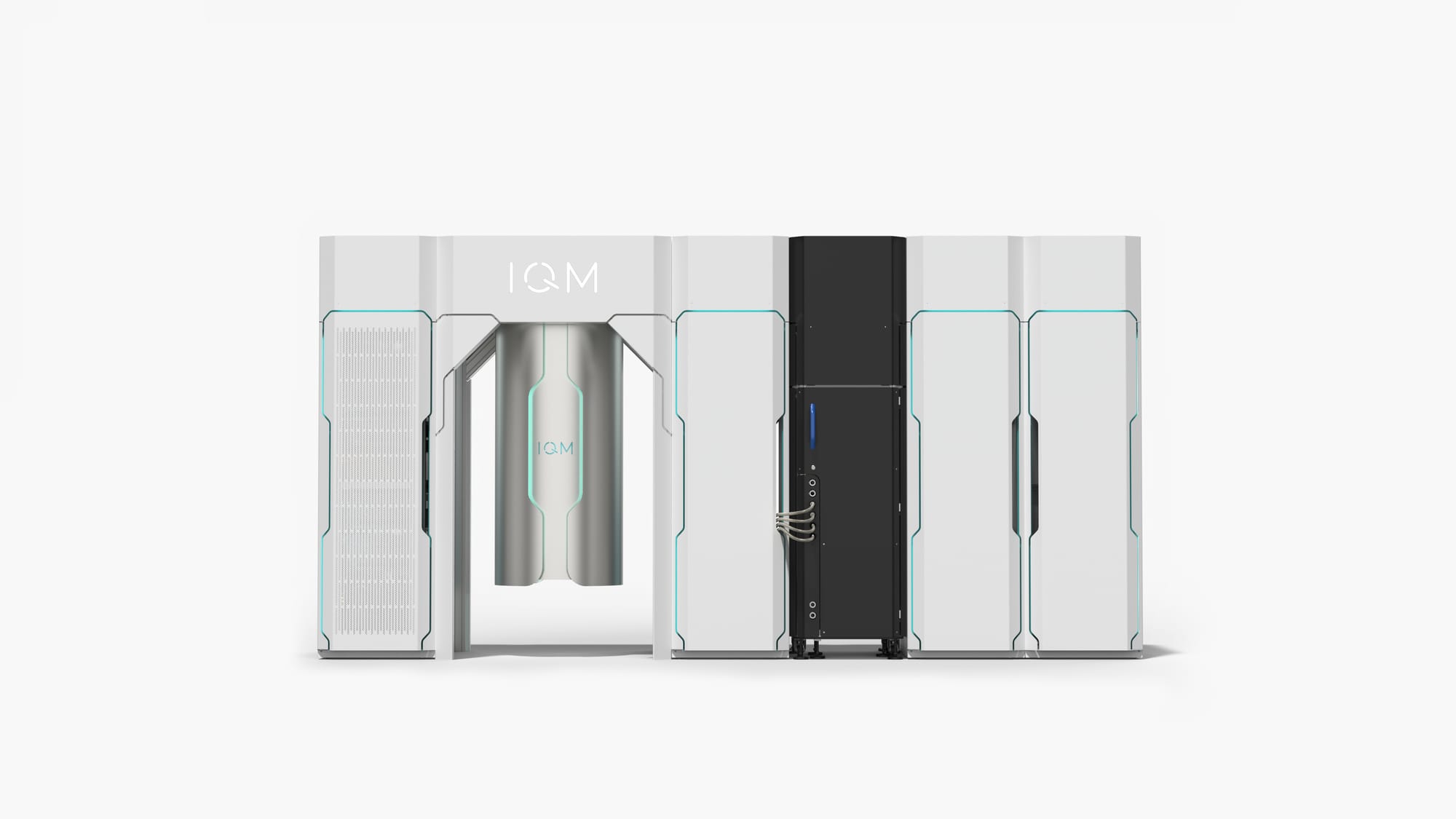
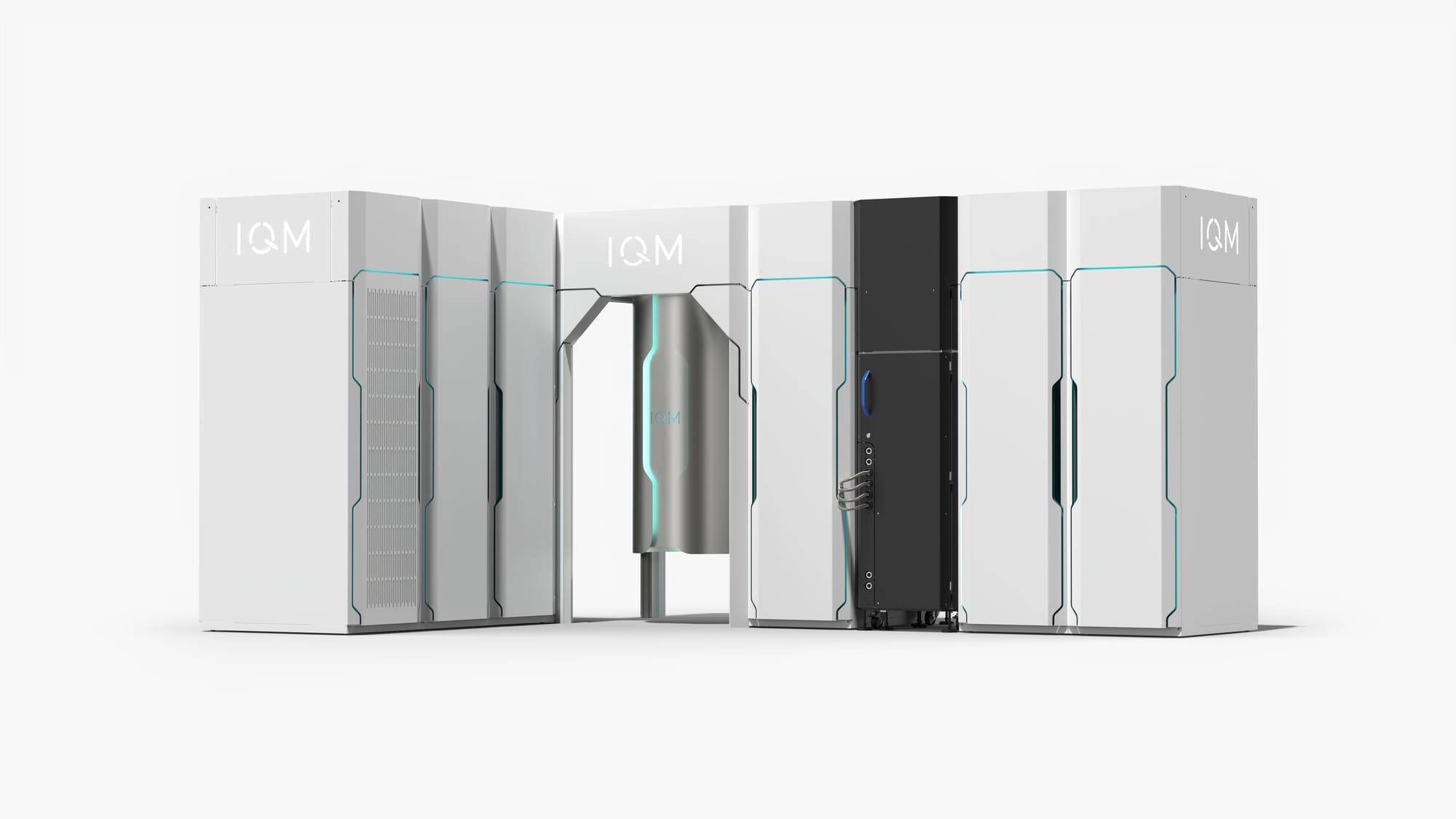
IQM Radiance Hardware
3. Technical and operational considerations
3.1 Crystal and Star topologies. IQM develops two processor topologies. Crystal is a square-lattice layout with nearest-neighbor connectivity (up to four neighbors) and fast parallel gates, natively supporting surface-code error correction; it underpins the Spark (5-qubit), Garnet (20-qubit), Emerald (54-qubit), and Radiance product QPUs [3][9][11]. Star uses a central computational resonator to connect many qubits with high effective connectivity and reduced SWAP overhead, favoring variational and optimization algorithms and bosonic simulation. IQM has further described a Constellation architecture built from hexagonal Star-like modules in which each qubit attains a connectivity of 12, tiled for scaling and intended as the substrate for its error-correction codes [12].
3.2 Benchmarked performance against stated performance. The strongest independently referenced benchmark is the peer-reviewed and preprint characterization of the 20-qubit Garnet system, which reported a median two-qubit gate fidelity of exactly 99.5 percent and genuine 20-qubit GHZ entanglement, obtained through randomized and cross-entropy benchmarking on a single named device [9]. Independent third-party experimental work using IQM's Garnet and Emerald devices reported (as median values) CZ gate fidelities of 99.37 percent (Garnet) and 99.45 percent (Emerald), single-qubit PRX fidelities of 99.91 and 99.94 percent, and T1/T2 coherence of 36.53/8.61 microseconds (Garnet) and 50.05/15.75 microseconds (Emerald) [11]. The Garnet T2 of 8.61 microseconds is notably short and is a meaningful qualifier on circuit-depth capability. IQM advertises a Quantum Volume of at least 32 for a Radiance 20-qubit device, a figure surfaced in independent cross-platform benchmarking at LRZ [9].
At the test-chip level, IQM reported a 40-hour-averaged CZ gate fidelity of 99.93 percent with simultaneous single-qubit fidelities of 99.98 percent and readout fidelities above 99.94 percent in a single two-qubit device [10]. This is a best-case, small-device, time-averaged result and should not be read as fleet-wide or full-processor performance; the gap between it and the 99.5 percent Garnet system-level median illustrates the standard divergence between showcase devices and deployed fleets. The roadmap target of 99.95 percent two-qubit fidelity at scale is a development goal, not a measured result [14]. No independently verified figure for fleet-wide median two-qubit gate fidelity across all delivered systems was identified.
3.3 The qLDPC error-correction pathway relative to surface codes. IQM's fault-tolerance thesis rests on quantum low-density parity-check codes co-designed with its topologies, positioned as more hardware-efficient than surface codes. Two 2026 results anchor the claim. "Barbell" codes, a qLDPC family tailored to the Constellation topology, were reported to achieve up to three orders of magnitude lower logical error rates than the surface code while requiring up to eight times fewer physical qubits; in one published comparison, 400 data qubits encoding 16 logical qubits at a physical error rate of 10^-3 yielded a logical error rate per round of 8.8 x 10^-7 [12]. Separately, "directional tile codes" were reported to deliver up to a 1,000-fold reduction in logical error rate on near-term-sized Crystal hardware using only nearest-neighbor connectivity, at a footprint of roughly 30 physical qubits per logical qubit [13]. The roadmap targets a logical error rate of 10^-9 and fault tolerance by 2030, scaling toward one million qubits [14].
The epistemic status of these results must be stated plainly: they are architecture and circuit-level numerical demonstrations described in company-authored preprints, not experimental demonstrations of a below-threshold logical qubit on IQM hardware at scale. The sector's credibility gap lies precisely between simulated code performance and hardware-realized, repeatedly error-corrected logical qubits. IQM's near-term hardware for this program is the Halocene line, combining NISQ qubits with error-correction demonstrators; the first Halocene H4 systems are contracted but not yet delivered [13][15].
3.4 Fabrication capacity, yield, and throughput. IQM's in-house Espoo fabrication and its stated delivery cadence of six months from order for standard systems are competitive differentiators, and its self-reported delivery count supports the claim of manufacturing repeatability [6][9]. The central unresolved technical risk is yield at scale: maintaining high junction and resonator fidelity uniformly across 150-qubit and larger chips is unproven at volume, and the company has not published fleet-wide yield or throughput data. The revenue guidance's heavy Q4 weighting, tied to acceptance of the first 150-qubit system, is the near-term test of whether larger-chip fabrication and commissioning perform on schedule [7].
3.5 Software stack and HPC integration. IQM emphasizes an open, modular software stack with pulse-level access and HPC-workflow integration, exemplified by the co-located loose-integration model documented jointly with LRZ [32]. The Resonance cloud service exposes the 54-qubit Crystal system for remote access [3]. In 2026 IQM acquired selected assets of the Berlin simulation-software developer Quantistry, extending its applications layer [2]. The strategic logic is that on-premises HPC integration, not cloud metering, is IQM's route to durable lock-in, since a physically installed and workflow-integrated system is far stickier than a cloud allocation.
3.6 Roadmap credibility against delivery record. On balance, IQM's delivery record is credible on cadence and unproven on capability. It has repeatedly shipped systems to European HPC centers on announced timelines and expanded configurations from 5 to 20 to 54 qubits, with a 150-qubit system in commissioning [6][20]. The unmet portion is the hard part: 150- and 300-qubit QEC demonstrators, below-threshold logical qubits, and the 2030 fault-tolerance target all lie ahead, and the million-qubit ambition is aspirational. IQM has demonstrated engineering and delivery discipline at NISQ scale, while the fault-tolerance roadmap should be treated as a statement of intent whose milestones have not yet been met.
4.1 On-premises versus cloud/QPU-as-a-service. As noted, 2025 revenue was almost entirely on-premises system sales (EUR 30.6 million of EUR 31.3 million), with cloud at EUR 0.3 million and co-development at EUR 0.3 million [4]. The model's strength is capital efficiency per booking and customer ownership; its weakness is revenue concentration, long cash-conversion cycles, and vulnerability to a single slipped commissioning date. Management explicitly guides that 2026 revenue is structurally second-half and fourth-quarter weighted for this reason [7].
4.2 Revenue, backlog, margin, burn, and runway. Revenue grew 91 percent to EUR 31.3 million in 2025 from EUR 16.4 million in 2024 [4]. First-half 2026 revenue was EUR 8.9 million (up 47 percent year over year), with Q2 revenue of EUR 6.7 million [6][7]. The 2025 loss for the year was EUR 54.4 million, and the H1 2026 operating loss widened to EUR 60.5 million, of which EUR 9.9 million was transaction cost tied to the combination and dual listing [4][6]. Order backlog moved from EUR 67.3 million at end-2025 to EUR 69.1 million at 30 June 2026 and to EUR 102.1 million by 3 August 2026, the last step driven by the EUR 33 million CSC LUMI contract [6][15]. FY2026 guidance is order intake of EUR 65 to 75 million and revenue of EUR 42 to 47 million [6][7]. Reported cash was EUR 309.4 million as of 2 July 2026, which management states funds operations into Q2 2028; IQM also prepaid and terminated a EUR 5 million Kreos Capital term loan in July 2026 [6][7]. Bookings, backlog, and contracted pipeline are distinct from recognized revenue in every instance; the EUR 102.1 million backlog is contracted future revenue, not booked results [6]. Gross margin was not cleanly resolvable from the interim disclosure; given project-based recognition and heavy R&D, the operating loss is the more informative near-term metric than gross margin.
4.3 Provenance of market-size estimates. Headline market figures originate in a few consultancy models: Boston Consulting Group projects quantum computing will create USD 450 billion to USD 850 billion of economic value by 2040, sustaining a USD 90 billion to USD 170 billion market for hardware and software providers, and it explicitly stated that its near-term NISQ-era value assumptions "have proved optimistic and must be revised," citing slower hardware progress and stronger classical and AI competition [24]. McKinsey has estimated quantum computing revenue of USD 28 billion to USD 72 billion by 2035 within a broader quantum-technology market [25]. These are modeled, scenario-dependent projections, and BCG's own downward revision of the NISQ phase is the most relevant caution for a company whose current revenue is entirely NISQ-era instrument sales [24].
4.4 Capital structure and valuation versus comparables. The combination valued IQM at approximately USD 1.8 billion pre-money [3]. Net proceeds were EUR 198.7 million (USD 233.5 million), comprising the residual RAAQ trust after redemptions and a PIPE of 14,548,000 shares at USD 10 (EUR 127.7 million, USD 145.5 million), the latter including a commitment from the Finnish pension insurer Ilmarinen [1][4]. The company also reported a pro forma cash position of EUR 337 million in its listing announcement, a figure some outlets rendered inconsistently against the EUR 309.4 million balance-sheet figure; the figure of record is EUR 309.4 million as of 2 July 2026, and the EUR 337 million pro forma number should be treated as a pro forma presentation rather than a reconciled balance-sheet figure [1][2][6].
The de-SPAC forensics warrant specific attention. RAAQ raised USD 172.5 million in trust at its IPO. The exact redemption rate and residual trust cash were not disclosed in the closing releases located; an arithmetic inference from the 14,381,747 consideration shares issued suggests roughly 42 percent of public shares may have been redeemed, but this is a derived estimate, not a disclosed figure, and should be verified against the redemption disclosure. The sponsor agreed to forfeit 1,375,000 founder shares and up to 3,725,000 warrants on a sliding scale tied to residual trust proceeds, retaining approximately 4,240,000 ADSs; the exact number of warrants ultimately forfeited was formula-dependent and not separately reported [5]. Warrant overhang is defined: a maximum of 12,530,975 shares may be subscribed via IQM Warrants at a USD 11.50 strike, trading as IQMX WS [1]. Lock-ups run up to one year for existing shareholders, with early release if the ADS trades at or above USD 12.00 for 20 of any 30 trading days commencing at least 150 days after closing; 70 percent of sponsor ADSs carry the same one-year lock-up, while insider warrants were restricted for only 30 days [5]. Employee dilution is live: the ESOP 1 exercise added 183,619 shares in July 2026 [6].
The accounting basis is IFRS, as a Finnish issuer, and IQM files with the SEC as a foreign private issuer under CIK 0002113060 on Forms 6-K and 20-F rather than 10-Q and 10-K [3][6]. Revenue on on-premises systems is recognized against installation and acceptance milestones over the delivery period, the mechanism behind the guidance's Q4 concentration [4][7].
5. Regulatory landscape
5.1 Export controls. Quantum hardware and its cryogenic and control subsystems moved firmly into export-control scope during 2024 and 2025, directly involving IQM's cross-border delivery model. The US Bureau of Industry and Security, on 6 September 2024, implemented controls on quantum computers and related assemblies (ECCN 4A906), certain cryogenic cooling systems (ECCN 3A904), cryogenic wafer-probing equipment (ECCN 3B904), and quantum-relevant materials (ECCNs 3C907, 3C908, 3C909), within a new plurilateral framework adopted with allied states outside the Wassenaar Arrangement [26]. The EU's 2025 update to Annex I of Regulation (EU) 2021/821, in force from 15 November 2025, added autonomous "500-series" controls covering quantum computers, cryogenic-temperature electronics, parametric signal amplifiers, cryogenic cooling systems, and cryogenic wafer probers, a deliberate departure from reliance on Wassenaar consensus [27][28]. Wassenaar itself has been unable to update its lists since 2022 because of Russia's veto, the structural reason the EU, US, UK, and Japan moved to plurilateral and national controls [26][28]. Cryogenic refrigeration of the type used in superconducting quantum computers was historically outside Wassenaar's munitions cryogenics entry, so the new EU and US measures represent genuinely new coverage of IQM's core inputs and outputs [28].
As a manufacturer whose systems and whose key inputs (dilution refrigerators, parametric amplifiers) are now controlled, IQM's shipments to non-allied destinations require licensing, so its reach into Asian and other markets is now a function of licensing outcomes rather than pure commercial choice [26][27]. As a Finnish and German operator inside the EU regime, it benefits from intra-EU and allied-destination license facilitation, which advantages its European HPC customer base [28]. An IISS analysis characterizes these controls as evolving from security measures into an explicit industrial-strategy instrument, which cuts both ways for a sovereignty-positioned European vendor [29].
5.2 Dual securities-law obligations. The concurrent Nasdaq and Nasdaq Helsinki listings impose overlapping obligations: SEC reporting as a foreign private issuer on Forms 6-K and 20-F, and, in Finland, the EU Market Abuse Regulation, prospectus rules, and Nasdaq Helsinki disclosure requirements, the last evidenced by the FIN-FSA's approval of an English-language listing prospectus on 1 July 2026 and the monthly total-voting-rights releases [6][8]. IQM engaged Lago Kapital as a Nasdaq Helsinki market maker to support liquidity and price alignment with the ADS, with a maximum quoted spread of 4 percent [8]. Dual listing raises compliance cost and the risk of asymmetric disclosure timing, a governance burden disproportionate for a company of IQM's revenue scale.
5.3 Public procurement and state aid. A substantial share of demand originates in public procurement through the EuroHPC Joint Undertaking, national laboratories, and universities, funded by combinations of EU and member-state money, as the CSC LUMI, VTT, LRZ, and CINECA contracts illustrate [15][17][20][32]. This subjects material contracts to public-procurement competition rules and EU state-aid constraints, and it means demand durability is a function of political budget cycles. Policy-funded demand is more concentrated and more exposed to fiscal and political shifts than commercially validated demand, and it should not be aggregated with enterprise demand when assessing revenue quality.
6. Geopolitical and strategic dimensions
IQM is positioned squarely within the European technological-sovereignty agenda, and that positioning is both its principal moat and its principal concentration risk. European policy, articulated through EuroHPC quantum-computer procurements and successor European quantum programs, has explicitly sought sovereign, EU-domiciled quantum capability integrated into European supercomputers, and IQM has been the leading beneficiary, deploying at LRZ, CINECA, CESGA, CSC, and VTT [15][17][18][32]. Its decision to remain headquartered in Finland while listing on Nasdaq, rather than redomiciling to the US, was itself a sovereignty-aligned choice that preserved eligibility for European public funding [8][21].
Foreign-investment screening cuts in IQM's favor domestically (a European champion is the intended object of protection) but constrains its non-European reach, since the same export-control and screening logic that protects it in Europe restricts sales into screened jurisdictions [26][29]. On post-quantum cryptography, IQM's systems are nowhere near the scale required to threaten RSA or ECC, and its relevance to PQC transition timelines is indirect: its progress is one input into the sector-wide threat assessment motivating migration to post-quantum standards, not a proximate cryptographic threat. This should be stated soberly against a market discourse that frequently conflates any quantum progress with imminent cryptographic risk.
These scenarios reason forward from current evidence and are labeled with their assumptions; none is a forecast of record.
Base case. IQM meets or narrowly misses its FY2026 revenue guidance of EUR 42 to 47 million, contingent on Q4 acceptance of its first 150-qubit system, and converts most of its EUR 102.1 million backlog on the stated 1.5-to-2-year cadence [6][7]. Cash runway holds into Q2 2028, and the company advances QEC demonstrators at VTT and CSC without yet demonstrating a below-threshold logical qubit at scale [7][15][20]. Under this scenario IQM remains the European superconducting leader by deliveries but a small-revenue business dependent on public procurement, and it likely requires a further raise around 2028 to reach fault-tolerance milestones. Assumes no major commissioning slip and continued EuroHPC funding.
Upside case. Fabrication scales cleanly, the 150- and 300-qubit QEC demonstrators produce a credible hardware-demonstrated logical-qubit result ahead of peers, private-enterprise and Asian demand broadens beyond public procurement, and the ADS trades above the USD 12 lock-up-release threshold, easing future financing [13]. Assumes qLDPC numerical advantages translate to hardware and that at least one commercial (non-policy) vertical adopts at scale.
Downside case. A larger-chip yield problem or a slipped 150-qubit acceptance causes a guidance miss, backlog conversion stretches, and burn forces a dilutive raise into a weak quantum-equity tape amid warrant and lock-up overhang [7][30]. Policy-funded demand softens with EU budget pressure, and the fidelity gap versus trapped ions limits high-value commercial workloads. Assumes correlated technical and financing stress, the characteristic failure mode of capital-intensive de-SPAC hardware issuers.
Recommendations
For institutional investors and capital allocators. Treat IQM as a milestone-gated, policy-correlated hardware position, not a software-multiple growth stock, and size accordingly. Underwrite to the base case, never to the business-combination projections, which are company-modeled and must not be carried as performance. The trigger points that should change the position are: Q4 2026 acceptance of the first 150-qubit system on schedule and at spec (positive); a hardware-demonstrated, repeatedly error-corrected logical qubit on IQM hardware, as distinct from the current numerical qLDPC results (strongly positive) [13]; and, conversely, any commissioning slip, a downward revision of the EUR 42 to 47 million FY2026 revenue guidance, or an equity raise before a revenue inflection (negative) [6][7]. Watch the lock-up expiry around July 2027 and the USD 12 early-release threshold as supply-overhang events [5]. Benchmark cash burn quarterly against the stated Q2 2028 runway; runway compression below roughly 12 months without a financing plan is the key financial red line [7].
For HPC-center and enterprise technology buyers. IQM is a credible procurement counterparty for on-premises NISQ-era superconducting systems, with genuine HPC-integration experience and a demonstrated delivery cadence, and its open, modular stack and upgrade path reduce lock-in risk relative to cloud-only alternatives [9][32]. Contract explicitly on acceptance-test fidelity and coherence figures measured on the delivered fleet unit, not on test-chip or roadmap figures, given the documented gap between the 99.93 percent test-chip and 99.5 percent system-level medians [9][10][11]. Structure milestone-based payments tied to commissioning and calibrated performance, secure upgrade options in writing given the fast-moving roadmap, and verify export-license feasibility early for any cross-border deployment [26][27]. The trigger to expand commitment is a demonstrated quantum error correction (QEC) result on a delivered system; the trigger to pause is any pattern of missed acceptance dates across the installed base.
For policymakers and public funders. IQM is the leading instrument of European superconducting-quantum sovereignty, and continued EuroHPC and member-state procurement is the principal reason it exists at commercial scale [15][17][20]. Guard against creating a single point of failure: concentrating European quantum-hardware demand in one vendor is itself a sovereignty risk if that vendor stumbles. Tie continued funding to independently verified, published benchmark and QEC milestones rather than qubit-count headlines; maintain a competitive second-source policy within the EU where feasible; and align export-control implementation to protect the domestic base without foreclosing the allied-market sales IQM needs for commercial durability [28][29]. The trigger for intensified support is demonstrated progress toward fault tolerance; the trigger for reassessment is evidence that public funding is substituting for, rather than catalyzing, commercial demand.
Caveats
The public financial record spans only the audited 2025 fiscal year and the H1 2026 interim period, so trend inference is limited and several figures are provisional [4][6]. Installed-base counts are self-reported and internally inconsistent across disclosures (23, 21, and 26 systems sold in successive accounts), and no single audited installation schedule was identified; the precise installed base is unresolved [1][6][19]. The RAAQ redemption rate and residual trust cash, the exact number of sponsor warrants forfeited, and the precise post-closing beneficial-ownership percentages of named holders were not resolved to primary filings in this research and are flagged as open items rather than stated figures [5]. Device performance figures are predominantly vendor-authored, though several are corroborated in independent third-party experimental work; no independently verified fleet-wide median fidelity exists [9][10][11]. The qLDPC error-correction results are numerical and architectural, not hardware-demonstrated logical qubits at scale [12][13]. Market-size figures are modeled consultancy projections whose originators have revised near-term assumptions downward [24][25]. The EUR 337 million pro forma cash figure and the EUR 309.4 million reported cash figure differ and were rendered inconsistently by some outlets; the reported balance-sheet figure is used here [1][6].
[1] IQM Quantum Computers Oyj. 2026. "IQM Quantum Computers and Real Asset Acquisition Corp. Complete the Combination; Trading in IQM's ADSs and IQM Warrants Commences July 2, 2026." Form 6-K exhibit, U.S. Securities and Exchange Commission, July 1.
[2] IQM Quantum Computers. 2026. "IQM Quantum Computers Becomes First European Quantum Computing Company Listed on a Major U.S. Exchange." Business Wire, July 2.
[3] Real Asset Acquisition Corp. and IQM Finland Oy. 2026. "Announcement of Effectiveness of Registration Statement and Business Combination Terms." Form 8-K and Form 425, U.S. Securities and Exchange Commission, June 8.
[4] IQM Finland Oy. 2026. "Registration Statement and Prospectus (Financial Statements for the Years Ended December 31, 2025 and 2024)." Form 424B3, U.S. Securities and Exchange Commission, June.
[5] IQM Finland Oy. 2026. "Registration Statement on Form F-4 and F-4/A (Ownership, Dilution, Sponsor Support, and Lock-up Disclosures)." U.S. Securities and Exchange Commission, May–June.
[6] IQM Quantum Computers Oyj. 2026. "First Half and Second Quarter 2026 Results; FY2026 Guidance; Total Number of Voting Rights and Shares." Form 6-K exhibit and GlobeNewswire releases, July–August.
[8] IQM Quantum Computers Oyj. 2026. "Listing Application Approved; Trading on Nasdaq Helsinki Commences July 3, 2026; Liquidity Provision." Nasdaq Helsinki stock exchange release via GlobeNewswire, July 2.
[9] Abdurakhimov, Leonid, Janos Adam, Hamid Ahmad, Olli Ahonen, Manuel Algaba, et al. 2024. "Technology and Performance Benchmarks of IQM's 20-Qubit Quantum Computer." arXiv:2408.12433.
[10] Marxer, Fabian, Jakub Mrożek, Joona Andersson, Leonid Abdurakhimov, et al. 2025. "Above 99.9% Fidelity Single-Qubit Gates, Two-Qubit Gates, and Readout in a Single Superconducting Quantum Device." arXiv:2508.16437.
[11] Authors of arXiv:2603.28486. 2026. "Emergent-Coupling-Based Ansatz Evaluated on a Superconducting Quantum Processor" (median T1/T2, PRX, and CZ fidelities for IQM Garnet and Emerald). arXiv:2603.28486.
[12] Choe, Shin Ho, et al. (IQM Quantum Computers and academic collaborators). 2026. "Barbell Codes: Quantum Low-Density Parity-Check Codes for the Constellation Architecture." arXiv preprint, reported June.
[13] IQM Quantum Computers. 2026. "IQM Achieves Milestone in Quantum Error Correction Using Directional Tile Codes." Business Wire, June 23.
[15] CSC – IT Center for Science and IQM Quantum Computers. 2026. "LUMI AI Factory Selects IQM to Deploy Advanced Quantum Computer (Halocene H4)." Business Wire and CSC media release, July 8.
[16] DataDeep.Tech. 2026. "Finland's Deep Tech Gamble: Economy, R&D Spending, and Strategic Risks" August 30.
[17] IQM Quantum Computers. 2026. "IQM Radiance Installed at CINECA (NOX) Integrated with Leonardo Supercomputer." The Quantum Insider, June 11.
[18] CESGA, Telefónica, and IQM Quantum Computers. 2026. "CESGA Selects IQM and Telefónica to Deploy Advanced Quantum Computing Infrastructure." HPCwire, off-the-wire release.
[19] IQM Quantum Computers. 2026. "Poland's Galaxy Systemy Informatyczne Becomes First Private Enterprise to Buy a Quantum Computer from IQM." Business Wire, April 7.
[20] IQM Quantum Computers and VTT Technical Research Centre of Finland. 2025. "IQM to Deliver World-Leading 300-Qubit Quantum Computer to Finland." Business Wire, May 19.
[21] IQM Quantum Computers. 2025. "IQM Raises Over $300 Million in Series B Funding Led by Ten Eleven Ventures with Support from Tesi." Business Wire, September 3.
[22] IQM Quantum Computers and World Fund. 2022. "European Quantum Computing Leader IQM Raises €128m Led by World Fund." Business Wire, July 22.
[23] IQM Quantum Computers. 2026. "IQM Appoints Jan Goetz as Sole CEO; Søren Hein as COO and Deputy CEO." Business Wire, January 26.
[24] Boston Consulting Group (Jean-François Bobier et al.). 2024. "The Long-Term Forecast for Quantum Computing Still Looks Bright." July 18.
[26] Covington & Burling LLP. 2024. "U.S. Implements Plurilateral Export Controls Framework and Additional Controls on Semiconductor, Quantum, and Additive Manufacturing Items." September.
[27] Cooley LLP. 2025. "EU Issues 2025 Update to Dual-Use Control List." December 5.
[28] Hogan Lovells. 2025. "EU Updates Dual-Use Control List: New Controls on Emerging Technologies and Shift in Export Control Policy"; and Springer Nature. 2025. "Regulatory Challenges and Opportunities of Export Controls on Quantum Computing."
[29] International Institute for Strategic Studies. 2026. "Western Quantum Export Controls Are Evolving into an Industrial Strategy" (as reported by The Quantum Insider, August 3).
[30] The Motley Fool and Yahoo Finance. 2026. Peer coverage of IonQ, Rigetti, and D-Wave (Q2 2026 revenue, cash, remaining performance obligations, and two-qubit gate fidelity figures); IonQ Q2 2026 results release, August 5; Rigetti Cepheus-1-108Q performance release, April 7. July–August.
[31] Tesi (Finnish Industry Investment Ltd). n.d. "IQM Does Groundbreaking Work in Quantum Computing" (founders and institutional lineage).
[32] Open Compute Project. 2025. "Toward a Blueprint for Quantum Supercomputer Co-Deployments: IQM's 20-Qubit Integration at LRZ."


 John D
 Alex Woodie
 EC Team
 Mohamed Abdel-Kareem

 John D
 Liam L