ProLogium's €5.2B Dunkirk Gigafactory: 381 Wh/kg, a Capital Gap, and Whether the Cells Are Really Solid-State
ProLogium's €5.2B Dunkirk plant targets Q2 2029 output. We assess the funding gap, the 381 Wh/kg data, and whether its cells are truly solid-state.

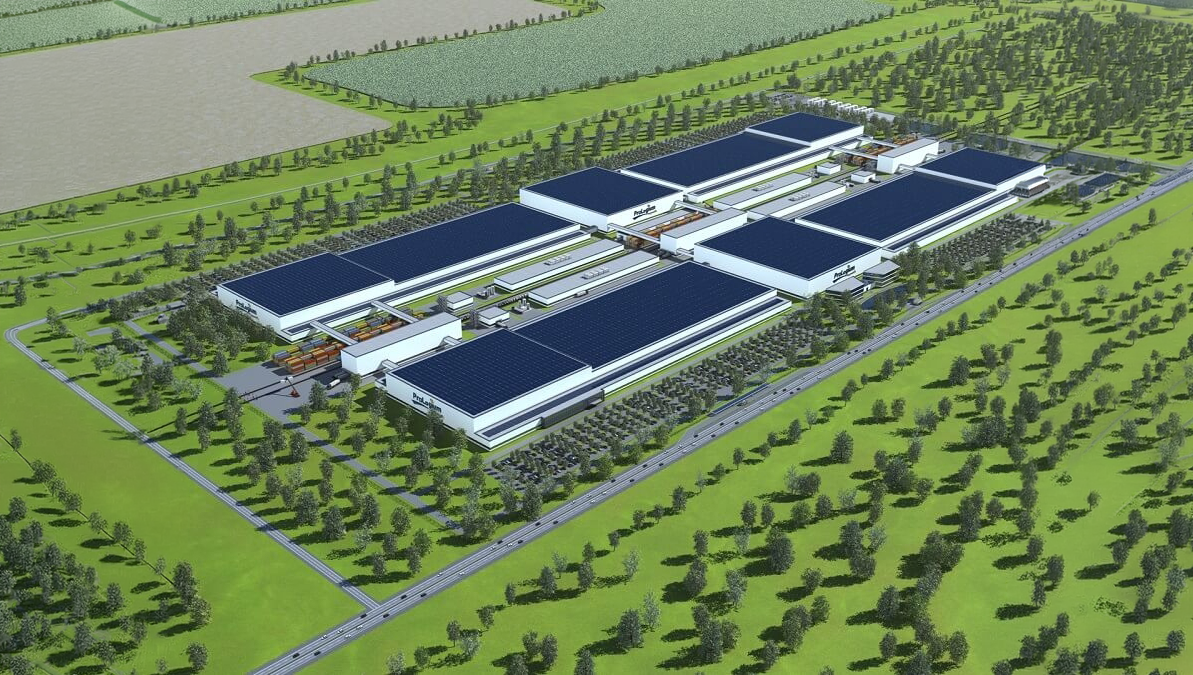
ProLogium Technology's Industrial Program in France: The Dunkirk Solid-State Battery Gigafactory
1. Summary
1.1 ProLogium Technology, a privately held (pre-listing) Taiwanese developer of lithium-ceramic batteries founded in 2006, broke ground on its first manufacturing facility outside Taiwan in Dunkirk, France, on 10 February 2026, after a multi-year cycle of announcement (May 2023), state-aid approval (August 2023), permitting (end 2024 to 2025), a prolonged quiet period, and re-launch [1][2][3]. The headline commitment is €5.2 billion total investment for a phased plant ("Fab 1") with a long-term ceiling of 48 GWh contingent on demand [3][4].
1.2 The documented figures are: an initial Dunkirk Phase 1 nameplate of 0.8 GWh (800 MWh) targeted for 2028; ProLogium's Taoyuan, Taiwan giga-level demonstration line at 0.5 GWh initial (expandable to 2 GWh); and an original 2013 Taiwan sample line of 10 MWh [2][5][6][7].
1.3 ProLogium is a genuine outlier among solid-state aspirants in that it operates a shipping gigafactory: per its 1 July 2025 disclosure, cumulative shipments "officially surpassed 2.4 million units" since production began in 2013, of which more than 800,000 are third-generation cells from the Taiwan gigafactory (over 500,000 from the Taoke plant within roughly eighteen months of operation) [9][10]. Nonetheless, its Dunkirk economics, offtake, and capital adequacy remain unproven; the company's May 2026 move to list on Nasdaq via SPAC (ticker PRLG) at approximately $3.8 billion on a pre-money, net cash-free basis is itself the clearest signal that the French build-out is not yet fully funded [10][11].
2. The Pilot/First Line and Disambiguation of Capacities
2.1 The ProLogium line hierarchy by date:
- 2013 sample line, Taiwan: 10 MWh, the first roll-to-roll lithium-ceramic sample line [7].
- 2017 pilot line, Taiwan: roll-to-roll, 250 to 330 mm web width; described qualitatively, with no published MWh figure; the source of the EV sample cells delivered to OEMs (ProLogium's 3 August 2023 release cited "nearly 8,000 solid-state battery sample cells," updated to "more than 12,000 lithium-ceramic battery samples" by its CES 2025 release) [2][7][12].
- Taoyuan "Taoke" giga-level demonstration line, Taiwan: inaugurated 23 January 2024, initial 500 MWh, expandable to 2 GWh; described as the world's first giga-scale solid-state line and the prototype for Dunkirk [5][6].
- Dunkirk "Fab 1" Phase 1, France: 800 MWh, targeted completion 2028 [1][13].
2.3 Function of the Dunkirk first phase.
ProLogium frames Dunkirk not as a qualification/sampling line but as a commercial mass-production "platform" replicated from Taoyuan ("a platform mindset, from equipment installation and process windows to quality systems") [1]. The 0.8 GWh Phase 1 is best read as an initial commercial-output and process-transfer step, with ramp to 4 GWh by 2030 and 12 GWh by 2032 [1][13]. The qualification/sampling role is discharged by the Taoyuan line and the Paris-Saclay R&D center (opened May 2024) [14].
3. The Full Dunkirk Gigafactory Plan: Phasing, Capacity, Capital, Timeline
3.1 Investment and capacity ceiling.
€5.2 billion total planned investment; total planned capacity is stated variously as 48 GWh (most releases) and 44 GWh (one ProLogium roadmap page), deployed in phases, long-term and contingent on demand [3][4]. The 48 GWh figure is aspirational and tied to reserved-but-uncommitted land at the Port of Dunkirk; only the "Fab 1" trajectory to 12 GWh is the near-term engineered scope [1].
3.2 Current phasing (as of the February 2026 groundbreaking and May 2026 SPAC materials):
- 2023: French government subsidy secured [13].
- 2024 to 2025: environmental assessment (DDAE) and building permit obtained [15].
- 2026: groundbreaking (10 February 2026) and start of construction [1][13].
- 2028: Fab 1 Phase 1 complete; fourth-generation production begins at 0.8 GWh [1][13].
- Q4 2028 to Q1 2029: ramp-up begins; formal mass production and deliveries in Q2 2029 [11][16].
- 2030: Fab 1 Phase 2 complete; 4 GWh total [1][13].
- 2032: full Phase 2; 12 GWh total [1][13].
- Long-term, demand-contingent: up to 48 GWh [1][4].
3.3 Schedule slippage.
The original schedule (May to August 2023) targeted construction start in H2 2024 and production by end-2026 [2][3]. The current schedule targets construction start 2026 and mass production/deliveries Q2 2029 [11][16]. This represents roughly a 2-2.5-year slip in both construction start (H2 2024 to 2026) and start of production (end 2026 to Q2 2029). An intermediate January 2025 milestone still cited 2025 construction and 2027 production [15]. A July 2024 Reuters interview with CEO Vincent Yang acknowledged a gradual ramp "amid slow EV sales" [17]. Independent trade coverage notes the project "went quiet" after initial funding commitments until permits were secured [13].
3.4 Committed versus aspirational.
Committed/permitted: the Fab 1 footprint and the 0.8 GWh to 12 GWh trajectory, backed by permits and state aid [1][15]. Aspirational/demand-contingent: the 48 GWh ceiling, explicitly conditioned on market demand and reserved land [1][4]. The 2022 pre-siting plan once referenced a 120 GWh three-phase overseas ambition; this has effectively been superseded by the more modest engineered scope [18].
4. Cell Technology and Manufacturing
4.1 Architecture and chemistry.
ProLogium's platform is a lithium-ceramic battery (LCB) built around a 100% ceramic separator (introduced 2013, replacing the polymer film), now combined with a "100% silicon composite anode" (debuted at the 2024 Paris Motor Show) and, since 2025, a proprietary "Superfluidized All-Inorganic Solid-State Electrolyte" (also branded "SF Ceramion" and as GEN 4), with an NMC cathode [17][19][20][21]. The company reports an ionic conductivity of 57 mS/cm at room temperature, which it claims is roughly five times conventional liquid and sulfide (LGPS) electrolytes [20].
4.2 Is "solid-state" accurate? A critical assessment.
ProLogium's own framing has shifted over time, which is itself diagnostic. Earlier-generation LCB cells used a ceramic separator but retained a liquid/gel electrolyte component, placing them on the quasi-solid/hybrid portion of the spectrum rather than all-solid-state. The CEO's own September 2025 keynote title ("Where Vision Meets Volume: A New Path, Beyond the Myth of Liquid vs. Solid-State Batteries") and the company's description of the GEN-4 electrolyte as "integrating the advantages of solid-state and liquid type batteries" both signal a system that is not a classical dry all-solid-state cell of the sulfide (Toyota, Samsung SDI, Solid Power) or oxide type [4][22]. The 2025 "all-inorganic" descriptor and "superfluidized" electrolyte indicate an inorganic but flowable/injectable medium, which the academic literature would classify nearer the quasi-solid/inorganic-liquid-hybrid category than true all-solid-state [20][23].
Verdict: the cells to be produced at Dunkirk are best described as advanced lithium-ceramic, quasi-solid-to-inorganic cells; the unqualified label "solid-state," while used by ProLogium and most press, is imprecise for the chemistry as independently understood. This matters for performance and safety claims, which should be read accordingly.
4.3 Performance claims.
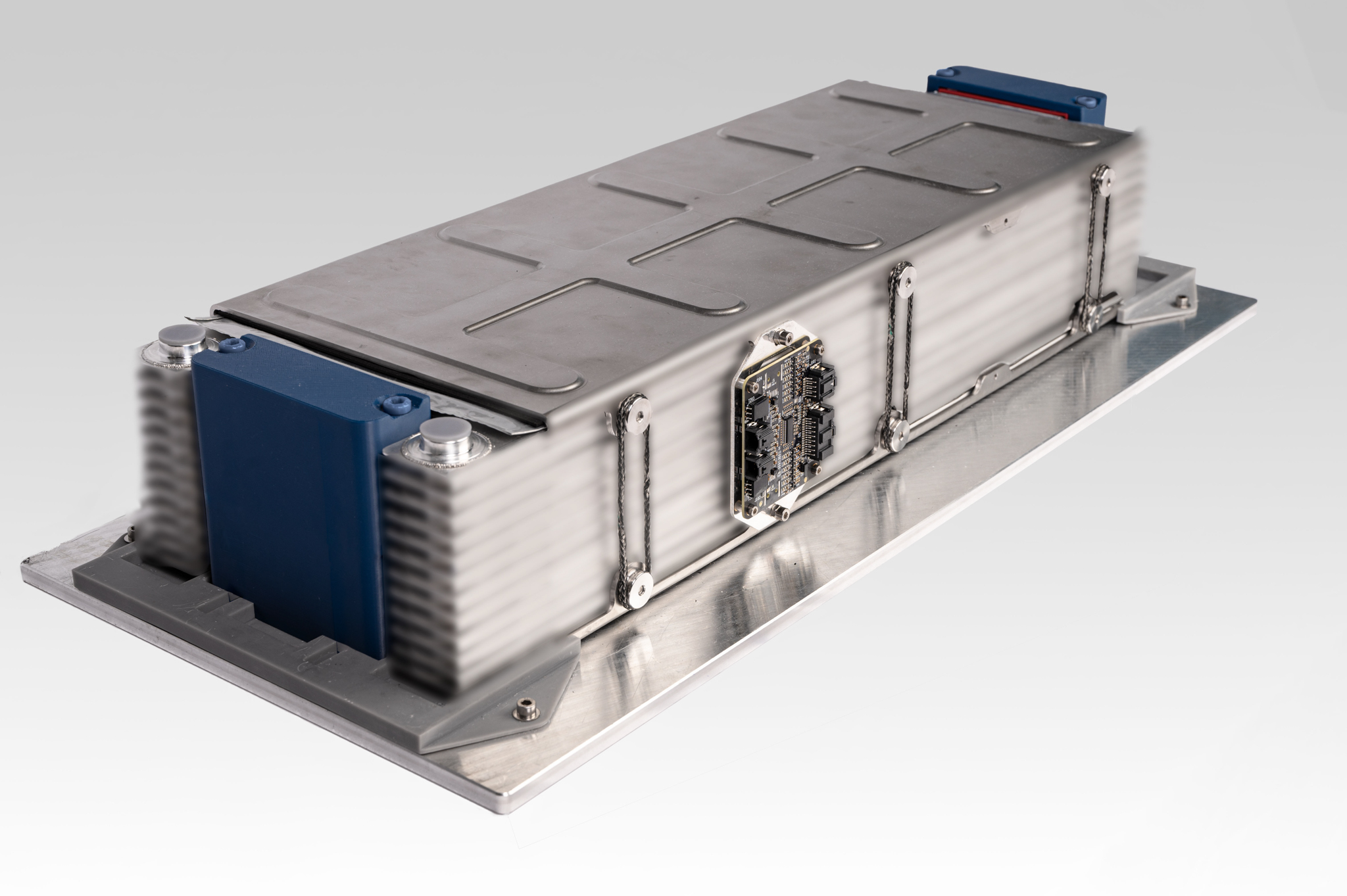
- Energy density: TÜV Rheinland reports (independent test house, on cells from the pilot line) confirmed 749 Wh/L and 321 Wh/kg (March 2024), rising to 811.6 Wh/L and 359.2 Wh/kg (December 2024) [24][25]. The latest GEN-4 figures of 900 Wh/L and 380 Wh/kg are company-stated cell-level specifications [26].
- Fast charge: 5% to 60% SOC in 5 minutes and 80% in 8.5 minutes, TÜV-certified on the silicon-anode cell [19]; GEN-4 60 to 80% in 4 to 6 minutes [20].
- Cycle life: greater than 1,200 cycles [26].
- Low-temperature: greater than 95% discharge performance at minus 20°C [26].
- Safety: UL Solutions ARC (Heat-Wait-Seek) testing verified no thermal runaway on the all-inorganic cell [10]; the "first lithium electrochemical system globally to show no thermal runaway in ARC testing" framing is the company's interpretation [20].
All third-party-verified figures are single-cell, pilot-line results. None constitutes independent verification at gigascale, of pack-level performance, or of long-run field durability. Cell-to-pack translation, as the company's own OPmobility module collaboration concedes, remains to be established [26].
4.4 Production process and scale-up risk.
ProLogium's process distinctively uses continuous wet coating of the ceramic separator/electrolyte and eliminates the liquid-electrolyte injection, soaking, and degassing steps of conventional Li-ion [5]. It claims a 99.9% single-layer-cell yield target on the trial line and 2.6 times the output efficiency at Taoke versus the original facility [5]. The principal scale-up risks in a pilot-to-gigascale transition are:
1. multilayer (versus single-layer) yield, where defect propagation across stacked layers is the historic killer of solid/quasi-solid economics;
2. maintaining ceramic-layer integrity and cathode/anode alignment at higher web speeds and widths (a 660 mm GWh-scale line was achieved in 2023);
3. silicon-anode volumetric expansion and cycle stability at automotive cell sizes; and
4. transferring a Taiwan process to a greenfield European workforce [7].
ProLogium's track record (over 2.4 million cells shipped) de-risks these relative to lab-stage peers, but Dunkirk would be its first replication of the platform off-island [9].
 media
media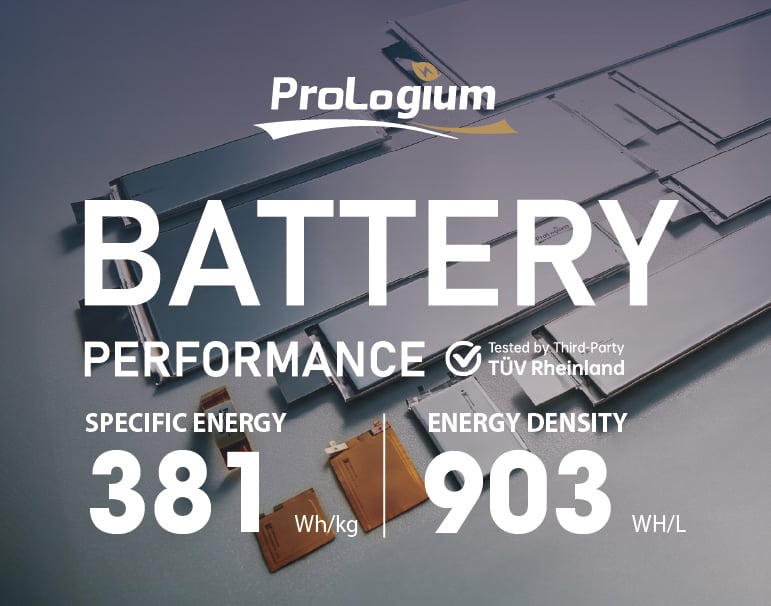
5. Company and Stakeholders
5.1 Corporate structure and listing status.
ProLogium remains privately held/pre-listing as of June 2026. On 27 May 2026 it announced a SPAC merger with Translational Development Acquisition Corp. (NASDAQ:TDAC), which "values ProLogium at approximately $3.8 billion on a pre-money, net cash-free basis," with the combined entity to trade as ProLogium Technology under NASDAQ:PRLG [10][11]. The structure is a two-step Cayman merger; closing (expected H2 2026) is conditioned on shareholder approvals, an effective Form F-4, Nasdaq listing, a TDAC deadline extension beyond 24 June 2026, and "Available Cash of at least $250,000,000" [27]. TDAC's own filings disclosed substantial-doubt going-concern language and a working-capital deficit, with roughly $183 million in trust as of 31 March 2026 plus a targeted PIPE [27].
Leadership: founder, chairman and CEO Vincent Yang; Group Chief Scientist Dmitry Belov; Europe operations under EVP Laurent Bataille (from October 2025), with Gilles Normand having served as President of ProLogium Europe [14][16][28].
5.2 Financing history.
Private funding of roughly $576 million across six rounds, including a $326 million Series E (October 2021) that valued the company around $2 to $3 billion; strategic equity from Mercedes-Benz (January 2022), POSCO (May 2022), and VinFast/Vingroup (July 2022); earlier Series D backing from FAW Group (2020) and SBCVC [29][30][31].
5.3 Customers and investors (binding versus non-binding).
- Mercedes-Benz: equity investor and board-level shareholder plus a technology cooperation agreement to co-develop cells; a development/equity relationship, not a disclosed binding Dunkirk offtake [30][32].
- VinFast (Vingroup): equity investor and MoU strategic partner; the primary named customer for Taoyuan output; "commercial agreements" referenced but a JV in Vietnam remains conditional; not a Dunkirk offtake [31][33].
- FAW Group: early (2020) equity investor; no current binding EV offtake disclosed [29].
- NIO, AiWAYS, Enovate, WM Motor, Gogoro and others: historical cooperation/sample relationships, largely non-binding or superseded [34].
- Crucially, no anchor customer or binding offtake has been publicly announced for Dunkirk specifically; independent reporting on the SPAC 8-K confirms no binding offtake tied to Dunkirk appears in the filings [13][35].
5.4 Equipment/materials/engineering partners.
Schneider Electric (smart-factory/energy-management agreement for Dunkirk) [16]; Arkema (Kynar PVDF and inside-the-cell materials, LOI May 2024) [36]; POSCO (cathode/anode/solid-electrolyte materials development and equity) [37]; CEA-Liten and Arkema in the Paris-Saclay R&D ecosystem [14]; FEV, OPmobility, Rimac and MAHLE (module/pack/thermal development MoUs) [26][38]; RTE (French TSO, high-voltage grid-connection co-management) [39]. Most are MoUs/LOIs or development agreements rather than binding supply contracts.
5.5 Public bodies and the Dunkirk cluster.
Backers include the European Commission (state aid), the French State (France 2030, Green Industry Act), Business France, Région Hauts-de-France, Nord France Invest, Communauté Urbaine de Dunkerque, and the Grand Port Maritime de Dunkerque [3][4][40]. ProLogium is the fourth gigafactory project in the Dunkirk/Hauts-de-France "Battery Valley," alongside Verkor (operational from December 2025), ACC/Automotive Cells Company (nearby Douvrin/Billy-Berclau), and AESC/Envision (Douai, serving Renault); ProLogium is the only one of the four producing next-generation (non-conventional-Li-ion) cells [4][13][40].
 John D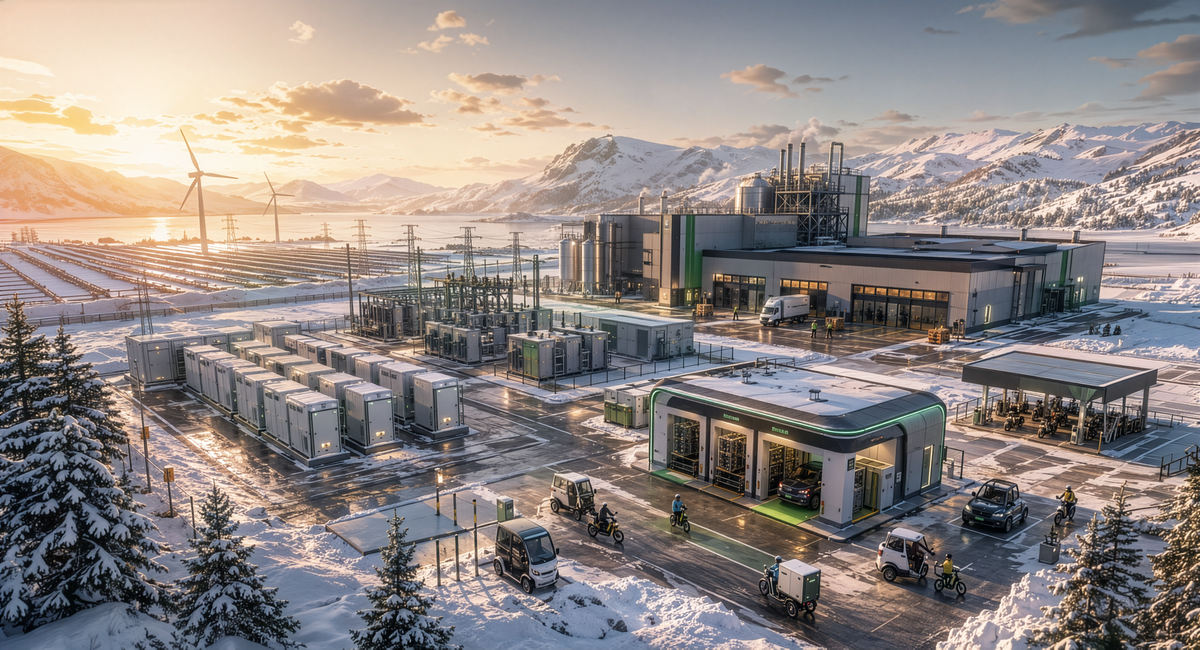
6. Economics and Market Dynamics
6.1 Cost position.
In a July 2024 Reuters interview, CEO Yang put ProLogium cell cost at about $170/kWh versus $100 to $115/kWh for LFP, arguing pack-level parity because the cell is smaller and lighter [17]. For context, the BloombergNEF 2025 Battery Price Survey put average BEV pack prices at US$99/kWh (LFP packs US$81/kWh, NMC US$128/kWh) with cells averaging US$79/kWh, against ProLogium's GEN-4 cell-level claims of 380 Wh/kg and 860 to 900 Wh/L [26][41]. ProLogium's claim that solid-state manufacturing costs can reach "the same level as mainstream batteries" is a forward assertion, not a demonstrated gigascale outcome [5].
6.2 Capital intensity.
€5.2 billion for an aspirational 48 GWh implies very high capex intensity, but the engineered near-term scope (12 GWh "Fab 1") is what the capital actually addresses; the per-kWh capex of the first 0.8 GWh phase will be especially high given platform-transfer and first-of-kind overheads. This front-loaded intensity is precisely why the SPAC and PIPE matter [10][11].
6.3 Demand environment.
The European EV/battery demand backdrop has deteriorated materially. Per S&P Global Mobility (August 2025): "We now project demand will be down by more than 40% for 2025 and 36% lower in 2030" [42]. S&P also recorded a substantial downward revision in BEV market-share forecasts for Europe in 2025, "from 27% in the first half of the year to 21% today" [42][43]. Northvolt's 2024 to 2025 collapse (after raising roughly $15 billion), ACC's June 2024 halt of two gigafactories, and a broader pattern in which over half of announced European gigafactory capacity is at risk of delay or cancellation define the environment ProLogium is entering [44][45][46]. This is simultaneously a threat (soft demand, financing stress) and an opportunity (differentiated high-end product, reduced competition from failed entrants).
6.4 Capital-secured gap.
There is a clear and material gap between the €5.2 billion announced investment and capital actually secured. Secured/identifiable: up to €1.5 billion French state aid (EC-approved 2023; cited as "up to ~€1.4 billion" in 2026 SPAC materials, see Section 7), disbursed against milestones to 2029; roughly $576 million historical equity; and prospective SPAC proceeds floored at $250 million plus an as-yet-unsized PIPE [10][11][27][29][47]. Even on favorable assumptions, identified funding falls far short of €5.2 billion, implying continued reliance on future equity/debt raises, the public subsidy stream, and demand-contingent phasing. The SPAC's own going-concern disclosure and minimum-cash condition underscore the fragility [27].

7. Regulatory Landscape
7.1 State aid.
On 3 August 2023, the European Commission "approved, under EU State aid rules, a €1.5 billion French measure to support ProLogium" in researching and developing a new generation of EV batteries, under the 2022 RDI Framework and Article 107(3)(c) TFEU [47]. The aid funds the R&D project codenamed "Prometheus" through end-2029, is "granted according to different milestones until 2029," and is subject to a claw-back if the project proves highly profitable [13][47]. ProLogium was also admitted to the Important Project of Common European Interest (IPCEI) on Batteries (December 2022) and is included in France 2030 [5][13]. Note a figure discrepancy confirmed across both primary sources: 2026 SPAC/Nasdaq materials describe the package as "an approved subsidy package of up to ~€1.4 billion from the Government of the French Republic" [10]. No source reconciles the €1.5 billion (2023 EC ceiling) versus ~€1.4 billion (2026 company figure); the difference of roughly €0.1 billion is unexplained and may reflect rounding/approximation (ProLogium uses the tilde "~"), the claw-back/milestone conditionality, or a gross-ceiling-versus-expected-net distinction.
7.2 EU Battery Regulation (2023/1542).
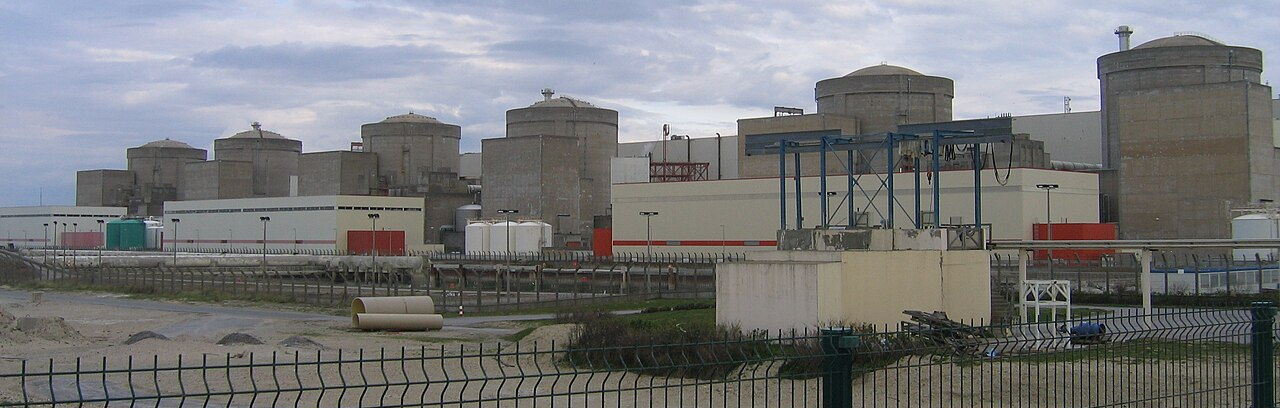
Obligations are largely generic across European gigafactories and should be treated proportionately. Salient points: per-plant, per-model carbon-footprint declaration for EV batteries (third-party verified, with primary site-specific data mandatory for the manufacturing stage); digital battery passport via QR code from 18 February 2027; due-diligence obligations (postponed to 18 August 2027 by Regulation 2025/1561); recycled-content minimums from 18 August 2031 (6% lithium, 16% cobalt, 6% nickel), rising in 2036; and lithium-based recycling-efficiency targets [48][49][50]. ProLogium's Dunkirk siting (low-carbon nuclear power from Gravelines via RTE) is a deliberate play to score well on the carbon-footprint performance classes, and its "Design-for-Disassembly" module work with CEA-Liten targets recyclability and repairability [38][39]. These are advantages relative to higher-carbon-grid competitors but are not unique regulatory exposures.
7.3 French industrial-policy framework.
France 2030 and the Green Industry Act (loi Industrie verte), plus competitive zero-carbon power pricing, were decisive in winning the project against German and Dutch sites; this is shared precedent across the cluster rather than ProLogium-specific [4][18][40].
8. Geopolitical and Strategic Dimensions
8.1 Battery sovereignty.
ProLogium directly serves the EU goal of reducing dependence on Asian cell supply and is positioned by Paris and Brussels as a sovereignty asset; it also illustrates the "de-risking by embracing" thesis, in which Europe partners with capable Asian firms while localizing production [3][51].
8.2 Taiwanese origin.
ProLogium's Taiwan base is double-edged: it brings genuine, rare mass-production know-how (a differentiator versus lab-stage Western peers), but it also imports Taiwan-Strait geopolitical risk into a European sovereignty project, and the company's investor base has included significant Chinese capital (SBCVC, Primavera, FAW, BOC Investment, Danfeng), which European FDI-screening regimes increasingly scrutinize [29][51].
8.3 US (IRA) and China competition.
ProLogium considered US sites and met US officials in 2022 [18]. The US IRA's direct production tax credits remain more generous than the EU's comparatively modest support, a structural pull the company partly addresses by listing on Nasdaq and targeting US growth verticals (data centers, aerospace, defense) [10][44]. China's dominance of low-cost LFP and of cathode/anode/electrolyte precursors (roughly 80% of global components) is the competitive backdrop localization is meant to counter [44][45].
8.4 Input localization. ProLogium's POSCO and Arkema relationships target localized cathode, anode (silicon), electrolyte, and PVDF supply; lithium and ceramic-precursor localization within Europe remains nascent and is a shared cluster vulnerability rather than a solved problem [36][37].
 John D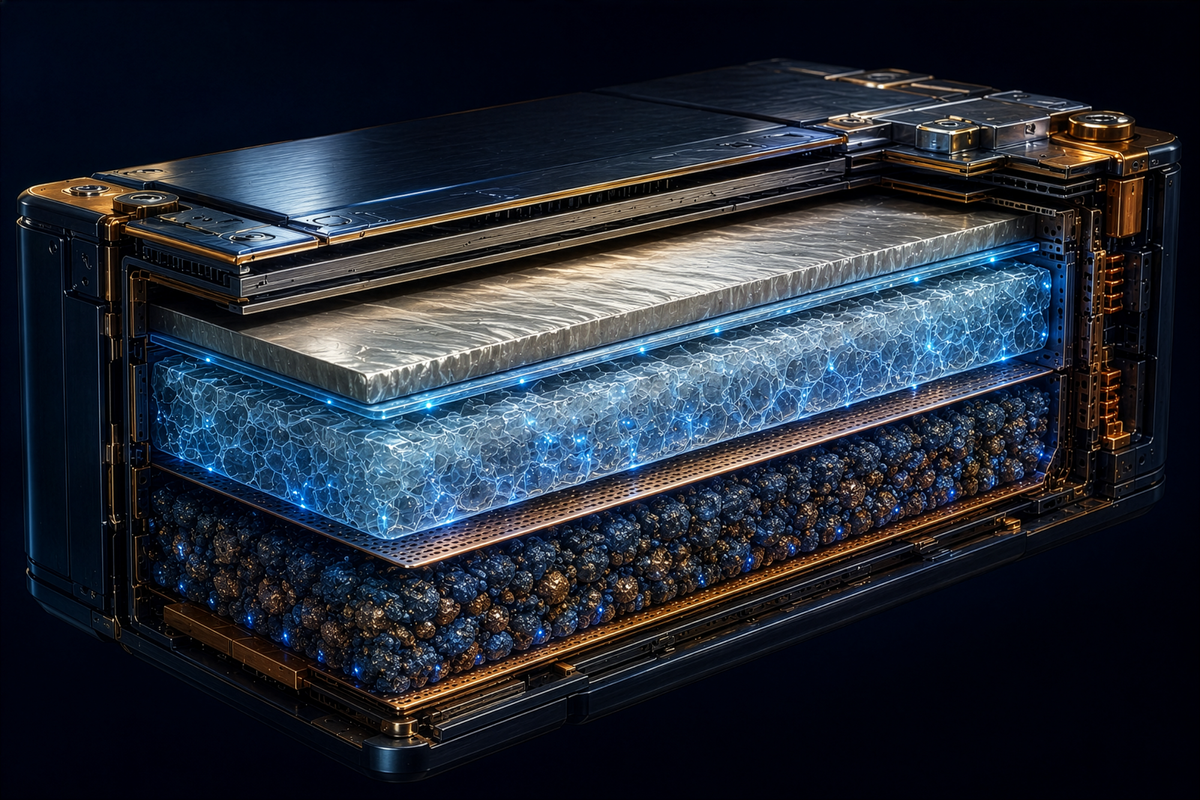
9. Competitive Context
9.1 Versus next-generation/solid-state peers.
ProLogium's distinctive position is that it ships product at gigafactory scale today, whereas most "solid-state" rivals remain at pilot or sampling stage as of 2026:
- QuantumScape (NYSE: QS): anode-free lithium-metal with ceramic separator; inaugurated its "Eagle Line" pilot in February 2026 and is producing initial QSE-5 volumes; commercialization still ahead [52][53].
- Toyota: sulfide all-solid-state, repeatedly delayed, targeting limited production around 2027 to 2028 [54][55].
- Samsung SDI: sulfide all-solid-state, targeting mass production around 2027 [54].
- Solid Power (Nasdaq: SLDP): sulfide electrolyte supplier, partnering BMW/Samsung SDI; pre-commercial [54][55].
- Factorial Energy: quasi-solid, partnering Mercedes-Benz and Stellantis; pre-commercial [54][55].
- CATL and other incumbents pursue semi-solid/condensed routes alongside dominant liquid Li-ion [55].
Third-party generic estimates put solid-state cell cost at roughly $400 to $800/kWh today versus about $115/kWh for liquid Li-ion, underscoring how far the category sits from parity [54]; ProLogium's own ~$170/kWh claim, if validated at scale, would be category-leading but is not independently confirmed [17].
9.2 Versus the incumbent base.
The binding competitive reality is the dominant, cheap, improving liquid Li-ion (NMC and especially LFP/LMFP) cost base [41][44]. ProLogium's value proposition rests on safety (no-thermal-runaway claims), energy density, fast charge, and low-temperature performance commanding a premium in high-end EVs and in adjacent verticals (data-center ESS, aerospace, robotics, defense, construction machinery) where safety and energy density outweigh cost [10][20].
10. Risk Matrix
| Risk | Likelihood | Impact | Credible mitigations |
|---|---|---|---|
| Technology/yield scale-up (multilayer yield, silicon-anode durability, platform transfer to France) | Medium | High | Proven Taoyuan platform and 2.4M cells shipped; platform-replication approach; phased 0.8 to 12 GWh ramp; Paris-Saclay R&D [5][9][14] |
| Financing/capital adequacy (€5.2bn versus secured funding gap; SPAC going-concern, redemption and minimum-cash risk) | High | High | Up to €1.5bn milestone state aid; SPAC plus PIPE; demand-contingent phasing; ability to slow capex [11][27][47] |
| Demand (EU EV/battery slowdown; forecasts cut more than 40% for 2025) | High | High | Premium-segment and non-EV verticals; reserved-land optionality; modest 0.8 GWh start [10][42] |
| Cost competitiveness versus LFP/NMC | High | Medium-High | Claimed pack-level parity; localization; low-carbon power; product differentiation on safety/density [17][41] |
| Competitive displacement (Toyota/Samsung SDI all-solid-state if they scale; cheap Chinese cells) | Medium | Medium | First-mover mass-production lead; 1,100+ patent portfolio; advantage erodes if peers industrialize [10][54] |
| Supply chain (cathode/anode/electrolyte/lithium/ceramic-precursor localization) | Medium | Medium | POSCO, Arkema, CEA-Liten partnerships (mostly MoU/LOI stage) [36][37] |
| Execution/schedule (already ~2 to 2.5 yr slipped; greenfield in soft market) | Medium-High | Medium | Permits secured; groundbreaking done; experienced cluster ecosystem [13][15] |
| Dependence on public support (state aid milestone-conditional; policy shifts) | Medium | Medium-High | IPCEI status; France 2030 alignment; EU Industrial Accelerator Act tailwind [46][47] |
| Offtake absence (no binding Dunkirk customer disclosed) | High | High | Equity-customer relationships (Mercedes, VinFast); module MoUs; conversion to binding offtake unproven [13][35] |
We deliberately omit candidate risks immaterial to this pre-production project (for example, consumer-safety recall risk).
11. Strategic Recommendations
11.1 For institutional investors weighing exposure.
- Treat the SPAC valuation as contingent, not realized: condition any position on (i) actual PIPE size and post-redemption cash at close, (ii) disclosure of at least one binding Dunkirk offtake, and (iii) an itemized Fab 1 capex budget. Absent these, size exposure as venture-stage risk despite the company's shipping track record [10][27][35].
- Benchmarks that would upgrade the thesis: PIPE clearing well above the $250 million floor; conversion of a Mercedes-Benz or VinFast relationship into a binding European offtake; independent (beyond TÜV single-cell) validation of multilayer-cell yield and pack-level energy density; on-time 2028 Phase 1 completion.
- Benchmarks that would downgrade it: further schedule slip beyond 2029 deliveries; reduction or claw-back of the French subsidy; failure to secure the TDAC deadline extension; any signal that the €5.2 billion is being quietly re-scoped below the 12 GWh engineered scope.
- Distinguish ProLogium from QuantumScape/Solid Power on evidence: ProLogium's commercial shipments are a genuine differentiator, but its chemistry is quasi-solid/inorganic rather than the dry all-solid-state that some peer valuations presume.
11.2 For OEM and industrial strategists weighing qualification, sourcing, or partnership.
- Qualify now on the Taoyuan line, not the French line: the credible, testable product exists in Taiwan today. Use A/B/C-sample programs and ARC/abuse testing to independently verify the no-thermal-runaway and fast-charge claims rather than relying on company or single-test-house data [5][10].
- For European-localized supply (relevant under EU Battery Regulation carbon-footprint and emerging local-content pressures), structure any Dunkirk offtake with milestone-linked volume commitments tied to demonstrated Phase 1 yield and Q2 2029 delivery, with second-source fallback to conventional NMC/LFP given the demand and execution risks [11][48].
- For premium and safety-critical applications (high-end EV, data-center ESS, aerospace, defense, off-highway), ProLogium's density/safety profile is most compelling; for cost-driven mass-market BEVs, LFP/LMFP remains the rational default and ProLogium should be treated as a complementary high-end option, not a like-for-like replacement [20][41].
- Materials and module suppliers should convert MoUs/LOIs (Arkema, POSCO, OPmobility, Rimac, MAHLE) into staged, yield-contingent supply agreements rather than fixed take-or-pay, given the binary nature of the gigascale transition [26][36][37][38].
12. Caveats
12.1 ProLogium is privately held and pre-listing; disclosure quality is correspondingly limited, and a large share of performance and schedule claims are company-asserted, with independent verification confined to single-cell, pilot-line third-party tests. The SPAC investor deck is a marketing document with safe-harbored projections [10][27][35].
12.2 Several material figures have changed over time and are dated accordingly in the text: total capacity (44 versus 48 GWh), state aid (€1.5bn versus ~€1.4bn), Taoyuan capacity (0.5 versus 2 versus 3 GWh references), and the production-start date (end-2026 to Q2 2029). Where sources conflict, we have flagged the conflict rather than silently choosing [4][6][10][11][47].
12.3 The chemistry's classification ("solid-state" versus quasi-solid/inorganic) is contested and consequential for interpreting performance and safety claims; this report takes the position that "solid-state" is imprecise for these cells [4][20][23].
 media
media

References
[1] ProLogium Technology. 2026. "ProLogium Breaks Ground on Dunkirk Gigafactory in France." prologium.com.
[2] ProLogium Technology. 2023. "ProLogium Announces €5.2b Gigafactory in Dunkirk France and Greets French President Emmanuel Macron." prologium.com.
[3] ProLogium Technology. 2023. "PROLOGIUM ANNOUNCES GIGAFACTORY IN DUNKIRK FRANCE AND GREETS FRENCH PRESIDENT EMMANUEL MACRON." prologium.com.
[4] Nord France Invest. 2023. "ProLogium Technology a 4th gigafactory in Hauts-de-France." nordfranceinvest.com.
[5] ProLogium Technology. 2024. "ProLogium Opens the World's First Giga-level Solid-State Lithium Ceramic Battery Factory." PR Newswire / prologium.com, January 23.
[6] electrive. 2024. "ProLogium opens first factory for series production of solid-state cells." electrive.com, January 24.
[7] ProLogium Technology. 2025. "ProLogium Shatters Cost and Scale Limits with Patent Leadership, Fast-Tracking Solid-State Battery Commercialization." prologium.com.
[8] CleanTechnica. 2023. "ProLogium Introduces 2nd-Gen Solid-State Battery, Porsche Consolidates Battery Production." cleantechnica.com, June 18.
[9] ProLogium Technology / GlobeNewswire. 2025. "ProLogium Leads the Way to Solid-State Battery Commercialization." July 1.
[10] ProLogium Technology / GlobeNewswire. 2026. "ProLogium, a Next Generation Solid-State Battery Developer with 10+ Years of Proven Commercialization, to List on the Nasdaq through a Merger with Translational Development Acquisition Corp." May 27.
[11] Reuters. 2026. "Battery maker ProLogium to list on Nasdaq in $3.8 billion SPAC deal." May 27 (via Investing.com, AOL, MarketScreener).
[12] ProLogium Technology. 2024. "ProLogium Sets Record-Breaking Standards in Battery Safety and Energy Density Ahead of Schedule with TÜV Rheinland Certification." PR Newswire, December 13.
[13] electrive. 2026. "ProLogium begins construction of battery factory in France." electrive.com, February 11.
[14] ProLogium Technology. 2024. "ProLogium Initiates Establishment of R&D Center in Paris-Saclay." prologium.com, May 14.
[15] ProLogium Technology. 2025. "Giganews The Construction Bulletin: ProLogium's Gigafactory in Dunkirk." prologium.com, January 20.
[16] Schneider Electric. 2024. "Schneider Electric signs agreement to develop smart manufacturing technologies for ProLogium's battery gigafactory in France." se.com.
[17] Reuters. 2024. "Battery maker ProLogium to gradually ramp up French plant amid slow EV sales." July 12 (via KFGO/WHTC).
[18] ProLogium Technology. 2022. "ProLogium Discusses Overseas Expansion Plans at Meetings with French and US Officials." prologium.com.
[19] ProLogium Technology. 2024. "ProLogium Debuted World's First 100% Silicon Composite Anode at the Paris Motor Show." prologium.com.
[20] ProLogium Technology / PR Newswire. 2026. "ProLogium Marks 20th Anniversary at CES 2026, Unveils Breakthrough Superfluidized all Inorganic Solid-State Battery Results." January 5.
[21] ProLogium Technology. 2025. "Core Technologies." prologium.com.
[22] ProLogium Technology. 2025. "ProLogium Showcases Next-Generation Solid-State Battery Breakthrough at IAA Mobility 2025." prologium.com.
[23] Mazzapioda, L., et al. 2023. "Quasi-solid-state electrolytes: strategy towards stabilising Li|inorganic solid electrolyte interfaces in solid-state Li metal batteries." Energy Materials. oaepublish.com.
[24] ProLogium Technology. 2024. "ProLogium and FEV show 100% silicon battery (749 Wh/L, 321 Wh/kg)." eeNews Europe / Paris Motor Show coverage.
[25] ProLogium Technology. 2024. "ProLogium Sets Record-Breaking Standards… (811.6 Wh/L, 359.2 Wh/kg)." prologium.com, December.
[26] ProLogium Technology / GlobeNewswire. 2026. "ProLogium and OPmobility Sign MoU to develop next generation Solid-State Battery Modules for Mobility." June 9; and Charged EVs coverage.
[27] Translational Development Acquisition Corp. 2026. Form 8-K and Form 425 (Agreement and Plan of Merger, dated May 27, 2026); quarterly disclosures. sec.gov; StockTitan analysis.
[28] Wikipedia. 2026. "ProLogium." en.wikipedia.org.
[29] Tracxn. 2026. "ProLogium: Funding Rounds & List of Investors." tracxn.com.
[30] electrive. 2022. "VinFast invests in solid-state battery specialist ProLogium." electrive.com, July 6.
[31] VinFast. 2022. "VinFast partners with and invests in ProLogium for solid-state batteries development." vinfastauto.us, July 6.
[32] Taiwan News. 2024. "Taiwan's ProLogium opens EV battery 'gigafactory' in Taoyuan." taiwannews.com.tw, January 25.
[33] Norton Rose Fulbright. 2022. "Norton Rose Fulbright advises ProLogium on strategic partnership with VinFast." nortonrosefulbright.com.
[34] InsideEVs. 2022. "VinFast To Invest 'Tens Of Millions Of US Dollars' In ProLogium." insideevs.com.
[35] MSN / syndicated. 2026. "ProLogium just filed to go public through a SPAC merger." msn.com.
[36] Arkema. 2024. "Arkema and ProLogium engage in a collaboration for next generation lithium ceramic battery materials for e-mobility." arkema.com, May 14.
[37] POSCO Holdings. 2022. "POSCO Holdings and ProLogium Sign Agreements… Materials." PR Newswire / posco.com, May 13.
[38] ProLogium Technology. 2025. "ProLogium Signs Memorandum of Understanding with Rimac Technology at IAA Mobility Show 2025." prologium.com.
[39] battery-tech.net. 2026. "ProLogium Starts Dunkirk Solid-State Gigafactory Project." battery-tech.net.
[40] battery-news.de / evertiq. 2026. "ProLogium Breaks Ground on French Solid-State Battery Gigafactory." February 11.
[41] BloombergNEF. 2025. "Battery Price Survey 2025" (BEV pack average US$99/kWh; LFP US$81/kWh; NMC US$128/kWh; cells US$79/kWh).
[42] S&P Global Mobility. 2025. "Why Europe is losing the gigafactory race to China." spglobal.com, August.
[43] ACEA / S&P Global. 2025. BEV market-share forecast revision for Europe 2025 (27% to 21%).
[44] European Parliament Research Service. 2025. "Powering the EU's future: Strengthening the battery industry." EPRS_BRI(2025)767214. europa.eu.
[45] European Council on Foreign Relations. 2025. "Recharge or regret: Why the EU must act decisively to secure Europe's struggling battery industry." ecfr.eu.
[46] S&P Global Mobility. 2026. "How the EU's Industrial Accelerator Act could rescue the gigafactory pipeline." spglobal.com, April.
[47] European Commission. 2023. "State aid: Commission approves €1.5 billion French measure to support ProLogium…" Press release IP/23/4029, August 3. ec.europa.eu.
[48] European Union. 2023. Regulation (EU) 2023/1542 concerning batteries and waste batteries. EUR-Lex.
[49] EUR-Lex. 2023/2025. "Sustainability rules for batteries and waste batteries" (summary; recycled-content and recycling-efficiency targets; Regulation (EU) 2025/1561 amendment on due diligence).
[50] TÜV Rheinland. 2024. "EU New Battery Regulation (EU) 2023/1542" (implementation timeline). tuv.com.
[51] Bruegel / ECFR analysis cited in European Parliament Research Service. 2025. "Powering the EU's future" ("de-risking by embracing").
[52] QuantumScape Corp. 2026. Form 8-K (Eagle Line inauguration, QSE-5 initial volumes). sec.gov.
[53] eepower.com. 2026. "Solid-State Batteries Race to Mass Production." Tech Insights.
[54] exoswan.com. 2026. "Top Solid-State Battery Stocks 2026" (peer timelines and cost estimates; company-stated/unverified).
[55] to7motor.com / tahaabbasi.com. 2026. "Solid-State Batteries 2026" (peer roadmaps; analyst commentary).