
Ultrasonic Full-Body Scans, Wellness Spas, and the Science Behind the Spectacle
Ultrasonic CT uses no X-rays, and the prototype runs about 20 minutes, not the 60 seconds claimed. We separate the science from the pitch.


1. Summary
On 17-18 June 2026, Midjourney, the generative-image-AI company, announced a new division, Midjourney Medical, and its first hardware product, "The Midjourney Scanner," at a San Francisco event presented by founder David Holz [1][2]. The device is marketed as "Fullbody Ultrasonic Computational Tomography," shortened to "Ultrasonic CT." The single most important finding of this report is that the name is misleading and the headline performance claims are unverified: the device uses ultrasound, not X-rays or ionizing radiation, and the assertions of MRI-comparable or "in many ways superior" image quality at "nearly a hundred times the speed" are launch-marketing claims attached to a first-generation prototype, not demonstrated, peer-reviewed, or FDA-cleared results [2][3][4].
Three conclusions follow. First, on the science: ultrasound computed tomography (USCT) is a real, established research field, and tomographic ultrasound is already FDA-approved for a narrow indication (breast imaging in women with dense breasts), but the physics of ultrasound (the frequency/resolution-versus-penetration tradeoff and near-total reflection at bone and air interfaces) make diagnostic-quality whole-body ultrasound tomography genuinely hard, and no peer-reviewed source demonstrates it at the resolution Midjourney asserts [5][6][7]. Second, on the investable proxy: Butterfly Network, Inc. (NYSE:BFLY), the Burlington, Massachusetts ultrasound-on-chip maker whose 40 modules sit inside each prototype, is the only public way to gain exposure; its shares closed up 55.87% at $8.90 on 18 June 2026, but the disclosed agreement (an aggregation of components reported as up to $74 million over five years) is small relative to expectations now embedded in a stock trading at roughly 18.5x sales [8][9][10][35]. Third, on the business: the "Midjourney Spa," a flagship San Francisco wellness venue planned for the end of 2027, is a wellness-first commercialization route that deliberately sidesteps the FDA diagnostic pathway by offering body-composition maps rather than diagnosis, and the aspirational targets (50,000 scanners by 2031, a billion scans per month, avoiding "30% of all deaths and 50% of all healthcare costs") are developer aspirations unsupported by evidence [1][2][11].
The investment and strategic case rests less on whether the company can cross the chasm from a wellness body-composition novelty to a clinically validated, regulated, reimbursed diagnostic platform. The evidence base for screening asymptomatic people, the regulatory hurdle, the single-customer concentration risk for Butterfly, Midjourney's first-time-hardware execution risk, and active copyright litigation against Midjourney all weigh against the most bullish reading.
The Midjourney Full Body Scanner, the Spa, and Butterfly Network: A Rigorous Assessment of a Consumer-AI Entrant's Clinical-Imaging Claims
1. Summary
2. The Technology and Its Scientific Context
- 2.1 What “Ultrasonic CT” Is and Is Not
- 2.2 USCT State of the Art and Commercial Prior Art
- 2.3 Physical Limits of Ultrasound for Whole-Body Imaging
- 2.4 Image Formation Versus Interpretation
3. Principals and Stakeholders
- 3.1 Midjourney Medical
- 3.2 The Midjourney Scanner: Prototype and Roadmap
- 3.3 The Midjourney Spa
- 3.4 Butterfly Network
- 3.5 Other Stakeholders
4. Technical and Operational Considerations
- 4.1 Demonstrated Versus Claimed Performance
- 4.2 Throughput and Scale Feasibility
- 4.3 Ultrasound-on-Chip Manufacturing and Supply
5. Economic and Market Dynamics
- 5.1 Butterfly Network as Investable Proxy
- 5.2 Midjourney and Spa Unit Economics
- 5.3 Full-Body Screening Market and Willingness to Pay
- 5.4 Incumbents and Competitive Response
6. Regulatory Landscape
- 6.1 The Wellness/Body-Composition Line Versus Diagnostic Claims
- 6.2 Screening of Asymptomatic Individuals
7. Geopolitical and Strategic Dimensions
- 7.1 Population-Scale Body-Imaging Data Governance
- 7.2 Supply and Industrial Considerations
8. Risk Matrix
9. Strategic Recommendations
- 9.1 For Investors and Capital Allocators
- 9.2 For Healthcare-Technology Strategists and Imaging Technologists
- 9.3 For Policy and Regulatory Observers
Caveats
References
2. The Technology and Its Scientific Context
2.1 What "Ultrasonic CT" Is and Is Not
The Midjourney Scanner images the body using ultrasound. According to Midjourney's own description, a subject stands on a platform that descends into a shallow water bath at approximately 5 centimeters (2 inches) per second, passing through a ring of ultrasonic transducers that both emit sound waves and record the returning signals from many angles; a compute cluster then reconstructs cross-sectional images of muscle, fat, bone, and organs [1][2][12]. The "computational tomography" in the name refers to this reconstruction step, in which signals collected around the body are computationally inverted into a cross-sectional image, mathematically analogous to the reconstruction in X-ray CT but using acoustic rather than X-ray data. The critical clarification, which the company itself makes, is that there is no X-ray and no ionizing radiation and no strong magnetic field [2][3]. Holz reportedly said the system is "not even using any AI in this yet" for image formation; AI is used downstream to segment and label scan output, not to form the images [4][13].
The naming is a source of confusion. Multiple outlets and clinicians noted that calling an ultrasound device "CT" invites a false association with the resolution and diagnostic standing of X-ray computed tomography [3][4]. For a non-specialist reader, the operative facts are: (1) the modality is ultrasound; (2) the absence of ionizing radiation is a real and material safety advantage over CT; and (3) "CT" here denotes a reconstruction mathematics, not the X-ray modality.
2.2 USCT State of the Art and Commercial Prior Art
Ultrasound computed tomography is not new. The field traces to work by Greenleaf and Johnson at the Mayo Clinic in the 1970s and has matured into a substantial peer-reviewed literature [5]. Two systems are already FDA-cleared or approved for breast imaging and constitute the most relevant prior art. Delphinus Medical Technologies' SoftVue, a 3D whole-breast ultrasound tomography system, received FDA premarket approval (PMA) in October 2021 as an adjunct to mammography for screening women with dense breasts; in its pivotal multi-reader study it demonstrated an increase in both sensitivity of 20% and specificity of 8% versus full-field digital mammography alone, and a later Radiology-published analysis found a statistically significant 25% improvement in sensitivity for BI-RADS 4-or-higher lesions [14][15]. QT Imaging (QT Ultrasound) markets a "Breast Acoustic CT" transmission ultrasound tomography system [14][16]. Both immerse the breast in a warm water bath and use a circular transducer ring, exactly the geometry Midjourney proposes to scale to the whole body [16].
This prior art cuts two ways. It establishes that water-immersion ring-array ultrasound tomography is a real, deployable, clinically validated modality, which lends partial credibility to Midjourney's physical approach. But it also underscores the gap: after more than two decades of development and substantial research investment, commercial USCT remains confined to the breast, an organ with no bone and no air, of small and uniform dimension, accessible from all angles in a water bath. The peer-reviewed USCT literature is overwhelmingly about breast imaging, and the most advanced reconstruction methods (full-waveform inversion, or FWI) are recognized as computationally very expensive even in 2D for a single breast [5][6][7].
2.3 Physical Limits of Ultrasound for Whole-Body Imaging
The physics imposes hard constraints that the launch marketing does not address. There is a fundamental tradeoff between resolution and penetration depth in ultrasound: higher frequencies give finer resolution but attenuate rapidly, while lower frequencies penetrate deeper but resolve less detail [6][17]. As a rule of thumb, penetration depth is limited to roughly 200 wavelengths, corresponding to about 30 cm for a 1 MHz transducer, 12 cm for 2.5 MHz, and 6 cm for 5 MHz [17]. Delphinus's SoftVue operates around 2.5-3 MHz precisely because that is the "sweet spot" allowing whole-breast penetration with submillimeter resolution [5]. Achieving "a fraction of a millimeter" resolution, as Midjourney claims, while penetrating an entire adult torso (30-40 cm) is in direct tension with this tradeoff, because the frequency that penetrates that deep cannot also resolve to a fraction of a millimeter at depth [5][6].
The behavior of ultrasound at bone, lung, and air interfaces is the more severe problem. Acoustic impedance mismatch at tissue-bone and tissue-air boundaries causes near-total reflection and creates shadow artifacts that obscure structures behind them [18][19]. Bone has roughly 20 dB/cm/MHz attenuation and air around 12 dB/cm/MHz, versus roughly 0.5-1 dB/cm/MHz for soft tissues such as liver [18]. The speed of sound differs sharply across tissues (about 1,540 m/s in soft tissue versus roughly 4,080 m/s in bone), causing refraction and reconstruction errors [18][19]. This is why ultrasound cannot readily image the brain (the skull), the lungs (air), or structures shadowed by the rib cage or pelvis, and why MRI and CT remain dominant for whole-body diagnostic imaging. Whole-body ultrasound tomography in the presence of high-impedance-contrast bone is recognized in the literature as an unsolved problem; one Nature Scientific Reports paper noted there is "presently no ultrasound tomographic system for orthopaedic or whole-body imaging in the presence of high impedance contrast (bone)" and that prior simulation work required reconstruction speed-ups of roughly 200-fold to be clinically feasible [5]. Water immersion helps as a coupling medium (it eliminates the air gap between transducer and skin, matching impedance to soft tissue), but it does nothing to solve the bone-and-air problem inside the body [5][16].
2.4 Image Formation Versus Interpretation
A clarification that matters for both clinical and investment readers: Midjourney has explicitly stated the imaging itself is ultrasound and signal processing, with AI confined to segmentation and labeling of the reconstructed output, not to forming the images [4][13]. This is an honest disclosure that distances the product from Midjourney's generative-AI core, but it also removes the company's principal claimed technical advantage: its generative models are essentially irrelevant to whether the scanner works. The hard problem (reconstructing accurate acoustic images of the whole body) is a physics-and-compute problem that Butterfly's hardware and conventional reconstruction must solve, and Midjourney's generative-AI expertise does not address it. There is a latent risk on the other side as well: if AI is later used to "enhance" or "complete" images, the line between reconstructing real anatomy and generating plausible-looking anatomy becomes a patient-safety question, especially for a company whose core technology is generative image synthesis.
3. Principals and Stakeholders
3.1 Midjourney Medical
Midjourney Medical is a new division of Midjourney, announced in mid-June 2026. The day-to-day medical leadership is reported as Tom Calloway, PhD, Head of Medical [3], while the hardware effort is reported to be led by Ahmad Abbas, who previously worked on Apple's Vision Pro [12]. Founder David Holz, who co-founded Leap Motion and served as its CTO, was the public presenter [11][12]. Midjourney states it has no outside investors and describes itself as a "community-backed research lab," funded by its subscription business (priced from $10 to $120 per month), and says it can finance the first spa itself [11][12]. The scanner is reportedly one of eight projects (four hardware, four software) the company is pursuing [11].
The funding model is double-edged. Independence from venture capital gives Midjourney latitude to pursue a long-horizon, capital-intensive hardware bet without investor pressure for near-term returns. However, a medical-device program is enormously capital-hungry (regulatory trials, manufacturing, real estate, clinical staff), and a self-funded lab without external capital has a finite runway determined by its subscription cash flows, which are themselves exposed to the litigation discussed in Section 8.
3.2 The Midjourney Scanner: Prototype and Roadmap
What has been demonstrated: a physical prototype exists and was shown live; it incorporates 40 Butterfly Ultrasound-on-Chip modules arranged in a ring [8][12]. Each Butterfly chip contains 8,960 transducer elements, so 40 modules imply on the order of 358,000 elements, consistent with the "half a million tiny squares" framing in the marketing (the company rounds up) [12][20]. Reporting indicates that at announcement roughly 12 people had been scanned by a core team of about nine engineers, and that the prototype scan time was approximately 20 minutes, not the 60-second target [13][21]. Midjourney's own scan gallery shows phantom scans, segmentations, and thigh and abdomen ultrasound-versus-MRI side-by-sides [22].
The 60-second scan, the "fraction of a millimeter" resolution, the "100x faster than MRI" and "10x cheaper" figures, and the "superior to MRI" framing are all company projections against an early prototype, not measured, independently verified results [13][21][23]. The roadmap calls for a second-generation design and, in 2028, a third-generation scanner with fully custom silicon that Midjourney says is where image quality and scan time will become "night-and-day"; future generations are expected to use substantially more than 40 modules [1][8][11].
3.3 The Midjourney Spa
The first flagship Midjourney Spa is planned for San Francisco around the end of 2027, reported as a roughly 25,000-square-foot space near Union Square fitted with about 9-10 scanners alongside hot tubs, saunas, cold plunges, and a gym [11][24]. The commercial concept is to make whole-body scanning "as casual as a trip to the spa" [1][2]. Per-scan pricing has not been disclosed [25]. William Blair indicates Midjourney has described a longer-term ambition of roughly 5,000 spa locations each with about 10 scanners, with the first San Francisco site serving as a test bed for the operating model [9][26]. There is a waitlist for the San Francisco spa, and Midjourney is recruiting volunteers for clinical trials through its website [11].
3.4 Butterfly Network
Butterfly Network, Inc. (NYSE:BFLY), founded in 2011 by Jonathan Rothberg and based in Burlington, Massachusetts, pioneered "Ultrasound-on-Chip," replacing piezoelectric crystals with a capacitive micromachined ultrasonic transducer (CMUT) array fabricated on a CMOS semiconductor die [20][27]. A single chip (8,960 elements in a 140-by-64 array) can emulate linear, curved, and phased-array probes across roughly 1-12 MHz, enabling whole-body imaging from one handheld probe (the iQ, iQ+, and iQ3) [20][27]. The Midjourney relationship runs through "Butterfly Embedded" (formerly Octiv), Butterfly's chip-licensing and co-development business [8][9].
The agreement was disclosed in a Form 8-K filed November 18, 2025. Per the verbatim text of that filing, Butterfly, through subsidiary BFLY Operations, Inc., granted Midjourney "an exclusive, non-transferable license, within a specified field of use, to access and use certain of the Company's ultrasound-on-chip technology, software, and backend technology" [28]. Under the terms, Midjourney will pay "a one-time non-recurring fee of $15 million and a $10 million annual license fee, payable quarterly during the term of the Agreement," plus "additional payments of up to $9 million upon the achievement of specified milestones," "certain revenue sharing payments in connection with Midjourney's commercialization of hardware products incorporating Company chips," and "payments in connection with any purchases of chips from the Company" [28]. The term is five years, subject to earlier termination for breaches and insolvency, and Midjourney has an option to upgrade its license in certain circumstances [28]. Notably, the "up to $74 million over a five-year term" figure cited widely in the press and in Butterfly's own June 18, 2026 commentary is an aggregation of the disclosed components ($15M + $50M over five years + up to $9M), not a single headline figure stated in the operative 8-K legal disclosure [28][29]. The full agreement (including the defined field of use) was to be filed as an exhibit to Butterfly's FY2025 Form 10-K [28].

3.5 Other Stakeholders
The radiology profession has been publicly skeptical (Section 4.1). Prospective consumers face an undisclosed price and an unproven clinical value proposition. Payers are unlikely to reimburse screening of asymptomatic people absent outcomes evidence (Section 6). Regulators (FDA) hold the gate to any diagnostic claim. Incumbent imaging vendors (GE HealthCare, Siemens Healthineers, Philips) are the competitive context (Section 5.4).
4. Technical and Operational Considerations
4.1 Demonstrated Versus Claimed Performance
The gap between demonstration and claim is the central technical tension. Demonstrated: a working prototype, phantom segmentations, and ultrasound-versus-MRI side-by-sides of thighs and abdomen [22]. Claimed but not independently verified: full-body diagnostic quality, "fraction of a millimeter" resolution, and superiority to MRI [3][13][23]. As of June 2026, no peer-reviewed paper had been published on the system's accuracy versus MRI or CT, and no radiologist outside Midjourney had evaluated its image quality against a clinical standard [21].
Named radiologists contested the claims directly. Laura Heacock, MD, an associate professor at NYU Langone Health, wrote: "The question remains: Why would I use an experimental full body [ultrasound] when there's whole body MRI available that's already diagnostic quality?" She added that the device "looks like it's going to be great for body composition" but "Is it currently medical-grade diagnostic quality? No, not based on what they showed us. What's been presented so far does not outperform modern US, CT or MRI" [9]. Gennaro D'Anna, MD, a neuroradiologist with CDI Centro Diagnostico Italiano in Milan, said that "in medicine, we are impressed by evidence, rather than shining images," and that he found "it increasingly concerning that potentially revolutionary medical technologies are introduced through cinematic ... marketing videos rather than through rigorous scientific evidence" [9]. These critiques converge on two points: the physics-based ceiling on ultrasound resolution at depth, and the absence of evidence.
4.2 Throughput and Scale Feasibility
The stated targets are: 50,000 scanners worldwide by 2031, capacity for a billion scans per month, and (in the most expansive framing) about 5,000 spas [1][9][11]. These are aspirational. To put a billion scans per month in perspective: it implies regular monthly scanning of roughly a billion people, an order of magnitude that would dwarf the entire installed base of MRI and CT globally. The prototype currently takes about 20 minutes per scan, so the throughput case depends entirely on hitting the 60-second target in later generations, which itself depends on custom silicon (Gen3, 2028) and reconstruction-compute advances that have not been demonstrated [13][21]. Even granting the scan time, siting 50,000 water-bath installations with the associated real estate, water handling, hygiene, staffing, and data infrastructure within roughly five years would be an unprecedented medical-hardware deployment. The targets are best read as direction-of-travel ambition, not a plan with demonstrated feasibility.
4.3 Ultrasound-on-Chip Manufacturing and Supply
Butterfly's CMUT-on-CMOS approach is manufactured through a standard semiconductor supply chain, which is its key scaling advantage: chips improve with Moore's Law (the iQ, iQ+, and iQ3 each leveraged greater processing power), and wafer-level integration supports high-volume production [27][30]. Each scanner uses 40 modules today and "substantially more" in future generations [8]. This is favorable for Butterfly's revenue scaling if volumes materialize, but it also concentrates dependency: thermal management on a dense die, ASIC yields, and foundry capacity all gate the module counts that whole-body tomography appears to require (potentially hundreds to thousands of chips per machine at full ring density). No public source quantifies the per-system module count for the Gen3 custom-silicon design.
5. Economic and Market Dynamics
5.1 Butterfly Network as Investable Proxy
Butterfly is the only publicly traded pure-play exposure to the Midjourney scanner. Its financial profile as of Q1 2026 (quarter ended March 31, 2026): revenue of $26.5 million, up 25% year over year; gross margin of 68.9%; net loss of $12.7 million ($0.05 per share); adjusted EBITDA loss of $6.1 million; and cash and equivalents of $138 million (about $142 million including restricted cash), with $12.5-13.9 million of cash used in operations in the quarter [31][32][33]. Full-year 2026 guidance was reaffirmed at $117-121 million in revenue (roughly 20-24% growth) with an adjusted EBITDA loss of $21-25 million [31][33]. Trailing-twelve-month revenue was about $103 million [10].
The Midjourney agreement is material to Butterfly's growth narrative but small in absolute dollars. Butterfly Embedded revenue rose 147% year over year to $5.7 million in Q1 2026, primarily driven by the Midjourney partnership, and Butterfly's Q1 earnings release stated U.S. revenue growth was "primarily driven by revenue from our Butterfly Embedded partnerships, including our co-development partnership with Midjourney" [31][34]. The contracted economics ($15 million one-time plus $10 million per year) are meaningful against a roughly $103 million revenue base and a deeply unprofitable P&L, but the total disclosed value (the components aggregating to up to ~$74 million over five years) is a fraction of the market-capitalization gain the announcement produced [10][28][29].
On valuation: shares closed up 55.87% at $8.90 on Thursday 18 June 2026, having reached a 52-week intraday high of $8.01, with intraday gains reported variously from "more than 30%" to above 50% on heavy volume (the prior close was $5.71) [8][35]. Around the announcement Butterfly's market capitalization was roughly $2.0-2.3 billion (about 262 million shares), implying a price-to-sales multiple of about 18.5x [10][35][36][37]. That is a richly priced, cash-burning, small-cap medical-device stock whose valuation now embeds substantial optionality on a partner's unproven product. The repricing is more a sentiment-and-optionality event than a fundamentals event: the contracted cash flows do not justify a multi-hundred-million-dollar market-cap increase on their own. Insiders have been net sellers over the trailing twelve months [36].
5.2 Midjourney and Spa Unit Economics
Midjourney has not disclosed per-scan pricing, scanner build cost, or spa unit economics, so any unit-economics analysis is necessarily incomplete, and this should be stated plainly [25]. What can be observed: a 25,000-square-foot Union Square space with about 9-10 scanners, saunas, hot tubs, cold plunges, and a gym implies a high fixed-cost, capital-intensive flagship more akin to a luxury wellness club than a medical clinic [11][24]. The scanner bill of materials includes at least 40 Butterfly chips plus the water-handling, platform, transducer-ring, and compute-cluster hardware. The "petaflop-scale" compute and "terabytes per second" data handling Midjourney describes imply substantial per-scan compute cost [2][12]. Profitability depends on price points and throughput that are not public. Midjourney says it can fund the first spa from its own resources [12].
5.3 Full-Body Screening Market and Willingness to Pay
The closest market benchmarks are whole-body MRI screening services. Prenuvo, which owns and operates its own clinics, prices a Comprehensive Whole Body Scan at $2,499 (down from a $3,099 list price, roughly 19% membership savings), with an Executive tier at $3,999, rising to $4,499-$4,999 in New York City [38][39]. Ezra, acquired by Function Health in May 2025, repriced aggressively: its base offering is now a 22-minute full-body scan for $499, down from Ezra's cheapest prior offering of a 30-minute scan that cost $1,495, with Function membership at $499 per year for 160-plus lab tests [38][40]. This established a consumer willingness to pay for radiation-free, fast, convenience-oriented elective body imaging, and demonstrates a clear price-compression trend that Midjourney's "casual as a spa" positioning would extend. The wellness-imaging market is growing, validated by the celebrity-endorsement-driven demand for Prenuvo and Ezra [38]. But the same market is dogged by the overdiagnosis and incidental-findings problems (Section 6.2), and the medical establishment's skepticism applies to Midjourney with at least equal force, since ultrasound tomography of the whole body is less established than MRI.
5.4 Incumbents and Competitive Response
The diagnostic-imaging market is consolidated among GE HealthCare (NASDAQ:GEHC), Siemens Healthineers, and Koninklijke Philips, which with Canon and Fujifilm control roughly 90% of the medical-imaging market; GE HealthCare alone holds an estimated ~32% share [41][42]. These incumbents own the MRI and CT installed base, the clinical relationships, the regulatory track records, and the reimbursement codes. Dedicated USCT specialists (Delphinus, QT Imaging) hold the breast-tomography niche and the relevant FDA precedents [14][16]. Midjourney is not, in the near term, a competitive threat to the incumbents' diagnostic franchises; it is attacking the adjacent elective-wellness segment that the incumbents largely do not serve directly. The more probable incumbent response is to wait and see whether Midjourney generates clinical evidence, and to acquire or partner if the modality proves out, rather than to respond competitively to an unproven prototype.
 Shishanka Wangnoo and Jignesh Rawal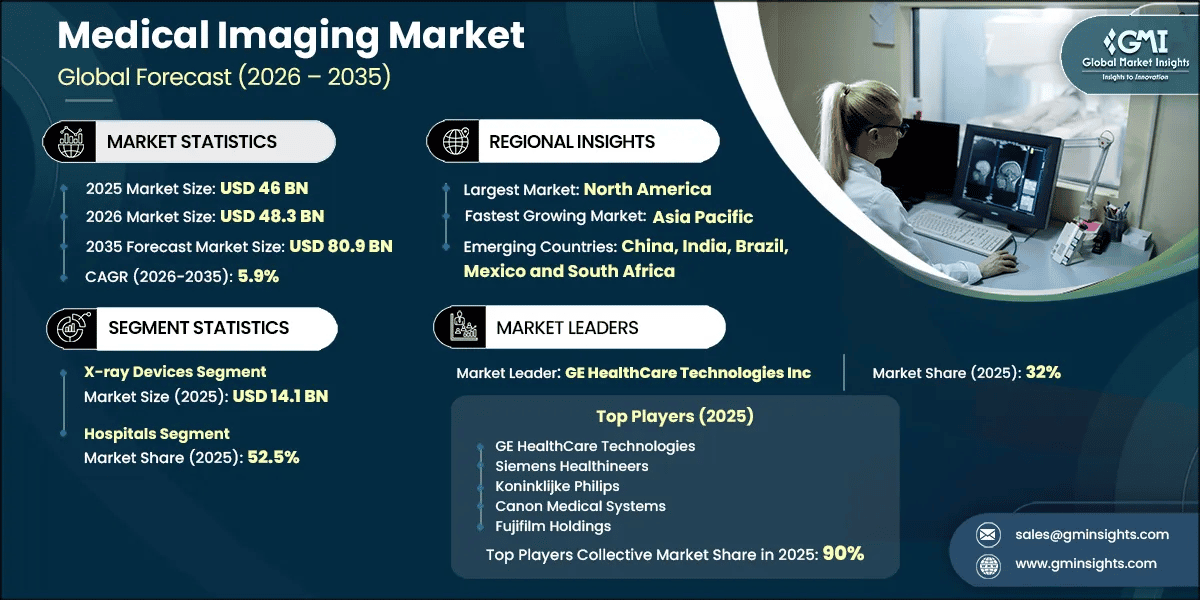
6. Regulatory Landscape
6.1 The Wellness/Body-Composition Line Versus Diagnostic Claims
Midjourney's regulatory strategy is to launch as a general-wellness product, offering "detailed body composition maps" rather than diagnosis, and to "submit regular test results to the FDA for increased capabilities" over time [1][2]. This exploits the FDA's "General Wellness: Policy for Low-Risk Devices" guidance, reissued in final form on January 6, 2026, under which products intended solely to promote a healthy lifestyle and that present low risk fall outside active device regulation or qualify for enforcement discretion [43][44]. The critical constraints are two: the product must be intended only for general wellness (no disease-specific diagnosis, treatment, or mitigation claims), and it must be low risk, meaning non-invasive and not dependent on high-risk technologies [44][45].
There are two material vulnerabilities. First, the FDA's guidance is explicit that even indirect or implied disease claims can move a product out of the wellness category and into device regulation; a body-composition map marketed with language implying early cancer detection would cross that line [44][45]. Second, the "low risk" test turns on whether the technology poses a safety risk absent regulatory controls; a water-immersion system delivering substantial acoustic energy across the whole body is not self-evidently "low risk" in the way a step-counter is, and the FDA could reasonably scrutinize that classification. If Midjourney pursues any diagnostic capability, it must enter the device pathways: 510(k) (for a device substantially equivalent to a predicate), De Novo (for a novel low-to-moderate-risk device with no predicate), or PMA (the most stringent, used for high-risk devices such as Delphinus's SoftVue), plus software-as-a-medical-device (SaMD) considerations for the AI segmentation and any future diagnostic algorithms [14][43]. There is genuine "off-label drift" risk: once people receive images, them and their physicians may use them diagnostically regardless of the wellness label.
 Kyle A. Dolinsky and Karla Ballesteros and Kaitlin J. Clemens and Samarth Parikh
6.2 Screening of Asymptomatic Individuals
The deepest non-technical problem is the evidence base for screening healthy people. Professional bodies are consistently skeptical. The American College of Radiology "does not believe there is sufficient evidence to justify recommending total body screening for patients with no clinical symptoms, risk factors or a family history," and states there is "no documented evidence that total body screening is cost-efficient or effective in prolonging life" [46][47]. The Royal Australian and New Zealand College of Radiologists likewise does not recommend whole-body MRI screening in asymptomatic patients without a prior malignancy or cancer-predisposition syndrome [48].
The harms are well documented. A review found that roughly 95% of asymptomatic patients had at least one "abnormal finding" on whole-body MRI, but about 91% of those findings were not clinically relevant, generating cascades of follow-up testing, biopsies, cost, and anxiety [49]. The overdiagnosis problem is generalizable: per the USPSTF lung-cancer screening recommendation, "a modeling study performed for the USPSTF estimated that 10% to 12% of screen-detected cancer cases are overdiagnosed, that is, they would not have been detected in the patient's lifetime without screening," and the Task Force has found net harm from screening for thyroid cancer in asymptomatic people because of overdiagnosis and overtreatment [50][51]. The core epistemic point, made by a radiologist quoted in independent commentary, is that "detecting an abnormality indicating cancer earlier necessarily leads to better outcomes" is a hypothesis that must be tested per cancer type, not an axiom [23]. A faster, cheaper, radiation-free scanner that finds more incidental abnormalities in more people could increase net harm rather than reduce it, unless paired with evidence that detection changes outcomes. This is the single largest threat to Midjourney's "avoid 30% of deaths and 50% of costs" thesis, which no evidence supports and which inverts the actual screening literature [2][23][49].
 Laurie Fronek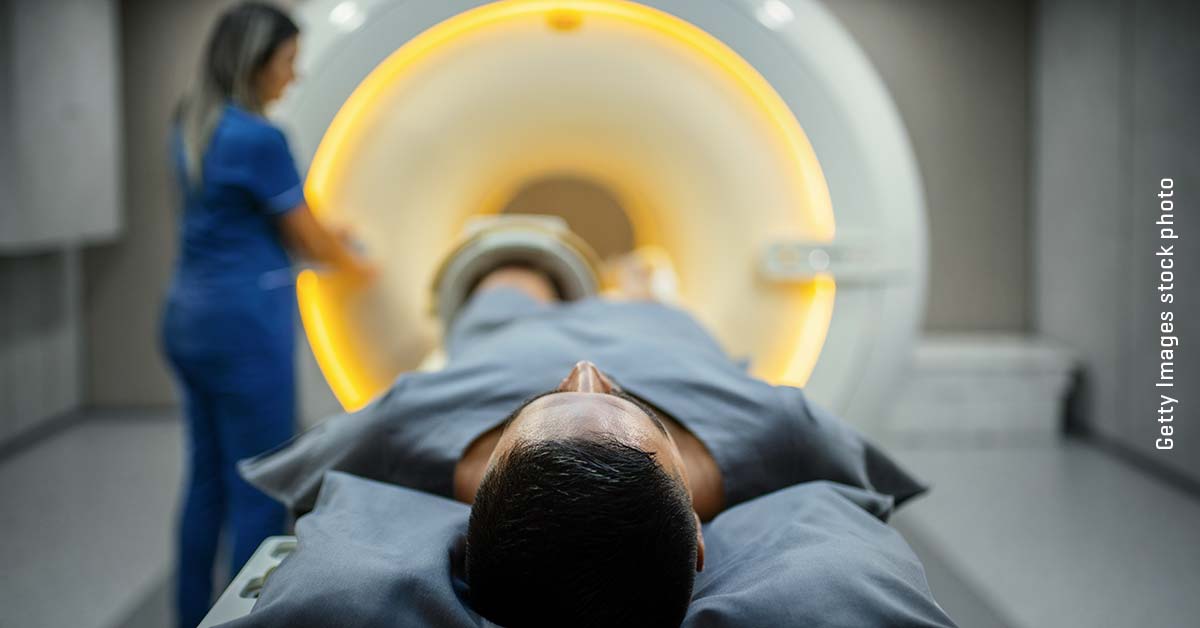
7. Geopolitical and Strategic Dimensions
7.1 Population-Scale Body-Imaging Data Governance
A whole-body scan is among the most sensitive biometric datasets it is possible to produce, revealing organ size and placement, body composition, bone density, and physical anomalies. Midjourney's announcement said almost nothing about data retention, access controls, training-data use, or deletion rights, which privacy reviewers flagged as a serious gap [21][52]. If Midjourney's stated ambition (a billion scans per month) were ever realized, the resulting repository would be a uniquely sensitive population-scale biometric database held by a private company with no outside investors and no track record in regulated health-data stewardship. Under the FDA's wellness framing, FDA cybersecurity device rules may not apply, but other privacy and security obligations (for example, state biometric-privacy laws and general consumer-protection law) would [44]. This is a latent governance risk that would grow with scale.
7.2 Supply and Industrial Considerations
Ultrasound-on-chip relies on semiconductor (CMOS/MEMS) fabrication, tying the program to foundry capacity and the broader semiconductor supply chain [27][30]. This is a modest strategic dependency rather than a geopolitical flashpoint: the volumes implied even by aggressive scaling are small relative to mainstream semiconductor demand, and CMUT-on-CMOS uses relatively mature process nodes. The dependency is worth noting but does not rise to the level of a strategic-materials or export-control concern on current evidence.
 John D
8. Risk Matrix
The following risks are assessed by likelihood and impact, with mitigations.
Technical/physical feasibility (whole-body diagnostic quality). Likelihood: High. Impact: High. The physics (resolution-versus-penetration tradeoff; bone/air reflection) makes diagnostic-quality whole-body ultrasound tomography an unsolved problem, and no peer-reviewed evidence supports the resolution claims [5][6][18]. Mitigation: confine claims to body composition where ultrasound is adequate; publish peer-reviewed validation; advance Gen3 custom silicon and reconstruction compute before making diagnostic claims.
Regulatory clearance and off-label diagnostic drift. Likelihood: Medium-High. Impact: High. Launching under wellness enforcement discretion is viable, but any diagnostic claim triggers 510(k)/De Novo/PMA, and implied disease claims can void the wellness classification; users may use wellness scans diagnostically regardless [43][44][45]. Mitigation: rigorous claims discipline; staged FDA submissions; clear consumer disclosures.
Clinical harm from overdiagnosis and incidental findings. Likelihood: High (if scaled). Impact: Medium-High. Screening asymptomatic people generates large volumes of clinically irrelevant findings, driving cost, procedures, and anxiety, with professional societies opposed [46][48][49]. Mitigation: longitudinal (baseline-and-change) protocols; physician integration; restraint on screening claims.
Single-customer concentration for Butterfly. Likelihood: Medium. Impact: Medium. Midjourney drove the 147% Embedded revenue jump and a greater-than-10% customer concentration in Q1 2026; the absolute contracted value is modest, but the stock's repriced valuation embeds optionality on a single, unproven partner program [10][31][34]. Mitigation: Butterfly's diversified Embedded pipeline (reported ninth partner signed by April 2026 and 30-plus engaged) and growing core POCUS business [31][34].
First-time-hardware execution risk for Midjourney. Likelihood: High. Impact: Medium-High. Midjourney has never shipped a physical product or operated a medical device; the prototype is at ~20 minutes per scan with ~12 people scanned [12][21]. Mitigation: experienced hires (ex-Apple Vision Pro hardware lead; PhD medical head) [3][12]; partnership with an established chip maker.
 Ana Maria Constantin
IP litigation bearing on capital and focus. Likelihood: Medium. Impact: Medium. Disney, Universal (suit filed June 11, 2025), and Warner Bros. Discovery (suit filed September 4-5, 2025 in the Central District of California, No. 2:25-cv-08376) have sued Midjourney for copyright infringement; Warner Bros. Discovery seeks "statutory damages of up to $150,000 per infringed work by virtue of Midjourney's willful infringement," plus disgorgement of profits and an injunction, and the related artist-led Andersen v. Stability AI case is set for trial in 2027 [53][54][55]. Because Midjourney funds the capital-intensive medical program from its own subscription cash flows, an adverse judgment or settlement could constrain medical-program funding and management attention. Mitigation: Midjourney's fair-use defense and DMCA arguments; segregation of medical-program funding; the disclosed scanner program is small relative to the subscription business.
 Jeremy Fuster
Hype-unwind in BFLY equity. Likelihood: Medium-High. Impact: Medium. The repricing rests on sentiment and optionality, not contracted fundamentals; negative news (FDA friction, weak clinical data, Midjourney delays, or a litigation-driven Midjourney cash squeeze) could reverse it [8][35][36]. Mitigation (for investors): position-sizing, valuation discipline, monitoring the catalysts in Section 9.
9. Strategic Recommendations
9.1 For Investors and Capital Allocators
Treat BFLY as a high-volatility, sentiment-driven optionality play on the Embedded business, not as a fundamentals-justified position at current multiples. The base business (about $103 million trailing revenue, ~69% gross margin, narrowing but persistent losses, $138 million cash) is a credible point-of-care-ultrasound and chip-licensing growth story; the Midjourney optionality is a call option layered on top, priced richly at roughly 18.5x sales [10][31][35]. Concrete steps: (1) Size any position to survive a full retracement of the June 2026 gain, since the disclosed components aggregating to up to ~$74 million over five years do not underwrite the market-cap increase [28][29]. (2) Monitor specific catalysts that would change the thesis: peer-reviewed validation of the scanner's diagnostic accuracy (bullish), an FDA submission or clearance for any Midjourney-related indication (bullish), Embedded customer diversification beyond Midjourney (de-risks concentration), and conversely any Midjourney delay, the disclosure of the full agreement's field-of-use and revenue-share terms in Butterfly's FY2025 10-K, or adverse developments in Midjourney's copyright litigation (bearish) [28][53]. (3) The threshold to upgrade from speculative to investable: evidence that Embedded revenue is both growing and diversified, plus a credible path to adjusted-EBITDA breakeven (guided loss of $21-25 million for 2026) [31][33]. Do not underwrite the 50,000-scanner or billion-scan claims in any model; they are aspirational [1][2].
9.2 For Healthcare-Technology Strategists and Imaging Technologists
Take the modality seriously but discount the marketing. The fair near-term application is body composition (fat, muscle, organ volumetrics), where ultrasound is physically adequate and the wellness framing is honest; the unrealistic near-term claim is whole-body diagnostic parity with or superiority to MRI, which the physics and the absence of evidence contradict [5][9][22]. Concrete steps: (1) Benchmark the scanner against the right comparator, which is DEXA and existing body-composition tools and the breast-USCT precedents (SoftVue, QT), not against whole-body MRI [14][16]. (2) Watch the Gen3 custom-silicon milestone (2028) as the real technical inflection; the 40-module Gen1 is a proof of concept, and the reconstruction-compute and bone/air-artifact problems, not chip count alone, are the binding constraints [1][5][8]. (3) For incumbents (GE HealthCare, Siemens Healthineers, Philips), the rational posture is option-preserving: monitor for clinical evidence, protect the diagnostic franchise on evidence and reimbursement, and consider partnership or acquisition only if the modality demonstrates validated clinical utility [41][42]. (4) For any organization tempted to offer the scans, build the patient pathway first: how incidental findings are adjudicated, who reads the images, and how downstream cost and anxiety are managed [49].
9.3 For Policy and Regulatory Observers
The case is a live test of the wellness/diagnostic boundary at population scale. Concrete steps: (1) Scrutinize the "low risk" classification of a whole-body acoustic-energy water-immersion system, which is not obviously analogous to the wearables the wellness guidance was written for [44][45]. (2) Anticipate off-label diagnostic use and the incidental-findings burden on the broader health system and consider guidance on consumer disclosures and on the use of generative AI in image formation versus interpretation [21][23]. (3) Treat population-scale biometric-imaging data governance (retention, consent, secondary use, training-data use) as a gap requiring attention before, not after, scale [21][52].
Caveats
This report relies substantially on launch-event reporting and company statements dated 17-18 June 2026, which are explicitly treated as asserted, launch-marketing-provenance claims unless independently corroborated. Several key operational figures (per-scan price, scanner cost, spa unit economics, Gen3 module counts) are undisclosed and are flagged as such. The most consequential performance claims (60-second scan, fraction-of-a-millimeter resolution, MRI superiority, 50,000 scanners, a billion scans per month, and the "30% of deaths / 50% of costs" figure) are aspirational developer claims and they should not be relied upon. Financial figures for Butterfly are as of the quarter ended March 31, 2026 and the June 2026 trading dates noted; market data are time-sensitive and will change. The "up to $74 million" deal value is an aggregation of disclosed components, not a single verbatim figure in the operative legal disclosure of the 8-K.
References
[1] Midjourney. 2026. "A New Era of Midjourney." Midjourney Medical blog post, June.
[2] Midjourney Medical. 2026. Announcement of Midjourney Medical and The Midjourney Scanner, June 18.
[3] Moon, Mariella. 2026. "Midjourney, the AI Image Generator, Is Developing a Full-Body Ultrasonic Scanner." Engadget, June.
[4] The Next Web. 2026. "Midjourney's Full-Body Scanner: Big Claims, No Track Record." June.
[5] Wiskin, James, et al. 2020. "Full Wave 3D Inverse Scattering Transmission Ultrasound Tomography in the Presence of High Contrast." Scientific Reports 10.
[6] National Center for Biotechnology Information. "Ultrasound." Medical Imaging Systems, NCBI Bookshelf NBK546144.
[7] "A Forward Model Incorporating Elevation-Focused Transducer Properties for 3-D Full-Waveform Inversion in Ultrasound Computed Tomography." PMC10775680.
[8] Butterfly Network, Inc. 2026. "Butterfly Network Provides Commentary on Midjourney Medical's Full Body Ultrasound Scanner Announcement." Business Wire / Investor Relations, June 18.
[9] Stempniak, Marty. 2026. "AI Lab Midjourney Investing Over $74M to Launch Whole-Body Ultrasound Screening Business." Radiology Business, June.
[10] PitchBook; StockAnalysis; CompaniesMarketCap. 2026. Butterfly Network market and revenue data, June.
[11] PYMNTS. 2026. "Midjourney Enters Medical Imaging With 60-Second Full-Body Scan." June.
[12] Technology.org. 2026. "Midjourney Builds a 60-Second Full-Body Scanner and Plans Spas to House It." June 22.
[13] explainx.ai. 2026. "Midjourney Medical: What Experts, Radiologists, and the Internet Actually Think." June.
[14] Imaging Technology News. 2021. "Delphinus Receives FDA Approval for Its SoftVue 3D Whole Breast Ultrasound Tomography System." October.
[15] Imaging Technology News. 2026. "Study Demonstrates Superiority of Ultrasound Tomography System in Conjunction with Mammography for Breast Cancer Screening in Women with Dense Breasts."
[16] Medical Device Network. "Delphinus' SoftVue 3D Whole Breast Ultrasound Tomography System, US."
[17] Echocardiografie.nl. "Basics of Ultrasound."
[18] ScienceDirect Topics, "Medical Ultrasound: An Overview"; USPTO patent attenuation-coefficient compilation.
[19] Neuraxiom, "Ultrasound Physics"; Radiology Key, "Ultrasound Imaging."
[20] System Plus Consulting (Yole Group). 2020. "Butterfly Network iQ CMUT Sensor: Reverse Costing Structure, Process & Cost Report."
[21] Latent Space / AINews; explainx.ai. 2026. Reporting on prototype scan time, number scanned, and team size, June.
[22] Midjourney Medical. 2026. "Scan Gallery."
[23] Astral Codex Ten. 2026. "Preliminary Thoughts on the Midjourney Scanner." June.
[24] PYMNTS. 2026. Reporting on the 25,000-square-foot San Francisco spa, June.
[25] iatroX. 2026. "Midjourney Medical Explained: What Is the 60-Second Full-Body Ultrasound Scanner?" June.
[26] Sahm Capital; Benzinga. 2026. "Butterfly Network Climbs on Midjourney Hype Despite FDA, Reimbursement Questions." June 18.
[27] Butterfly Network. "Ultrasound-on-Chip Technology."
[28] Butterfly Network, Inc. 2025. Form 8-K (Items 1.01, 9.01), event dated November 17, 2025, filed November 18, 2025. SEC EDGAR, Accession 0001804176-25-000015.
[29] Butterfly Network, Inc. 2026. Q1 2026 earnings press release, Exhibit 99.1 to Form 8-K, filed April 30, 2026.
[30] Medical Design and Outsourcing. "How Ultrasound-on-Chip Miniaturizes Devices and Expands Access."
[31] Butterfly Network, Inc. 2026. Q1 2026 earnings call and transcript, April 30.
[32] StockTitan; TradingView. 2026. Butterfly Network Q1 2026 results summaries.
[33] Butterfly Network, Inc. 2026. Form 8-K, Q1 2026 results and guidance, April 30.
[34] Butterfly Network, Inc. 2026. Form 10-Q for quarter ended March 31, 2026, filed April 30, 2026. SEC EDGAR, Accession 0001804176-26-000016.
[35] Blockonomi; CoinCentral; IBTimes; RTTNews; TS2. 2026. Reporting on BFLY's June 18, 2026 share-price move, 52-week high of $8.01, and ~18.5x price-to-sales.
[36] Simply Wall St. 2026. "Butterfly Network (NYSE:BFLY) Stock Analysis."
[37] Morningstar. 2026. Butterfly Network quote and price/sales data, June 20.
[38] BodySpec. 2026. "Prenuvo MRI: Cost, Benefits, Risks & Comparison."
[39] Prenuvo. 2026. Pricing and membership pages.
[40] Radiology Today Magazine. 2024. "Looking for Trouble"; CNBC. 2025. Reporting on Function Health's acquisition and repricing of Ezra, May.
[41] Global Market Insights. 2026. "Medical Imaging Market Size, Trends & Forecast 2026-2035."
[42] MarketsandMarkets; Grand View Research. Diagnostic imaging market share analyses.
[43] U.S. Food and Drug Administration. 2026. "General Wellness: Policy for Low Risk Devices." Final guidance, reissued January 6.
[44] Troutman Pepper Locke. 2026. "FDA's 2026 Guidance on General Wellness Devices: Policy for Low-Risk Devices."
[45] Kendall PC. 2026. "FDA's 2026 Guidance on General Wellness Devices: Key Compliance and Regulatory Insights for Digital Health Companies."
[46] American College of Radiology. Position statement on full-body CT screening (reproduced in Aetna Clinical Policy Bulletin 0603).
[47] MDLinx. "The Use and Misuse of Full-Body MRI Scans for Tumor Detection."
[48] Royal Australian and New Zealand College of Radiologists. 2024. "Whole Body MRI Screening in Low-Risk Patients Position Statement."
[49] Fred Hutchinson Cancer Center. 2025. "Pricey Whole-Body MRIs Don't Add Up."
[50] U.S. Preventive Services Task Force. 2013/2021. "Screening for Lung Cancer: Recommendation Statement." Annals of Internal Medicine, M13-2771.
[51] U.S. Preventive Services Task Force. 2017. "Screening for Thyroid Cancer: Recommendation Statement."
[52] Medical Design and Outsourcing. 2026. "What Butterfly's Saying About Midjourney's Ultrasonic CT Plans"; explainx.ai on data governance.
[53] Hollywood Reporter; Deadline; Variety. 2025. Warner Bros. Discovery v. Midjourney copyright complaint coverage, September.
[54] TheWrap. 2025. "Warner Bros. Sues Midjourney Over AI Copyright Infringement, Joining Disney and Universal."
[55] Mogin Law LLP; McKool Smith; IPWatchdog; Engadget. 2025. AI infringement case updates on Disney/Universal/Warner Bros. v. Midjourney.