Permaculture for Urban Food Production: Growing Potatoes in Small Balcony Containers
Learn how a simple balcony potato tub uses permaculture principles for small-scale urban food production in apartments.

How to Grow Potatoes on an Apartment Balcony Using Small-Scale Permaculture
Permaculture Techniques for Small-Scale Urban Food Production
Growing Food Where Space Is Limited
Urban food production does not have to begin with farmland, a greenhouse, or a suburban backyard. It can begin with a balcony, a plastic mixing tub, a few rocks, compost, soil, and a crop that tolerates container growing. That is the practical value of small-scale permaculture: it turns overlooked space into productive space without requiring industrial infrastructure.
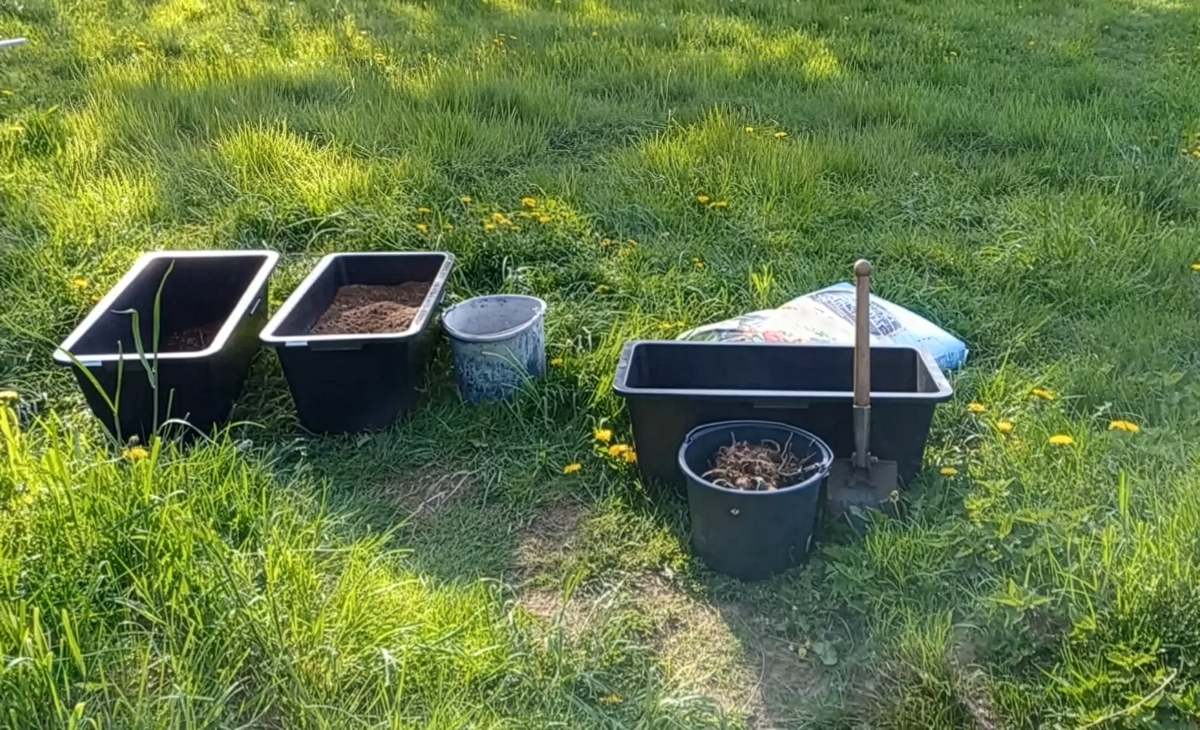
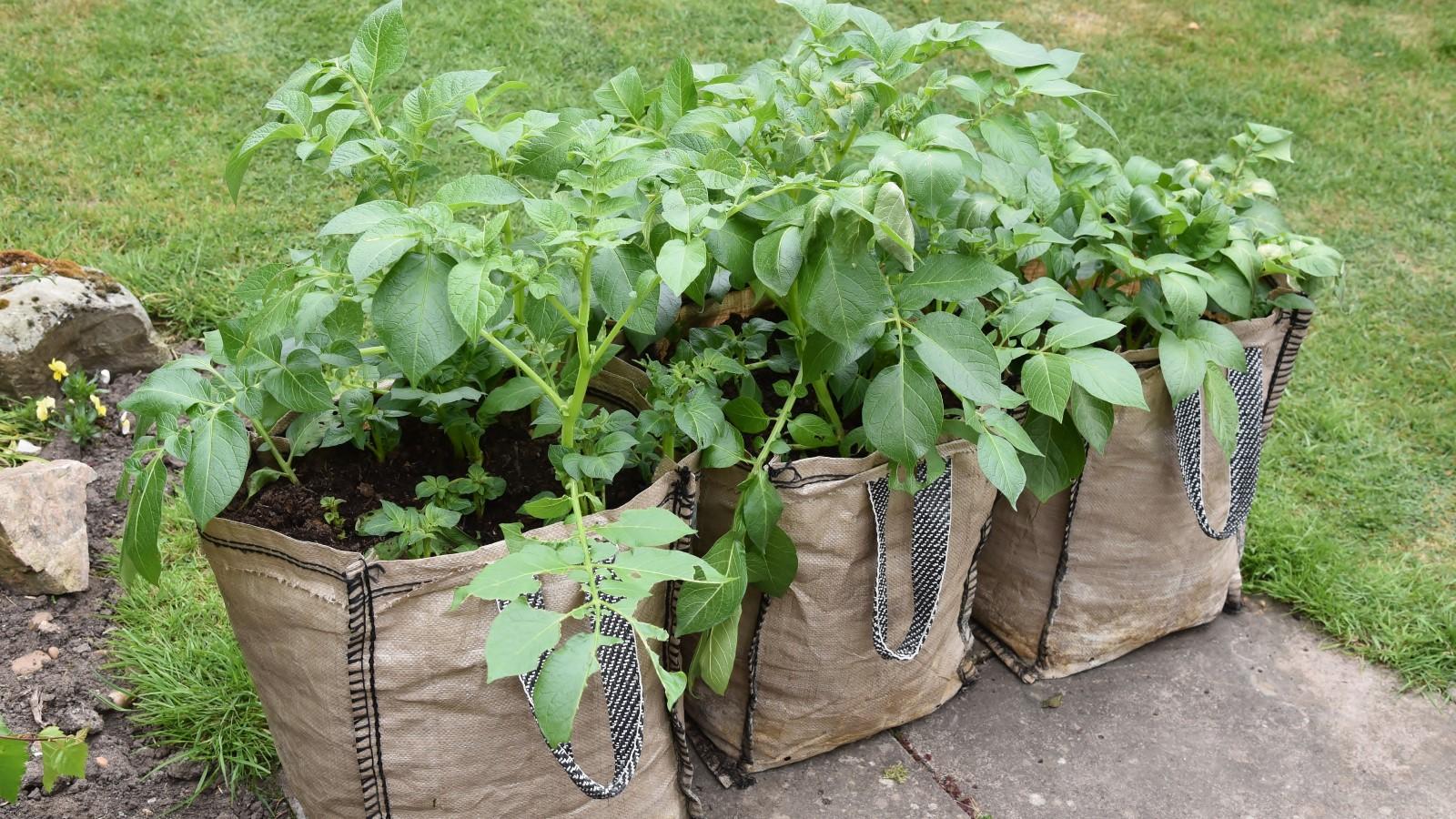
The example shown in this project is intentionally simple. A plastic mixing tub is placed on an apartment balcony. Rocks are added to the bottom to improve drainage and create separation between saturated water and the main growing medium. Soil and compost are added above that layer. Seed potatoes or potato pieces are planted into the tub, and the container becomes a compact balcony potato bed.
This is not a complete replacement for rural agriculture, but rather an independent option for growing at home without land. A balcony potato tub will not feed an entire household year-round. Its value is in showing that food production can be modular, local, low-cost, and accessible. For apartment dwellers, students, renters, urban families, and people without land access, a container garden can become a small but meaningful point of contact with food production.
Permaculture is often associated with food forests, homesteads, swales, ponds, orchards, and broad-acre ecological design. But the core logic also applies at small scale: observe the site, use available resources, stack functions, reduce waste, build soil, harvest water carefully, and design systems that are easier to maintain over time. In a city, this may mean growing potatoes in a tub, herbs on a windowsill, lettuce in a recycled container, or strawberries in a vertical planter.
 Extension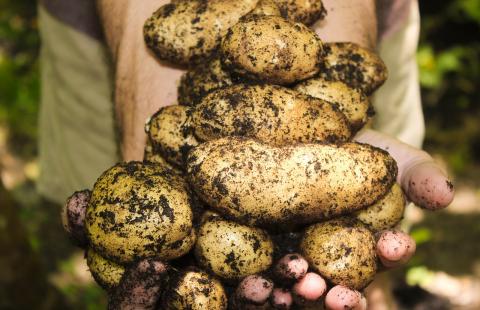
Why Potatoes Work Well in Containers
Potatoes are a strong candidate for balcony-scale production because they grow underground, tolerate container systems, and offer a visible lesson in soil, moisture, nutrition, and plant development. University of New Hampshire notes that potatoes can be grown in containers when given adequate sun, proper container selection, and sufficient water, though container yields may be lower than in open ground.
The goal is not to exaggerate the yield, rather it is to demonstrate a practical urban growing method with clear constraints. A container potato system needs sufficient sunlight, steady moisture, loose growing medium, drainage, and enough depth for tuber development. It also needs realistic expectations: the harvest may be modest, but the learning value is high.
In small-space gardening, potatoes offer several advantages. They are familiar, calorie-dense compared with many herbs and leafy greens, and relatively forgiving. They also visually reward the grower through a simple cycle: planting, sprouting, leaf growth, hilling or adding more medium, flowering or canopy maturation, dieback, and harvest.
A balcony potato tub therefore functions as both food production and education. It teaches the operator how water behaves in a container, how compost changes soil texture, how plants respond to light, and how living systems require observation rather than rigid control.
Jerusalem artichoke can work as a potato alternative because it produces edible tubers, tolerates poor soils, and grows vigorously with relatively low maintenance. In containers or balcony systems, it should be managed carefully because the plant can grow tall and spread aggressively if planted directly in open soil.
The Plastic Mixing Tub as a Micro-Growing System
A plastic mixing tub is not a glamorous object. That is part of the appeal. It is cheap, widely available, durable, and large enough to hold a useful volume of soil. In an urban permaculture context, the tub becomes a miniature growing bed.
The basic system includes four functional layers.
The first layer is the container itself. It defines the growing area, keeps the system portable, and allows food production in a place where there is no exposed soil. For renters, this is important. A tub can be moved, cleaned, modified, or removed without permanently altering the property.
The second layer is drainage. The rocks at the bottom create a lower zone where excess water can collect temporarily instead of saturating the main soil mass. However, drainage holes are still important. Container systems should not become sealed bathtubs unless they are intentionally designed as self-watering planters. University of Maryland emphasizes that containers need adequate holes or slits so excess water can drain, preventing root drowning and rot.

The third layer is soil and compost. Compost adds organic matter, improves nutrient availability, and helps support soil structure. Potatoes prefer a loose medium that allows tubers to expand. A heavy, compacted soil can hold too much water and restrict growth. A tub system should generally use a blend that balances moisture retention with drainage.
The fourth layer is the crop itself. Potatoes are planted below the surface and then covered. As the plant grows, additional soil or compost can be added around the stems, leaving some leaves exposed. This practice, often called hilling, encourages more buried stem area and protects developing tubers from sunlight.
Permaculture Principles at Apartment Scale
The balcony potato tub may look simple, but it reflects several permaculture principles.
The first is use small and slow solutions. Rather than waiting for land ownership or a full garden buildout, the grower starts with one manageable container. A single tub is easy to monitor. It teaches lessons without requiring a major financial commitment.
The second is produce no waste. Kitchen scraps cannot always be added directly to a balcony potato container, especially in apartments where odor and pests are concerns. But finished compost can return organic matter to food production. Leaves, spent potting mix, worm castings, and composted material can become part of a small urban nutrient cycle.
The third is observe and interact. A balcony is not a generic growing site. It has its own microclimate. It may be windy, shaded, overheated by concrete, exposed to reflected sunlight, or protected by building walls. A grower must observe how quickly the soil dries, how much sun reaches the tub, and whether the plants show stress.
The fourth is stack functions. The tub produces potatoes, but it also stores organic matter, captures attention, improves household food awareness, and can become part of a broader balcony system. A potato tub might sit near herb pots, pollinator plants, a small composting system, or a rainwater collection method where allowed.
The fifth is design from patterns to details. The general pattern is clear: urban residents often lack land but may have small, underused surfaces. The detail is the specific container, crop, soil mix, watering method, and balcony orientation.
Practical Design Considerations
A balcony garden must be designed with constraints in mind. The first constraint is weight. Wet soil is heavy. A large plastic tub filled with soil, compost, water, and rocks can weigh far more than expected. Before scaling up, apartment growers should consider balcony load limits, building rules, and safe placement. A modest container may be wiser than an oversized one.
The second constraint is drainage. Water must have somewhere to go. If drainage holes allow water to run onto a downstairs neighbor’s balcony, the design may create conflict. A tray, riser, controlled watering schedule, or self-watering design may be needed. Container gardening succeeds when water is managed deliberately.
The third constraint is sunlight. Potatoes generally need strong light for good production. UNH Extension states that container potatoes require a location receiving at least six to eight hours of direct sunlight per day. A shaded balcony may still grow foliage, but tuber production may be limited.
The fourth constraint is temperature. Balconies can become hotter than ground-level gardens because concrete, brick, metal railings, and glass reflect heat. A tub may dry out faster than expected. In summer, consistent watering becomes critical.
The fifth constraint is pests and sanitation. Urban gardens may attract insects, rodents, or birds if poorly managed. Finished compost is usually preferable to raw food waste in exposed balcony containers. Good sanitation makes the system easier to live with.
A Simple Balcony Potato Method
Start with a sturdy plastic mixing tub. Add drainage holes if the tub does not already have them. Place the tub where it can receive strong sunlight and where drainage will not damage the building or disturb neighbors. Add a layer of rocks at the bottom to help create drainage space, then add a loose mixture of soil and compost.
Plant seed potatoes or sprouted potato pieces a few inches below the surface. Cover them with soil and water gently. The medium should be moist but not waterlogged. As the plants grow, add more soil or compost around the stems, leaving the upper leaves exposed. Continue this process until the tub is filled close to the top.
Water consistently. Container potatoes can dry out faster than potatoes grown in the ground. At the same time, they should not sit in stagnant water. The system needs balance: enough moisture for tuber growth, enough drainage to prevent rot.
When the plants mature and begin to yellow or die back, the grower can stop watering and allow the system to dry somewhat before harvest. Harvesting is one of the advantages of container potatoes. Instead of digging through a garden bed, the grower can tip or sift through the tub and collect the potatoes.
Why This Matters for Urban Food Resilience
Small-scale balcony growing should not be oversold as total self-sufficiency. A few containers will not replace the food system. But they can increase household resilience in several smaller, practical ways.
First, they create experience. Many people are separated from the mechanics of food production. A potato tub teaches timing, soil, water, plant health, and harvest cycles.
Second, they reduce dependence at the margin. Even a small harvest provides food that did not need to be shipped, purchased, packaged, or stored through a long supply chain.
Third, they make cities more productive. Urban agriculture can include community gardens, rooftop systems, indoor farms, school gardens, balcony containers, and small commercial operations. USDA recognizes urban agriculture and innovative production as areas of institutional support, including grants and cooperative agreements for urban, indoor, and emerging production systems.
Fourth, they change household behavior. A person who grows even a small amount of food may become more attentive to food waste, composting, seasonality, water use, and crop quality.
Fifth, they can be replicated. A plastic tub potato bed is modular. One person can test one tub. A family can test several. A community group can demonstrate the same method in a courtyard, rooftop, school, or senior housing complex.
Limitations and Responsible Framing
The responsible way to present this technique is as an accessible food-production method, not a miracle solution. It requires sunlight, water, attention, safe drainage, and appropriate expectations. The yield may vary substantially based on potato variety, container size, soil fertility, temperature, and grower consistency.
There are also apartment-specific concerns. Some leases restrict balcony modifications or plant containers. Some balconies may not safely support heavy loads. Some buildings prohibit water runoff. Some urban environments may expose plants to pollution, extreme heat, or wind. A good article should encourage readers to adapt the method to their actual conditions rather than copying it blindly.
This is where permaculture’s emphasis on observation is useful. The first season does not need to be perfect. The grower can treat it as a field trial. How much sun reaches the balcony? Did the soil dry too quickly? Did the rocks help drainage? Was the tub too shallow? Did the compost mix hold too much water? Did the plant produce well? The second version can be better than the first.
Conclusion: Small Systems as Practical Food Infrastructure
The plastic mixing tub potato system is powerful because it is simple. It does not require a farm, specialized equipment, or a major budget. It takes a common object and turns it into a small productive system.
That is the deeper lesson of permaculture for small-scale urban food production. Productive landscapes do not always begin as landscapes. Sometimes they begin as containers. A balcony can become a micro-farm. Compost can become fertility. Drainage rocks can become part of water management. A potato can become a teaching tool.
For people living in apartments or dense urban areas, the goal is not to imitate rural farming at a tiny scale. The goal is to design within constraints. A plastic tub on a balcony is a demonstration of how food production can be decentralized, low-cost, modular, and locally adapted.
In that sense, the balcony potato tub is more than a gardening trick. It is a practical entry point into urban permaculture: start small, observe carefully, use available materials, build soil, manage water, and produce something real in the space you already have.