Sm₂Co₁₇ Sintered Magnet Supply Chain 2026: China Export Controls, Lynas, MP Materials, DFARS 252.225-7052, and Cobalt Repricing
SmCo magnets run F-35 hardware, Tomahawk seekers, and satellite pointing systems. No substitute exists above 200°C. China controls almost all supply.

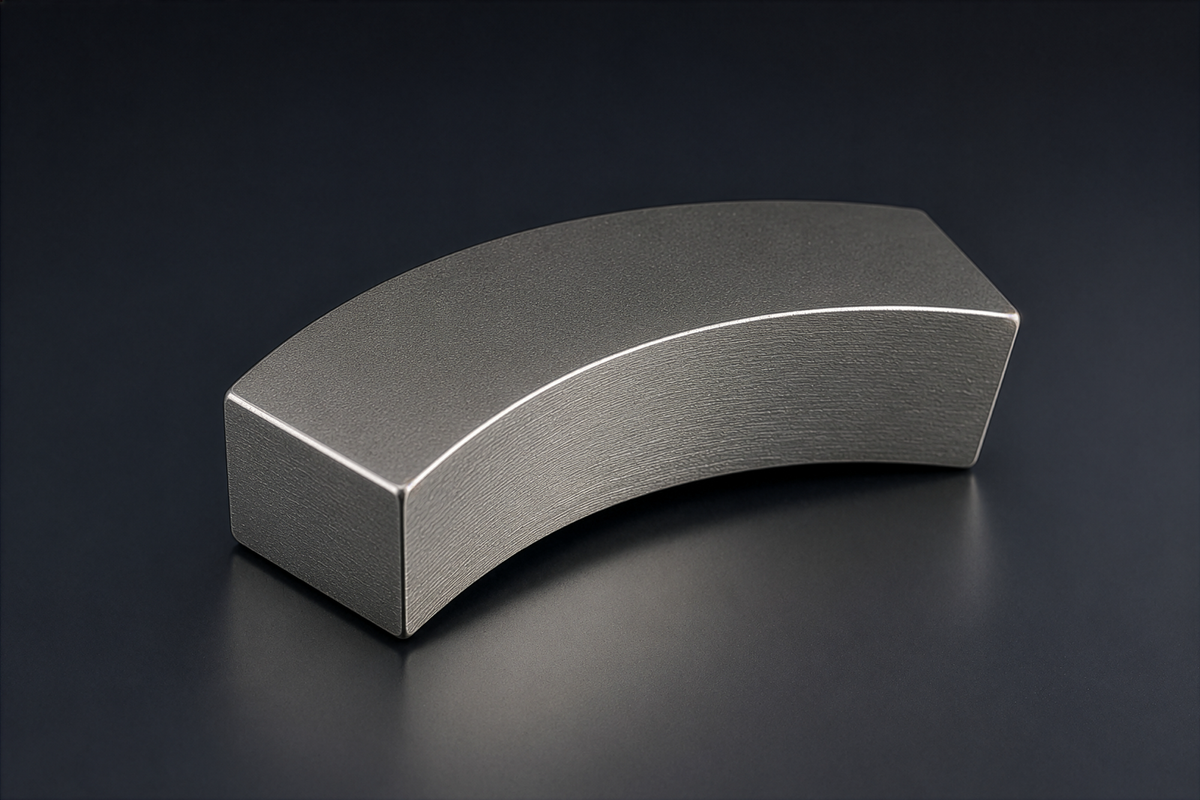
Samarium-Cobalt Magnets in 2026: China Controls 90 to 98 Percent of Supply and the F-35 Depends on Them
1. Summary
1.1 Key findings
Samarium–cobalt (Sm₂Co₁₇, or "2:17-type") sintered magnets occupy a strategically disproportionate position in the global advanced-materials economy. Although the global SmCo magnets market is small in dollar terms, estimated at approximately USD 590.9 million in 2024 by IMARC Group with secondary market-research forecasts pointing to USD 750–850 million by 2033 [37], its end-use profile is concentrated in irreplaceable defense, aerospace, downhole, and high-temperature industrial applications [37][20][21]. In late 2025 and into 2026, the U.S. Geological Survey's revised criticality methodology ranked samarium as the single highest-risk mineral commodity for the U.S. economy, with an estimated USD 4.5 billion potential GDP impact under a complete supply disruption scenario, driven principally by exposure in guided missile and space systems [3].
The supply chain is heavily concentrated. China controls an estimated 85 to 90 percent of global rare-earth refining capacity and an estimated 90 to 98 percent of global SmCo magnet manufacturing capacity, depending on the source consulted [5][6]. China's April 4, 2025 export control regime (Ministry of Commerce Announcement No. 18) placed samarium and samarium containing alloys, including samarium–cobalt alloys, under a national-security-based licensing requirement, and the October 9, 2025 Announcement No. 61 added a "foreign direct product" rule that extends Chinese jurisdiction to magnets produced offshore with Chinese-origin material or technology [4][5][6]. The "truce" reached at Busan on October 30, 2025 suspended only the October expansion; the April baseline remains in force as of May 2026 [5].
Western diversification efforts have advanced but remain immature. As of early 2026, Lynas Rare Earths produced its first separated samarium oxide at its Malaysian plant on March 19, 2026, becoming the only commercial producer of separated samarium oxide outside China [16]. In the United States, Electron Energy Corporation (operating under the Permag group) remains the only vertically integrated U.S. producer of Sm₂Co₁₇ sintered magnets and announced on August 22, 2025 a multi-million-dollar capital plan at its Lancaster, Pennsylvania facility that "began several months ago and more than doubles its production capacity" [19]. MP Materials' July 2025 public-private partnership with the U.S. Department of War commits to expanding the Independence facility to approximately 3,000 metric tons (mt) of magnet capacity annually and constructing a USD 1.25 billion "10X" facility in Northlake, Texas, targeting commissioning in 2028, though MP's near-term product mix is NdFeB rather than SmCo [17][18]. Cobalt input costs have repriced sharply: the LME cobalt 3-month price stood at roughly USD 56,290 per tonne on May 18, 2026, more than 67 percent above year-earlier levels, driven by the Democratic Republic of the Congo's (DRC) export quota regime that caps shipments at 96,600 mt annually for 2026 and 2027 [11][12].
1.2 Strategic implications by audience
For defense and national-security policymakers, Sm₂Co₁₇ magnets represent a "small-tonnage, mission-critical" exposure that cannot be resolved within the planning horizon of conventional industrial policy. Substitution into NdFeB grades is generally infeasible above 200 °C, and qualification cycles for aerospace and missile applications extend three to seven years [20][21]. The Department of Defense's accelerated stockpiling, illustrated by the Defense Logistics Agency's FY2025 Annual Materials Plan ceiling of 60 mt of samarium–cobalt alloy [1][28], is a stabilization measure rather than a substitute for domestic productive capacity.
For institutional investors and corporate strategists, the SmCo vertical is too small to function as a mass-investment thesis on its own, but it offers a leveraged play on rare-earth and cobalt criticality through diversified platforms such as MP Materials, Lynas, Vacuumschmelze (via Ara Partners), Ucore Rare Metals, and USA Rare Earth (which acquired Less Common Metals in November 2025) [16][17][22]. Margin economics are improving for non-China producers because defense and aerospace OEMs are reportedly accepting meaningful price premia for non China-sourced magnets, although the authors were unable to locate an audited or independently verified primary source quantifying this premium across qualified offtake contracts
For OEM design engineers and procurement leads, the imperative is dual-source qualification, certified custody-of-chain documentation under DFARS 252.225-7052 (effective January 1, 2027), and proactive engagement with Lynas, Electron Energy Corporation, Vacuumschmelze, and the emerging MP/Ucore alliance well before the 2027 compliance deadline [19][22].
For allied governments, the SmCo bottleneck illustrates the limits of mineral-by-mineral policy: it is not samarium scarcity but Chinese dominance in the separation, metallization, and sintering steps that creates the chokepoint. EU Critical Raw Materials Act benchmarks for 2030 (at least 10 percent extraction, 40 percent processing, 25 percent recycling, no more than 65 percent from any single third country) are ambitious but binding only on aggregate metrics, not on SmCo specifically [9][10].
1.3 Headline risks and opportunities for 2026–2033
The headline risk is a deliberate Chinese tightening of samarium and SmCo-alloy export licensing in response to U.S. or allied tariff or technology measures. The October 30, 2025 Busan agreement reduced the immediate threat but did not eliminate the April 2025 licensing regime [5][6]. The headline opportunity is the emergence, for the first time since 2010, of a credible non Chinese mine-to-magnet pathway for samarium, anchored by Lynas (Malaysia), Ucore (Louisiana and Ontario), Vacuumschmelze/eVAC (South Carolina), Electron Energy Corporation (Pennsylvania), Arnold Magnetic Technologies (United States, Switzerland, Thailand), and prospective Australian and Indian capacity additions [16][17][19][22].
Reader Question 1:
Will the price of Western Sm2Co17 Sintered Magnet exceed 500 USD/kg by September 2026? How about March 2027?
Our Answer:
By September 2026, most likely not, but depends on whether Section 232 tariffs on processed critical minerals activate in 2026. If they do, $500/kg becomes plausible. Most Western Sm2Co17 supply is imported from China. By March 2027, most likely yes. DFARS 252.225-7052 in Jan 2027 is worth looking in to. As of today, for high-grade defense usage, above $500/kg is common.
The Global Supply Chain and Economy of Sm₂Co₁₇ Sintered Magnets in 2026: A Strategic Assessment
1. Summary
- 1.1 Key Findings
- 1.2 Strategic Implications by Audience
- 1.3 Headline Risks and Opportunities for 2026–2033
2. Contextual Background
- 2.1 Metallurgical and Crystallographic Overview of Sm2Co17 (2:17 Type) Sintered Magnets
- 2.2 Historical Evolution from SmCo5 (1:5) to Sm2Co17 (2:17) and the Role of TM-Substitution
- 2.3 Comparative Positioning Against NdFeB, Ferrite, and AlNiCo Magnet Systems
- 2.4 Demand Drivers Specific to SmCo
3. Global Supply Chain Architecture and Key Stakeholders
- 3.1 Upstream: Samarium and Cobalt Mining and Separation
- 3.2 Midstream: Metal Reduction, Alloying, Strip Casting, and Powder Metallurgy
- 3.3 Downstream: Sintering, Machining, Magnetization, and Integrated Component Assembly
- 3.4 Principal Producers by Jurisdiction
- 3.5 OEM and Integrator Demand Profile
4. Technical and Operational Considerations
- 4.1 Production Process
- 4.2 Performance Envelope
- 4.3 Yield Losses, Scrap Economics, and the Role of Swarf Recycling
- 4.4 Quality Assurance, Qualification Cycles for Aerospace and Defense
- 4.5 Substitution Feasibility Analysis
5. Economic and Market Dynamics
- 5.1 Global Market Size Estimates for SmCo Magnets in 2026
- 5.2 Price Formation
- 5.3 Demand Segmentation by End-Use Vertical
- 5.4 Cost Structure Decomposition
- 5.5 Trade Flows, Tariff Exposure, and Policy Regimes
- 5.6 Investment Landscape
6. Regulatory and Policy Landscape
- 6.1 United States
- 6.2 European Union
- 6.3 China
- 6.4 Japan, South Korea, and Australia
- 6.5 Environmental, Health, and Safety Regulation
7. Geopolitical and Strategic Dimensions
- 7.1 Concentration Risk
- 7.2 Cobalt Geopolitics
- 7.3 Defense-Industrial Implications
- 7.4 Allied Resilience Strategies and the “Friend-Shoring” Thesis
- 7.5 Scenarios for Supply Disruption
8. Structured Risk Discussion
- Short-Term Horizon: 2026–2028
- Medium-Term Horizon: 2028–2032
- Long-Term Horizon: 2032 Onward
9. Strategic Recommendations
- For Defense and National-Security Policymakers
- For Institutional Investors and Corporate Strategists
- For OEM Design Engineers and Procurement Leads
- For Allied Governments Coordinating Critical-Minerals Policy
10. Conclusion
2. Contextual Background
2.1 Metallurgical and crystallographic overview of Sm₂Co₁₇ (2:17 type) sintered magnets
Sm₂Co₁₇ sintered magnets are second-generation rare-earth permanent magnets developed in the 1970s, following the original SmCo₅ (1:5) magnets created by Karl Strnat and Alden Ray at Wright-Patterson Air Force Base and the University of Dayton in the 1960s. Modern 2:17-type magnets are not stoichiometric Sm₂Co₁₇ but rather a quaternary or quinary system of approximate formula Sm(Co,Fe,Cu,Zr)₇.₅₋₈.₅, age-hardened to develop a characteristic cellular precipitation microstructure. The arrangement of atoms is rhombohedral in the space group R 3m.
The coercivity mechanism is fundamentally distinct from that of NdFeB magnets. Where NdFeB coercivity is dominated by nucleation control at grain boundaries, Sm₂Co₁₇ coercivity is dominated by domain-wall pinning at the cell boundaries within a multiphase microstructure. After sintering at approximately 1,180 to 1,220 °C, a solution treatment at 1,150 to 1,200 °C, and a multi-stage isothermal aging at 800 to 850 °C followed by a slow cool to about 400 °C, the magnet develops a diamond-shaped (rhombic) cellular structure consisting of a 2:17R rhombohedral phase in the cell interiors (typically 80 to 200 nm across), bounded by a thin 1:5H hexagonal cell-boundary phase enriched in copper, and intersected by thin "Z-platelets" enriched in zirconium oriented perpendicular to the c-axis [30][31][39].
Iron substitutes for cobalt to raise saturation magnetization and the maximum energy product, copper segregates to the cell-boundary phase and provides the magnetocrystalline-anisotropy gradient that creates the domain-wall pinning, and zirconium stabilizes the Z-platelets and refines the cell structure. Recent micromagnetic work has shown that, surprisingly, copper also segregates at the platelet–matrix interface, suggesting the strength of pinning is governed by a three-dimensional network of compositional gradients rather than the cell wall alone [30].

2.2 Historical evolution from SmCo₅ (1:5) to Sm₂Co₁₇ (2:17) and the role of TM-substitution
SmCo₅ achieved maximum energy products (BHmax) of 16 to 25 MGOe (approximately 128 to 200 kJ/m³), with a reversible temperature coefficient of remanence of about –0.05 percent per degree Celsius. The 2:17 generation lifted BHmax into the 22 to 33 MGOe range (approximately 175 to 264 kJ/m³) while simultaneously reducing the temperature coefficient of remanence to as low as –0.03 percent per degree Celsius and, in specialty "low-temperature-coefficient" grades, to between +0.01 and –0.03 percent per degree Celsius [producer datasheets; 20][21].
The substitution chemistry that defines modern 2:17 magnets, namely Fe (typically 14 to 22 atomic percent of the transition-metal fraction), Cu (4 to 7 atomic percent), and Zr (1.5 to 3.0 atomic percent), was largely settled in the 1980s but has continued to be refined. In 1995, the U.S. Air Force, working with other branches of the U.S. Department of Defense, required magnets that operated at temperatures greater than 400 °C, leading Electron Energy Corporation and several U.S. national-laboratory partners to develop a new class of Sm₂Co₁₇ magnets for use at temperatures up to 550 °C [20]. These ultra-high-temperature grades trade some room temperature energy product for a flattening of the coercivity–temperature curve through careful adjustment of the Fe:Cu:Zr ratio and aging schedule.
2.3 Comparative positioning against NdFeB, ferrite, and AlNiCo magnet systems
Sintered NdFeB magnets dominate the rare-earth magnet market in both tonnage and revenue. The SmCo segment is widely estimated to represent less than 2 percent of global rare-earth permanent magnet volume. Adamas Intelligence reports that in 2024 China exported a record 58,152 tonnes of rare-earth permanent magnets and magnet alloys, "nearly all NdFeB, minor SmCo," up 10 percent year-on-year [41]. NdFeB grades offer higher BHmax (commercial sintered grades exceed 50 MGOe) but degrade rapidly above 150 °C without heavy-rare-earth (dysprosium, terbium) additions, and their irreversible flux loss accelerates above 200 °C even with grain-boundary diffusion (GBD) doping
Ferrite (strontium and barium hexaferrite) magnets are vastly cheaper but offer BHmax of only 3 to 4 MGOe and lower Curie temperatures, making them unsuitable for high-temperature precision applications. AlNiCo magnets retain magnetic properties at high temperatures (Curie temperatures up to about 860 °C) but have intrinsic coercivities below 2 kOe, two orders of magnitude lower than Sm₂Co₁₇, and demagnetize readily under reverse fields.
Sm₂Co₁₇ therefore occupies the unique design envelope where high coercivity (Hcj up to about 30 kOe), high Curie temperature (700 to 850 °C), continuous operating capability up to 350 °C in standard grades and 550 °C in specialty grades, intrinsic corrosion resistance (often used uncoated), and high resistance to radiation damage are required simultaneously [20][21].
2.4 Demand drivers specific to SmCo
Demand for Sm₂Co₁₇ is driven by applications where the magnet must operate reliably under thermal, oxidative, or radiation stress over a multi-decade service life. The principal demand verticals are: (a) aerospace turbomachinery and actuators, including the F-35 turbomachinery (where the Pentagon issued a national-security waiver in 2022 after discovering a Chinese-origin Sm-Co alloy in a Honeywell-supplied APU magnet that was destined for installation by Lockheed Martin); (b) missile guidance, inertial navigation gyroscopes, radar seekers, and tail fin actuators in systems such as the Tomahawk and JASSM; (c) traveling wave tubes and klystrons in radar and electronic warfare systems; (d) satellite reaction-wheel and antenna pointing assemblies; (e) downhole tools in oil and gas, where bottomhole temperatures routinely exceed 175 °C; (f) high-temperature electric motors and generators in turbine starter-generators, aviation electric propulsion, and high-speed industrial spindles; (g) medical imaging components including MRI gradient drives and surgical handpieces; and (h) selected automotive sensor and high-temperature actuator niches that NdFeB cannot serve [20][21][22].
3. Global Supply Chain Architecture and Key Stakeholders
3.1 Upstream: samarium and cobalt mining and separation
Samarium is a light-to-medium rare earth element that occurs as a minor constituent in bastnäsite and monazite. At Mountain Pass, California, samarium represents approximately 0.79 percent of the total rare-earth oxide (REO) content of the bastnäsite ore; at Bayan Obo, China, the figure is comparable at about 0.80 percent [2]. Samarium is therefore an obligate co-product of the much larger neodymium-praseodymium-cerium-lanthanum production stream, and its supply is determined by the economics of those higher-value light REEs rather than by samarium demand itself.
China's domination of samarium output is the consequence of its domination of light REE separation. China accounts for an estimated 85 to 90 percent of global rare-earth refining capacity, with samarium oxide concentrated at Inner Mongolia (Bayan Obo / Baotou) facilities and Sichuan/Jiangxi separation plants [2][3][6]. Global rare-earth mine production in 2024 was estimated by the USGS at 390,000 mt of REO equivalent, with the 2025 figure described by USGS as continuing to grow on the back of expanded mining and processing in China, Nigeria, and Thailand [1][2]. Liu and co-authors, in a Resources Policy material flow analysis, report that China supplied over 60 percent of historical global samarium output and that Chinese domestic samarium demand grew from 162 tonnes in 2011 to 726 tonnes in 2020 [40].
Outside China, Lynas's Mt. Weld concentrate is now separated to samarium oxide in Malaysia following the March 19, 2026 milestone of first samarium oxide production, achieved ahead of an earlier April 2026 target [16]. Ucore Rare Metals' RapidSX demonstration facility in Kingston, Ontario, and its planned Strategic Metals Complex in Alexandria, Louisiana, are scheduled to add separated samarium oxide output by 2026-2028 under offtake agreements with Vacuumschmelze and eVAC Magnetics [22].
Cobalt sourcing is concentrated to a comparable but distinct degree. Per USGS Mineral Commodity Summaries 2025, "the increase in mine production was mainly in Congo (Kinshasa), the world's leading source of mined cobalt, which accounted for an estimated 76% of world cobalt mine production" in 2024 [2]. Indonesia is the second producer, with an estimated 49,300 mt of cobalt output in 2025 (a 42.6 percent year-on-year increase), driven entirely by HPAL processing of nickel laterites in which cobalt is recovered as a byproduct of mixed-hydroxide precipitate (MHP) production [36]. Indonesian MHP capacity is forecast by Argus Media to nearly double to 862,000 mt of nickel equivalent in 2026, implying continued growth in associated cobalt output [33]. Recycling of cobalt and SmCo magnet swarf is technically advanced but commercially limited; hydrogen decrepitation (HD) of Sm₂TM₁₇ scrap has been demonstrated for production-scrap recovery in 2026 peer-reviewed literature [29].
3.2 Midstream: metal reduction, alloying, strip casting, and powder metallurgy
Samarium oxide is reduced to samarium metal by a calciothermic or electrolytic route, then alloyed with cobalt, iron, copper, and zirconium by induction or arc melting under argon. The alloy ingot is crushed and jet-milled to a particle size of approximately 3 to 6 µ m. China holds an effectively dominant share of metallization and alloying capacity, and Chinese export controls effective from October 9, 2025 explicitly list "samarium-cobalt magnet manufacturing technology" alongside NdFeB and cerium-magnet manufacturing technology in the Dual-Use Items and Technologies List, formalizing a long-standing technology export ban [5][6].
Outside China, the principal midstream operators are Electron Energy Corporation in Lancaster, Pennsylvania (the only U.S. producer with full alloying-to-magnet vertical integration for SmCo) [19][20]; Vacuumschmelze in Hanau, Germany, which produces both NdFeB and SmCo grades and is constructing its U.S. eVAC Magnetics facility in Sumter, South Carolina, expected to focus initially on NdFeB at up to 1,600 mt annual capacity [22]; Arnold Magnetic Technologies (RECOMA family) with operations in the United States, Switzerland, and Thailand [21]; Shin Etsu Chemical and TDK in Japan; and Hangzhou Permanent Magnet Group, Ningbo Yunsheng, Beijing Zhong Ke San Huan, Grirem Advanced Materials, Earth-Panda, and Baotou Tianhe Magnetics in China.
3.3 Downstream: sintering, machining, magnetization, and integrated component assembly
Following pressing in a magnetic-field aligned die (axial, transverse, or isostatic) and sintering at 1,180 to 1,220 °C, magnets are solution-treated and multi-step aged to develop the cellular microstructure described in Section 2.1. Because sintered SmCo is mechanically brittle (an inherent property highlighted by Electron Energy Corporation and its joint program with Ames Laboratory to improve fracture toughness), final-shape grinding by diamond wheel, wire EDM, and ultrasonic machining account for a material share of yield losses [20].
Downstream integration into assemblies is typically performed by either the magnet producer or a specialty magnetic-assembly contractor such as Dexter Magnetic Technologies, Magnetic Component Engineering, or Adams Magnetic Products in the United States. For DOD-bound applications, the supply chain must comply with DFARS 252.225-7018 (specialty metals) and, from January 1, 2027, with DFARS 252.225-7052 (NdFeB and SmCo magnet sourcing). Permag has stated it will reach DFARS 252.225-7052 compliance for both NdFeB and SmCo magnets by mid-2026, well in advance of the deadline [19].
3.4 Principal producers by jurisdiction
China hosts the largest concentration of SmCo magnet producers, with Ningbo Ninggang Permanent Magnetic Materials Ltd. (NGYC) reporting an installed capacity of 1,500 mt per year of samarium-cobalt permanent magnetic material per secondary market-research surveys, plus production at Baotou Tianhe, Chengdu Galaxy Magnets, Hangzhou Permanent Magnet Group, Earth-Panda, Beijing Zhong Ke San Huan, and several smaller producers. Combined Chinese SmCo capacity is widely estimated to account for between 90 and 98 percent of global production, with the higher figure cited by Rare Earth Exchanges and the lower figure consistent with IMARC and IDTechEx data [37][5].
Japan hosts Shin-Etsu Chemical, TDK, and Proterial (the former Hitachi Metals) as the principal SmCo producers; Japan is reported to hold under 10 percent of the global SmCo magnet market. Germany is anchored by Vacuumschmelze (VAC). The United States has Electron Energy Corporation, Arnold Magnetic Technologies, Thomas & Skinner, and Dexter Magnetic Technologies as principal SmCo-active firms. Quadrant Magnetics LLC, formerly a Louisville, Kentucky-based DOD supplier, was indicted in November 2022 on charges including violations of the Arms Export Control Act and DFARS specialty-metals provisions for sourcing SmCo and NdFeB magnets from China while representing them as U.S.-origin; the company case ended in a March 2025 mistrial, individual defendants pleaded guilty in 2024, with Phil Pascoe sentenced in October 2025 to 19 months in prison and Quadrant Magnetics agreed to pay approximately USD 1.33 million in forfeiture plus a USD 1 million penalty [23][24]. The case has reverberated through DOD magnet procurement and accelerated the DFARS 252.225-7052 regime.
3.5 OEM and integrator demand profile
SmCo demand by end use is reported by IMARC and other market-research providers as concentrated in defense (the largest single segment), aerospace, medical imaging, precision sensors, and industrial high-temperature motors [37]. The defense and aerospace concentration is qualitatively confirmed by primary-source statements from Vacuumschmelze ("Samarium Cobalt magnets are essential to defense systems including advanced radar, sonar and guidance systems") [22] and from Arnold Magnetic Technologies' RECOMA aerospace and defense product literature [21]. EV traction motor applications are limited to specialty high-temperature niches (such as integrated starter-generators and certain aviation-electric-propulsion systems) and remain dwarfed by NdFeB volumes.
4. Technical and Operational Considerations
4.1 Production process
The Sm₂Co₁₇ sintered magnet production process comprises induction or arc melting of the master alloy under argon, hydrogen decrepitation or coarse crushing to about 30 µ m, jet milling under nitrogen or argon to 3 to 6 µ m, pressing in a magnetic field of 1.5 to 2.0 T (axially, transversely, or isostatically), sintering at 1,180 to 1,220 °C under high vacuum or argon, solution treatment at 1,140 to 1,200 °C, rapid quenching to room temperature, isothermal aging at 800 to 850 °C for 10 to 40 hours, and a slow controlled cool at 0.3 to 1.0 °C per minute to about 400 °C. The slow cooling segment is the critical step that develops the cellular precipitation microstructure governing coercivity [20][31][39].
4.2 Performance envelope
Commercial Sm₂Co₁₇ grades cover the following envelope: BHmax 22 to 33 MGOe (175 to 264 kJ/m³); intrinsic coercivity Hcj from about 10 kOe up to 30 kOe; remanence Br 0.9 to 1.16 T; Curie temperature 700 to 850 °C; reversible temperature coefficient of Br typically –0.03 to –0.05 percent per degree Celsius, with specialty low-temperature-coefficient grades achieving +0.01 to–0.03 percent per degree Celsius; and continuous operating temperature ratings from 250 °C in standard grades up to 350 °C in high-grade commercial product and to 550 °C in defense qualified ultra-high-temperature grades developed by Electron Energy Corporation under U.S. Air Force sponsorship [20].
4.3 Yield losses, scrap economics, and the role of swarf recycling
Total yield from alloy to finished sintered magnet typically falls in the 50 to 65 percent range, with the remainder lost in grinding swarf, machining offcuts, and process scrap. Swarf is a significant intermediate inventory, and recycling is increasingly attractive given the criticality of samarium and cobalt. Recent peer-reviewed work demonstrates that hydrogen decrepitation (HD) processing of Sm₂TM₁₇ sintered magnet production scrap, performed at 2 to 18 bar and temperatures between 25 and 300 °C, can recover material with magnetic properties suitable for reuse [29]. Closed-loop swarf recycling has been implemented in Chinese facilities for over a decade and is now being scaled by Western producers; MP Materials describes its Independence facility as incorporating "closed-loop recycling" within its mine-to-magnet platform [17].
4.4 Quality assurance, qualification cycles for aerospace and defense
Qualification of a new SmCo magnet supplier or grade for an aerospace or defense application requires conformity to AS9100D (aerospace quality management), NADCAP accreditation for special processes including heat treatment and non-destructive testing, MIL-STD documentation for specific platforms, ITAR registration where applicable, and DFARS 252.225 7018 specialty-metals compliance. Electron Energy Corporation states explicit ITAR registration and AS9100D / ISO 9001:2015 certification as well as DPAS-rated DX/DO production capability [20]. The full qualification cycle, including first-article inspection, lot acceptance testing, accelerated aging, vibration and shock testing, and demagnetization characterization, typically extends 18 to 36 months for new grades on existing platforms and three to seven years for new platforms, materially slowing the speed at which non-Chinese supply can backfill displaced Chinese product.
4.5 Substitution feasibility analysis
Substitution of Sm₂Co₁₇ by NdFeB, including grain-boundary-diffused Dy/Tb variants, is feasible only where peak operating temperatures remain below approximately 200 °C and where corrosion exposure is moderate. Above 200 °C, even high-Dy NdFeB grades exhibit irreversible flux losses that disqualify them from precision applications. The technical literature consistently identifies Sm₂Co₁₇ as the only commercially available permanent-magnet system capable of stable operation in the 200 to 350 °C continuous range, and the only system at all suitable for service above 400 °C [20][21]. Beyond these thermal regimes, substitution into electromagnet (current-excited) architectures is technically possible but imposes weight, power, and reliability penalties unacceptable in aerospace, missile, and downhole applications. Magnet-free motor topologies (synchronous reluctance, switched reluctance) are technically mature for some EV traction and industrial applications but cannot meet the power-density and thermal-stability envelope required for missile fin actuators or aerospace turbomachinery.
5. Economic and Market Dynamics
5.1 Global market size estimates for SmCo magnets in 2026
The global SmCo magnets market is small by absolute dollar value. IMARC Group estimates 2024 market size at USD 590.9 million, with a 2.66 percent CAGR projection reaching USD 757.6 million by 2033 [37]. Business Research Insights estimates the 2023 market at USD 0.54 billion, growing to USD 0.85 billion by 2032 at 5.2 percent CAGR. ResearchAndMarkets cites a comparable USD 539 million 2024 figure rising to USD 850 million by 2033. Cognitive Market Research reports a much higher USD 15.7 billion in 2024 with 8 percent CAGR, a figure that is anomalous against all other consultancies and almost certainly conflates SmCo-bearing assemblies with bulk magnet sales. We treat this latter figure as an outlier; the publicly available data does not permit reconciliation of this methodological discrepancy.
Production volumes are reported less consistently. IDTechEx, IMARC, and Adamas Intelligence converge on the conclusion that SmCo magnets constitute less than 2 percent of global rare earth permanent magnet volume; on the basis of total Chinese 2024 magnet alloy and finished magnet exports of 58,152 mt (nearly all NdFeB, per Adamas) and global NdFeB production above 200,000 mt, the implied global SmCo finished-magnet output is most plausibly in the range of 2,000 to 4,000 mt annually, of which Sm₂Co₁₇ accounts for the majority share over SmCo₅ [41] [37]. The authors note that no single authoritative primary-source figure for global Sm₂Co₁₇ sintered magnet tonnage was publicly accessible at the time of writing.
5.2 Price formation
Samarium oxide (99.99 percent purity, FOB Shanghai) advanced 3.82 percent in Q4 2025 against Q3 2025 according to Price-Watch AI's tracking that draws on Argus and Asian Metal series, with a December 2025 single-month rise of 9.02 percent, driven by April and October 2025 Chinese export-licensing controls and downstream procurement intensification. Argus Media maintains a "Samarium oxide min 99.5 percent FOB China" assessment series; publicly available data on this point is limited.
Cobalt metal price formation in 2026 is dominated by the DRC export quota regime. The LME 3 month cobalt price reached approximately USD 56,290 per tonne on May 18, 2026, up over 67 percent year-on-year, reflecting the February 2025 DRC export ban that was replaced in October 2025 by an annual quota of 96,600 mt for 2026 and 2027 (of which 87,000 mt is distributed pro rata to producers and 9,600 mt held as a strategic state quota) [11][12]. PricePedia's October 2025 forecast, drawing on LME futures and Consensus Economics surveys, projects average prices for cobalt mattes rising to USD 34,000/tonne in 2026 and USD 35,000/tonne in 2027 [38]. Consensus Economics' September 2025 survey indicated a December 2026 LME cobalt range of USD 22,000 to USD 48,500 per tonne, with an average of USD 37,000 per tonne, and forecast risk (measured by standard deviation of estimates) has risen materially since January 2025 [38]. Cobalt represents the majority of the raw-material cost in an Sm₂Co₁₇ magnet (typically 60 to 65 percent transition metal by weight, of which cobalt is the dominant fraction), so the doubling of cobalt prices in 2025 has materially compressed gross margins for non-integrated SmCo producers.
A second-order observation: SmCo magnets use no lithium, nickel, or manganese, yet cobalt price volatility driven by EV battery demand and DRC supply policy is the single largest determinant of SmCo magnet cost structures. This is a textbook example of cross-segment commodity contagion in critical materials
5.3 Demand segmentation by end-use vertical
IMARC and Business Research Insights converge on a demand pattern in which defense and aerospace together account for approximately 38 to 45 percent of SmCo magnet demand by volume; industrial high-temperature motors and sensors for 25 to 30 percent; medical imaging and instrumentation for roughly 15 to 20 percent; oil-and-gas downhole tools for 5 to 10 percent; and consumer electronics and other miscellaneous uses for the residual [37]. These ranges are consistent with the qualitative statements of Vacuumschmelze, Arnold, and Electron Energy Corporation, and with the U.S. Defense Logistics Agency's listing of 60 mt of samarium-cobalt alloy in its FY2025 Annual Materials Plan stockpile acquisitions [1][28]. Quantitative sub segmentation below the vertical level is not reliably available in the open literature.
5.4 Cost structure decomposition
A representative cost decomposition for an Sm₂Co₁₇ sintered magnet, based on triangulation across Electron Energy Corporation public statements, Vacuumschmelze investor disclosures via Ara Partners, and industry trade data, is approximately: raw materials 55 to 65 percent (of which cobalt 30 to 40 percentage points, samarium 10 to 15 percentage points, iron/copper/zirconium and consumables 5 to 10 percentage points); energy 10 to 12 percent (sintering and aging are energy-intensive); labor 10 to 15 percent in high-cost jurisdictions and 4 to 7 percent in China; capital amortization 8 to 12 percent; yield loss and recycle 5 to 8 percent. These ranges should be treated as analytic estimates rather than audited figures; the publicly available data does not permit a definitive cost decomposition
Gross margin pressure is most acute for Western producers that have invested in greenfield capacity at high capital cost while facing Chinese-origin product priced on marginal-cost terms. CSIS analyses of cobalt and rare earth markets identify deliberate Chinese pricing below extraction cost as a strategic instrument that has historically closed competing Western mines, including Jervois's Idaho cobalt mine in 2023 [7][8]. The defense premium observed by industry analysts for non-China SmCo magnets reflects market acceptance of this dynamic.
5.5 Trade flows, tariff exposure, and policy regimes
China's April 4, 2025 Ministry of Commerce Announcement No. 18 requires export licenses for metallic samarium, samarium-containing alloys including samarium-cobalt alloys, samarium oxide, and samarium compound mixtures, and for the corresponding gadolinium, terbium, dysprosium, lutetium, scandium, and yttrium materials [4] [6]. Announcement No. 61 of October 9, 2025 added europium, holmium, erbium, thulium, and ytterbium, and introduced a "foreign direct product" rule requiring Chinese export licenses for magnets and target materials produced outside China that contain heavy-rare-earth content above a 0.1 percent value threshold or that were made using Chinese rare-earth processing or magnet-manufacturing technology [5]. The October 30, 2025 Busan agreement suspended the October expansion for one year but left the April baseline in force [5].
In the United States, Executive Order 14272 of April 15, 2025 directed the Secretary of Commerce to initiate a Section 232 national-security investigation into imports of "processed critical minerals and their derivative products," explicitly including "permanent magnets, motors, electric vehicles, batteries, smartphones, microprocessors, radar systems, wind turbines and their components, and advanced optical devices" [25]. The Bureau of Industry and Security (BIS) initiated the investigation on April 22, 2025 with a Federal Register notice published April 25, 2025; 507 public comments were received by the May 16, 2025 deadline at Regulations.gov docket BIS-2025-0019 [26]. The Secretary of Commerce transmitted his final report to the President on October 24, 2025; on January 14, 2026, the President issued Proclamation 11001 concurring that imports of processed critical minerals and derivative products "are being imported into the United States in such quantities and under such circumstances as to threaten to impair the national security," directing negotiations within 180 days and reserving the possibility of tariffs (including minimum import prices) for July 2026 if negotiations fail [27].
The EU Critical Raw Materials Act (Regulation 2024/1252), in force since May 23, 2024, designates samarium as part of the broader rare-earth strategic materials grouping and establishes binding 2030 benchmarks of at least 10 percent EU extraction capacity, at least 40 percent processing capacity, at least 25 percent recycling capacity, and no more than 65 percent annual consumption from any single third country for each strategic raw material [9][10]. On March 25, 2025 the Commission adopted 47 Strategic Projects; the five REE-focused projects are ReeMAP (Sweden, extraction and processing), Caremag (France, separation), Puławy (Poland, processing), MagREEsource (France, recycling and manufacturing), and INSPIREE (Italy, recycling and manufacturing), with first production scheduled between 2026 and 2028 [10].
5.6 Investment landscape
The most material 2024-2026 capacity announcements relevant to Sm₂Co₁₇ magnets are:
• Electron Energy Corporation's expansion of its Lancaster, Pennsylvania facility: Permag announced on August 22, 2025 a multi-million-dollar capital plan at Electron Energy Corporation that "began several months ago and more than doubles its production capacity" with new alloying, pressing, and fabrication equipment [19].
• Vacuumschmelze/eVAC Magnetics' Sumter, South Carolina facility: USD 94.1 million DPA Title III grant in September 2023, USD 111.9 million Section 48C Qualifying Advanced Energy Project tax credit in March 2024, USD 335 million in non-recourse financing led by BMO, MUFG, CIBC, and Rabobank in September 2024, opened fall 2025; principally NdFeB at up to 1,600 mt annual capacity but with potential SmCo extension via parent VAC's European SmCo product line [22].
• MP Materials' DoW Transaction Agreements of July 9, 2025: USD 400 million DOD equity investment, NdPr price-floor protection agreement, expansion of the Independence facility to approximately 3,000 mt of magnet capacity annually, and construction of the 10X facility in Northlake, Texas on a 120-acre site purchased in April 2026 for approximately USD 80 million, with the DOD guaranteeing minimum EBITDA of USD 140 million and a right to purchase all magnets produced at 10X; commissioning targeted for 2028; total combined US capacity goal of approximately 10,000 mt of NdFeB per year [17][18].
• Lynas Rare Earths' Malaysian heavy rare earth separation expansion: first samarium oxide on March 19, 2026, ahead of an April 2026 target; planned flow sheet includes separated samarium, gadolinium, dysprosium, terbium, yttrium, and lutetium [16].
• Ucore Rare Metals' Louisiana Strategic Metals Complex (Alexandria, LA) and Commercial Demonstration Facility (Kingston, ON), with a 2026 commercial-processing target and MOU signed November 3, 2025 with VAC and eVAC Magnetics covering Nd, Pr, Tb, Dy, Sm, and Gd oxides [22].
• Vulcan Elements announced in November 2025 a USD 1.4 billion partnership with the U.S. government and ReElement Technologies, and on November 17, 2025 plans for a USD 918.1 million NdFeB-focused factory in Benson, North Carolina [Vulcan Elements].
• USA Rare Earth's acquisition of Less Common Metals (UK) in November 2025, which holds the legacy Solvay samarium nitrate stockpile (approximately 200 tonnes) in La Rochelle, France, now being processed into SmCo alloy for U.S. defense customers via Arnold Magnetic Technologies.
Realistic commissioning timelines: existing facility expansions (Electron Energy, VAC, MP Independence) reach material output by 2026-2027; greenfield facilities (10X, Ucore SMC, Vulcan Elements Benson) target 2027-2029.
6. Regulatory and Policy Landscape
6.1 United States
DOD's investment posture toward rare-earth magnet capacity intensified materially in 2023 2026. The Office of the Assistant Secretary of Defense for Industrial Base Policy awarded the USD 94.1 million Title III DPA grant to E-VAC Magnetics in September 2023 [22]. The Critical Materials and Strategic Materials Office subsequently funded Noveon (San Marcos, Texas), TDA Magnetics (Rancho Dominguez, California), and Vulcan Elements (Durham, North Carolina) for NdFeB production capability. The DOD reported, via Acting Deputy Assistant Secretary of Defense for Industrial Base Resilience Danielle Miller, that since 2020 DOD had spent more than USD 439 million on establishing rare-earth supply chains; following the July 2025 MP Materials equity purchase, the cumulative figure rose to approximately USD 540 million.
The Defense Production Act Title III framework, the Inflation Reduction Act's Section 48C Qualifying Advanced Energy Project tax credit (USD 111.9 million awarded to eVAC in March 2024), and the proposed Rare Earth Magnet Security Act (REMSA, introduced February 21, 2025 by Rep. Reschenthaler) that would create a USD 20 per kg production tax credit for U.S.-made rare-earth magnets (rising to USD 30 per kg for fully domestic supply chains) collectively shape the U.S. policy landscape [22]. The Section 232 investigation initiated April 22, 2025 under Executive Order 14272 culminated in Proclamation 11001 of January 14, 2026 [25][26][27], establishing the legal predicate for potential tariffs on imported permanent magnets and rare earth processed materials beginning July 2026.
DOD stockpiling has accelerated. The Defense Logistics Agency Strategic Materials Annual Materials Plan for FY2025 (DLA-SM-25-3256, effective October 1, 2024) lists potential acquisitions of 300 mt of neodymium-praseodymium oxide, 450 mt of NdFeB magnet block, and 60 mt of samarium-cobalt alloy [28]. The FY2026 plan was published for public comment in the Federal Register on August 29, 2024 (89 FR 70166) but specific FY2026 SmCo tonnage figures were not in the version retrieved [Federal Register]. Industry reporting indicates DLA issued multiple critical-minerals RFIs in 2025 specifically targeting samarium, dysprosium, and terbium under an announced intent to procure up to USD 1 billion of stockpile material.
6.2 European Union
Regulation (EU) 2024/1252 (the Critical Raw Materials Act, in force since May 23, 2024) sets binding 2030 benchmarks of at least 10 percent extraction, 40 percent processing, and 25 percent recycling of EU annual consumption of strategic raw materials, plus a 65 percent ceiling on annual consumption from any single third country [9][10]. The Commission designated 47 strategic projects on March 25, 2025, including the five REE-focused projects named in Section 5.5. The CRMA's recycling-benchmark methodology will be detailed in a Commission delegated act due by January 1, 2027 [10]. ESG-driven sourcing requirements under the Corporate Sustainability Due Diligence Directive and the Battery Regulation extend due-diligence obligations to the cobalt portion of the SmCo value chain. In addition to the strategic projects, Canadian Neo Performance Materials opened Europe's first mass-production facility for rare earth magnets in Estonia in 2024, providing the EU with its first downstream NdFeB and (in time) SmCo route to market outside Asian dependency.
6.3 China
Beyond the April 2025 and October 2025 export controls described in Section 5.5, China maintained a separate Catalog of Technologies Prohibited or Restricted from Export under the Foreign Trade Law, which has banned export of "samarium-cobalt and neodymium-iron-boron magnet manufacturing" technologies since at least 2023. The October 2025 reorganization formally moved these technologies into the Dual-Use Items and Technologies List, integrating them with the Export Control Law regime and tightening enforcement mechanisms [5][6]. The November 2025 expansion of the Unreliable Entity List added 14 foreign entities, predominantly U.S. defense firms.
6.4 Japan, South Korea, and Australia
Japan's response to the 2010 Chinese rare-earth shock institutionalized JOGMEC-led equity participation in Lynas and other non-Chinese sources, and the Center for Rare Earths Research at Muroran Institute of Technology. South Korea's electronics, EV, transformer, display, battery, and aerospace manufacturers received MOFCOM letters following the April 2025 controls demanding end-user verification, prompting accelerated diversification. Australia, through Lynas and Iluka Resources, has emerged as the principal allied processing hub outside East Asia; the Lynas Malaysian samarium oxide milestone of March 2026 is the most consequential allied development of the past 18 months [16].
The Minerals Security Partnership (MSP), launched June 2022 by the United States and 13 partners, and the Quad Critical Minerals initiative provide minilateral coordination, though neither framework has yet financed a flagship SmCo-specific project. The Ucore-VAC-eVAC MOU signed November 3, 2025 at the G7 Energy and Environment Ministers' Summit, attended by Canada's Minister of Energy and Natural Resources Tim Hodgson, Ontario's Minister of Energy and Mines Stephen Lecce, and Germany's Deputy Director General of Raw Materials Policy Matthias Koehler, is the most concrete cross-allied SmCo-relevant alignment to date [22].
6.5 Environmental, health, and safety regulation
Cobalt handling triggers REACH Annex XIV authorization requirements in the EU (cobalt(II) compounds are reproductive-toxin classified) and OSHA Permissible Exposure Limits in the United States. Rare-earth separation generates radiogenic residues (thorium and uranium in monazite feedstocks) regulated under U.S. NRC, EU EURATOM, and Australian ARPANSA frameworks. The environmental permitting burden is a material driver of capital cost asymmetry between Chinese and Western producers and is one of the structural reasons cited by CSIS for the inability of Western capacity to compete on marginal cost without industrial-policy intervention [8].
7. Geopolitical and Strategic Dimensions
7.1 Concentration risk
The geopolitical reality is that an estimated 90 to 98 percent of global Sm₂Co₁₇ sintered magnet production occurs in China, and over 60 percent of historical samarium output has been Chinese [6][40]. The USGS 2025 critical minerals methodology, finalized in November 2025, identified samarium together with lutetium, terbium, dysprosium, gadolinium, and yttrium as the rare earth elements with the highest supply-chain risk to the U.S. economy and national security [3]. The supply-disruption model that drove the methodology ranked samarium first among 84 modeled mineral commodities for potential U.S. GDP impact, estimated at approximately USD 4.5 billion under a complete supply cutoff scenario, with that impact concentrated in the guided missile and space-systems sectors [3].
7.2 Cobalt geopolitics
The DRC accounted for an estimated 76 percent of global cobalt mine production in 2024 per USGS Mineral Commodity Summaries 2025 [2], with Chinese-affiliated operators (CMOC, Zijin, Huayou, Ningbo Lygend, GEM, Tsingshan via various JV structures) holding a majority share of large-scale concession output [11][12][13]. The DRC's February 2025 export ban, replaced October 16, 2025 by an annual quota of 96,600 mt for 2026-2027 (87,000 mt distributed pro rata, 9,600 mt held as a strategic state quota), has structurally repriced the cobalt market: prices rebounded approximately 170 percent from January 2025 lows by Q1 2026 [12][13]. Indonesia's HPAL-driven cobalt output reached an estimated 49,300 mt in 2025 (a 42.6 percent year-on-year increase) [36], but is also predominantly Chinese-financed (via the Indonesia Morowali Industrial Park, Halmahera Persada Lygend, and Huayou Huafei projects). The implication for Sm₂Co₁₇ is that the cobalt portion of the magnet's raw-material cost is exposed to two distinct sets of geopolitical risk (DRC sovereign policy and Chinese ownership of DRC and Indonesian assets) that have repriced upward by more than 50 percent in 12 months.
7.3 Defense-industrial implications
Sm₂Co₁₇ magnets are documented inputs in: F-35 turbomachinery (the 2022 Lockheed Martin/Honeywell Chinese-origin SmCo waiver case is the most explicit primary-source confirmation, in which Air & Space Forces Magazine reported "the part involved was a magnet in a turbomachinery element supplied to F-35 builder Lockheed Martin by Honeywell. It contained a magnet made of cobalt and samarium, an alloy sourced from China"); missile guidance systems including inertial navigation gyroscopes, radar seekers, and tail-fin actuators in systems such as Tomahawk and JASSM cited in defense-trade and industry literature including SFA Oxford and Arnold Magnetic Technologies aerospace and defense product literature [21]; traveling wave tubes and klystrons used in radar and electronic warfare amplification; satellite reaction wheels and antenna-pointing assemblies; submarine drive and sonar systems; and torpedo propulsion electric motors [21][22]. The U.S. Defense Logistics Agency's listing of 60 mt of SmCo alloy in the FY2025 Annual Materials Plan is the most concrete primary-source confirmation that DOD treats SmCo as a strategically stockpiled material distinct from NdFeB [28].
The Quadrant Magnetics case is a precedent-setting illustration of the DFARS specialty-metals enforcement regime: between January 2012 and December 2018, Quadrant Magnetics imported SmCo and NdFeB magnets smelted and magnetized in China, then sold them to U.S. prime contractors (publicly identified in court filings as including GE Aviation and General Dynamics Ordnance and Tactical Systems) for installation in F-16, F-18, and other defense assets in violation of DFARS [23]. The 2026 sentencing schedule and forfeiture order codify a significant deterrent precedent [24].
7.4 Allied resilience strategies and the "friend-shoring" thesis
The friend-shoring thesis applied to rare-earth permanent magnets is materially constrained by the geography of mineral occurrence (samarium concentration in Bayan Obo and Mountain Pass), the capital-intensive nature of separation (Ucore RapidSX, Lynas solvent extraction), the technology-export ban on Chinese SmCo and NdFeB manufacturing technology codified in October 2025 [5][6], and the long qualification cycles in aerospace and defense. The most viable allied resilience architecture as of 2026 connects Australian and Brazilian mine concentrates to Malaysian (Lynas), North American (Ucore Louisiana SMC, MP Mountain Pass HRE separation), and European (Solvay La Rochelle legacy stockpile, Caremag) separation, with downstream metallization and magnet production in Germany (VAC), the United States (eVAC Sumter, EEC Lancaster, Arnold), Japan (Shin-Etsu, TDK, Proterial), and Estonia (Neo Performance Materials' 2024 NdFeB facility).
7.5 Scenarios for supply disruption
Three scenarios warrant explicit consideration. In a "compliant licensing" scenario, the April 2025 baseline remains in force, Chinese MOFCOM licenses are issued with delays of weeks to months, defense procurement experiences cost increases but no absolute shortages, and Lynas, Ucore, and Electron Energy Corporation incrementally fill non-Chinese demand. In a "selective embargo" scenario, China declines licenses for samarium-cobalt alloy exports to identified defense end-users in the United States and allied jurisdictions; defense contractors are forced into stockpile draws and emergency sourcing, exemplified by the Less Common Metals processing of the Solvay legacy samarium nitrate stockpile (approximately 200 tonnes) reported in 2025; production-rate impacts on missile and aircraft programs are measured in months. In a "complete cutoff" scenario, all samarium and SmCo exports from China cease; the USGS modeled GDP impact of approximately USD 4.5 billion is realized; defense procurement timelines for missile replenishment, F-35 production, and certain satellite programs slip by 12 to 36 months until non-Chinese capacity (Lynas, Ucore, eVAC, EEC, MP) scales sufficiently.
8. Structured Risk Discussion
Short-term horizon (2026–2028)
Technical risks center on the qualification bottleneck: even where alloy and magnet supply is available from non-Chinese sources, AS9100/NADCAP qualification cycles of 18 to 36 months will gate the rate at which non-Chinese SmCo magnets can be designed into existing platforms. Regulatory risks are dominated by the rolling implementation of Chinese export licensing (April 2025 baseline) and the contingent activation of U.S. Section 232 tariffs in July 2026 if negotiations under Proclamation 11001 fail [27]. Financial risks reflect cobalt price volatility (LME at USD 56,290/mt in May 2026, up 67 percent year-on-year, with Fastmarkets and Benchmark forecasts of structural tightness through 2027) compressing margins for non integrated producers [11][12]. Geopolitical risks include the possibility of a renewed Chinese export-control tightening if U.S.-China trade negotiations break down before October 30, 2026. Adoption and substitution risks are limited in the short term given the technical impossibility of NdFeB substitution above 200 °C.
Medium-term horizon (2028–2032)
Technical risks include the difficulty of scaling defense-qualified ultra-high-temperature 550 °C rated Sm₂Co₁₇ grades outside Electron Energy Corporation's incumbent capability, and the unproven economics of large-scale swarf and end-of-life SmCo recycling at Western producers. Regulatory risks include divergence between U.S. DFARS 252.225-7052 enforcement (effective January 1, 2027), EU CRMA 2030 benchmarks, and potential Chinese de minimis enforcement under Announcement No. 61's foreign direct product rule [5][6]. Financial risks center on the sustainability of Western capital-intensive greenfield projects (eVAC, MP 10X, Ucore SMC) in a scenario where Chinese pricing reverts to marginal-cost-plus levels and erodes the defense premium margin. Geopolitical risks include cobalt-specific risk associated with the DRC's discretionary 9,600 mt strategic quota (which CSIS notes could be deployed politically) [7] and the possibility of an Indonesian export tariff or processing requirement on cobalt-bearing MHP. Adoption risks include the slow pace at which dual-source qualification is being implemented by aerospace primes; the publicly available data does not permit a definitive estimate of how many platforms are currently dual-sourced.
Long-term horizon (2032 onward)
Technical risks include the potential emergence of competing magnet chemistries (iron-nitride, manganese-bismuth, or rare-earth-lean tetragonal Fe-X systems) that could displace Sm₂Co₁₇ in selected high-temperature applications, though CSIS and other analysts treat such substitution as speculative and unlikely within a decade for missile and aerospace applications. Regulatory risks include the maturation of EU recycling benchmarks under the CRMA delegated act due January 1, 2027 and the possibility of mandatory recycled-content requirements that favor incumbents with closed-loop infrastructure. Financial risks include the structural Western disadvantage in scale economics, particularly given that, per CSIS analysis, the United States accounted for only 1.7 percent of global rare-earth consumption in 2024 [8] and lacks the demand pull to amortize Western processing capacity without industrial-policy support. Geopolitical risks include the possibility of Chinese acquisition of new rare-earth resources in Africa or Central Asia that could re-concentrate supply even as Western capacity matures. Adoption risks are bounded by the irreplaceability of Sm₂Co₁₇ in defined high-temperature niches.
9. Strategic Recommendations
For defense and national-security policymakers
Priority 1: Expand the DLA National Defense Stockpile target for samarium-cobalt alloy from the current 60 mt FY2025 ceiling to a sustained 200 to 400 mt rolling inventory, sufficient to cover 24 to 36 months of identified defense-program magnet demand under a complete-cutoff scenario [3][28]. The benchmark that would change this recommendation is the achievement of certified non-Chinese SmCo magnet capacity exceeding 1,000 mt annually at AS9100/NADCAP qualification levels, anticipated for 2028-2029.
Priority 2: Apply the DPA Title III framework specifically to Sm₂Co₁₇ ultra-high-temperature grade development at Electron Energy Corporation, Arnold Magnetic Technologies, and prospective new entrants. The current Title III award portfolio is heavily weighted toward NdFeB; the SmCo-specific share remains under-resourced relative to defense-criticality rankings [3][22].
Priority 3: Use the Section 232 negotiation window opened by Proclamation 11001 to secure minimum import price commitments rather than ad valorem tariffs on processed critical minerals and derivative products, mirroring the MP Materials NdPr price-floor instrument struck in July 2025 [17][27]. Price floors create the offtake certainty required to amortize Western capital investment without driving up acquisition costs for DOD platforms whose magnet content is small in dollar terms.
Priority 4: Mandate platform-level dual-sourcing certification for any major defense system entering Milestone B from 2028 onward, with the threshold being not less than 30 percent non-Chinese SmCo magnet content by mass, rising to 100 percent by 2032. The benchmark that would relax this requirement is the certified collapse of Chinese export-control risk, an outcome that no reputable analytical source projects within the 2026-2033 horizon.

For institutional investors and corporate strategists
Priority 1: Treat Sm₂Co₁₇ exposure not as a standalone investment thesis but as a component of a broader rare-earth and cobalt portfolio. Pure-play SmCo equity exposure is structurally limited; preferred vehicles include MP Materials (NYSE: MP), Lynas Rare Earths (ASX: LYC), Ucore Rare Metals (TSXV: UCU), USA Rare Earth (which acquired LCM in November 2025), and private exposure to Permag/Electron Energy Corporation via parent corporate vehicles.
Priority 2: Position for a cobalt market that remains structurally tight through at least 2027 given the DRC quota architecture. Consensus Economics survey forecasts as of September 2025 imply LME cobalt averaging USD 22,000 to USD 48,500 per tonne in December 2026, with an average of USD 37,000 per tonne; the wide range reflects unusually high forecast risk [38]. The benchmark to monitor is the DRC's mid-year quota adjustment for 2026, expected in May or June.
Priority 3: Underweight Chinese SmCo-exposed producers in defense supply chains given DFARS 252.225-7052 enforcement effective January 1, 2027. The risk-adjusted return on Chinese-origin magnet supply to U.S. defense contractors has deteriorated materially since the Quadrant Magnetics indictment [23][24].
For OEM design engineers and procurement leads
Priority 1: Initiate dual-source qualification for all Sm₂Co₁₇ part numbers entering 24+ month production cycles, with non-Chinese qualified suppliers including Electron Energy Corporation (United States), Arnold Magnetic Technologies (United States, Switzerland, Thailand), Vacuumschmelze and eVAC (Germany, United States), Shin-Etsu Chemical, TDK, and Proterial (Japan).
Priority 2: Build 12 to 24 months of finished-magnet or alloy buffer inventory for parts in high volume defense or aerospace platforms, particularly those bound by DFARS 252.225-7018 specialty-metals provisions and the January 1, 2027 252.225-7052 deadline.
Priority 3: Engage with the MP Materials–DOD partnership and the eVAC-Ucore alliance early in the qualification process to ensure that emerging U.S. capacity is sized and grade-engineered to match OEM-specific BHmax, Hcj, and temperature-coefficient requirements rather than only commercial-grade specifications [17][22].
For allied governments coordinating critical-minerals policy
Priority 1: Use the Minerals Security Partnership and the Quad Critical Minerals initiative to coordinate offtake commitments for Lynas samarium oxide, Ucore separated oxides, and downstream Vacuumschmelze, eVAC, EEC, and Arnold magnet output, ensuring that the small absolute volumes of Sm₂Co₁₇ demand are aggregated across allied defense procurement to support viable Western production economics.
Priority 2: Align the EU CRMA Article 5 strategic-project framework with U.S. DPA Title III investment to avoid duplicative spending and to ensure that ReeMAP, Caremag, MagREEsource, INSPIREE, and Puławy outputs are interoperable with U.S. DFARS-qualified downstream supply [9][10][22].
Priority 3: Develop coordinated end-of-life SmCo magnet collection protocols across allied defense forces, with particular attention to decommissioned missile, aircraft, and satellite assets where SmCo content is concentrated and where security classification has historically prevented commercial recycling.
10. Conclusion
Sm₂Co₁₇ sintered magnets occupy a peculiar but consequential position in the 2026 global advanced-materials economy: a small-tonnage, small-revenue product class whose absence would degrade or disable strategic defense capabilities ranging from F-35 turbomachinery to Tomahawk and JASSM seekers, traveling wave tube radars, satellite pointing systems, and missile inertial-navigation gyroscopes. China's April 4, 2025 Announcement No. 18 and October 9, 2025 Announcement No. 61 export controls have weaponized this concentration in a manner that no Western policy framework can fully neutralize within a 24-month horizon. The most actionable observation is that the constraint is not samarium scarcity, which is geological rather than commercial, but Chinese dominance in separation, metallization, and the technology of cellular-precipitation aging that gives Sm₂Co₁₇ its defining performance.
The non-Chinese architecture taking shape in 2026, anchored by Lynas's March 19 Malaysian samarium oxide milestone, MP Materials' DoW-backed 10X facility, Electron Energy Corporation's vertically integrated U.S. capacity, Vacuumschmelze's German and South Carolina platforms, and Ucore's RapidSX separation, represents the first credible mine-to-magnet pathway outside China in two decades. Whether it scales to defense-procurement-relevant volumes by 2028-2029 depends on the consistency of DOD offtake commitments, the durability of Section 232 and DFARS enforcement, the cobalt cost regime imposed by the DRC quota architecture, and the speed of AS9100/NADCAP qualification on platforms whose magnet specifications were originally engineered around Chinese-origin supply.
For senior executives, institutional investors, and policymakers, the strategic question for the 2026-2033 horizon is not whether Sm₂Co₁₇ supply will be secured, but at what cost and at what speed. The publicly available data points to continued Chinese dominance of the marginal-cost cost curve, continued Western dominance of the defense-premium segment, and a structural divergence between commercial-grade and defense-grade SmCo supply that is likely to widen rather than converge through the end of the decade.
References
[1] Cordier, D. J. (2026, February). Rare earths. In Mineral commodity summaries 2026. U.S. Geological Survey.
[2] U.S. Geological Survey. (2025, March). Mineral commodity summaries 2025 (Version 1.2). https://doi.org/10.3133/mcs2025
[3] U.S. Geological Survey. (2025, November 7). Final 2025 list of critical minerals. Federal Register, 90(215); and About the 2025 list of critical minerals. USGS Mineral Resources Program.
[4] Holland & Knight. (2025, April). China imposes export controls on medium and heavy rare earth materials. Holland & Knight Insight.
[5] Rare Earth Exchanges. (2025, November). China's rare earth truce: Tactical pause or genuine relief? Rare Earth Exchanges.
[6] SFA (Oxford). (2025, October). China's rare earth export controls: Impact and Western response. SFA Oxford.
[7] Baskaran, G. (2025, July). Stabilizing cobalt markets: A price floor for U.S. minerals security. Center for Strategic and International Studies.
[8] Baskaran, G. (2026, March 25). Unleashing America's mineral potential: The critical minerals commodity supply chain [Congressional testimony]. Center for Strategic and International Studies.
[9] European Commission. (2024, May 23). Regulation (EU) 2024/1252 of the European Parliament and of the Council of 11 April 2024 establishing a framework for ensuring a secure and sustainable supply of critical raw materials.
[10] Ragonnaud, G. (2024, October). Implementing the EU's Critical Raw Materials Act (PE 766.253). European Parliamentary Research Service.
[11] Benchmark Mineral Intelligence. (2025, September 22). DRC to lift cobalt export ban and impose quotas through 2027. Source.
[12] Fastmarkets. (2025, September). Cobalt export quotas: DRC sets limits to rebalance global supply. Fastmarkets.
[13] Cobalt Institute. (2025, May). Cobalt market report 2024.
[14] S&P Global Market Intelligence. (2025, October). DRC cobalt export quotas to support cobalt prices, though challenges loom. S&P Global.
[15] Fastmarkets. (2026, March). 'Massive' discrepancy between DRC cobalt hydroxide exports, allocated quota: Sources. Fastmarkets.
[16] Lynas Rare Earths Ltd. (2026, March 19). First production of samarium oxide at Lynas Malaysia [Press release]. Corroborated by Mining Weekly, Mining.com, Australian Mining, and Capital Brief, March 19–20, 2026.
[17] MP Materials Corp. (2026). Form 10-Q for the period ending March 31, 2026. U.S. Securities and Exchange Commission; and MP Materials selects Northlake, Texas, as the site of '10X,' a new U.S. rare earth magnet manufacturing campus [Press release], February 26, 2026.
[18] MP Materials Corp. (2025, July 10). Form 8-K regarding Department of War Transaction Agreements. U.S. Securities and Exchange Commission.
[19] Permag & Electron Energy Corporation. (2025, August 22). Permag, a leader in rare earth magnets, invests to expand domestic samarium cobalt magnet manufacturing. PR Newswire.
[20] Electron Energy Corporation. (n.d.). Ultra high temperature samarium cobalt magnets and Manufacturing. Electron Energy Corporation.
[21] Arnold Magnetic Technologies. (2022, September). Aerospace & defense: RECOMA samarium cobalt magnets [Data sheet].
[22] Ucore Rare Metals Inc. (2025, November 3). Ucore announces strategic alliance with Vacuumschmelze and eVAC Magnetics LLC for the supply of rare earth oxides [Press release]; Ara Partners. (2024, September 5). Ara Partners secures $335 million of non-recourse financing for permanent magnet manufacturing facility.
[23] U.S. Department of Justice, U.S. Attorney's Office, Western District of Kentucky. (2022, November 9). Indictment of Quadrant Magnetics LLC, Phil Pascoe, Monica Pascoe, and Scott Tubbs.
[24] Export Compliance Daily. (2026, March 10). US firm to pay $2.3M in fines, forfeiture for illegal defense exports to China, court records show. Export Compliance Daily.
[25] The White House. (2025, April 18). Executive Order 14272: Ensuring national security and economic resilience through Section 232 actions on processed critical minerals and derivative products. Federal Register, 90, 16437.
[26] U.S. Department of Commerce, Bureau of Industry and Security. (2025, April 25). Notice of request for public comments on Section 232 national security investigation of imports of processed critical minerals and derivative products. Federal Register, 90. Docket BIS-2025-0019.
[27] The White House. (2026, January 14). Proclamation 11001: Processed critical minerals and derivative products imports into the United States and adjustment. Federal Register.
[28] Defense Logistics Agency Strategic Materials. (2024, October 1). Annual materials plan, fiscal year 2025 (DLA-SM-25-3256).
[29] Griffiths, J., Brooks, O., Kozak, V., Xia, W., Kitaguchi, H., Brown, D., Campbell, A., Lambourne, A., & Sheridan, R. S. (2026). Hydrogen decrepitation of Sm₂TM₁₇ sintered magnets from scrap rotor assemblies. Journal of Magnetism and Magnetic Materials, 639, 173755.
[30] Yan, G., Liu, Z., Xia, W., et al. (2018). Iron-rich 2:17-type Sm-Co magnets: Evolution of phase constitution and microstructure. Scientific Reports, 8, article 9419. https://doi.org/10.1038/s41598-018-27487-x
[31] Gutfleisch, O., et al. (2010). High-temperature samarium cobalt permanent magnets. In J. P. Liu, E. Fullerton, O. Gutfleisch, & D. J. Sellmyer (Eds.), Nanoscale magnetic materials and applications (pp. 337–372). Springer.
[32] Center for Strategic and International Studies. (2023). Indonesia's nickel industrial strategy. CSIS.
[33] Argus Media. (2025, December). Viewpoint: Indonesia's MHP surge to hit nickel prices. Argus Media.
[34] Mercator Institute for China Studies. (2025). China's rare-earths export controls. MERICS.
[35] Baskaran, G. (2025, April 14). The consequences of China's new rare earths export restrictions. Center for Strategic and International Studies.
[36] Mining Technology. (2026, February). New project launches and ramp-ups set to lift Indonesia's cobalt output in 2026. Mining Technology.
[37] IMARC Group. (2025). Samarium cobalt (SmCo) magnets market: Global industry trends, share, size, growth, opportunity and forecast 2025–2033.
[38] Sazzini, L. (2025, October 20). Cobalt price forecasts. PricePedia.
[39] Mishra, R. K., Thomas, G., Yoneyama, T., Fukuno, A., & Ojima, T. (n.d.). Analytical electron microscope study of high- and low-coercivity SmCo 2:17 magnets. Materials Research Society Online Proceedings Library. Cambridge University Press.
[40] Liu, P., et al. (2022). Material flow analysis of samarium in China. Resources Policy.
[41] Adamas Intelligence. (2025). Record rare earth magnet exports from China in 2024.
[42] Thakre, A., & Verma, P. (2025). How China's rare earth export restrictions triggered diversification. Observer Research Foundation America.