Super Heavy Lift Launch Vehicles 2026: Starship V3, SLS Artemis IV, New Glenn, Long March 10, GAO Affordability, and SpaceX S-1
SLS costs $43,000 per kilogram. Starship has never completed a full mission profile. China targets the Moon by 2030. The super heavy lift race is on.

SpaceX Starship, SLS, and the Race Back to the Moon: A Strategic Assessment for Investors and Policymakers
1. Summary
The super heavy lift launch vehicle (SHLLV) class (vehicles capable of placing more than 50 metric tons in a single launch into low Earth orbit, known as LEO) has, after a half-century dormancy, become the central infrastructure question in space policy, defense logistics, and commercial space finance. As of May 2026, three SHLLV-class vehicles have flown to space in the current era: NASA's Space Launch System (SLS) Block 1, which carried Artemis I (November 2022) and Artemis II (April 2026) [5][26]; SpaceX's Starship/Super Heavy, which has completed twelve integrated flight tests with mixed but accelerating success [1][3][32]; and, at the lower edge of the class, Blue Origin's New Glenn 7×2, which reached orbit on its January 2025 maiden flight and landed its first stage on its second flight in November 2025 [10][11]. China's Long March 10 (lunar variant, three-core) and Long March 9 (single-body reusable) are under development, with Long March 10 targeting a 2027 debut and a crewed lunar landing no later than 2030 [13] [14].
Three findings should anchor decisions by capital allocators, policymakers, and program executives. First, the architectural divergence between expendable government-built launchers (SLS, at an OIG-estimated $4.1 billion per launch through Artemis IV) [6] and reusable commercial systems (Starship, New Glenn) is now decisively in favor of the commercial systems on a cost-per-kilogram basis, even before Starship demonstrates full operational reusability; the GAO has formally characterized SLS as "unaffordable" at current cost levels [4]. Second, Starship's path to operational maturity remains genuinely uncertain: of five 2025 launches, four ended in loss of the upper stage, and orbital propellant transfer (a precondition for any Artemis lunar landing using Starship HLS) has not yet been demonstrated between two vehicles [1][2] [31]. Third, the U.S.-China competition over a sustained lunar presence is now timed in years rather than decades; the Artemis III mission has been re-scoped as an Earth-orbit lander demonstration in late 2027, with a crewed lunar landing pushed to Artemis IV in 2028, while China is publicly committed to a crewed lunar landing by 2030 [13][26].
Headline implications: (a) Institutional investors evaluating SpaceX's May 2026 S-1 ($18.674 billion in 2025 consolidated revenue, with an accumulated deficit of $41.3 billion as of March 31, 2026) should treat Starship as a binary technical bet whose primary near-term cash generation remains the Starlink connectivity segment, not launch services [15]. (b) Policymakers should plan for SLS attrition through Artemis IV and a transition to commercial heavy lift thereafter, while preserving redundancy in case Starship HLS slips further. (c) The "demand wall" for super heavy lift is real but contingent: at credible commercial cost-per-kilogram below $1,000/kg, demand from megaconstellations, in-space manufacturing, and national security payloads becomes plausible; above that threshold, the addressable market remains narrow and government-dependent.
Super Heavy Lift Launch Vehicles and the SpaceX Starship Inflection: A Strategic Assessment
1. Summary
2. Contextual Background and Definitions
- 2.1 Defining the Super Heavy Lift Class and Payload Thresholds
- 2.2 Historical Evolution from Saturn V and Energia to the Present
- 2.3 Strategic Rationale: Why Super Heavy Lift Is Being Pursued Now
3. Key Players and Stakeholders
- 3.1 SpaceX and the Commercial Vanguard
- 3.2 NASA, SLS, and the U.S. Government Launch Architecture
- 3.3 Blue Origin and the Second-Mover Commercial Entrants
- 3.4 China’s National Program: CASC, Long March 9 and 10
- 3.5 Other State and Emerging Actors
- 3.6 The Customer and Demand Base
4. SpaceX Starship: Dedicated Segment
- 4.1 Vehicle Architecture, Full Reusability Thesis, and Design Philosophy
- 4.2 Development and Flight Test History
- 4.3 Engine Technology: Raptor and Production Scaling
- 4.4 The HLS Lunar Lander Contract and Its Programmatic Significance
- 4.5 Claimed Versus Independently Assessed Performance and Economics
- 4.6 Critical Technical Dependencies and Unresolved Challenges
5. Technical and Operational Considerations
- 5.1 Propulsion, Reusability, and Refurbishment Economics
- 5.2 Manufacturing, Production Cadence, and Scaling Constraints
- 5.3 Launch and Recovery Infrastructure
- 5.4 In-Orbit Refueling and the Dependency Chain It Creates
- 5.5 Reliability, Flight Heritage, and the Path to Operational Maturity
6. Economic and Market Dynamics
- 6.1 Cost Structures and the Contested Economics of Cost per Kilogram
- 6.2 Addressable Demand and the Question of Whether Demand Justifies Supply
- 6.3 Public Versus Private Financing Models and the Role of Anchor Government Contracts
- 6.4 Competitive Dynamics and Pricing Pressure
- 6.5 Investment Landscape and Considerations for Institutional Investors
7. Regulatory Landscape
- 7.1 U.S. Launch Licensing: FAA AST, Environmental Review, and Throughput Constraints
- 7.2 Spectrum, Orbital Debris, and Planetary Protection Considerations
- 7.3 International Regulatory and Treaty Frameworks
- 7.4 Cross-Jurisdictional Comparison of Regulatory Enabling Environments
8. Geopolitical and Strategic Dimensions
- 8.1 Super Heavy Lift as an Instrument of National Power and Prestige
- 8.2 The U.S.-China Competitive Dynamic and the Lunar Timeline
- 8.3 Military and Dual-Use Implications: Point-to-Point Logistics, Responsive Space Access
- 8.4 Supply Chain, Industrial Base, and Dependency Considerations
9. Risk Assessment
- 9.1 Short-Term Risks: 1–3 Years, 2026–2029
- 9.2 Medium-Term Risks: 3–7 Years, 2029–2033
- 9.3 Long-Term Risks: 7+ Years, 2033 and Beyond
- 9.4 The Most Consequential Risks
10. Strategic Recommendations
- 10.1 For Institutional Investors and Capital Allocators
- 10.2 For Policymakers and Government Program Managers
- 10.3 For Commercial Space Enterprises and Prime Contractors
Caveats
2. Contextual Background and Definitions
2.1 Defining the Super Heavy Lift Class and Payload Thresholds
The conventional United States definition of a super heavy lift launch vehicle, codified in publications by NASA, the FAA, and academic literature, is a launch system capable of delivering more than 50 metric tons to a reference low Earth orbit, typically defined as a circular orbit at approximately 200 km altitude and an inclination compatible with the launch site [29]. Russia and several Soviet-era references use a higher threshold of 100 metric tons, which would exclude SLS Block 1 and New Glenn from the class [29]. The 50-ton convention is the more widely adopted standard in U.S. policy documents and is used throughout this report.
Within the class there is meaningful internal differentiation. New Glenn's published capability of 45,000 kg to a 51.6° inclined LEO places it just below the conventional threshold, though it is routinely grouped with super heavy systems on the basis of physical scale, fairing volume (7 meters in diameter), and competitive positioning [10]. SLS Block 1 is rated for approximately 95 metric tons to LEO, Block 1B for 105 metric tons, and the not-yet-built Block 2 for 130 metric tons [29]. Starship's claimed reusable LEO payload of more than 100 metric tons remains a manufacturer figure; independently assessed and publicly acknowledged near-term performance is substantially lower, with SpaceX leadership having stated that the early Block 1 vehicle could deliver only 40 to 50 tons to orbit and that the retired Block 2 design ultimately had an estimated 35-ton payload capability before being superseded [1][27]. Saturn V delivered approximately 140 metric tons to LEO including its third stage and translunar injection propellant, or roughly 122 metric tons of "pure" payload by NASA's apples-to-apples comparison [29].
2.2 Historical Evolution from Saturn V and Energia to the Present
Only fourteen super heavy lift payloads were successfully placed in orbit before 2022: twelve by Saturn V (Apollo 4 through Apollo 17, plus Skylab) and two by the Soviet Energia (1987 and 1988) [29]. Saturn V flew thirteen times between 1967 and 1973 without loss of payload, an operational record that remains unmatched in the SHLLV class [29]. The Soviet N1, designed as Saturn V's counterpart and powered by 30 NK-15 engines in its first stage, failed in all four launch attempts between 1969 and 1972 and was cancelled in 1974 [29]. Energia, designed under Valentin Glushko after the N1 cancellation, was capable of approximately 105 metric tons to LEO and flew twice; once with the Polyus weapons platform (which failed to enter orbit due to an upper-stage software error) and once with the Buran orbiter [29].
A four-decade gap in operational SHLLV capability followed Energia's 1988 flight. During that period the United States pursued and cancelled multiple shuttle-derived heavy lift studies, including Ares V under the Constellation program. The current revival of the class dates to congressional direction in the NASA Authorization Act of 2010, which mandated development of SLS using shuttle-derived hardware [4], and to SpaceX's increasing technical ambition, which evolved from the Mars Colonial Transporter concept (2012), to the Interplanetary Transport System (2016), to the Big Falcon Rocket (2017), and finally to the stainless-steel Starship architecture announced in 2018-2019.
2.3 Strategic Rationale: Why Super Heavy Lift Is Being Pursued Now
Five drivers explain the simultaneous emergence of multiple super heavy lift programs. First, lunar return is a stated objective of every major spacefaring power: NASA's Artemis program targets a sustained lunar presence beginning with Artemis IV in 2028 [13][26]; China has formally committed to a crewed lunar landing by 2030 using the Long March 10 [13]; Russia and India have published longer-horizon ambitions. Second, Mars architecture, while only seriously pursued by SpaceX, drives Starship's design parameters and explains the disproportionate emphasis on full reusability and methane propellants suitable for in-situ propellant production. Third, megaconstellations have created the first commercially significant demand pull for super heavy mass-to-orbit, with SpaceX's Starlink (over 9,000 satellites on orbit) and Amazon's Kuiper/Leo (initial launches under contract with multiple providers including New Glenn) demonstrating the per-launch payload economics that justify scale [10]. Fourth, national prestige and the U.S.-China strategic competition have created political momentum for visible heavy lift programs even where the commercial business case is weak [30]. Fifth, military logistics, specifically the U.S. Air Force Research Laboratory (AFRL) "Rocket Cargo" Vanguard program, announced in June 2021 with USTRANSCOM as a key partner [14], has introduced a new dual-use rationale for the class, though program funding remains modest relative to civil space spending.
3. Key Players and Stakeholders
3.1 SpaceX and the Commercial Vanguard
SpaceX is the dominant actor in the SHLLV class on every available metric: flight cadence, demonstrated cost reduction, vertical integration, and capital deployment. The company's May 2026 S-1 registration statement disclosed 2025 consolidated revenue of $18.6 billion, with the Connectivity (Starlink) segment generating exactly $11.4 billion (approximately 61 percent of total revenue), and an accumulated deficit of $41.3 billion as of March 31, 2026, principally reflecting Starship development [15]. The filing identified Starship-specific research and development spending of approximately $3 billion in 2025 and $930 million in the first quarter of 2026 [15]. SpaceX projects Starship "to begin payload delivery to orbit in the second half of 2026," a milestone contingent on the successful debut and orbital reflight of the V3 (Block 3) vehicle [15][32].
The company's commercial dominance was independently assessed by RAND in 2024: SpaceX held approximately 70 percent of the global addressable launch market in 2022, up from 40 percent in 2019 [16]. With the retirement of the Delta IV Heavy in April 2024 and the exhaustion of allocated Atlas V launches, only Falcon 9, Falcon Heavy, and (from 2025) New Glenn are NSSL-certified U.S. heavy launch options [16].
3.2 NASA, SLS, and the U.S. Government Launch Architecture
NASA's role is bifurcated. As an SHLLV operator through SLS, it owns the most powerful currently-operational expendable rocket but has acknowledged unsustainable costs. The NASA Office of Inspector General has projected that NASA will spend $93 billion on the Artemis effort through fiscal year 2025 and estimated the production and operations cost of a single SLS/Orion system at $4.1 billion per launch for Artemis I through IV [6]. The GAO, in its September 2023 SLS cost transparency report, recorded that "Senior NASA officials told GAO that at current cost levels, the SLS program is unaffordable" [4]. A subsequent GAO assessment of the Artemis program (GAO-24-106256, November 2023) concluded that the original 2025 lunar landing date was unrealistic and that the HLS program was attempting to complete development thirteen months faster than the average for NASA major projects [5].
As the largest customer for commercial SHLLV services, NASA is also the entity whose contracts have made Starship and Blue Moon Mk2 economically viable. The HLS Option A award to SpaceX in April 2021 was valued at $2.9 billion [8]; the November 2022 Option B contract modification for an Artemis IV crewed landing demonstration added $1.1 billion, bringing the maximum value of the SpaceX HLS contract to approximately $4.2 billion [9]. As of October 31, 2025, NASA had paid SpaceX $2.6 billion against 49 completed HLS milestones [33]; Blue Origin had received approximately $835 million of its $3.4 billion Mk2 contract for Artemis V [33].
3.3 Blue Origin and the Second-Mover Commercial Entrants
Blue Origin transitioned from suborbital tourism operator to orbital launch provider with the successful NG-1 maiden flight of New Glenn on January 16, 2025 [10]. The first stage was lost on descent during NG-1 but successfully landed on the company's downrange platform during NG-2 in November 2025, which also launched NASA's ESCAPADE Mars spacecraft [11]. New Glenn's published capability of 45,000 kg to LEO and 13,000 kg to GTO places it just below the conventional SHLLV threshold, though Blue Origin has announced a New Glenn 9×4 variant in development that would lift the vehicle into the unambiguous super heavy class [10]. The company holds a $3.4 billion fixed-price NASA contract for the Blue Moon Mk2 crewed lunar lander, intended for Artemis V, with Blue Origin contributing more than 50 percent of the total program cost from its own resources, bringing total program value to approximately $7 billion [33].
3.4 China's National Program (CASC, Long March 9 and 10)
China Aerospace Science and Technology Corporation (CASC), through its China Academy of Launch Vehicle Technology (CALT) subsidiary, is developing two SHLLV-class systems. The Long March 10, a partially reusable three-core vehicle with 21 YF-100K kerolox engines across its first stage and boosters, is designed for crewed lunar missions and is rated for 70 metric tons to LEO and 27 metric tons to trans-lunar injection [13]. A successful integrated test of a Long March 10 first stage and Mengzhou capsule launch escape system was conducted on February 11, 2026, at Wenchang [13]. Two Long March 10 launches will be used for each crewed lunar mission, with separate launches of the Mengzhou crew capsule and the Lanyue lander rendezvousing in lunar orbit [13].
The Long March 9, a separate and larger program, has been redesigned multiple times since 2016. The current 2023 design specifies a single-body 10.6-meter-diameter reusable first stage with 30 YF-215 methalox engines (200 metric tons of thrust each) and an LEO payload capacity of up to 150 metric tons in reusable mode, with first flight targeted for 2033 [12].
3.5 Other State and Emerging Actors
ESA does not pursue an indigenous SHLLV but contributes to Artemis through the European Service Module for Orion, and Ariane 6 occupies the medium-heavy class only. Russia's Yenisei super heavy concept has been repeatedly delayed and is currently paused as resources have been diverted to other priorities. India's ISRO is developing the Next Generation Launch Vehicle (NGLV), with target capability around 30 metric tons to LEO and a longer-term aspiration to reach SHLLV class. Japan does not currently have an SHLLV program; H3, its flagship vehicle, is in the medium-lift class.
3.6 The Customer and Demand Base
Demand for super heavy lift comes from three sources of differing maturity. Government civil space missions (Artemis, Mars Sample Return concepts, the Habitable Worlds Observatory, lunar Gateway elements) generate the most certain near-term demand but at low cadence. Commercial megaconstellations (Starlink, Amazon Leo) generate higher cadence demand but can in principle be served by medium-heavy systems and are partially captive to SpaceX (Starlink) or distributed across multiple providers (Amazon Leo). National security space launch (NSSL) and intelligence community payloads form a third category with growing volume; Blue Origin received an NSSL Phase 3 Lane 2 award in April 2025 anticipating seven launches valued at approximately $2.4 billion [10].
4. SpaceX Starship: Dedicated Segment
4.1 Vehicle Architecture, Full Reusability Thesis, and Design Philosophy
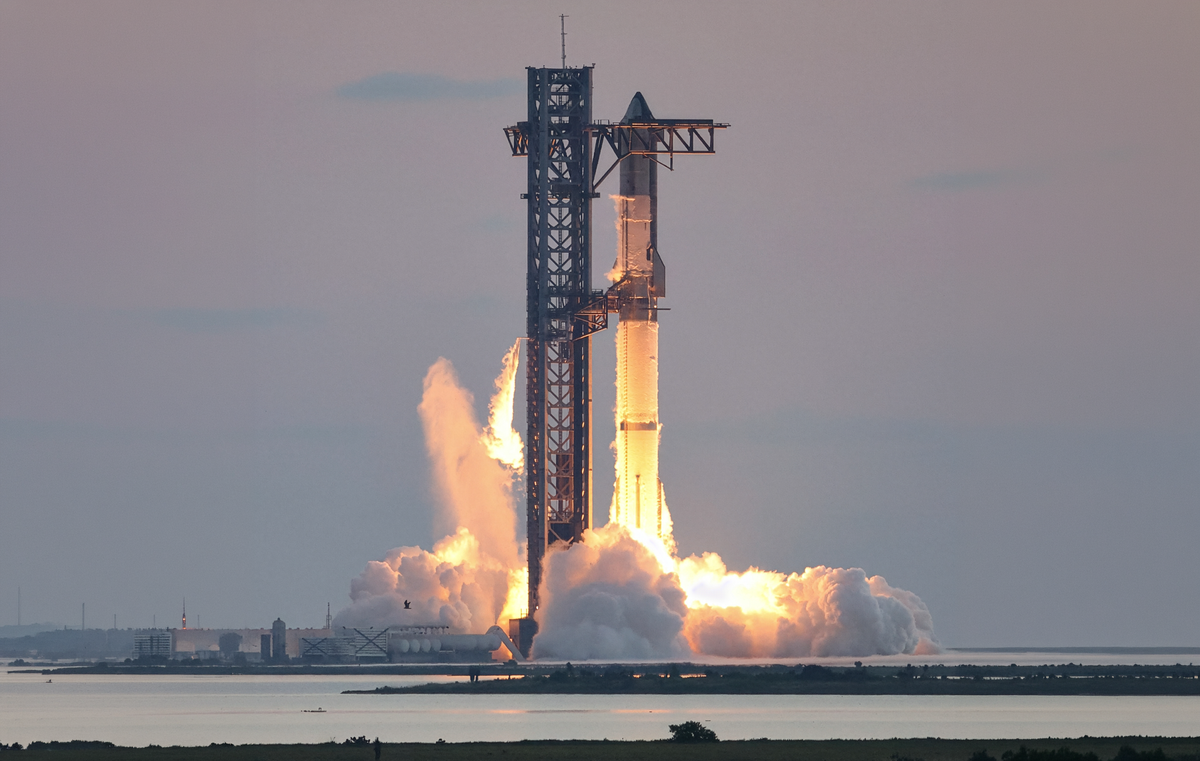
The Starship system comprises two stages: the Super Heavy booster (71 meters tall, powered by 33 Raptor engines), and the Starship upper stage (52 meters tall, powered by six Raptor engines —three sea-level and three vacuum-optimized) [1][2]. Both stages are designed to be fully and rapidly reusable, recovered through propulsive landings: Super Heavy is captured by mechanical "chopstick" arms on the launch tower (first achieved on Flight 5 in October 2024), while Starship is intended to return to the launch site via a "bellyflop" reentry maneuver, terminal landing burn, and a subsequent tower catch that has not yet been attempted [1][32]. The vehicle is constructed primarily from 304L and 30X stainless steel, a material choice driven by cryogenic strength, manufacturability, and thermal performance during atmospheric reentry. The fully reusable architecture is the central thesis: SpaceX has stated that achieving rapid reuse of both stages is the precondition for the company's projected cost-per-kilogram targets.
4.2 Development and Flight Test History
As of May 22, 2026, SpaceX had completed twelve Starship integrated flight tests. The Block 1 (V1) configuration flew on Flights 1 through 6 (April 2023 to November 2024), demonstrating staged ascent (Flight 3), booster tower catch (Flights 5 and 7), and ship reentry and soft splashdown (Flight 6) [1]. The Block 2 (V2) configuration flew on Flights 7 through 11 (January 2025 to October 2025), with mixed results: the first three V2 launches (Flights 7, 8, and 9 in January, March, and May 2025) all ended in loss of the upper stage [1][2]. The Flight 7 ship was lost to an aft-section fire attributed to propellant leaks from harmonic oscillations; Flight 8 to a hardware failure in a central Raptor; and Flight 9 to a fuel diffuser failure that caused loss of attitude control during the coast phase [1][2]. A static-fire ground test of Ship 36 ended in vehicle destruction in June 2025 [1]. Flight 10 (August 26, 2025) and Flight 11 (October 13, 2025) achieved their primary mission objectives, including the first successful deployment of Starlink simulators through the payload bay door and controlled soft splashdowns in the Indian Ocean [3][32]. Flight 12 (May 2026) was the maiden V3 (Block 3) test; the upper stage successfully deployed twenty Starlink simulators and conducted a simulated landing, but the booster failed to relight engines for a sustained boostback burn and was lost in the Gulf of Mexico [15].
The aggregate flight test record as of May 2026 is six Block 1 vehicles flown (no in-flight failures of the ship after Flight 4), five Block 2 vehicles flown (four ship losses), and one Block 3 vehicle flown (with booster loss but successful ship objectives) [1]. The Super Heavy booster has been caught at the tower three times (Flights 5, 7, and 8), and one previously-flown booster was reflown on Flight 9 with 29 of 33 engines reused [2]. Starship has not yet been recovered or caught.
4.3 Engine Technology (Raptor) and Production Scaling
The Raptor engine is a full-flow staged-combustion methalox engine, the only such engine class to have flown. SpaceX has published sea-level thrust values of 185 metric tons-force (tf) for Raptor 1, 230 tf for Raptor 2, and 280 tf for Raptor 3, with corresponding specific impulses of 350 s, 347 s, and 350 s [28]. Raptor 3 reduces engine mass to 1,525 kg and eliminates the external heat shroud required by earlier variants by internalizing secondary flow paths and incorporating regenerative cooling for exposed components [28]. The first Raptor 3 was unveiled in August 2024; by November 2025, observed serial numbers exceeded 68, suggesting a production cadence consistent with Raptor 3 powering the entire V3 vehicle fleet [28]. SpaceX has publicly targeted Raptor 3.x variants exceeding 300 tf, with a future Raptor 3/4 vacuum variant targeted at 380 s specific impulse [28]. These figures are manufacturer claims; independent verification of chamber pressure, specific impulse, and reliability at scale is not publicly available.
4.4 The HLS Lunar Lander Contract and Its Programmatic Significance
NASA's April 2021 selection of SpaceX as the sole Human Landing System provider for Artemis III, at a firm-fixed-price contract value of $2.9 billion, made Starship the centerpiece of U.S. lunar return architecture [8]. The November 2022 Option B modification, valued at $1.2 billion, added an Artemis IV crewed landing using a more capable, sustainable HLS variant [9]. The total maximum contract value to SpaceX is therefore approximately $4.2 billion across the two awards [9]. As of October 31, 2025, NASA had paid SpaceX $2.7 billion against 49 completed milestones [33].
The contract's programmatic significance extends beyond its dollar value. Selecting Starship HLS aligned NASA's lunar architecture with a vehicle whose development was already privately funded and whose payload capacity dwarfed alternatives, but it also bound the Artemis schedule to Starship's flight test cadence and to the unprecedented operational requirement of in-orbit cryogenic propellant transfer. In October 2025, NASA Acting Administrator Sean Duffy announced that the Artemis III HLS contract would be reopened to competition because SpaceX was "behind" on development [33]. The Artemis III mission was subsequently re-scoped in February 2026 from a lunar landing to a crewed lander rendezvous and docking demonstration in Earth orbit, with the first crewed lunar landing pushed to Artemis IV in 2028 [13].
4.5 Claimed Versus Independently Assessed Performance and Economics
SpaceX's published Starship Payload Users Guide states that the vehicle "can deliver over 100 metric tons to LEO" in baseline reusable configuration [1]. Independent and acknowledged near term performance is meaningfully lower. Elon Musk publicly stated in 2024 that Flight 3-era Starship was capable of only "40-50 tons to orbit" [27]. The retired Block 2 design had a final estimated 35-ton payload-to-orbit capability before being retired after Flight 11 [1]. The Block 3 (V3) vehicle is projected by SpaceX to achieve approximately 100 tons to LEO in reusable configuration; this remains an engineering projection rather than a demonstrated capability [15] [32]. Independent cost-per-kilogram estimates, summarized in section 6.1, range from approximately $1,200/kg in early operational use to manufacturer aspirations of $10-20/kg at full reusability and high cadence; no independent peer-reviewed analysis has confirmed sub-$200/kg pricing [27].
4.6 Critical Technical Dependencies and Unresolved Challenges
Four interlinked technical dependencies remain unresolved as of May 2026. First, orbital propellant transfer between two vehicles has not been demonstrated. NASA's Marshall Space Flight Center has stated that the transfer of cryogenic propellants between independent spacecraft has never been demonstrated; a tank-to-tank transfer within a single Starship was conducted on Flight 3 in March 2024, but the ship-to-ship transfer required for HLS has been deferred to 2026 [31]. Second, the number of tanker launches required to refuel a HLS for a single lunar landing is contested: SpaceX has stated approximately ten, the GAO has estimated sixteen, and NASA officials have at various points cited the "high teens" or a range from 8 to 19 [7]. Third, cryogenic boil-off during the multi-launch tanker campaign drives the required launch cadence; tanker launches must occur in rapid succession (days, not weeks) to avoid significant evaporative losses of methane and oxygen [31]. Fourth, heat shield durability remains unproven for rapid reuse; every successful reentry to date has included visible tile loss and structural stress and no Starship has yet been recovered for refurbishment assessment. [2][32].markers [2][32].
5. Technical and Operational Considerations
5.1 Propulsion, Reusability, and Refurbishment Economics
The economic case for super heavy lift hinges on engine and structural reuse cycle counts. SpaceX has reflown Falcon 9 boosters as many as thirty times each, providing the empirical basis for projecting Starship reuse economics, but Falcon 9 first-stage refurbishment, while substantially less expensive than building a new booster, is not free, and a comparable refurbishment cost structure for Starship and Super Heavy has not been publicly characterized. Blue Origin states that the New Glenn first stage is designed for at least 25 flights [10]. SLS, by contrast, is fully expendable; each launch consumes one core stage with four RS-25 engines (originally Space Shuttle Main Engine flight assets, now being newly manufactured), two five segment solid rocket boosters, and one interim cryogenic propulsion stage [4].
5.2 Manufacturing, Production Cadence, and Scaling Constraints
SpaceX is building Starship vehicles at its Starbase, Texas "Starfactory" with the stated objective of producing one Starship per week and is scaling Raptor 3 production at its McGregor, Texas test facility [28]. By November 2025, observed Raptor 3 serial numbers exceeded 68 [28]. Blue Origin's BE-4 production at its Huntsville, Alabama facility is the binding constraint on New Glenn cadence; the engine is also used in ULA's Vulcan, creating dependency. SLS production cadence is structurally limited to roughly one core stage per year at Michoud Assembly Facility; the GAO has documented that the contract for Artemis III and IV core stages exceeds $2 billion and that "the cost to produce successive core stages is increasing over time" [4]
5.3 Launch and Recovery Infrastructure
The FAA in May 2025 authorized SpaceX to conduct up to 25 annual Starship/Super Heavy launches from the Boca Chica (Starbase) site in Cameron County, Texas, including up to 25 annual Starship landings and 25 annual Super Heavy landings [23][24]. This represents a five fold increase over the previous limit of five annual launches authorized under the 2022 Programmatic Environmental Assessment [23]. The FAA received over 12,000 public comments on the draft 2025 assessment and modified the final document in response, including a requirement that any Pacific Ocean Starship landings remain outside Hawaii's 200-nautical-mile exclusive economic zone [25]. Additional environmental reviews are underway for Starship operations from Kennedy Space Center LC-39A and proposed Cape Canaveral SLC-37 or SLC-50 [25]. Blue Origin launches New Glenn from Cape Canaveral LC-36, with planned West Coast operations from a new SLC-14 at Vandenberg announced in April 2026 [10]. SLS launches exclusively from Kennedy Space Center LC-39B.
5.4 In-Orbit Refueling and the Dependency Chain It Creates
In-orbit refueling is the single most consequential operational dependency in the Starship architecture. For a lunar landing, NASA's Marshall Space Flight Center confirms that approximately ten tanker launches of propellant to a depot in orbit are required to refuel a Starship HLS sufficiently to reach the lunar surface [7][31]. SpaceX's stated estimate is approximately ten; GAO estimates have been as high as sixteen; one Wikipedia/industry compilation cites NASA estimates ranging from 8 to 19 [7]. The dependency chain is sequential: every tanker launch must succeed; cumulative reliability requirements compound; cryogenic boil-off forces tight scheduling; and the depot-and-tanker architecture itself has never been operationally demonstrated at scale.
5.5 Reliability, Flight Heritage, and the Path to Operational Maturity
Saturn V achieved thirteen successful launches in thirteen attempts [29]. SLS has achieved two successful launches in two attempts (Artemis I in November 2022 and Artemis II in April 2026) [26]. New Glenn has achieved two successful orbital insertions in two attempts, with one booster lost on NG-1 and one booster recovered on NG-2 [10][11]. Starship has achieved 12 launches with 7 ascent successes through May 2026, with no full mission profile (booster recovery plus ship recovery) yet completed [1][15]. The path to human-rated operational maturity for Starship is therefore measured not in months but in years of demonstrated reliability, a fact that NASA has acknowledged by re-scoping Artemis III.
6. Economic and Market Dynamics
6.1 Cost Structures and the Contested Economics of Cost per Kilogram
Published cost-per-kilogram-to-LEO estimates vary widely depending on definitions (list price versus marginal cost, expendable versus reusable, vehicle-only versus mission), but the directional trend is clear. The Space Shuttle delivered payload at approximately $54,500/kg in current dollars [27]. Falcon 9 reduced this to approximately $2,720/kg at list price and to internal SpaceX marginal costs estimated by industry analysts at $1,200-$1,500/kg [27]. Falcon Heavy delivers approximately $1,400-$1,500/kg [27]. SLS, by NASA OIG estimation, operates at approximately $4.1 billion per launch with a Block 1 LEO capability of approximately 95 metric tons, implying a notional $43,000/kg [6]. Starship's eventual cost-per-kilogram is the central question of contemporary space economics: SpaceX has aspired to figures as low as $10-$20/kg at full reusability and high cadence; near-term independent analyses suggest $100-$200/kg may be achievable in the late 2020s if reuse goals are met; an HSBC research note projected sub-$100/kg as unlikely before 2030 [27]. None of these projections have been independently validated by demonstrated operational flights.
6.2 Addressable Demand and the Question of Whether Demand Justifies Supply
The addressable demand question is the principal commercial uncertainty in the SHLLV class. Existing commercial demand can largely be served by the medium-heavy class: most communications and Earth observation satellites are smaller than 6,000 kg and can be launched on Falcon 9, Ariane 6, or Vulcan. Demand sources that genuinely require SHLLV capability are limited to: (a) large constellation deployment campaigns where bulk lift dramatically reduces per-satellite launch cost; (b) crewed lunar and Mars missions; (c) very large space telescopes and science platforms (Habitable Worlds Observatory class); (d) potentially, in-space manufacturing and on-orbit servicing platforms not yet at scale; and (e) point-to-point military logistics, which remains a research program [14]. The realization of these demand categories at scale depends in part on Starship achieving the cost reductions it has projected, creating a circular dependency between supply and demand that institutional investors should weigh carefully
6.3 Public Versus Private Financing Models and the Role of Anchor Government Contracts
SLS is funded entirely through congressional appropriations to NASA, with no commercial customer base; the OIG and GAO have reported that NASA's attempts to find non-NASA customers, including the Department of Defense, have been unsuccessful [7]. Starship is funded through a mix of: (i) SpaceX internal capital (including Starlink revenues, which represented $11.4 billion or approximately 61 percent of the company's $18.7 billion in 2025 consolidated revenue) [15]; (ii) NASA HLS contracts ($2.89 billion Option A plus $1.2 billion Option B) [8][9]; and (iii) private capital raises. New Glenn is funded principally through Jeff Bezos' personal investment, supplemented by NSSL contracts and the Blue Moon HLS award. Blue Origin's contribution to the Blue Moon Mk2 program exceeds the $3.4 billion NASA award, bringing total Mk2 program value to approximately $7 billion [33].
6.4 Competitive Dynamics and Pricing Pressure
The competitive landscape in 2026 features one dominant incumbent (SpaceX), one credible new entrant approaching SHLLV class (Blue Origin), one expensive government-owned system whose operational future is uncertain (SLS), and a Chinese national program operating outside the global commercial market. Pricing pressure is therefore asymmetric: commercial customers face limited supplier diversity in heavy lift, while government customers face limited commercial alternatives for crewed lunar missions until Starship HLS is operational. New Glenn pricing has not been formally published by Blue Origin; a competitor's estimate cited by CNBC on January 16, 2025, placed the price at approximately $70 million per launch [10]; A competitive equilibrium with two or three commercial SHLLV providers (Starship operational, New Glenn 9×4 in service, possibly Stoke Space's Nova at the lower edge) is not expected before the 2030s.
6.5 Investment Landscape and Considerations for Institutional Investors
SpaceX's May 2026 S-1 filing made the company's financials publicly available for the first time, including 2025 consolidated revenue of $18.7 billion, an operating loss of $2.6 billion, and Adjusted EBITDA of $6.6 billion [15]. The accumulated deficit since inception, as of March 31, 2026, was $41.3 billion, principally reflecting Starship development [15]. The first quarter of 2026 generated $4.7 billion in revenue with continued operating losses; Starship R&D in Q1 2026 alone was $930 million [15]. For institutional investors, three considerations should anchor analysis: (i) the cash flow profile is dominated by Starlink's subscription connectivity revenue, not launch services; (ii) Starship represents a binary technical bet with multi-year resolution; and (iii) the company's regulatory and political risk profile is unusual in commercial aerospace due to its founder's public political activity and the consequent concentration of executive and policy risk.
7. Regulatory Landscape
7.1 U.S. Launch Licensing (FAA AST), Environmental Review, and Throughput Constraints
The FAA Office of Commercial Space Transportation (FAA AST) licenses U.S. commercial launches under 14 CFR Parts 400-460. Each licensed launch site requires environmental review under the National Environmental Policy Act (NEPA), typically conducted as a Programmatic Environmental Assessment or Environmental Impact Statement. For Starship at Boca Chica, the 2022 Programmatic Environmental Assessment authorized up to five Starship launches per year; the May 2025 Final Tiered Environmental Assessment increased the authorization to 25 launches per year [23][24][25]. The FAA received over 12,000 public comments on the draft 2025 assessment and modified the final document in response [25]. Subsequent tiered assessments have addressed updated airspace closures for additional launch trajectories and Starship Return to Launch Site mission profiles [23].
7.2 Spectrum, Orbital Debris, and Planetary Protection Considerations
Launch communications require FCC licenses; FCC granted experimental communication licenses for each Starship integrated flight test. Orbital debris mitigation is regulated through both FCC (for spectrum and satellite licensing) and FAA AST (for launch operations); SpaceX's deployment of Starlink at scale has prompted regulatory and academic scrutiny of debris generation, atmospheric reentry effects, and collision risk. Planetary protection considerations apply most directly to lunar and Mars missions and are governed by COSPAR guidelines and Article IX of the Outer Space Treaty; no commercial vehicle has yet been subject to extensive forward-contamination requirements at the scale Starship would impose on Mars.
7.3 International Regulatory and Treaty Frameworks
The Outer Space Treaty of 1967 establishes the foundational principles of international space law, including non-appropriation of celestial bodies (Article II), state responsibility for national activities including those of non-governmental entities (Article VI), and liability for damage caused by launched objects (Article VII). The Registration Convention (1974), Rescue and Return Agreement (1968), and Liability Convention (1972) provide supplementary frameworks. The Artemis Accords, drafted by NASA and the U.S. Department of State and first signed in October 2020, are a non-binding set of principles intended to guide civil exploration of the Moon, Mars, and other celestial bodies under the Outer Space Treaty framework [22]. As of May 7, 2026, 67 countries have signed the Artemis Accords, with Paraguay being the most recent signatory [22]. Russia and China have declined to sign, instead pursuing the International Lunar Research Station (ILRS) initiative.
7.4 Cross-Jurisdictional Comparison of Regulatory Enabling Environments
The U.S. regulatory environment is characterized by parallel oversight (FAA, FCC, NOAA, EPA, state agencies) and an environmental review process that has become the binding constraint on launch site throughput at Boca Chica. CSIS analysts have observed that "SpaceX has faced repeated FAA licensing delays for its Starship test flights" and recommended optimization of existing processes before adoption of new mission authorization frameworks [30]. China's regulatory environment is integrated within CASC and the China Manned Space Agency, with launch site environmental review processes that do not permit public comment in the U.S. sense. European and Japanese regulatory frameworks emphasize launch safety and orbital debris but operate at lower launch cadences. Cross-jurisdictional regulatory arbitrage remains limited because launch vehicles are typically tied to specific national territories and ITAR/export-control regimes prevent technology transfer.
8. Geopolitical and Strategic Dimensions
8.1 Super Heavy Lift as an Instrument of National Power and Prestige
Super heavy lift capability has historically functioned as a marker of national technological achievement; Saturn V's role in Apollo and Energia's role in the late Soviet space program both illustrate the prestige and signaling functions of the class [29]. The contemporary revival of multiple national SHLLV programs (SLS, Long March 9, Long March 10) cannot be explained on purely commercial grounds and reflects the political utility of visible heavy lift programs. CSIS has emphasized that "China is currently pursuing the most expansive space program, and growth across its space and counterspace programs, that threatens to challenge us diplomatically, economically, and militarily," with Chinese President Xi Jinping articulating a "space dream" to make China the foremost space power by 2045 [30].
8.2 The U.S.-China Competitive Dynamic and the Lunar Timeline
The lunar competition has tightened materially since 2023. Following Artemis III's February 2026 re-scoping to an Earth-orbit demonstration, the first U.S. crewed lunar landing is now planned for Artemis IV in 2028 [13]. China has publicly committed to a crewed lunar landing by 2030, with Long March 10 development reportedly on schedule and a successful integrated abort test conducted in February 2026 [13]. The probability that China lands taikonauts on the Moon before the U.S. returns American astronauts has risen from low (in 2022) to reasonably possible (in 2026). Beyond the symbolic stakes, lunar precedence implications include norms-setting for resource utilization, exclusion zones, and the operating rules for cislunar logistics, which the Artemis Accords seek to establish under U.S. and allied leadership [22].
8.3 Military and Dual-Use Implications (Point-to-Point Logistics, Responsive Space Access)
The most discussed dual-use application is point-to-point military logistics, formalized as the AFRL "Rocket Cargo" Vanguard program announced in June 2021 in partnership with USTRANSCOM and the U.S. Space Force [14]. AFRL awarded SpaceX a $100 million, five-year contract signed January 14, 2022, to explore Starship for cargo delivery [14]. The published operational concept envisions moving payloads across the globe in under an hour [14]. Verified program budgets remain modest relative to civil space; published FY2025 Space Force RDT&E budget lines for point-to-point delivery are approximately $4 million, suggesting the program is in early study rather than acquisition phase [14].
A broader set of dual-use implications includes responsive space access (the ability to launch national security payloads rapidly in response to operational needs), in-space refueling and servicing infrastructure (which has both civil and military utility), and the use of large reusable launchers to deploy resilient national security constellations at scale, including the Space Force's Proliferated Warfighter Space Architecture. The RAND 2023 study on commercial space services for the Department of the Air Force surveyed these opportunities and risks in detail [17].
8.4 Supply Chain, Industrial Base, and Dependency Considerations
The U.S. heavy lift industrial base has consolidated significantly. Boeing's SLS core stage work, Northrop Grumman's solid rocket boosters, Aerojet Rocketdyne (now part of L3Harris) RS-25 engine production, and Lockheed Martin's Orion production form a cost-plus prime ecosystem largely separated from the commercial reusable launch base anchored by SpaceX [4][5]. Blue Origin's BE-4 engine is dual-used by Vulcan, creating ULA dependency on a competitor. Internationally, the European Space Agency contributes the Orion European Service Module through Airbus Defence and Space, creating a transatlantic dependency. Critical mineral and material dependencies (including specialty alloys, large composite structures, and certain electronics) remain a strategic concern; industrial policy measures including the CHIPS and Science Act have begun to address these supply chains but the resilience of the heavy lift industrial base to disruption remains imperfectly characterized.

9. Risk Assessment
9.1 Short-Term Risks (1-3 Years, 2026-2029)
Technical risks are concentrated in three areas. First, Starship V3 must demonstrate operational orbital insertion, ship recovery, and ship-to-ship cryogenic propellant transfer; the May 2026 Flight 12 V3 maiden flight succeeded on the ship side but lost the booster [15]. Likelihood of further setbacks: moderate-to-high; impact: directly threatens Artemis IV 2028 lunar landing and SpaceX IPO valuation. Leading indicators: Flight 13 and Flight 14 outcomes; the first successful ship-to-ship propellant transfer demonstration; the first ship catch.
Second, the Long March 10 must complete its first orbital flight (targeted late 2026 or 2027) and demonstrate the reliability needed for crewed missions [13].
Likelihood of meaningful delay: moderate
Impact: would push China's lunar landing past 2030.
Third, SLS Block 1B development for Artemis IV must complete on schedule, including the new Exploration Upper Stage and the Mobile Launcher 2.
Likelihood of further delay: high (consistent with historical SLS performance) [4];
Impact: pushes Artemis IV beyond 2028.
Regulatory risks include further FAA environmental review constraints on Starship launch cadence at Boca Chica or 39A; the May 2025 increase to 25 annual launches [24] is significantly below SpaceX's stated operational requirements.
Likelihood: moderate; impact: substantial cadence constraint that would propagate into Artemis tanker campaign feasibility.
Financial risks include SpaceX IPO execution, Starlink subscriber growth required to support continued Starship development, and the political durability of the Artemis HLS contract value if Starship development slips further. The October 2025 reopening of the Artemis III HLS competition by NASA Acting Administrator Sean Duffy created an option, not yet exercised, to substitute another lander provider [33].
Likelihood of contract restructuring: moderate;
Impact: significant for SpaceX market position but not existential.
9.2 Medium-Term Risks (3-7 Years, 2029-2033)
Operational maturity risks dominate this horizon. Achieving the launch cadence Starship requires for both Starlink V3 deployment and HLS tanker campaigns demands an order-of magnitude improvement over current operations. If Starship achieves only a 10-20 percent reuse refurbishment efficiency improvement over Falcon 9 rather than the much higher levels SpaceX has projected, the cost-per-kilogram economics fundamentally differ from the company's marketing claims [27].
Likelihood: moderate-to-high;
Impact: redefines the commercial case for the entire vehicle.
Adoption risks include the rate at which commercial customers other than SpaceX itself (Starlink) commit to Starship for primary payload launches. Demand from megaconstellation operators, NASA science missions, and the Department of Defense will determine whether Starship's annual launch cadence approaches the 100+ flights per year required for its targeted economics.
Geopolitical timing risk is the central second-order effect: if China lands taikonauts on the Moon before NASA returns American astronauts, the political pressure on Artemis program leadership, NASA budget, and HLS contractor relationships will increase substantially. The China lunar landing is publicly targeted for 2030 [13]; a reasonable confidence interval places it between 2029 and 2033.
Likelihood of Chinese precedence: now plausible (we estimate 30-50 percent) versus negligible in 2022.
9.3 Long-Term Risks (7+ Years, 2033 and Beyond)
Strategic risks include the possibility that a fully operational Starship enables business models (large constellations, in-space manufacturing, lunar resource extraction) whose scale strains the existing international legal framework (Outer Space Treaty interpretation, debris and traffic management, resource appropriation under the Artemis Accords) [22]. Likelihood: moderate;
Impact: potentially transformative.
Competitive risks include the emergence of a Chinese commercial reusable SHLLV (Long March 9 reusable variant, first flight targeted 2033) [12] or further entrants (Stoke Space, Relativity, others) that fragment the supplier base. By 2033 the SHLLV class may include 3-5 operational reusable vehicles, fundamentally altering pricing dynamics.
Long-term financial risks for institutional investors include the possibility that the cumulative capital required to achieve Starship's targeted economics exceeds SpaceX's ability to fund through Starlink cash flow and equity issuance, requiring sustained government support that may be politically unstable.
9.4 The Most Consequential Risks
In our assessment, the three most consequential risks are: (1) failure or substantial delay of orbital propellant transfer [31], because it gates every Starship application beyond LEO and therefore the entire HLS program; (2) the gap between SpaceX's claimed and demonstrated payload-to-orbit performance [27], because credible cost-per-kilogram economics require approximately 100-ton reusable performance and current operational performance is closer to 35-50 tons; and (3) the U.S.-China lunar timing race [13][30], because political and budget consequences of Chinese lunar precedence would propagate through every U.S. space program for a generation.

10. Strategic Recommendations
10.1 For Institutional Investors and Capital Allocators
First, treat SpaceX equity (as available through the May 2026 S-1 listing or secondary markets) as two distinct businesses for valuation purposes: a high-margin, high-growth Starlink connectivity business with $11.4 billion of 2025 revenue, and a high-risk, capital-intensive Starship development business with no current launch revenue [15]. Apply different discount rates and probability-weighted scenarios to each. Second, treat the Starship technical milestones as binary trigger events for portfolio rebalancing. Define explicit thresholds: (a) successful ship-to-ship cryogenic propellant transfer (would derisk HLS execution and unlock Mars architecture); (b) first successful Starship catch (would derisk the full reusability thesis); (c) first commercial customer payload delivered (would derisk the demand thesis); (d) demonstrated payload to LEO of 80+ metric tons in reusable configuration (would derisk the cost-per-kilogram thesis). The absence of (a) through (c) by end of 2027 should trigger a meaningful downward revision in Starship-dependent valuations.
Third, consider concentration risk in launch-services adjacencies. Investments in megaconstellation operators (other than SpaceX itself), in-space servicing companies, and small launch providers are all exposed to Starship pricing outcomes; if Starship achieves sub-$500/kg pricing at scale, multiple business models become economically unviable; if it does not, small launchers retain a market position they would otherwise lose [27].
Fourth, monitor regulatory throughput as a binding constraint. The 25-launches-per-year FAA Boca Chica authorization [24] is incompatible with both Starlink V3 deployment cadence and HLS tanker campaigns at projected mission profiles. Investments contingent on Starship achieving 100+ annual launches require successful environmental review at Kennedy Space Center and Vandenberg.
10.2 For Policymakers and Government Program Managers
First, structure SLS attrition with explicit decision gates rather than open-ended commitment. The GAO has documented that SLS is unaffordable at current cost levels and that "efforts to find customers outside of NASA have been unsuccessful to date" [7]. A credible transition plan should: (a) complete Artemis II (achieved April 2026) [26] and Artemis III SLS launches as planned; (b) tie continued Artemis IV and beyond SLS purchases to specific cost-reduction milestones (e.g., the 50 percent cost reduction goal under the Exploration Production and Operations Contract, which the OIG has assessed as "highly unrealistic") [7]; and (c) maintain Starship and New Glenn as parallel architectural options for cislunar transport.
Second, accelerate redundancy in the HLS portfolio. The October 2025 reopening of the Artemis III HLS competition was an appropriate response to Starship development risk [33], but redundancy should extend beyond the lander to the broader cislunar architecture: alternative propellant management approaches (storable propellants for some lunar tugs), alternative crew transport vehicles, and alternative lunar surface power systems.
Third, modernize FAA AST capacity to match commercial cadence. The bottleneck in current U.S. launch licensing is not regulatory authority but agency staffing and environmental review throughput; CSIS analysts have noted that licensing delays have produced costs that "arguably resulted from bureaucratic delays" [30]. A modest investment in FAA AST and NEPA review capacity would substantially expand commercial launch throughput at lower marginal cost than alternative policy interventions.
Fourth, preserve Artemis Accords coalition cohesion under accelerating Chinese competition. With 67 signatories as of May 2026 [22], the Accords represent the principal multilateral framework for U.S.-led civil space cooperation. Maintaining its growth, particularly in Asia and Africa where Chinese ILRS recruitment is active, should be a State Department and NASA priority.
Fifth, plan for the political consequences of Chinese lunar precedence. If China lands taikonauts on the Moon in 2029 or 2030 [13], U.S. policy responses should be pre-considered: a NASA budget increase, an Artemis acceleration, a commercial cislunar incentive program, or a strategic refocusing on Mars are all options that should be modeled in advance rather than improvised under political pressure.
10.3 For Commercial Space Enterprises and Prime Contractors
First, prime contractors building to government SHLLV specifications (Boeing, Northrop Grumman, L3Harris) should plan for SLS production volume to peak between Artemis IV and Artemis VI and decline thereafter. Diversification into cislunar logistics, in-space servicing, and commercial lunar payload services should be accelerated.
Second, commercial launch competitors to SpaceX (Blue Origin, ULA, Rocket Lab) should accept that the medium-heavy and SHLLV markets will remain SpaceX-dominated through the late 2020s and compete on differentiated value: assured access (national security), schedule certainty (commercial), unique orbits (polar, GTO, cislunar). The Blue Origin NSSL Phase 3 Lane 2 award (seven flights, approximately $2.4 billion) demonstrates that government customers will pay a premium for supplier diversity [10].
Third, payload operators (satellite manufacturers, megaconstellation operators, science mission principals) should design payloads to leverage but not require Starship-class lift. The risk of design lock-in to a single launch vehicle remains substantial until Starship demonstrates an operational track record measured in years.
Fourth, in-space services providers (refueling, servicing, manufacturing, debris remediation) should track Starship's in-orbit propellant transfer demonstration as a leading indicator of broader market viability. The first successful ship-to-ship cryogenic transfer will validate both the technology and the underlying business case for in-space cryogenic logistics generally [31].
Caveats
This analysis is constrained by several material uncertainties. Several Starship performance figures cited herein, including payload-to-LEO claims and reuse cycle counts, are SpaceX manufacturer claims that have not been independently verified through demonstrated operations [1][27]. The Long March 9 and Long March 10 technical specifications are drawn from Chinese-language CASC and CALT presentations that have been translated and re-reported through English-language outlets; primary source verification is limited [12][13]. SpaceX's May 2026 S-1 filing is a self-reported document subject to standard SEC disclosure requirements, but operational metrics within it (Starship development spending, projected revenue) are not independently audited at the level of granularity reported [15]. The Artemis program schedule has slipped multiple times since 2019 and may slip further; any specific dated milestone in this report should be treated as subject to revision [26]. The 67-signatory Artemis Accords count is current as of May 7, 2026 [22] but is changing. The CSIS, RAND, and Aerospace Corporation analyses cited reflect specific authors and institutional perspectives and should not be read as the consensus of the broader policy community on contested questions of U.S.-China space competition [16][17][21][30].
References
[1] Wikipedia. (2026, May 22). SpaceX Starship flight tests. Wikipedia. https://en.wikipedia.org/wiki/SpaceX_Starship_flight_tests
[2] Heard, A. (2025, August 16). SpaceX schedules 10th test flight for Starship, details recent setbacks. Spaceflight Now. https://spaceflightnow.com/2025/08/16/spacex-schedules-starship-flight-10-details-recent-setbacks/
[3] Smith, M. (2025, August 26). A great day for Starship. SpacePolicyOnline.com. https://spacepolicyonline.com/news/a-great-day-for-starship/
[4] U.S. Government Accountability Office. (2023, September 7). Space Launch System: Cost transparency needed to monitor program affordability (GAO-23-105609). GAO. https://www.gao.gov/products/gao-23-105609
[5] U.S. Government Accountability Office. (2023, November 30). NASA Artemis programs: Crewed moon landing faces multiple challenges (GAO-24-106256). GAO. https://www.gao.gov/products/gao-24-106256
[6] NASA Office of Inspector General. (2021, November 15). NASA's management of the Artemis missions (Report IG-22-003). NASA OIG. https://oig.nasa.gov/wp-content/uploads/2024/02/IG-22-003.pdf
[7] Foust, J. (2023, October 13). New contract unlikely to significantly reduce SLS costs. SpaceNews. https://spacenews.com/new-contract-unlikely-to-significantly-reduce-sls-costs/
[8] NASA. (2021, April 16). As Artemis moves forward, NASA picks SpaceX to land next Americans on Moon [News release]. https://www.nasa.gov/news-release/as-artemis-moves-forward-nasa-picks-spacex-to-land-next-americans-on-moon/
[9] NASA. (2022, November 15). NASA awards SpaceX second contract option for Artemis Moon landing [News release]. https://www.nasa.gov/humans-in-space/nasa-awards-spacex-second-contract-option-for-artemis-moon-landing/
[10] Blue Origin. (2025, January 16). Blue Origin's New Glenn reaches orbit [News release]. https://www.blueorigin.com/news/new-glenn-ng-1-mission
[11] Davenport, J. (2025, November 13). Blue Origin launches ESCAPADE on New Glenn, successfully lands first stage booster. NASASpaceFlight.com. https://www.nasaspaceflight.com/2025/11/ng-2-escapade-launch/
[12] Wikipedia. (2026). Long March 9. Wikipedia. https://en.wikipedia.org/wiki/Long_March_9
[13] Jones, A. (2025, October 30). China targets 2026 for first Long March 10 launch, new lunar crew spacecraft flight. SpaceNews. https://spacenews.com/china-targets-2026-for-first-long-march-10-launch-new-lunar-crew-spacecraft-flight/
[14] U.S. Transportation Command. (2021, June 7). Rocket cargo delivery gets big boost [Press release]. Scott Air Force Base. https://www.ustranscom.mil/cmd/panewsreader.cfm?ID=046F658F-D703-F8BB-55E86FE18DDEB735
[15] Space Exploration Technologies Corp. (2026, May 20). Form S-1 registration statement under the Securities Act of 1933. U.S. Securities and Exchange Commission. https://www.sec.gov/cgi-bin/browse-edgar?action=getcompany&CIK=0001181412
[16] Triezenberg, B. L., Sousa, É. M., Allendorf, E., Perez, H., Roberts, J., & Rodgers, M. (2024). Assessing the impact of U.S. Air Force national security space launch acquisition decisions: 2023 update (RR-A2843-1). RAND Corporation. https://www.rand.org/pubs/research_reports/RRA2843-1.html
[17] Wong, J. P., Kim, Y., Langeland, K., Nacouzi, G., Grocholski, K. R., Balk, J., Patel, K. V., & Bicksler, B. (2023). Leveraging commercial space services: Opportunities and risks for the Department of the Air Force (RR-A1724-1). RAND Corporation. https://www.rand.org/pubs/research_reports/RRA1724-1.html
[18] Ligor, D. C., Miller, B. M., McCollester, M., Phillips, B., Kirkwood, G., Becker, J., Mazzotta, G., McClintock, B., & Bicksler, B. (2023). Assessing the readiness for human commercial spaceflight safety regulations (RR-A2466-1). RAND Corporation. https://www.rand.org/pubs/research_reports/RRA2466-1.html
[19] Morgan, D. (2024). Artemis: NASA's program to return humans to the Moon (CRS In Focus IF11643). Congressional Research Service. https://www.congress.gov/crs-product/IF11643
[20] Morgan, D. (2025, August 6). NASA appropriations and authorizations: At a glance (CRS Report R43419). Congressional Research Service. https://www.congress.gov/crs-product/R43419
[21] Bukley, A., & Stover, S. (2024, October). Moonstruck: We're going back to the Moon — beyond the hype, what does it mean? In Space agenda 2025: Informing the future of space. Center for Space Policy and Strategy, The Aerospace Corporation. https://csps.aerospace.org/papers/moonstruck-were-going-back-moon-beyond-hype-what-does-it-mean
[22] U.S. Department of State. (2026). Artemis Accords. Bureau of Oceans and International Environmental and Scientific Affairs. https://www.state.gov/bureau-of-oceans-and-international-environmental-and-scientific-affairs/artemis-accords
[23] Federal Aviation Administration. (2025, May 6). Final tiered environmental assessment for SpaceX Starship/Super Heavy Vehicle increased cadence at the SpaceX Boca Chica launch site. FAA Office of Commercial Space Transportation. https://www.faa.gov/media/94346
[24] Federal Register. (2025, May 12). Notice of availability of the final tiered environmental assessment and mitigated finding of no significant impact and record of decision for SpaceX Starship/Super Heavy Vehicle increased cadence at the SpaceX Boca Chica launch site. Federal Register, 90. https://www.federalregister.gov/documents/2025/05/12/2025-08232
[25] Foust, J. (2025, May 7). FAA gives environmental approval for increased Starship launch rate. SpaceNews. https://spacenews.com/faa-gives-environmental-approval-for-increased-starship-launch-rate/
[26] Smith, M. (2024, December 5). More delays: Artemis II slips to April 2026, Artemis III to mid-2027. SpacePolicyOnline.com. https://spacepolicyonline.com/news/more-delays-for-artemis-artemis-ii-slips-to-april-2026-artemis-iii-to-mid-2027/
[27] Seibert, J. (2024, April 20). Starship faces performance shortfall for lunar missions. AmericaSpace. https://www.americaspace.com/2024/04/20/starship-faces-performance-shortfall-for-lunar-missions/
[28] Wikipedia. (2026). SpaceX Raptor. Wikipedia. https://en.wikipedia.org/wiki/SpaceX_Raptor
[29] Wikipedia. (2026). Super heavy-lift launch vehicle. Wikipedia. https://en.wikipedia.org/wiki/Super_heavy-lift_launch_vehicle
[30] Swope, C., & Bingen, K. A. (2025). Strategic trajectories: Assessing China's space rise and the risks to U.S. leadership. Center for Strategic and International Studies, Aerospace Security Project. https://www.csis.org/analysis/strategic-trajectories-assessing-chinas-space-rise-and-risks-us-leadership
[31] NASA Marshall Space Flight Center, Cryogenic Fluid Management Portfolio Project Office. (2025). Guidelines for in-space cryogenic propellant transfer (NTRS Document 20250004625). NASA. https://ntrs.nasa.gov/citations/20250004625
[32] Foust, J. (2025, October 13). Starship successfully completes 11th flight test. SpaceNews. https://spacenews.com/starship-successfully-completes-11th-flight-test/
[33] Smith, M. (2025, October 28). Blue Origin details lunar exploration progress amid Artemis 3 contract shakeup. Spaceflight Now. https://spaceflightnow.com/2025/10/28/blue-origin-details-lunar-exploration-progress-amid-artemis-3-contract-shakeup/