Underwater Acoustic Target Recognition: 2026 Strategy Report
Intelligence report on lightweight hybrid attention networks for underwater acoustic target recognition: ShipsEar, DeepShip, AUKUS, Replicator.

1. Summary
Underwater acoustic target recognition (UATR) is moving from a sub-discipline of classical signal processing into a deep-learning-dominated, data-constrained, edge-deployed capability area whose strategic significance has risen sharply because of three converging forces. First, the geopolitical premium on undersea domain awareness has increased substantially, driven by the contestation of seabed infrastructure in the Baltic from 2022 through early 2026, by Chinese investments in seabed sensors and cable-cutting capabilities, and by allied responses including the AUKUS Pillar II "Maritime Autonomy Experimentation and Exercise Series" and the United States Department of Defense's Replicator initiative [21][22][27][28]. Second, autonomous undersea platforms, ranging from small REMUS-class autonomous underwater vehicles to extra-large unmanned undersea vehicles such as the Orca XLUUV and Anduril's Dive-LD, are scaling out: MarketsandMarkets projects the global unmanned underwater vehicle market to grow from USD 5.93 billion in 2025 to USD 8.72 billion in 2030, and Mordor Intelligence places the sonar systems market at USD 5.80 billion in 2026 with a 2.84 percent compound annual growth rate to 2031 [16][17]. Third, the academic research base on lightweight hybrid attention architectures for UATR has matured rapidly between 2021 and 2025, with multi-scale convolution combined with channel and self-attention modules now routinely achieving claimed accuracies above 95 percent on the two principal open benchmarks, ShipsEar and DeepShip [1][2][3][5][6].
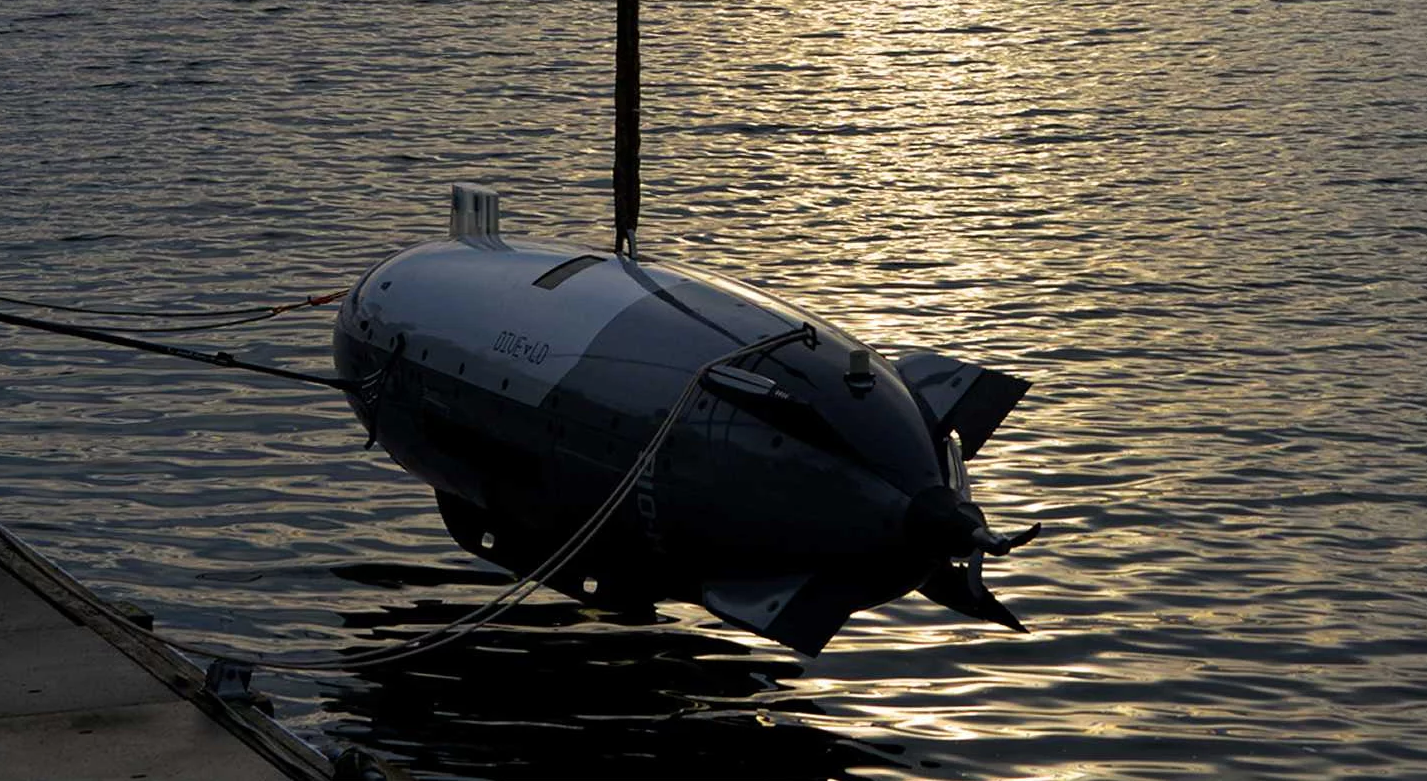
The autonomous Dive-LD is engineered for long-duration, deep-sea missions, with the ability to operate at depths of up to 6,000 meters and remain submerged for up to 10 days. It has a 3D-printed exterior and high-resolution seafloor mapping tools.
The combination matters strategically because real-world classification of ship-radiated noise, transient signatures, biologics, and ambient background under low and variable signal-to-noise ratio remains the bottleneck for any persistent, distributed, low-cost undersea surveillance architecture. The traditional approach, in which a hull-mounted or towed array streams data to a manned platform where trained operators make classification decisions, does not scale to the projected fleet of thousands of small autonomous nodes envisioned under Replicator and AUKUS Pillar II. Recognition must therefore be embedded onboard, under tight constraints on parameters, floating-point operations, latency, and thermal power.
Lightweight hybrid attention networks with multi-scale feature integration are the leading candidate architecture for that role because they preserve the representational depth of convolutional and transformer-style models while compressing parameter counts and computational budgets enough to fit modern low-power inference accelerators.
The evidence base is, however, narrower than vendor and conference rhetoric suggests. The published peer-reviewed literature relies overwhelmingly on two open datasets: ShipsEar, approximately three hours of recordings in 11 vessel categories plus natural noise, collected off the Spanish Atlantic coast between 2012 and 2014, and DeepShip, 47 hours and 4 minutes of recordings from 265 vessels in four classes (cargo, passenger, tanker, tugboat), collected in the Strait of Georgia Delta between 2016 and 2018 [1][2]. Both are valuable, but neither covers the full range of operational acoustic environments, hostile signature management practices, or the long tail of class imbalance that operational systems encounter. Reported headline accuracies, including 98.89 percent for the MFAGNet multi-scale hybrid network on ShipsEar and 96.40 percent for the CFTANet sub-band Mel spectrogram model with multidomain attention on the same benchmark, should therefore be read as upper bounds under benign and partially in-distribution conditions rather than as operational performance estimates [3][5]. Two recent surveys, one in Remote Sensing in 2024 and one in Ocean Engineering in 2024, document this generalization gap as the central unresolved problem in the field [8][10].
 admin
admin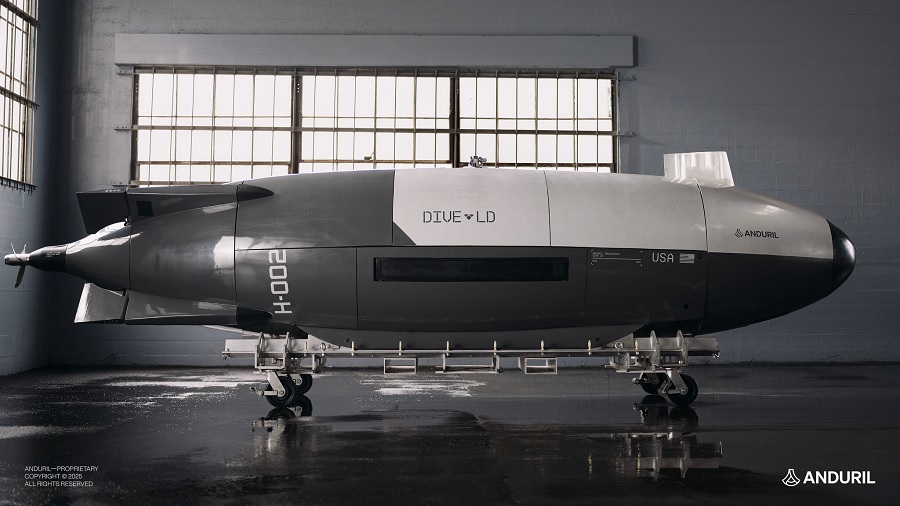
For acquisition leaders, the operational implication is that lightweight hybrid attention plus multi-scale fusion is a technology to integrate now, but with assurance, evaluation, and procurement structures that explicitly address brittleness rather than treating benchmark accuracy as a contract metric. For institutional investors, the implication is that the biggest value in the stack is no longer the sonar transducer or the raw classifier, but the integrated edge-inference plus data-management layer that allows continuous retraining, domain adaptation, and field assurance across heterogeneous platforms. For policymakers, the implication is that export-control, AI-assurance, and standards regimes (Wassenaar dual-use lists, ITAR Category XI, the NIST AI Risk Management Framework, the United States Department of Defense Responsible AI Strategy and Implementation Pathway, and the NATO STANAG 4748 JANUS protocol family) intersect in ways that have not yet been fully resolved and which will shape what allied industrial bases can co-develop under AUKUS Pillar II and similar frameworks [21][23][24][29].
This report assesses the technology, the actors, the markets, the regulatory and geopolitical environments, the structured risks, and the prioritized recommendations that follow. It distinguishes throughout between peer-reviewed findings, agency policy documents, market-research estimates, and analytic inference.
Underwater Acoustic Target Recognition Using Lightweight Hybrid Attention Networks with Multi-Scale Feature Integration: An Intelligence and Strategy Assessment
1. Summary
2. Contextual Background and Problem Definition
- 2.1 The Underwater Acoustic Channel and Why It Is Hard
- 2.2 The Classification Problem: Passive Versus Active, and Class Structure
- 2.3 From Classical Methods to Deep Learning
- 2.4 The Rationale for Lightweight Hybrid Attention and Multi-Scale Integration
3. Technical and Operational Considerations
- 3.1 Acoustic Data Modalities and Feature Representations
- 3.2 Attention Mechanisms in UATR
- 3.3 Multi-Scale Feature Integration
- 3.4 Lightweight Model Design for Edge Deployment
- 3.5 Datasets and Benchmarks
- 3.6 Operational Deployment Contexts
- 3.7 Failure Modes and Adversarial Considerations
4. Key Players and Stakeholders
- 4.1 National Defense and Naval Research Establishments
- 4.2 Defense Primes and Undersea-Systems Manufacturers
- 4.3 Academic and Open-Research Communities
- 4.4 Commercial and Dual-Use Actors
- 4.5 Standards, Funding, and Coordinating Bodies
5. Economic and Market Dynamics
- 5.1 Sonar and Undersea Warfare Systems Market
- 5.2 UUV and AUV Market and the Value of Onboard Inference
- 5.3 Dual-Use Commercial Demand Drivers
- 5.4 Cost Structure and Value Chain
- 5.5 Investment and Funding Flows
6. Regulatory Landscape
- 6.1 Export Controls
- 6.2 Environmental and Acoustic Emissions Regulation
- 6.3 Data Governance, Model Assurance, and AI Assurance
- 6.4 Standards and Interoperability
7. Geopolitical and Strategic Dimensions
- 7.1 Great-Power Competition Beneath the Surface
- 7.2 Maritime Domain Awareness and Seabed Infrastructure Protection
- 7.3 Alliances
- 7.4 Proliferation and Asymmetric Use
- 7.5 Strategic Significance of Lightweight, Deployable Recognition at Scale
8. Risk Matrix
- 8.1 Technical Risks
- 8.2 Operational and Integration Risks
- 8.3 Market and Economic Risks
- 8.4 Regulatory, Legal, Environmental Risks
- 8.5 Geopolitical and Supply-Chain Risks
- 8.6 Consolidated Risk Matrix
9. Strategic Recommendations
- 9.1 For Defense Policymakers and Naval Acquisition Leaders
- 9.2 For Institutional Investors and Technology Executives
- 9.3 For Research Institutions and Standards Bodies
10. Outlook and Conclusion
References
 John D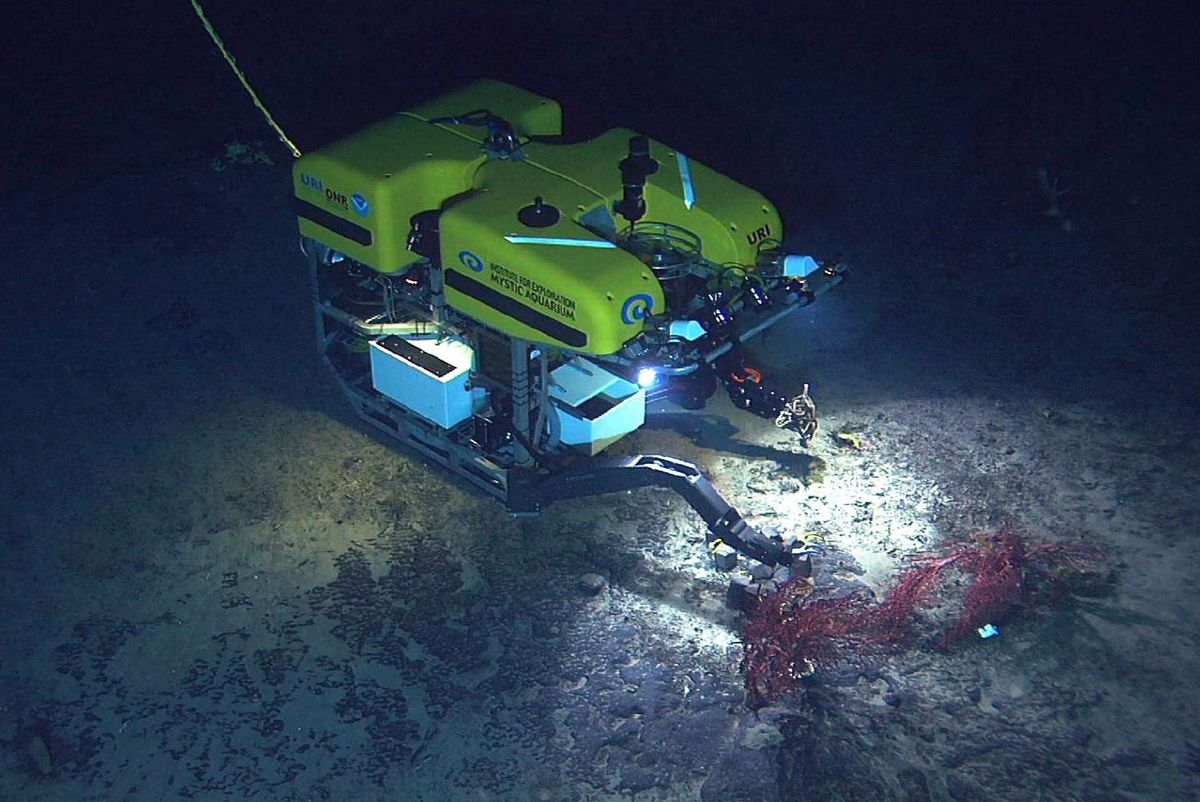
2. Contextual Background and Problem Definition
2.1 The Underwater Acoustic Channel and Why It Is Hard
The underwater acoustic channel is among the most adverse signal environments in widespread engineering use. Sound propagation in seawater is governed by a depth-, salinity-, and temperature-dependent speed profile that produces refractive bending, surface and bottom reflections, and the formation of duct, shadow, and convergence zones whose geometry varies on timescales from minutes to seasons. The result is that a single radiated signature reaches a receiver as a superposition of many delayed, attenuated, and Doppler-shifted copies, a phenomenon usually described under the umbrella of multipath propagation and reverberation. The bandwidth available to a passive sensor is constrained from above by frequency-dependent absorption, which rises sharply above approximately one kilohertz, and from below by ambient noise, which is shaped by wind, rain, distant shipping, and biological sources such as snapping shrimp and marine mammals. In coastal and littoral environments, the variance of ambient noise from minute to minute and from location to location is large, and biological transients can dominate spectral content in narrow windows of interest.
The signal-to-noise ratio at the recognition stage is therefore not only low in absolute terms but also highly non-stationary. The 2024 Remote Sensing survey by Feng and colleagues emphasizes that these channel effects mean that conventional assumptions of signal stationarity, additive Gaussian noise, and feature stability do not hold, and that any recognition system must be designed to be robust to channel-induced distortion rather than merely to classifier-side noise [8]. The Hummel, van der Mei, and Bhulai survey in Ocean Engineering in 2024 reaches a similar conclusion across more than one hundred reviewed studies, noting that performance reported on a single dataset has limited transfer to other recording sites, hydrophone configurations, or weather conditions [10]. The earlier survey by Luo, Chen, Zhou, and Cao in the Journal of Marine Science and Engineering provides a complementary taxonomy of channel-conditioned methodological choices [9].
A further complication, less frequently discussed in the open literature but well documented in classical underwater acoustics references, is geographic variability. Sound speed profiles, ambient noise floors, and bottom characteristics in the Indo-Pacific, the Arctic Ocean, and the Eastern Mediterranean differ materially from those in the Atlantic shelf and Strait of Georgia regions where the principal open datasets were collected. Models tuned on those datasets cannot be assumed to perform comparably elsewhere without additional evidence.
2.2 The Classification Problem: Passive Versus Active, and Class Structure
UATR is usually decomposed by sensing modality and by the temporal character of the target signature. Passive sonar listens for the radiated noise of vessels, marine life, or anthropogenic events; active sonar transmits an acoustic pulse and analyzes the returned echo. Passive recognition is dominant in the open research literature because it does not reveal the listener's position, because most of the open data is passive, and because it maps naturally to maritime domain awareness and anti-submarine warfare doctrine. Within passive recognition, signatures are further subdivided into continuous broadband and tonal components driven by propulsion, propeller cavitation, and machinery, and transient events such as door closures, ice cracks, or weapon launches. The recent work of Sun and Wang in the Journal of the Acoustical Society of America extends this taxonomy to single-channel multi-target recognition, in which several radiating sources overlap in time and frequency, and shows that mixture-aware architectures can recover acceptable classification under controlled conditions but degrade significantly when the number of co-present targets is unknown [13].
Class imbalance is structural. In ShipsEar, three categories (pilot ships, trawlers, and tug boats) have so few samples that almost every published study removes them from the training and test split [1]. In DeepShip, the four broad classes (cargo, passenger, tanker, tugboat) are more balanced but still dominated by cargo. In real operational contexts, rare but high-value classes such as specific submarine variants are typically absent from open datasets entirely, which is both a security feature and a methodological hazard, because algorithms tuned to commercial vessel taxonomies offer no guarantee of useful behavior on military classes. Few-shot and class-imbalance handling have therefore become substantive sub-fields, but the absence of an open, well-balanced, and operationally relevant test set remains the binding constraint.
2.3 From Classical Methods to Deep Learning
The classical underwater acoustic targets recognition (UATR) pipeline, dominant from the 1980s through approximately 2017, combined hand-engineered features with shallow classifiers. The feature side drew on cepstral coefficients, mel and gammatone filterbanks, low-frequency analysis and recording (LOFAR) spectra, detection of envelope modulation on noise (DEMON), and wavelet decompositions. The classifier side used Gaussian mixture models, support vector machines, and later random forests. The original ShipsEar paper itself reported a baseline classifier built on cepstral coefficients and Gaussian mixture models that achieved a 75.4 percent classification rate with 100 percent accuracy in detecting vessel presence [1]. This regime is well understood, interpretable, and computationally light, and it remains the operational baseline in many fielded sonar systems.
Deep learning has displaced this approach in the open research literature over the last seven years. Convolutional neural networks operating on time-frequency representations, recurrent and convolutional-recurrent networks for temporal modeling, autoencoders for denoising and self-supervised pretraining, and most recently transformer and attention-based architectures, have all been applied to UATR. The Luo and colleagues survey documents this transition in detail, including the recognition that deep models exploit information in time-frequency representations that hand-engineered features systematically discard [9]. The Khishe DRW-AE paper in the IEEE Journal of Oceanic Engineering combines wavelet and recurrent autoencoders explicitly to address the periodic-plus-time-varying nature of ship-radiated noise [12]. Zhou and Yang's denoising representation framework in JASA, which couples correlation-based "multi-image" generation with a convolutional denoising autoencoder feeding a random-forest classifier, is illustrative of the hybrid deep-classical idiom that persisted in the field through 2020 [14].
The displacement is not uniform across operational segments. Fielded fleet sonar systems remain dominated by signal-processing pipelines with operator decision support, partly because of certification requirements and partly because of legacy hardware constraints. Deep learning is more aggressively adopted in research, in commercial AUV applications, and in the autonomy stacks of newer attritable platforms.
2.4 The Rationale for Lightweight Hybrid Attention and Multi-Scale Integration
Three observations motivate the specific architectural class addressed by this report. First, ship-radiated noise carries discriminative information at multiple temporal and spectral scales simultaneously, from sub-second transient envelopes to multi-second propeller modulation rates and minute-scale machinery line drift. Single-scale convolutional receptive fields capture only one of these. Multi-scale fusion, implemented through parallel kernels of different sizes, dilated convolutions, or feature pyramid networks, lifts this constraint. Liu and colleagues' MFAGNet in Remote Sensing is the canonical recent example; it combines multi-scale convolutional features with gated fusion to achieve 98.89 percent accuracy on a 12-class ShipsEar task [3].
Second, attention mechanisms allow the network to weight discriminative spectral bands, time windows, or channels adaptively, which is particularly valuable when the relevant signature occupies a small fraction of the input representation. Channel attention modules of the squeeze-and-excitation family, spatial attention over time-frequency maps, and self-attention from transformer architectures have all been deployed. Xue, Zeng, and Jin's CamResNet in Sensors and Xiao and colleagues' attention-based deep neural network in JASA Express Letters are early channel-attention exemplars [6][7]. Hybrid attention denotes the deliberate combination of two or more such mechanisms, such as channel attention plus self-attention or channel attention plus a transformer block, often arranged at different network depths to refine features of different abstraction levels. The Yang group's CFTANet in Engineering Applications of Artificial Intelligence uses such a multidomain attention design on a sub-band concatenated Mel spectrogram and reports 96.40 percent accuracy on ShipsEar and 90.60 percent on DeepShip, with a stated improvement of 7.06 percent over prior state-of-the-art methods on DeepShip [5].
Third, the deployment environment for any operationally useful UATR system is increasingly constrained. Onboard AUVs and sonobuoys, the inference budget is measured in milliwatts and tens of milliseconds, not in GPU-hours. Lightweight design, through depthwise separable convolutions, parameter sharing, model distillation, pruning, and quantization, is therefore not an optional optimization but a deployment prerequisite. The Yang, Xue, Hong, and Zeng lightweight network paper in the Journal of Marine Science and Engineering exemplifies this objective, reporting a 56.1 percent parameter reduction relative to a ResNet-18 baseline with comparable accuracy on ShipsEar [4]. UALF, the learnable acoustic front-end developed by Ren, Xie, Zhang, and Xu, is a complementary contribution at the input side, replacing fixed filterbanks with a small number of trainable Gabor-like filters that can be jointly optimized with downstream attention modules [11].
3. Technical and Operational Considerations
3.1 Acoustic Data Modalities and Feature Representations
A modern UATR pipeline accepts raw waveforms sampled typically between 20 and 96 kilohertz from one or more hydrophones, and transforms them into one or more two-dimensional representations before classification. The dominant representations are short-time Fourier spectrograms, log-Mel spectrograms (motivated by human auditory perception but useful for ship signatures because of the bias toward low-frequency content), gammatone filterbank outputs, and continuous or discrete wavelet decompositions. Specialty representations include LOFAR (for narrowband line spectra typical of machinery), DEMON (for envelope modulation associated with propeller blade rates), and constant-Q transforms.
Recent literature has trended toward feature fusion, in which multiple representations are stacked along a channel axis and consumed jointly by a multi-stream or multi-branch network. The Liu MFAGNet paper combines several representations into a multi-scale feature bank [3]. The Yang CFTANet introduces a "sub-band concatenated Mel spectrogram" specifically engineered to amplify low-frequency ship-radiated content [5]. Learnable front-ends, exemplified by UALF, replace fixed filterbanks with trainable Gabor-like filters whose parameters are optimized jointly with the classifier [11]. The trade-off is between interpretability and end-to-end learning: fixed representations are easier to audit and certify, whereas learned front-ends typically extract a few additional percentage points of accuracy at the cost of opacity, which matters for test-and-evaluation and AI-assurance regimes.
A practical caution noted across the survey literature is that preprocessing choices, including segment length (commonly 1 to 5 seconds), resampling rate (22,050 or 44,100 Hz), and band-pass filter cutoffs, are not standardized across papers and can shift reported accuracy by several percentage points. This is one of the reasons reproducibility across the field is uneven, as both the Feng survey and the Hummel survey emphasize [8][10].
3.2 Attention Mechanisms in UATR
Attention can be applied along three axes in a two-dimensional time-frequency representation: channels (when multiple feature maps coexist), spatial axes (time and frequency), and temporal sequences (when recurrent or transformer encoders are used). Channel attention, popularized by squeeze-and-excitation networks, learns a scalar weight per feature map; the Xue, Zeng, and Jin CamResNet uses channel attention atop a ResNet backbone and reports it improves recognition by emphasizing stable spectral features and suppressing high-frequency components that are degraded by the underwater channel's low-pass behavior [6]. Spatial attention learns weighting masks over the time-frequency plane and is particularly useful for transient localization. Self-attention from transformer architectures models global dependencies and has been shown by Xiao and colleagues to permit the model to focus on the target ship's frequency-domain features while suppressing noise and interference, including in multi-target conditions [7].
Hybrid attention combines two or more of these mechanisms, generally with the rationale that different mechanisms encode complementary inductive biases. The empirical risk is that stacking attention modules grows parameter count and inference latency disproportionately to accuracy improvement. The Yang CFTANet implements a multidomain attention architecture explicitly to keep the network "simple residual" while gaining the benefits of multiple attention types [5]. Reported gains over single-attention baselines are typically in the range of 1 to 4 percentage points of classification accuracy on ShipsEar and DeepShip, with greater margins under low signal-to-noise conditions. These figures are aggregated from the survey literature [8][10] and should be regarded as indicative rather than precise, given variation in preprocessing and class definitions.
3.3 Multi-Scale Feature Integration
Multi-scale integration is implemented through three main idioms. The first is parallel multi-kernel convolution, in which the same input is processed by branches with kernel sizes spanning, for example, 3, 5, and 7 samples in time and frequency, with the outputs concatenated. The second is dilated convolution, which expands the receptive field without increasing parameter count by inserting gaps in the convolution kernel. The third is the feature pyramid, in which features at multiple resolutions are computed by progressive downsampling and then aggregated, often with top-down lateral connections.
MFAGNet uses a combination of multi-kernel and gating-based fusion to achieve its reported 98.89 percent on a 12-class ShipsEar setup [3]. The Khishe DRW-AE uses wavelet decomposition as an intrinsically multi-scale operator [12]. The Wang, Liu, and Guo multi-scale self-distillation paper in the Journal of the Acoustical Society of America in 2025 extends the idea to self-supervised pretraining, in which a multi-scale teacher network distills a saliency-masked spectrogram representation into a student model and is positioned by its authors as a response to the data-scarcity problem [35]. Cross-scale aggregation, often paired with attention, has now become standard in the highest-performing networks reported on ShipsEar and DeepShip.
The trade-off between multi-scale depth and edge-deployability is real. A pyramid network with five scales and bidirectional aggregation, paired with channel and self-attention at each level, will dominate benchmarks but will likely exceed the inference budget of a small AUV. Hardware-aware neural architecture search, parameter sharing across scales, and progressive distillation are the principal mitigations.
3.4 Lightweight Model Design for Edge Deployment
The deployment context for any operationally useful UATR system imposes hard limits on model size, computation, latency, and thermal envelope. A medium-class AUV carries a battery of typically tens of kilowatt-hours, and inference at duty cycles compatible with continuous mission operation must fit within budgets of a few watts. Lightweight design strategies include depthwise separable convolutions (which factorize a standard convolution into a depthwise and a pointwise step, reducing parameter and FLOP count by roughly an order of magnitude), structured pruning (which removes filters or channels whose contribution is empirically small), quantization to 8-bit integer or lower precision (which roughly halves memory bandwidth and energy per operation for each halving of bit width), and knowledge distillation (in which a small student network is trained to mimic the soft outputs of a larger teacher).
Reported results in the recent literature are not directly comparable because authors use different baselines and target devices. The Yang lightweight network reports 56.1 percent parameter reduction versus ResNet-18 with comparable accuracy on ShipsEar [4]. The market signals, particularly Mordor Intelligence's observation that procurement is "shifting from traditional hull-mounted hardware toward software-defined acoustic arrays," reinforce the strategic importance of this engineering layer [16]. Astute Analytica notes from the industry side that capital is flowing to edge computing components, "fueling real-time Automatic Target Recognition (ATR)" on UUV platforms; this is an analyst characterization rather than a peer-reviewed datum and should be read accordingly.
A practical engineering note: the gap between an academic-grade lightweight model and a deployable one is typically larger than the literature suggests, because additional engineering effort is required for hardware-specific compilation, quantization-aware training, calibration on representative data, and integration with the platform's autonomy stack. Lab benchmarks rarely capture these costs.
3.5 Datasets and Benchmarks
Two datasets dominate the open literature. ShipsEar, released by Santos-Domínguez and colleagues in 2016, comprises approximately three hours of recordings collected from single or multiple hydrophones on the Spanish Atlantic coast between 2012 and 2014, sampled at 52,734 Hz, in 11 vessel categories plus natural noise [1]. DeepShip, released by Irfan and colleagues in 2021, contains 47 hours and 4 minutes of recordings from 265 ships in four classes (cargo, passenger, tanker, tugboat), collected at the Strait of Georgia delta node between May 2016 and October 2018 [2]. Both are vital to the field but represent only a narrow operational slice. There is, as of mid-2026, no fully open large-scale benchmark for military classes, for under-ice acoustic environments, for the Indo-Pacific, or for adversarial conditions. The Hummel survey explicitly identifies dataset scarcity as the field's foremost methodological constraint [10].
Reproducibility is uneven. Different papers report on different subsets of ShipsEar (often a nine-class or 5-class reduction), different segment lengths (typically 1 to 5 seconds), different train-validation-test splits, and different preprocessing pipelines. A skeptical reader of the literature should treat the reported numbers as ordinally informative rather than directly comparable. Comparative tables compiled across recent papers, for example in the Feng survey [8], typically show that a ranking of methods on ShipsEar partially reverses on DeepShip, which itself is evidence that no single benchmark is determinative.
Allied data-sharing programs under AUKUS Pillar II and bilateral NATO arrangements have begun to address this gap, but the resulting datasets are classified and unavailable to academic groups, which preserves the public-research bottleneck. This bifurcation, between an open academic literature trained on a narrow public substrate and a classified operational literature trained on a richer but invisible one, is itself a strategic feature of the field.
3.6 Operational Deployment Contexts
Operational UATR is delivered in several distinct platform families: hull-mounted active and passive sonars on surface combatants and submarines (for example the AN/SQQ-89 family on US destroyers and the Thales Sonar 2076 on UK Astute-class submarines); towed line arrays such as the TB-29 and TB-33 series; expendable sonobuoys deployed from maritime patrol aircraft like the P-8A; AUVs and UUVs ranging from man-portable systems such as the REMUS family through medium AUVs to the Anduril Dive-LD and the US Navy's Orca XLUUV; seabed sensor networks including legacy SOSUS and contemporary fiber-based distributed acoustic sensing systems; and unmanned surface vessels including the Modular Attack Surface Craft (MASC) program that replaced the LUSV and MUSV programs in 2025 [20].
Inference may be onboard, edge-distributed, or shore-side. The trend, evident across both peer-reviewed and analyst literature, is toward edge processing on the platform, with only high-value contacts or alerts uplinked over slow acoustic or burst optical links. This shift is structurally favorable to lightweight attention architectures: a five-million-parameter quantized model can fit comfortably on a contemporary low-power inference accelerator and meet a typical latency budget of under 100 milliseconds per classification window, whereas an unconstrained transformer of the kind that dominates speech recognition benchmarks cannot. Anduril's Dive-LD, selected as part of the Replicator 1.2 second tranche in August 2024 at approximately USD 2.5 million per unit (per DefenseScoop reporting on contract sources), with first delivery to the US Navy's UUVRON-1 on 5 April 2025, exemplifies the platform class on which these recognition payloads will be deployed [22].
3.7 Failure Modes and Adversarial Considerations
The open literature's failure-mode analysis is preliminary. Documented failure modes include domain shift between training and deployment environments (different sea states, different hydrophone responses, different ambient noise profiles), class imbalance and long-tail blindness, brittleness under low signal-to-noise ratio, and the lack of well-characterized confidence calibration. Adversarial robustness has received almost no rigorous study in UATR specifically, though analogous results in image and speech recognition strongly suggest that small, structured perturbations to a radiated signature could induce misclassification. In a military context, signature management (the deliberate engineering of vessels and propulsion systems to reduce radiated noise and shape its spectral content) functions as an adversarial domain shift mechanism without explicit adversarial intent, and the cumulative investment in submarine quieting by major navies over decades is essentially an unannounced adversarial machine-learning experiment.
The methodological implication is that benchmark accuracies on ShipsEar and DeepShip overestimate operational performance, possibly by a substantial margin. An internal estimate is that field performance under unfamiliar conditions can be 10 to 30 percentage points lower than benchmark accuracy, though this figure is based on cross-dataset transfer studies aggregated in the Feng and Hummel surveys [8][10] rather than a directly measured datum, and is offered as a working assumption rather than a finding.
4. Key Players and Stakeholders
4.1 National Defense and Naval Research Establishments
The United States ecosystem is anchored by the Office of Naval Research, the Naval Undersea Warfare Center in Newport and Keyport, the Naval Research Laboratory, the Defense Advanced Research Projects Agency, and (increasingly visibly through Replicator) the Defense Innovation Unit [22]. The United Kingdom's Defence Science and Technology Laboratory is the principal research counterpart, supported by the National Oceanography Centre. France's Direction Générale de l'Armement is paired with several CNRS and university laboratories. Germany's Bundeswehr Technical Center for Ships and Naval Weapons, Maritime Technology and Research (WTD 71) supports the Bundeswehr's undersea programs. Italy's Centre for Maritime Research and Experimentation (CMRE), part of the NATO Science and Technology Organization, plays an outsized role as NATO's principal maritime science laboratory and the originator of the JANUS underwater communications standard [29][34].
Chinese research output in UATR has grown sharply over the past five years, with the Institute of Acoustics of the Chinese Academy of Sciences, Harbin Engineering University's National Key Laboratory of Underwater Acoustic Technology, Northwestern Polytechnical University, and Southeast University producing a substantial share of the recent attention-based UATR literature. The Russian Federation operates undersea research through entities including the Main Directorate of Deep-Sea Research (GUGI), whose Yantar and Belgorod-associated platforms have been the subject of recurrent allied concern. India's Defence Research and Development Organisation Naval Physical and Oceanographic Laboratory (NPOL) in Kochi, Japan's Acquisition, Technology and Logistics Agency, the Republic of Korea's Agency for Defense Development, and Australia's Defence Science and Technology Group round out the principal national programs.
4.2 Defense Primes and Undersea-Systems Manufacturers
The sonar systems and undersea integration market is concentrated among a small number of primes. Mordor Intelligence identifies Thales, Raytheon, L3Harris, Kongsberg, and General Dynamics Mission Systems as anchor players, with software specialists entering through "open-architecture payload slots" [16]. Other significant suppliers include Lockheed Martin (notably the AN/BQQ-10 submarine sonar suite and the Orca XLUUV prime role), BAE Systems, Leonardo (the Italian prime, particularly through its underwater systems division and Naval Group joint ventures), Atlas Elektronik (now part of thyssenkrupp Marine Systems), Hensoldt, ELAC SONAR (the Wärtsilä underwater business), Ultra Maritime, Saab, Teledyne (notably Teledyne Marine for commercial AUVs and Teledyne Gavia), Sonardyne (positioning and acoustic communications), and ASELSAN, FURUNO Electric, Hanwha Systems, and GeoSpectrum Technologies as regional specialists.
Within the autonomous undersea segment, Huntington Ingalls Industries (with the REMUS family acquired from Hydroid), Kongsberg Maritime (the HUGIN family), Anduril Industries (Dive-LD selected for Replicator 1.2 in August 2024; Ghost Shark for the Royal Australian Navy), Saab (Sabertooth), and BAE Systems Australia are the leading western players [22]. China's offerings, including the HSU-001 series, are less well-characterized in the open literature.

4.3 Academic and Open-Research Communities
Geographic concentration of UATR publication has shifted markedly. By citation volume in the last five years, China-based groups dominate the open peer-reviewed output on attention-based and multi-scale UATR, followed by groups in Spain (notably the University of Vigo where ShipsEar originated), the United States, Iran (where Khishe and collaborators are productive), and Pakistan (the DeepShip collaboration). European Union research is distributed across Italy, France, Germany, and the Netherlands (with the Hummel group at the Centrum Wiskunde and Informatica and Vrije Universiteit Amsterdam producing the recent Ocean Engineering survey) [10]. The asymmetry in publication is not necessarily indicative of an asymmetry in operational capability; classified output from US, UK, French, and Russian establishments is by definition not reflected in citation counts.
4.4 Commercial and Dual-Use Actors
The commercial UUV segment includes Kongsberg, Teledyne Marine, Saipem, Saab, Sonardyne, Exail, DeepOcean, and a long tail of smaller systems integrators. Offshore wind development, subsea cable inspection, offshore oil and gas integrity monitoring, hydrography, and environmental monitoring constitute the principal civilian demand drivers, with MarketsandMarkets projecting that the ROV-dominated commercial segment will grow in step with the broader UUV market [17]. Fortune Business Insights places the global autonomous underwater vehicle subset at USD 1.85 billion in 2026, rising to USD 4.37 billion by 2034 at an 11.3 percent CAGR [18].
 John D
Several dual-use autonomy startups have moved from venture-backed pilot scale into government procurement. Anduril, with the Dive-LD selection for Replicator 1.2 at approximately USD 2.5 million per unit and first delivery to UUVRON-1 in April 2025, is the most visible US example [22]. Saab's Sabertooth and HII's REMUS continue to compete for both commercial and naval contracts. The Australian Anduril Ghost Shark program and the joint AUKUS AURAS project sit at the dual-use edge as well.
4.5 Standards, Funding, and Coordinating Bodies
NATO's Centre for Maritime Research and Experimentation, the IEEE Oceanic Engineering Society, the Acoustical Society of America, and the open-data initiative OAlib coordinate the technical and standards work. NATO STANAG 4748, the JANUS protocol, was promulgated in March 2017 as the first internationally adopted digital underwater acoustic communications standard [29][34]. The European Defence Agency's SALSA project (2018-2022) and follow-on activities extend this work to adaptive underwater acoustic networking. Funding flows include defense procurement (national budgets), agency R&D (ONR, DARPA, the European Defence Fund), and an increasing share of venture and growth equity, particularly in the United States, the United Kingdom, and Australia under AUKUS Pillar II auspices [21].
5. Economic and Market Dynamics
5.1 Sonar and Undersea Warfare Systems Market
The sonar systems market is moderate in headline growth but undergoing significant structural reallocation. Mordor Intelligence reports the market at USD 4.89 billion in 2025, rising to USD 5.80 billion in 2026 and reaching USD 6.67 billion by 2031, a 2.84 percent compound annual growth rate. Within that aggregate, multi-static configurations are projected to grow at a 5.10 percent CAGR through 2031 and seabed-mounted systems at 6.05 percent, while traditional hull-mounted segments grow more slowly. Defense accounted for 69.87 percent of revenue in 2025, with the commercial segment expected to grow fastest at 4.30 percent. By installation platform, unmanned platforms are expected to grow at a 6.65 percent CAGR through 2031. North America led with 36.98 percent of 2025 revenue, with Asia-Pacific projected to grow fastest at 4.75 percent through 2031 [16].
Fortune Business Insights, using a narrower scope, places the sonar market at USD 3.01 billion in 2026 growing to USD 3.92 billion by 2034 at a 3.34 percent CAGR, with North America accounting for 31.35 percent in 2025 and hull-mounted dominating the product type segment [19]. The divergence between Mordor and Fortune (more than 80 percent on the 2026 base) reflects different inclusion criteria (defense versus commercial, sonobuoys included or not, integration services included or not) rather than measurement noise. Analysts should not treat either figure as definitive; the more useful inference is directional, that the market is growing at low-to-mid-single digits in aggregate with much faster growth in software-defined and unmanned segments.
A separate Mordor Intelligence report places the sonobuoy market at USD 512.23 million in 2026 rising to USD 690.34 million by 2031 at 6.15 percent CAGR, reflecting digital detection systems and expanding maritime surveillance needs [16]. The sonobuoy segment is directly relevant to UATR because expendable buoy hardware is paired increasingly with onboard or burst-uplink classification
5.2 UUV and AUV Market and the Value of Onboard Inference
The unmanned underwater vehicle market is growing faster than the sonar market by a substantial margin. MarketsandMarkets projects the global UUV market at USD 5.9 billion in 2025, rising to USD 8.7 billion in 2030 at an 8.0 percent CAGR, with autonomous underwater vehicles the fastest-growing segment at 8.2 percent CAGR. Unit volumes are projected to grow from 19,092 in 2024 to 33,603 by 2030 [17]. Fortune Business Insights reports the AUV-only subset at USD 1.7 billion in 2025, USD 1.8 billion in 2026, and USD 4.3 billion by 2034 at 11.3 percent CAGR [18]. The North American UUV segment alone is projected by MarketsandMarkets to rise from USD 1.5 billion in 2025 to USD 2.2 billion in 2030 at 8.1 percent CAGR and from 4.8k unit deliveries to 8.6k unit deliveries by 2030. The European UUV segment is projected from USD 2 billion in 2025 to USD 2 billion in 2030 at 7.6 percent, and the Asia-Pacific segment from USD 1.6 billion to USD 2.5 billion at 8.8 percent over the same horizon [17].
A separate forecast by ResearchAndMarkets projects the global UUV market at USD 5 billion in 2026, rising to USD 15 billion by 2036 at 11 percent CAGR, while Astute Analytica projects a more aggressive USD 47 billion by 2035 at 24 percent CAGR. The latter figure is an outlier and should be treated with skepticism. The convergence of the more conservative forecasts (MarketsandMarkets, Fortune Business Insights, Global Market Insights) on annual growth of 8 to 12 percent is the more common reference range.
The strategic significance of these numbers is that the share of UUV value attributable to onboard intelligence (software, AI, edge compute, sensors, mission autonomy) is rising faster than the hardware base. This is consistent with broader patterns observed in unmanned aerial systems and ground robotics. Whether the same will hold in undersea systems is contingent on the maturation of edge inference, on the resolution of the generalization-gap problem in UATR, and on regulatory and assurance frameworks that may favor or disfavor onboard learning.
5.3 Dual-Use Commercial Demand Drivers
Three demand drivers stand out. First, offshore wind development is generating substantial demand for AUV-based site survey, route survey, and asset integrity inspection, with Mordor noting that "AUV-based synthetic-aperture sonar surveys saved Equinor six ship days per pipeline inspection in 2025" and prompting similar operators to add contract capacity for 2026 campaigns [16]. Second, the increasing density of subsea cable laying by hyperscalers requires continuous inspection and route assurance; according to TeleGeography data cited by Open Markets Institute (March 2025) and Submarine Networks, Amazon, Google, Meta, and Microsoft together accounted for 71 percent of all used international cable capacity in 2024, and the CSIS analysis "China's Underwater Power Play" notes that the same four firms "now own or lease around half of all undersea bandwidth worldwide" [27]. Third, fisheries and environmental monitoring, including the implementation of the IMO's revised guidelines for underwater radiated noise from commercial shipping under MEPC.1/Circ.906 (effective 1 October 2023), is creating new demand for calibrated passive listening, fleet noise auditing, and certified URN reduction [28].
5.4 Cost Structure and Value Chain
The undersea recognition stack has four principal cost layers: sensors (hydrophones, transducers, arrays), compute (edge inference accelerators, low-power FPGAs, navigation processors), software (signal processing, AI models, autonomy stacks, mission planning), and integration plus sustainment (platform integration, secure communications, retraining infrastructure, certification). Historically, sensors and platform integration captured the majority of program value. The forward distribution shifts toward software and integration as platforms commoditize and as the operational differentiator becomes the quality of the recognition and autonomy stack. This shift mirrors a long-running pattern in aerospace, where the value migrated from airframes to mission systems, and is broadly consistent with the analyst commentary cited above [16][17].
A specific cost-structure note: the marginal cost of additional model retraining cycles is small in absolute terms but high in opportunity cost, because each retraining requires access to certified test data and a re-run of assurance procedures. Programs that fail to anticipate this and to build a sustainable retraining-and-assurance pipeline as part of the program of record will likely face cost overruns mid-life as models drift away from operational distributions.
5.5 Investment and Funding Flows
The United States Navy's FY2025 budget requested USD 22 million in research and development funding for the XLUUV program and USD 68 million for core UUV technologies, in addition to USD 54 million and USD 102 million for the LUSV and MUSV programs that were merged into the Modular Attack Surface Craft program in 2025 [20]. The figures understate the total flow because UUV-relevant funding is also embedded in submarine modernization, ASW, sonobuoy, and Replicator lines. Replicator itself has fielded multiple thousands of uncrewed systems across domains by mid-2026, with the Pentagon publicly characterizing the initiative as having "made enormous strides," though no fully audited tally has been released [22].
AUKUS Pillar II spending is opaque in aggregate but visibly concentrated on undersea autonomy, including the AURAS project, the AUKUS Maritime Autonomy Experimentation and Exercise Series, and a 2024 trilateral innovation challenge focused on autonomous undersea warfare [21][30]. European Union public investment in undersea infrastructure protection rose materially in 2025; the European Commission's Joint Communication EU Action Plan on Cable Security of 21 February 2025 committed €533 million under the Connecting Europe Facility (CEF) Digital programme for submarine cable projects through 2027, taking total CEF Digital funding for submarine cables under the current Multiannual Financial Framework to "almost EUR 1 billion," with a separate February 2026 tranche adding €347 million specifically for cable security [26].
Private investment flow into undersea autonomy and AI startups is harder to quantify, with no comprehensive open dataset. Anduril's Dive-LD selection for Replicator at approximately USD 2.5 million per unit (per DefenseScoop reporting on contract documentation) is one durable signal; the AUKUS Defense Investors Network established in 2024 to coordinate capital flows across the three nations is another. Uncertainty here is large, and a skeptical reader should not treat any private investment figure as audited.
6. Regulatory Landscape
6.1 Export Controls
Sonar systems, undersea autonomy, and AI components for target recognition sit at the intersection of multiple export-control regimes. Under United States International Traffic in Arms Regulations, the United States Munitions List Category XI covers military electronics including sonar systems, anti-submarine warfare equipment, and signal-processing components for military use. The Export Administration Regulations ECCN 6A001 covers commercial and dual-use acoustic systems, equipment, and components, with significant overlap. Wassenaar Arrangement controls cover dual-use acoustic sensors and AI components more broadly. The AUKUS partners completed substantial export-control reforms in 2024 to enable defense trade among the three nations, including ITAR exemptions for many controlled items between Australian, United Kingdom, and United States entities, but the Excluded Technology List continues to limit a meaningful subset of UATR-relevant items [21][30]. The practical implication for industry is that any UATR algorithm trained on, or intended for, military classes will trigger ITAR jurisdiction and that licensing latency remains a material constraint on multi-national R&D consortia.
A subtle but consequential dimension is that the dataset itself can be controlled. Acoustic recordings of specific naval platforms, particularly submarines, are typically classified at high levels, and even derived feature embeddings can carry classification. This means that model weights trained on classified data, and in some cases the models themselves, are subject to export control independent of their algorithmic content.
6.2 Environmental and Acoustic Emissions Regulation
The Marine Mammal Protection Act in the United States, the European Union Marine Strategy Framework Directive (which treats anthropogenic underwater noise as a descriptor of environmental status), and the IMO's revised MEPC.1/Circ.906 guidelines for the reduction of underwater radiated noise from shipping all shape the operational envelope for both active sonar operations and commercial shipping. MEPC.1/Circ.906, adopted in July 2023 and effective from 1 October 2023, supersedes the 2014 MEPC.1/Circ.833 and provides updated technical references and sample templates for URN management plans, with an "Experience Building Phase" targeted for completion by 2026 [28]. The MEPC.1/Circ.907 guidelines specifically address URN reduction in Inuit Nunaat and the Arctic. These regulations are not directly binding on military operations but condition the commercial market in which dual-use technologies are tested.
For UATR specifically, the URN regime has a second-order effect: as commercial vessels become quieter under MEPC.1/Circ.906, the discriminative signature available to passive classification on ShipsEar-style tasks may also diminish. The empirical literature has not yet quantified this effect, and it is plausible that performance on benchmarks compiled before widespread URN compliance will overstate performance on similar tasks after.
6.3 Data Governance, Model Assurance, and AI Assurance
The NIST AI Risk Management Framework (AI RMF 1.0), released in January 2023 under the National Artificial Intelligence Initiative Act of 2020, is the dominant voluntary framework in the United States for managing AI risks across the GOVERN, MAP, MEASURE, and MANAGE functions [23]. On 7 April 2026, NIST released a concept note for an AI RMF Profile on Trustworthy AI in Critical Infrastructure, which is likely to influence dual-use undersea recognition systems as well. The DoD Responsible Artificial Intelligence Strategy and Implementation Pathway, signed in June 2022 by then-Deputy Secretary of Defense Kathleen Hicks, defines five DoD AI Ethical Principles (Responsible, Equitable, Traceable, Reliable, Governable) and is the principal authority for DoD-internal RAI program design [24]. The European Union AI Act, in force from 2024 with rolling implementation through 2027, addresses civilian high-risk AI systems and includes a national-security carve-out, but its model-documentation and transparency provisions are likely to shape allied industrial practice in dual-use systems by 2026 and beyond.
The intersection of these frameworks with UATR is non-trivial. Recognition models that influence weapon-engagement decisions are likely to be treated as safety-critical under DoD principles and to require traceable provenance, bias measurement, and human override mechanisms that the current academic-style benchmarks (ShipsEar accuracy alone) do not satisfy. Programs that delay the integration of AI-RMF-aligned documentation and DoD-RAI-aligned engineering controls into their development lifecycle face material rework risk.
6.4 Standards and Interoperability
NATO STANAG 4748, the JANUS digital underwater acoustic communications standard, was promulgated in March 2017 and is the first internationally adopted digital underwater acoustic communications protocol [29][34]. It defines a robust modulation and coding scheme using 900 Hz to 60 kHz frequencies, with demonstrated ranges up to approximately 22 to 28 kilometers in benign conditions and standard configurations operating at roughly 100 bits per second. JANUS is the principal interoperability layer for ad-hoc allied underwater networks and is the natural integration point for distributed UATR, though its data rates are far below the bandwidth required to stream full classifier inputs, which reinforces the case for on-platform recognition with classification labels transmitted rather than raw audio. The European Defence Agency's SALSA project (2018-2022) extended this work, and the Subsea Wireless Group's SWiGacoustic standard addresses offshore energy applications. Neither has yet produced a ratified successor to JANUS at the NATO level.
The interaction between JANUS and lightweight UATR is operationally important. A recognition system that produces compact class-and-confidence labels can transmit those labels over JANUS in seconds; one that produces raw spectrograms cannot. Standards bodies should anticipate this and reserve code points for AI-generated outputs and confidence metadata.
7. Geopolitical and Strategic Dimensions
7.1 Great-Power Competition Beneath the Surface
The undersea domain has reasserted itself as a critical theater of great-power competition. The 2020 Hudson Institute study by Clark, Cropsey, and Walton argues that "the current US and allied approach to antisubmarine warfare is unlikely to cope with the probable scale of undersea threats in a crisis or conflict" and proposes a transition to autonomous-system-centric ASW concepts emphasizing distributed sensors, multistatic active sonar, and AI-mediated command and control [15]. The argument is not unique to Hudson: the May 2024 RAND commentary by Kiran Suman-Chauhan, Nicolas Jouan, and James Black, "Navies Look to Uncrewed Systems to Counter Threats Beneath the Waves," states that "Autonomy, though, is potentially transformative, removing the need to expose or expend human life," and identifies distributed sensing and attritable platforms as the principal vectors of change [31]. The Australian Strategic Policy Institute is more explicit that China is closing qualitative gaps in ASW and that the strategic premium on autonomous undersea sensing will rise.
The unifying analytical claim across Hudson, RAND, ASPI, and CNAS commentary is that volume-of-presence will substitute partially for sensor exquisiteness, and that the marginal effectiveness of an extra unit of capability comes increasingly from improvements in onboard recognition rather than from improvements in physical sensors. That claim is plausible but not yet empirically demonstrated at the scale envisioned, and is the principal speculative premise on which the lightweight-hybrid-attention investment case rests.
7.2 Maritime Domain Awareness and Seabed Infrastructure Protection
The vulnerability of seabed infrastructure has been demonstrated repeatedly over the past four years. The September 2022 Nord Stream pipeline detonations were determined by Swedish investigators to be a deliberate act before the investigation was closed without naming suspects in 2024; in November 2025 Italy approved the handover to Germany of a Ukrainian suspect [32]. The October 2023 damage to the Balticconnector pipeline and adjacent cables, attributed to the Chinese-flagged vessel Newnew Polar Bear's anchor; the November 2024 cuts to the BCS East-West Interlink and C-Lion1 cables, in which the Chinese vessel Yi Peng 3 was the principal suspect; the December 2024 Estlink 2 power cable cut linked to the Eagle S tanker associated with Russia's shadow fleet; the January 2025 Vezhen incident with the Latvia-Sweden Gotland cable; and the December 2025 Elisa cable cut between Helsinki and Tallinn associated with the Fitburg seizure form a continuing pattern [32][33]. By early 2026, NATO had established the Critical Undersea Infrastructure Coordination Cell (February 2023), the Maritime Centre for the Security of Critical Underwater Infrastructure at Allied Maritime Command (July 2023 Vilnius Summit), and the Baltic Sentry operation as institutional responses.
The Center for Strategic and International Studies summarizes the strategic stakes: more than 95 percent of international data traverses subsea cables and approximately USD 10 trillion of financial transactions cross them daily. Cable kilometre counts cited in the CSIS literature have grown from approximately 1.2 million kilometres in the 2024 CSIS analysis "Safeguarding Subsea Cables" to "1.5 million kilometers of submarine cables" in the 2025 CSIS analysis "Protecting Subsea Cables: Detect to Deter, Sue to Secure," reflecting rapid network expansion as well as different inclusion conventions across reports [25][26]. CSIS reporting in 2025 documents the China Ship Scientific Research Centre's development of a cable-cutting device capable of operating "at depths of up to 4,000 meters (13,123 feet)," deepening the concern from gray-zone anchor damage to potential intentional severance at strategic depths [27].
7.3 Alliances
AUKUS Pillar II is the most consequential vehicle for allied UATR cooperation. Its eight working groups include "undersea capabilities" and "artificial intelligence and autonomy," and the announced initiatives include the AUKUS Maritime Autonomy Experimentation and Exercise Series, the AUKUS Undersea Robotics Autonomous Systems (AURAS) project, the AUKUS Defense Investors Network, and the 2024 trilateral innovation challenge focused on autonomous undersea warfare [21][30]. The 2024 ITAR exemptions and the United Kingdom's Defence Trade Controls Act amendments significantly lower frictions to UATR-relevant technology sharing among the three partners, though critics including Dean and Nason in War on the Rocks (June 2025) argue that Pillar II has yet to deliver "marquee deliverables." NATO Pillar II analogues, the Joint Expeditionary Force in northern Europe, and bilateral arrangements between Japan, South Korea, and Five Eyes partners extend the cooperation perimeter.
The interoperability premium under these frameworks is significant. A coalition that operates a heterogeneous fleet of recognition systems from multiple primes, on multiple platforms, in multiple acoustic environments, can only generate consistent operational outputs if it agrees on label taxonomies, confidence reporting conventions, and audit standards. The push toward common AI-output schemas on JANUS-like channels is therefore as much an alliance-political requirement as a technical one.
7.4 Proliferation and Asymmetric Use
The combination of falling unit costs for AUVs, freely available open-source machine learning frameworks, and modestly accessible training data lowers the barrier to entry for small navies to field crude UATR capabilities [26]. The strategic implication is that UATR is becoming a baseline capability rather than a high-end discriminator, with the differentiator shifting to integration, training data, and operational tempo.
7.5 Strategic Significance of Lightweight, Deployable Recognition at Scale
The convergence of low-cost autonomous platforms, edge inference, and improved attention-based recognition produces a qualitative shift in the cost-imposition calculus of undersea operations. A defender that can field hundreds or thousands of seabed nodes and small AUVs equipped with onboard classification can in principle saturate a bottleneck or littoral basin at a cost-per-square-kilometer-per-day that is one to two orders of magnitude below the operating cost of a manned destroyer or maritime patrol aircraft. The Hudson study and analogous Center for a New American Security analyses use this calculus to argue that allied procurement should prioritize "many small, cheap" platforms with onboard AI over fewer "exquisite" systems [15]. The argument is plausible but unproven at the scale envisioned. The principal uncertainty is whether onboard recognition will generalize sufficiently outside its training distribution to be operationally useful, which is the same question the academic literature flags as the central unresolved problem [8][10].
8. Risk Matrix
8.1 Technical Risks
The principal technical risk is generalization failure under domain shift. Benchmark accuracies on ShipsEar and DeepShip do not transfer to other recording sites, hydrophone configurations, weather conditions, or vessel classes, and cross-dataset transfer studies in the survey literature consistently show degradation of 5 to 20 percentage points [8][10]. Data scarcity is structural and persistent: there is no near-term prospect of an open dataset comparable in scale and breadth to those that have catalyzed image recognition or speech recognition. Adversarial vulnerability is largely uncharacterized in UATR specifically. Brittleness of single-study results, magnified by inconsistent preprocessing and reporting, complicates capability assessment.
8.2 Operational and Integration Risks
Integration of UATR into manned and unmanned platforms requires resolution of acoustic, mechanical, thermal, electromagnetic, and software-architectural interfaces, often across multiple primes and over multi-year acquisition cycles. The 2025 merger of LUSV and MUSV into the Modular Attack Surface Craft program indicates the difficulty of stabilizing requirements [20]. Latency, energy, and reliability budgets on small platforms are tight and trade against accuracy. Training-and-test data calibration to the deployed sensor configuration is often underestimated and is a recurrent source of underperformance in fielded systems.
8.3 Market and Economic Risks
Defense procurement cycles are long and volatile, and the recent compression of LUSV and XLUUV R&D budgets in FY2025 illustrates that even strategically prioritized programs can be cut sharply [20]. Hype-cycle correction is plausible: the Pentagon's Replicator initiative announced fielding "thousands of uncrewed systems" by August 2025, but reporting in mid-2026 suggests that the pace has been slower than originally envisioned even as the program has made progress [22]. AUKUS Pillar II has been criticized as "failing in its mission" by some analysts. Concentration risk is real in the prime-vendor base, particularly as autonomy startups consolidate or are acquired.
8.4 Regulatory, Legal, Environmental Risks
ITAR licensing latency, MMPA exposure for active sonar trials, IMO underwater radiated noise expectations under MEPC.1/Circ.906, and the still-evolving EU AI Act create a regulatory perimeter that is dense and shifting [28]. Insurance and liability exposure for autonomous classification errors is unsettled in case law. The risk that an autonomous UATR system misidentifies a civilian vessel and contributes to an incident with civil-liability consequences is not zero and is likely to grow as systems are deployed in commercially trafficked waters.
8.5 Geopolitical and Supply-Chain Risks
Sonar transducers, piezoelectric materials, and high-end inference accelerators are exposed to Chinese supply concentration in upstream inputs. Rare earth supply, gallium and germanium for compound semiconductors, and certain magnetics are flagged in CSIS and other think-tank work as vulnerabilities. Sanctions, secondary sanctions, and counter-sanctions are an active risk vector through 2026. The expansion of Chinese cable-cutting capability at depths up to 4,000 meters introduces a new escalation path that allied undersea surveillance must contend with [27].
8.6 Consolidated Risk Matrix
The following matrix summarizes the principal risks. Likelihood and impact are scored on a five-point scale (Very Low, Low, Medium, High, Very High). Confidence reflects assessment of the underlying evidence base.
| Risk | Likelihood | Impact | Confidence | Mitigation |
|---|---|---|---|---|
| Generalization failure under domain shift | High | High | High | Multi-site data collection; adversarial training; domain-adaptation evaluation; human-in-the-loop oversight. |
| Open-data scarcity persisting | Very High | Medium | High | Allied pooled-data programs under AUKUS; synthetic data generation; transfer learning approaches. |
| Adversarial / signature-management vulnerability | Medium | High | Low | Robustness testing; model ensembling; conservative confidence calibration. |
| Procurement cycle volatility (LUSV/MUSV merger pattern) | High | Medium | High | Modular open architectures; multi-vendor sourcing; capability-based contracting. |
| Hype-cycle correction in autonomy | Medium | Medium | Medium | Disciplined milestone reporting; rigorous testing and evaluation; staged investment. |
| ITAR / export-control friction | High | Medium | High | AUKUS license exemptions; segmentation of dual-use versus military models. |
| Regulatory exposure (MMPA, IMO URN) | Medium | Medium | High | Compliance-by-design; environmental impact engineering. |
| Supply-chain concentration (semiconductors, piezoelectrics) | High | High | Medium | Allied stockpile programs; CHIPS-style industrial policies; design for substitutability. |
| Seabed infrastructure attack escalation (including 4,000 m cable-cutting) | High | Very High | Medium | Distributed sensing; rapid-repair fleets; legal-attribution frameworks. |
| Adversarial proliferation via open tooling | Medium | Medium | Medium | Selective release; data-side classification; export of services rather than model weights. |
| Model assurance failure under DoD Responsible AI (RAI) and NIST AI RMF requirements | Medium | High | Medium | Align with AI RMF principles from the design phase; conduct documented red-teaming. |
| Class imbalance and rare-class blindness | High | High | High | Few-shot learning; pretraining on related signals; targeted collection of rare-event data. |
9. Strategic Recommendations
9.1 For Defense Policymakers and Naval Acquisition Leaders
First, treat real-world generalization, not benchmark accuracy, as the contract performance metric. UATR procurement should specify test-and-evaluation protocols that include domain-shifted holdout data drawn from operationally relevant environments, including under-ice conditions in the High North, the South China Sea littoral, and the Eastern Mediterranean. Benchmark numbers on ShipsEar and DeepShip should be treated as necessary but not sufficient. Time horizon: 12 to 24 months for protocol drafting; multi-year for full implementation. Principal trade-off: slower contracting in exchange for materially better field outcomes.
Second, fund and govern allied pooled-data programs explicitly. AUKUS Pillar II already provides the political framework; what is missing is a sustained, classified-but-shareable acoustic data pipeline with common metadata standards, hydrophone calibration protocols, and a federated training regime that preserves national control while enabling joint model improvement [21]. Time horizon: 24 to 36 months. Principal trade-off: classification overhead and political sensitivity over national signature data.
Third, accelerate the adoption of NATO STANAG 4748 (JANUS) extensions for the transmission of classifier labels and confidence rather than raw audio, with reserved code points for AI-generated outputs and a metadata schema that supports model provenance and version tracking [29][34]. Time horizon: 18 to 36 months. Principal trade-off: standardization may slow vendor differentiation but is necessary for coalition interoperability.
Fourth, align UATR program development with the NIST AI Risk Management Framework and the DoD Responsible AI Strategy and Implementation Pathway from the outset rather than retrofitting them, with explicit requirements for documented data lineage, bias measurement on rare classes, and human override mechanisms [23][24]. Time horizon: 12 months for policy alignment; ongoing for integration. Principal trade-off: higher upfront engineering cost in exchange for survivable assurance posture.
Fifth, treat lightweight hybrid attention plus multi-scale fusion as a baseline, not a discriminator. The architectural class is mature enough that primes and software vendors should be expected to deliver it; competitive evaluation should focus on integration quality, retraining tempo, and assurance evidence. Time horizon: immediate. Principal trade-off: lower vendor margin on the algorithm itself, higher demand on systems engineering.
Sixth, plan acquisition for the assumption that benchmark-to-field accuracy degradation can be material, possibly 10 to 30 percentage points. This is analytic inference, not a directly measured figure, but it is consistent with the cross-dataset transfer evidence in the recent survey literature [8][10] and should inform reserve performance margins.
9.2 For Institutional Investors and Technology Executives
First, prioritize the integration plus data-management layer over the raw algorithm. The defensible margin in the UATR stack is shifting from model architecture (which is rapidly commoditizing through open publication and conference disclosure) toward data pipelines, retraining infrastructure, model versioning, edge deployment toolchains, and assurance instrumentation. Companies that own the data plus deployment plus retraining loop, including with secure federated architectures, will capture disproportionate value. Time horizon: 18 to 36 months for portfolio rebalancing.
Second, structure undersea autonomy investments around AUKUS Pillar II and Replicator transition pathways rather than purely commercial markets. The DoD Replicator initiative has demonstrated willingness to procure from non-traditional vendors, including the August 2024 selection of Anduril's Dive-LD for Replicator 1.2 at approximately USD 2.5 million per unit and first delivery to UUVRON-1 in April 2025 [22]. The AUKUS Defense Investors Network is an explicit coordination mechanism. Time horizon: immediate. Principal trade-off: defense procurement is slower and more concentrated than commercial cycles but offers larger, more durable contracts.
Third, accept that the sonar systems market headline growth of 2.8 to 4.4 percent CAGR (depending on analyst) is an aggregate that masks divergent segment growth. Investment exposure should favor the higher-growth segments: multi-static at 5.1 percent CAGR, unmanned platforms at 6.65 percent CAGR, seabed nodes at 6.05 percent CAGR, and software [16][17]. Time horizon: ongoing. Principal trade-off: higher segment growth typically correlates with higher execution risk.
Fourth, conduct due diligence on dataset provenance and assurance practices, not just on benchmark accuracy. The most common failure mode of acquired UATR startups in due diligence is overstated generalization based on overlapping or insufficiently diverse training and test data. Time horizon: every transaction.
Fifth, consider EU-side opportunities given the February 2025 EU Action Plan on Cable Security which committed €533 million under the Connecting Europe Facility Digital programme for submarine cable projects through 2027, with cumulative CEF Digital submarine cable funding approaching €1 billion under the current Multiannual Financial Framework and a €347 million February 2026 tranche specifically for cable security [26]. This is a structural demand signal for sensing, classification, and inspection services around critical undersea infrastructure.
9.3 For Research Institutions and Standards Bodies
First, develop and publish a multi-site, multi-condition open benchmark that supersedes single-source ShipsEar and DeepShip dependencies, ideally with explicit train-validation-test splits, calibrated hydrophone metadata, and characterized signal-to-noise ratio distributions. Time horizon: 24 to 48 months.
Second, formalize reporting standards for UATR, analogous to MLPerf in mainstream machine learning, including required disclosures on segment length, preprocessing, model parameter count, FLOPs, latency on a reference accelerator, and confidence calibration. Time horizon: 12 to 24 months.
Third, extend the JANUS standard and its successors with provisions for AI-output transmission, model versioning, and a confidence-and-provenance metadata schema. Time horizon: 24 to 48 months via NATO Science and Technology Organization and IEEE Oceanic Engineering Society pathways.
Fourth, invest in adversarial robustness and signature-management research as a first-class research line rather than an afterthought. Time horizon: ongoing.
10. Outlook and Conclusion
The trajectory of underwater acoustic target recognition through the late 2020s is reasonably well supported by current evidence in three dimensions and speculative in two.
Well supported, first, is the continued dominance of lightweight hybrid attention architectures with multi-scale feature integration as the principal academic and engineering paradigm for UATR. The published literature between 2021 and 2025 has converged on this design space, and reported gains over single-scale, single-attention baselines are robust across independent groups and datasets [3][4][5][6][7][8][9][10][11][12]. Well supported, second, is the scaling of unmanned undersea platforms and the associated demand for onboard recognition: MarketsandMarkets, Fortune Business Insights, and Mordor Intelligence agree directionally that the autonomous underwater vehicle segment grows materially faster than the broader sonar market through at least 2030 [16][17][18]. Well supported, third, is the strategic salience of undersea domain awareness in NATO, Indo-Pacific, and AUKUS contexts; the regular incidence of seabed infrastructure events from 2022 through 2026 is unlikely to abate, and the institutional responses (Baltic Sentry, the NATO Maritime Centre for the Security of Critical Underwater Infrastructure, AUKUS Pillar II, the EU Action Plan on Cable Security) have entered an operational phase [25][26][27][32][33].
Speculative, first, is the rate at which generalization gaps between benchmark and operational performance will close. Self-supervised pretraining on large unlabeled acoustic corpora, federated learning across allied datasets, and synthetic data generation are all plausible vectors, but none has yet demonstrated decisive transfer in the open literature. Speculative, second, is the structural distribution of value across the undersea AI stack. The hypothesis that data and integration capture the value plausibly holds in commercial software analogues, but undersea hardware constraints, classification regimes, and sovereign-data sensitivities may produce a different equilibrium than terrestrial AI markets exhibit.
The strategic recommendation that follows is to invest, acquire, and regulate as if lightweight hybrid attention plus multi-scale integration is now the table-stakes technology for undersea recognition, with the contested ground being assurance, data, and integration. The risk of treating any specific reported benchmark as a measure of operational capability remains the most consequential analytical error a senior reader could make from the current literature, and this report has flagged that risk explicitly throughout.
References
[1] Santos-Domínguez, David, Soledad Torres-Guijarro, Antonio Cardenal-López, and Antonio Pena-Gimenez. 2016. "ShipsEar: An Underwater Vessel Noise Database." Applied Acoustics 113: 64–69.
[2] Irfan, Muhammad, Zheng Jiangbin, Shahid Ali, Muhammad Iqbal, Zafar Masood, and Umar Zakir Abdul Hamid. 2021. "DeepShip: An Underwater Acoustic Benchmark Dataset and a Separable Convolution Based Autoencoder for Classification." Expert Systems with Applications 183: 115270.
[3] Liu, Shuai, Xiaomei Fu, Hong Xu, Jiali Zhang, Anmin Zhang, Qingji Zhou, and Hao Zhang. 2023. "A Fine-Grained Ship-Radiated Noise Recognition System Using Deep Hybrid Neural Networks with Multi-Scale Features." Remote Sensing 15 (8): 2068.
[4] Yang, Shuyuan, Lingzhi Xue, Xuan Hong, and Xiangyang Zeng. 2023. "A Lightweight Network Model Based on an Attention Mechanism for Ship-Radiated Noise Classification." Journal of Marine Science and Engineering 11 (2): 432.
[5] Yang, Shuyuan, Lingzhi Xue, Xuan Hong, and Xiangyang Zeng. 2024. "Underwater Acoustic Target Recognition Based on Sub-band Concatenated Mel Spectrogram and Multidomain Attention Mechanism." Engineering Applications of Artificial Intelligence 133: 107983.
[6] Xue, Lingzhi, Xiangyang Zeng, and Anqi Jin. 2022. "A Novel Deep-Learning Method with Channel Attention Mechanism for Underwater Target Recognition." Sensors 22 (15): 5492.
[7] Xiao, Xu, Wenbo Wang, Qunyan Ren, Peter Gerstoft, and Li Ma. 2021. "Underwater Acoustic Target Recognition Using Attention-Based Deep Neural Network." JASA Express Letters 1 (10): 106001.
[8] Feng, Sheng, Shuqing Ma, Xiaoqian Zhu, and Ming Yan. 2024. "Artificial Intelligence-Based Underwater Acoustic Target Recognition: A Survey." Remote Sensing 16 (17): 3333.
[9] Luo, Xinwei, Lu Chen, Hanlu Zhou, and Hongli Cao. 2023. "A Survey of Underwater Acoustic Target Recognition Methods Based on Machine Learning." Journal of Marine Science and Engineering 11 (2): 384.
[10] Hummel, Hilde I., Rob D. van der Mei, and Sandjai Bhulai. 2024. "A Survey on Machine Learning in Ship Radiated Noise." Ocean Engineering 298: 117252.
[11] Ren, Jiawei, Yuan Xie, Xiaowei Zhang, and Ji Xu. 2022. "UALF: A Learnable Front-End for Intelligent Underwater Acoustic Classification System." Ocean Engineering 264: 112394.
[12] Khishe, Mohammad. 2022. "DRW-AE: A Deep Recurrent-Wavelet Autoencoder for Underwater Target Recognition." IEEE Journal of Oceanic Engineering 47 (4): 1083–1098.
[13] Sun, Qinggang, and Kejun Wang. 2022. "Underwater Single-Channel Acoustic Signal Multitarget Recognition Using Convolutional Neural Networks." Journal of the Acoustical Society of America 151 (3): 2245–2254.
[14] Zhou, Xingyue, and Kunde Yang. 2020. "A Denoising Representation Framework for Underwater Acoustic Signal Recognition." Journal of the Acoustical Society of America 147 (4): EL377–EL383.
[15] Clark, Bryan, Seth Cropsey, and Timothy A. Walton. 2020. Sustaining the Undersea Advantage: Transforming Anti-Submarine Warfare Using Autonomous Systems. Washington, DC: Hudson Institute.
[16] Mordor Intelligence. 2026. Sonar Systems Market Size & Share Analysis: Growth Trends and Forecasts (2026–2031). Hyderabad: Mordor Intelligence.
[17] MarketsandMarkets. 2026. Unmanned Underwater Vehicles (UUV) Market by Type, Propulsion, Size, Application, and Region: Global Forecast to 2030. Report AS 9659. Pune: MarketsandMarkets Research.
[18] Fortune Business Insights. 2026. Autonomous Underwater Vehicle Market Size, Share & Industry Analysis, 2026–2034. Pune: Fortune Business Insights.
[19] Fortune Business Insights. 2026. SONAR System Market Size, Share & Industry Analysis, Forecast 2026–2034. Report 101830. Pune: Fortune Business Insights.
[20] O'Rourke, Ronald. 2026. Navy Large Unmanned Surface Vessels (USVs): Background and Issues for Congress. CRS Report R45757. Washington, DC: Congressional Research Service, January 16.
[21] Nicastro, Luke A. 2024. AUKUS Pillar 2 (Advanced Capabilities): Background and Issues for Congress. CRS Report R47599. Washington, DC: Congressional Research Service, May 21.
[22] Congressional Research Service. 2025. DOD Replicator Initiative: Background and Issues for Congress. CRS Report IF12611. Washington, DC: Congressional Research Service.
[23] Tabassi, Elham. 2023. Artificial Intelligence Risk Management Framework (AI RMF 1.0). NIST AI 100-1. Gaithersburg, MD: National Institute of Standards and Technology.
[24] U.S. Department of Defense, Responsible AI Working Council. 2022. U.S. Department of Defense Responsible Artificial Intelligence Strategy and Implementation Pathway. Washington, DC: Department of Defense, June.
[25] Morcos, Pierre, and Colin Wall. 2021. "Invisible and Vital: Undersea Cables and Transatlantic Security." Commentary. Washington, DC: Center for Strategic and International Studies, June 11.
[26] Sherman, Justin, and Erol Yayboke. 2024. Safeguarding Subsea Cables: Protecting Cyber Infrastructure amid Great Power Competition. Washington, DC: Center for Strategic and International Studies.
[27] Center for Strategic and International Studies. 2025. "China's Underwater Power Play: The PRC's New Subsea Cable-Cutting Ship Spooks International Security Experts." Washington, DC: Center for Strategic and International Studies.
[28] International Maritime Organization. 2023. Revised Guidelines for the Reduction of Underwater Radiated Noise from Shipping to Address Adverse Impacts on Marine Life. MEPC.1/Circ.906. London: IMO, August 7.
[29] Potter, John R., João Alves, Daniele Green, Giovanni Zappa, Iván Nissen, and Kim McCoy. 2014. "The JANUS Underwater Communications Standard." In 2014 Underwater Communications and Networking Conference (UComms). Sestri Levante: IEEE.
[30] House of Commons Library. 2025. AUKUS Pillar 2: Advanced Capabilities. Research Briefing CBP-9842. London: House of Commons Library.
[31] Suman-Chauhan, Kiran, Nicolas Jouan, and James Black. 2024. "Navies Look to Uncrewed Systems to Counter Threats Beneath the Waves." Commentary. Santa Monica, CA: RAND Corporation, May 21.
[32] Statista. 2025. Damage to Underwater Cables and Pipelines in the Baltic Sea, 2022–2025. Hamburg: Statista.
[33] Bulletin of the Atomic Scientists. 2026. "Seabed Zero: Baltic Sabotage and the Global Risks to Undersea Infrastructure." Chicago: Bulletin of the Atomic Scientists, February.
[34] Petroccia, Roberto, João Alves, and Giovanni Zappa. 2017. "JANUS-Based Services for Operationally Relevant Underwater Applications." IEEE Journal of Oceanic Engineering 42 (4): 994–1006.
[35] Wang, Xingmei, Zijian Liu, and Zheng Guo. 2025. "Multi-Scale Self-Distillation Underwater Acoustic Signal Recognition via Saliency Masking Modeling." Journal of the Acoustical Society of America 158 (6): 4594–4606.