EHang's EH216-S and VT35: Inside the World's Only Certified Pilotless Passenger eVTOL Program
EHang holds the world's only certified pilotless passenger eVTOL. We assess the EH216-S, the VT35, and whether autonomy can scale beyond China.

EHang Holdings Limited: The Autonomy Wager in Passenger eVTOL: A Deep Institutional Assessment of the EH216-S and VT35 Programs
1. Summary
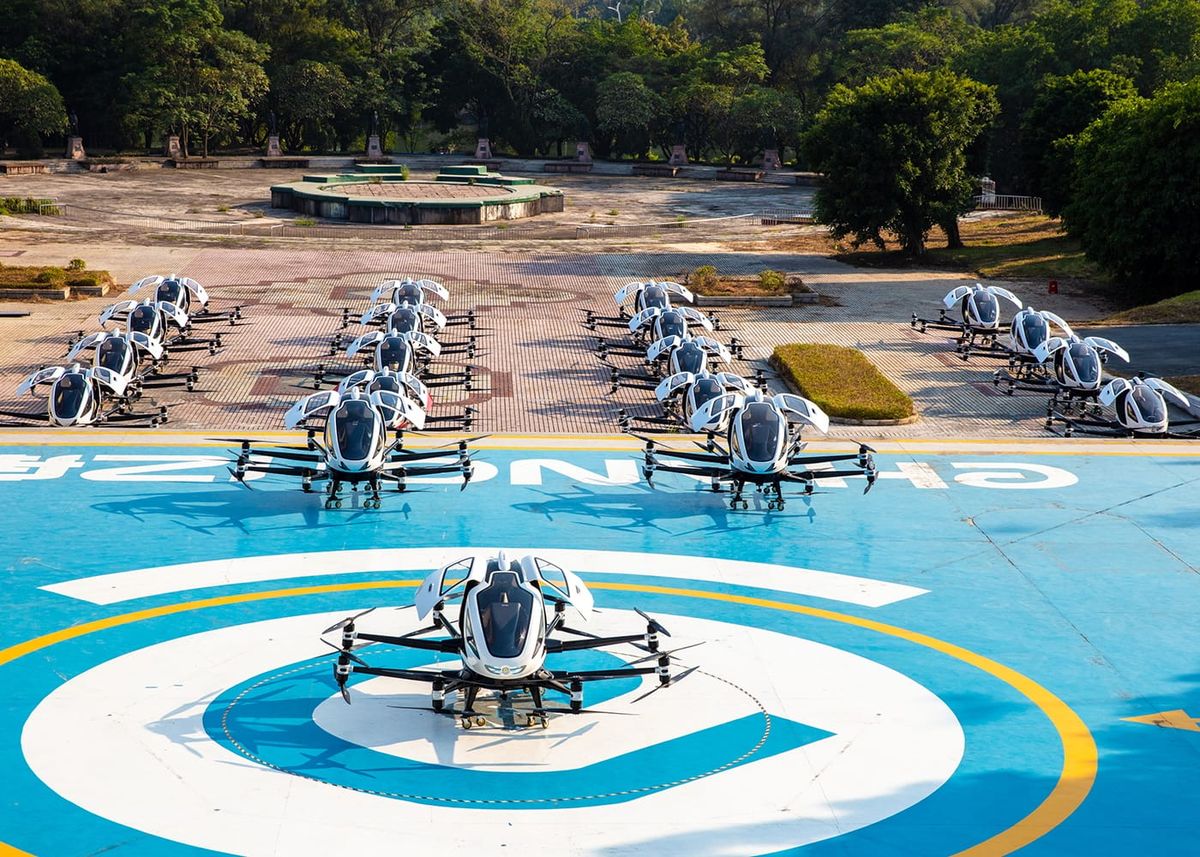
1.1 EHang Holdings Limited (NASDAQ: EH; Guangzhou, China) is the only company in the world operating a passenger-carrying electric vertical takeoff and landing (eVTOL) aircraft under a complete national regulatory suite, and it has built that position on a design philosophy that diverges fundamentally from every Western peer: full autonomy, with no onboard pilot and no per-vehicle remote pilot, operated through a centralized ground command-and-control model [4][6]. Its flagship EH216-S, a two-seat, 16-rotor multirotor, holds the world's first Type Certificate (TC, issued 13 October 2023), Standard Airworthiness Certificate (AC, 21 December 2023), Production Certificate (PC, 7 April 2024), and Air Operator Certificate (OC, 28 March 2025) for a pilotless human-carrying eVTOL, all issued by the Civil Aviation Administration of China (CAAC) [4][5][6]. In March 2026 EHang and its two certified operators began the world's first ticketed commercial pilotless passenger service in Guangzhou and Hefei [3][40].
1.2 The autonomy choice is the analytical spine of this report. It is simultaneously EHang's greatest asset and its central risk. In China it has enabled a faster certification pathway, structurally lower operating costs (no pilot wage, no pilot training pipeline, higher potential vehicle utilization), and a fleet-scale command-and-control model. Outside China it is a near-total barrier: neither the U.S. Federal Aviation Administration (FAA) nor the European Union Aviation Safety Agency (EASA) has an approved certification basis for fully autonomous passenger-carrying flight, and both are currently certifying only piloted eVTOLs [25][38]. EHang's international strategy therefore depends on bilateral regulatory recognition and "sandbox" frameworks (notably Thailand, Qatar, Japan) rather than home-authority certification [3][24].
1.3 Financially, EHang is small, improving on a non-GAAP basis, but still GAAP loss-making, and its revenue is volatile and policy-dependent. Fiscal 2025 revenue was RMB 509.5 million (US$72.9 million), up 11.7% year over year, on record deliveries of 221 eVTOLs; the company posted its first-ever GAAP-profitable quarter in Q4 2025 (net income RMB 10.5 million) but a full-year net loss of RMB 231 million [3]. Q1 2026 then collapsed sequentially to RMB 25.7 million in revenue and just four aircraft delivered, with net loss widening to RMB 126 million, exposing the extreme quarterly lumpiness of a business whose customers are predominantly local governments and state-linked tourism operators purchasing on annual cycles [1][2]. Cash, restricted short-term deposits, short-term investments and treasury investment balances were RMB 1 billion (US$148 million) as of 31 March 2026, providing a multi-year runway at current burn, and the company is even running a US$30 million buyback [1]. The investment case rests less on near-term unit economics than on whether China's low-altitude economy policy converts into durable, recurring operational demand, and whether autonomy can ever be exported.
2. Contextual and Scientific Background
2.1 The two platforms and the configuration tradeoff. The EH216-S and VT35 occupy opposite ends of the eVTOL design space, and the contrast is instructive. The EH216-S is a pure multirotor: 16 propellers driven by 16 independent electric motors mounted on eight arms around a two-seat carbon-composite cabin, with no wing and no thrust-vectoring [10][11]. The VT35 is a lift-plus-cruise (also termed "lift-and-cruise") design: eight distributed lift propellers for vertical takeoff and landing plus a single rear pusher propeller and a fixed tandem wing for forward cruise [8][9]. This is the textbook division in eVTOL engineering between hover-optimized and cruise-optimized architectures.
2.2 The governing physics is disk loading (thrust per unit rotor-disk area). Ideal hover power scales with the square root of disk loading, so a low-disk-loading multirotor like the EH216-S is comparatively efficient in hover and vertical flight but pays a severe penalty in cruise because it has no wing to generate lift and its large rotors add drag [36][37]. A peer-reviewed configuration study (Bacchini and Cestino 2019) modeled the EHang 184 (the single-seat predecessor of the 216 family) at a disk loading of 440 N/m² (≈9.2 lb/ft²) versus 880 N/m² for a representative lift-plus-cruise design (Kitty Hawk Cora) and 7,500 N/m² for a vectored-thrust design (Lilium Jet); it concluded that "the multirotor is more efficient in hover. The vectored thrust jet is more efficient in cruise and has a higher range. The lift + cruise is a compromise" [36]. The same study modeled the multirotor as unable to complete a 100 km mission at all, while the winged designs could (the lift-plus-cruise Cora at a modeled 107 km practical range), a direct quantitative illustration of why EHang needed the VT35 to address intercity range [36].
2.3 This tradeoff explains EHang's product strategy precisely. The EH216-S is bound by its multirotor physics to short, hover-intensive urban missions (manufacturer-stated range 30–35 km, flight time 21–25 minutes) [10][12]. The VT35's wing and pusher give it a manufacturer-asserted design range of approximately 200 km and cruise speed of 216 km/h, opening intercity, cross-sea, and cross-mountain corridors that the EH216-S physically cannot serve [8][9]. Independent modeling confirms that fixed-wing cruise is the dominant lever for energy efficiency and range in this class: a PNAS study (Sripad and Viswanathan 2021) found winged Urban Air Mobility (UAM) aircraft consume on the order of 156–218 Wh per passenger-mile at design range, with energy-per-km falling sharply as the cruise fraction rises [37]. NASA has similarly assessed that winged eVTOLs achieve a lift-to-drag ratio "more than double that of conventional helicopters" [38].
2.4 Acoustics.
Lower disk loading also tends to reduce noise (larger rotors permit lower tip speeds), which is why multirotors and distributed-propulsion eVTOLs are generally quieter than conventional helicopters [38]. Rigorous, peer-reviewed, measured community-noise data specific to the EH216-S could not be identified; the only specific figure located is a roughly 90 dB value recorded at a 2019 public demonstration against a company aspiration of 75 dB, and this popular-press figure should be treated as indicative rather than certified. No peer-reviewed flyover measurement of the EH216-S was identified, and this remains a genuine evidence gap. NASA's modeled target for winged eVTOLs is a noise reduction of 15 dB or more relative to comparable helicopters [38].
3. Key Players and Stakeholders
3.1 The company.
EHang was founded by Huazhi Hu, who remains Founder, Chairman and CEO; the company listed on NASDAQ in December 2019 under ticker EH [33]. Shuai Feng was appointed Chief Technology Officer in January 2026, and Conor Yang (Chia-Hung Yang) serves as CFO [1][2]. Manufacturing is concentrated at the Yunfu production facility (Guangdong); per the Q1 2025 disclosure the expansion would "double the factory space to 48,000 square meters, with plans to increase the annual production capacity to 1,000 units by the end of [2025]," plus newer facilities in Hefei (VT35 hub) and Beijing (EH216-F firefighting variant) [3][19].
3.2 Operators and the autonomy operating model.
Because the aircraft is pilotless, the certified operating entity is not a pilot but an Air Operator Certificate holder running a centralized command-and-control center. The two inaugural OC holders are EHang General Aviation (a wholly owned EHang subsidiary) and Heyi Aviation (an operator affiliated with an EHang client, based in Hefei) [4][19]. Both obtained OCs on 28 March 2025; per the Q1 2026 release, "since obtaining their OCs in March 2025, both operators have maintained a flawless safety record with zero accidents and zero violations, completing more than 3,000 safe flight missions" [1][4]. The EH216-S flies preset routes using GNSS positioning and a 5G command link to the ground center, which monitors and can intervene across a fleet [6][40].
 John D
3.3 Government and policy stakeholders.
Provincial and municipal governments are simultaneously EHang's principal customers, infrastructure financiers, and regulatory facilitators. The Hefei Municipal Government committed to purchase at least 100 EH216-series units and/or provide financing support up to US$100 million [40], and a Hefei platform company placed initial VT35 orders [8]. The CAAC is the enabling regulator. This entanglement of customer, financier, and state is both the engine of EHang's commercialization and a source of demand-quality risk (Section 6).
3.4 Suppliers.
Shenzhen Inx Energy Technology Co. is the strategic battery partner; EHang made a strategic investment in Inx in September 2023 and the two co-developed the solid-state battery used in record endurance and over-water demonstrations [14][3].
 John D
4. Technical and Operational Considerations
4.1 EH216-S airframe, propulsion, and redundancy.
The EH216-S is a 16-rotor, 16-motor, eight-arm multirotor; each rotor pair is mounted coaxially [10]. Manufacturer-asserted performance: maximum takeoff weight 620 kg (some earlier company materials cite 650 kg), payload 220 kg, cruise speed 100 km/h, maximum speed 130 km/h, service ceiling 3,000 m, range 30–35 km, and flight time 21–25 minutes [10][11][12]. These figures are manufacturer-asserted product specifications; the certification campaign that supported them comprised, per EHang, over 40,000 adjustment test flights and formal conformity testing across 65 major categories and over 450 individual test items witnessed by CAAC [40]. The autonomy and safety architecture is built on redundancy: the company describes multiple flight-control systems with voting mechanisms, redundant power and avionics, a fail-safe health-monitoring system that can command an emergency landing, and a parachute [6][10].
4.2 The energy system and the range constraint.
The production EH216-S uses a lithium-ion pack of approximately 17 kWh installed energy, distributed across 12 batteries managed by a redundant battery-management system so that failure of one or several packs does not end the flight [13]. This modest energy capacity, combined with multirotor disk loading, is the binding physical constraint on range: independent analysis concludes the aircraft's short range is "a consequence of its limited battery capacity and the low lift/drag ratio of rotary wing aircraft" [13]. Charging is stated at roughly one to two hours [12][40].
 Nigel
Nigel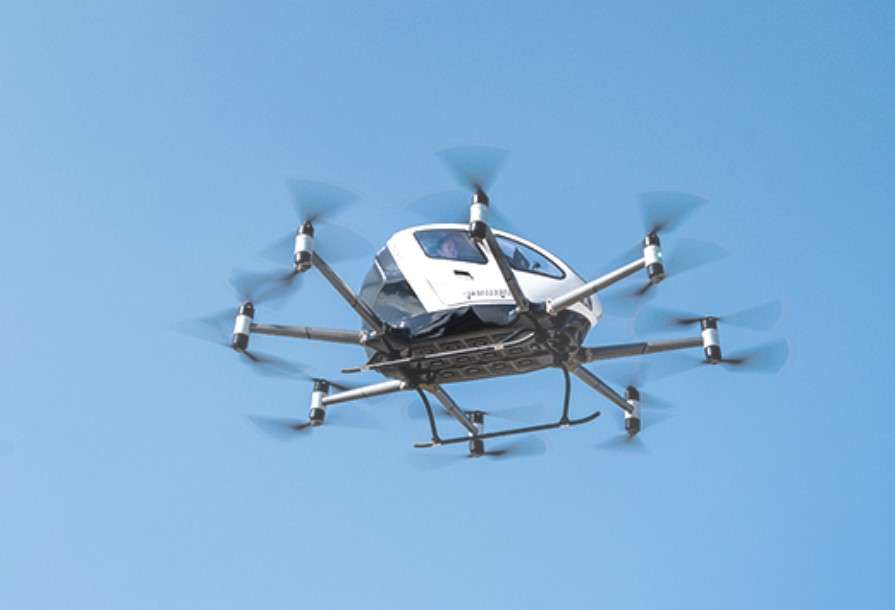

4.3 Solid-state roadmap versus delivered hardware.
EHang has aggressively publicized a next-generation chemistry. In November 2024, an EH216-S equipped with an Inx solid-state lithium-metal battery (metallic-lithium anode, oxide-ceramic electrolyte, claimed cell-level energy density of 480 Wh/kg) completed a continuous flight test of 48 minutes 10 seconds, notarized by the Guangzhou Notary Office, which EHang framed as a 60–90% endurance improvement and the world's first solid-state-powered passenger eVTOL flight [14]. In December 2025 an EH216-series aircraft completed a 22 km, 18-minute crossing of the Qiongzhou Strait powered by the Inx solid-state battery [3]. These are flight-demonstrated results, but they are demonstrations, not delivered, certified, mass-produced hardware: the 480 Wh/kg figure is manufacturer/supplier-asserted at cell level, and EHang's own stated target was to achieve certified, large-scale production of solid-state packs for the EH216-S by end-2025, a roadmap claim that should be tracked against actual certification disclosures rather than assumed complete [14]. The broader industry context is that production eVTOL cells generally top out near 285 Wh/kg against a widely cited requirement of at least 400 Wh/kg for meaningful range, so a verified, certified 480 Wh/kg pack would be a genuine step-change if delivered [41].
4.4 VT35: status and the asymmetry of evidence.
Public, verifiable VT35 data is far thinner than for the EH216-S, and this report treats it honestly as a development-stage program. Confirmed facts: the VT35 is a tandem-wing, two-seat lift-plus-cruise aircraft with eight lift propellers and one pusher; manufacturer-asserted MTOW 950 kg, design range approximately 200 km, cruise speed 216 km/h, dimensions roughly 8 m length/wingspan and 3 m height; it is compatible with EH216-S vertiports; and the China standard-version price is RMB 6.5 million (≈US$1 million) [8][9]. It is an upgrade of the earlier VT30 prototype. Development milestones: CAAC accepted the VT35 Type Certificate application in March 2025; the aircraft completed transition flight tests and fixed-wing flight tests and, per the Q1 2026 disclosure, entered the certification-basis definition phase with CAAC (discussions on Special Conditions and safety objectives) and the flight-envelope performance-testing phase; first public demonstration flights occurred in Hefei in December 2025 [3][8]. All VT35 performance numbers are design targets or manufacturer assertions, not independently flight-verified or certified, and no Type Certificate has been issued [8]. Six VT35 units were "delivered" in 2025 (one in Q3, five in Q4) to partners and a Hefei platform company, but these are early units to cooperation partners ahead of type certification rather than deliveries of a certified product [3][21].
4.5 The command-and-control stack as the differentiator.
EHang's centralized command-and-control system integrates monitoring, dispatch, early warning, and fleet-level coordination, with real-time data exchange between aircraft and ground stations over a redundant communications link [6]. The company demonstrated the scalability of this architecture in February 2026 by flying 16 EH216-S and 22,580 GD4.0 formation drones from a single computer at the China Spring Festival Gala, setting a Guinness World Record for most drones airborne simultaneously from one computer [3]. This is the operational embodiment of the autonomy thesis: one control center managing many aircraft, which is the source of EHang's claimed cost and scalability advantage, but also concentrates systemic risk (link integrity, cybersecurity, single-center failure modes) in ways a distributed piloted fleet does not.
 John D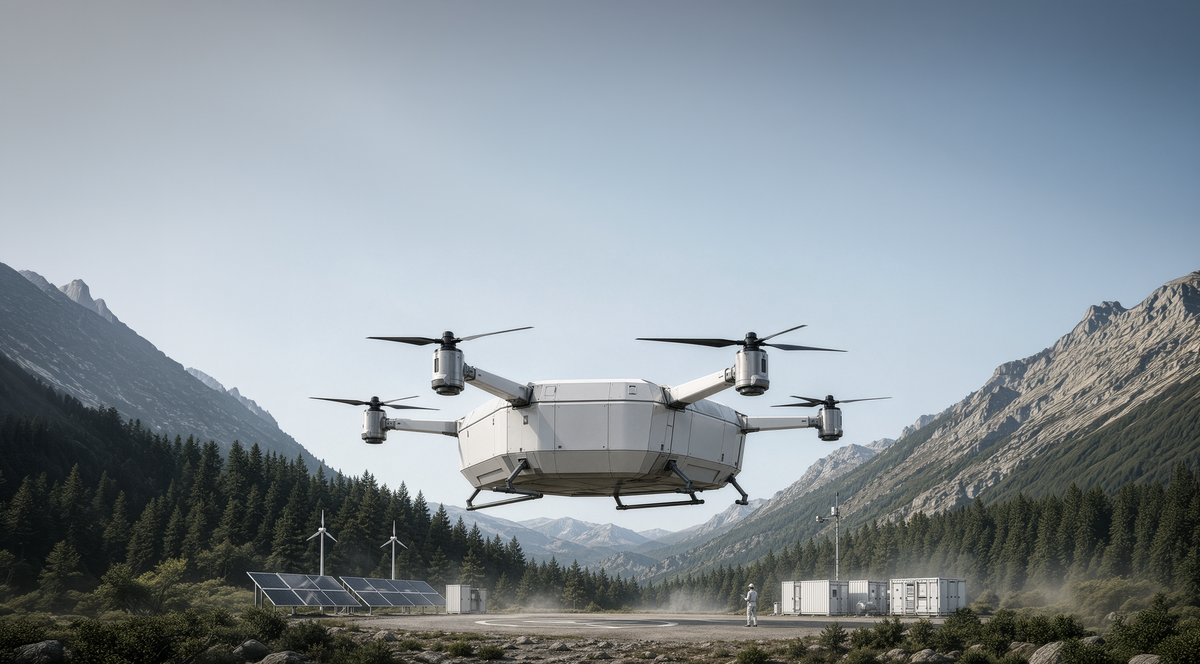
5. Certification and Airworthiness
5.1 The CAAC pathway and what "four certificates" means.
EHang frequently states it holds the world's first "full suite" of certificates [4]. These are distinct instruments and must not be conflated. The Type Certificate (TC, 13 October 2023) certifies the design of the aircraft type as airworthy [6]. The Standard Airworthiness Certificate (AC, 21 December 2023) certifies an individual aircraft as conforming to the type design [6][12]. The Production Certificate (PC, 7 April 2024) authorizes mass production under an approved quality system [5]. The Air Operator Certificate (OC, 28 March 2025) authorizes a specific operator to conduct commercial human-carrying flights [4]. The EH216-S TC application was filed 28 December 2020 and reviewed from January 2021, so the design certification alone took nearly three years against a novel, purpose-built airworthiness basis (the CAAC issued Special Conditions because no prior standard existed for passenger-carrying unmanned aircraft systems) [6][12].
5.2 Certification of the type versus approval of the use case.
The OC is narrow. It was issued under the CAAC's CCAR-92 framework (Civil Unmanned Aerial Vehicle Operational Safety Management Regulations) and initially authorizes "hovering flight" operations: takeoff and landing at the same location (point A-to-A), including hovering, circling, and return flights within a designated zone, for human-carrying tourism and sightseeing [7]. It does not yet authorize point-to-point (A-to-B) routing, urban commuting, or scheduled "transportation" in the regulatory sense [7]. The March 2026 commercial launch at EHang Future City (Guangzhou) and Luogang Park (Hefei) is therefore a same-vertiport sightseeing service at an early-bird fare of RMB 299 (≈US$41) per person, booked via app, with one passenger per flight in initial operations [40][23]. EHang states it is working with CAAC to expand to A-to-B and higher-level operations on a step-by-step, safety-record-driven basis [7]. This sequencing (certify a simpler aircraft first, then expand permissions on demonstrated safety) is the structural feature of the Chinese pathway.
5.3 The structural contrast with FAA and EASA.
The divergence here is the crux of the entire investment and strategic thesis. The FAA and EASA are certifying piloted eVTOLs and have no approved certification basis for fully autonomous passenger-carrying flight. In the U.S., Joby Aviation completed FAA certification Stage 4 (of five) in late March 2026 and Archer Aviation is in compliance/testing, both under the bespoke powered-lift framework of Part 21.17(b) and a 2024 powered-lift Special Federal Aviation Regulation — and both aircraft carry a pilot [25][26][27]. Autonomous operation in the U.S. is generally projected by industry observers for the 2028–2030+ window at the earliest, contingent on regulatory evolution [42]. The implication is stark: the EH216-S, as certified, cannot be flown commercially with passengers in the U.S. or EU under any existing approved pathway. EHang's non-China deployments consequently proceed via separate national authorities and sandbox regimes, not via FAA/EASA type acceptance.
5.4 VT35 certification, treated with appropriate caution.
The VT35 is at an early certification stage: TC application accepted March 2025, certification-basis/Special Conditions definition underway in early 2026, with flight-envelope testing in progress and no TC issued [3][8]. EHang states it is leveraging EH216-S certification precedent, but a larger, faster, winged aircraft presents a materially different airworthiness case (higher energy state, transition dynamics, fixed-wing failure modes), and no credible public basis exists to forecast a TC date. The report flags any implied near-term VT35 certification as speculative.
6. Economic and Market Dynamics
6.1 Unit economics and pricing.
The EH216-S carries a China guide price of RMB 2.39 million (≈US$0.3 million), effective 1 April 2024, with a suggested global retail price of approximately US$0.41 million; the VT35 is priced at RMB 6.5 million in China [8][12]. EHang's reported gross margin is consistently high for a hardware manufacturer. 62% for FY2025 and 62.5% in Q1 2026; reflecting both the autonomy-driven simplicity of the product and, plausibly, favorable pricing to state-linked buyers [1][3]. Implied average selling price per EH216-series unit, derived from revenue and deliveries, is broadly consistent with the RMB 2.3–2.5 million guide range, though revenue mix now includes higher-margin aerial-media and non-passenger lines; per CFO Conor Yang, "the aerial media business gained solid traction and contributed approximately 40% of total revenues during the first quarter" of 2026, reflecting 22 aerial shows and 1,000 GD 4.0 formation drones delivered [1][2].
6.2 The financial trajectory, dated.
FY2025: revenue RMB 509.5 million (US$72.9 million, +11.7% YoY); deliveries 221 eVTOLs (215 EH216-series + 6 VT35); gross margin 62.0%; operating loss RMB 266.3 million; net loss RMB 231.0 million; but non-GAAP adjusted net income of RMB 29.4 million, the second consecutive year of non-GAAP profitability, and a first-ever GAAP-profitable quarter in Q4 2025 (net income RMB 10.5 million on record quarterly revenue of RMB 243.8 million and 100 units) [3]. Q1 2026: revenue RMB 25.7 million (US$3.7 million), down sharply from RMB 177.6 million in Q4 2025; only four units delivered; gross margin 62.5%; operating loss RMB 127.9 million; net loss RMB 126.4 million; adjusted net loss RMB 75.2 million [1]. The company attributes the Q1 collapse to Chinese New Year seasonality and annual customer purchasing cycles concentrated in Q4 [2]. Management reaffirmed FY2026 revenue guidance of approximately RMB 600 million (≈18% growth), which implies a steep second-half ramp that Q1's run-rate does not yet support and which the report flags as ambitious [1][2].
6.3 Balance sheet and runway.
Cash, restricted short-term deposits, short-term investments and treasury investment balances totaled RMB 1.03 billion (US$149 million) as of 31 March 2026 [1]. Against a FY2025 GAAP net loss of RMB 231 million but a much smaller non-GAAP loss and historically positive operating cash flow in peak years, the company is not in near-term going-concern distress, and its authorization of a US$30 million buyback signals management confidence in liquidity [1][3]. The principal liquidity risk is not the current balance but the durability and quality of demand.
6.4 Order book: binding orders versus LOIs.
Demand quality is the single most contested element of the EHang story, dating to the 2021 Wolfpack Research short report (Section 8). Disclosed firm purchase orders include 50 EH216-S units from Guizhou Scenic Tourism Development (a Guizhou Tourism Group subsidiary) in June 2025, of which 50 had been delivered to that customer by Q4 2025, and the Hefei commitment of at least 100 units or up to US$100 million in financing support [22][40][23]. EHang and analysts have referenced "over 1,000 units" of client intent orders, but these are predominantly non-binding letters of intent and framework agreements rather than firm, financed purchase contracts, and should be discounted accordingly [22]. The recurring pattern of orders from local-government tourism vehicles and platform companies is the defining feature of the demand base.
6.5 Demand within the low-altitude economy policy frame.
China designated the low-altitude economy a "strategic emerging industry" at the December 2023 Central Economic Work Conference, included it in the 2024 Government Work Report as a new growth engine, and elevated it to a strategic emerging pillar industry in the 15th Five-Year Plan (2026–2030) [16][17][41]. Per Xinhua and the State Council's English portal, "the Civil Aviation Administration of China (CAAC) estimates the industry's value will reach 1.5 trillion yuan (about 211 billion U.S. dollars) in 2025 and exceed 3.5 trillion yuan by 2035" [15][41]. These are official government targets and third-party projections, not realized revenue, and must be sharply distinguished from EHang's actual RMB 0.5 billion FY2025 revenue. Analysts caution that early demand is dominated by government procurement rather than organic consumer demand: a State Information Center expert noted that high eVTOL costs and low passenger capacity mean early applications "primarily serve a small, time-sensitive demographic," far from mass adoption [16]. The report's assessment is that the policy tailwind is real and materially de-risks EHang's regulatory path, but that converting policy and government orders into self-sustaining commercial demand is unproven and is the central commercial uncertainty.
6.6 Cost-per-flight-hour and the autonomy economics. The strongest economic argument for autonomy is operating cost. Eliminating the pilot removes the largest recurring cost of conventional rotorcraft and piloted eVTOL operations (pilot wages, training, duty-time limits) and permits higher utilization and one-to-many fleet control [42]. As an order-of-magnitude piloted benchmark, Joby has publicly estimated the operating cost of its piloted aircraft at roughly US$3.80 per mile for a 25-mile trip, against a comparable helicopter trip cited near US$9 per mile; a NASA-commissioned Booz Allen Hamilton study separately found that "up to 60% of further cost savings were possible for eVTOL with autonomy (pilotless flight)" [42]. These are modeled projections, not EHang-realized figures, and EHang has not published audited cost-per-flight-hour data; the centralized-control model also introduces its own fixed costs (command centers, connectivity, ground crews). The directional conclusion stands: if autonomous passenger operations are permitted and prove safe at scale, their unit economics are structurally superior to piloted alternatives, and this is the core of EHang's long-term thesis.
 John D
7. Regulatory, Geopolitical, and Strategic Dimensions
7.1 Domestic positioning. EHang is the national champion of China's passenger-eVTOL ambition, deeply embedded in provincial and municipal industrial policy. A revised PRC Civil Aviation Law effective 1 July 2026 introduces a dedicated "development promotion" chapter and tiered airspace rules below 300 m, and new mandatory UAV registration standards take effect in 2026, progressively resolving the airspace-access and "black flight" bottlenecks that have constrained the sector [17]. This domestic regulatory momentum is EHang's single largest strategic advantage.
7.2 International activity and the autonomy gate abroad. EHang's flight footprint spans numerous jurisdictions, but the depth varies and the autonomy barrier shapes everything. Thailand is the strategic benchmark: under an Advanced Air Mobility (AAM) Sandbox launched October 2025, EHang has conducted validation flights and trial operations in Bangkok in coordination with the Civil Aviation Authority of Thailand, with management expecting the first overseas commercial operating license and commercial operations as early as Q2 2026, and mutual airworthiness recognition with China nearing completion [3][24]. Other activity: Qatar (point-to-point and human-carrying trial flights in central Doha, November 2025, with Qatari authorization); Japan (pilotless human-carrying flights at Gotemba near Mount Fuji, October 2025, with Mitsubishi Estate and AirX); and earlier demonstrations in Spain (first European urban pilotless flight), Indonesia, and Mexico [3][24]. The consistent structure (bilateral authorization, sandbox, local operator partner) reflects the reality that no major Western aviation authority will accept the autonomous type on its own certification, so each market must be unlocked individually. This makes international scaling slower and more capital- and relationship-intensive than the headline multi-country footprint implies.
7.3 The autonomy-versus-piloted strategic divide.
The competitive landscape is best organized around this single axis rather than a feature catalog. EHang stands almost alone on the autonomous-first side with a certified product and revenue; Boeing-owned Wisk Aero is the principal other autonomous-first program but is years from passenger certification [42]. On the piloted side, Joby Aviation (NYSE: JOBY) and Archer Aviation (NYSE: ACHR) are the best-capitalized leaders, both pursuing FAA powered-lift certification with piloted aircraft and targeting commercial launch around late 2026–2027; Joby cleared Stage 4 in March 2026 [25][27]. The European piloted cohort has been culled: Volocopter filed for insolvency in December 2024 and Lilium's operating subsidiaries filed for insolvency in October 2024 and again, fatally, in February 2025 after a rescue financing collapsed [28][29][30]. Vertical Aerospace and Eve Air Mobility (an Embraer affiliate) continue but with later timelines [42]. The strategic reading: EHang has won the race to first certification and first revenue by choosing the simpler, autonomous, short-range path under a supportive regulator, while Joby and Archer are taking the harder, piloted, longer-range path toward larger Western markets. These are not directly competing for the same near-term customers; they are competing to prove different theses about how the industry will scale. The collapse of the European piloted leaders also demonstrates that certification progress without sustainable financing is fatal; a cautionary contrast that, so far, favors EHang's lower-burn, revenue-generating model.
 Jens Flottau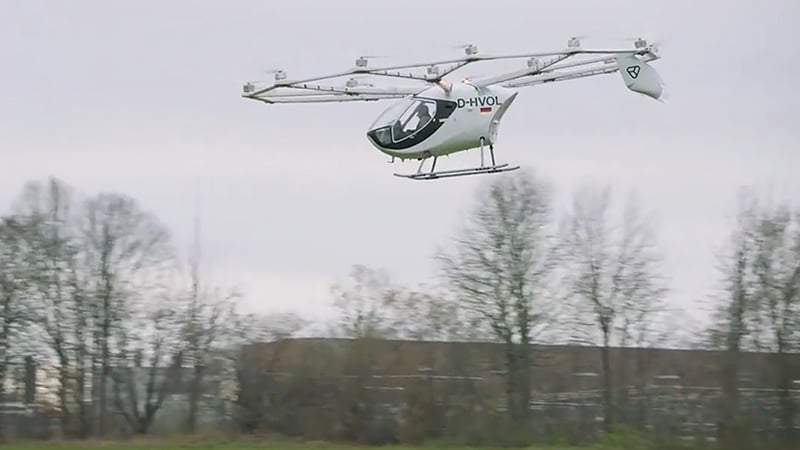
7.4 US-listing, PCAOB, and HFCAA exposure. As a China-based NASDAQ issuer filing on Form 20-F, EHang is exposed to the Holding Foreign Companies Accountable Act (HFCAA), under which the SEC must prohibit trading of an issuer whose auditor the Public Company Accounting Oversight Board (PCAOB) cannot inspect for two (originally three) consecutive years [33][35]. This risk was acute in 2021–2022 but materially abated after the PCAOB secured complete inspection access to mainland China and Hong Kong audit firms in December 2022, which reset the delisting clock [34][35]. EHang's own 20-F continues to carry the standard HFCAA delisting-risk disclosure, and the risk is not eliminated; it is contingent on continued PCAOB access, which is a function of the broader US-China relationship and could deteriorate [33]. Relative to a VIE-structured Chinese internet company, EHang's audit/delisting risk is real but currently moderate and well-disclosed. The deeper geopolitical exposure is sentiment- and policy-driven: as a Chinese aerospace and autonomy champion, EHang sits in a sector with dual-use sensitivity and could be affected by export controls, investment restrictions, or sanctions in a worsening bilateral environment.
8. Risk Matrix
8.1 Regulatory acceptance of full autonomy outside China
Likelihood: High; Impact: High. No FAA/EASA pathway exists for autonomous passenger flight; this caps EHang's addressable market largely to China and accommodating sandbox jurisdictions for the foreseeable future [25][38]. Mitigation: bilateral airworthiness-recognition agreements (China–Thailand model), sandbox regimes, and positioning for an eventual autonomy rulemaking; diversification into non-passenger applications (firefighting, logistics, aerial media) that face lower regulatory bars [3][24].
8.2 Safety, incident, and reputational risk
Likelihood: Low-to-Moderate per flight, but Impact: Catastrophic. A single fatal accident involving a pilotless passenger aircraft would carry outsized reputational and regulatory consequences precisely because the "no pilot" model is novel and politically scrutinized. The current record (3,000+ trial missions, zero accidents claimed) is an asset but a small statistical base [1][4]. Mitigation: extensive redundancy architecture, fail-safe systems, parachutes, conservative same-vertiport initial operations, accumulation of actuarial flight data, and notarized demonstrations [6][40].
8.3 Battery and technology risk
Likelihood: Moderate; Impact: Moderate-to-High. Range and utility remain constrained by current lithium-ion energy density; the solid-state roadmap is promising but the 480 Wh/kg pack is demonstrated, not yet certified and mass-produced, and timelines have a history of slipping [14][41]. Mitigation: strategic ownership stake in Inx, parallel fast-charge chemistries, and product diversification (VT35 for range) [3][14].
8.4 Demand quality and concentration
Likelihood: High; Impact: High. Demand is dominated by local governments and state-linked tourism operators purchasing on lumpy annual cycles; the Q1 2026 revenue collapse to RMB 25.7 million illustrates the volatility, and the "1,000+ unit" pipeline is largely non-binding LOIs [1][22]. Organic consumer demand is unproven [16]. Mitigation: transition from one-time aircraft sales to recurring operations revenue (ticketed flights, operations-as-a-service), and geographic/application diversification [2][23].
8.5 Financial and liquidity risk
Likelihood: Low near-term; Impact: High if demand stalls. GAAP losses persist (FY2025 net loss RMB 231 million), though non-GAAP profitability and a RMB 1.03 billion cash position provide multi-year runway [1][3]. Mitigation: high gross margins, cost discipline (2026 opex growth guided below revenue growth), and capital-markets access [1][3].
8.6 Listing and geopolitical risk
Likelihood: Low-to-Moderate; Impact: High. HFCAA delisting risk is currently abated by PCAOB access but remains contingent on US-China relations; broader dual-use/sanctions exposure exists [33][34][35]. Mitigation: maintained PCAOB-inspectable auditor; potential for a secondary Hong Kong listing as a structural hedge, as other Chinese ADRs have pursued [35].
8.7 Competitive displacement
Likelihood: Moderate (long-term); Impact: Moderate. If Joby/Archer certify, scale, and then achieve autonomy in large Western markets, EHang's first-mover lead could erode; conversely, EHang's China data and cost lead could prove durable [25][42]. Mitigation: deepen the China moat, accumulate operational data, and advance the VT35 to contest the intercity segment [3][8].
9. Strategic Recommendations
9.1 For institutional investors.
Treat EH as a binary, policy-levered call option on Chinese autonomous AAM, not as a conventional aerospace manufacturer to be valued on near-term earnings. The bull case requires three things to compound: (i) conversion of the March 2026 ticketed launch into recurring, expanding operations revenue with a clean safety record; (ii) CAAC expansion of permissions from A-to-A sightseeing to A-to-B and commuting; and (iii) at least one credible overseas commercial license (Thailand is the near-term test). Position sizing should reflect the high-impact tail risks in Section 8, particularly a safety incident and demand concentration. Concrete staging and thresholds that should change the view: upgrade conviction if (a) FY2026 revenue tracks toward the RMB 600 million guide with H1 deliveries materially above the Q1 run-rate, (b) Thailand commercial operations begin in 2026 with units delivered, and (c) A-to-B operational approval is granted in China; downgrade if (a) the Q1 2026 weakness persists into H2 with deliveries failing to ramp, (b) the solid-state pack misses certified mass-production milestones into late 2026, or (c) any passenger safety incident occurs. Monitor PCAOB access status annually as a gating geopolitical variable, and watch for any Hong Kong secondary-listing announcement as a positive de-risking signal. The recurring-revenue transition is the metric that most distinguishes a durable franchise from a serial hardware-sale story.
9.2 For aerospace and autonomy technologists and operators. EHang is the world's only source of at-scale, real-world operational data on certified autonomous passenger flight, and that data (maintenance intervals, battery cycle life under commercial duty, command-link reliability, weather/temperature envelope performance, and incident statistics) is strategically valuable irrespective of one's view of the company's equity. Operators in permissive jurisdictions should engage via the sandbox model to build autonomy operational competence early. Technologists should treat the EH216-S as the empirical benchmark for the multirotor hover-efficiency/short-range regime and the VT35 as a test of whether EHang's autonomy and command-and-control stack transfers cleanly to the more demanding lift-plus-cruise flight regime (transition dynamics, fixed-wing failure modes, higher energy states). The key technical due-diligence questions are: the true certified (not demonstrated) energy density and cycle life of the solid-state pack; the redundancy and cybersecurity architecture of the 5G command link and command center (the single largest systemic concentration in the autonomous model); and independently measured community-noise data, which remains an evidence gap. For those building competing autonomous systems, EHang's certification dossier with CAAC is the closest existing template for how a regulator can construct an airworthiness basis for pilotless passenger flight from a standing start.
10. Caveats
10.1 Most performance figures for both aircraft are manufacturer-asserted product specifications, not independently verified; this report has labeled demonstrated, modeled, and asserted claims throughout and readers should preserve those distinctions. The solid-state battery's 480 Wh/kg energy density and the VT35's 200 km range and 216 km/h cruise are particularly important examples of figures that are demonstrated-at-best or design-target-only, not certified production values [8][14].
10.2 Q1 2026 and FY2025 financial figures are company-reported and, for the quarters, unaudited; EHang filed a Form 6-K/A in May 2026 correcting certain unaudited interim 2025 figures, which warrants attention to final audited numbers in the FY2025 Form 20-F [1].
10.3 VT35 public data is genuinely sparse; this report has deliberately not inflated the VT35 sections and treats its certification timeline as indeterminate.
10.4 Market-sizing figures for China's low-altitude economy are official government targets and third-party projections, not realized revenue, and the gap between the RMB 1.5–3.5 trillion sector projections and EHang's RMB 0.5 billion FY2025 revenue should be kept firmly in view [15][16][41].
10.5 Competitor certification timelines (Joby, Archer) are based on company and regulator statements and industry analysis and are subject to the well-documented history of slippage in eVTOL certification; the autonomy timelines for Western markets (2028–2030+) are analyst projections, not regulatory commitments [25][42].

References
- EHang Holdings Limited. 2026. "EHang Reports First Quarter 2026 Unaudited Financial Results." GlobeNewswire, June 9, 2026.
- The Motley Fool. 2026. "EHang (EH) Q1 2026 Earnings Call Transcript." June 9, 2026.
- EHang Holdings Limited. 2026. "EHang Reports Fourth Quarter and Fiscal Year 2025 Unaudited Financial Results." GlobeNewswire, March 12, 2026.
- EHang Holdings Limited. 2025. "EHang's EH216-S eVTOL Operators Obtain Air Operator Certificates." GlobeNewswire, March 30, 2025.
- EHang Holdings Limited. 2024. "EHang Secures Production Certificate from CAAC, Clearing Path for Mass Production of EH216-S Pilotless eVTOL Aircraft." ehang.com, April 7, 2024.
- EHang Holdings Limited. "EH216-S" and "EH216-S Airworthiness." ehang.com.
- EHang Holdings Limited. 2025. "EHang EH216-S Interpretation Series: Air Operator Certificate." ehang.com.
- EHang Holdings Limited. 2025. "Global Debut: EHang Introduces VT35, a Next-Generation Long-Range Pilotless Passenger eVTOL." GlobeNewswire, October 13, 2025.
- EHang Holdings Limited. "VT35 Pilotless Passenger Aircraft." ehang.com/vt35/.
- Vertical Flight Society. "EHang EH216-S (production model)." evtol.news.
- Forecast International. 2024. "UAM Snapshot — EHang EH216-S." Flight Plan, May 2, 2024.
- CnEVPost. 2024. "eVTOL Maker EHang Prices Its EH216-S Unmanned Aerial Vehicle at About $333,000 in China." February 2, 2024.
- Battery Design. "Ehang EH216-S eVTOL Battery." batterydesign.net.
- EHang Holdings Limited. 2024. "EHang and Inx Achieve Breakthrough in Solid-State Battery Technology: EH216-S Completes World's First eVTOL Solid-State Battery Flight Test." GlobeNewswire, November 13, 2024.
- Xinhua / English.gov.cn. 2025. "China's Burgeoning Low-Altitude Economy Empowers Industries via Diverse Applications." October 17, 2025.
- The Jamestown Foundation. 2026. "The Low-Altitude Economy's Great Leap Upward." China Brief.
- Daxue Consulting. 2026. "China's Low-Altitude Economy."
- APCO Worldwide. 2025. "China's Low-Altitude Economy: A Rapidly Developing Sector to Watch."
- EHang Holdings Limited. 2025. "EHang Reports First Quarter 2025 Unaudited Financial Results." GlobeNewswire, May 26, 2025.
- EHang Holdings Limited. 2025. "EHang Reports Fourth Quarter and Fiscal Year 2024 Unaudited Financial Results." ir.ehang.com.
- EHang Holdings Limited. 2025. "EHang Reports Third Quarter 2025 Unaudited Financial Results." ir.ehang.com, November 26, 2025.
- EHang Holdings Limited. 2025. "EHang Secures Order for 50 Units of EH216-S from Guizhou and Partners with Anshun Government." GlobeNewswire, June 30, 2025.
- The Motley Fool. 2026. "EHang (EH) Q4 2025 Earnings Call Transcript." March 12, 2026.
- CompositesWorld. 2026. "EHang Posts Record Q4 Revenue, First GAAP Profit as EH216-S Commercial Launch Nears."
- Aircraft Insider. 2026. "Joby Aviation Clears FAA Stage 4 Certification — First-Ever Commercial eVTOL Certificate Now Within Reach."
- Archer Aviation. 2026. "Archer Announces First Quarter 2026 Results, Highlighting Record FAA Certification Progress."
- FLYING Magazine. 2025. "Why Joby Thinks Passenger Air Taxi Service Will Lift Off in 2026."
- Aviation Week Network. 2025. "German eVTOL Pioneer Volocopter Joins Lilium in Bankruptcy Proceedings."
- Vertical Mag. 2025. "Lilium Files for Insolvency Again as Funding Deal Falls Through."
- Electrive. 2025. "German eVTOL Developer Volocopter Goes Bankrupt." January 2, 2025.
- EHang Holdings Limited. 2021. "EHang Provides Details of Its Sales Contracts and Firmly Refutes Short-Seller's Allegations." GlobeNewswire, February 22, 2021.
- Vertical Mag. 2021. "EHang Stock Falls 60 Percent on Report by Activist Short-Seller Wolfpack Research."
- EHang Holdings Limited. 2023; 2026. Annual Report (Form 20-F), FY2022 and FY2025. U.S. Securities and Exchange Commission.
- Orrick. 2022. "PCAOB Secures Complete Inspection Access to Audits of Chinese Companies, Removing Delisting Risks."
- White & Case LLP. "The HFCAA and Consequences for US-Listed China-Based Companies."
- Bacchini, Alessandro, and Enrico Cestino. 2019. "Electric VTOL Configurations Comparison." Aerospace 6 (3): 26. https://doi.org/10.3390/aerospace6030026.
- Sripad, Shashank, and Venkatasubramanian Viswanathan. 2021. "The Promise of Energy-Efficient Battery-Powered Urban Aircraft." Proceedings of the National Academy of Sciences 118 (45): e2111164118. https://doi.org/10.1073/pnas.2111164118.
- NASA. 2021. NASA Electric Vertical Takeoff and Landing (eVTOL) Aircraft Technology for Public Services — A White Paper. NTRS 20205000636.
- New Atlas. 2026. "Pilotless Air Taxi Gains Approval to Start Commercial Flight Operations."
- Low Altitude Economy (lowaltitudeeconomy.aero). 2026. "EHang Is About to Sell the World's First eVTOL Ticket. One Certificate Made It Legal."
- CGTN. 2026. "China's Low-Altitude Economy: 1.5 Trillion to 3.5 Trillion Yuan — Feasible or Fantasy?" May 27, 2026.
- PrivateCharterX. 2025. "eVTOL Certification 2025: FAA Timeline for Joby & Archer"; Low Altitude Economy, "The FAA Certification Race Enters the Endgame for Joby and Archer"; Abbott Aerospace / NASA–Booz Allen Hamilton autonomy cost-savings analysis.