The Survival Mindset: Critical Lessons from Real-Life Disasters
Survival is a mental battle. From the Andes to the Amazon, discover the key psychological tactics that separate the living from the dead.

The Human Spark: Lessons in Survival Scenarios and Case Studies
Survival is not merely the absence of death; it is the active, often agonizing, process of remaining alive against overwhelming odds. Whether faced with the freezing desolation of the Andes, the uncharted depths of the Amazon, or the psychological strain of extreme isolation, the human spirit exhibits a remarkable capacity for resilience. By analyzing real-life survival stories, historical accounts, and contemporary survival challenges, we can extract profound lessons regarding psychology, preparation, and adaptability. These case studies prove that survival is as much a mental battle as it is a physical one.
Real-Life Survival Stories: Resilience in Action
Real-life survival stories provide intimate accounts of individuals confronting death, often highlighting the critical importance of remaining calm and resourceful. A prime example is the 1971 story of 17-year-old Juliane Koepcke, who survived a plane crash that dropped her two miles into the Amazon rainforest. As the sole survivor of LANSA Flight 508, Koepcke endured nine days in the dense jungle with a broken collarbone and deep cuts, relying on her father's advice to "follow flowing water." Her story teaches that knowledge of the environment, combined with a calm, analytical mindset, can overcome dire physical injuries.
Koepcke's ordeal began when lightning struck her plane, tearing it apart mid-air. Still strapped to her seat, she fell approximately 10,000 feet into the jungle canopy. Despite her injuries and the shock of the event, she immediately recalled her parents' teachings about jungle survival. Her father, a biologist, had taught her that rivers in the Amazon eventually lead to human settlements. This single piece of knowledge became her lifeline. Day after day, she pushed through the dense vegetation, dealing with insect bites, infections, and the constant threat of predators. Her story demonstrates how even a small amount of relevant knowledge, when combined with determination, can make the difference between life and death.
Similarly, Mauro Prosperi's survival in the 1994 Marathon des Sables, where he was lost in a Sahara sandstorm for nine days, illustrates the necessity of extreme adaptability. Prosperi survived by drinking his own excrement and eating bats, proving that overcoming conventional disgust is necessary when death is imminent. His experience emphasizes that innovation and the willingness to utilize available, however unpleasant, resources are crucial for surviving unpredictable catastrophes.
Prosperi, an Italian police officer and endurance runner, was participating in a 155-mile ultramarathon across the Moroccan desert when a sandstorm with 100 mph winds disoriented him and other competitors. Separated from the course, he wandered for days, eventually finding an abandoned Muslim shrine where he took shelter. With no water source, he resorted to drinking his own excrement using a siphon made from his penknife and plastic tubing. When he found bats in the shrine, he overcame his revulsion and ate them raw. His survival was ultimately secured when he encountered a nomadic family who helped him reach safety. Prosperi's story teaches us that survival often requires us to overcome our most ingrained cultural and personal aversions.
 John D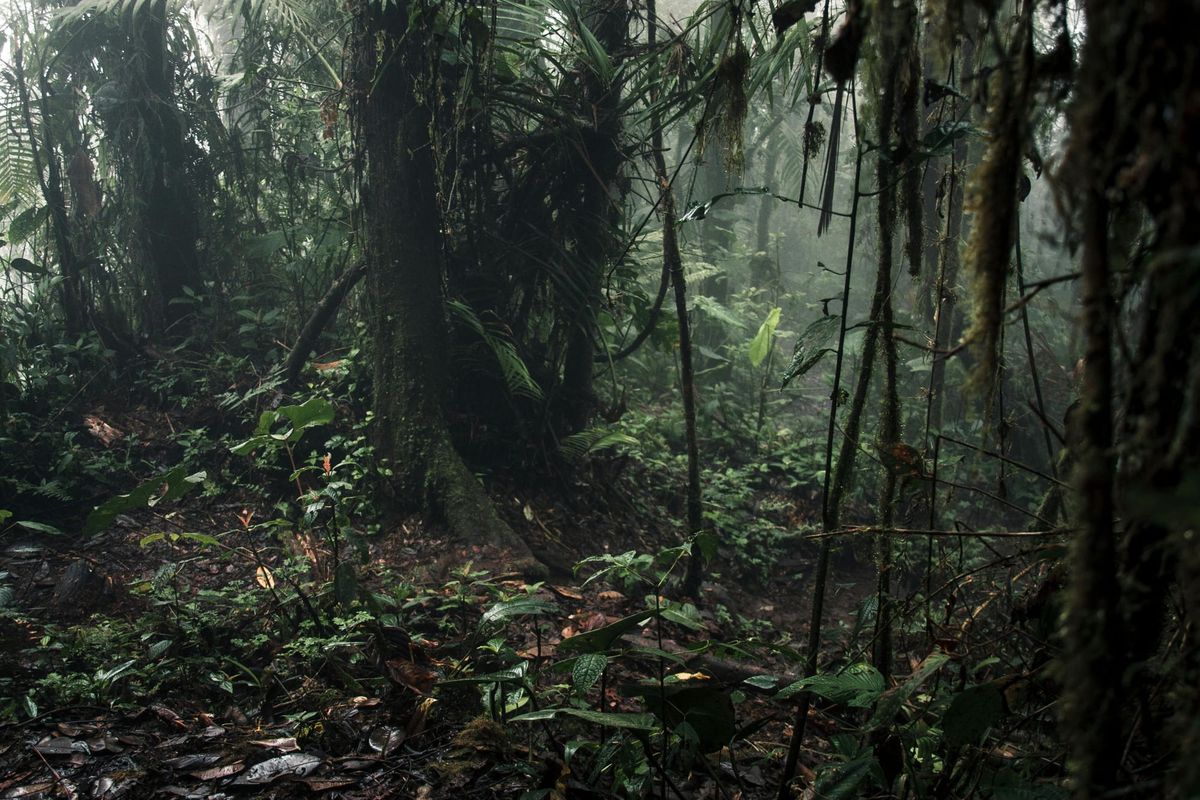
Historical Survival Experiences: Against the Odds
Historical figures often serve as paragons of endurance, offering timeless lessons in leadership and willpower. Ernest Shackleton's 1914-1916 Endurance expedition is perhaps the most famous account of collective survival. When their ship was crushed by Antarctic ice, leaving the crew stranded 1,200 miles from civilization, Shackleton maintained morale, kept his men moving, and prioritized their safety above all else. His leadership underscores that in a group survival scenario, social cohesion, clear roles, and shared optimism are just as vital as food and water.
Shackleton's Imperial Trans-Antarctic Expedition began with the goal of crossing the Antarctic continent, but when their ship became trapped and eventually crushed by pack ice, the mission transformed into one of pure survival. What followed was an extraordinary 18-month ordeal that included camping on ice floes, a harrowing open-boat journey across treacherous seas, and a trek across unmapped mountains to reach a whaling station. Throughout this nightmare, Shackleton's leadership was exemplary. He maintained strict routines to preserve normalcy, made difficult decisions for the group's benefit, and never lost hope. Perhaps most remarkably, not a single member of his 27-man crew perished. The Endurance expedition teaches us that in crisis situations, leadership qualities, such as clear communication, empathy, decisiveness, and the ability to inspire, can be as life-saving as any physical skill.
Alternatively, the "Miracle in the Andes" in 1972 shows the darkest, yet most necessary, aspects of survival. Stranded for 72 days without food, survivors of a rugby team plane crash faced the unthinkable, consuming their deceased friends to stay alive. Nando Parrado, who protected his sister and mother, showed that in extreme circumstances, moral, ethical, and practical boundaries must be adapted for survival. Their story illustrates that willpower can sustain life when resources are completely exhausted, ultimately highlighting the human instinct for survival at any cost.
After their plane crashed into a remote Andean mountain range, the 16 survivors initially hoped for rescue. As days turned into weeks, with their food supplies exhausted and news that the search had been called off, they faced an impossible choice: starve to death or consume the flesh of those who had died in the crash. After agonizing debate and spiritual struggle, they made the decision to survive. Parrado, who had lost consciousness for three days after the crash, awoke to find his mother had died and his sister was critically injured. Despite his grief and injuries, he became one of the leaders of the group, ultimately undertaking a grueling 10-day trek across mountains to find help. His journey, which other survivors deemed impossible, led to the rescue of all remaining survivors. The Andes survivors teach us that survival sometimes requires confronting our deepest taboos and that the human will to live can transcend conventional moral boundaries.
Survival Challenges: Lessons from Reality
Modern survival reality shows, such as Alone, provide insight into the strategies utilized by trained experts. Unlike scripted television, Alone places contestants in harsh environments, such as the Canadian wilderness, with limited gear, forcing them to survive in isolation. Analysis of these contestants reveals that psychological survival is just as difficult as physiological survival. Many participants "tap out" not due to starvation, but because of loneliness, emphasizing that mental fortitude and the ability to manage solitude are critical.
The psychological challenges faced by Alone contestants are profound. Without the distraction of modern life, they are left alone with their thoughts, fears, and anxieties. Many report that the silence becomes deafening, that they begin to doubt their abilities, and that the isolation becomes more difficult to endure than the physical hardships. Contestants who succeed often develop mental strategies to combat loneliness, talking to themselves, creating daily routines, or focusing intensely on specific tasks. The show demonstrates that in survival situations, our minds can be either our greatest asset or our most dangerous liability. The ability to maintain psychological equilibrium when isolated and under extreme stress is perhaps the most critical survival skill of all.
Strategies used by successful contestants often revolve around managing energy rather than excessive foraging. Participants who "go harder earlier" - building a strong shelter and securing a food source while their energy is high, tend to last longer. The "Rule of Threes" (three minutes without air, three hours without shelter, three days without water) is often validated on these shows, with shelter and water safety taking precedence over the hunt for food.
The most successful Alone contestants typically follow a systematic approach to survival. They begin by assessing their location and resources, then prioritize shelter construction to protect against hypothermia. Next, they secure a water source and establish a method for purification. Only after addressing these immediate survival needs do they focus on food procurement. Interestingly, the contestants who last the longest are often not the most skilled hunters or the physically strongest, but rather those who are most efficient with their energy expenditure. They understand that in a survival situation, calories are precious currency, and unnecessary exertion can lead to exhaustion and failure. This strategic approach to energy management is a valuable lesson for anyone facing survival circumstances.
Lessons Learned and Common Threads
Across all cases, several common themes emerge that determine the boundary between life and death:
The Survival Mindset: A positive attitude is a crucial factor. Survivors often focus on small, actionable goals rather than the enormity of their predicament. In survival situations, maintaining hope and mental clarity can be as important as any physical skill. Survivors like Koepcke, Prosperi, and Parrado all faced moments of despair but managed to maintain focus on their immediate needs and next steps. They didn't allow themselves to be overwhelmed by the magnitude of their situation. This psychological resilience, the ability to compartmentalize fear and maintain purpose, is perhaps the defining characteristic of those who survive against overwhelming odds.
Adaptability: The ability to pivot when a strategy fails, like Prosperi turning to bats when his food ran out, is essential. In survival situations, rigidity is fatal. The environment is constantly changing, and initial plans may prove inadequate. Those who survive are those who can assess new circumstances and adjust their strategies accordingly. This adaptability applies not just to physical actions but also to mental frameworks; the willingness to reconsider assumptions and embrace unconventional solutions when conventional ones fail.
Preparation and Knowledge: Knowing how to build a shelter, purify water, or navigate without technology drastically increases survival odds. While some survival situations arise unexpectedly, many involve individuals with some level of preparation. Koepcke's knowledge of jungle survival, Prosperi's endurance training, and the Alone contestants' primitive skills all contributed to their survival. This preparation doesn't need to be formal training. Simple knowledge of basic survival principles can make a critical difference. The key is having a mental toolkit of techniques that can be adapted to various situations. The most prepared survivors are those who have studied multiple environments and scenarios, allowing them to draw upon relevant knowledge when faced with unexpected challenges. This mental preparation creates a foundation upon which physical survival skills can be built.
Conclusion
Survival scenarios provide a mirror to the human condition, showcasing both our fragility and our profound tenacity. These lessons offer practical guidance for the outdoors but, more importantly, they offer inspiration for navigating the challenges of life itself.
The human spark that enables survival against overwhelming odds is not some mystical quality possessed by a select few. Rather, it is a combination of mental attitudes, practical skills, and social dynamics that can be understood, cultivated, and applied by anyone willing to learn from these remarkable stories of human endurance.
John D John D
 John D
 John D
 John D
 John D
 John D