Could Blue Origin’s New Glenn Explosion Delay Artemis? LC-36 Damage and NASA’s Moon Base Logistics
How New Glenn’s LC-36 explosion could disrupt Artemis, Blue Moon cargo, rover delivery, and NASA’s Moon Base logistics.

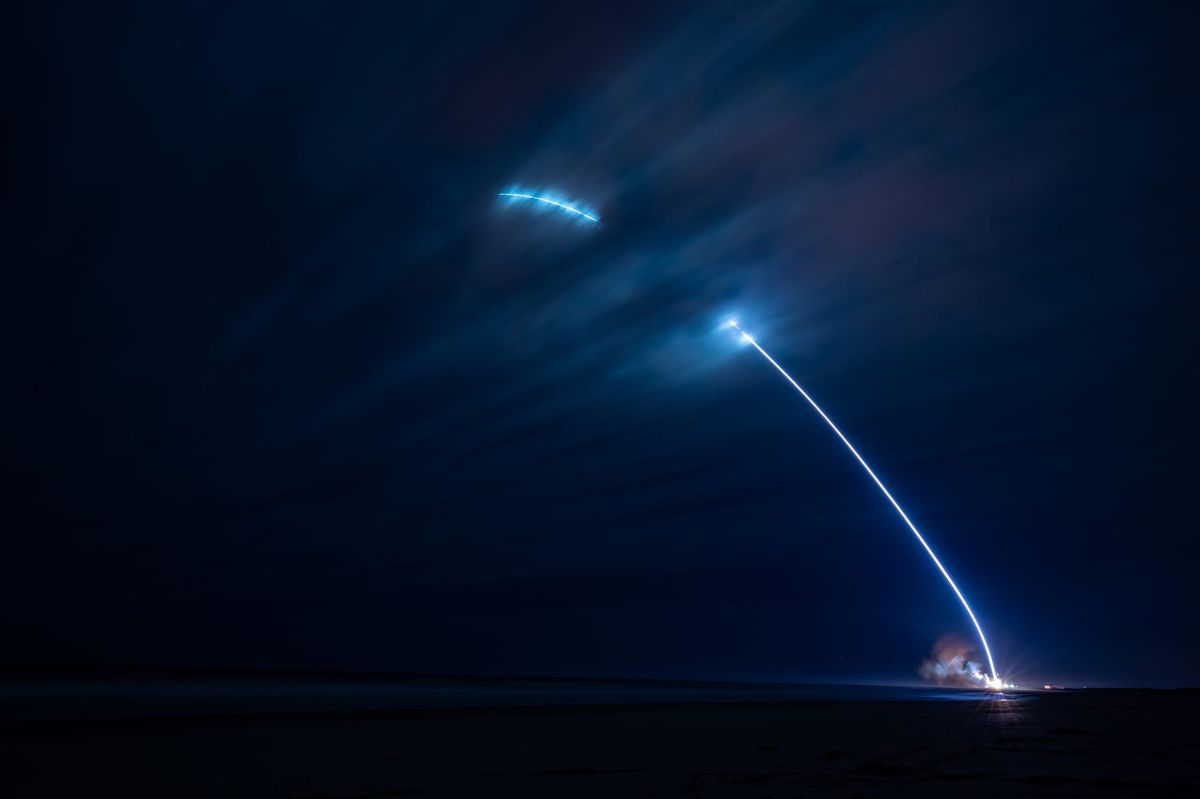
TLDR: Blue Origin’s New Glenn explosion may not automatically delay Artemis crewed landings, but it creates a serious lunar logistics problem: if LC-36 is offline for six months to a year or longer, NASA may lose near-term Blue Moon cargo capacity, rover delivery margin, and part of the infrastructure pipeline meant to reduce risk before sustained Moon Base operations.
How One Destroyed Launch Pad Affects Lunar Logistics
Blue Origin’s New Glenn explosion was a launch infrastructure failure. NASA’s current Moon strategy is increasingly logistical: send robotic precursors, cargo landers, rovers, drones, power systems, science payloads, and surface infrastructure before astronauts depend on that system at the lunar South Pole [4][5].
Launch Complex 36 is a gate in the lunar supply chain.
New Glenn exploded during an engine hot-fire test while being prepared for a mission that would have carried 48 Amazon Leo satellites to low Earth orbit. The satellites were reportedly not integrated at the time, which prevented a direct payload loss, but the vehicle was destroyed and the pad was heavily damaged [1][2]. Livestream captured a giant fireball seen and felt upwards of 150 miles away, with aerial views showing crumpled structures and only limited infrastructure still standing [3].
The most important Artemis question is: how many lunar missions were functionally dependent on that rocket and that pad?
NASA’s Moon Base plan, updated in late May 2026, describes a phased buildout near the lunar South Pole. Phase One, running from now through 2029, is supposed to “learn, test, build” through robotic missions, mobility demonstrations, surface technology tests, communications systems, power systems, and early lander operations [5]. NASA says this phase includes up to 25 missions, including 21 landings, and about four tons of payload delivered to the lunar surface [5].
That architecture depends on cadence. The more missions NASA flies before astronauts return to the lunar surface, the more data it has about landing plumes, terrain hazards, communications, mobility, thermal survival, surface preparation, and polar operations. If one major lander/launch pathway is delayed, NASA loses part of the entire plan.
The near-term Blue Origin link is Blue Moon Mark 1, also known as Endurance. NASA described Endurance as an uncrewed cargo lander funded by Blue Origin as a commercial demonstration mission to advance Human Landing System capabilities. Its planned objectives include precision landing, cryogenic propulsion, and autonomous guidance, navigation, and control demonstrations [6]. NASA also stated that Moon Base I, targeted no earlier than fall 2026, would use Blue Origin’s Blue Moon Mark 1 Endurance lander to deliver NASA payloads to the Shackleton Connecting Ridge and reduce risk for future crewed Artemis landing missions in 2028 [4].
That is where the New Glenn explosion becomes an Artemis issue. New Glenn is Blue Origin’s heavy-lift launch vehicle. Blue Origin says New Glenn can carry 45 metric tons to low Earth orbit, has a seven-meter fairing, uses a hydrogen-powered upper stage, and launches from LC-36 at Cape Canaveral [7]. Blue Origin also says LC-36 houses the New Glenn launch pad, vehicle integration, first-stage refurbishment, propellant facilities, and environmental control systems [7]. If that complex is badly damaged, the issue is not only replacing a rocket. It is restoring the entire launch and ground-support system that New Glenn needs to fly.
 John D
Scott Manley, an astrophysicist and YouTuber, described the pad as “destroyed” and mentioned that repairs could take 8+ months, if not longer [2]. Reuters also noted the precedent of SpaceX’s 2016 Falcon 9 pad explosion: Falcon 9 returned to flight in roughly four and a half months, but SpaceX spent more than a year repairing the damaged launch facility [2]. That comparison is not perfect, but it illustrates the key difference between a vehicle recovery timeline and a pad recovery timeline.
A rocket can sometimes return before a pad does. But that only works if the operator has another compatible pad.
That is the problem for New Glenn. SpaceX could shift Falcon 9 operations after the Amos-6 pad explosion because it had other launch infrastructure. New Glenn does not yet have the same distributed launch network. If LC-36 is the sole operational New Glenn pad, then New Glenn’s return is constrained by physical reconstruction, regulatory investigation, ground systems validation, and customer confidence.
For Artemis, the risk falls into three categories.
The first is schedule risk. If Blue Moon Mark 1 or later Blue Moon missions were waiting on New Glenn, a long pad outage pushes those missions rightward unless NASA and Blue Origin can find a technically compatible alternate path. Lunar payloads are not generic shipping containers. They are designed around launch vehicle environments, fairing dimensions, mass limits, interfaces, trajectory requirements, vibration loads, ground integration flows, and mission operations. Reuters specifically noted that lunar payloads are designed around specific launch vehicles, making vehicle substitution complicated [2].
The second is risk-reduction loss. Moon Base I is not just symbolic. NASA framed it as a pathfinder mission that would deliver payloads, demonstrate capabilities, and reduce risk for future crewed Artemis landing missions [4]. If that mission slips, NASA may still proceed with other Artemis elements, but it loses some early operational data from Blue Moon’s landing system and the associated surface payloads. In lunar logistics, late data is less useful than early data because later missions need time to incorporate lessons learned.
The third is industrial concentration risk. Artemis is increasingly dependent on a small group of heavy-lift and lunar surface providers. SpaceX is central through Starship HLS. Blue Origin is central through Blue Moon and New Glenn. Firefly, Astrobotic, Intuitive Machines, Astrolab, Lunar Outpost, and others contribute important pieces, but the large cargo and crewed lunar lander class is not broadly interchangeable. When one provider loses its heavy-lift launch site, NASA’s redundancy shrinks.
That does not mean Artemis is automatically delayed. NASA’s architecture is modular enough that some elements can continue. NASA’s MoonFall drones, for example, are targeted for 2028 and will use a Firefly-built spacecraft to transport four hopping drones from Earth orbit to the Moon [4]. NASA also has other CLPS landers and rover providers in the pipeline [4]. These missions can still generate surface data and keep some Moon Base preparation moving.
But the Blue Origin branch of the architecture is now under pressure. NASA awarded Blue Origin $188 million, with an option period worth $280 million, for task orders to deliver rovers to the lunar South Pole region [4]. NASA described those deliveries as part of a strategic investment in lunar exploration and sustained operations [4]. If New Glenn is unavailable for an extended period, then Blue Origin’s ability to execute that delivery chain becomes a major open question.
The situation also matters for Artemis beyond cargo. NASA selected Blue Origin as the second Artemis lunar lander provider in 2023 for the Artemis V mission, adding Blue Origin’s Human Landing System alongside SpaceX’s Starship HLS [9]. That selection was meant to create competition, redundancy, and long-term sustainability in lunar landing services. A major New Glenn stand-down does not necessarily erase that long-term role, but it does raise near-term questions about schedule maturity, integrated testing, and launch availability.
There is also an engine-confidence angle, though it should not be overstated. New Glenn’s first stage uses seven BE-4 engines, and Blue Origin notes that ULA’s Vulcan first stage uses two BE-4 engines [8]. That commonality does not mean Vulcan is automatically implicated. The root cause could involve ground support equipment, fueling sequence, tank pressurization, vehicle plumbing, software, structural failure, or pad-side systems rather than the BE-4 itself. Still, until the failure investigation identifies the initiating event, BE-4 systems and interfaces will receive intense scrutiny.
John D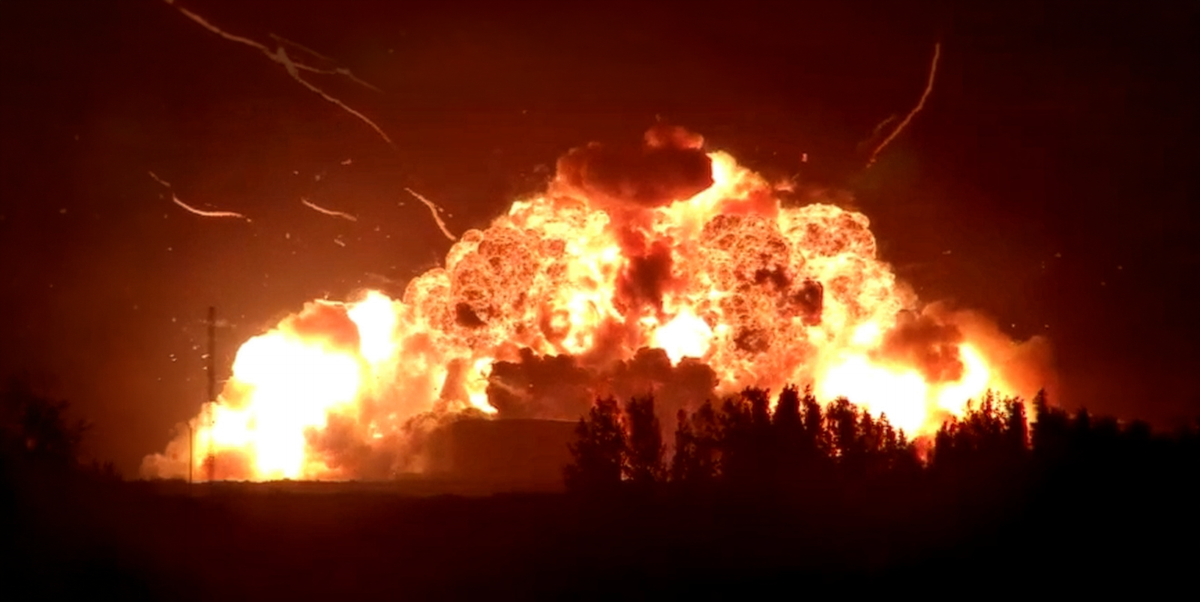
The broader strategic issue is that lunar logistics are fragile because the Moon Base plan is cargo-hungry. Phase Two of NASA’s Moon Base development, from 2029 to 2032, includes expanded solar power, initial nuclear surface power, upgraded rovers, early habitation elements, enhanced surface-to-orbit communications, and delivery of up to 60 tons of cargo through as many as 24 landings [5]. Phase Three aims at sustained human presence after 2032, with semi-permanent habitation, operational fission surface power, pressurized rovers, advanced logistics, and recurring cargo delivery [5].
Those numbers show why one destroyed launch pad matters. A lunar base is not built by one flagship mission. It is built through repeated deliveries. If a provider loses six months, that is painful. If it loses a year, it may disrupt payload sequencing, rover availability, lander demonstration timing, astronaut mission planning, and NASA’s confidence in schedule assumptions.
The best-case scenario is that Blue Origin isolates the cause quickly, repairs LC-36 faster than expected, preserves undamaged hardware, and returns New Glenn to flight within months. In that case, Artemis absorbs a disruption but not a structural delay. The Moon Base campaign continues with some reordering of missions and extra oversight.
The worst-case scenario is that the explosion damaged enough pad infrastructure, ground systems, vehicle hardware, and confidence that New Glenn cannot support lunar missions on the required timeline. In that case, NASA would face hard choices: delay Blue Moon-linked missions, shift selected payloads to other providers, rely more heavily on SpaceX, or restructure parts of the early Moon Base campaign.
The most likely outcome is somewhere in between. Blue Origin will probably recover, but recovery is not the same as schedule preservation. A destroyed or badly damaged pad introduces real friction into a program that was already trying to coordinate landers, rovers, drones, surface payloads, power systems, astronauts, and multiple commercial providers on tight timelines.
So, could the New Glenn explosion delay Artemis?
Yes, but the effect is more likely to appear first in lunar logistics than in a single dramatic announcement that “Artemis is delayed.” The near-term risk is not that NASA suddenly abandons the Moon. The risk is that key precursor missions slip, Blue Moon demonstrations are pushed back, rover deliveries become harder to sequence, and NASA loses schedule margin before the 2028 crewed surface campaign.
References
[1] Rajan, G., & Brock, J. (2026, May 29). Blue Origin rocket explodes on launchpad in a setback for bid to catch Musk’s SpaceX. Reuters. https://www.reuters.com/science/blue-origin-says-it-faced-anomaly-during-hot-fire-test-2026-05-29/
[2] Sriram, A. (2026, May 30). Blue Origin faces months of delays after rocket explosion damages launch pad. Reuters. https://www.reuters.com/business/aerospace-defense/blue-origin-faces-months-delays-after-rocket-explosion-damages-launch-pad-2026-05-30/
[3] Associated Press. (2026, May 29). Blue Origin investigates rocket explosion as public is warned about possible wreckage washing ashore. AP News. https://apnews.com/article/blue-origin-new-glenn-rocket-explosion-a69e249784c277b0d08ac8c246b21a6d
[4] Shaw, E. (2026, May 26). NASA provides update on Moon Base rovers, landers, missions (Release No. 26-046). NASA. https://www.nasa.gov/news-release/nasa-provides-update-on-moon-base-rovers-landers-missions/
[5] National Aeronautics and Space Administration. (2026, May 27). Moon Base phases. NASA. https://www.nasa.gov/moonbase-phases/
[6] Segovia, V. (2026, May 4). Blue Origin Moon lander completes testing at NASA vacuum chamber. NASA. https://www.nasa.gov/missions/artemis/blue-origin-moon-lander-completes-testing-at-nasa-vacuum-chamber/
[7] Blue Origin. (n.d.). New Glenn. https://www.blueorigin.com/new-glenn
[8] Blue Origin. (n.d.). Engines. https://www.blueorigin.com/engines
[9] National Aeronautics and Space Administration. (2023, May 19). NASA selects Blue Origin as second Artemis lunar lander provider. NASA. https://www.nasa.gov/news-release/nasa-selects-blue-origin-as-second-artemis-lunar-lander-provider/