Why Was the New Glenn Explosion So Big? Propellant Load, Fireball Physics, and the 1-Kiloton Question
A technical look at New Glenn’s LC-36 explosion, propellant energy, mushroom-cloud visuals, and why “1 kiloton” remains speculative.

TLDR: Blue Origin’s New Glenn explosion was not just a dramatic static-fire failure; it likely destroyed or severely damaged key LC-36 launch infrastructure, meaning the pad may require a major rebuild and could plausibly be offline for months to a year, disrupting Amazon Leo, Artemis lunar logistics, and the wider heavy-lift launch market.
May 28, 2026: Blue Origin’s New Glenn rocket suffered a catastrophic failure during a static-fire test at Launch Complex 36 at Cape Canaveral Space Force Station. The vehicle was being prepared for a planned launch of 48 Amazon Leo broadband satellites, but the payload was reportedly not yet integrated at the time of the explosion. All personnel were reported safe, and Blue Origin described the event as an “anomaly” while beginning a formal investigation.
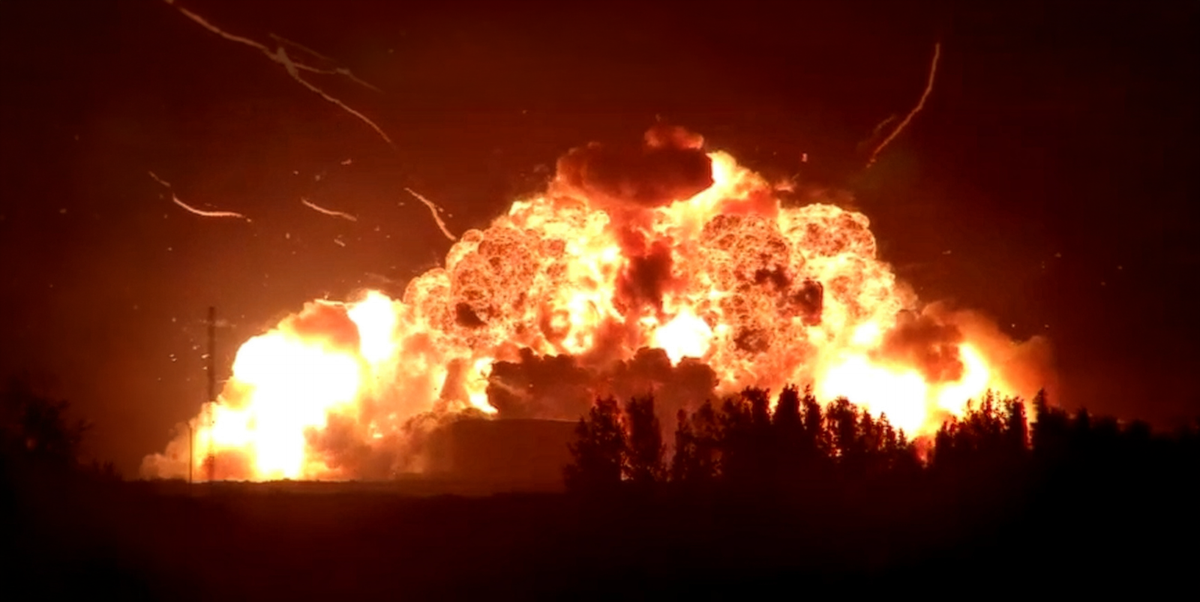
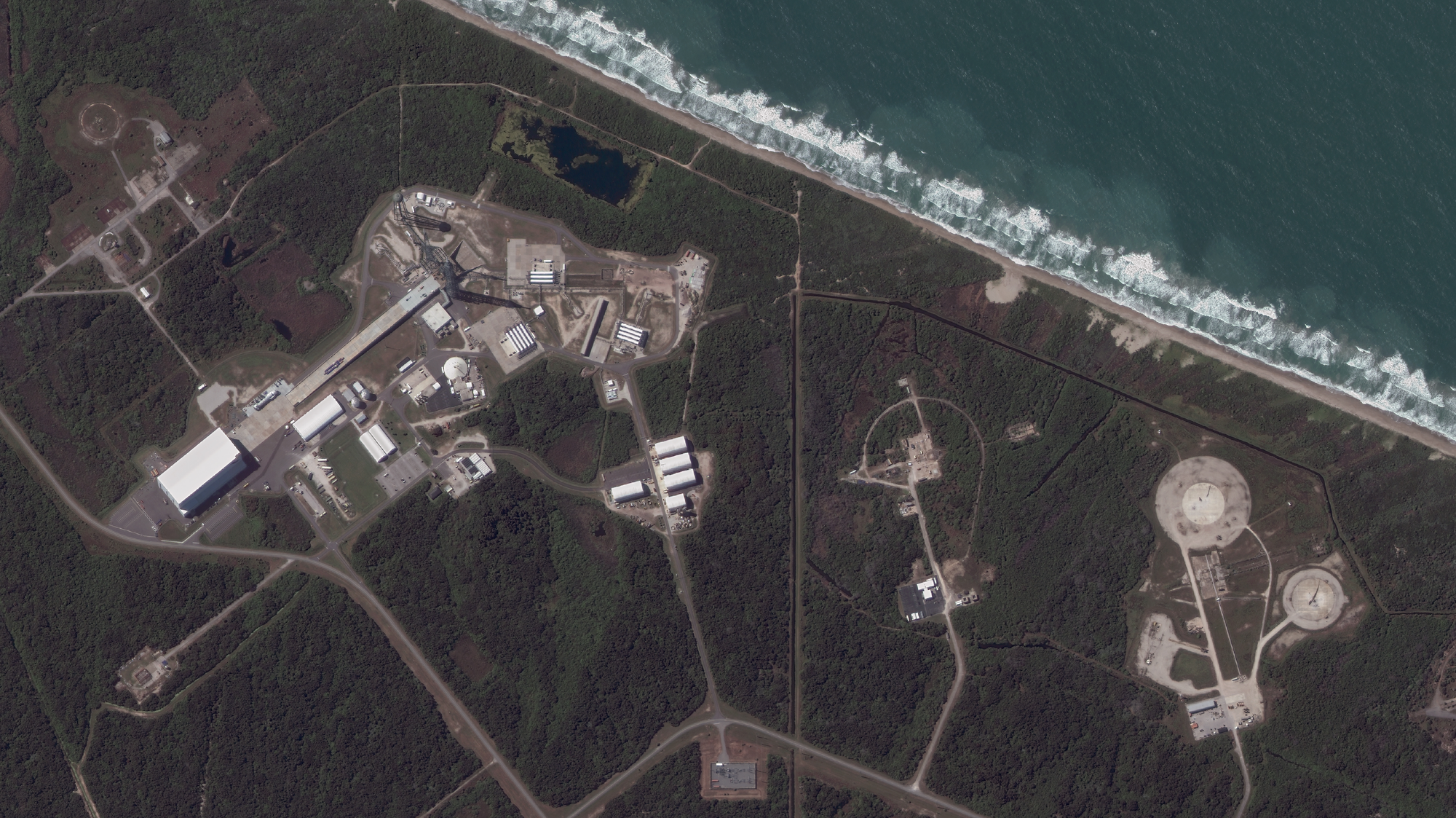
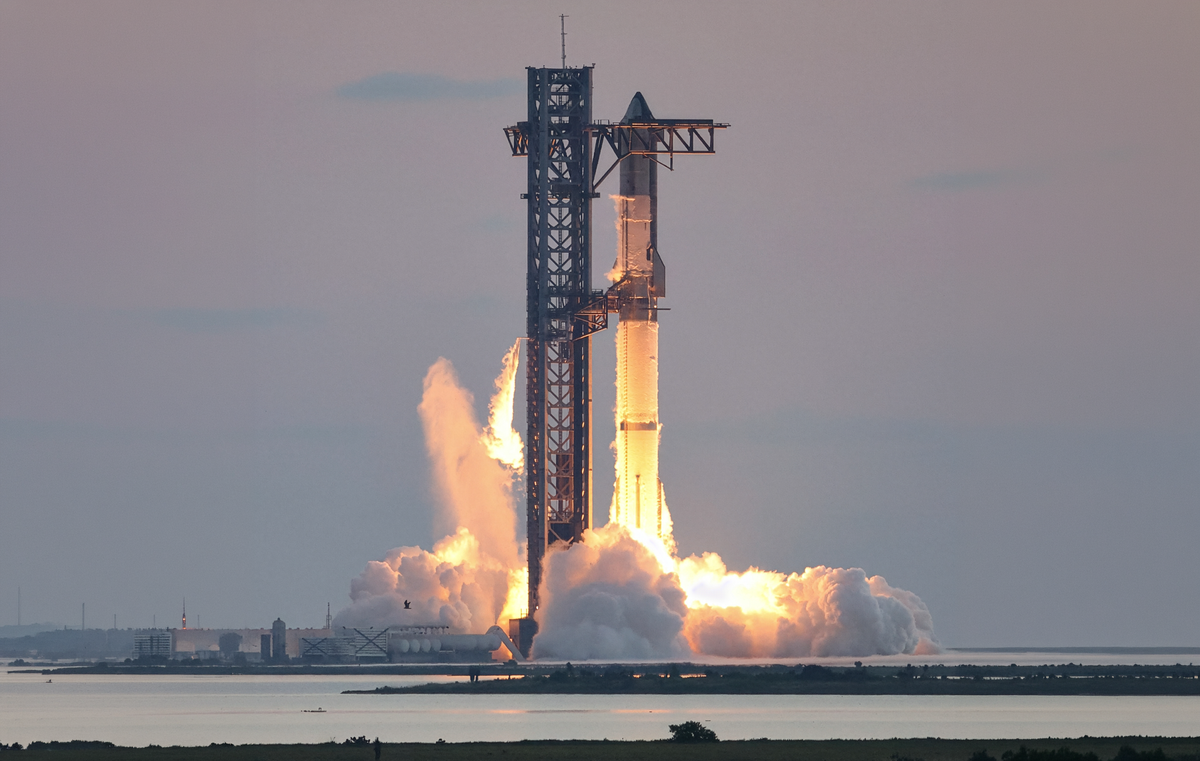
The images and video from the test are striking: a brief ignition sequence, followed by a massive fireball, structural collapse, and sustained burning at the pad. Early reporting indicates significant damage to Launch Complex 36 infrastructure, including the transporter-erector and at least one lightning tower. For Blue Origin, this is not merely the loss of a vehicle. It is a launch-site, infrastructure, certification, customer-confidence, and schedule problem compressed into a single failure event.
New Glenn is not a small rocket. Blue Origin describes it as more than 320 feet tall, with a seven-meter payload fairing and a hydrogen-powered upper stage designed for demanding missions to LEO, MEO, GEO, and beyond. Its first stage uses seven BE-4 engines burning liquefied natural gas and liquid oxygen. That means a fully or partially fueled static-fire vehicle contains an enormous amount of cryogenic propellant energy before it ever leaves the pad.
The explosion has understandably been described as producing a “mushroom cloud,” and visually that is a fair description. However, it is important not to overstate the physics. A rocket pad explosion can resemble a military-scale detonation, but it is not automatically equivalent to a one-kiloton nuclear or TNT-yield blast. The apparent fireball size depends on how much methane, oxygen, and possibly hydrogen were loaded; how rapidly the tanks failed; how well the propellants mixed; whether the combustion was a deflagration or detonation-like event; and how much of the chemical energy was released quickly enough to couple into a pressure wave. At this stage, the propellant load and upper-stage fueling status are not publicly confirmed, so any exact yield estimate should be treated as speculative.
Still, the scale of the event matters. Even without a confirmed blast yield, the operational consequences are obvious. New Glenn’s first stage carries high-energy cryogenic propellants, and if a large fraction of the vehicle’s propellant was loaded during the static fire, the resulting fireball would have involved hundreds or potentially more than a thousand tons of oxidizer and fuel in the surrounding system. This is why the damage footprint can extend beyond the rocket itself: pad plumbing, ground-support equipment, flame trench structures, electrical systems, lightning protection, transporter hardware, and nearby integration assets may all require inspection, repair, replacement, or redesign.
The immediate customer impact is Amazon Leo. The failed static-fire campaign was tied to a planned launch of 48 Amazon Leo satellites, reportedly New Glenn’s largest Amazon Leo payload to date. Because the satellites were not on the rocket, this was not a direct payload loss. But it may still be a constellation-deployment setback. Amazon’s LEO broadband strategy depends on cadence, not just individual launches. A single heavy-lift delay can push back multiple downstream integration, deployment, orbital phasing, and service-readiness milestones.
The broader issue is launch capacity. Not only is launch availability constrained and booked years in advanced, the LEO constellation market is increasingly split between providers that can launch small payloads frequently and providers that can move large batches of satellites in one mission. New Glenn was supposed to help expand the heavy-lift side of that market. If LC-36 is offline for a prolonged period, customers that require large fairing volume or high payload mass may have fewer practical options. SpaceX remains dominant, but not every customer wants to rely on SpaceX, and not every payload architecture fits cleanly into small-launch or medium-lift alternatives.
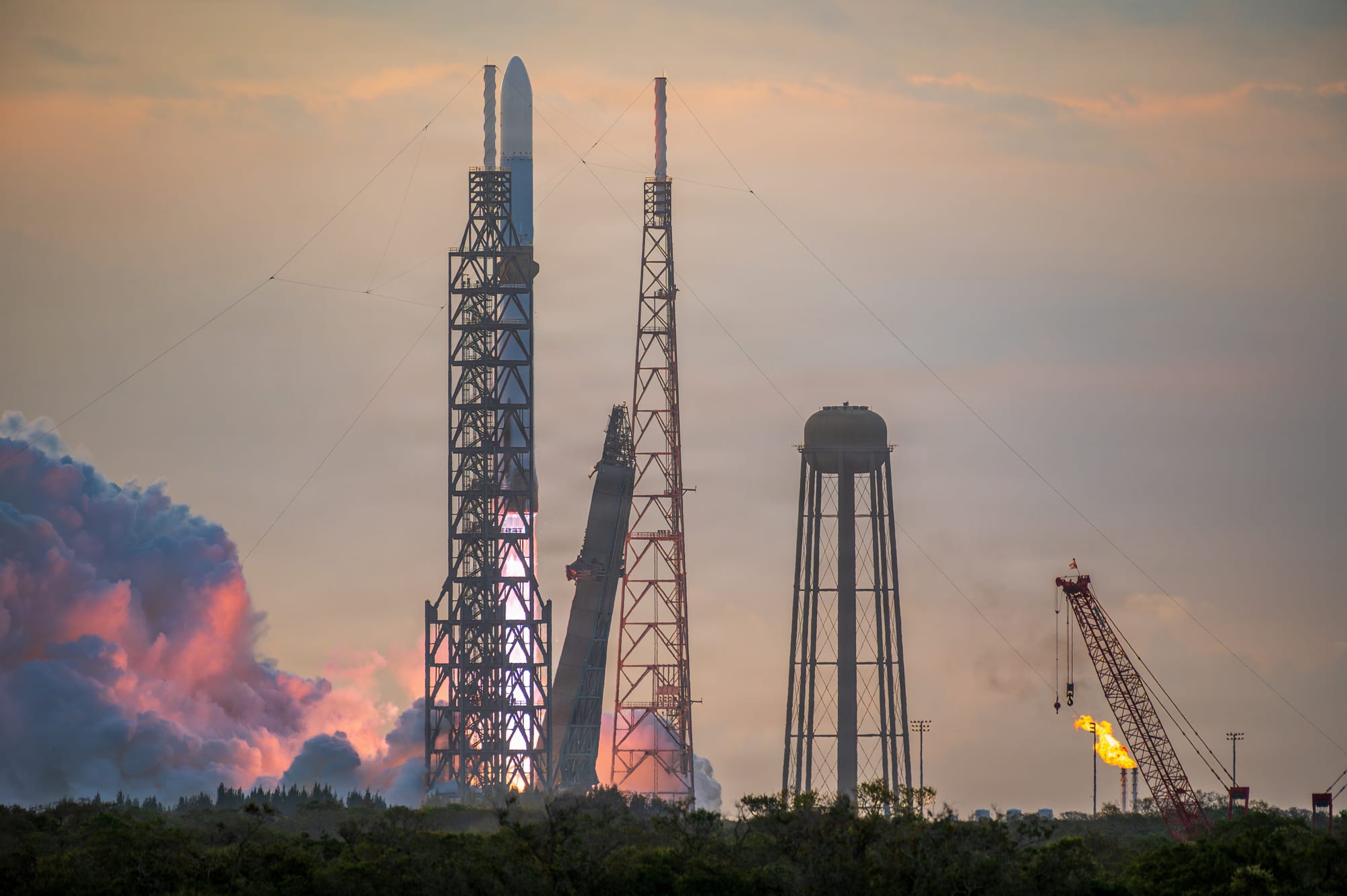
This has implications beyond Amazon. AST SpaceMobile is a good example of a company exposed to heavy-payload launch bottlenecks. AST’s BlueBird satellites are large direct-to-device cellular broadband spacecraft, and the company has already used New Glenn for a BlueBird 7 mission. AST has stated that it expects frequent orbital launches through 2026 using multiple launch providers, but a New Glenn stand-down would still reduce flexibility in the launch market at precisely the moment large LEO constellations are trying to scale.
Rocket Lab’s Neutron could eventually become relevant in this gap, but it is not a one-for-one substitute for New Glenn. Neutron is a medium-lift reusable rocket with a listed payload capability of 13,000 kilograms to low Earth orbit. That is a major step above Electron and could serve constellation-deployment customers that exceed small-launch capacity. But it is still a different class of vehicle from New Glenn, especially when payload volume, fairing diameter, batch size, and mission architecture are taken into account.
The engine question is also significant. New Glenn and United Launch Alliance’s Vulcan both use Blue Origin’s BE-4 engine family. Blue Origin states that seven BE-4 engines power New Glenn’s reusable booster, while two BE-4 engines power ULA’s Vulcan first stage. That does not mean Vulcan is automatically grounded or technically compromised by a New Glenn pad failure. The root cause could involve vehicle integration, ground support equipment, propellant loading, software, ignition sequencing, tank pressurization, plumbing, or a pad-side failure rather than the engine itself. But until investigators determine the initiating fault, BE-4 commonality will be an unavoidable focus of industry attention.
The NASA consequences may be even more important. Blue Origin had just been positioned as a major player in NASA’s updated Moon Base architecture. NASA’s current Moon Base plan is organized around a phased buildout near the lunar South Pole, beginning with robotic demonstrations and cargo missions before transitioning toward early habitation and sustained human presence. The agency has described Blue Origin’s Blue Moon Mark 1 Endurance lander as part of the early Moon Base campaign, targeted no earlier than fall 2026.
 John D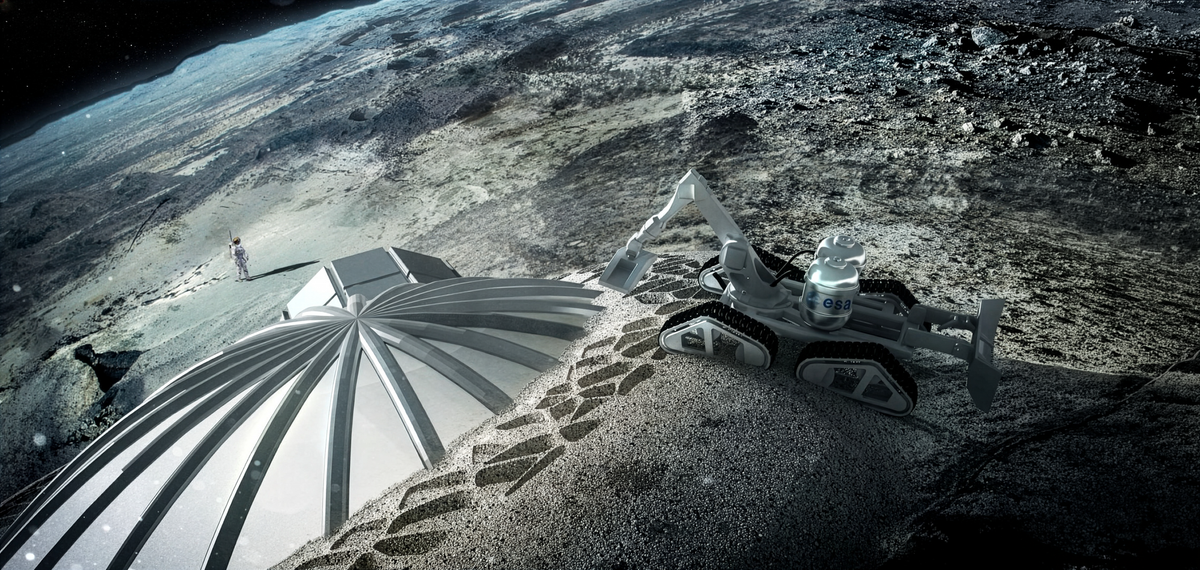
That matters because Blue Moon and New Glenn are tightly linked in practice. Blue Moon-class lunar logistics require heavy lift, large fairing volume, and high-energy mission capability. If New Glenn is unavailable for months or longer, NASA and Blue Origin will have to assess whether the Moon Base schedule can be protected through pad repairs, alternate vehicle flows, alternate launch providers, or changes to mission sequencing. Some Artemis and Moon Base elements may be less exposed, including missions flying on other commercial landers or launchers. But any mission architecture that assumes New Glenn availability now carries additional schedule risk.
The comparison to SpaceX’s 2016 Amos-6 pad explosion is useful, but imperfect. SpaceX returned Falcon 9 to flight within months, while Space Launch Complex 40 required a much longer recovery period. That precedent shows two different timelines: the vehicle investigation timeline and the pad reconstruction timeline. A company can sometimes return a rocket family to flight faster than it can restore a heavily damaged launch complex. For Blue Origin, that distinction is critical because New Glenn’s operational infrastructure is far less distributed than Falcon 9’s. If LC-36 is severely damaged and no alternate New Glenn pad is ready, the bottleneck is not just vehicle certification. It is physical launch-site availability.
John D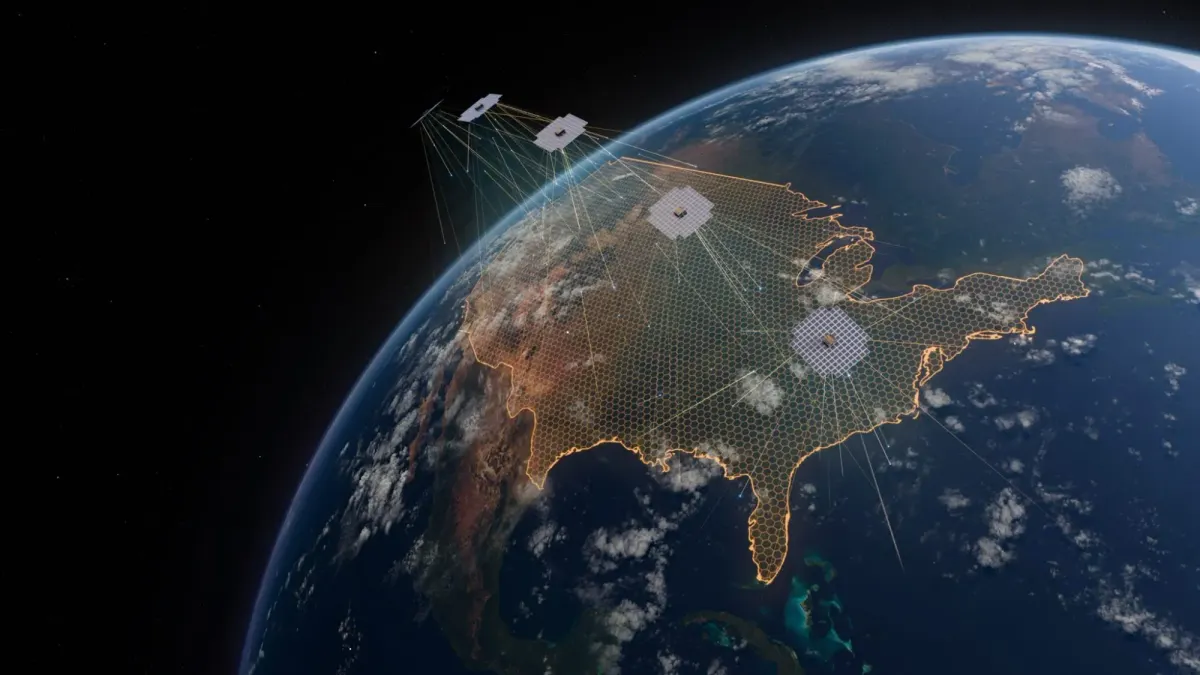

This is the core industrial issue: New Glenn is a node in several overlapping supply chains. It supports Amazon’s LEO broadband ambitions, potential AST SpaceMobile constellation growth, NASA’s lunar logistics, Blue Origin’s own commercial launch credibility, and the broader U.S. heavy-lift market. A pad explosion therefore propagates outward. It affects customers, insurers, regulators, engine confidence, launch manifests, NASA planning assumptions, and investor expectations across multiple space subsectors.
Rocket programs survive catastrophic failures. SpaceX, ULA, Northrop Grumman, Arianespace, and others have all dealt with major anomalies over time. The question is how fast Blue Origin can identify the root cause, protect or rebuild LC-36, preserve customer confidence, demonstrate BE-4 reliability, and return New Glenn to flight without creating a second failure sequence. Heavy-lift launch markets are unforgiving because delays compound. A one-month disruption can be absorbed. A one-year disruption can reshape customer behavior.
For Amazon Leo, the problem is deployment cadence. For AST SpaceMobile, it is access to large-payload launch supply. For ULA, it is the optics and technical scrutiny around BE-4 commonality. For NASA, it is lunar logistics risk, and for Blue Origin, it is the central question the company has faced for years: can New Glenn move from impressive hardware to reliable, repeated launch operations?
The explosion at LC-36 is a stress test of America’s emerging commercial space logistics architecture. The full impact will depend on the investigation, the extent of pad damage, the health of nearby vehicles and ground systems, and how quickly Blue Origin can return with a credible recovery plan.
John D John D
 John D
 John D
Rajan, G., & Brock, J. (2026, May 29). Blue Origin rocket explodes on launchpad in a setback for bid to catch Musk’s SpaceX. Reuters. https://www.reuters.com/science/blue-origin-says-it-faced-anomaly-during-hot-fire-test-2026-05-29/
Dunn, M. (2026, May 29). Blue Origin rocket explodes on the launch pad during an engine-firing test. AP News. https://apnews.com/article/blue-origin-rocket-explosion-bezos-ecdb38828fac02e3a33cc4fd4e61543e
Financial Times. (2026, May 29). Blue Origin rocket explodes on launch pad during test. Financial Times. https://www.ft.com/content/11b2eb12-6623-4624-83a6-5d25c905f3e6
Blue Origin. (n.d.). New Glenn. https://www.blueorigin.com/new-glenn
Boyle, A. (2026, May 27). Blue Origin readies New Glenn rocket to launch 48 Amazon Leo satellites after FAA clearance. GeekWire. https://www.geekwire.com/2026/blue-origin-new-glenn-rocket-amazon-leo-satellites/
AST SpaceMobile. (n.d.). Next-generation BlueBird. https://ast-science.com/next-gen-bluebird/
Rocket Lab. (n.d.). Neutron. https://rocketlabcorp.com/launch/neutron/
Blue Origin. (n.d.). Engines. https://www.blueorigin.com/engines
Shaw, E. (2026, May 26). NASA provides update on Moon Base rovers, landers, missions (Release No. 26-046). NASA. https://www.nasa.gov/news-release/nasa-provides-update-on-moon-base-rovers-landers-missions/
Dunn, M. (2026, May 27). NASA lays out moon base plans with landers, buggies and drones at the top of the list. AP News. https://apnews.com/article/nasa-moon-base-artemis-astronauts-2cacb3f0e194fd8f1cd6e4b903ff133d