Artemis Lunar Base 2026: What the Program Costs, What the Moon Has, and Who Is Winning the Race
Artemis II flew April 2026. The first crewed landing slips to 2028. ISRU is TRL 4. Ice abundance is unconfirmed. China targets 2030.

A Decision-Support Analysis for Policymakers, Executives, and Institutional Investors
Artemis: Three-Phase Lunar South-Pole Base and Lunar Industrial Potential
TL;DR
• The Artemis program has survived political transition but emerged structurally transformed: with the March 24, 2026 pause of Lunar Gateway in favor of a surface-first lunar base, the Artemis II crewed flyby completed on April 1, 2026, and a re-baselined campaign in which Artemis III becomes an Earth-orbit shakedown and the first crewed landing slips to Artemis IV in 2028, the United States retains the technical lead but has lost roughly three years against its original schedule while spending in excess of $93 billion through FY 2025 (NASA OIG, IG-22-003).
• Lunar "industrial potential" in the next 7–10 years is real but narrow: the credible near-term value chain is oxygen and water-derived propellant from polar permanently shadowed-region (PSR) ice plus 40–100 kW-class fission surface power; helium-3 and rare earth narratives remain speculative and, on current evidence, economically unjustifiable.
• The geopolitical map has hardened into two coalitions: 67 Artemis Accords signatories versus a China-Russia-led ILRS bloc claiming 17 states and 50+ institutions, with China's stated 2030 crewed-landing target (first publicly outlined by China Manned Space Agency Deputy Chief Designer Zhang Hailian at the China (International) Commercial Aerospace Forum in Wuhan on July 12, 2023, and reaffirmed in October 2025) now pacing U.S. decision-making and creating both alliance-management opportunities and resource-claim risks under an Outer Space Treaty regime that does not directly govern extraction.
Key Findings
- Schedule risk has become the defining commercial and strategic variable. As of late May 2026, Artemis II flew successfully (April 1–11, 2026); Artemis III was restructured in February 2026 into an Earth-orbit rendezvous/docking demonstration in 2027; Artemis IV is targeted for the first crewed lunar landing in 2028, with Artemis V (Blue Moon HLS) following in 2028–2029. Gateway has been paused indefinitely.
- Cost discipline is failing on the government-led legs and improving on the commercial legs. The OIG's $4.1 billion per-launch SLS/Orion figure (IG-22-003, 2021) has not been disproven by any subsequent audit; HLS contracts to SpaceX ($4B) and Blue Origin ($3.4B) are firm-fixed-price, with contractors absorbing additional.
- Water-ice abundance is far more uncertain than public narrative suggests. LCROSS impactor data place Cabeus crater ice at 5.6 ± 2.9 wt%; subsequent ShadowCam analysis (Science Advances, 2024) found no widespread surface ice at ≥20–30 wt% abundance and could not rule out widespread low-content ice, materially weakening the case for easy "ice skating-rink" extraction.
- ISRU technology is at TRL 4–5, not deployment-ready. Molten regolith electrolysis remains the most credible oxygen pathway (TRL 4, scalable to ~10 tonnes O₂/year from a ~1 tonne plant per NASA-supported studies); icy-regolith excavation has been demonstrated to TRL 5 only in simulants under the "Break the Ice" challenge.
- Surface power is now the central architectural lever. NASA's Fission Surface Power Project, with $5M Phase 1 contracts to Lockheed Martin, Westinghouse, and IX (Intuitive Machines/X-Energy JV) since 2022, was redirected in August 2025 to accelerate a 100 kW-class reactor with first criticality testing at INL's DOME bed planned for late 2026 and a lunar demonstration targeted for the early 2030s.
- Cislunar economics still require government anchor demand. Independent techno economic analyses (Metzger 2023; Kornuta et al. 2019 Commercial Lunar Propellant Architecture) find lunar propellant can be cost-competitive only with disciplined transportation gear-ratios and capex amortization assumptions that have not yet been demonstrated; using NASA Ames' cost model (Jones, NASA TRS 20230013555, 2023), the achieved cost to deliver mass to the lunar surface today is approximately $10,800/kg via Falcon Heavy.
- The legal architecture is fragmented and increasingly normatively contested. The 1967 Outer Space Treaty has 118 parties but its non-appropriation clause (Article II) does not directly govern resource extraction; the 1979 Moon Agreement remains a dead letter with only 17–18 parties (no major spacefaring state); national laws in the U.S. (2015), Luxembourg (2017), UAE (2019), and Japan (2021) have effectively created a patchwork commercial-mining regime that the Artemis Accords codify in soft law.
- A bipolar lunar order is now operationally meaningful. Artemis Accords reached 67 signatories with Paraguay's accession on May 7, 2026; the China-Russia ILRS counts 17 countries/international organizations plus 50+ research institutions, with construction targeted from 2031 and a basic facility by 2035 at the lunar south pole.
Contextual Background
Program Architecture and the Three-Phase Framing
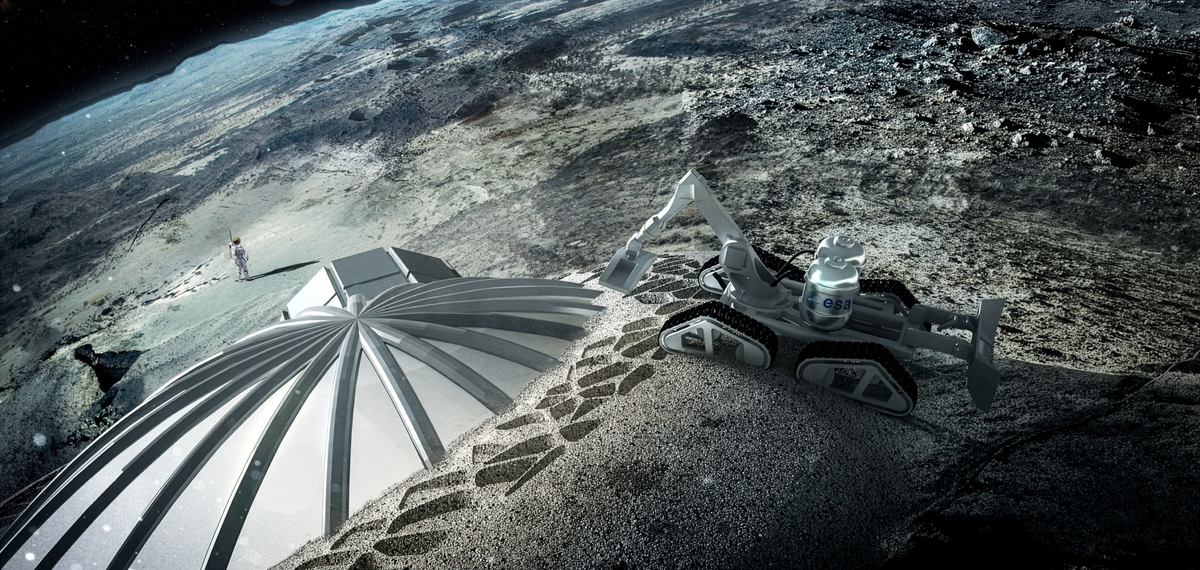
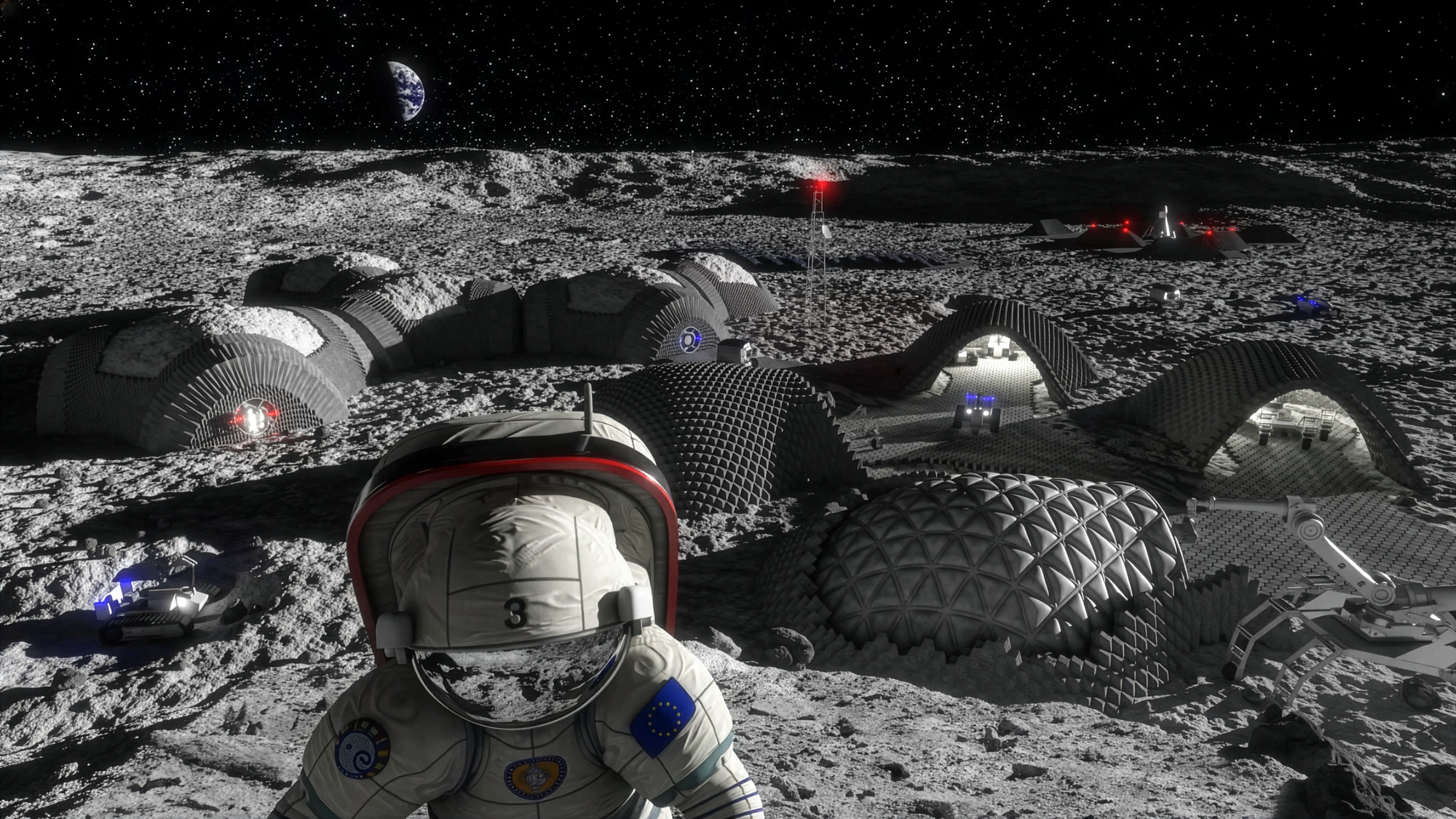
NASA now describes the Moon Base as a formal three-phase development campaign for establishing an enduring human presence near the lunar South Pole. Rather than treating “three phases” as an outside analytical scaffold, this report follows NASA’s published Moon Base Development framework: Phase One, “Learn, Test, Build” from now through 2029; Phase Two, “Early Habitation” from 2029 to 2032; and Phase Three, “Sustained Human Presence” from 2032 onward. NASA characterizes this as a phased, iterative approach in which robotic missions, surface demonstrations, mobility systems, power systems, communications infrastructure, habitation, logistics, and resource-use technologies are matured over time.
Phase One - Learn, Test, Build, Now–2029: NASA’s first phase focuses on scouting, demonstration, and risk reduction. It includes a major increase in lunar activity, with up to 25 missions, including 21 landings; delivery of roughly four tons of payload; science payloads integrated across landers and rovers; early demonstrations of power, navigation, communications, and radioisotope heater technologies; communications relay and observation satellites; MoonFall drones; VIPER resource mapping; and early crewed and autonomous Lunar Terrain Vehicles. Key CLPS-linked missions include Blue Origin’s Blue Moon Mark 1 “Endurance,” Astrobotic’s Griffin Mission One, and Intuitive Machines’ IM-3 mission. NASA states that Endurance is intended to reduce risk for future crewed Artemis landing missions in 2028.
Phase Two - Early Habitation, 2029–2032: NASA’s second phase transitions from demonstration toward semi-permanent infrastructure and early habitation/logistics operations. Planned elements include expanded solar power systems, initial nuclear surface power capabilities, upgraded rovers, potential advanced MoonFall drones, early habitation elements, enhanced surface-to-orbit communications, and delivery of up to 60 tons of cargo through as many as 24 landings using low-, medium-, and heavy-class cargo landers. The JAXA-supplied pressurized rover is expected during this phase and is designed to support two astronauts in a shirt-sleeve environment for up to 30 days, with an approximate 10-year lifespan.
Phase Three - Sustained Human Presence, 2032 and Beyond: NASA’s third phase scales the Moon Base toward continuous surface activity and routine crew rotations. Planned capabilities include semi-permanent habitation modules, operational fission surface power systems, pressurized rovers for long-distance exploration, advanced logistics networks using crewed and autonomous rovers, and annual delivery of up to 38 tons of cargo to sustain habitats, power systems, logistics operations, and science outposts. NASA also identifies Phase Three as the period when ISRU moves from early testing toward sustained use, including possible extraction of oxygen, water, and hydrogen from lunar regolith and conversion of regolith into construction materials through sintering, corbelling, and 3D printing. Phase Three also includes substantial uncrewed cargo return capability, with systems capable of returning up to 500 kilograms of material from the lunar surface to Earth.
Phase One for robotic scouting and surface demonstrations, Phase Two for early habitation and logistics infrastructure, and Phase Three for sustained human presence, resource utilization, and recurring lunar surface operations.
What Changed in 2024–2026
Three program-shaping events define the present landscape:
- VIPER cancellation (July 17, 2024) and partial revival (September 2025). NASA terminated the Volatiles Investigating Polar Exploration Rover after spending approximately $450 million on the largely-built vehicle, citing $84M near-term savings against an estimated $104M additional cost-to-fly. After bipartisan congressional pressure, NASA released an Announcement for Partnership Proposal in February 2025 and on September 19, 2025 selected Blue Origin to deliver and operate VIPER on its Blue Moon cargo lander.
- Heat-shield and Artemis II/III re-baselining (2024–2026). Investigation of Artemis I AVCOAT char loss delayed Artemis II from September 2025 to April 2026; in February 2026 NASA Administrator Jared Isaacman announced Artemis III would become an Earth-orbit test of HLS/Orion docking, deferring the first crewed landing to Artemis IV in 2028.
- Gateway pause and surface pivot (March 24, 2026). At NASA's "Ignition" event, Isaacman announced Gateway would be paused "in its current form," redirecting funding toward a ~$20 billion surface-first lunar base over seven years, with ESA's HALO module and the Power and Propulsion Element potentially repurposed (the PPE is now slated to become "Space Reactor-1 Freedom," a nuclear-electric-propulsion deep-space demonstrator).
The IM-2 / PRIME-1 Lesson
On March 6, 2025, Intuitive Machines' IM-2 mission landed Athena at Mons Mouton (84.6°S), 250 m from its targeted point, tipped on its side inside a crater after an altimeter failure, and ended operations within 13 hours. NASA's PRIME-1 instruments (the TRIDENT drill and MSOLO mass spectrometer) extended the drill but could not perform their core science. This is the second consecutive Intuitive Machines lander to suffer an altimetry-induced tip-over (after IM-1 in February 2024), and it is the second consecutive south-polar mission to fail to confirm subsurface ice abundance, emphasizing that, as of May 2026, no in-situ measurement has independently confirmed economically extractable ice in a PSR.
Key Players and Stakeholders
U.S. Government
• NASA as program architect and chief customer. The agency's Moon-to-Mars architecture is the only fully funded, treaty-compliant, alliance-anchored lunar campaign of record.
• The Department of Energy and Idaho National Laboratory as Fission Surface Power Project sponsors. INL's Demonstration of Microreactor Experiments (DOME) test bed is open as of 2025 and will host criticality testing for FSP designs from late 2026.
• GAO and NASA OIG as oversight authorities. GAO-23-105609, published September 7, 2023, found verbatim that "senior NASA officials told GAO that at current cost levels, the SLS program is unaffordable"; OIG IG-24-015 (August 2024) continued to document SLS production-cost overruns.
 John D
U.S. Commercial Primes and New Entrants
• SpaceX (Starship HLS, ~$4B firm-fixed-price; ~$2.7B paid against 49 milestones as of late 2025) faces the orbital propellant-transfer demonstration as a critical path item, now slipped from 2025 to 2026. In October 2025, Acting Administrator Sean Duffy publicly stated SpaceX is "behind" on HLS and reopened the Artemis III HLS competition.
• Blue Origin (Blue Moon Mk2, $3.4B firm-fixed-price contract; total program cost approximately $7B with Blue Origin self-funding more than 50%) is the second HLS provider, paired with Lockheed Martin's Cislunar Transporter.
• Intuitive Machines has emerged as the dominant CLPS contractor (four task orders; the $4.8B Near Space Network IDIQ; prime on the Moon RACER LTV team) but with a 0/2 record on intact landings.
• Astrobotic (Peregrine failure, January 2024; Griffin lander pending) and Firefly Aerospace (Blue Ghost Mission 1 successful soft landing in Mare Crisium, March 2025) are the other CLPS workhorses.
• Axiom Space holds the AxEMU spacesuit contract for the first crewed landing.
• Westinghouse, Lockheed Martin, and IX (Intuitive Machines + X-Energy) hold the three FSP Phase 1 contracts; Westinghouse received a follow-on award in January 2025 to advance its eVinci-derived "AstroVinci" microreactor concept.
International Partners
• ESA (Orion service module, formerly HALO/I-Hab on Gateway, ESPRIT communications module, "Argonaut"/European Large Logistics Lander).
• JAXA (Pressurized Lunar Cruiser developed with Toyota; April 10, 2024 Implementing Arrangement allocates two Japanese astronaut surface flights).
• CSA (Canadarm3, Lunar Utility Vehicle, astronaut Jeremy Hansen on Artemis II).
• Italy (ASI) has committed Multi-Purpose Habitation modules; UAE's MBRSC was committed to Gateway airlock and is now being re-scoped.
John D
The Competing ILRS Bloc
China (CNSA, Deep Space Exploration Laboratory) and Russia (Roscosmos) lead. Confirmed ILRS member states include Russia, Venezuela, Belarus, Pakistan, Azerbaijan, South Africa, Egypt, Nicaragua, Thailand, Serbia, Senegal, and Kazakhstan, with the UAE, APSCO, and ILOA Hawai'i having signed cooperation MoUs at sub-state level. Chang'e 6 (June 2024) returned the first far-side samples; Chang'e 7 (2026) and Chang'e 8 (~2029) will conduct ISRU technology demonstrations at the south pole. Russia and China signed a May 2025 MoU on a joint nuclear power station for the ILRS, with completion targeted for 2036.
Technical and Operational Considerations
Polar Environment and Site Selection
The lunar south pole's value rests on two superimposed conditions: near-continuous illumination at certain topographic high points ("Peaks of Near-Eternal Light"), and adjacent permanently-shadowed regions (PSRs) at temperatures below 110K capable of cold-trapping water and other volatiles.
Peer-reviewed illumination analyses provide the quantitative anchor:
• Mazarico et al. (2011, Icarus 211: 1066–1081) found that near the Shackleton crater rim, a location is continuously sunlit for 240 days per year with the longest continuous dark period of ~1.5 days.
• Speyerer & Robinson (2013, Icarus 222: 122–136) found that outposts on Shackleton's rim remain illuminated for 94% of a lunar year.
• Gläser et al. (2018, Planetary & Space Science 162: 170–178) found that the Connecting Ridge between Shackleton and de Gerlache craters provides up to 88% illumination at 2 m above ground (climbing above 95% at 10m height); Gläser et al. (2014) found locations receiving sunlight 92.27% of the time at 2m and 95.65% at 10m, with longest darkness of typically 3–5 days.
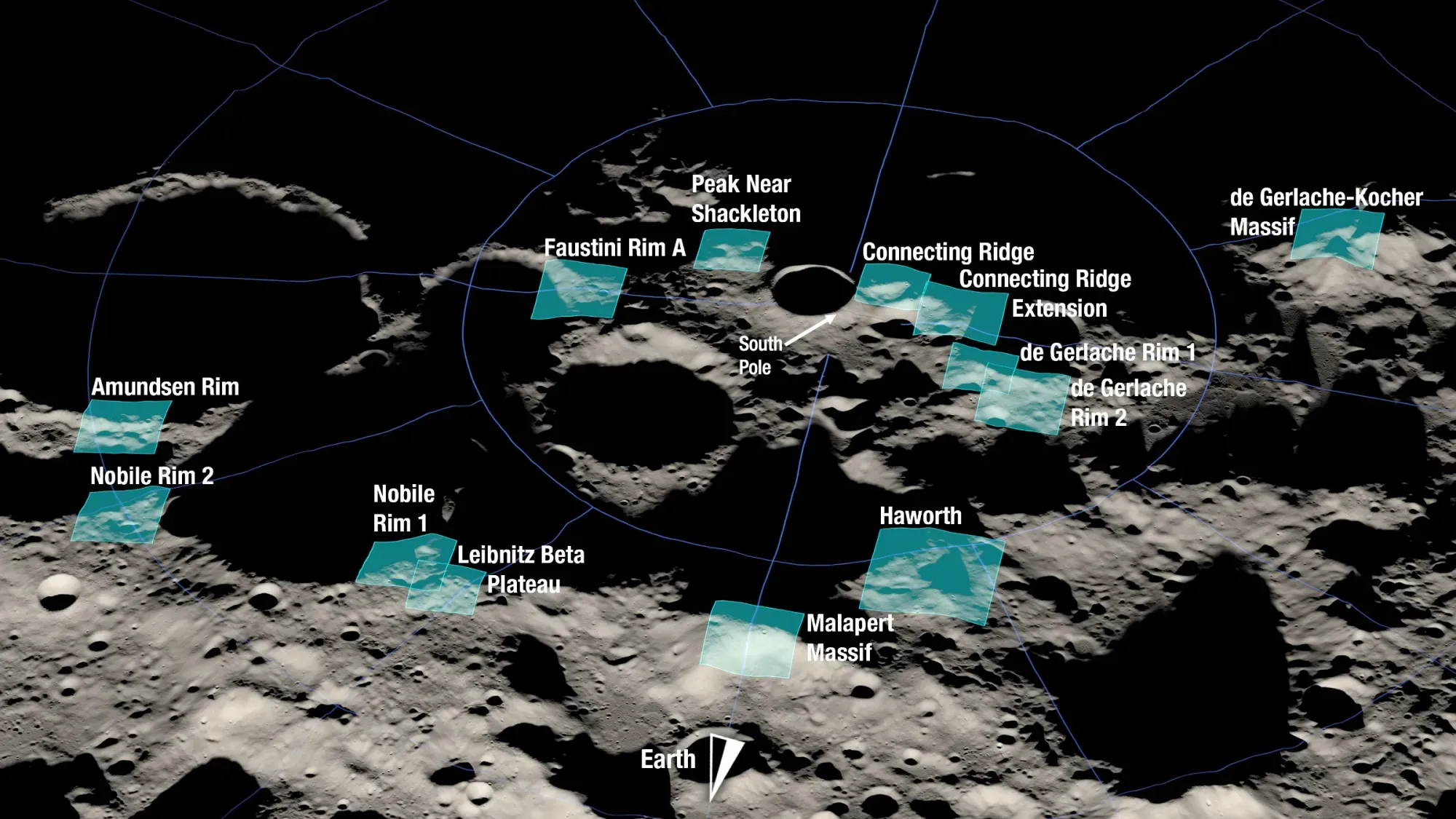
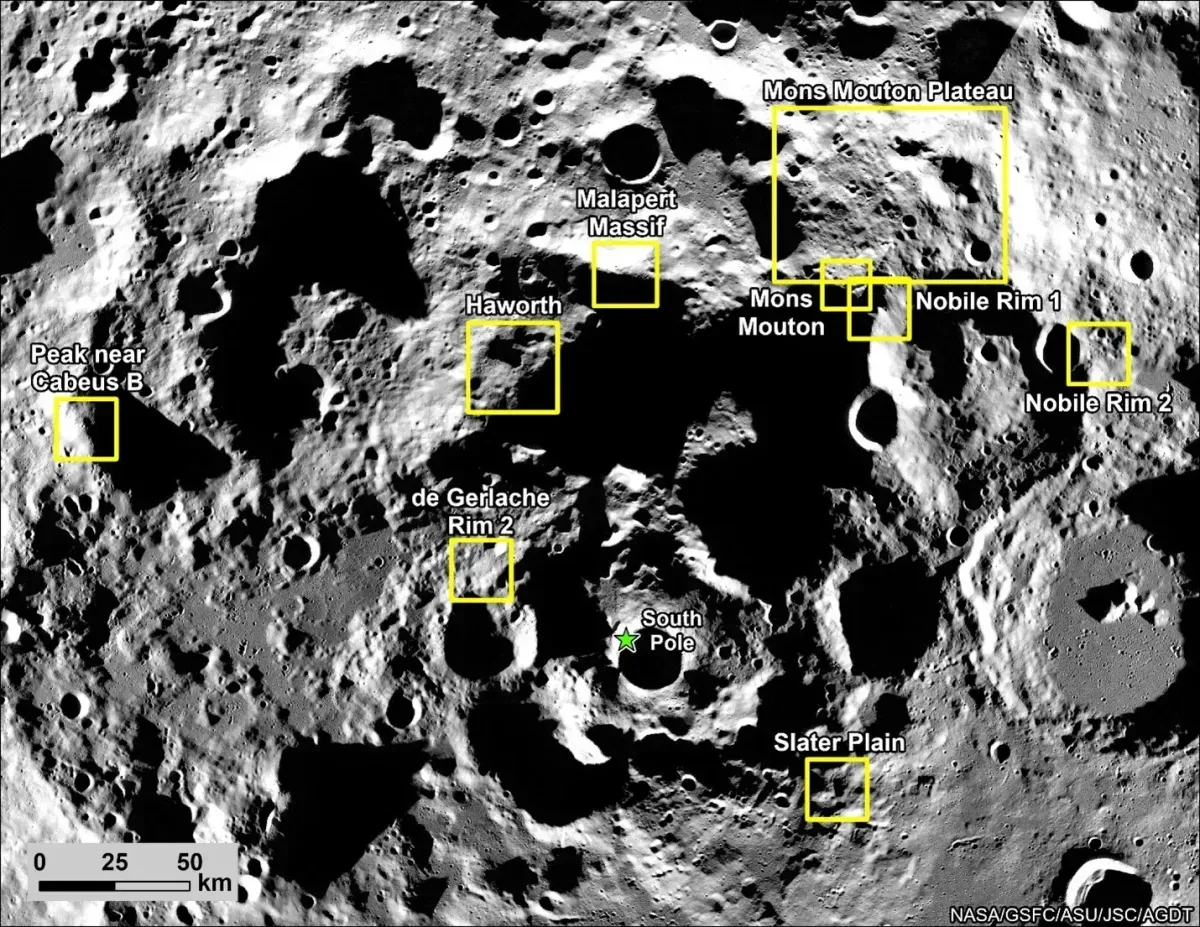
NASA's August 19, 2022 announcement identified 13 candidate Artemis III landing regions within 6° of the south pole: Faustini Rim A, Peak Near Shackleton, Connecting Ridge, Connecting Ridge Extension, de Gerlache Rim 1 and 2, de Gerlache-Kocher Massif, Haworth, Malapert Massif, Leibnitz Beta Plateau, Nobile Rim 1 and 2, and Amundsen Rim. The list was narrowed to nine in October 2024.
Water-Ice Resource: Evidence vs. Assumption
The case for lunar polar water rests on a converging but incomplete dataset:
• LCROSS (2009): direct impact-plume detection of water ice in Cabeus PSR at 5.6 ± 2.9 wt% (Colaprete et al. 2010, Science); subsequent modeling (Heldmann et al. 2020) refines this to 4.3–8.2 wt% depending on regolith density assumptions.
• Chandrayaan-1 / M3 (2009): evidence of surface hydration and exposed water ice in PSRs.
• LRO/LAMP, LEND, Diviner: mapping of hydrogen abundance and ultra-cold trap distribution. LEND data (Sanin et al., 2012, JGR Planets) shows Cabeus has the largest statistically significant neutron-flux suppression in the south circumpolar area.
• ShadowCam (Korean Pathfinder Lunar Orbiter, Science Advances, 2024): "found no evidence of widespread water ice in PSRs at abundances above the detection limit of 20 to 30 wt%" but could not rule out widespread low-content ice. A few small locations consistent with >10 wt% surficial ice were identified.
Implication for industrial planning: Within a 7–10 year horizon, the conservative planning assumption is that polar regolith may contain ~1–6 wt% water (and possibly less at the surface), distributed heterogeneously, with the highest concentrations potentially at depth (~10 cm to several meters) and requiring excavation in 40K to 110K cryogenic vacuum. The "ice-skating-rink" mental model unsupported by current evidence is the single largest source of business-case optimism that should be discounted
ISRU Technology Readiness
NASA's 2025 lunar ISRU progress review (Sanders, NASA Tech Reports 20250003730) provides the cleanest TRL inventory:
• Molten Regolith Electrolysis (MRE): currently TRL 4. Studies (NASA NTRS 20240013999) indicate a 400 kg, 14 kW MRE plant can produce 1,000 kg O₂/year from highlands regolith, scaling to a 1,593 kg, 56.5 kW plant producing 10,000 kg O₂/year. MRE yields ~95% of regolith oxygen plus iron-silicon alloy by-products usable for additive manufacturing.
• Hydrogen and Carbothermal Reduction: TRL 4–5; lower processing temperatures than MRE but consumable-dependent.
• Water electrolysis from polar ice: mature on Earth (TRL 9 industrially) but the integrated extraction-purification-electrolysis chain is TRL 3–4 in lunar conditions.
• Hard Icy Regolith Excavation: demonstrated to TRL 5 in simulants under NASA's "Break the Ice" challenge (2024).
• Regolith sintering / 3D printing: ESA demonstrated solar concentrated sintering of regolith simulant to produce 1.5-tonne building blocks; selective laser sintering, microwave sintering, and D-Shape binder-based approaches are TRL 3–5.
Surface Power: The Critical Path
The lunar south pole's polar night cycle (continuous darkness can exceed 100 hours at most candidate sites, despite favorable illumination percentages) drives a surface-power architecture that combines:
• Photovoltaic arrays at peaks of near-eternal light, supplemented by vertical solar arrays (NASA's VSAT technology demonstrator).
• Fission Surface Power: initial requirement was 40 kWe with a 6,000 kg mass cap, ten-year unattended lifetime, low-enriched uranium fuel; in 2025 NASA redirected the project toward 100 kWe to support a "burgeoning lunar economy and national security interests" (NASA Directive, August 4, 2025). The three Phase 1 awardees (Lockheed Martin/BWXT/Creare; Westinghouse/Aerojet Rocketdyne; IX/Maxar/Boeing) are advancing concepts with Brayton or Stirling power conversion. Lunar demonstration is targeted for the early 2030s.
A 100-kW reactor changes the addressable industrial set: it is the difference between supporting a 4 person crew with limited ISRU pilot operations (40 kW) and supporting a continuous ISRU pilot plant of ~10 t O₂/year scale plus crew operations.
Mobility, Communications, and Crew Health
• Lunar Terrain Vehicle (LTV): NASA awarded $30M Phase 1 design contracts in April 2024 to Intuitive Machines (Moon RACER), Venturi Astrolab (FLEX), and Lunar Outpost (Lunar Dawn) under a $4.6B program ceiling. First use is targeted for Artemis V in 2028–2029.
• Pressurized Lunar Cruiser (JAXA/Toyota): ~2031 launch, accommodates two astronauts for 30 days, ~10-year operational life. Bill Nelson described it at the April 10, 2024 press conference as "a mobile habitat, it's a lunar lab, a lunar home and a lunar explorer."
• Communications and Navigation: Intuitive Machines' Near Space Network IDIQ ($4.8B ceiling through 2034) covers GEO-to-cislunar relay; NASA's LunaNet architecture coordinates international interoperability standards.
• Crew Health: Polar mission radiation environments are dominated by galactic cosmic ray (GCR) and solar particle event (SPE) exposure. Lunar dust (regolith) remains an unsolved engineering hazard; Apollo seal degradation and respiratory hazards documented in 1972 are unaddressed in current EVA suit and habitat designs at sustained timescales.
Economic and Market Dynamics
Government Anchor Demand Dominates the Decade
Through at least 2032, the cislunar economy is overwhelmingly composed of government contract revenue. NASA Artemis cumulative obligations are projected by NASA OIG (IG-22-003) to exceed $93 billion by FY 2025, with Payload Research estimating the program will cross $100 billion in FY 2026. The principal commercial revenue lines are:
• HLS: SpaceX (~$4B), Blue Origin (~$3.4B contract; ~$7B total).
• CLPS: $2.6B IDIQ ceiling, with individual task orders ranging from $77M (IM-1) to $180.4M (IM-5, March 2026). Astrobotic's Peregrine task order grew from $79.5M to ~$108M; Firefly's Blue Ghost Mission 3 was awarded at $179.6M in December 2024; Intuitive Machines' IM-4 (south pole, 2027) at $116.9M in August 2024.
• Communications/Navigation: Intuitive Machines Near Space Network IDIQ, $4.8B ceiling through 2034.
• Surface mobility: $4.6B LTV ceiling.
• Fission Surface Power: Phase 2 anticipated to be multi-hundred-million per awardee through early-2030s demonstration.
Cost-to-Surface Economics
Using NASA Ames analyst Harry Jones' published gear-ratio model (NASA TRS 20230013555, 2023): "The launch cost for a Moon base would be 10.8 $k/kg, based on the Falcon Heavy cost of 1.52 $/kg and a Moon gear ratio of about 7.2." This $10,800/kg-to-lunar-surface anchor frames the entire business case:
• A 1-tonne MRE oxygen plant delivered to the surface costs ~$11M in transport alone, plus development, integration, and operations. Producing 10 t O₂/year, the plant breaks even against Earth-launched LOX (assuming ~$2,000/kg LOX delivered to lunar surface at $10,800/kg gear-rated launch) within roughly 1–2 years of nominal operation, but only if reliability and uptime targets are met, neither of which has been demonstrated.
• Starship at SpaceX's $2M-per-flight aspirational marginal cost would drop launch cost to LEO to approximately $20/kg (per the same NASA analysis), and to lunar surface to roughly $150/kg. This is an aspirational target, not a demonstrated number; the same analysis treats it as "speculative."
John D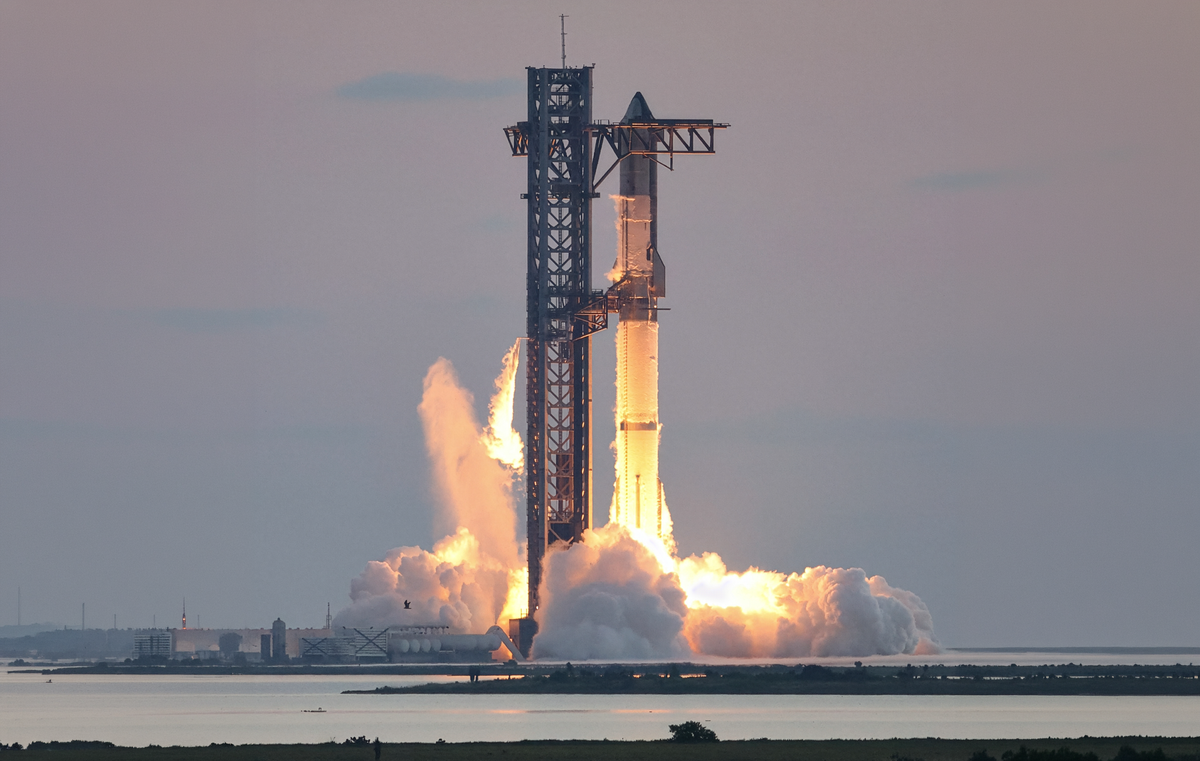
The Lunar Propellant Business Case: Disciplined But Not Yet Proven
The Kornuta et al. Commercial Lunar Propellant Architecture (2019, REACH journal, ULA-hosted workshop) and Metzger's 2023 Acta Astronautica paper "Economics of in-space industry and competitiveness of lunar-derived rocket propellant" provide the most rigorous techno-economic analyses. Their findings:
• Lunar-derived propellant can be competitive at the LEO delivery point against Earth-launched propellant only with capital-cost gear ratios (G) below thresholds that historic lunar architectures have rarely achieved.
• The "tent sublimation" extraction technology has a thermodynamic efficiency ratio (φ) "an order of magnitude better than the threshold for competitiveness even in low Earth orbit."
• Strip-mining approaches are marginal; technological improvements plus several years of operational experience would be required.
The conclusion across these studies is consistent: lunar propellant economics work, but only with a specific transportation architecture (likely Starship-class fully-reusable lift), disciplined capex, and an anchor demand customer (defense satellite refueling, commercial GEO servicing, or NASA's own Mars program).
Helium-3 and Rare Earths: Treat with Skepticism
The helium-3 narrative deserves explicit pushback. The U.S. Geological Survey has described lunar helium-3 as an "inferred unrecoverable resource" under current economic and technical constraints. Independent feasibility analyses converge:
• The Kuhlen/Köhle/Eichler study (2014 COSPAR) found that to supply 10% of global energy demand via lunar He-3 by 2040 would require 200 tonnes/year of He-3, implying a regolith mining rate of 630 tonnes per second at optimistic 20 ppb concentrations, 1,700–2,000 mining vehicles, and ~39 GW of heating power. At a 1% market share, annual costs of €45 - €140B against profits of −€78 to +€23.1B. At 0.1%, the analysis shows net losses.
• Crawford (Birkbeck) has argued that He-3 is "a fossil fuel reserve" once mined, and that the capital that would be deployed to extract it would be better directed to terrestrial energy systems.
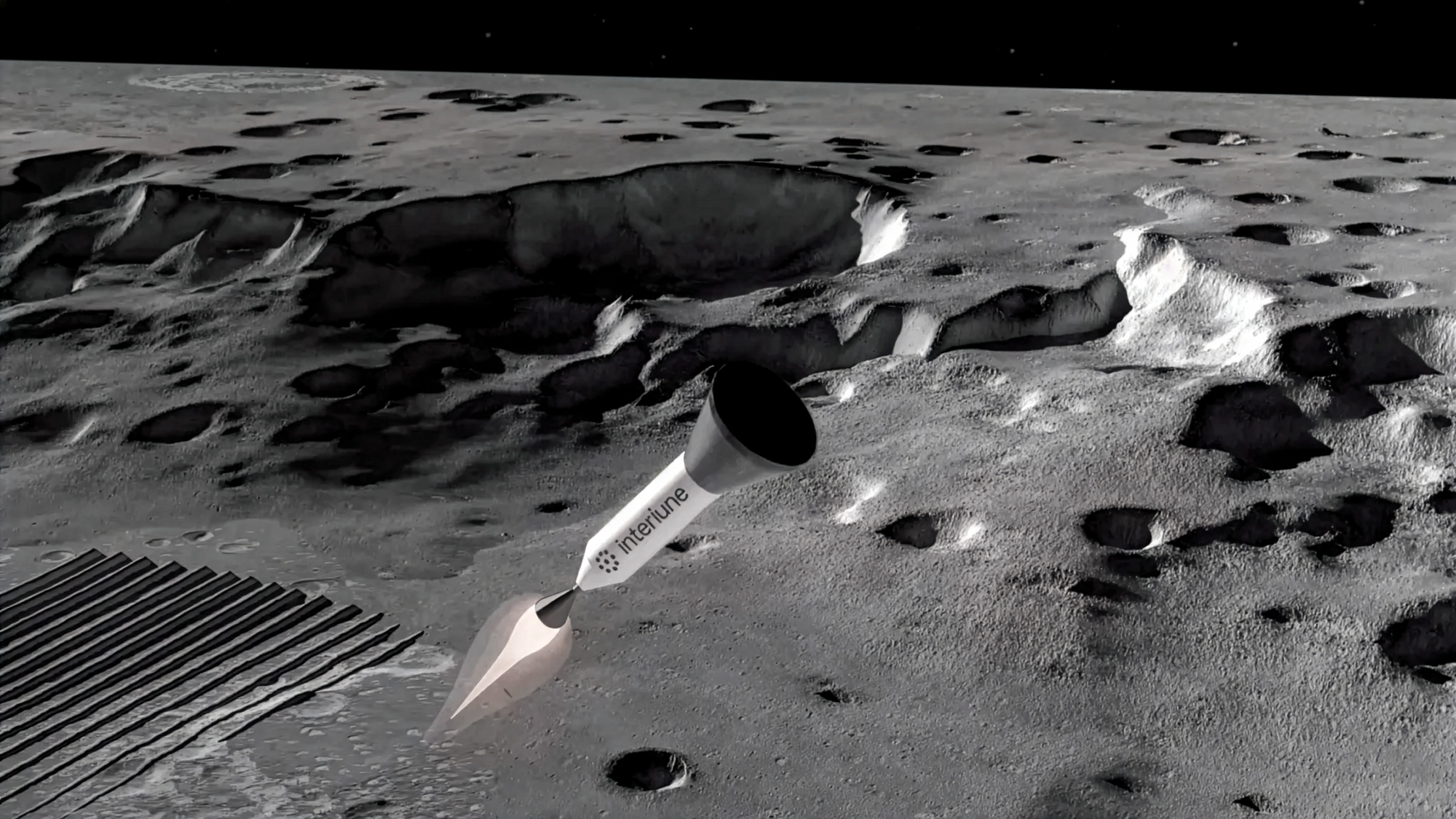
• The DOE's announcement on May 7, 2025, that it would purchase 3 liters of lunar He-3 from Interlune (delivery no later than April 2029) is a strategic seed buy, not market validation. Per Interlune CEO Rob Meyerson (GeekWire, May 7, 2025), pricing is "roughly $3,000 per liter, with roughly 7,400 liters in a kilogram under standard conditions," valuing the entire DOE purchase at approximately $8,100–$9,000.
• The September 17, 2025 Bluefors (Finland)–Interlune commercial supply agreement for up to 10,000 liters of He-3 annually from 2028 to 2037, valued at $300M (The Quantum Insider), is a genuine commercial commitment but is contingent on supply that has not been demonstrated.
John D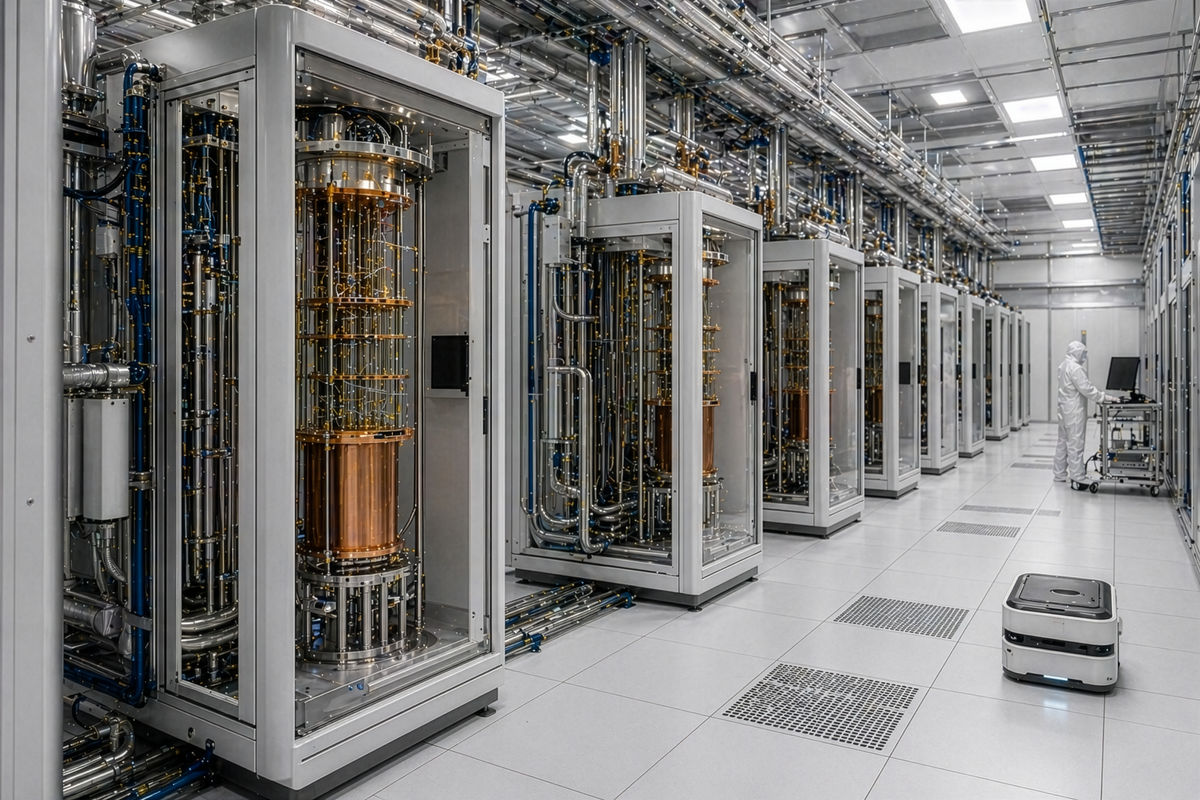
• Qosmosys concluded that current ambitions for substantial He-3 extraction are "more speculative than feasible."
Rare-earth-element concentration on the Moon is not supported by current geochemistry; KREEP-rich materials exist but are not preferentially enriched to the degree that would justify Earth-return economics under any plausible transport-cost scenario in the next 30 years.
Realistic Cislunar Market Size
Assembling the credible building blocks, including government anchor demand, propellant for in-space tug architectures, communications/navigation services, and scientific payload delivery, leads to a base-case forecast of a cislunar economy in the $5–15 billion/year range by 2035, with upside to $30–50B/year if (and only if) (a) Starship achieves a sub-$1,000/kg-to-LEO cost, (b) one ISRU technology reaches TRL 8 in flight, and (c) at least one of defense satellite refueling, lunar tourism, or Mars-architecture propellant demand becomes anchor demand. McKinsey, PwC, and Bryce Tech "trillion-dollar space economy by 2040" forecasts include broad Earth-orbit-driven categories (satellite communications, broadband, Earth observation) that should not be conflated with lunar/cislunar opportunity.
John D
Regulatory Landscape
Treaty Architecture
The hierarchy of binding international law remains:
- Outer Space Treaty (1967) - 118 parties as of October 2025. Article II prohibits "national appropriation by claim of sovereignty, by means of use or occupation, or by any other means." Article VI requires states to authorize and continuously supervise their non-governmental space activities. Article IX requires consultation where activities might cause "harmful interference." Article XI requires informational transparency on the "nature, conduct, locations and results" of space activities.
- Rescue Agreement (1968), Liability Convention (1972), Registration Convention (1976) - broadly ratified.
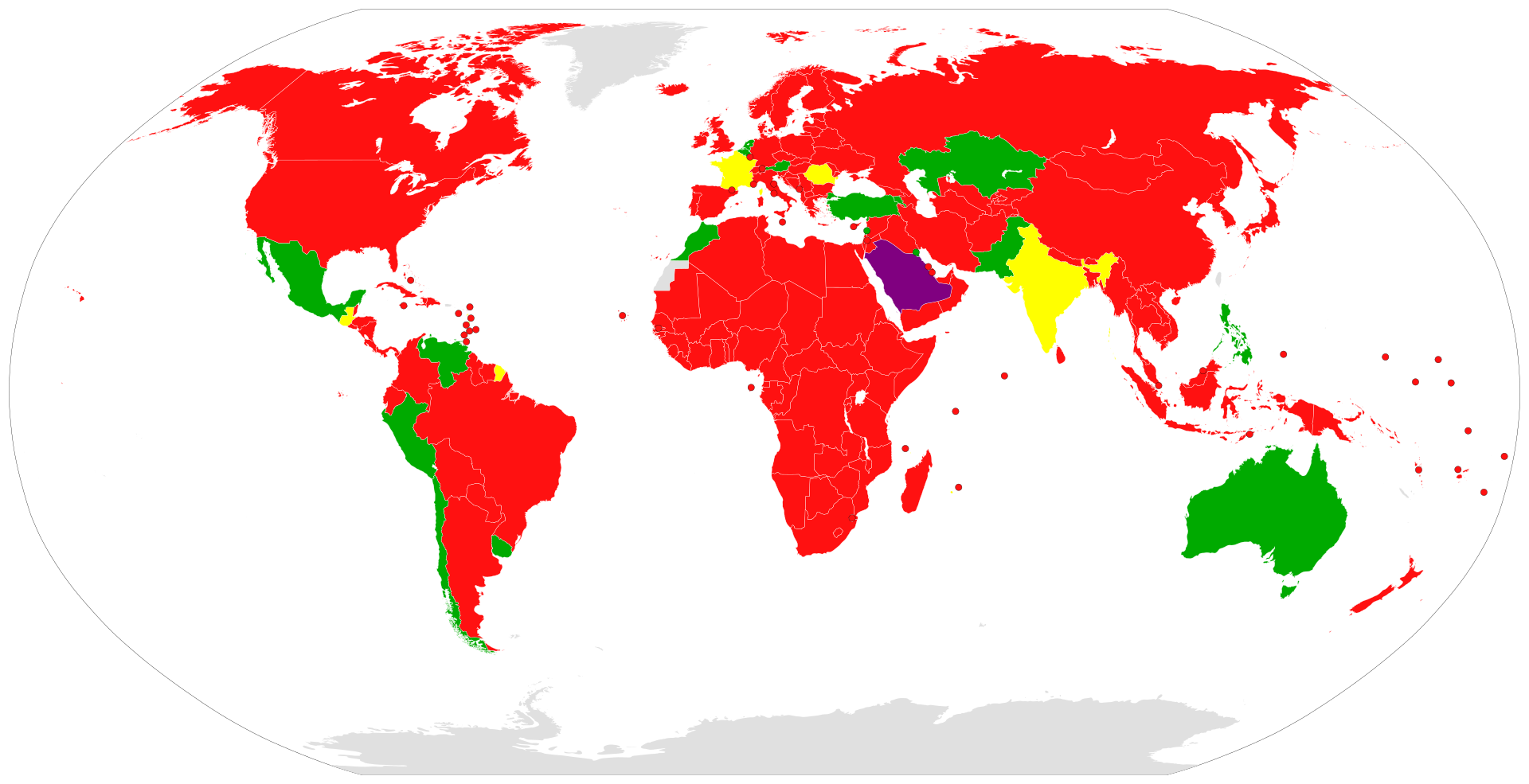
- Moon Agreement (1979 / entered into force 1984) - 17 parties; no major spacefaring state is party. Declares Moon and natural resources "the common heritage of mankind" and contemplates an international regulatory regime to govern extraction. Its effective irrelevance is the central legal fact of lunar resource policy.
Agreement Governing the Activities of States on the Moon and Other Celestial Bodies
National Legislation Creating a De Facto Regime
In the absence of a binding multilateral framework, four national legal regimes have created the operational rules:
• United States - Commercial Space Launch Competitiveness Act, 2015 (51 U.S.C. § 51303): U.S. citizens "shall be entitled to any asteroid resource or space resource obtained, including to possess, own, transport, use, and sell" such resources. Reinforced by Executive Order 13914 (April 6, 2020), "Encouraging International Support for the Recovery and Use of Space Resources," which explicitly states "the United States does not view outer space as a 'global commons'."
• Luxembourg - Law of 20 July 2017 on the Exploration and Use of Space Resources: Article 1 provides that "space resources are capable of being appropriated"; establishes an authorization regime with fees of €5,000–€500,000 and criminal penalties for unauthorized activity.
• United Arab Emirates - Federal Law No. (12) of 2019, on the Regulation of the Space Sector: UAE Space Agency licensing of resource extraction; 2023 Space Resources Resolution adds operational specificity.
• Japan - Act on the Promotion of Business Activities for the Exploration and Development of Space Resources (Act No. 83 of 2021): licensing model with "business activity plans" required.
The Artemis Accords as Soft-Law Bridge
The Artemis Accords (October 13, 2020), with 67 signatories as of May 7, 2026 (including all 23 ESA member states with Ireland's May 4, 2026 accession, plus Paraguay on May 7), are political commitments and not a treaty. Section 10 ("Space Resources") "notes that the utilization of space resources can benefit humankind by providing critical support for safe and sustainable operations" and asserts that "the extraction and utilization of space resources… should be executed in a manner that complies with the Outer Space Treaty." Section 11 ("Deconfliction of Activities") introduces the controversial concept of "safety zones", areas in which signatories will notify and coordinate. Russia and the Secure World Foundation have criticized safety zones as functionally equivalent to de facto territorial claims; the U.S. position is that they are coordination measures consistent with Article IX of the OST.
Open Questions
The unresolved issues that will define the legal regime over the next decade are: (1) whether "safety zones" become customary international law or are challenged as appropriation; (2) whether ILRS bloc resource claims will be recognized by Accords signatories and vice versa; (3) whether private-law contracts (such as the Bluefors–Interlune $300M He-3 supply agreement) will generate de facto governance ahead of UN COPUOS deliberation; and (4) how heritage preservation (Section 9 of the Accords) intersects with industrial activity near Apollo sites.
Geopolitical and Strategic Dimensions
A Bipolar Lunar Order
By May 2026, the lunar order is effectively bipolar with non-aligned middle powers. The Artemis Accords bloc of 67 signatories spans every populated continent and includes all major Western spacefaring states, Japan, South Korea, India, Brazil, and most G20 members. The ILRS bloc of 17 states plus 50+ research institutions is concentrated in Russia, China, and partners across Africa (Senegal, Egypt, South Africa), Central/South Asia (Pakistan, Azerbaijan, Kazakhstan, Belarus), Southeast Asia (Thailand), and Latin America (Venezuela, Nicaragua). Notable middle powers (Brazil, Turkey, Indonesia) have either signed Accords or maintained dialogue with both; the UAE has notably signed the Accords while maintaining sub-state ILRS cooperation.
China's stated objective is a 2030 crewed landing, outlined publicly by CMSA Deputy Chief Designer Zhang Hailian at the China (International) Commercial Aerospace Forum, Wuhan, July 12, 2023, who described "a preliminary plan to put two astronauts on the moon for a short period to conduct scientific tasks and collect samples," and reaffirmed by CMSA spokesman Zhang Jingbo in an October 2025 CCTV press conference as "proceeding smoothly" with ground facilities "being accelerated." An ILRS basic facility at the south pole by 2035 is the parallel objective. CNSA Chief Designer Wu Weiren has set a target of attracting 500 international scientific research institutions and 5,000 researchers by 2035, with an extended station planned for the 2040s. Russia's role has shrunk: Russian segment design was only approved by the Russian Academy of Sciences in April 2025, and Russia's principal contribution is now framed as the joint nuclear power station (May 2025 MoU) for 2036 completion.
Strategic Implications
NASA Administrator Isaacman's March 24, 2026 framing: "The clock is running in this great-power competition, and success or failure will be measured in months, not years", captures the prevailing strategic doctrine. CSIS analysis (Clayton Swope testimony, 2025) describes China's space activities as "methodically executing an ambitious, multi-faceted space agenda that, at the highest level, aims to prove that China is a world power in space without equal." The strategic stakes from a U.S. perspective are:
• Norm-setting: First-mover advantage in establishing operational norms for safety zones, scientific data sharing, and resource registration.
• Alliance management: Maintaining ESA, JAXA, and CSA confidence after Gateway pause, which has caused visible discomfort. Per SpacePolicyOnline (March 25, 2026), ESA Director General Josef Aschbacher attended the Ignition event in Washington and ESA stated it "is consulting closely with its Member States, international partners and European industry to assess the implications of the announcement with further information to follow."
• Dual-use considerations: Cislunar space (high lunar orbits, Earth-Moon Lagrange points) has demonstrated military utility for space-domain awareness; both blocs are quietly developing capabilities here.
• Resource preemption: A small number of polar high-illumination sites (Connecting Ridge, Shackleton-de Gerlache rim, Malapert massif) are objectively scarce and would be functionally pre-claimed by the first operator to establish persistent surface presence.
John D
Risk of Lunar Blockade or Interference
Atlantic Council and CSIS analyses have flirted with framing cislunar space as "the next Strait of Hormuz." This is overstated for the next decade, there is no plausible blockade scenario when both sides operate sparse infrastructure, but the underlying point is correct: by 2035, lunar-orbit communications relays, surface power plants, and resource extraction sites become high-value assets with limited redundancy, creating coercive leverage that does not exist today.
Risk Analysis
Short-Term Risks (1–3 Years, 2026–2029)
• Technical (high): Starship orbital propellant transfer slip beyond 2026; Artemis IV first landing slip; further CLPS lander failures eroding confidence in the commercial precursor model.
• Regulatory (low-medium): No imminent treaty change; potential Congressional intervention on Gateway and SLS contract restructuring.
• Financial (medium): SLS cost-per-launch unable to break below $4B; HLS milestone disputes between SpaceX and NASA.
• Adoption (medium): Loss of one or more ESA-member-state contributions if Gateway pause triggers a partner-confidence cascade.
• Geopolitical (medium-high): Chinese acceleration to a 2029 landing attempt or robotic precursor "land grab" at Connecting Ridge.
Medium-Term Risks (3–7 Years, 2029–2033)
• Technical (medium): FSP demonstrator slip beyond 2033; ISRU pilot plant performance below specification; failure to demonstrate icy-regolith excavation at TRL 7 in flight.
• Regulatory (medium): Open challenge to safety zones by ILRS bloc state; UN COPUOS-led counter-framework gaining momentum; first private-law contractual disputes over space resources reaching national courts.
• Financial (high): Commercial revenue lines (Intuitive Machines, Astrobotic, Firefly) failing to achieve operational profitability, triggering consolidation; commercial propellant business case failing to attract private capital without further NASA anchor demand.
• Adoption (medium): Insurance market remains unwilling to underwrite lunar operations at commercial terms.
• Geopolitical (high): Open ILRS-Artemis competition for polar real estate; Russia's contribution materially reduced, ceding co-leadership to China.
Long-Term Risks (7+ Years, 2033+)
• Technical (medium): ISRU technology fails to scale beyond pilot; lunar dust mitigation remains unsolved at sustained-presence timescales; reactor radiation environment near habitat exceeds acceptable crew dose.
• Regulatory (high): Bifurcated legal regimes (Artemis Accords vs. ILRS) crystallize into incompatible operational norms; helium-3 commercial framework gets ahead of feasibility, creating regulatory bubble that pops.
• Financial (high): Without anchor Mars-program demand or defense-customer demand, the commercial cislunar economy stalls at $5–10B/year, well below "trillion-dollar economy" headlines and insufficient to justify continued private capex.
• Adoption (medium): Public support for crewed deep-space exploration erodes in the absence of a near-term "Sputnik moment."
• Geopolitical (high): A serious incident (lander collision, interference dispute, resource claim) without an established dispute-resolution mechanism creates an Antarctic-Treaty-style demand for moratorium or, conversely, an unmanaged escalation in cislunar space.
Strategic Recommendations
For Policymakers (United States and Allied Governments)
- Make Fission Surface Power the program's protected critical path. No other technology choice has the same architecture-enabling consequence. Fully fund the redirected 100 kW Phase 2 program and the INL DOME criticality testing; resolve regulatory interfaces (NRC/DOE/NASA) for space reactor authorization before 2027.
- Preserve international partner confidence by formalizing alternate roles for Gateway-displaced contributions. ESA's HALO module, CSA's Canadarm3, and JAXA's pressurized rover must be given concrete, funded surface-system roles in the new architecture within 12 months; absent this, the strategic value of the Accords' 67-state coalition erodes faster than the marginal cost saving from canceling Gateway.
- Use the FY 2027–2029 budget cycle to transition SLS to a service-procurement model. GAO (September 2023) and OIG (August 2024) have repeatedly documented SLS unaffordability; a Boeing-Northrop Grumman JV service contract for Artemis V–IX should be conditioned on price-per-flight ceilings below $2B by Artemis IX.
- Engage China bilaterally on lunar safety-zone and registration norms even outside Accords/ILRS structures. The 2011 Wolf Amendment prevents NASA bilateral cooperation with Chinese entities, but State Department-led Track 1.5 dialogues on operational safety are both legally permissible and increasingly urgent given the late-2020s mission density.
- Insist on an independent in-situ measurement of polar ice abundance before committing to large-scale ISRU industrialization. A successor to VIPER, whether Blue Moon-delivered VIPER itself, or a competing instrument suite under CLPS, should be flown before 2028. The current evidence base does not support multi-billion-dollar capex commitments.
For Institutional Investors and Commercial Strategists
- Position for the 2030–2035 anchor-demand window, not the 2026–2030 hype cycle. Realistic revenue inflection comes when FSP enables persistent surface ISRU pilots, not before. Public-equity exposure to current pure-play CLPS contractors (Intuitive Machines, Astrobotic) should be sized as venture-equivalent risk, not infrastructure-equivalent risk.
- Differentiate between "lunar economy" claims grounded in government contract revenue and those grounded in commercial demand. Through 2032, ≥85% of credible cislunar revenue will be NASA-derived. Investors should price contract risk (cost-plus restructuring, milestone disputes, government shutdowns) as the dominant variable.
- Treat helium-3, rare-earth, and lunar tourism narratives as marketing. The defensible commercial value chains in the next 15 years are: (a) communications/PNT (Intuitive Machines NSN, Lockheed Martin Cislunar Transporter), (b) ISRU oxygen and propellant supply chains, (c) surface logistics (LTV, cargo landers), (d) surface power, (e) scientific payload services. The Bluefors–Interlune $300M He-3 commitment is the exception that proves the rule: it is an option play, not a financeable commodity stream.
- Underwrite lunar operational risk explicitly. As of May 2026, the soft-landing record at the south pole is approximately 1-for-4 (Firefly Blue Ghost succeeded; IM-1, IM-2 tipped; Peregrine never landed). Insurance markets have not converged. Capex-heavy ISRU and FSP investments require government risk-sharing instruments or hard caps.
- Track three threshold events that would justify materially up-weighting allocations:
- Starship achieves a successful orbital propellant transfer demonstration. This compresses the lunar gear ratio and changes every business case.
- An in-situ measurement confirms ≥5 wt% extractable ice across ≥1 km² in a PSR. This converts ice from "presumed resource" to "proven reserve" in mining-industry terms.
- The FSP demonstrator achieves criticality on the lunar surface. This unlocks the 100 kW-class continuous-power architecture.
Decision Triggers and Benchmarks
- Schedule volatility. Artemis re-baselining occurs at intervals of roughly 12 months; figures cited reflect publicly available data through May 27, 2026, and material changes are likely within 6 months.
- The $93 billion Artemis total is a NASA OIG 2021 projection, not an audited actual. It covers FY 2012–FY 2025 and includes activities (some Mars precursor work, some ground systems) that other accountings exclude. Payload Research's $100B-by-FY 2026 figure is broadly consistent but uses a different basis.
- Lunar ice abundance figures (LCROSS's 5.6 ± 2.9 wt%, ShadowCam's <20–30 wt% upper bound) are not directly comparable. They measure different things (impact-ejecta water vs. surficial optical signature) over different volumes.
- The "three-phase" framing is the author's analytical construct, not a NASA-published program structure. NASA's published architecture uses capability tranches and an "evolving Artemis Base Camp" formulation.
- Cost-per-kg-to-lunar-surface estimates are highly sensitive to launch-vehicle assumptions. The $10,800/kg Falcon Heavy-derived figure (NASA TRS 20230013555) and the ~$150/kg Starship-derived figure are not comparable on demonstrated-cost terms; the latter is aspirational.
- ILRS membership numbers are reported by CNSA and include institutional/sub-state cooperation MoUs alongside state accessions, making direct comparison with Artemis Accords signatory counts misleading. The 17-states figure reflects state-level commitments; the 50+ figure includes institutions.
- Helium-3 economic dismissals depend on assumed end-use (fusion reactor electricity) economics that themselves do not yet exist commercially. If a fusion industry materializes with He-3 as a feedstock, the analysis would have to be revisited; that scenario is not currently credible on a 15-year horizon. The May 2025 DOE 3-liter Interlune purchase is a strategic positioning buy of ~$8,100–$9,000, not a market-clearing transaction.
- The U.S. policy environment is in transition with Administrator Isaacman; multiple personnel and structural decisions remain pending and could materially alter the program direction.
John D
Documentation

Citations

National Aeronautics and Space Administration. (2026, May 27). Moon Base phases. NASA. https://www.nasa.gov/moonbase-phases/
National Aeronautics and Space Administration, Office of Inspector General. (2021, November 15). NASA’s management of the Artemis missions (Report No. IG-22-003). https://oig.nasa.gov/wp-content/uploads/2024/02/IG-22-003.pdf
Martin, P. K. (2022, January 20). Keeping our sights on Mars Part 3: A status update and review of NASA’s Artemis initiative [Statement before the House Subcommittee on Space and Aeronautics, Committee on Science, Space, and Technology]. National Aeronautics and Space Administration, Office of Inspector General. https://oig.nasa.gov/wp-content/uploads/2024/02/CT-2022-01.pdf
Fernandez-Tous, M. (2026, March 4). With Artemis II facing delays, NASA announces big structural changes to the lunar program. The Conversation. https://theconversation.com/with-artemis-ii-facing-delays-nasa-announces-big-structural-changes-to-the-lunar-program-277169
Harwood, W. (2023, May 19). NASA awards Blue Origin $3.4 billion Artemis moon lander contract. CBS News. https://www.cbsnews.com/news/nasa-blue-origin-artemis-moon-lander-contract/
Brown, H. M., Boyd, A. K., Denevi, B. W., Henriksen, M. R., Manheim, M. R., Robinson, M. S., Speyerer, E. J., & Wagner, R. V. (2022). Resource potential of lunar permanently shadowed regions. Icarus, 377, Article 114874. https://doi.org/10.1016/j.icarus.2021.114874
Li, S., Robinson, M. S., Denevi, B. W., Manheim, M. R., Mazarico, E., Wagner, R. V., Speyerer, E. J., & Mahanti, P. (2026). Searching for surficial water ice in lunar permanently shaded regions (PSRs) with ShadowCam. Science Advances, 12(12), Article eaec8211. https://doi.org/10.1126/sciadv.aec8211
Runyon, K., Arnold, S., Nord, M., Summers, R., Fuhrman, W., & Hibbitts, K. (2022, July 16–24). A systems-level approach to extracting oxygen from lunar regolith via molten regolith electrolysis [Conference presentation]. 44th COSPAR Scientific Assembly, Athens, Greece. https://ui.adsabs.harvard.edu/abs/2022cosp...44..138R/abstract
Sanders, G. B., & Kleinhenz, J. E. (2025, May 19). Progress review of NASA lunar ISRU development: 2019 to 2025 [Conference presentation]. Luxembourg Space Resources Week. National Aeronautics and Space Administration. https://ntrs.nasa.gov/api/citations/20250003730/downloads/Progress%20Review%20NASA%20Lunar%20ISRU_Sanders.pdf
Rapacka, P. (2022, July 11). NASA chooses three companies to produce concepts for fission surface power system. NucNet. https://www.nucnet.org/news/nasa-chooses-three-companies-to-produce-concepts-for-fission-surface-power-system-7-1-2022
Wikipedia contributors. (n.d.). Outer Space Treaty. In Wikipedia. Retrieved May 27, 2026, from https://en.wikipedia.org/wiki/Outer_Space_Treaty
Wikipedia contributors. (n.d.). Moon Treaty. In Wikipedia. Retrieved May 27, 2026, from https://en.wikipedia.org/wiki/Moon_Treaty
National Aeronautics and Space Administration. (2026, May 7). Artemis Accords. NASA. https://www.nasa.gov/artemis-accords/
Intuitive Machines, Inc. (2024, April 3). Intuitive Machines-led Moon RACER team awarded NASA Lunar Terrain Vehicle contract to support the agency’s Artemis campaign [Press release; Exhibit 99.1]. U.S. Securities and Exchange Commission. https://www.sec.gov/Archives/edgar/data/1844452/000184445224000043/ex991ltvs_finalx3apr2024.htm
Burke, C., Howard, R. L., Jr., & Kessler, P. (2022). Internal layout of a lunar surface habitat. 2022 ASCEND, AIAA. https://ntrs.nasa.gov/api/citations/20220013669/downloads/Internal%20Layout%20of%20a%20Lunar%20Surface%20Habitat.pdf
Dreier, C. (2024, July 23). For parts: Lunar rover, never used: NASA cancels a lunar rover months away from completion. The Planetary Society. https://www.planetary.org/articles/nasa-cancels-viper
Vigliarolo, B. (2026, March 24). Goodbye, Lunar Gateway: NASA ditches Moon station for Moon base. The Register. https://www.theregister.com/offbeat/2026/03/24/nasa-abandons-lunar-gateway-plans-for-base-on-lunar-surface/5225207
Evans, B. (2025, February 27). Intuitive Machines IM-2 mission launches to the Moon. Astronomy. https://www.astronomy.com/space-exploration/intuitive-machines-preps-im-2-mission-for-moon-launch-this-week/
NASA Act mandates moon reactor. (2026, February 27). Nuclear Engineering International. https://www.neimagazine.com/news/nasa-act-mandates-moon-reactor/
U.S. Government Accountability Office. (2023, September 7). Space Launch System: Cost transparency needed to monitor program affordability (GAO-23-105609). https://www.gao.gov/products/gao-23-105609
Daleo, J. (2025, November 4). SpaceX, Blue Origin share new lunar landing profiles. Astronomy. https://www.astronomy.com/space-exploration/spacex-blue-origin-share-new-lunar-landing-profiles/
Robinson-Smith, W. (2023, May 20). Blue Origin wins $3.4 billion NASA contract for crewed Moon landing. Spectrum News 13. https://mynews13.com/fl/orlando/news/2023/05/20/blue-origin-led--national-team--awarded--3-4-billion-contract-to-take-astronauts-to-the-moon-s-surface
Wikipedia contributors. (n.d.). Blue Moon (spacecraft). In Wikipedia. Retrieved May 27, 2026, from https://en.wikipedia.org/wiki/Blue_Moon_(spacecraft)
Intuitive Machines, Inc. (2024, November 14). Intuitive Machines reports third quarter 2024 results [Press release; Exhibit 99.1]. U.S. Securities and Exchange Commission. https://www.sec.gov/Archives/edgar/data/1844452/000184445224000127/lunr-20240930xexx991.htm
Wikipedia contributors. (n.d.). IM-2. In Wikipedia. Retrieved May 27, 2026, from https://en.wikipedia.org/wiki/IM-2
American Nuclear Society. (2025, January 15). Westinghouse’s lunar microreactor concept gets a contract for continued R&D. Nuclear Newswire. https://www.ans.org/news/2025-01-15/article-6686/westinghouses-lunar-microreactor-concept-gets-a-contract-for-continued-rd/
Japan Aerospace Exploration Agency. (2024, April 11). NASA and Japanese Government sign the implementing arrangement concerning lunar surface exploration using the pressurized rover. https://humans-in-space.jaxa.jp/en/news/detail/003924.html
Rao, N. (2024, July 28). China’s International Lunar Research Station. Johns Hopkins University Space Systems CyberSecurity. https://spacesecurity.wse.jhu.edu/2024/07/28/chinas-international-lunar-research-station/
Mazarico, E., Neumann, G. A., Smith, D. E., Zuber, M. T., & Torrence, M. H. (2011). Illumination conditions of the lunar polar regions using LOLA topography. Icarus, 211(2), 1066–1081. https://doi.org/10.1016/j.icarus.2010.10.030
Speyerer, E. J., & Robinson, M. S. (2013). Persistently illuminated regions at the lunar poles: Ideal sites for future exploration. Icarus, 222(1), 122–136. https://doi.org/10.1016/j.icarus.2012.10.010
Gläser, P., Scholten, F., De Rosa, D., Marco Figuera, R., Oberst, J., Mazarico, E., Neumann, G. A., & Robinson, M. S. (2014). Illumination conditions at the lunar south pole using high resolution digital terrain models from LOLA. Icarus, 243, 78–90. https://doi.org/10.1016/j.icarus.2014.08.013
National Aeronautics and Space Administration. (2022, August 19). NASA identifies candidate regions for landing next Americans on Moon. https://www.nasa.gov/news-release/nasa-identifies-candidate-regions-for-landing-next-americans-on-moon/
Foust, J. (2024, October 31). NASA updates list of Artemis 3 landing sites. SpaceNews. https://spacenews.com/nasa-updates-list-of-artemis-3-landing-sites/
Patel, P. B., Soto, J., Adams, Z. K., Koller, S., Latyshev, K., Boothe, E., Cooper, A., Fontanez, J., Jalil, L., Ma, B., Meza, C., Misquitta, K., Na, H., Nguyen, T., Pendley, H., Sangabattula, L., Usey, H., Zehner, A., Allanore, A., . . . Hoffman, J. A. (2023). Producing lunar steel and oxygen using molten regolith electrolysis. ASCEND 2023. https://doi.org/10.2514/6.2023-4794
Williams, M. (2025, June 27). How to make building blocks for a lunar habitat. Universe Today. https://www.universetoday.com/articles/how-to-make-building-blocks-for-a-lunar-habitat
European Space Agency. (2017, June 29). 3D printing of a model building block for a lunar base outer shell. https://www.esa.int/Enabling_Support/Space_Engineering_Technology/Shaping_the_Future/3D_printing_of_a_model_building_block_for_a_lunar_base_outer_shell
Intuitive Machines, Inc. (2024, September 17). NASA awards Intuitive Machines Near Space Network contract with a maximum potential value of $4.82 billion [Press release; Exhibit 99.1]. U.S. Securities and Exchange Commission. https://www.sec.gov/Archives/edgar/data/1844452/000184445224000119/ex991nsncontract.htm
Luchsinger, K. M., Chanover, N. J., & Strycker, P. D. (2020). Water within a permanently shadowed lunar crater: Further LCROSS modeling and analysis. arXiv. https://doi.org/10.48550/arXiv.2009.05080
Sanin, A. B., Mitrofanov, I. G., Litvak, M. L., Malakhov, A., Boynton, W. V., Chin, G., Droege, G., Evans, L. G., Garvin, J., Golovin, D. V., Harshman, K., McClanahan, T. P., Mokrousov, M. I., Mazarico, E., Milikh, G., Neumann, G., Sagdeev, R., Smith, D. E., Starr, R. D., & Zuber, M. T. (2012). Testing lunar permanently shadowed regions for water ice: LEND results from LRO. Journal of Geophysical Research: Planets, 117(E6), E00H26. https://doi.org/10.1029/2011JE003971
Patel, P. B., Soto, J., Koller, S., Latyshev, K., Sangabattula, L., Adams, Z., Misquitta, K., Jalil, L., Cooper, A., Nguyen, T., Fontanez, J., Ma, B., Na, H., Ramirez, J., Rissola, C., Subramanian, I., Bergman, D., Allanore, A., Culpepper, M., ... Hoffman, J. A. (2023). Producing lunar steel and oxygen using molten regolith electrolysis. ASCEND 2023. American Institute of Aeronautics and Astronautics. https://doi.org/10.2514/6.2023-4794
Ex Terra Media, LLC. (2026, April 7). CLPS at 30: The revenue math behind NASA’s lunar landing acceleration. The Journal of Space Commerce. https://www.exterrajsc.com/p/clps-at-30-the-revenue-math-behind
Jones, H. W. (2023). Take material to space or make it there? [Conference paper]. 2023 ASCEND Conference, Las Vegas, NV, United States. National Aeronautics and Space Administration. https://ntrs.nasa.gov/citations/20230013555
Shaikh, K. (2025, September 24). Mining the Moon’s helium-3: The race fueling quantum dreams and fusion hopes. Interesting Engineering. https://interestingengineering.com/science/mining-the-moon-for-helium3
European Space Agency. (n.d.). Helium-3 mining on the lunar surface. Retrieved May 28, 2026, from https://www.esa.int/Enabling_Support/Preparing_for_the_Future/Space_for_Earth/Energy/Helium-3_mining_on_the_lunar_surface
David, L. (2015, January 7). Is Moon mining economically feasible? Space.com. https://www.space.com/28189-moon-mining-economic-feasibility.html
Interlune. (2025, May 7). U.S. Department of Energy buys helium-3 from U.S. space resources company Interlune in historic agreement [Press release]. https://www.interlune.space/press-release/u-s-department-of-energy-buys-helium-3-from-u-s-space-resources-company-interlune-in-historic-agreement
Boyle, A. (2025, May 7). Interlune announces deals for moon mining equipment—and for selling lunar helium-3. GeekWire. https://www.geekwire.com/2025/interlune-moon-mining-vermeer-maybell-quantum-doe/
Howells, K. (2024, May 14). What is the Outer Space Treaty? The Planetary Society. https://www.planetary.org/articles/what-is-the-outer-space-treaty
Shaw, E. (2026, May 4). NASA welcomes Ireland as newest Artemis Accords signatory. National Aeronautics and Space Administration. https://www.nasa.gov/missions/artemis/nasa-welcomes-ireland-as-newest-artemis-accords-signatory/
Smith, M. (2026, March 24). NASA rolls out new Moon plan. SpacePolicyOnline.com. https://spacepolicyonline.com/news/nasa-rolls-out-new-moon-plan/