Leonardo AW609 Tiltrotor: Powered-Lift Certification Status, Order Book Quality, and the Investment Case
The AW609 holds no FAA type certificate as of July 2026. Inside its powered-lift path, seven firm orders, and materiality to Leonardo.

1. Summary
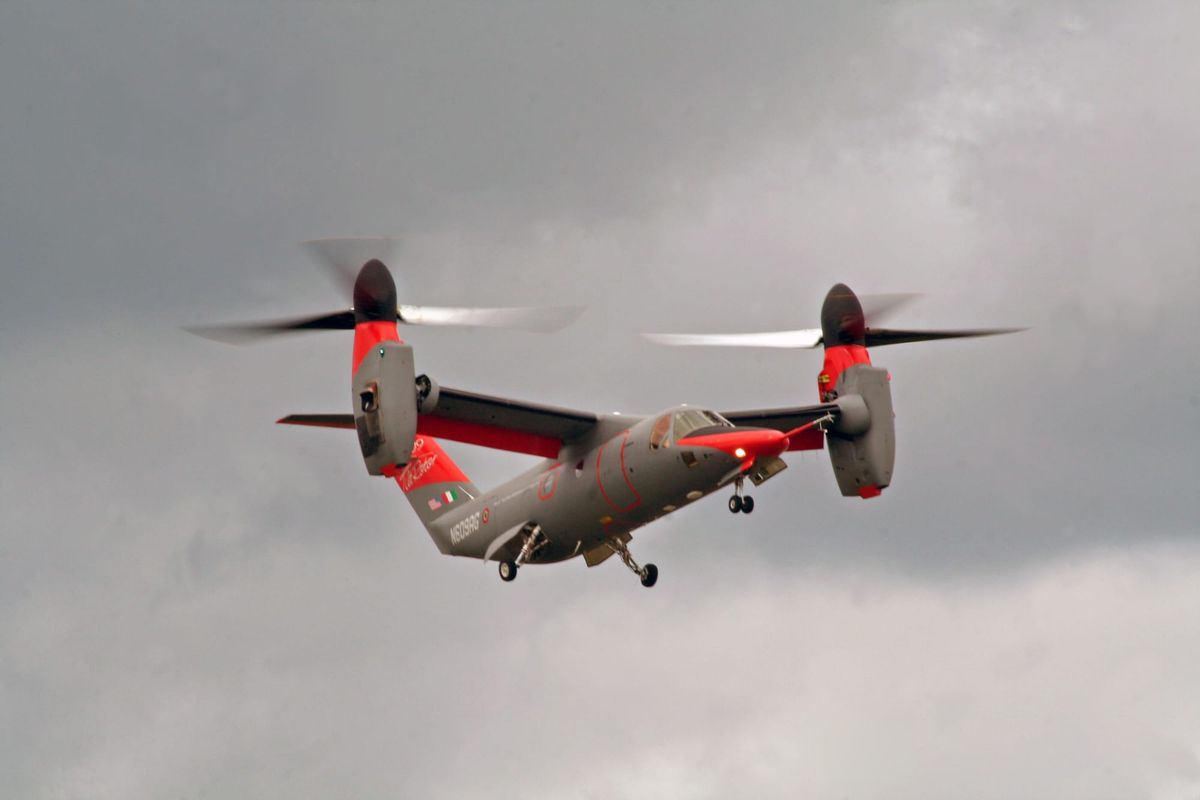
The AW609 is a certification-stage, twin-engine civil tiltrotor owned outright by Leonardo S.p.A. (BIT:LDO), the Italian aerospace and defence group in which the Italian state, through the Ministry of Economy and Finance (MEF), holds 30%; Leonardo's 2024 governance disclosure states the company "is subject to the de facto control of the Ministry of Economy and Finance, which directly holds a stake of about 30% in the share capital of Leonardo and has sufficient votes to exercise a predominant influence at Leonardo's Ordinary Meeting." As of the date of writing, the aircraft has not received an FAA type certificate; it remains in FAA Type Inspection Authorization (TIA) flight testing under a special-class "powered-lift" certification basis formally agreed on 31 October 2024, with authority-flown testing having begun in early March 2025. The AW609 is deeply embedded within a conglomerate that reported €17.8 billion of revenue in 2024 and whose Helicopters division alone turned over €5.867 billion (up from €5.513 billion in 2023) on 191 helicopter deliveries that year, and on any plausible near-term delivery scenario the program is insignificant to Leonardo's consolidated earnings.
The single most important finding is that the AW609 works technically but has not yet demonstrated that it works economically, and the gap between its current state and cash flow is dominated by regulatory rather than engineering risk. Leonardo executives themselves state the development is essentially complete and that the aircraft performs "as advertised"; what remains uncertain is the certification process for an aircraft category that did not previously exist in civil service. The program carries a documented, multi-decade record of guidance revision: type certification has been projected for 2007, 2011, 2016, 2017, 2018, 2020, 2024, and 2025, and each target has slipped. The current company guidance is entry into service in 2027, which should be treated as an assertion, not a schedule.
The order book is thin and of low contractual quality: on the most authoritative accounting there are only about seven firm aircraft (two for Bristow, four for an undisclosed European VVIP operator, one leased to Weststar), with the remaining announced "interest" consisting of memoranda of understanding and studies. The investment case, therefore, is not an AW609 case at all. The program is best understood as an embedded call option on the first-mover position in civil powered-lift and as a certification-precedent signal for the wider advanced air mobility cohort, with strategic rather than financial value to Leonardo as the anchor of its tiltrotor franchise (including the EU-funded Next Generation Civil Tiltrotor). An investor who wants exposure buys Leonardo for its defence electronics and helicopters businesses and receives the AW609 as a free option.
The Leonardo AW609 Civil Tiltrotor: An Asset Briefing for Investors
2. Background
A tiltrotor occupies the capability gap between a helicopter and a fixed-wing turboprop. Its prop-rotors, mounted on rotating pylons at the wingtips, point skyward for vertical takeoff and landing and hover, then tilt forward to convert the aircraft into a propeller-driven fixed-wing machine in which the wing, not the rotor, produces lift. The result is an aircraft that lifts from a helipad or ship deck but cruises at roughly twice the speed and altitude of a conventional helicopter. The AW609 is marketed with a maximum cruise speed of about 275 knots (509 km/h), a service ceiling of 25,000 feet with a pressurised cabin, and a range of roughly 750 nautical miles on standard fuel, extendable with auxiliary tanks. These are manufacturer specification and flight-test-demonstrated figures, not type-certificated performance, and that distinction matters until a type certificate exists.
The configuration imposes two consequences that dominate the program. Aerodynamically, the transition between helicopter and airplane modes, and high-speed flight in airplane mode, introduce failure modes that neither a helicopter nor an airplane certification framework fully anticipates; the AW609 manages transition through a triple-redundant digital fly-by-wire system. From a certification standpoint, the aircraft did not fit any existing civil category, so the FAA had to construct a bespoke basis blending fixed-wing (Part 25), rotorcraft (Part 29), and new tiltrotor-specific criteria under the "powered-lift" special class. That regulatory novelty, more than any technical shortfall, explains the program's timeline.
The lineage is compressed but consequential. The aircraft began in 1996 as a Bell-Boeing civil tiltrotor concept; Boeing withdrew in 1998 and Agusta joined, forming the Bell/Agusta Aerospace Company and the Bell-Agusta BA609. It first flew on 7 March 2003. AgustaWestland progressively took control, assuming full ownership in November 2011 and redesignating the aircraft AW609; it became Leonardo's asset when Finmeccanica consolidated its subsidiaries under the Leonardo name. On 30 October 2015, the second of two flying prototypes (N609AG) broke up in flight near Vergiate, Italy, during high-speed dive testing, killing both test pilots. The Italian air-safety agency ANSV concluded that flight-control laws and tail changes permitted a divergent "Dutch roll" lateral-directional oscillation at high speed; the excessive sideslip caused a prop-rotor to strike the wing, severing fuel and hydraulic lines and triggering an in-flight fire. The accident cost the program its most mature test article, forced revision of the flight-control laws, and set the flight-test and certification trajectory back by years; the third prototype was seized by Italian prosecutors in May 2016 and returned to flight testing that July.
3. Program Profile
3.1 The aircraft and the test fleet
The AW609 is a two-crew, six-to-nine-passenger aircraft with a maximum takeoff weight of roughly 16,800 lb (7,620 kg) and a useful load in the region of 5,500 lb (2,500 kg). It is powered by two Pratt & Whitney Canada PT6C-67A turboshaft engines of about 1,940 shp each, each driving a three-bladed prop-rotor, with a cross-shaft allowing either engine to drive both rotors after an engine failure. The airframe is largely composite; the avionics suite is built around Collins Aerospace (a unit of RTX Corporation, NYSE:RTX) Pro Line Fusion, with the fly-by-wire flight-control system historically supplied by BAE Systems (OTCM:BAESY) and inertial navigation content from Northrop Grumman (NYSE:NOC). The aircraft is designed to full Transport Category / Class 1 performance, with one-engine-inoperative capability, autorotation, and certification for flight into icy conditions.
As of now the flying test fleet comprises three aircraft. Following the 2015 loss, the program rebuilt around new-build airframes: AC3, AC4, and AC5 are flying, with AC4 based at Cascina Costa, Italy for manufacturer testing and AC5, the first production-configuration aircraft (first flight 13 October 2023 in Philadelphia), used for the FAA TIA campaign in the United States. AC5 is the aircraft the FAA has been flying. A sixth airframe, AC6, was designated to perform the FAA-required 150 flight-hours of function-and-reliability (F&R) testing; as of the last confirmed reporting in early March 2026 AC6 was in final assembly and expected to fly around May 2026, a slip of roughly a year from the Q2 2025 first flight anticipated earlier.
3.2 Certification state in precise terms
The FAA agreed the final certification basis on 31 October 2024, under Part 21.17(b) special-class provisions blending Parts 23, 25, and 29 with tiltrotor-specific criteria; the underlying updated type certification basis dates to 31 March 2021 and the special-class airworthiness criteria were finalised in the Federal Register in late 2024. Type Inspection Authorization was granted and authority-flown testing by FAA pilots began in early March 2025 using AC5. Function-and-reliability testing (150 flight hours) has not yet been completed, and the aircraft AC6 assigned to it has not been confirmed as flying. No type certificate or production certificate has been issued.
The parallel EASA pathway lags. EASA pilots have flown the aircraft since March 2023 in familiarisation activity, but as of early March 2026 Leonardo was still awaiting the EASA certification basis, described as expected "soon," and intends to pursue EASA approval only after FAA type certification is achieved. The EASA certification basis had therefore slipped more than a year beyond the "by year-end 2024" expectation Leonardo stated in November 2024.
3.3 Industrial base and production rate
The design authority and primary industrial home for the AW609 sit within Leonardo Helicopters, split between Cascina Costa di Samarate and Vergiate in northern Italy and the company's US subsidiary at Northeast Philadelphia Airport, Pennsylvania. Final assembly of production AW609s is established in Philadelphia, in the 275,000-square-foot facility that also assembles the AW119 and AW139 and houses an FAA-approved repair station; a second final assembly line in Italy has been discussed but not committed. Leonardo opened an AW609 Training Academy in Philadelphia in 2021, including the world's first AW609 full-flight simulator, so pilot and maintainer training infrastructure exists ahead of certification.
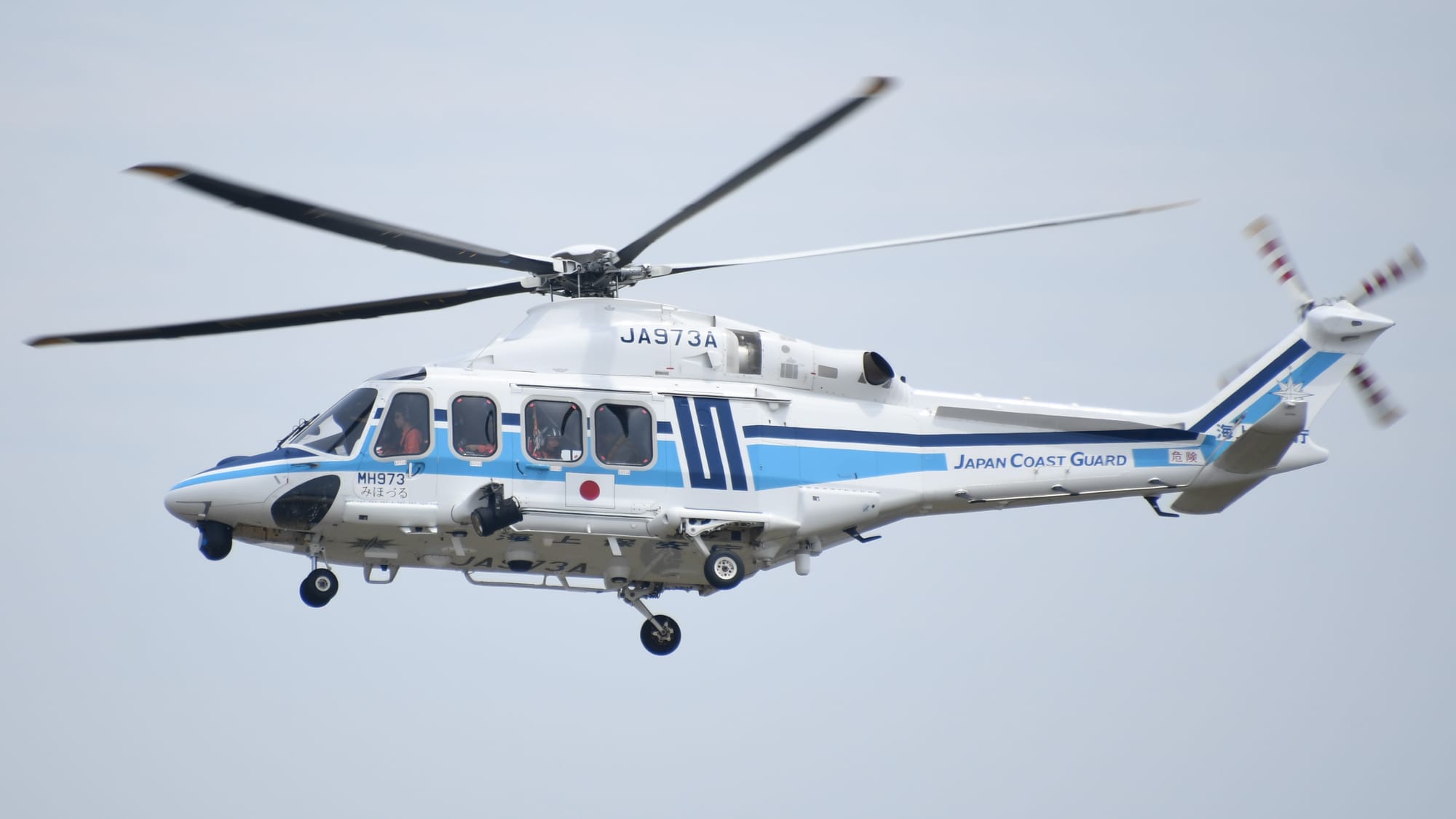
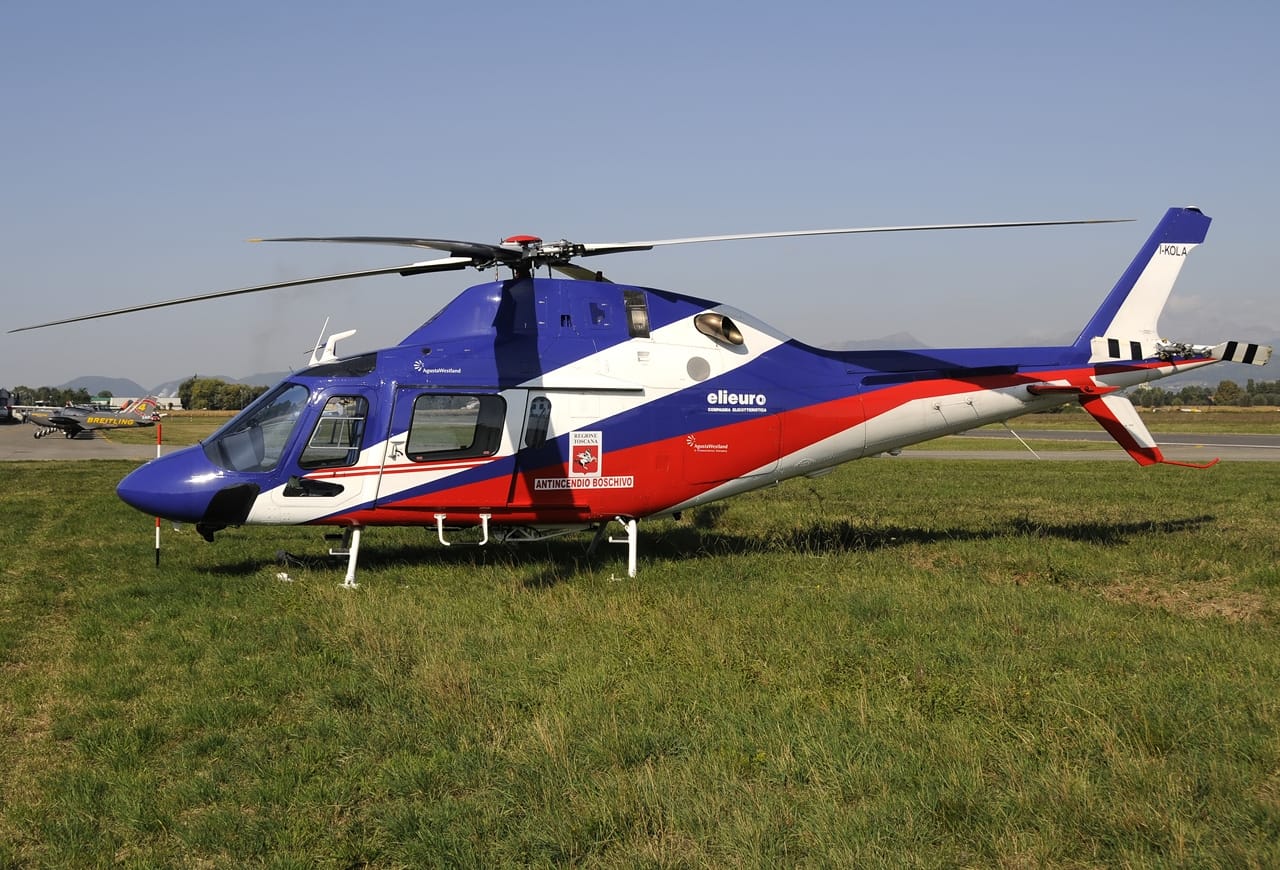
Photo of AW139 by Hunini - CC BY-SA 4.0 | Photo of Agusta AW119 Koala by Aldo Bidini - GFDL 1.2
Planned production rate is modest and has never been demonstrated. Historic guidance envisaged two to three aircraft assembled per year initially in Philadelphia. Given the order book (Section 4), the binding constraint is demand and certification, not line capacity. Spares provisioning and a single-model support network for an entirely new type represent quantitatively undisclosed, working-capital and execution commitments; the training academy and simulator are the most tangible evidence that Leonardo has funded operability, not merely deliverability.
3.4 Cost position
The AW609 is not priced transparently, and this must be stated plainly: rotorcraft and specialised-aircraft transaction prices are negotiated and rarely disclosed, list prices are marketing artifacts, and realised prices are not public. With that caveat, the consistent trade-press and company-attributed figure is a unit price of around $25 million; Leonardo Helicopters managing director Gian Piero Cutillo told CNN that "the AW609's price tag is expected to be somewhere around $25 million ... more than twice the cost of a comparable traditional helicopter." That places the AW609 near a fully-equipped super-medium helicopter such as the Leonardo AW189 (roughly $17 million and up on published guidance) and far above a light business turboprop of comparable cabin size (roughly $4 million to $9 million).
Direct operating cost per hour has not been published by Leonardo and no independent, verified figure was identified; industry guidance implies tiltrotor direct operating costs meaningfully above a comparable turbine helicopter, driven by twin high-power PT6C engines, complex transmissions and a rotating-pylon drive system, and the maintenance burden of a low-volume type. This is the crux of the economic question. The AW609's advantage is unambiguously a capability case: it flies roughly twice as fast and twice as far as a helicopter, above weather, from points a fixed-wing aircraft cannot use. Whether that capability converts into an operator economic case depends on missions where speed and range command a premium large enough to offset a high acquisition price and high operating cost. On offshore oil-and-gas crew change, where cost-per-seat-mile dominates, the case is weak: Bristow chief executive Chris Bradshaw has stated that the AW609's focus will be on EMS and VIP transport "where it has a 'unique offering', and not oil and gas support where it is 'not a great fit'." On long-range search and rescue, emergency medical services, and VVIP point-to-point transport, where response time or door-to-door speed is the value, the case is stronger. AW609 has proven the capability and not yet proven the economics.
 John D
3.5 Gating items between current state and cash flow
Five things stand between the AW609 and revenue-generating deliveries at rate. First, remaining certification work: completion of the 150-hour F&R campaign (contingent on AC6 flying) and issuance of the FAA type certificate, followed by a production certificate. Second, operational readiness under the new powered-lift rules, including a pilot type-rating and training pipeline that did not exist until the FAA's late-2024 rulemaking (Section 6). Third, EASA validation, which is sequenced behind FAA certification and whose basis is not yet issued. Fourth, order conversion, turning MoUs and studies into firm contracts with deposits. Fifth, production ramp and product-support network buildout to make the delivered aircraft operable in the field. The first and second are the near-term critical path; the aircraft cannot earn revenue commercially until both a type certificate exists and pilots can be certified to fly it in commercial operations.
4. Demand, Pricing, and the Order Book
The missions Leonardo actually markets are long-range search and rescue, emergency medical services, VVIP and corporate transport, offshore energy, government and parapublic work, and island or archipelago connectivity. The addressable fleet differs sharply by mission and is difficult to size precisely; historic manufacturer market estimates ranged wildly, from Bell's 1,000-aircraft estimate in 2001 to AgustaWestland's 700-aircraft-over-20-years estimate in 2013, and these are promotional projections, not demonstrated demand. The credible near-term markets are narrow, high-value niches: national SAR and coast-guard fleets (a handful of aircraft per country), air-medical operators seeking extended range, and VVIP buyers for whom door-to-door speed justifies the premium. Island connectivity, exemplified by an ongoing study to link Japan's main islands to remote smaller ones, is early and unquantified. The offshore market, historically the marquee use case, has been substantially disavowed by the launch operator itself.
On pricing, the position is between super-medium helicopters and light business aircraft: comparable cabin volume to a light jet or large turboprop, acquisition price comparable to a top-of-range super-medium helicopter, and speed and altitude comparable to a turboprop. The roughly $25 million figure is the only consistent public data point and it carries company and trade-press provenance, not transaction provenance.
The order book should be judged on quality, not headline count, and on that basis it is thin. The most authoritative accounting, attributed to Leonardo Helicopters managing director Gian Piero Cutillo, puts firm commitments in single figures: two aircraft for Bristow, four for an undisclosed long-established European VVIP/corporate operator (signed 2022, the largest single position and confirmed by Cutillo as the largest single order), and one leased to Malaysia's Weststar to support service entry. Announced "interest" of around 50 aircraft is a tally of MoUs and studies, not backlog. Bristow (NYSE:VTOL) is the US launch customer; it inherited the AW609 relationship through its 2020 merger with Era Group (the original 2018 launch customer for two aircraft) and does not carry the AW609 as a firm order in its SEC filings. The United Arab Emirates Joint Aviation Command MoU for a SAR variant, first signed in 2015 for three aircraft plus options, remains an MoU and no contract had been signed as of the reporting reviewed. A Japanese operator relationship remains at the study stage.
In short, of the announced customer base, the live, contractually meaningful commitments are Bristow, the European VVIP operator, and Weststar, and only a subset of those appear to involve deposits.
Counterparty quality is mixed. Bristow is a substantial operator but treats the AW609 as optional and mission-narrow. The largest single customer is undisclosed, which limits any assessment of its creditworthiness or conversion probability. The concentration of the meaningful order book in three counterparties, one of them anonymous, means conversion risk is high and idiosyncratic.
5. Key Players
The parent is Leonardo S.p.A. (BIT:LDO), an Italian aerospace, defence, and security group that reported 2024 revenues of €17.8 billion (up 16.2%), new orders of €20.9 billion (up 16.8%), and EBITA of €1.525 billion, with an order backlog that exceeded €44 billion, equivalent to about 2.5 years of production coverage. Its Helicopters division generated €5.867 billion of revenue in 2024 on 191 helicopter deliveries (72 AW109/119, 67 AW139, 30 AW169, 13 AW189/149, 8 NH90, and 1 AW101). The anchor shareholder is the Italian state: the Ministry of Economy and Finance holds 30% and, through Italy's slate-voting and "golden power" arrangements, exercises de facto control and decisive influence over strategy and board composition despite a one-share-one-vote structure. Leonardo is listed on Borsa Italiana and, through its DRS subsidiary (NASDAQ:DRS); roughly 90% of the institutional free float is held by foreign funds, with institutional shareholders representing about 53% of capital at the 2024 annual meeting.
The propulsion supplier is Pratt & Whitney Canada, a unit of RTX Corporation, whose PT6C-67A is the sole engine for the AW609 and received Transport Canada certification in October 2017. This is a single-source dependency on a bespoke engine variant. The avionics anchor is Collins Aerospace, also an RTX unit, supplying Pro Line Fusion; historic flight-control and navigation content came from BAE Systems and Northrop Grumman. These suppliers are financially robust and pose little counterparty risk, but the single-source engine concentrates technical and schedule risk on one supplier and one certification chain.
The certification authorities are not background; they are the gating counterparties. The FAA is the primary certifying authority and, on the evidence, the binding constraint on schedule; EASA is the validating authority for Europe and is sequenced behind the FAA. Regulator resourcing and process have demonstrably paced the program (Section 6).
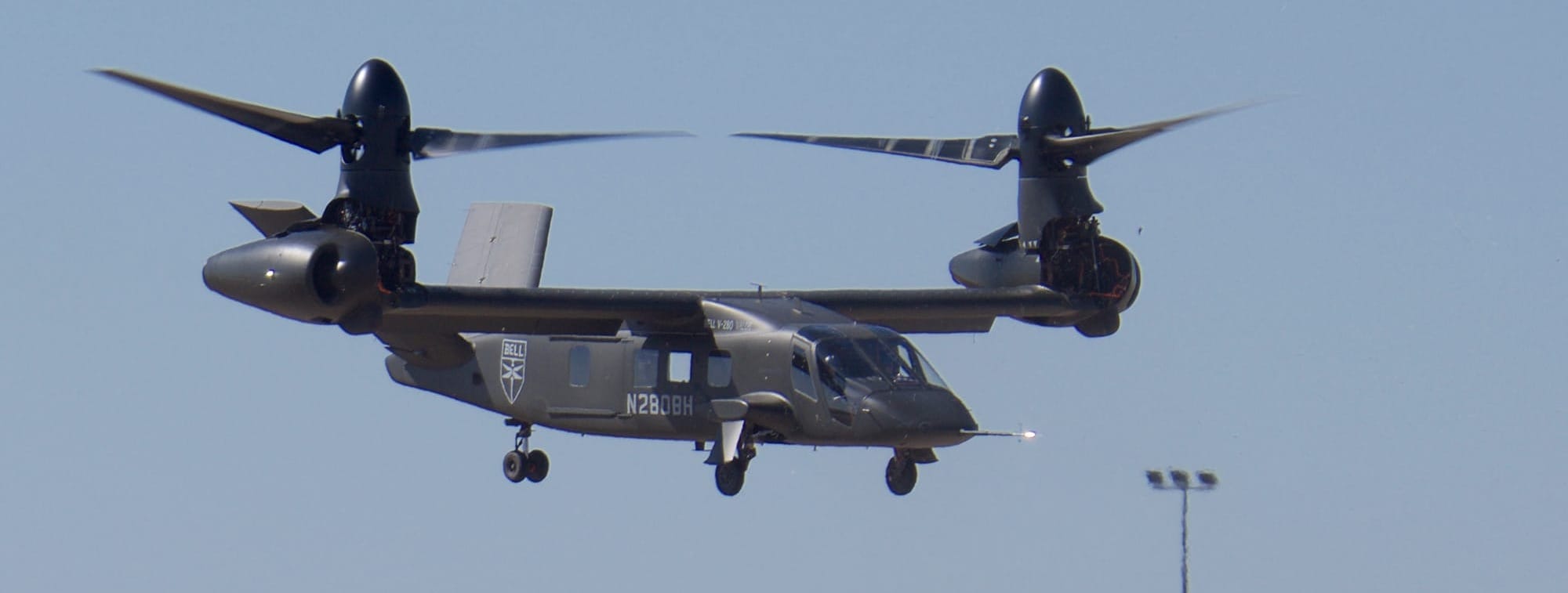
The former joint-venture partner, Bell (Textron, NYSE:TXT), exited the civil tiltrotor in 2011 and redirected its tiltrotor effort to the military V-280 Valor, selected for the US Army's Future Long-Range Assault Aircraft program. Bell is therefore no longer a civil competitor but validates the tiltrotor architecture at scale in the military domain. The competing civil platforms the AW609 must displace to win missions are conventional super-medium and heavy helicopters (the Leonardo AW189, Airbus H175, Sikorsky S-92, and Leonardo's own AW139/AW169 family) on the vertical-lift missions, and light business turboprops and jets on the point-to-point missions. The AW609 competes not by being cheaper but by collapsing two capabilities into one airframe.
The electric vertical-takeoff (eVTOL) cohort is relevant in exactly one respect: it shares the FAA's powered-lift regulatory pathway and the same new pilot-certification and operations rules (the SFAR discussed in Section 6). It does not compete for the same missions or customers; the AW609 is a long-range, high-speed, all-weather twin-turbine aircraft, while eVTOLs are short-range urban and regional platforms. The shared regulatory dimension is the operational rulemaking and certification precedent, not the market.
6. Certification, Regulatory, and Policy Dimensions
For this asset the regulatory process is the pivotal variable, and the certification basis had to be invented. As no civil category existed for an aircraft that takes off as a rotorcraft and cruises as an airplane, the FAA certificates the AW609 as a special-class "powered-lift" aircraft under Part 21.17(b), assembling its airworthiness standards from Part 23, Part 25, and Part 29 plus tiltrotor-specific criteria. The updated type certification basis dates to 31 March 2021, the special-class airworthiness criteria were finalised through the Federal Register in late 2024, and the final certification basis was agreed on 31 October 2024. This bespoke construction is the deep reason the program has taken decades: the regulator and the applicant have been building the rulebook and the aircraft simultaneously.
The operational rules are equally novel and equally gating. On 22 October 2024 the FAA issued its final rule integrating powered-lift into the National Airspace System, adopting Special Federal Aviation Regulation (SFAR) No. 120 (codified in Part 194) for a ten-year period. The rule establishes how powered-lift pilots and instructors are certified and trained and how the aircraft may be operated commercially, and it requires an individual powered-lift type rating for pilots. Leonardo's engineering leadership called the SFAR "pivotal" because a certificated aircraft cannot be flown commercially until a pilot-qualification pathway exists; the SFAR supplies that pathway but also means the first cohort of AW609 pilots must be trained and type-rated before revenue operations, adding a step between type certification and cash flow that a conventional aircraft does not face.
Regulator resourcing has visibly paced the schedule. Company and trade-press accounts attribute recent slippage to FAA personnel turnover, revisions to the Type Inspection Authorization (TIA), and pauses from US federal government shutdowns; two shutdowns in 2026 (a four-day episode from 31 January to 3 February and a longer episode from 14 February to 30 April) coincided with the period in which F&R testing and type certification had been hoped for. Historically, FAA funding shortfalls were cited as a delay factor as far back as 2000. The through-line is that the program's schedule is a function of regulatory bandwidth as much as of Leonardo's execution.
Export-control exposure follows from the configuration's military heritage. The tiltrotor architecture is dual-use and shares conceptual lineage with the V-22, and the original Bell/Agusta agreement precludes arming the AW609. Sales to government and parapublic customers such as the UAE Joint Aviation Command carry the export-licensing sensitivities normal for advanced US- and Italian-content aerospace, though the civil configuration and unarmed status reduce the burden relative to a military platform. National industrial policy is of interest: the Italian state is both Leonardo's largest shareholder and a prospective customer, with reported military and government interest in domestic AW609 applications, and the European Commission has historically required repayment of Italian development subsidies on the civil tiltrotor to avoid competition distortion.
Finally, adjacent publicly funded work changes the program's strategic value to Leonardo. The Next Generation Civil Tiltrotor (NGCTR), an EU Clean Sky 2 / Clean Aviation-funded technology demonstrator built on a donated AW609 fuselage with new GE Aerospace CT7 engines and advanced wing technologies, made its first flight on 19 December 2025 at Cascina Costa. NGCTR is a flying technology laboratory, not a product, and its maturation could support a larger, next-generation civil tiltrotor for service in the 2030s. It received €116 million in EU funding across more than 30 grant agreements and brought together more than 80 organisations from 15 countries. Its existence means the AW609 is not a standalone bet but the first and enabling asset in a longer tiltrotor franchise that Leonardo, backed by EU research funding, is building. This raises the strategic, as distinct from financial, value of the AW609 to its owner.
 John D
7. Material Risks
Further certification slippage is the highest-probability, highest-impact risk to the current thesis. The base rate is unambiguous: type certification has been publicly projected for 2007, 2011, 2016, 2017, 2018, 2020, 2024, and 2025, and every target has been missed, so the 2027 service-entry guidance should be treated as a company assertion until corroborated by issuance of a type certificate. The impact of continued slippage is deferred revenue and continued cash absorption; the mitigation is that the certification basis and TIA are now in place and authority-flown testing is under way, which is materially further than the program has ever been. On balance, likelihood remains moderate-to-high and impact moderate, given how small the program is within Leonardo.
Order-conversion failure is a high-likelihood, moderate-impact risk. With only around seven firm aircraft and the balance of demand held as MoUs and studies, a first-mover novelty aircraft entering an unproven operating-economics environment could see interest fail to convert to deposits. The mitigation is that the marquee near-term customers (a European VVIP operator, Bristow for niche SAR/EMS, Weststar for demonstration) are pursuing capability rather than commodity missions, where willingness to pay is highest.
Operator economics falling short of the capability case is a moderate-likelihood, high-impact risk to any broader thesis. If direct operating cost per hour and cost per seat-mile prove unattractive outside a few premium missions, the addressable fleet shrinks to national SAR fleets and VVIP buyers and the program never reaches meaningful rate. This is unmitigable until revenue service generates real cost data; it is the central unknown.
Single-source propulsion dependence on the Pratt & Whitney Canada PT6C-67A is a low-likelihood, high-impact risk. The engine is certificated and from a robust supplier, but any in-service reliability or supply problem would have no alternative and would ground a small fleet; there is no second engine source and none is contemplated.
Production-ramp and support-network execution is a low-to-moderate-likelihood, moderate-impact risk. Leonardo has funded a Philadelphia line, a training academy, and a full-flight simulator ahead of demand, which de-risks operability, but standing up a global spares and support network for a brand-new type at low volume is expensive and unproven.
A safety event in a small early fleet is a low-likelihood, very-high-impact risk. The 2015 fatal loss demonstrated both the physical failure modes of high-speed tiltrotor flight and the program's vulnerability to a single accident. A powered-lift accident in the first operational years, in a fleet of only a handful of aircraft, could halt the program and damage the entire civil powered-lift category. Mitigation lies in the revised flight-control laws, extensive envelope testing, and Transport Category design margins, but the tail risk is irreducible.
Competitive displacement is a low near-term risk: no other civil tiltrotor is close to certification, and the eVTOL cohort does not serve the same missions. Over the longer term, maturing high-speed compound helicopters and Leonardo's own NGCTR-derived aircraft could reposition the AW609, but that is a strategic consideration.
Program impairment or curtailment is a low-likelihood but thesis-defining risk. As the AW609 is immaterial to Leonardo's consolidated results, the group could in principle slow, impair, or shelve it without significant financial consequence. The countervailing force is strategic and political: the AW609 anchors Leonardo's tiltrotor franchise and enjoys Italian state and EU research backing, which makes outright abandonment unlikely even though the financial case for continued investment is weak on its own terms. Community, environmental, and social-license considerations are not unique to this asset beyond ordinary aircraft noise certification, which the FAA addressed years ago.
8. Implications for the Investor
The realistic avenues of exposure are limited, and the absence of clean exposure is itself the finding. There is no pure-play AW609 security. The only listed equity through which an investor gains any exposure is Leonardo S.p.A. (BIT:LDO), and within Leonardo the AW609 is financially immaterial. To quantify: even a mature production run of two to three aircraft per year at roughly $25 million each would generate on the order of $50 million to $75 million of annual revenue, against Helicopters-division revenue of €5.867 billion and group revenue of €17.8 billion in 2024. That is on the order of 1% of divisional revenue and a fraction of a percent of group revenue, and it is years away and unproven. Under any plausible near-term delivery scenario the program does not move Leonardo's consolidated revenue or earnings. An investor cannot construct a Leonardo trade on the AW609; the stock is driven by defence electronics, the helicopter core, and European rearmament, and the AW609 is a rounding error.
The program is therefore best understood as an embedded option and a certification-precedent signal rather than an investable thesis in its own right. As an embedded option, it gives Leonardo the first-mover position in civil powered-lift and a flying, funded platform (with the NGCTR demonstrator behind it) from which a larger next-generation tiltrotor could emerge in the 2030s; the option has strategic value to Leonardo disproportionate to its current financials. As a signal, AW609 certification would be the first FAA type certificate for a civil aircraft under the new powered-lift special class and SFAR 120 framework, and would establish precedent (on certification basis construction, pilot type-rating, and Part 194 operations) that materially informs the risk assessment for the entire eVTOL and advanced air mobility cohort. For an investor tracking that cohort, the AW609's regulatory milestones are a more valuable read than its order book.
The catalysts, in sequence, are: first flight of AC6 and commencement of the 150-hour F&R campaign; issuance of the FAA type certificate; issuance of an EASA certification basis and subsequent validation; first commercial delivery and entry into service; and conversion of MoUs into firm, deposited orders. Their timing is uncertain and, on the program's track record, likely later than guided; company guidance points to 2027 service entry, which is an assertion. The thesis that the AW609 matters to Leonardo shareholders fails in either of two ways: if certification and economics disappoint, the option expires worthless with no financial harm to Leonardo; or if certification succeeds, the program is still too small to move the parent. The only condition under which the AW609 becomes financially material to Leonardo is a step-change in demand (a large government or fleet order, or a successful larger NGCTR-derived successor) that is not visible in the current order book. Until such an order appears, the AW609 is a strategically important but financially immaterial embedded option inside a defence-and-aerospace holding, and to watch its certification milestones as a leading indicator for civil powered-lift generally rather than as a driver of Leonardo's equity value.

References
- FlightGlobal, "AW609 stays on certification path amid 'tangible progress' with FAA," 6 November 2024.
- FlightGlobal, "AW609 inches closer to certification with start of type-inspection flights," 11 March 2025.
- Aviation Week (Tony Osborne), "Regulatory Challenges Pace AW609's Push Toward Certification," 3 March 2026.
- Federal Register, "Airworthiness Criteria: Special Class Airworthiness Criteria for the AgustaWestland Philadelphia Corporation Model AW609 Powered-Lift," 31 October 2024 and 9 June 2023.
- Vertical Mag (Oliver Johnson), "Leonardo plans for AW609 tiltrotor 'maturity flights' post certification," 3 March 2026.
- Vertical Mag, "FAA pilots fly Leonardo AW609 for first time as certification enters 'final stage'," February 2023.
- Aviation International News (Matt Thurber), "Leonardo Planning for AW609 Tiltrotor To Enter Service in 2027," 16 February 2026 (updated 8 March 2026).
- Wikipedia, "Leonardo AW609" (program history, specifications, and 2015 accident summary), accessed July 2026.
- Agenzia Nazionale per la Sicurezza del Volo (ANSV), Final Report, accident to AW609 N609AG, Tronzano Vercellese, 30 October 2015.
- Leonardo S.p.A., "Board of Directors approves FY2024 results and 2025 guidance," 11 March 2025.
- Leonardo S.p.A., "FY 2024 Results" presentation, 11 March 2025.
- RotorHub International, "Leonardo Helicopters annual results reveal an uptick in orders, backlog and revenues," 2025.
- Vertical Aviation International, "Leonardo reports strong 2024 results," 10 March 2025.
- Leonardo S.p.A., Corporate Governance / Board composition disclosure (Ministry of Economy and Finance 30.204% shareholding; de facto control).
- Leonardo S.p.A., "At a glance" investor factsheet (shareholder base), 2024.
- FAA, "With New Rule, FAA is Ready for Air Travel of the Future," 22 October 2024.
- Federal Register, "Integration of Powered-Lift: Pilot Certification and Operations," final rule, 21 November 2024 (SFAR No. 120 / Part 194).
- FAA, "Powered Lift Part 194 SFAR Frequently Asked Questions."
- Business Jet Traveler, "Finmeccanica's AW609" (price positioning versus super-medium helicopters and light jets).
- CNN Travel, "First civilian helicopter-plane hybrid is coming next year" (Cutillo on ~$25 million price; Aboulafia commentary).
- FlightGlobal, "Era Group signs for two AW609s," 2018; Leonardo press release, "Era Group to mark entry of AW609 tiltrotor into the US commercial market."
- FlightGlobal, "New Bristow chief predicts wave of consolidation... as merger with Era closes," June 2020 (Chris Bradshaw on EMS/VIP focus, "not a great fit" for oil and gas).
- Vertical Mag / RotorHub / Asian Sky Group, "Weststar to launch AW609 tiltrotor in Southeast Asia," May 2023 (single aircraft on lease).
- FlightGlobal, "Leonardo plans AW609 demonstrations for Italian military and government agencies," 2024 (backlog in single figures; two Bristow, four VVIP, one Weststar).
- Pratt & Whitney Canada / Vertical Mag, "Pratt & Whitney Canada receives Transport Canada certification for PT6C-67A engine powering Leonardo AW609," 3 October 2017.
- Jalopnik / AgustaWestland, AW609 supplier and Philadelphia facility overview (Collins/Rockwell Collins avionics, BAE flight controls, Northrop Grumman navigation).
- Vertical Mag / The Aviationist / Clean Aviation, "Next Generation Civil Tiltrotor Technology Demonstrator performs first flight," 19–22 December 2025.
- FlightGlobal, "Leonardo performs first flight of Next Generation Civil Tiltrotor technology demonstrator," December 2025.
- Bristow Group Inc., SEC Form 10-Q and 8-K filings, FY2026.
- Wikipedia, "2026 United States federal government shutdowns," accessed July 2026.