The Practical Guide to Starting an Intentional Community: Shared Land Ownership, Equity Models, and Real Costs
No communes, no ideology. Just 3-10 people, a rural farmhouse, a USDA loan, and an LLC that makes everyone a real owner.

Ten People, One Farm, and a Monthly Bill Under $900: How a Small Group Can Buy Land, Share Ownership, and Build Something That Lasts
The math on modern housing has stopped making sense for a lot of people. Median rent in the United States is hovering above $1,650 per month for a one-bedroom apartment, and that number does not include utilities, internet, food, or the quiet anxiety of knowing that your landlord can raise that figure by 15 percent next year and there is nothing you can do about it. Meanwhile, wages have not kept pace, savings rates are near historic lows, and most people are one or two bad months away from a financial situation they cannot recover from quickly.
The conventional responses to this are familiar: get a better job, move somewhere cheaper, find a roommate, wait it out. None of these actually solve the structural problem, which is that conventional housing is designed to extract money from residents indefinitely while building zero wealth for them in return.
This post is about a different response. It is about ten people, a rural farmhouse, and a legal and financial structure that lets everyone in the group build real equity while splitting costs in a way that makes the monthly number look almost unreasonable by comparison. We are talking about all-in monthly costs in the range of $650 to $900 per person, on a property the group actually owns, with food production on site, renewable energy, resilient communications, and a governance structure that does not require everyone to be best friends or ideologically identical.
This is not a commune pitch. It is not a utopian experiment. It is a financial and logistical model that works, built on established legal structures, available government loan programs, and a realistic accounting of what a group of capable adults can build together with modest combined resources.
The total startup capital we are working with is approximately $250,000, pooled across a small group. That number, for ten people and a working farm, is the point.
The Concept: Who Is Doing This and How It Works
The model involves ten people and a rural property of 10 to 30 acres with an existing farmhouse, ideally in a state where land is genuinely affordable. Missouri, Tennessee, Kentucky, West Virginia, and Arkansas are the obvious candidates. In all five of these states, it is possible to find a 2,500 to 4,000 square foot farmhouse with a barn, a well, septic, and 15 to 25 acres for $150,000 to $220,000. That is not a typo and it is not a ruin. These properties exist in quantity, and in many rural counties they sit on the market for months because the demand simply is not there.
Of the ten people, three are primary financial contributors. They are the ones who co-own the property through a Member-Managed LLC, whose names are on the mortgage (or two of them are, depending on who qualifies), and who carry the primary financial liability. They put in the most cash up front and in the early months, and in exchange they hold the largest initial equity stakes.
The other seven are work-equity contributors. They may put in smaller cash amounts, or very little cash at all, but they contribute labor: building the garden beds, running the electrical for the solar system, laying greywater pipe, framing the greenhouse, maintaining the aquaponics system, cooking, managing the books, doing whatever their skills allow and the community needs. That labor is logged, valued at a flat agreed-upon dollar rate, and credited to their equity account in the same ledger as everyone else's cash contributions.
Nobody is a renter in the traditional sense. There is no landlord. There is no lease that expires and no arbitrary rent increase. Everyone is building toward a documented, legally enforceable ownership stake in a real asset.
Q3: How does a work-equity contributor earn ownership in the property? Choose one.
A) By paying rent monthly until they reach a defined threshold
B) By being approved by the primary financial contributors
C) By logging labor hours at the agreed community rate and making cash contributions
D) By purchasing shares directly from the primary holders
The cultural difference between this and a conventional rental arrangement is significant, and it matters beyond the financial mechanics. When people own a piece of something, they treat it differently. They fix the thing that is breaking before it becomes a crisis. They invest attention and care in ways that renters structurally cannot, because renters have no stake in the outcome. The equity model creates alignment between individual self-interest and collective wellbeing, and that alignment is what makes communities of this kind functional over time.
The Money: What $250,000 Actually Does
The financing structure takes advantage of one of the most underutilized loan programs in the United States: the USDA Rural Development Guaranteed Loan.
Most people have heard of FHA loans, which allow down payments as low as 3.5 percent. Fewer people know that the USDA offers a guaranteed mortgage program for rural properties that requires zero down payment, has competitive interest rates, and is available to moderate-income borrowers who meet income limits for their county. Approximately 97 percent of US land area qualifies as USDA-eligible, including most small towns and rural counties in the affordable states we are discussing. The income limits are generous enough to accommodate most working adults, and the credit requirements are similar to FHA.
The practical implication is this: one or two people in the group qualify for a USDA guaranteed loan on a property priced at $150,000 to $180,000, and they put zero dollars down. The group's $50,000 in pooled cash stays completely liquid for improvements.
Total purchasing power: $200,000 to $230,000 in property value, plus $50,000 cash for improvements, for a combined capacity of $250,000 directed entirely at building something useful.
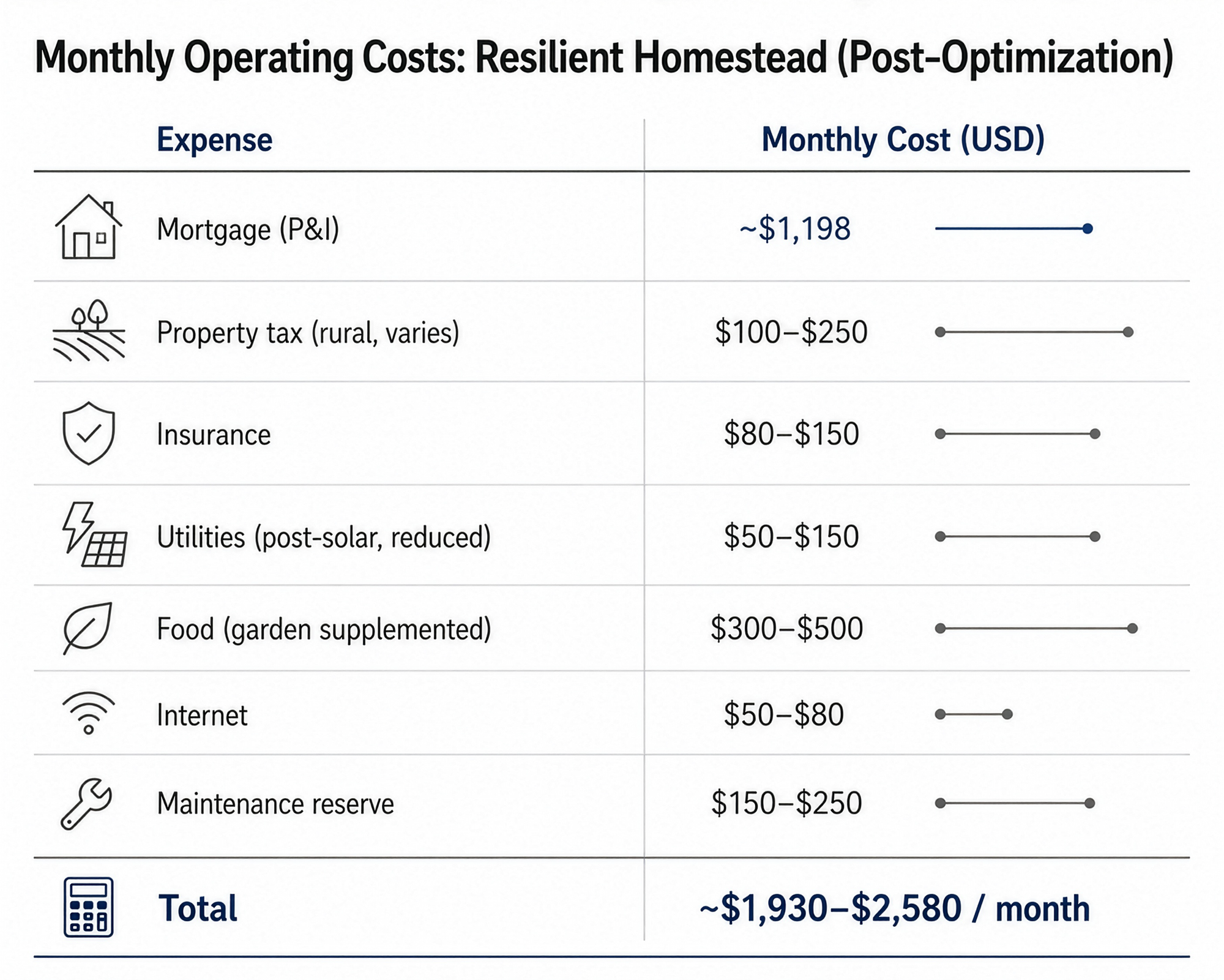
The monthly mortgage payment on a $170,000 USDA loan at approximately 7 percent over 30 years is around $1,130 per month. Add rural property tax (typically $800 to $2,000 per year in these states, or $70 to $170 per month), homeowner's insurance ($80 to $150 per month), utilities (which drop sharply once solar is online, but start at $150 to $250 per month for a large property), and shared food costs for what the land does not yet produce ($300 to $500 per month for the group), and you arrive at a total monthly operating cost somewhere between $6,500 and $9,000 for all ten people.
Split ten ways, that is $650 to $900 per person per month, all in. That figure includes housing, utilities, food, and internet. The average American renter pays $1,650 in rent alone, before touching food, utilities, or anything else. The arithmetic is not subtle.
 John D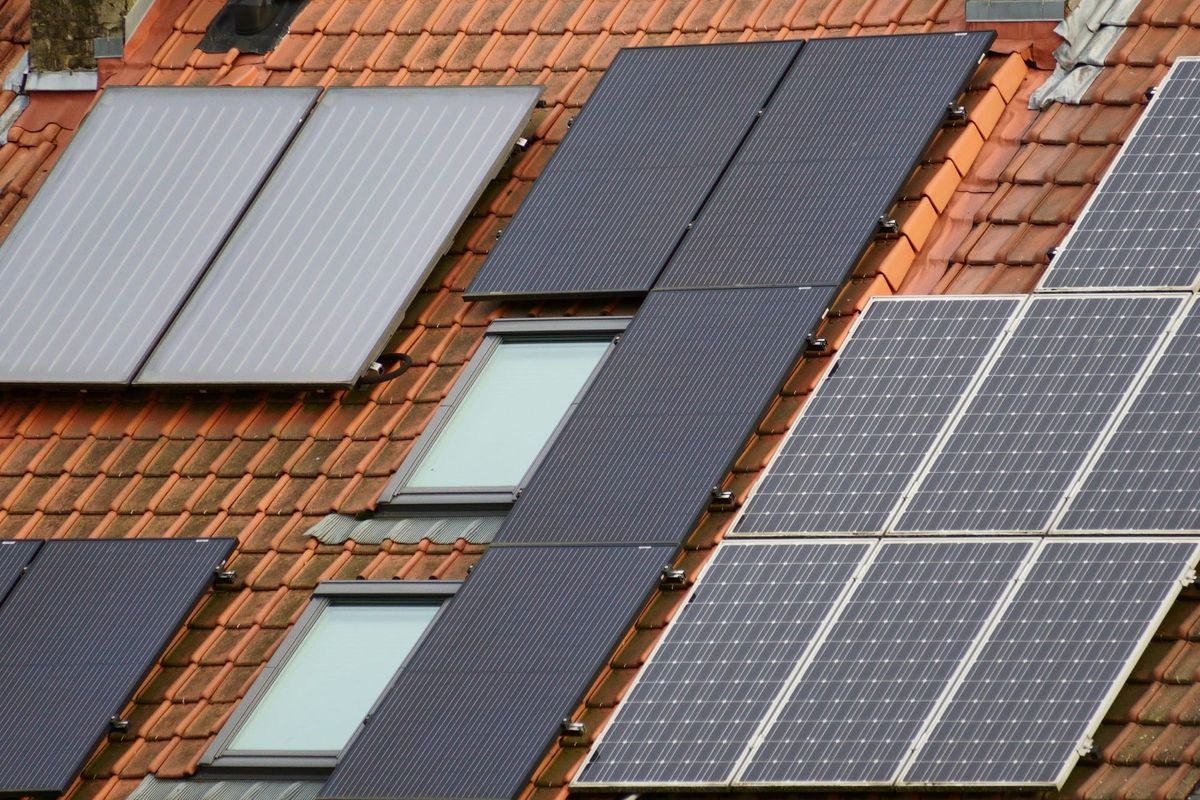
The Equity Model: Why This Is Not Renting
The equity model is the part of this concept that requires the most careful explanation, because it is where the whole thing either holds together or falls apart depending on how clearly it is defined up front.
The core principle is simple: every dollar and every documented hour of labor that goes into the community earns a proportional ownership stake in the property. Cash contributions to the mortgage, to improvement projects, and to the shared operating fund all count. Labor contributions, at a flat community labor rate agreed upon before anyone lifts a tool, also count.
The flat labor rate matters. It needs to be set unanimously before any work begins, and it needs to apply equally to everyone regardless of the skill involved. A suggested range is $20 to $30 per hour. This means that the person doing skilled electrical work and the person clearing brush earn the same hourly equity rate. This is intentional. It prevents the endless disputes about whose skills are more valuable, and it creates a genuinely egalitarian equity accumulation model where the person who shows up consistently and works hard builds ownership at the same rate as the person with a trade license. If the group decides that certain skilled tasks warrant a multiplier, that decision needs to be made in writing before the work happens, not after.
Every contribution, cash and labor, goes into a shared transparent ledger. The ledger is updated quarterly and accessible to every member. Equity percentage is calculated as simple division: your total contributions divided by total community contributions equals your ownership percentage. If the total contributions across all members are $80,000 and you have contributed $16,000 in cash and logged labor, you own 20 percent of the equity pool.
The equity pool is defined as the current property value minus the outstanding mortgage balance. If the property is worth $250,000 and the mortgage balance is $160,000, the equity pool is $90,000. Your 20 percent stake is worth $18,000. If the property appreciates to $300,000 and the mortgage is down to $150,000, your stake is worth $30,000.
When someone wants to leave, they are entitled to their equity stake back. The preferred mechanism is a new member buying in: an incoming person pays the departing member's equity value directly, steps into their ledger position, and the community continues with no disruption. If no incoming member is found within 90 days, the community has a defined window (recommend 12 months) to fund a cash buyout, either from reserves or by refinancing. This structure means that departure is never a crisis and never a loss, provided the property has held its value.
Q4: If the property increases in value by 20% over two years, what happens to a work-equity contributor's stake? Choose one.
A) Nothing, appreciation only benefits the primary financial contributors
B) Their stake increases proportionally by the same 20%
C) They receive a one-time cash bonus decided by the community
D) Their hourly labor rate is adjusted upward to compensate
This is the fundamental difference from renting. When a renter leaves after three years, they walk away with nothing. When a member of this community leaves after three years, they walk away with the dollar value of every hour they worked and every dollar they contributed. That is a different relationship with a place and with the people in it.
The legal container for all of this is a Member-Managed LLC with a detailed Operating Agreement. The Operating Agreement is the document that defines the labor rate, the equity calculation method, the departure procedure, the property valuation method at departure (a licensed appraisal, with the cost split between the departing member and the community), and the decision-making structure. Drafting this document with a real estate attorney who has experience in cooperative or shared ownership structures costs $1,500 to $3,500. It is, without qualification, the single most important expenditure the group makes before spending a dollar on anything else. Every hour of legal work done before the first conflict saves ten hours of mediation and potential litigation after it.
Q1: When a work-equity contributor leaves the community, what do they receive? Choose one.
A) Nothing, because they never held a formal ownership stake
B) The cash equivalent of their documented contributions in labor and money
C) A percentage of future profits after they leave
D) Whatever the remaining members decide to give them
One structural note on the mortgage: residential mortgages cannot typically be taken out in an LLC's name. The one or two people whose names are on the USDA loan carry personal financial liability for that debt. In exchange, the Operating Agreement should specify that they receive a small additional equity premium (5 percent of total equity is a reasonable figure) as compensation for this exposure. After closing, the property can be contributed to the LLC, though this should be reviewed with an attorney familiar with due-on-sale clause implications in the relevant state.
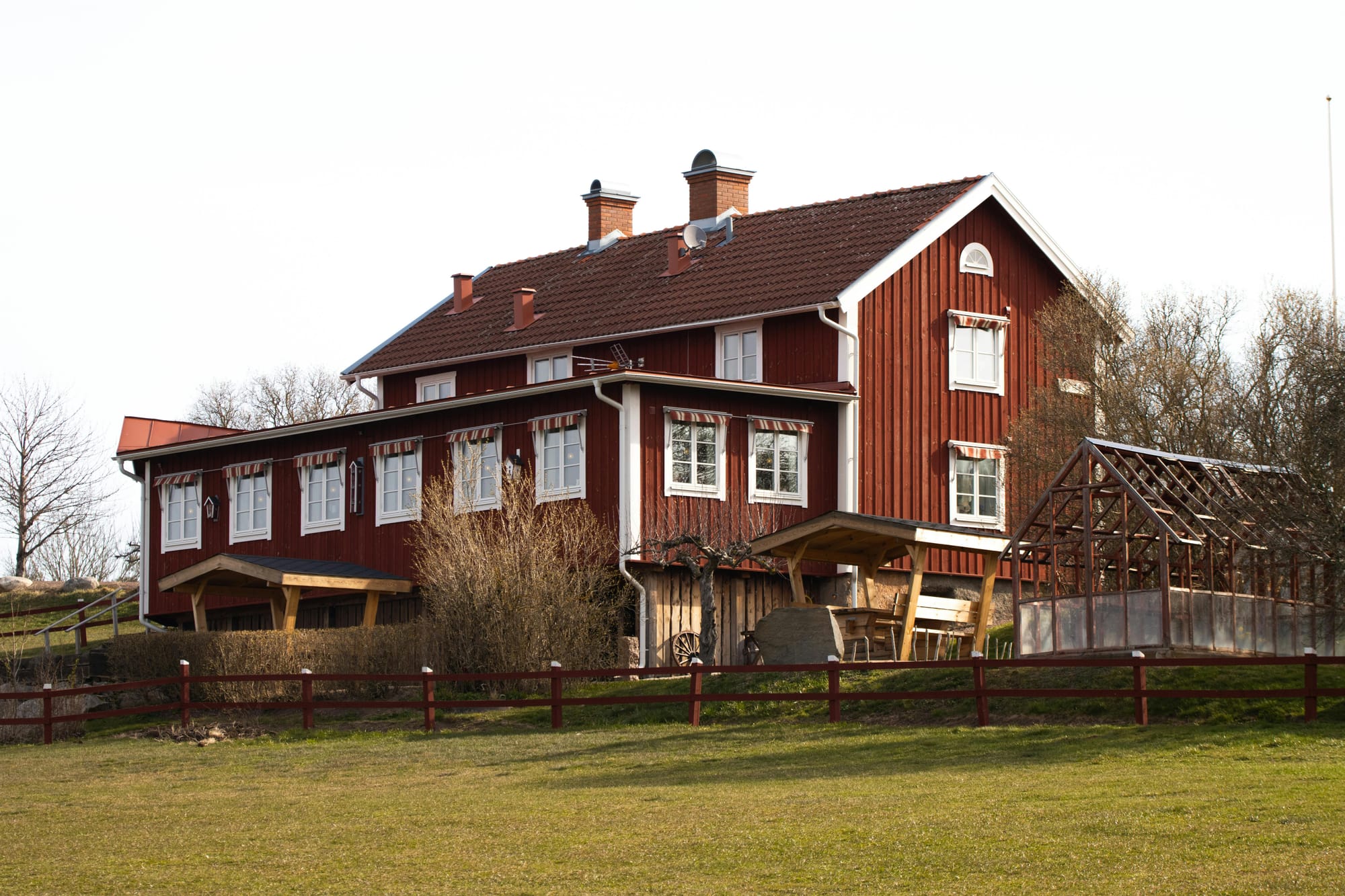
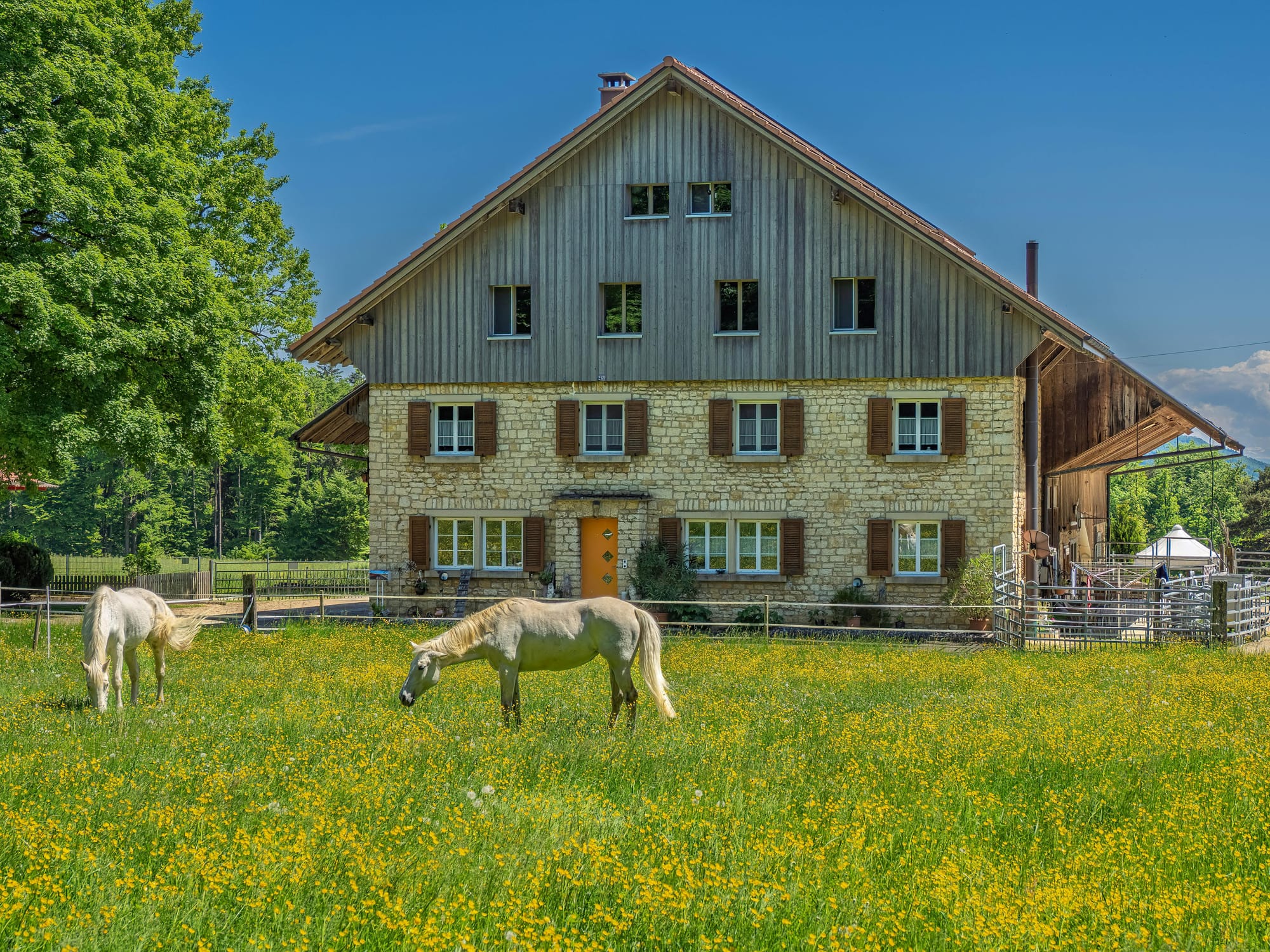
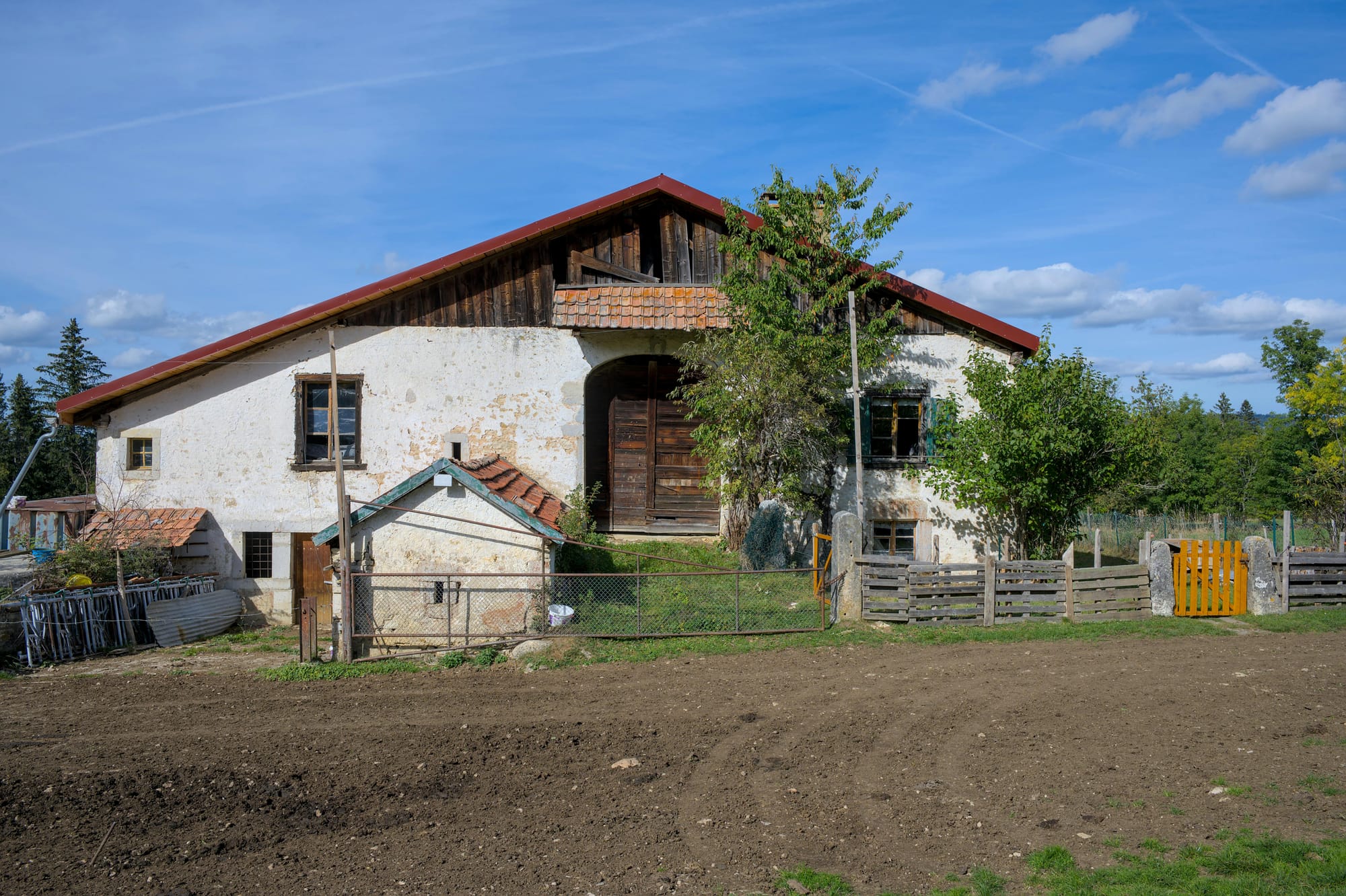
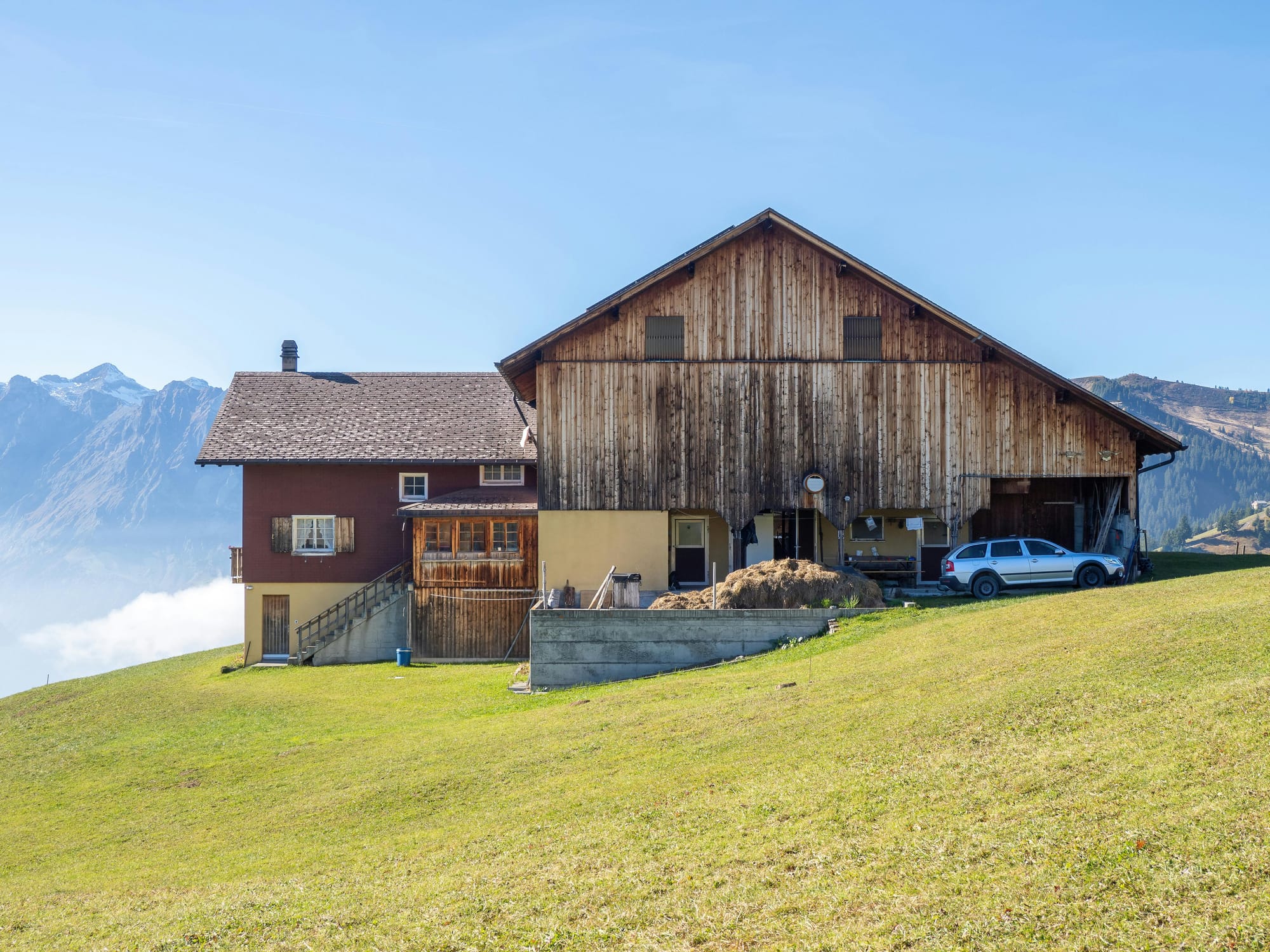
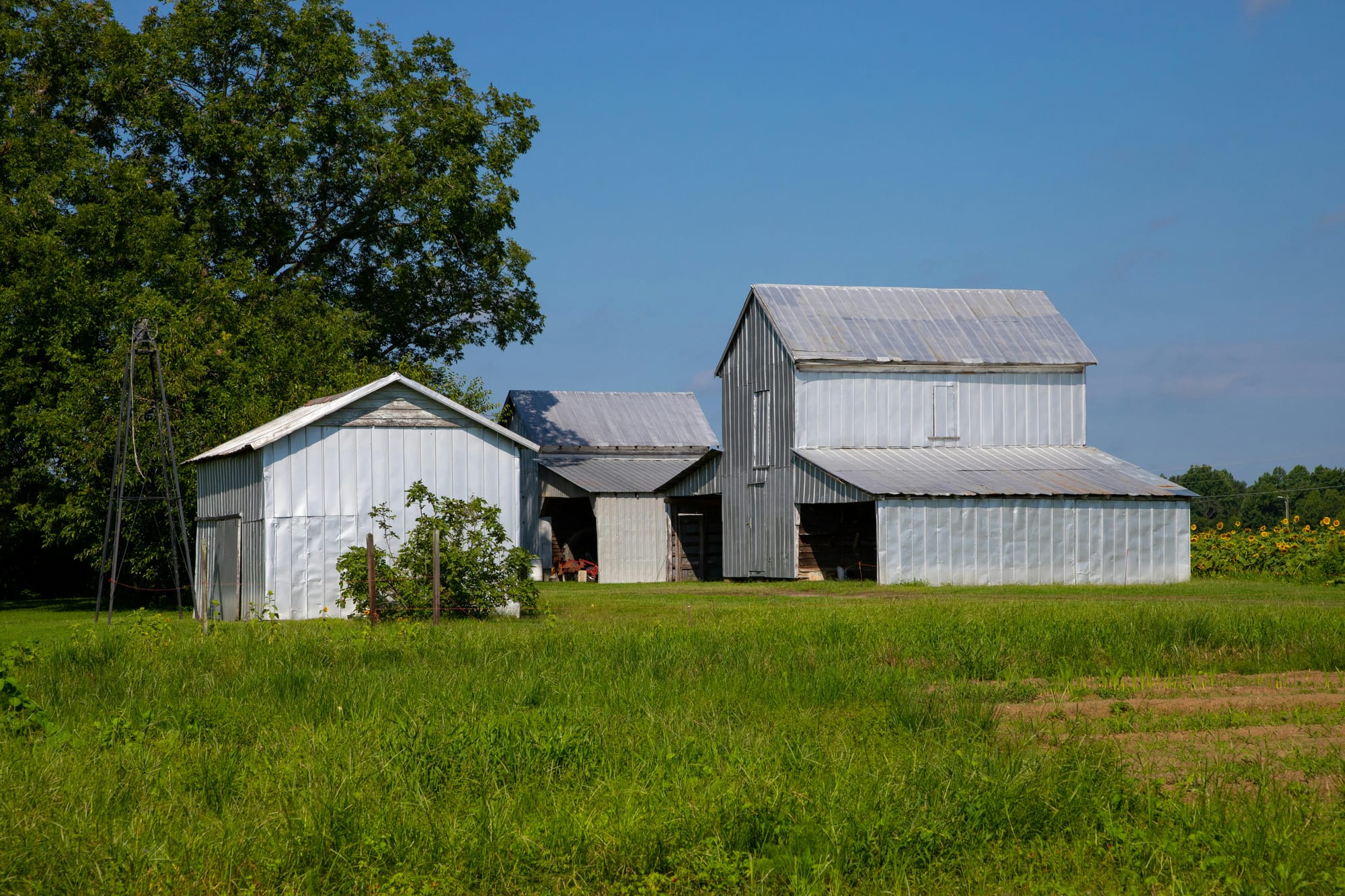
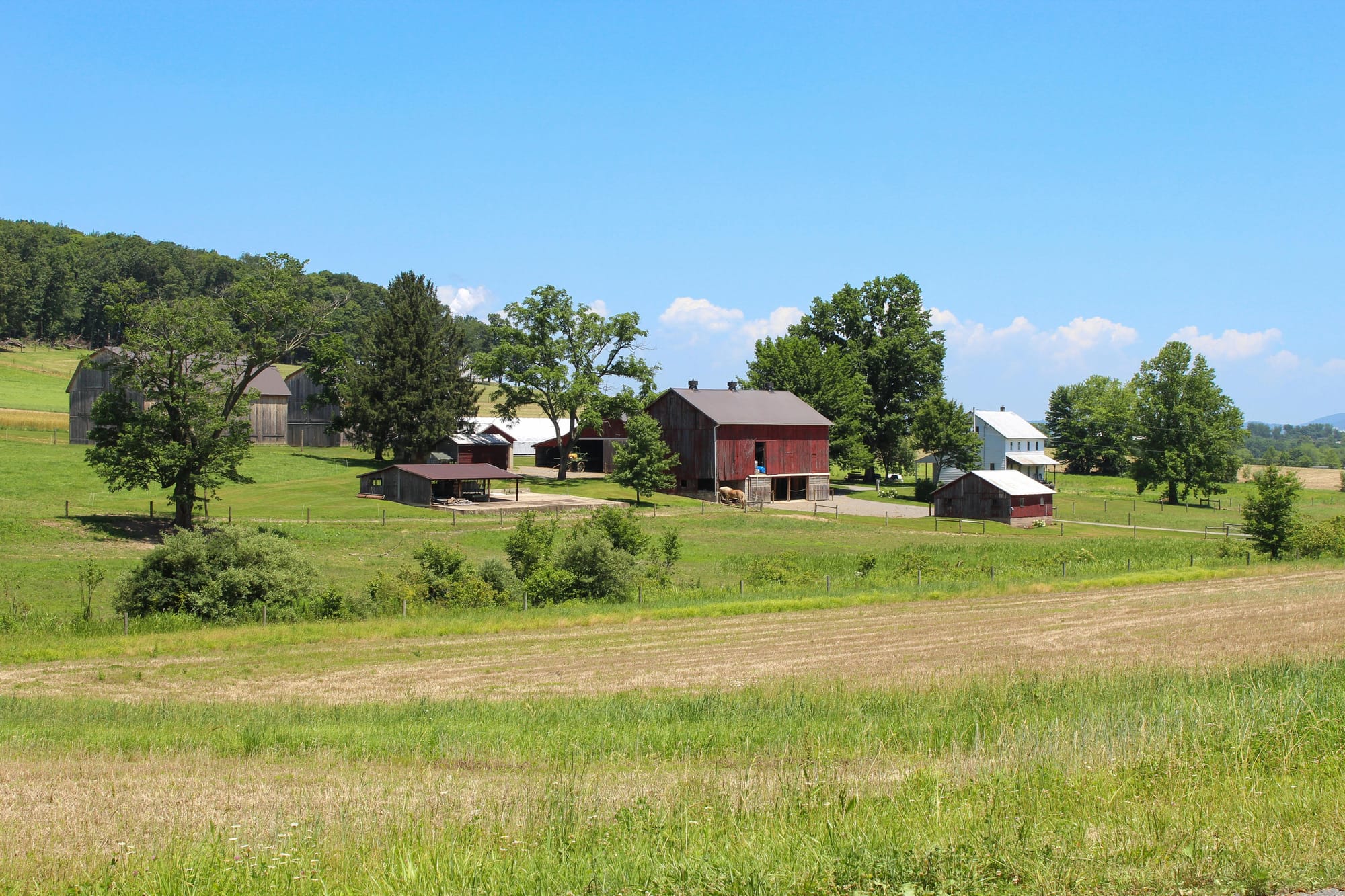
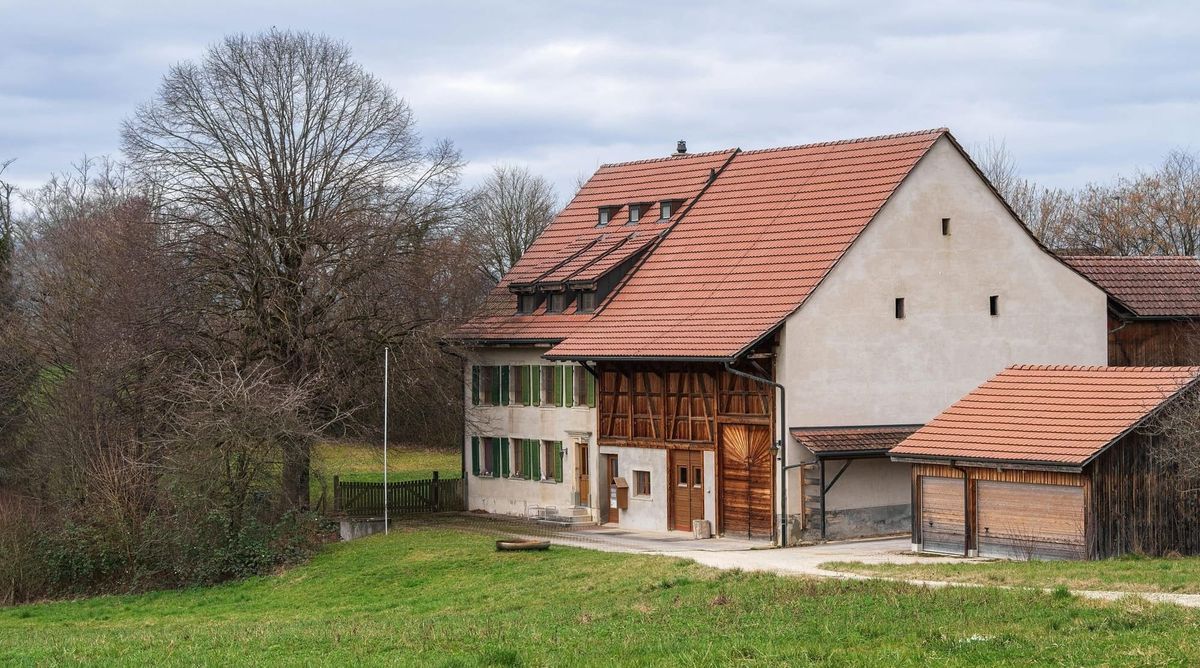
Farm Houses - Photos by Efrem Efre, Jean Paul Wettstein, Thomas P, Mark from NC Farm Bureau, and Michael S
The Property: What You Are Looking For and What You Do With It
The target property is a farmhouse in the 2,500 to 4,000 square foot range, with a barn or substantial outbuilding, on 10 to 30 acres, with an existing well and septic system. The well and septic are important. Drilling a new well in rural areas costs $8,000 to $20,000, and septic installation runs $10,000 to $25,000. An existing well and septic represent real money already in the ground.
The barn is arguably as valuable as the house. It becomes the community's technical infrastructure building: workshop, tool storage, solar equipment room, HAM radio station, mesh network hub, NAS server rack, and eventually the aquaponics system. Keeping technical and workshop functions out of the main house preserves the house as a living environment, which matters more than it might seem after the first few months of construction projects.
The house accommodates ten private bedrooms in the 200 to 300 square foot range, which is achievable in a 3,000 to 4,000 square foot farmhouse with some minor reconfiguration. Shared spaces include the kitchen, dining area, and living room. Some properties will have a second structure (a guest cottage, a converted outbuilding) that provides additional private space, which is worth paying a premium for.
The communal kitchen deserves particular attention. It is not just a cooking space. It is the place where the community actually forms, where daily life intersects, where conflicts surface early enough to address and connections deepen over time. Investing in a kitchen that works well and feels good to be in is an investment in community cohesion. Restaurant equipment auctions, available in every metro area and increasingly online through platforms like BidSpotter and AuctionZip, are the right source for affordable commercial-grade ranges, refrigerators, and prep equipment that will hold up to ten people cooking daily.
Cash Flow, Infrastructure and Utility
The impulse when designing a self-sufficient property is to do everything at once. That impulse needs to be resisted. Systems should be installed in priority order over the first one to three years, based on the return they deliver per dollar and hour invested.
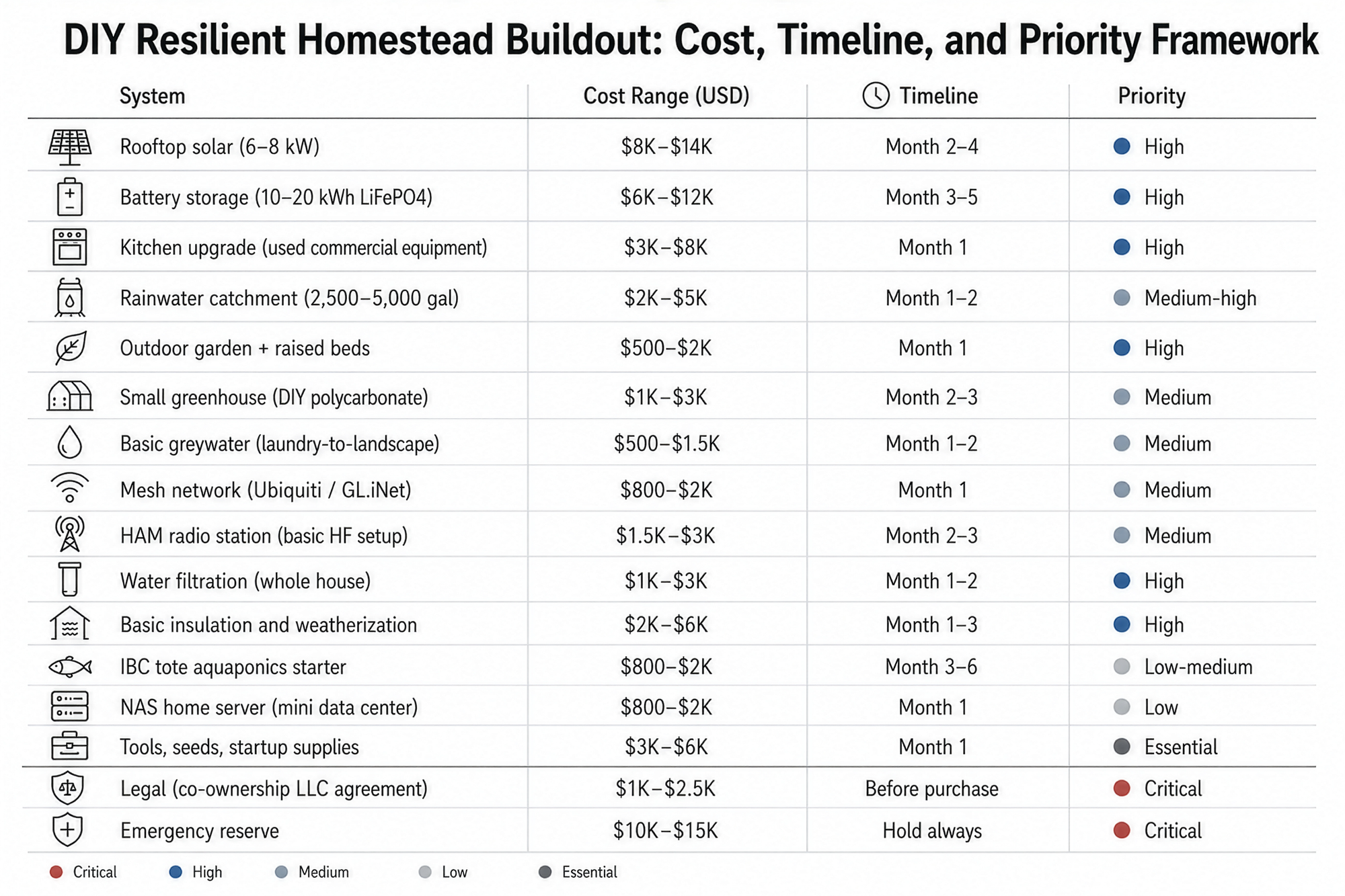
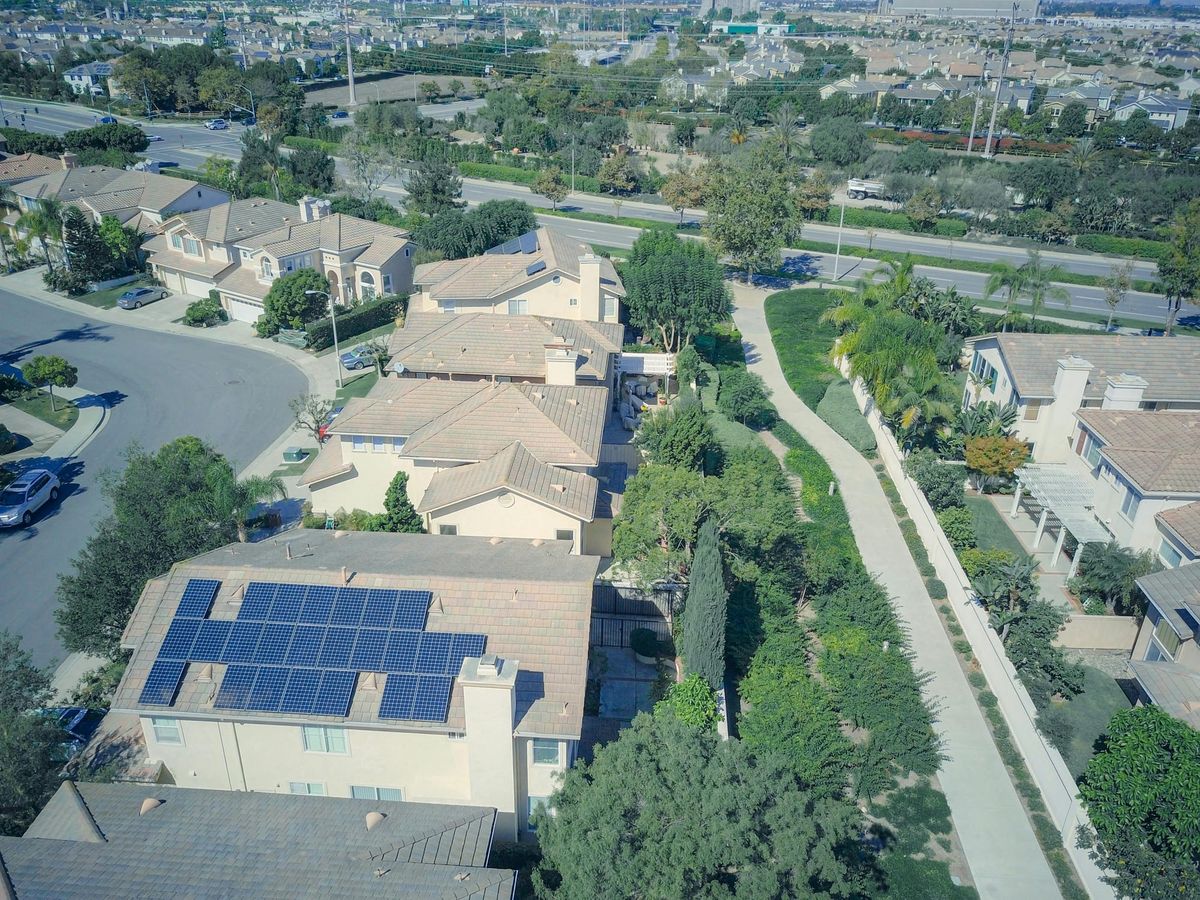
Solar and battery storage is the first major system priority after move-in. A 6 to 10 kilowatt rooftop solar array paired with 10 to 20 kilowatt-hours of lithium iron phosphate battery storage will cover the majority of electrical demand for a ten-person household and provide two to four days of backup during grid outages. This is fully DIY-installable by a competent group, with permits, at a cost of $15,000 to $25,000 in materials. The electricity bill drops to near zero. The system pays for itself in avoided utility costs within 8 to 12 years, and the battery backup is genuinely useful in the rural outage-prone environments where these properties exist.
Rainwater harvesting is a simple, low-cost resilience layer. A 2,500 to 5,000 gallon polyethylene cistern fed from roof gutters provides irrigation water and a supplemental supply buffer. Fully DIY, cost of $2,000 to $5,000 in materials. In a drought or well problem, this is what keeps the garden alive.
Greywater recycling routes laundry and sink water to fruit trees and garden beds rather than sending it through the septic. A simple laundry-to-landscape or branched drain system is legal in most rural states with permissive greywater codes (Missouri, Tennessee, Arkansas, and Oklahoma among them), requires no permit below certain daily volume thresholds, and costs $500 to $1,500 in materials. It reduces septic load, waters productive plants, and closes a small but meaningful loop in the water cycle.
The outdoor garden and raised beds are the primary food production system and should be started before anything else, because they take time to establish. A serious 2,000 to 4,000 square foot garden with raised beds, perennial plantings (fruit trees, berry bushes, asparagus, herbs), and seasonal rotation can supply 30 to 50 percent of the group's vegetables within two years. Cost in materials: $500 to $2,000, with labor the dominant input. This is also the highest-return use of early sweat equity hours.
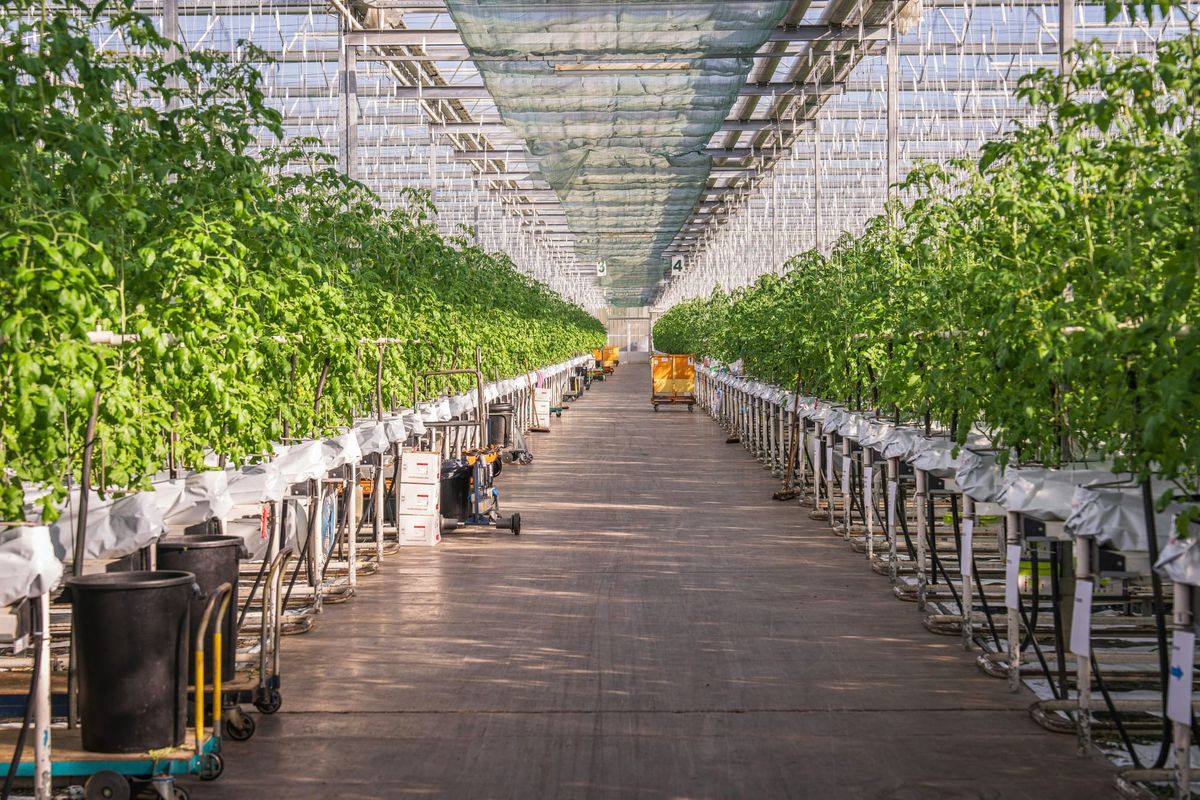
Two small greenhouses extend the growing season and provide year-round production of greens and fruiting crops. One greenhouse for seedling starts and year-round leafy greens, one for tomatoes, peppers, and cucumbers through shoulder seasons. Polycarbonate panel construction on pressure-treated lumber frames, fully DIY, at a cost of $1,000 to $4,000 each depending on size.
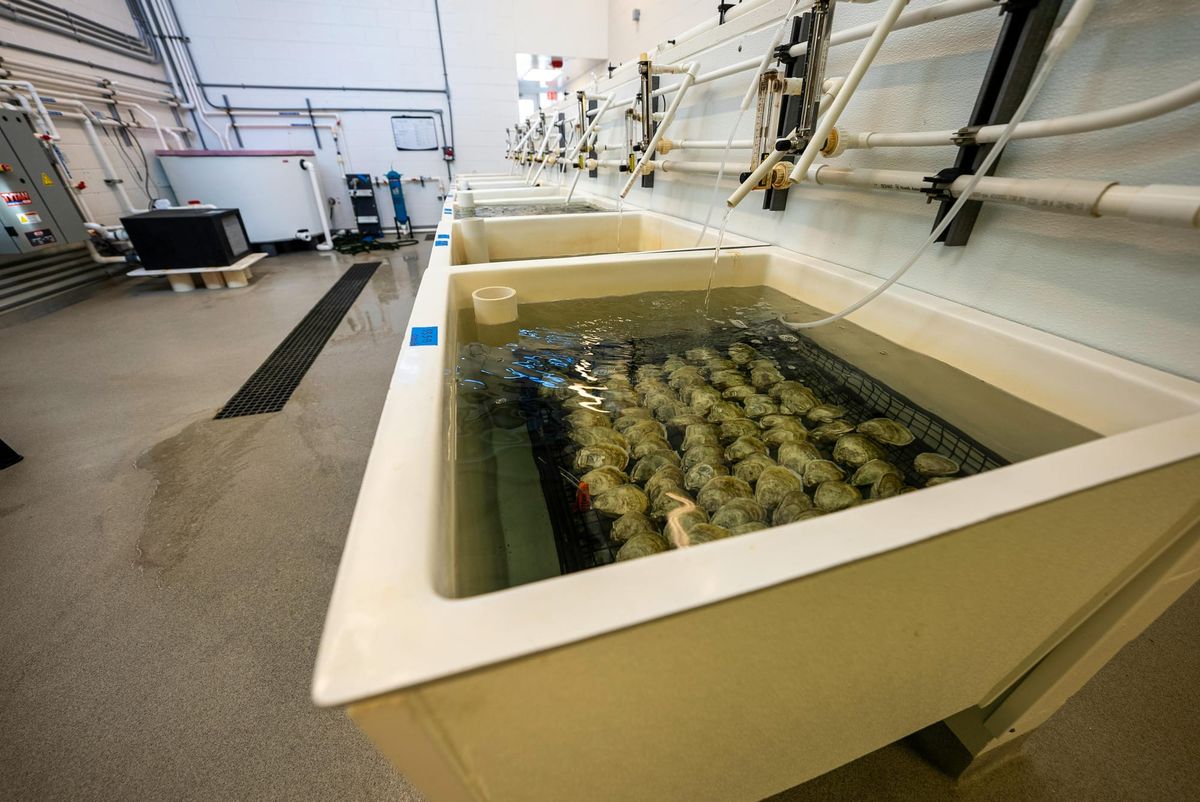
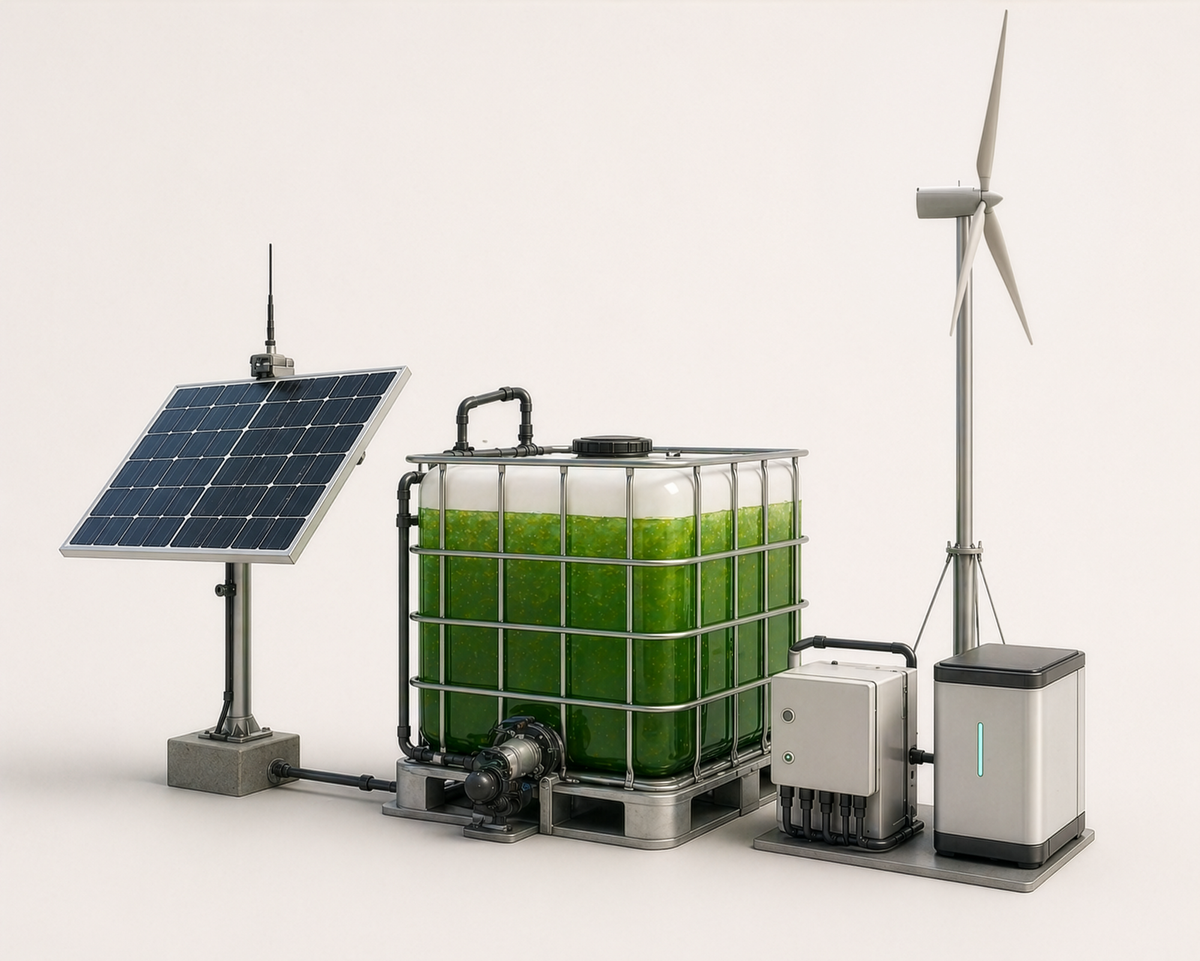
IBC tote aquaponics is the food system's most interesting element. Two or three 275-gallon intermediate bulk containers (the large plastic and metal-cage totes used in industrial shipping, available used for $50 to $150 each) form the basis of a closed-loop aquaponic system: fish (tilapia or catfish) live in the lower tanks, their waste-rich water feeds plant beds on top growing leafy greens and herbs, the plants filter the water which returns to the fish, and the whole system cycles continuously. It produces fresh fish protein and year-round greens with minimal inputs. Fully DIY with basic plumbing skills, at a cost of $800 to $2,500 in materials.
The mesh network is a building-wide and property-spanning wireless network running on affordable hardware like Raspberry Pi, Ubiquiti or GL.iNet, providing internal connectivity independent of the upstream internet provider. This means the community's file sharing, communication, and IoT sensor data (monitoring the solar system, the aquaponics water chemistry, the greenhouse temperature) all function even when the ISP is down. Cost: $800 to $2,000.
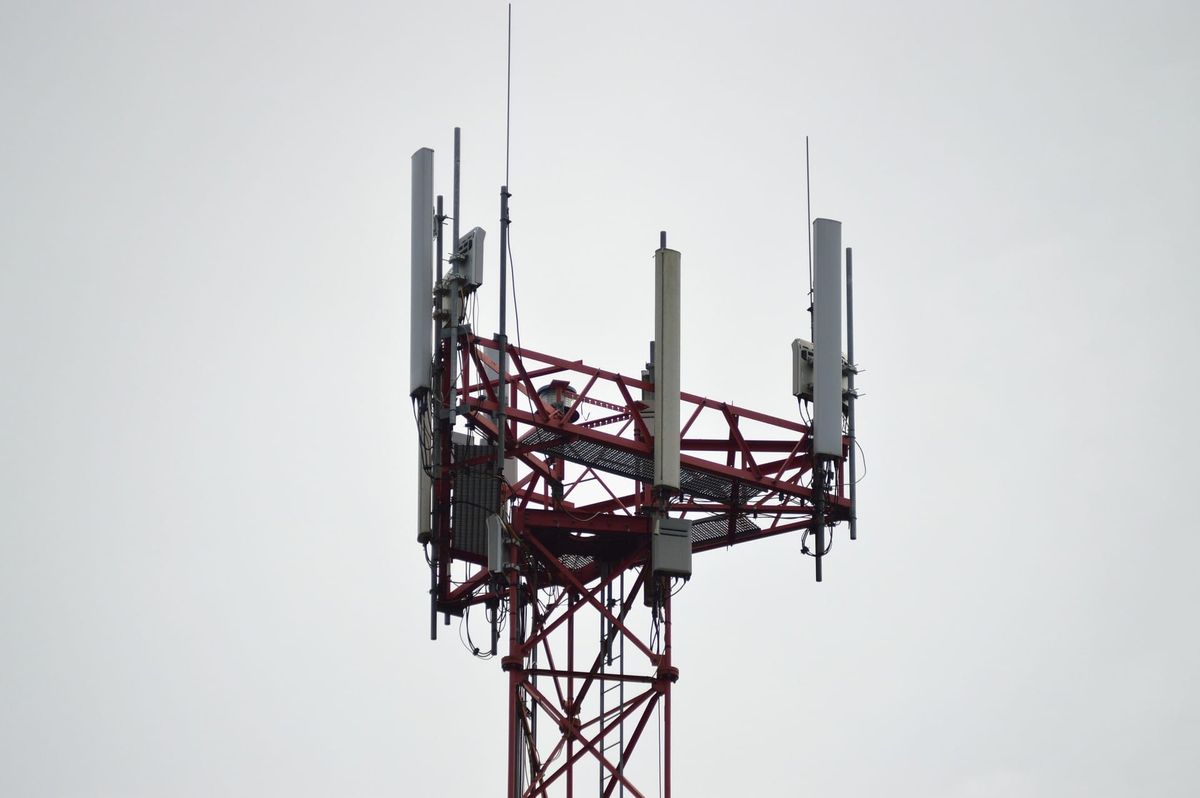
The HAM radio station is the communications infrastructure that most people overlook until they need it. A licensed amateur radio station running on high-frequency bands can communicate voice and digital data across regional distances with no cell towers, no internet, and no infrastructure beyond the antenna and a power supply. In every significant regional disaster of the past two decades, HAM radio has remained operational when everything else failed. Every major state emergency management office coordinates with licensed amateur operators through ARES (Amateur Radio Emergency Service) and RACES (Radio Amateur Civil Emergency Service) nets. At least one or two residents should obtain a General class FCC license, which is achievable with 30 to 60 hours of study. The station itself, a basic HF transceiver plus antenna, costs $1,500 to $3,500 in equipment.
A home NAS server running Nextcloud or similar open-source software gives the community a private cloud: shared file storage, collaborative documents, photo archives, backups, and communication tools that live on hardware in the barn rather than on someone else's servers. Cost: $500 to $1,500.
Whole-house water filtration on the well supply, a sediment filter followed by carbon and UV treatment, is non-negotiable. Well water quality in rural areas varies considerably. Cost: $1,000 to $3,000 for a properly sized system.
Taken together, the full systems buildout across two to three years runs $25,000 to $45,000 in materials, with the labor cost absorbed by sweat equity accumulation. This is well within the $50,000 cash reserve the group entered with, leaving $5,000 to $25,000 in operating reserves throughout.
Governance: The Part Everyone Underestimates
The technical systems are the easy part. Photovoltaic panels follow known physics. Aquaponics follows known biology. LLC operating agreements follow known law. None of these things have feelings or bad days or unresolved histories with other components of the system.
People do.
The single most common reason intentional communities fail is not money and it is not technical systems. It is unresolved interpersonal conflict that was never addressed in writing before it happened. Two people with a disagreement about guests, or quiet hours, or who is doing their share of the kitchen cleaning, or how a financial decision was made, can fracture a group of ten if there is no established process for handling it. The fracture does not happen all at once. It happens slowly, through accumulated grievance and avoided conversation, until someone leaves or the community reorganizes around the conflict rather than around its purpose.
The solution is not elaborate governance theory. Sociocracy, holacracy, and other formal frameworks are too much for a group of ten. What works is simple, written, consistently enforced agreements, adopted before anyone moves in.
The governance structure for this community should cover four things. First, decision-making: routine decisions (meals, scheduling, minor purchases) by simple majority; major financial decisions (capital expenditures over a defined threshold, membership changes, amendments to the Operating Agreement) by a supermajority of seven out of ten. Second, meeting structure: a weekly community meeting of no more than 90 minutes, with a rotating facilitation role so no single person becomes the default authority. Third, conflict resolution: a documented three-stage process, beginning with direct conversation between the parties, moving to a facilitated conversation with a neutral community member if direct conversation fails, and escalating to a community circle (all members present) only if mediation fails. Fourth, membership: a clear written policy covering the provisional period for new members (three to six months before full equity accrual begins), the process for departures, and the rules around guests.
Diana Leafe Christian's book "Creating a Life Together" is the most practical resource available on community formation at this scale. It is not idealistic. It documents what works and what does not, drawn from decades of observation of communities that survived and communities that did not. Read it before the group makes any major commitments.
The governance agreements do not need to be long. They need to be clear, specific, and agreed upon by everyone before anyone moves in. Vague agreements produce vague expectations, and vague expectations produce conflict.
Q2: What is the purpose of the supermajority 7/10 voting threshold for major decisions? Choose one.
A) To give primary financial contributors control over big decisions
B) To prevent any small group from pushing through major changes without broad agreement
C) To make it easier to amend the Operating Agreement
D) To ensure the mortgage holder has final say
The Timeline: What the First Three Years Actually Look Like
Months 1 to 3. The group forms the LLC and drafts the Operating Agreement with an attorney. A target property is identified and seriously evaluated. The USDA loan pre-application process begins (this takes time and should start early). The equity ledger is set up and the labor rate is agreed upon unanimously.
Months 3 to 6. The property closes. Everyone moves in or begins the move-in process. The garden is planted immediately, because the first season matters. The solar system is ordered (lead times can run 4 to 12 weeks) and installation begins. The kitchen is set up and functional within the first 30 days of occupancy. The well water is tested and filtration installed.
Months 6 to 12. Solar comes online and the first utility bills disappear. The rainwater cistern is installed before the end of the first growing season. Greywater routing is connected to the fruit trees and garden beds. The first greenhouse frame goes up before winter. IBC totes are sourced and the aquaponics system is assembled and cycled. HAM license study begins and the first residents sit for the exam. The mesh network is deployed across the house and barn.
Year 2. The second greenhouse is built. The outdoor garden is expanded, and the first perennial plantings (fruit trees, berry starts) go in. A larger farm plot is broken for staple crops. The first equity audit is completed: every member's ledger is reconciled, equity percentages are calculated and shared with the group, and any discrepancies are resolved. The community holds its first formal governance retrospective: what is working, what is not, and what needs to be changed in the written agreements.
Year 3. Systems are refined based on two years of operational data. The community will likely experience its first member transition: someone leaves, their equity is calculated, a new member buys in or a buyout is arranged. This is a test of the system and, if the Operating Agreement is solid, it passes the test. The group begins discussing whether to expand: additional land, a second structure, or simply deepening what already exists.
Q5: What is the single most important thing the group should do before spending any money on land or improvements? Choose one.
A) Find the right property in the right state
B) Apply for the USDA loan
C) Draft and sign a legally binding Operating Agreement with an attorney
D) Recruit all ten members simultaneously
What This Is and What It Is Not
This is not a commune. Communes pool income and distribute it communally. This model does not touch anyone's income. Everyone earns their own money from whatever work they do outside the community, and they contribute a defined amount to the shared operating costs. What they build together is shared infrastructure and shared equity, not shared wallets.
It is not a cult. There is no ideology requirement, no charismatic leader, no required belief system. The Operating Agreement is the governing document, not a philosophy. People join because the financial and lifestyle model makes sense to them, and they leave when it no longer does, with their money back.
It is not a utopian experiment. It is a rational response to a housing market that has stopped working for most people, combined with a legal and financial structure that has existed in various forms for decades, and a set of practical systems that any group of capable adults can build and maintain.
The technology works. Solar panels generate electricity reliably. Aquaponics produces food reliably. The finances work. The USDA loan program is real and accessible. The monthly math is real and favorable. The LLC structure is real and legally sound.
The only genuine variable is the people. Whether this works depends on whether the ten people involved are honest with each other before any money changes hands, whether they can commit to a written agreement and follow it when following it is inconvenient, and whether they can handle the ordinary friction of shared life without letting it become something larger.
Those are not easy things. They are also not mysterious things. They are the same things that make any long-term relationship or partnership work. And the answer to whether a particular group can do them is determined before anyone signs anything, at a table, with the Operating Agreement in front of everyone and enough time to talk through every clause until it means exactly what everyone thinks it means.
That conversation is where this either starts or it doesn't. Everything else is construction.
John D John D
 John D
 John D
 John D
 John D
 John D
 John D
 John D
 John D
 John D
 John D