Rocket Lab Neutron Strategic Technical Assessment: Archimedes Engine, Reusable Rocket Architecture, 2026 Launch Timeline, Market Position, and Key Risks
A strategic technical assessment of Rocket Lab’s Neutron rocket, covering Archimedes, reusability, launch timing, competitors, and risks.

Neutron Strategic Technical Assessment
Summary
Neutron is strategically significant because it is Rocket Lab’s attempt to move from a successful small-launch franchise into the medium-lift, reusable segment where constellation deployment, higher-value government payloads, and integrated end-to-end mission services are concentrated. As of July 2026, Rocket Lab’s stated Neutron configuration is a two-stage, methane/oxygen vehicle with a reusable first stage, captive fairing, and an advertised payload of up to 13,000 kg to LEO in reusable mode and 15,000 kg in expendable mode. Rocket Lab’s current guidance still points to a first launch in the fourth quarter of 2026 after a January 2026 stage-one tank rupture during qualification testing prompted design changes, a new tank build, and a broader test campaign. [1]
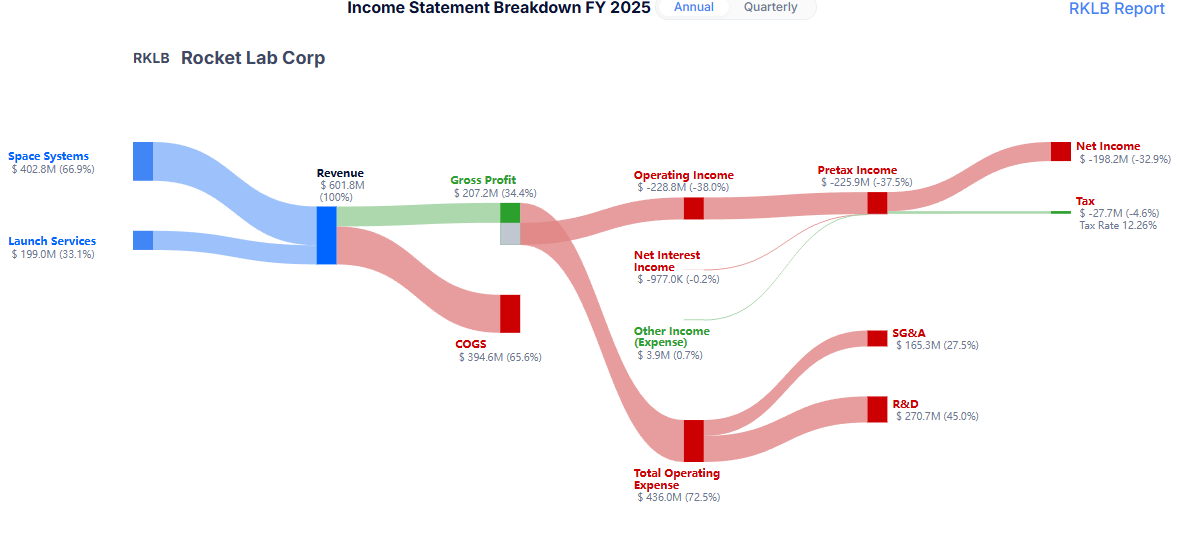
The core strategic point is that Neutron is not merely a larger Electron. It is intended to be Rocket Lab’s bridge into a market where launch is often purchased as part of a broader architecture: constellation replenishment, government-assured access, responsive launch, and missions paired with spacecraft manufacturing, mission operations, and in-space services. Rocket Lab’s own filings describe Neutron as important to its “end-to-end space solution,” especially for growing constellation demand. That framing matters because Rocket Lab’s current business is already more diversified than many launch startups: in 2025 it generated $402.8 million of revenue from space systems versus $199 million from launch services, and management has continued to position Neutron as both a launch product and a demand-capture mechanism for the wider company. [2]
Technically, Neutron’s most distinctive features are its carbon-composite primary structures, its “Hungry Hippo” captive fairing, and the Archimedes engine family. Operationally, the concept aims for reduced recurring hardware loss by returning the first stage and fairing together, while keeping the second stage expendable and relatively simple. The principal uncertainties are not whether the architecture is coherent—it is—but whether Rocket Lab can translate prototype and qualification progress into a reliable, high-cadence, low-refurbishment operational system before the market is further consolidated by SpaceX and before peers such as Blue Origin, Firefly, Relativity, and Stoke mature their competing vehicles. [3]
Rocket Lab Strategic Context
Rocket Lab’s transition from Electron to Neutron is a response to both market structure and company structure. Electron established Rocket Lab as a credible, high-cadence small-launch provider with 75 successful missions through year-end 2025 and ~87 successful missions as of July 2026, while the company simultaneously expanded into spacecraft components, satellite manufacturing, mission operations, solar power systems, and optical payloads. In 2025, Electron was the second most frequently launched orbital rocket, but Rocket Lab’s own filings acknowledge that future growth depends on expanding addressable launch market access through Neutron and winning larger constellation opportunities. [4]
This evolution is also visible in revenue composition. Rocket Lab’s 2025 total revenue reached a record $602 million, with space systems representing roughly two-thirds of the total and launch services roughly one-third. That balance implies Neutron should not be analyzed only as a standalone rocket program; it is also a strategic enabler for cross-selling launch, spacecraft buses, components, mission operations, and potentially future orbital transfer or deep-space services. NASA’s 2025 orbital transfer vehicle study awards explicitly cited concepts using Neutron’s upper stage, underscoring that Rocket Lab is already positioning Neutron-derived hardware beyond simple launch. [5]
Rocket Lab’s filings also make clear why the move upmarket matters. The company expects constellation missions to account for an increasing share of spacecraft launched and states that Neutron is tailored for large constellation deployments, interplanetary missions, and potentially human spaceflight over time. That is a different demand environment from Electron’s small dedicated launch niche, which has value but limited volume growth if more small satellites continue migrating onto larger rideshare and medium/heavy launch systems. BryceTech’s 2025 smallsat analysis is directionally consistent with Rocket Lab’s strategy: nearly 2,800 smallsats launched in 2024, accounting for 97% of all spacecraft and 81% of total upmass, while average smallsat mass continued to rise and the report specifically noted that smallsats are increasingly deploying on medium- to heavy-lift vehicles. [6]
In strategic terms, Neutron therefore matters to Rocket Lab for three reasons. First, it expands launch addressable market from responsive small launch into higher-value medium-lift missions. Second, it reinforces the company’s integrated model by allowing Rocket Lab to launch its own spacecraft products and future service architectures. Third, it improves relevance to U.S. government buyers, as shown by Neutron’s inclusion in NASA’s VADR contract vehicle and its on-ramp to the U.S. Space Force’s NSSL Phase 3 Lane 1. [7]
Vehicle and propulsion architecture
Neutron system design
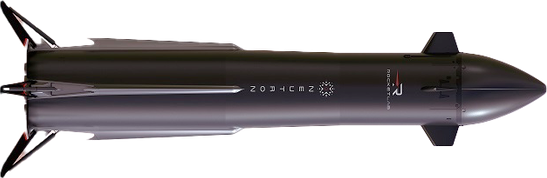
Rocket Lab’s current Neutron definition is relatively mature in broad configuration. The payload user guide describes a 43-meter-tall, 7-meter-diameter, two-stage launch vehicle with a 5.5-meter fairing, nine sea-level Archimedes engines on the reusable first stage, and one vacuum-optimized relightable Archimedes engine on the expendable second stage. Rocket Lab states capability of up to 13,000 kg to LEO in reusable configuration, 15,000 kg in expendable configuration, and up to 2,000 kg on trans-lunar injection missions. [8]
The most distinguishing architectural choice is the captive fairing. Rather than discarding fairings, Neutron keeps them integrated with the first stage; the payload is released when the two-petal “Hungry Hippo” fairing opens, after which the fairing closes again and returns with the booster. Rocket Lab argues that this reduces recurring hardware loss and simplifies post-flight vehicle recovery. The PUG further indicates that the complete first-stage assembly returns with the interstage and captive fairings attached, while the vehicle uses canards, landing legs, a tapered profile, and a low ballistic coefficient to reduce reentry heating and support a controlled return. [9]
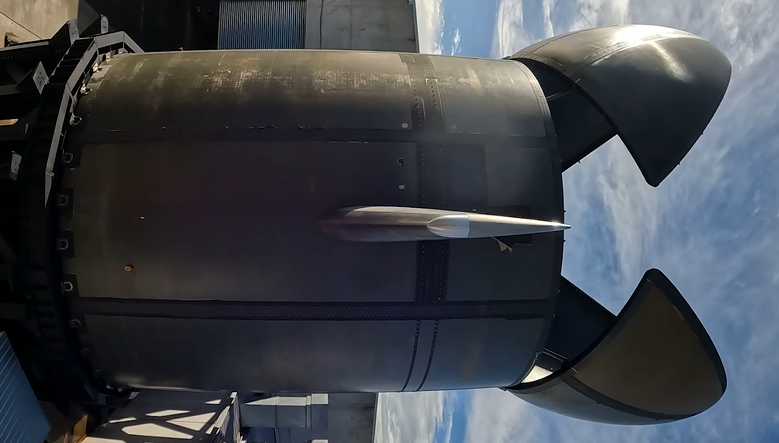
That design philosophy differs from both Electron and Falcon 9. Electron emphasized miniaturization, electric-pump-fed propulsion, and the economics of dedicated small launch; Neutron keeps Rocket Lab’s composite-heavy manufacturing DNA but shifts to methane propulsion, larger stage structures, and operational reuse from the outset. Falcon 9, by contrast, uses a more conventional aluminum-lithium and separate-fairing architecture, with first-stage recovery and reused fairings but not a captive fairing. Neutron’s approach also differs from Starship and Stoke Nova, both of which pursue fuller reuse, including a reusable upper stage in Nova’s case and a fully reusable system in Starship’s case. The implication is that Rocket Lab is aiming for a middle path: materially better recurring economics than expendables, but with lower technical ambition than fully reusable super-heavy systems. [10]
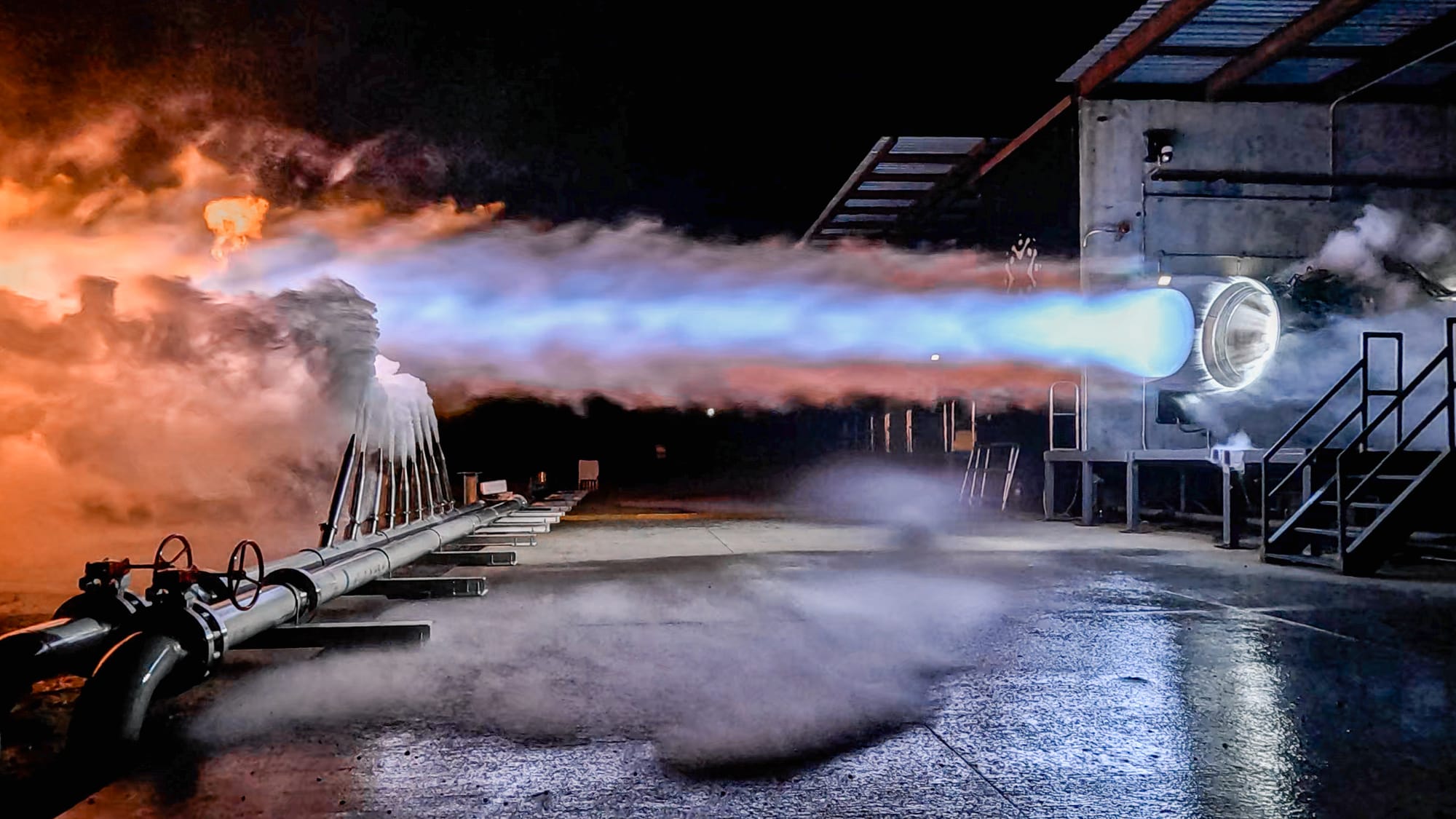
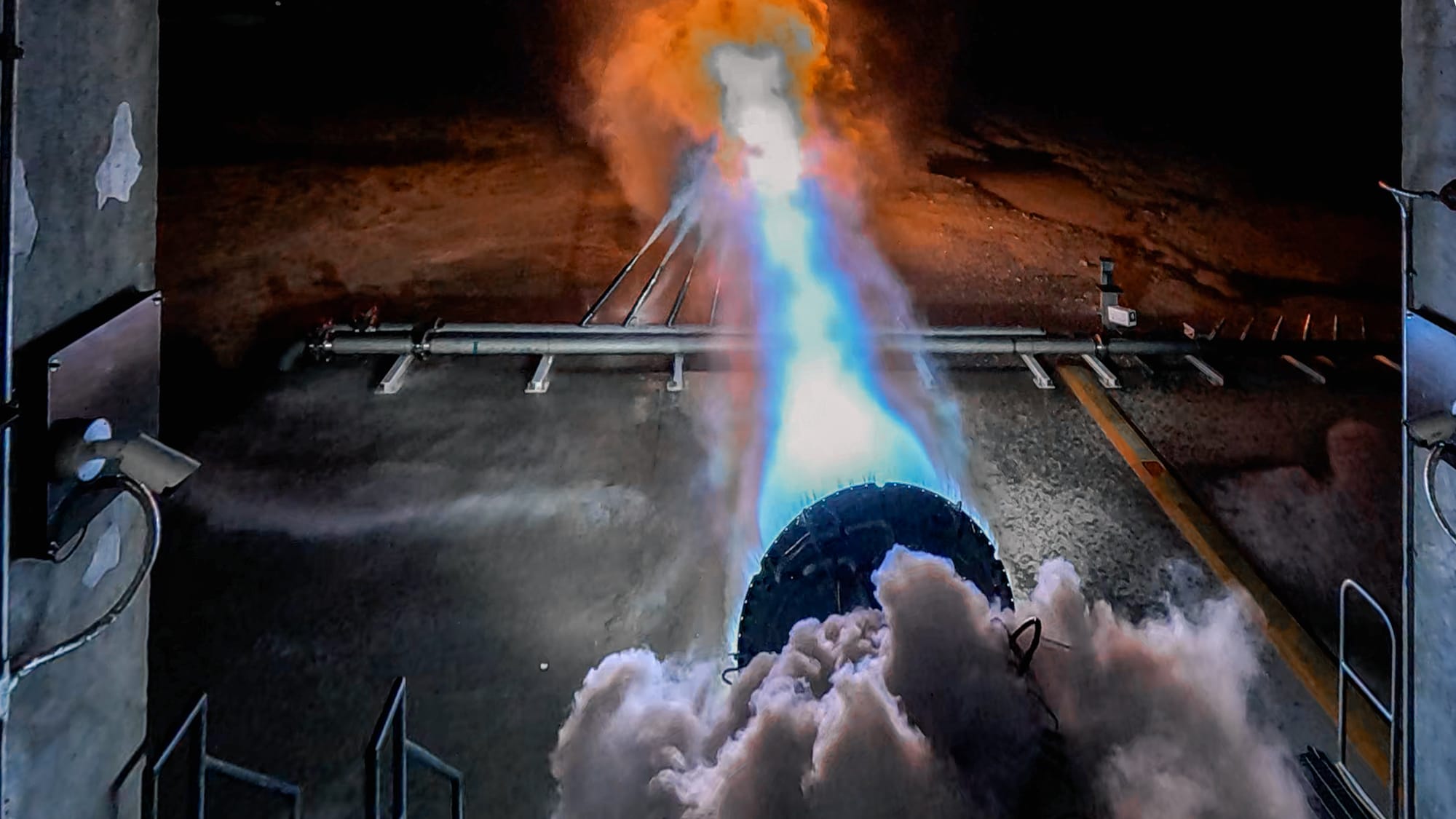
Archimedes Vacuum Engine Testing - Photo by Rocket Labs - All Rights Reserved
Archimedes engine analysis
Archimedes is central to Neutron’s risk profile and to its strategic differentiation. Rocket Lab’s current public materials define it as a reusable, LOX/methane oxidizer-rich staged-combustion engine with thrust up to about 165,000 lbf, or 733 kN, per engine, and a vacuum variant of up to 202,300 lbf, or 900 kN. The vacuum engine shares major components with the first-stage version and is designed for multiple restarts, with Rocket Lab stating up to six in-space starts for the vacuum version. Rocket Lab also states that many critical components are 3D printed and that full-rate Archimedes production will occur at the Engine Development Complex in Long Beach. [11]
The engine architecture is notable for balancing ambition and restraint. Rocket Lab’s payload guide says the engine operates on an oxidizer-rich staged-combustion cycle (ORSC), but at a “relatively benign statepoint” intended to reduce oxygen-compatibility and turbine-temperature challenges, and therefore improve engine life and reusability. That choice is analytically important. ORSC is more efficient than gas-generator or open cycles, but less technically aggressive than full-flow staged combustion. Rocket Lab’s own description emphasizes lower thermal strains, lower stress levels, and packaging/manufacturing efficiency over maximum theoretical performance. [12]
There is also evidence of design evolution. In Rocket Lab’s 2021 Neutron reveal, Archimedes was described as a 1 meganewton gas-generator methane engine, with seven engines on stage one. Current Rocket Lab materials instead describe a nine-engine first stage and an ORSC Archimedes in the 733 kN class. The program has therefore not remained fixed; it appears to have migrated from an early concept optimized for simplicity toward a somewhat more efficient current configuration, while preserving the broader design principle of avoiding the most extreme performance envelope. That evolution is consistent with a company learning how much performance margin it needs once detailed vehicle mass properties, mission classes, and reuse requirements become more concrete. [13]
Testing progress is meaningful but not yet commercialization-proof. Rocket Lab completed the first full Archimedes assembly and began test operations in May 2024, then announced a successful first hot-fire in August 2024, stating the engine reached 102% power. By February 2026, investor materials said Archimedes testing had intensified, with twin test cells at Stennis running in parallel to prepare the first flight set of engines. In May 2026 the company said first-flight hardware integration was continuing and Archimedes qualification was still progressing. The implication is that propulsion is no longer a conceptual risk but remains a schedule and durability risk until full certification, acceptance testing, and flight turnaround data exist. [14]
Neutron will utilize nine of these engines in the first re-usable booster stage
Reusability, operations, and launch infrastructure
Rocket Lab’s reusability concept is less radical than Starship or Nova, but more integrated than Falcon 9’s partial reuse model. The first stage is intended to be fully reusable, the fairing remains attached and reusable, and the second stage is expendable. Rocket Lab says the first stage can return either to launch site or to an ocean platform, after which it is brought back to Launch Complex 3 for refurbishment and reflight. In operational terms, that architecture narrows the refurbishment problem to the booster/fairing assembly while avoiding the major technical challenge of recovering and rapidly reusing an upper stage. [15]
The potential operational advantage is clear. By eliminating fairing recovery at sea and aligning stage-one and fairing return into a single reusable assembly, Neutron may reduce handling complexity and recurring hardware replacement. Rocket Lab also argues that because the second stage is fully enclosed during ascent, it can be made unusually lightweight and cost-optimized, since it does not need to serve as part of the external ascent structure in the way conventional upper stages do. If this works as intended, Neutron could be optimized for repeatable medium-lift launches without inheriting the operational overhead of a separate fairing-recovery supply chain. [16]
The difficult part is that each operational assumption compounds. To achieve truly competitive economics, several conditions must all hold simultaneously: Archimedes must reach high reliability with limited inspection burden; composite primary structures must tolerate repeated thermal and mechanical cycling; the captive fairing must not introduce alignment, contamination, or structural turnaround penalties; and pad operations must be streamlined enough that launch cadence is not limited by manual refurbishment labor. Rocket Lab’s own materials indicate that avionics and software were qualified and ready for integration, stage two completed qualification, the fairing completed qualification, but the landing barge was still under construction and regulatory work remained in progress in early 2026. That is progress, but not yet proof of aviation-like operations. [17]
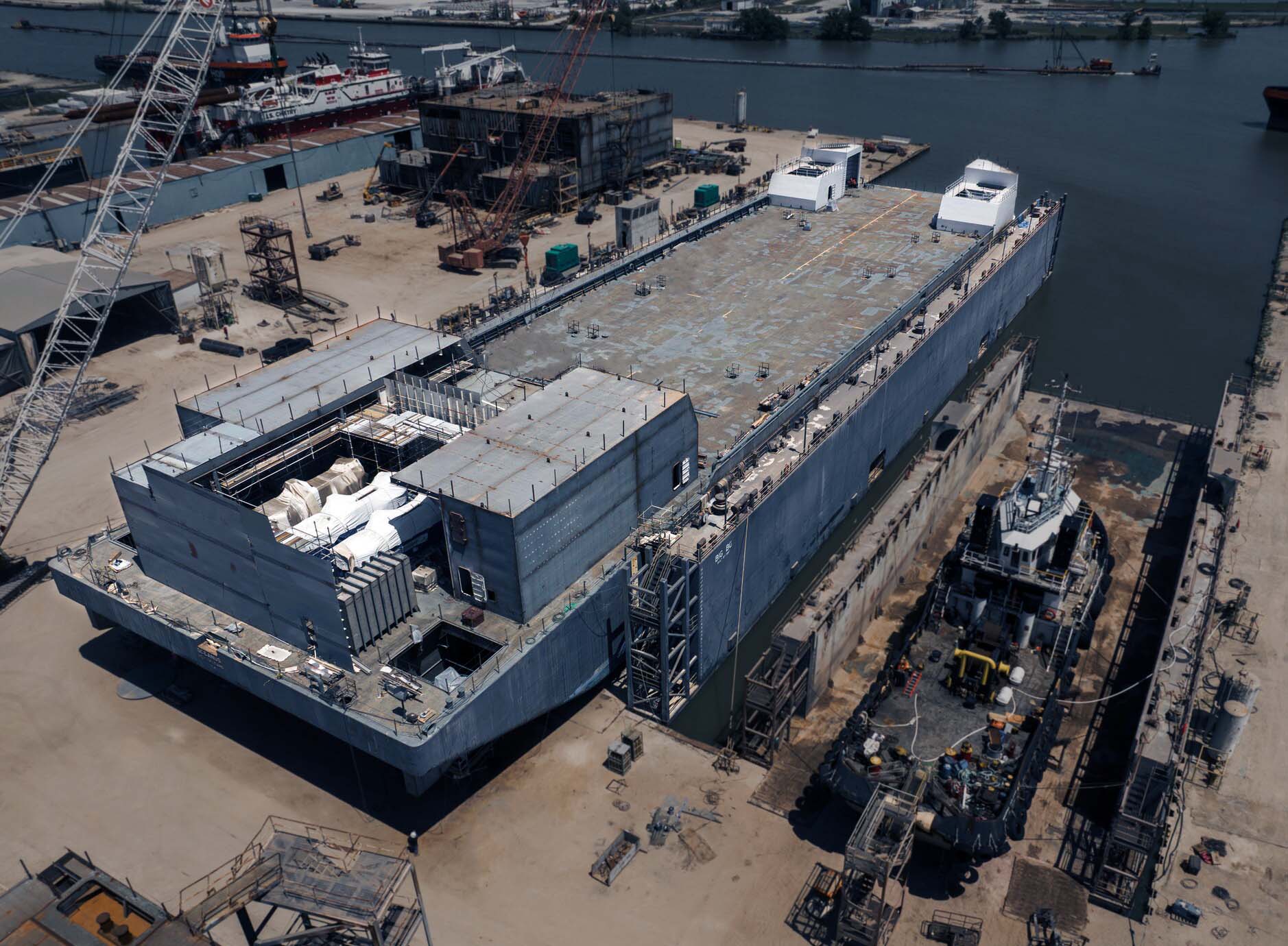
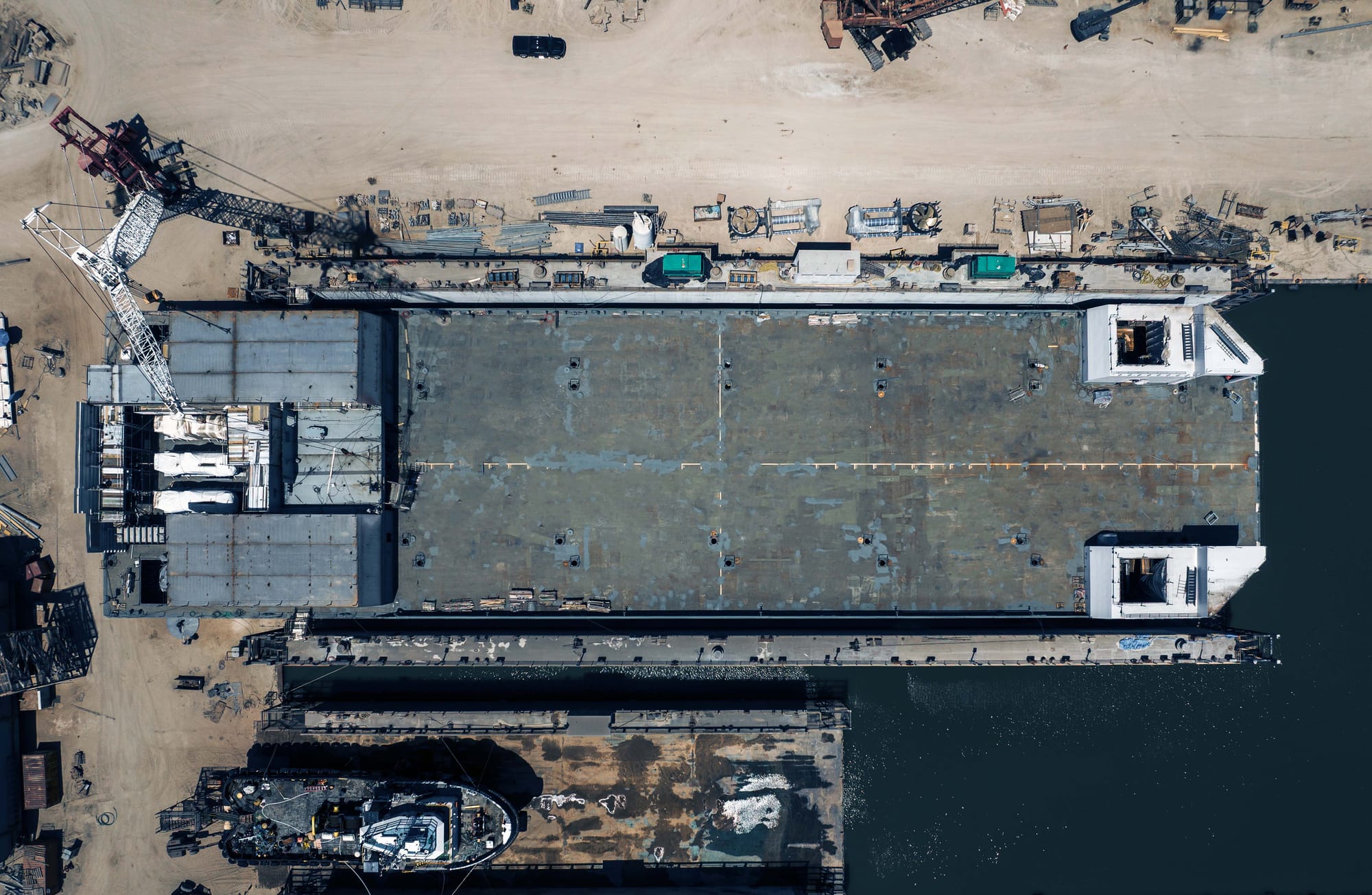
Rocket Lab Landing Barge - Photo by Rocket Lab - All Rights Reserved
Launch-site infrastructure is substantially advanced but still constraining. Rocket Lab officially opened Launch Complex 3 in August 2025, describing it as a reusable-rocket launch and return site. The 2025 10-K further states that LC-3 is licensed for two missions per year, with the possibility of a higher number pending ongoing assessments, and that Rocket Lab has access to the Mid-Atlantic Regional Spaceport payload processing facility. In practice, that means the physical pad may be nearing readiness, but regulatory approval and demonstrated turnaround remain bottlenecks if Rocket Lab’s long-term economics depend on significantly higher annual cadence. [18]
The January 2026 stage-one tank failure is especially important because it exposed both technical and industrial issues. Rocket Lab said the tank ruptured during hydrostatic testing after reaching anticipated flight loads, that the root cause was a manufacturing defect at a critical join, and that this first tank had been produced by a third-party contractor using manual hand lay-up while Rocket Lab was commissioning its automated fiber-placement machine (AFP). The company stated that future tanks would be produced on the AFP machine and that a design change would add margin and improve manufacturability. The episode reinforces a central operational lesson: Neutron’s economics will not be established by propulsion alone; they will depend just as heavily on repeatable composite manufacturing, quality control, and reduced dependence on ad hoc external fabrication. [19]
 Alex Tyrer-Jones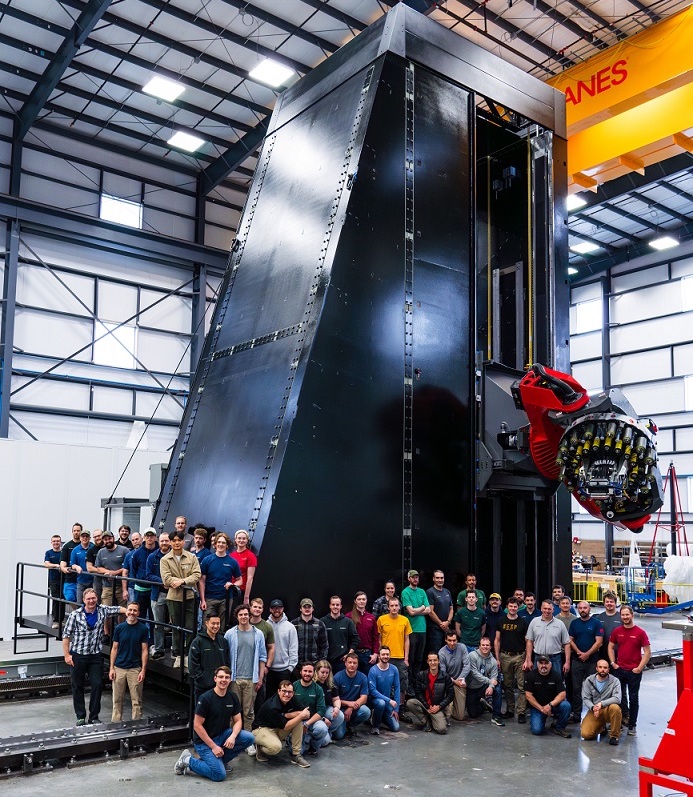
Market positioning and competitive landscape
Neutron’s most plausible markets are commercial constellation launches, civil government missions, national-security space, responsive or tactically flexible launch, and selected lunar or interplanetary missions requiring dedicated medium-lift performance. Rocket Lab already has institutional footholds supporting this argument: NASA agreed in January 2025 to include Neutron launch services under Rocket Lab’s VADR contract, and the U.S. Space Force on-ramped Neutron into NSSL Phase 3 Lane 1 in March 2025. Rocket Lab also announced a U.S. Air Force Neutron mission for a re-entry test in May 2025. Together, those awards suggest Neutron is being positioned not only for commercial work but as a resilience and diversification asset for U.S. government launch procurement. [20]
From a market-structure standpoint, Neutron should not be framed as a full-spectrum Falcon 9 substitute. Falcon 9 remains the dominant commercial benchmark, with publicly stated max capability of 22,000 kg to LEO on a fully expendable mission, more than 430 Falcon launches completed by the end of 2024, extensive booster and fairing reflight statistics, and a published standard payment-plan price of $74 million through 2026 for Falcon 9 launch services. SpaceX also continues to offer dedicated smallsat rideshare at $350,000 for 50 kg to SSO and $7,000/kg incremental mass. Neutron is smaller, newer, and unproven by comparison. [21]
Yet Neutron is also not just a niche micro-competitor. At 13 t reusable to LEO, it sits well above dedicated small launch, near the practical lower edge of many constellation-batch and government-medium missions, and with a fairing and vehicle architecture oriented toward dedicated deployment rather than purely rideshare economics. BryceTech’s view that rising smallsat mass and medium/heavy launch preference will continue to marginalize many small-launch propositions supports Neutron’s existence. In that sense, Neutron appears as a medium-lift reusable alternative for customers who want more control and smaller batch sizes than a Starship-class system, and potentially more tailored mission assurance or domestic diversification than a single-provider SpaceX strategy. That is an inference, but it is well supported by the program’s sizing, customer wins, and public market trends. [22]
The most relevant competitive comparison is therefore not “Can Neutron beat Falcon 9 on raw price?” but “Can Neutron secure durable share where customers value schedule control, diversified access, integrated mission services, and a reusable vehicle sized for the 5–15 ton class?” On that question, Neutron has a credible thesis. It becomes substantially stronger if Rocket Lab can package launch with spacecraft and mission services, and materially weaker if Neutron remains a launch-only offer competing against Falcon 9 on price. [23]
Rocket Lab has also shown signs that demand is not hypothetical. In first-quarter 2026 results, the company said it signed five new dedicated Neutron launches in the quarter and that total launch manifest exceeded 70 contracted missions. The absence of broad public customer disclosure limits visibility into pricing and customer quality, but the sales activity indicates that at least some buyers are willing to contract against a vehicle that has not yet flown. [24]
Comparative competitive matrix
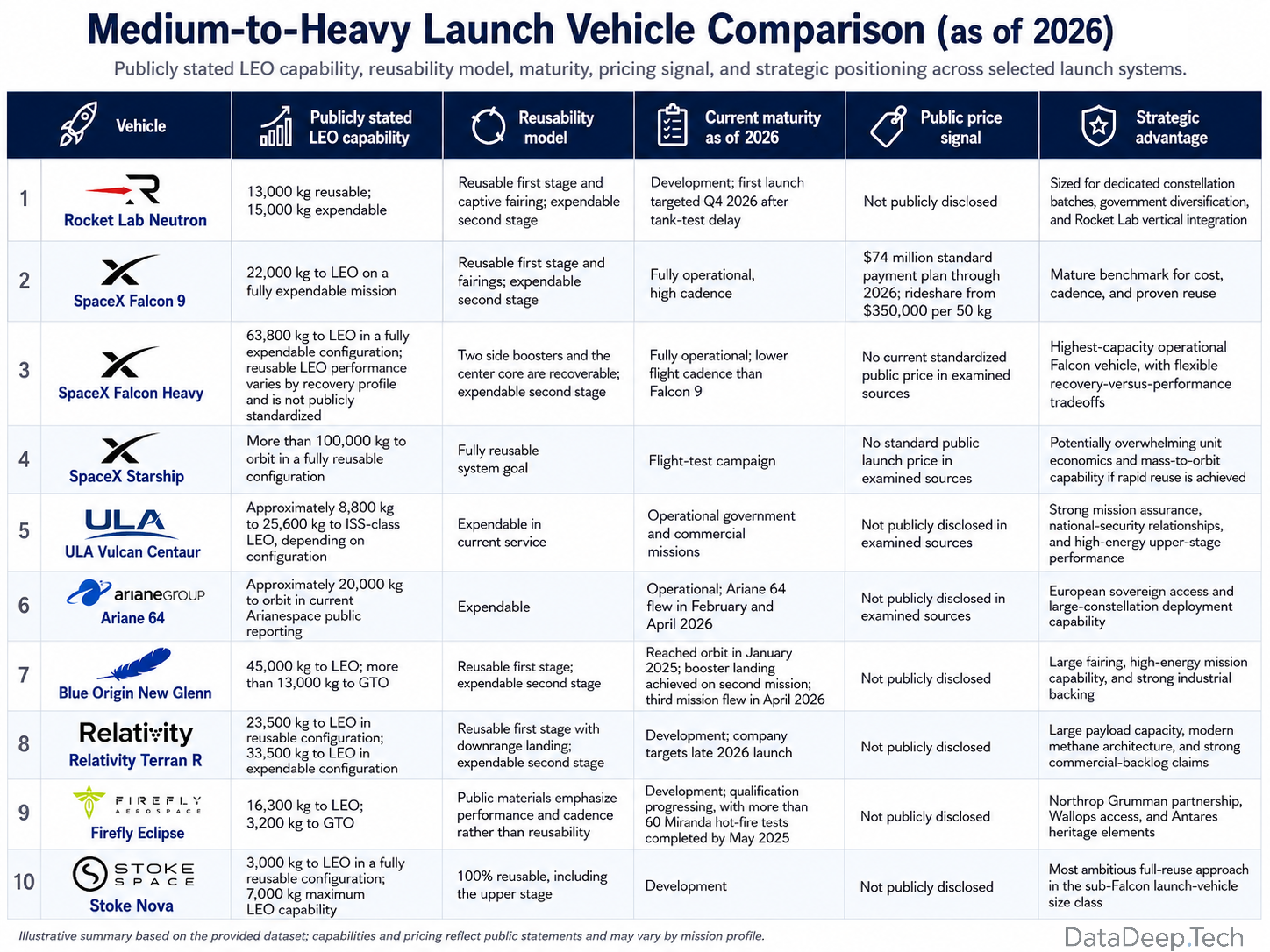
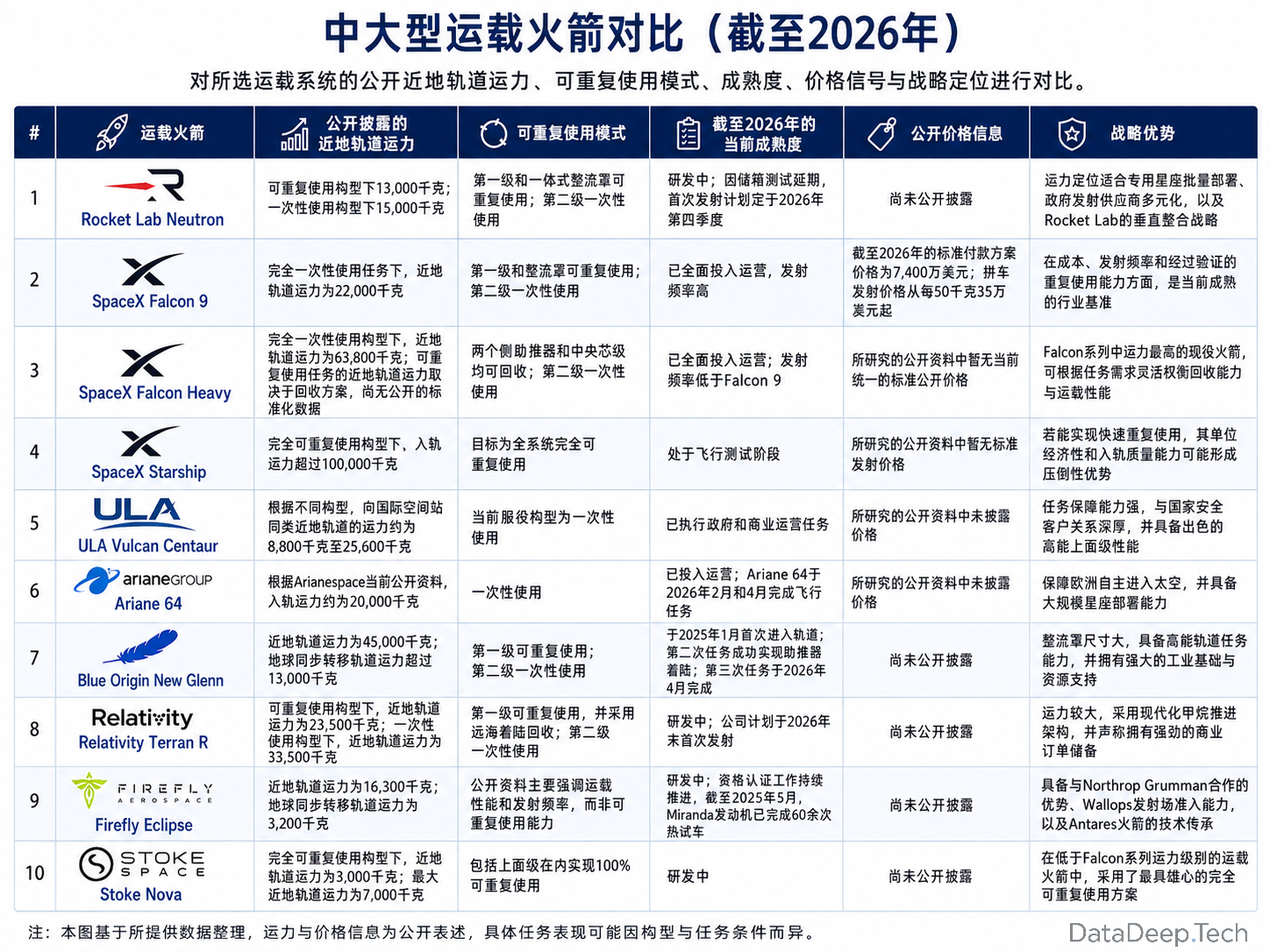
The table below consolidates provider-stated payloads, reusability approaches, maturity, and public pricing signals drawn from current provider materials, mission updates, and official user guides. Where pricing is not public, that opacity is itself strategically relevant because it limits direct cost comparison and suggests procurement may be negotiated mission-by-mission rather than standardized. [25]
|
Vehicle |
Publicly
stated LEO capability |
Reusability
model |
Current
maturity as of May 2026 |
Public
price signal |
Strategic
advantage |
|
Rocket
Lab Neutron |
13,000 kg
reusable; 15,000 kg expendable |
Reusable
first stage and captive fairing; expendable second stage |
Development;
first launch targeted Q4 2026 after tank-test delay |
Not
publicly disclosed |
Sized for
dedicated constellation batches, government diversification, and Rocket Lab
vertical integration |
|
SpaceX
Falcon 9 |
22,000 kg
to LEO on fully expendable mission |
Reused
first stage and fairings |
Fully
operational, high cadence |
$74M
standard payment plan through 2026; rideshare from $350k/50 kg |
Mature
benchmark for cost, cadence, and proven reuse |
|
SpaceX
Starship |
More than
100 t to orbit in fully reusable configuration |
Fully
reusable system goal |
Flight-test
campaign |
No standard
public launch price in examined sources |
Potentially
overwhelming unit economics and mass-to-orbit if rapid reuse is achieved |
|
ULA
Vulcan Centaur |
Roughly 8.8
t to 25.6 t to ISS-class LEO, depending on configuration |
Expendable
in current service |
Operational
government/commercial missions |
Not
publicly disclosed in examined sources |
Strong
mission assurance, national-security relationships, high-energy upper-stage
performance |
|
Ariane
64 |
Around 20 t
to orbit in current Arianespace public reporting |
Expendable |
Operational;
Ariane 64 flew in Feb. and Apr. 2026 |
Not
publicly disclosed in examined sources |
European
sovereign access and large-constellation deployment capability |
|
Blue
Origin New Glenn |
45 t to
LEO; >13 t to GTO |
Reusable
first stage |
Reached
orbit in Jan. 2025; booster landing on second mission; third mission flew
Apr. 2026 |
Not
publicly disclosed |
Large
fairing, high-energy missions, strong industrial backing |
|
Relativity
Terran R |
23.5 t
reusable LEO; 33.5 t expendable LEO |
Reusable
first stage with downrange landing |
Development;
company targets late 2026 launch |
Not
publicly disclosed |
Large
payload with modern methane architecture and strong commercial backlog claims |
|
Firefly
Eclipse |
16.3 t to
LEO; 3.2 t to GTO |
Public
materials emphasize performance/cadence rather than reuse |
Development;
qualification progressing, 60+ Miranda hot fires by May 2025 |
Not
publicly disclosed |
Northrop
partnership, Wallops access, Antares heritage elements |
|
Stoke
Nova |
3.0 t to
LEO fully reusable; 7.0 t max LEO |
100%
reusable including upper stage |
Development |
Not
publicly disclosed |
Most
ambitious full-reuse approach in sub-Falcon size class |
On balance, Neutron sits in a strategically interesting but crowded middle. It is much smaller than New Glenn and Starship, less mature than Falcon 9 and Vulcan, and larger than Nova. Its closest conceptual peers are arguably Terran R and Eclipse, but Neutron stands out from those programs through Rocket Lab’s existing launch cadence, spacecraft business, NASA/DoD relationships, and already-open U.S. launch infrastructure. [26]

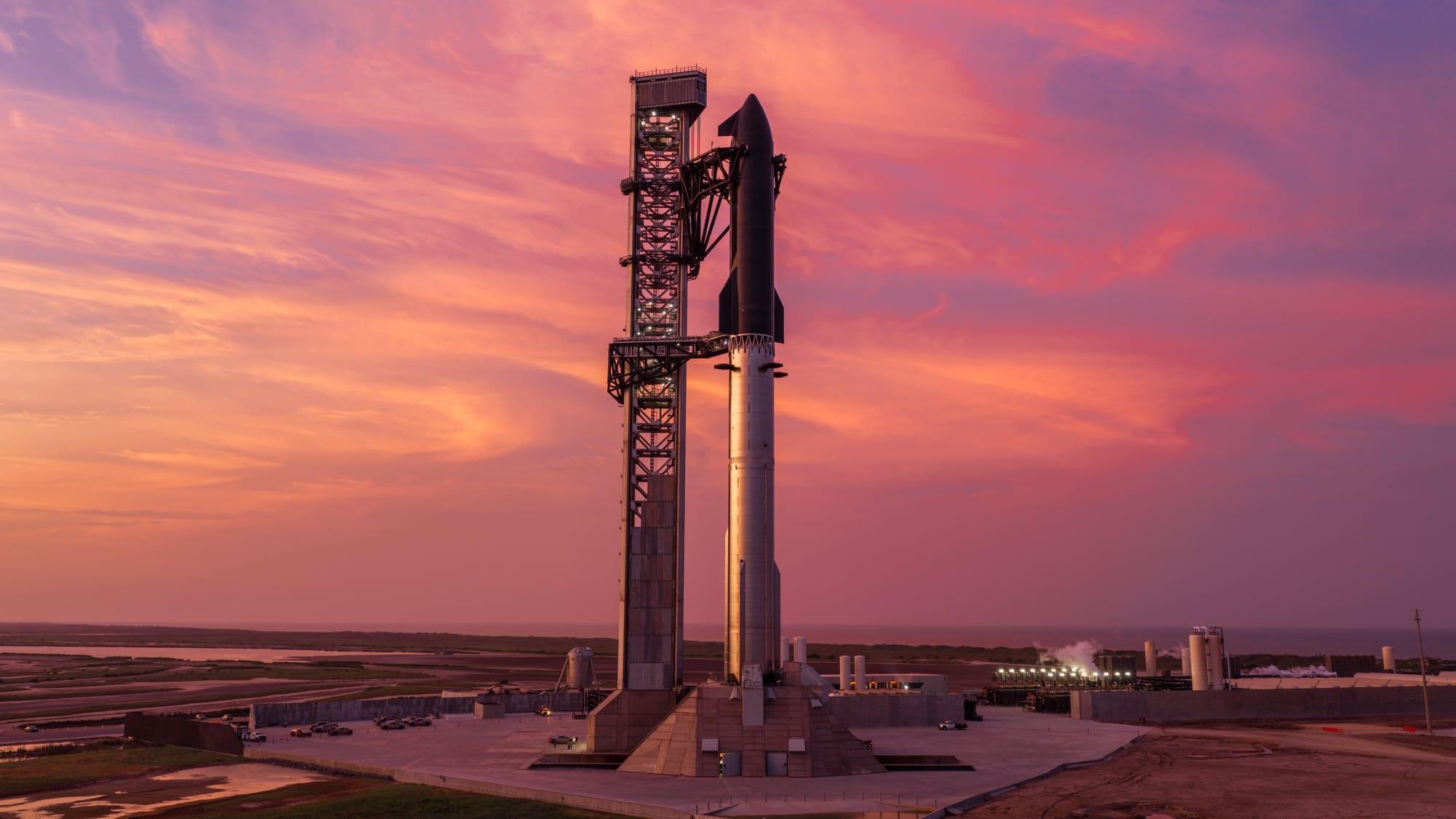
Starship Photo by Spacex - CC BY 2.0
Industrial capacity, financial implications, and risks
Rocket Lab enters Neutron development with more industrial substance than a typical launch startup. Its 2025 10-K describes a broadly vertically integrated production base across Long Beach for engines and avionics, Auckland for composite structures, batteries, and vehicle integration, Stennis for Archimedes testing, Middle River for advanced composite products, Wallops for launch operations, and Albuquerque and Tucson for spacecraft power and optical payloads. The company also states that it uses additive manufacturing, machining, and assembly in-house, and has achieved NASA Launch Services Program Category-1 certification. These capabilities do not eliminate scale-up risk, but they do reduce dependence on an underdeveloped supplier ecosystem. [27]
The primary industrial challenge is production transformation. Rocket Lab has demonstrated recurring small-launch manufacturing, yet Neutron requires a step-change into large composite primary structures, reusable methane engines, heavier-stage integration, and new refurbishment loops. The January 2026 tank failure is a concrete example of how scaling exposes weak points: the defect originated in a third-party manual process introduced to maintain schedule while automated composite capability was still being commissioned. Rocket Lab’s mitigation (moving subsequent tank production to its AFP machine and altering the affected design) is sensible, but it confirms that Neutron’s industrial maturity is still being built. [19]
Financially, Neutron is both opportunity and capital sink. Rocket Lab reported record 2025 revenue of $602 million, backlog of $1.85 billion at year-end 2025, and backlog of $2.2 billion by first-quarter 2026, alongside access to more than $2 billion in liquidity following capital raising. At the same time, 2025 cash flows show $156 million in purchases of property, equipment, and software, and Rocket Lab’s investor materials tied ongoing capital spending to Neutron infrastructure investments. The near-term implication is that Rocket Lab currently has the balance-sheet flexibility to continue funding Neutron, but the program still competes for capital with acquisitions and the company’s rapidly growing space-systems operations. [28]
From a business-model standpoint, Neutron could improve Rocket Lab’s launch mix and strategic relevance, but it does not need to become the company’s sole economic engine to matter. As space systems already generates the majority of revenue, Neutron can create value by improving integrated win rates, securing larger government contracts, increasing wallet share per customer, and enabling Rocket Lab to offer design-build-launch-operate packages. That said, backlog quality still matters. Rocket Lab disclosed that its top five customers accounted for about 49% of 2025 revenue and that its top five backlog customers represented about 77% of backlog, leaving the company exposed to concentration, government-funding changes, and customer cancellations. Neutron magnifies both upside and downside under that structure. [29]
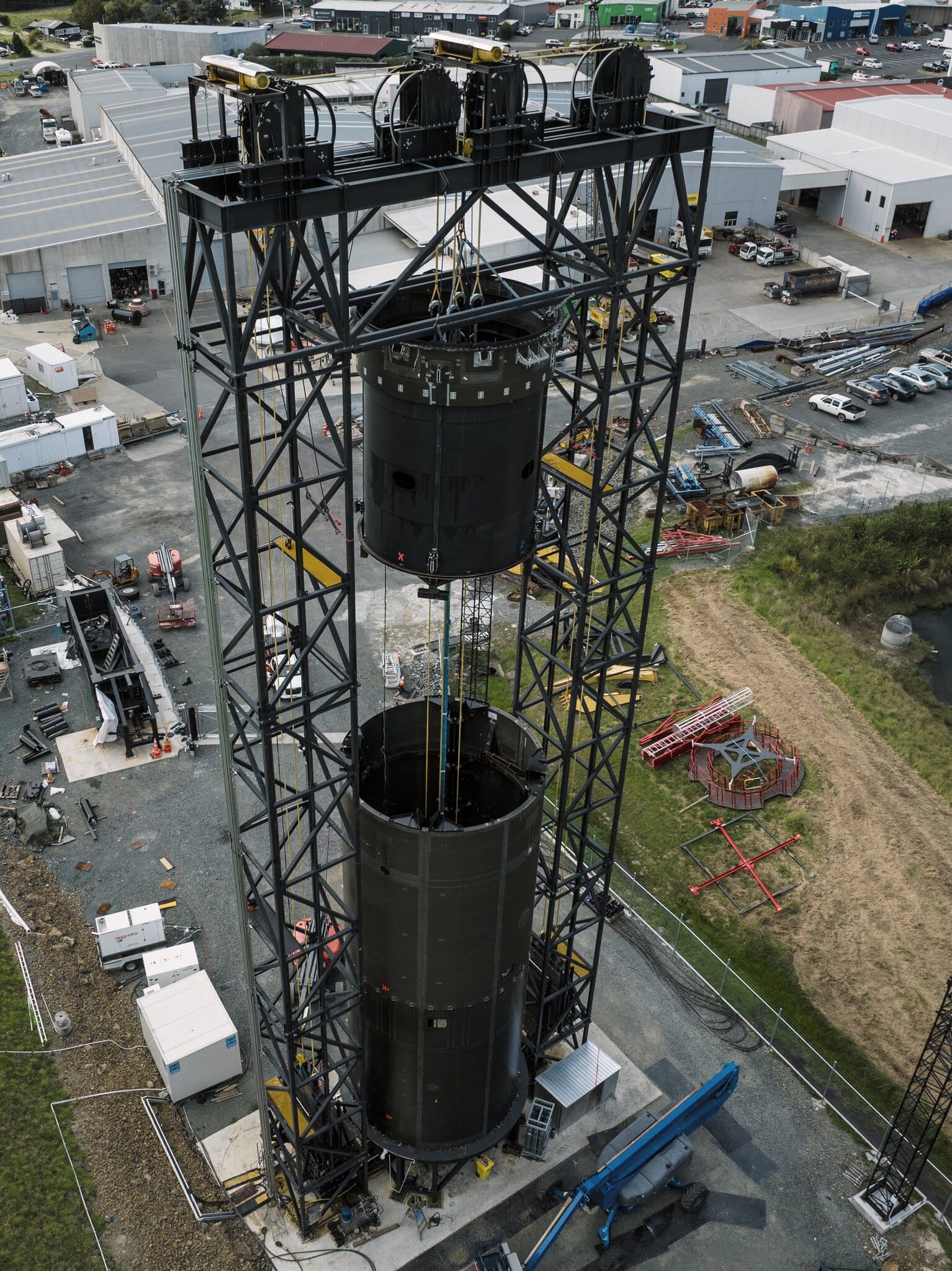
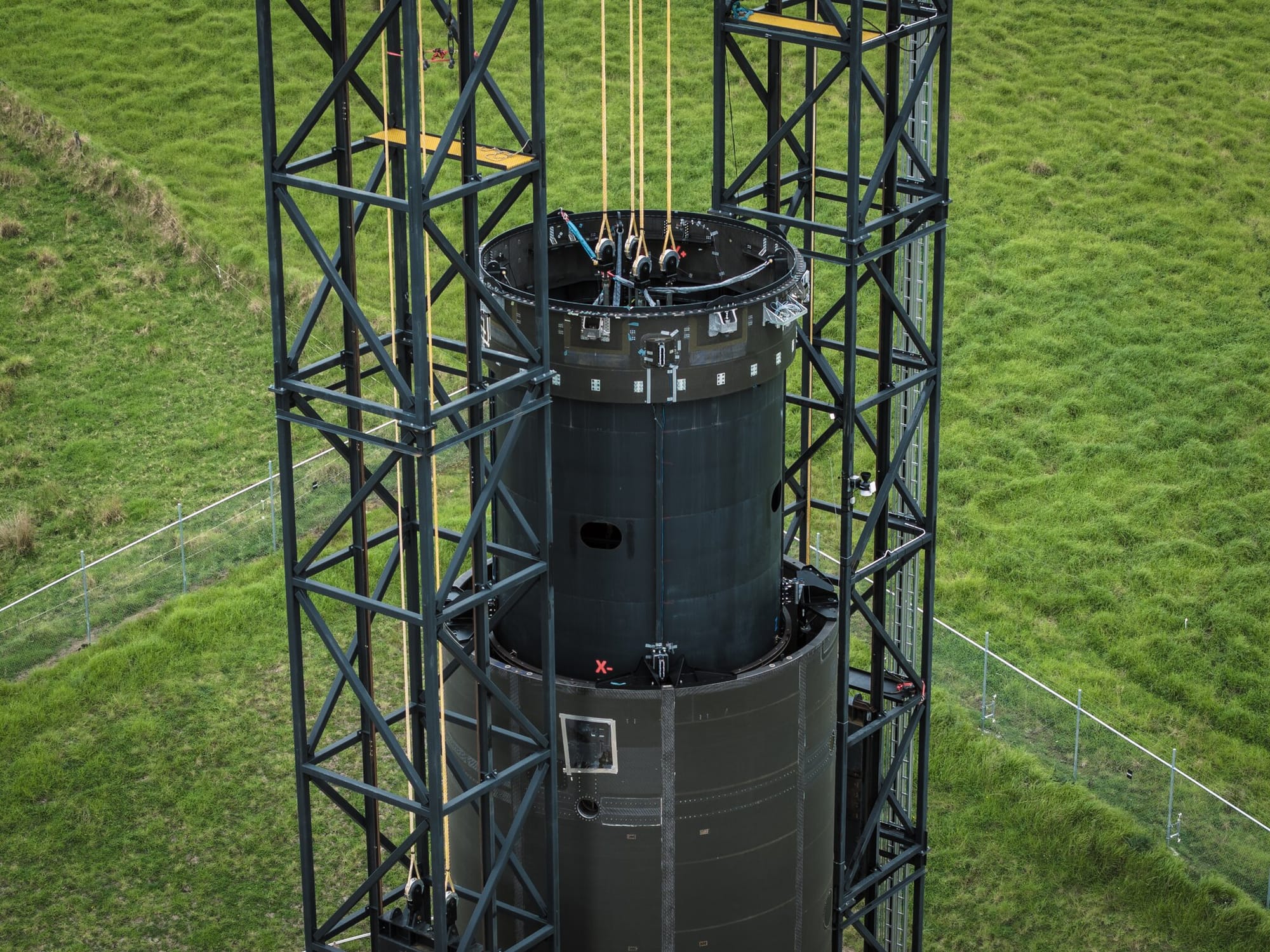
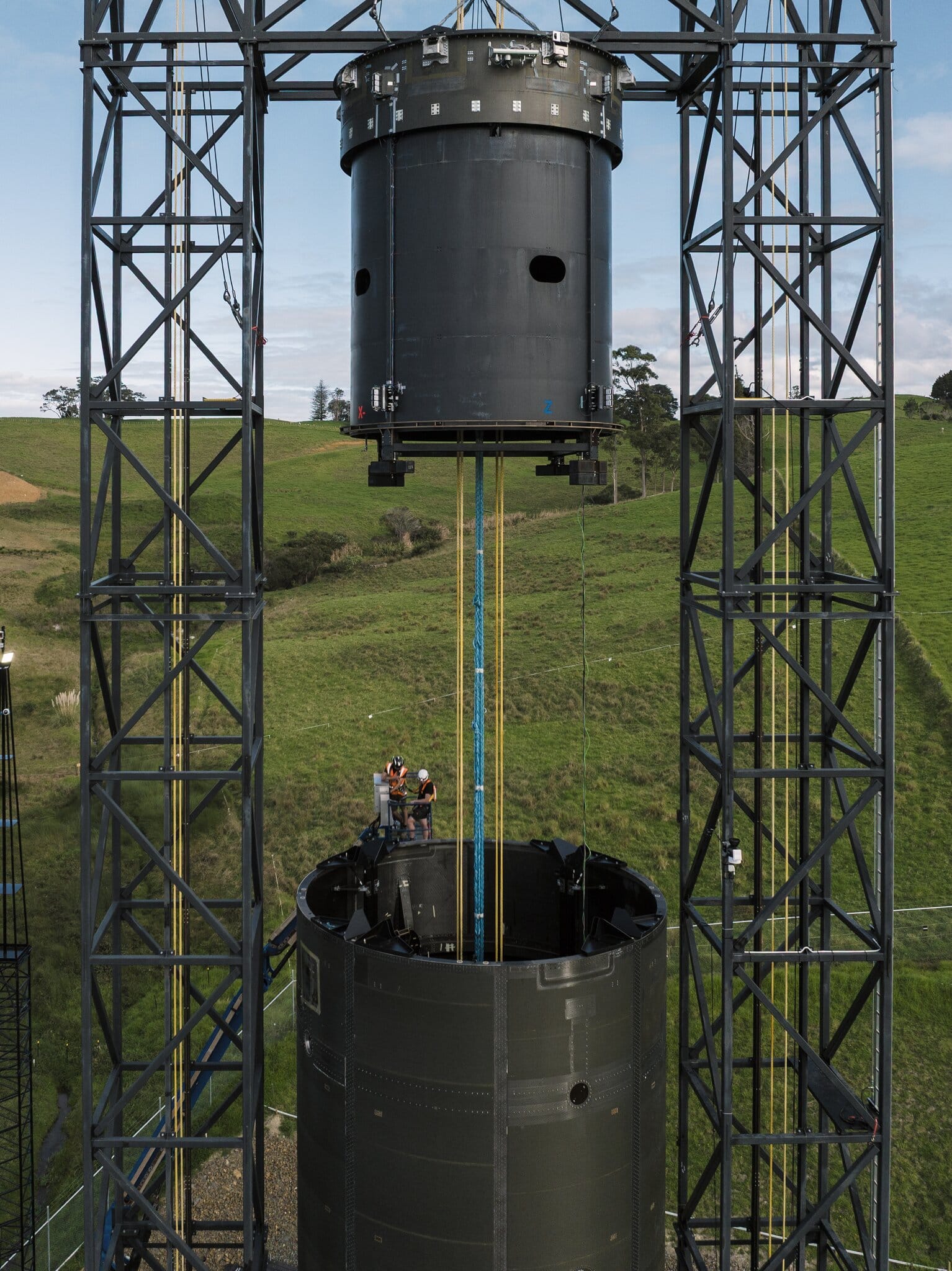
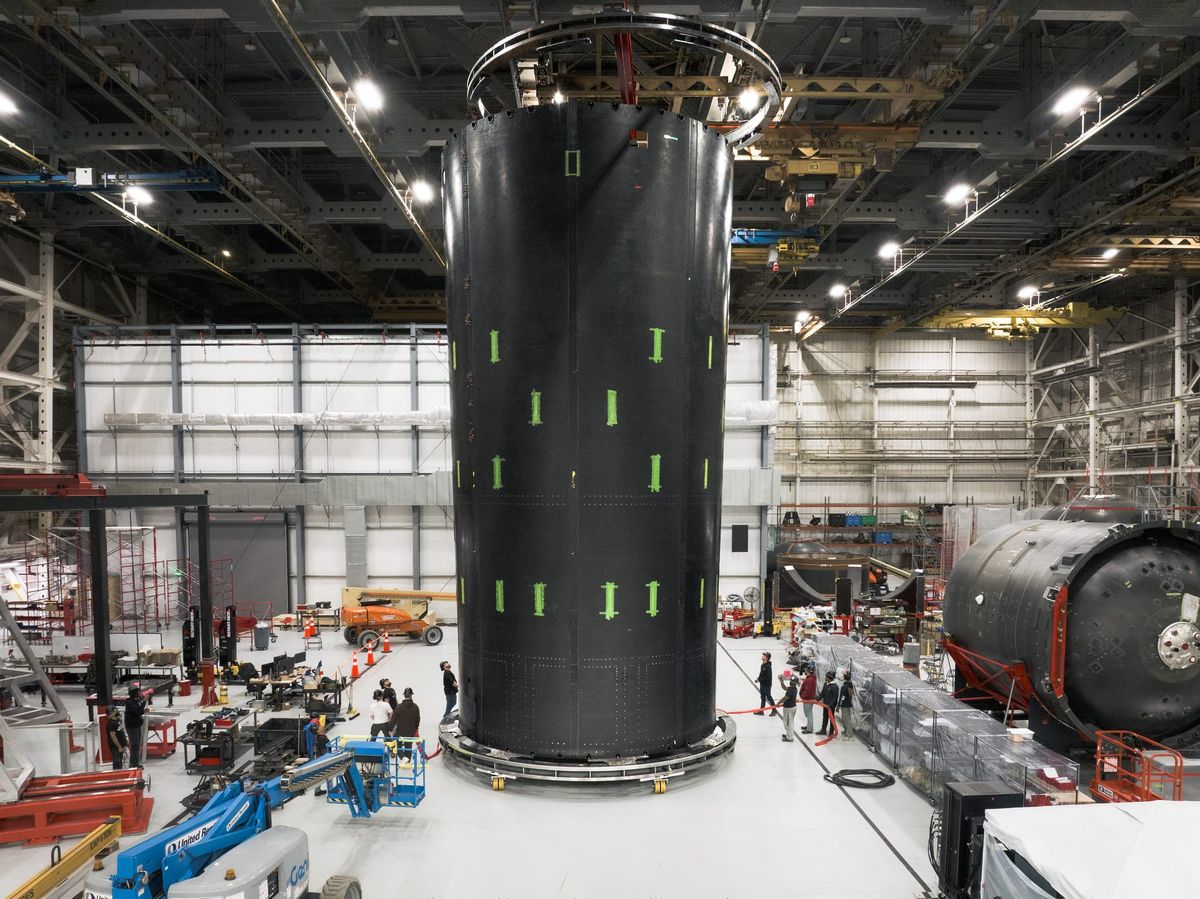
Neutron Under Construction - Photos by Rocket Lab - All Rights Reserved
Structured risk matrix
|
Risk area |
Likelihood |
Impact |
Indicators to
monitor |
Mitigation
pathways |
|
Archimedes
durability or qualification slippage |
Medium |
High |
Full-duration
tests, acceptance-test cadence, engine-out tolerance evidence, reuse
inspections |
Expand ground-test
envelope, preserve stage/engine commonality, limit early mission complexity |
|
Composite
primary-structure manufacturing variability |
Medium-High |
High |
AFP tank
qualification, repeatability across successive tanks, scrap/rework rates |
Keep production
in-house, reduce third-party manual processes, design for manufacturability |
|
Schedule delay
beyond Q4 2026 |
Medium |
High |
Shift in
first-launch language, incomplete integrated pad tests, prolonged regulatory
reviews |
Preserve liquidity,
prioritize flight-one scope discipline, avoid mission creep |
|
Launch-cadence
shortfall after entry to service |
Medium |
High |
LC-3
mission-license expansion, refurbishment time, launch-manifest conversion to
flown missions |
Early cadence
targets should remain conservative; invest in ground ops before aggressive
commercial pricing |
|
Cost position
not competitive with Falcon 9 |
High |
High |
Public pricing
behavior, contract mix, margin pressure in launch segment |
Compete on mission
tailoring, bundled services, government diversification, not only price |
|
Insufficient
commercial demand outside government |
Medium |
Medium-High |
Constellation
contract wins, named anchor customers, repeat bookings |
Exploit Rocket Lab
spacecraft/constellation stack, bundle mission services, target replenishment
needs |
|
Supply-chain
bottlenecks and long-lead parts |
Medium |
Medium |
Sole-source issues,
engine materials delays, avionics or valve production constraints |
Continue vertical
integration and buffer-stock policy on long-lead items |
|
Regulatory/site
constraints |
Medium |
Medium |
FAA cadence
authorization beyond two launches/year, environmental/licensing milestones |
Phase growth, align
launch-rate ambitions with site approvals, maintain alternate recovery
options |
The most significant risk combination is technical-plus-operational. Rocket Lab can probably reach first flight if current milestones continue, but competitive economics require a second, harder achievement: repeated reuse with modest refurbishment burden and credible cadence. That is where many reusable launch concepts underperform their initial strategic promise. [30]
Scenarios, conclusion, and sources
Scenario analysis
|
Scenario |
Description |
Implications for Rocket
Lab |
Implications for
customers and investors |
Implications for
industry |
|
Base case |
Neutron reaches service
in late 2026 or thereafter, but ramps gradually through the late 2020s |
Rocket Lab adds a
credible medium-lift product, though profitability depends on gradual cadence
and bundled services |
Government customers
gain a diversification option; investors see strategic progress but limited
near-term launch-margin inflection |
Medium-lift market
becomes somewhat more resilient, but SpaceX remains dominant |
|
Bull case |
Archimedes matures
quickly, launch cadence expands, and Neutron wins recurring government plus
constellation business |
Neutron becomes a
strategic inflection point, pulling through spacecraft, mission-ops, and
national-security work |
Customers gain a
credible second U.S. reusable medium-lift provider; investors re-rate Rocket
Lab closer to a diversified prime rather than a niche launcher |
U.S. launch resilience
improves materially, especially below super-heavy class |
|
Bear case |
Further delays,
refurbishment friction, or demand softness prevent scale; SpaceX
price/cadence pressure intensifies |
Neutron remains
strategically emergent but financially dilutive; Rocket Lab leans harder
on space systems and acquisitions |
Customers continue to
concentrate on Falcon 9 or larger incumbents; investors question capital
returns on launch development |
Consolidation around a
few dominant launch providers accelerates |
The base case is the most plausible. Rocket Lab has enough industrial depth, customer traction, and infrastructure progress to make Neutron more credible than many medium-lift startups, but not enough public evidence yet to assume rapid commercialization. The bull case is possible if Neutron’s captive-fairing and moderate-stress engine philosophy truly reduces recurring operations cost. The bear case becomes more likely if the program suffers another major qualification surprise or if LC-3 cadence expansion trails vehicle readiness. [31]
Key indicators to monitor
|
High-signal
indicator |
Why it matters |
|
Archimedes
qualification milestones and acceptance-test throughput |
Best near-term
proxy for both technical maturity and production readiness |
|
Integrated
stage tests at LC-3 |
Confirms that
launch-site readiness is converging with vehicle readiness |
|
Public
confirmation of flight-one customer and mission profile |
Reveals the
confidence Rocket Lab and its customers place in the initial risk envelope |
|
LC-3 cadence
authorization above current two missions/year |
Essential for
long-run reusable economics |
|
Recovery
demonstrations and refurbishment timelines |
Determines
whether Neutron is merely reusable in principle or competitively reusable in
practice |
|
Named Neutron
government awards under NSSL, NASA, or other defense programs |
Validates
strategic relevance beyond promotional positioning |
|
Launch-segment
margin trends after Neutron entry |
The clearest
financial test of whether the vehicle improves economics rather than only
revenue |
|
Mix of
bundled contracts involving Rocket Lab spacecraft plus Neutron launch |
Indicates
whether Neutron is strengthening the broader end-to-end thesis |
Conclusion
The evidence supports a balanced conclusion. Neutron is more than an incremental extension of Electron, because it changes Rocket Lab’s addressable market, policy relevance, and integration potential. At the same time, it is not yet a demonstrated market reset. Its core architecture is logical, its propulsion program is well past the concept stage, its launch site is largely established, and the company has already secured real governmental positioning through NASA VADR and NSSL Lane 1. Those are meaningful advantages. [32]
The decisive question is whether Rocket Lab can convert design coherence into operations. If Neutron flies in late 2026, achieves acceptable booster-turnaround economics, and wins a recurring mix of government and constellation missions, it could become a strategic inflection point for Rocket Lab and a valuable diversification asset for the U.S. launch market. If it flies but remains low-rate or labor-intensive, it may still be useful (especially as an integrated internal launcher) but with less transformative financial effect. The safest analytical judgment today is that Neutron has crossed the threshold from aspirational concept to credible strategic program, but it has not yet crossed the harder threshold from credible program to durable launch franchise. [33]
Open questions and limitations
Several important items remain non-public or only partially public: Rocket Lab has not disclosed standard Neutron pricing; there is no public recurring-cost or refurbishment-time model; engine life targets by number of flights have not been published; the path to LC-3 cadence above two licensed missions per year is not yet fully visible; and publicly named Neutron customers remain limited relative to total bookings. Those unknowns constrain any attempt to forecast Neutron’s long-term margins with high precision. [34]

 John D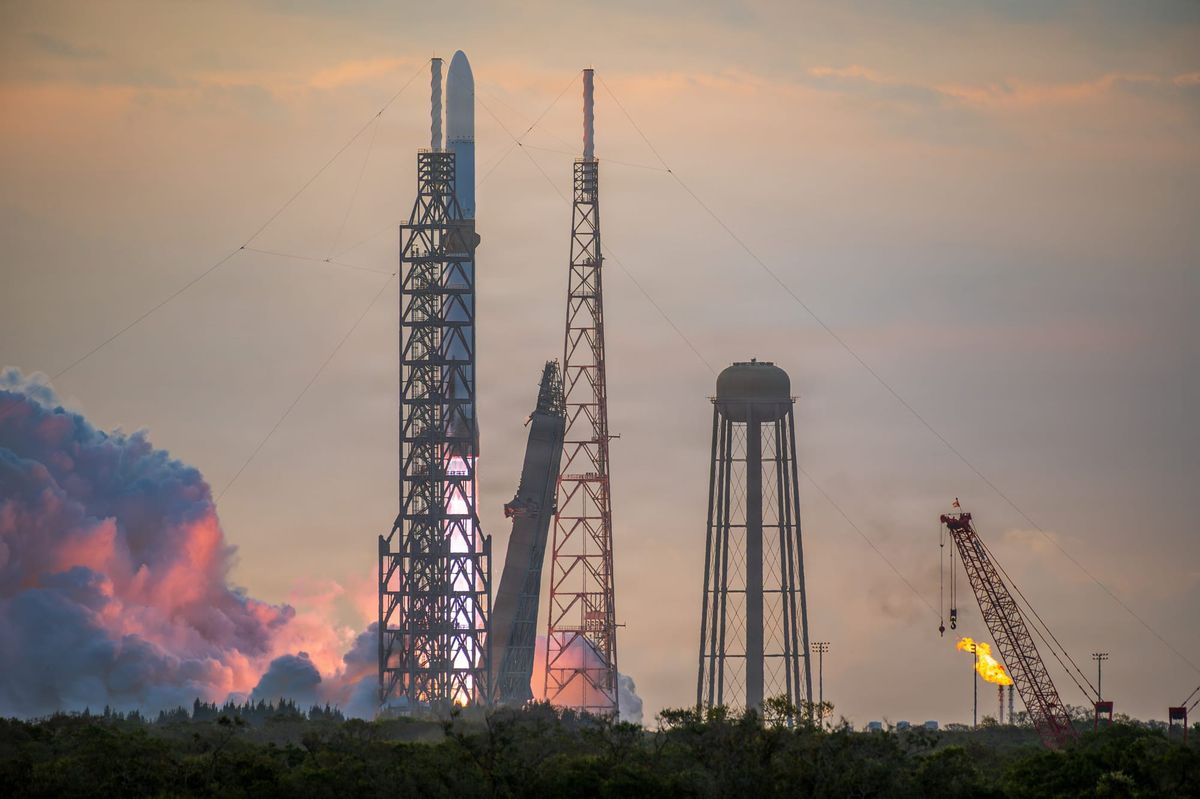
 John D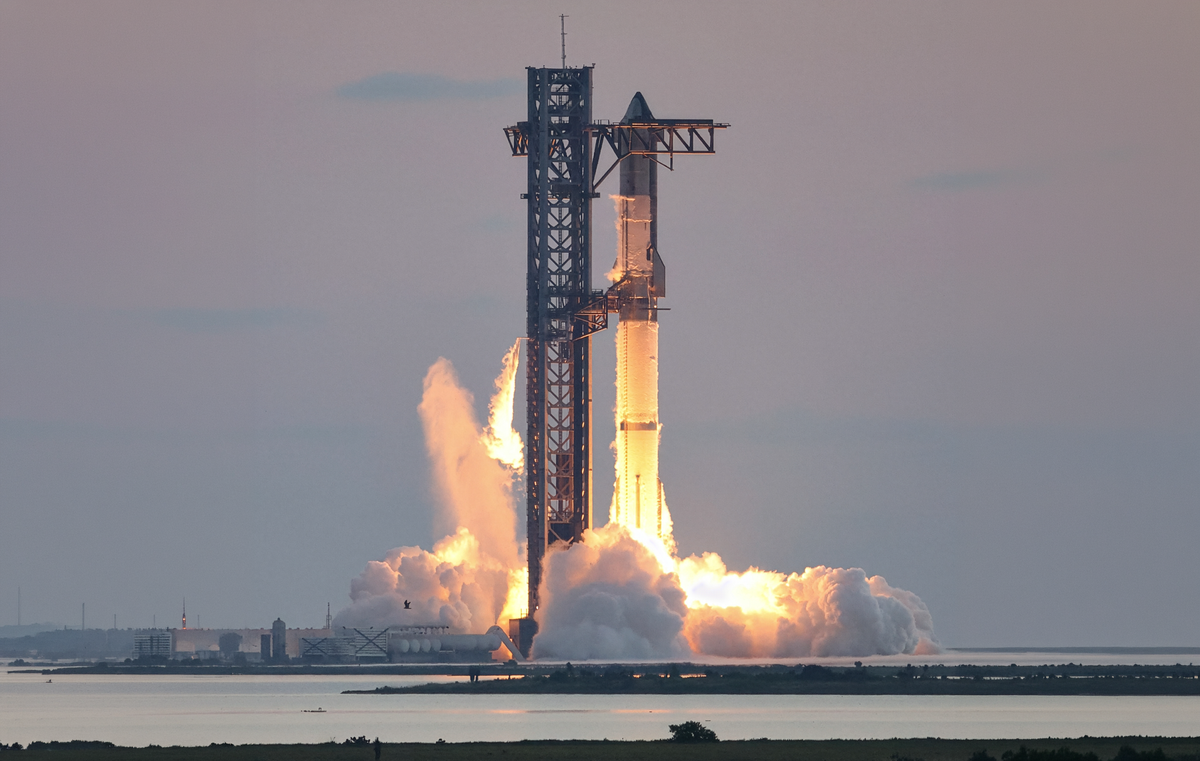
 John D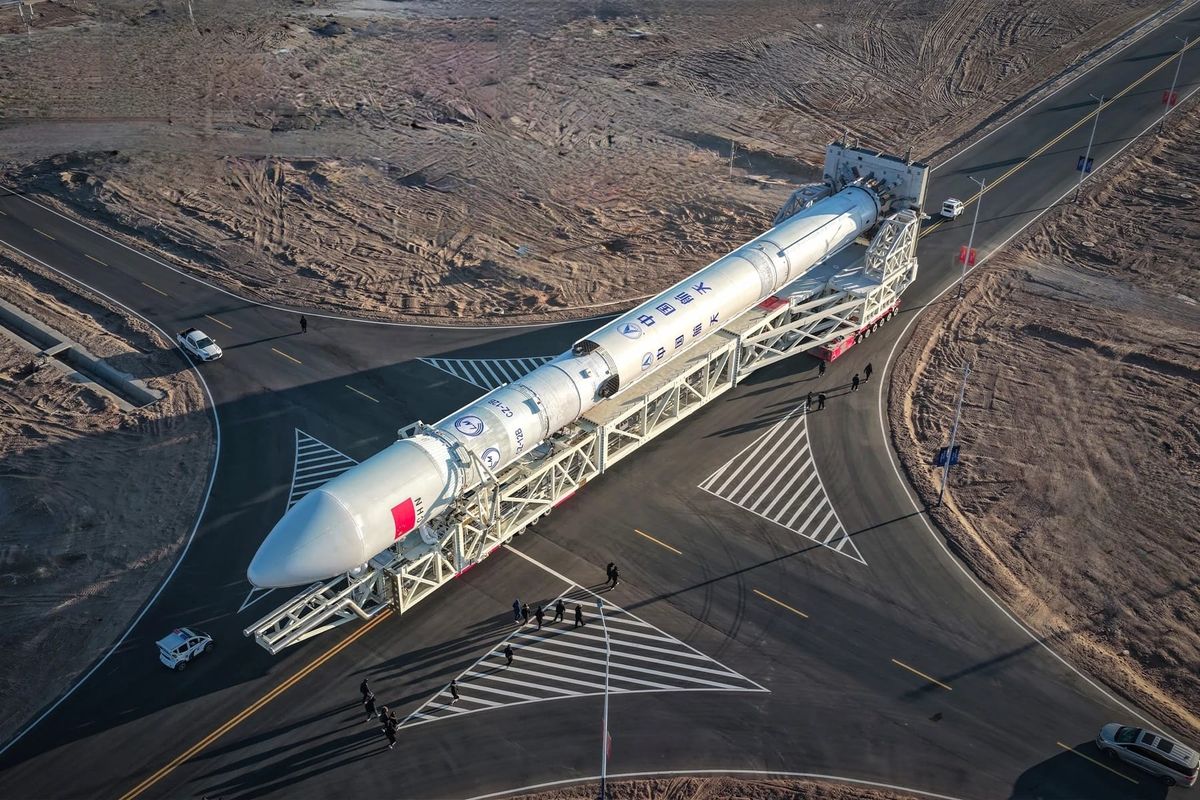
 John D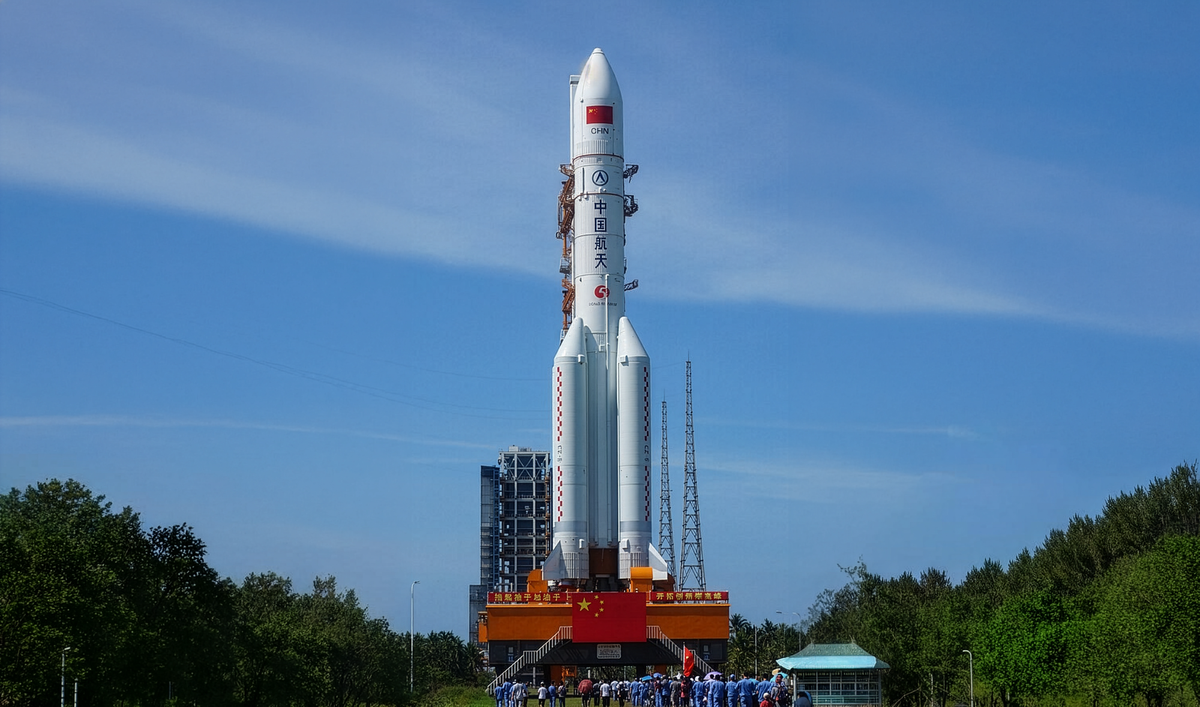
Sources
· Rocket Lab, Neutron Payload User Guide, current public technical baseline for vehicle dimensions, payload class, fairing architecture, staging, reusability, and TLI performance. [8]
· Rocket Lab, Neutron program page, facilities, launch-site concept, and test/manufacturing footprint. [35]
· Rocket Lab, Q4 2025 Financial Update and Q1 2026 Financial Results, current development status, schedule update, backlog, and sold Neutron missions. [36]
· Rocket Lab, 2025 Form 10-K, strategic rationale, revenue mix, facilities, customer concentration, and LC-3 licensing context. [37]
· Rocket Lab, Archimedes engine releases, engine cycle, thrust class, restarts, and production strategy. [38]
· U.S. Space Force Space Systems Command, NSSL Phase 3 Lane 1 on-ramp announcement for Rocket Lab Neutron. [39]
· NASA, VADR inclusion for Neutron and orbital transfer vehicle studies featuring Neutron upper-stage concepts. [40]
· FAA, Aerospace Forecast Fiscal Years 2025–2045, launch/reentry growth outlook. [41]
· BryceTech, Smallsats by the Numbers 2025, market trend evidence on smallsat mass growth and migration to medium/heavy launch. [42]
· SpaceX, Falcon 9 official page, Falcon User’s Guide, Capabilities & Services, and Smallsat Rideshare pricing. [21]
· ULA, Vulcan Launch Systems User’s Guide, configuration-dependent payload performance. [43]
· Arianespace, Ariane 64 launch releases, current operational maturity and publicly described LEO payload. [44]
· Blue Origin, New Glenn product page and mission pages NG-1 through NG-3, current capability and maturity. [45]
· Relativity Space, Terran R official page, performance, architecture, and target service entry. [46]
· Firefly Aerospace, Eclipse vehicle page and development update, performance and qualification status. [47]
· Stoke Space, Nova official page and related company releases, fully reusable market position and capability claims. [48]
[1] [3] [8] [9] [10] [12] [15] [25] Rocket Lab USA, Inc. (2025, January). Neutron payload user’s guide (Version 1.0). https://rocketlabcorp.com/assets/Uploads/Rocket-Lab-Neutron-PUG-reduced-final.pdf
[2] [4] [6] [23] [26] [27] [29] [34] [37] Rocket Lab Corporation. (2026, February 26). Annual report on Form 10-K for the fiscal year ended December 31, 2025. U.S. Securities and Exchange Commission. https://www.sec.gov/Archives/edgar/data/1819994/000181999426000013/rklb-20251231.htm
[5] [28] Rocket Lab Corporation. (2026, February 26). Rocket Lab announces fourth quarter and full year 2025 financial results, posts record quarterly revenue of $180M, record annual revenue of $602M, delivering annual growth of 38% and growing backlog 73% year-on-year to $1.85B [Press release]. https://investors.rocketlabcorp.com/news-releases/news-release-details/rocket-lab-announces-fourth-quarter-and-full-year-2025-financial
[7] [20] [32] [40] Rocket Lab USA, Inc. (2025, January 9). Rocket Lab selected by NASA to provide Neutron launch services under VADR launch contract [Press release]. https://rocketlabcorp.com/updates/rocket-lab-selected-by-nasa-to-provide-neutron-launch-services-under-vadr-launch-contract/
[11] [14] [38] Rocket Lab USA, Inc. (2024, May 6). Rocket Lab completes Archimedes engine build, begins engine test campaign [Press release]. https://rocketlabcorp.com/updates/rocket-lab-completes-archimedes-engine-build-begins-engine-test-campaign/
[13] [16] Rocket Lab USA, Inc. (2021, December 2). Rocket Lab reveals Neutron launch vehicle’s advanced architecture [Press release]. https://rocketlabcorp.com/updates/rocket-lab-reveals-neutron-launch-vehicles-advanced-architecture/
[17] [19] [30] [31] [33] [36] Rocket Lab Corporation. (2026, February 26). Q4 2025 investor update [Investor presentation]. https://investors.rocketlabcorp.com/static-files/be9441ad-c07f-49c2-ad50-531fd77180ee
[18] Rocket Lab Corporation. (2025, August 28). Rocket Lab opens Launch Complex 3, a critical milestone on the path to Neutron’s first launch [Press release]. https://investors.rocketlabcorp.com/news-releases/news-release-details/rocket-lab-opens-launch-complex-3-critical-milestone-path
[21] SpaceX. (n.d.). Falcon 9. Retrieved August 1, 2026, from https://www.spacex.com/vehicles/falcon-9
[22] BryceTech. (2025, March). Smallsats by the numbers 2025 [Report]. https://brycetech.com/reports/report-documents/smallsats-2025/BryceTech_Smallsats-by-the-Numbers-2025.pdf
[24] Rocket Lab Corporation. (2026, May 7). Rocket Lab announces first quarter 2026 financial results: Surpasses all guidance metrics including revenue, margin, and adjusted EBITDA; posts record $200M quarterly revenue and over $2.2B backlog; guides another record revenue [Press release]. https://investors.rocketlabcorp.com/news-releases/news-release-details/rocket-lab-announces-first-quarter-2026-financial-results
[35] Rocket Lab. (n.d.). Neutron. Retrieved August 1, 2026, from https://rocketlabcorp.com/launch/neutron/
[39] SSC Public Affairs. (2025, March 27). Space Systems Command on-ramps two new providers to National Security Space Launch Phase 3 Lane 1 contract. Space Systems Command. https://www.ssc.spaceforce.mil/Newsroom/Article-Display/Article/4137680/space-systems-command-on-ramps-two-new-providers-to-national-security-space-lau
[41] Federal Aviation Administration. (2025). FAA aerospace forecast fiscal years 2025–2045: Commercial space. https://www.faa.gov/data_research/aviation/aerospace_forecasts/2025-commercial-space.pdf
[42] BryceTech. (2025). Smallsats by the numbers 2025. https://brycetech.com/reports/report-documents/smallsats-2025/
[43] United Launch Alliance. (2023, October). Vulcan launch systems user’s guide. https://www.ulalaunch.com/docs/default-source/rockets/2023_vulcan_user_guide.pdf
[44] Arianespace. (2026, February 12). Arianespace successfully launches 32 Amazon Leo satellites with the first Ariane 64 [Press release]. https://newsroom.arianespace.com/arianespace-successfully-launches-32-amazon-leo-satellites-with-the-first-ariane-64/
[45] Blue Origin. (n.d.). New Glenn. Retrieved August 1, 2026, from https://www.blueorigin.com/new-glenn
[46] Relativity Space. (n.d.). Terran R. Retrieved August 1, 2026, from https://www.relativityspace.com/terran-r
[47] Firefly Aerospace. (n.d.). Eclipse launch vehicle. Retrieved August 1, 2026, from https://fireflyspace.com/eclipse/
[48] Stoke Space. (n.d.). Nova: Engineered for full and rapid reuse. Retrieved August 1, 2026, from https://www.stokespace.com/nova/