SanDisk's NAND Flash Bet: The Storage Pure-Play Riding the AI Memory Shortage
SanDisk, the flash pure-play spun off from Western Digital, rides the AI NAND shortage on a $42B backlog. Cyclicality is the risk.

1. Executive Summary
1.1 Principal findings
SanDisk Corporation (Nasdaq: SNDK) is a pure-play NAND flash memory and solid-state storage company, not a manufacturer of mechanical hard disk drives (HDDs). It became an independent public company on February 21, 2025, when Western Digital Corporation (Nasdaq: WDC) spun off its flash business; SanDisk shares began regular-way trading on Nasdaq under the symbol SNDK on February 24, 2025 [1][2]. The "hard drives" framing in the brief is therefore a misnomer that must be corrected at the outset: SanDisk's product portfolio comprises solid state drives (SSDs), embedded products, removable memory cards, USB flash drives, and wafers and components, serving Cloud (datacenter), Client (edge), and Consumer end markets [3]. The mechanical HDD franchise remained with Western Digital [1].
1.2 The corporate-lineage clarification
The original SanDisk was founded in 1988 and acquired by Western Digital in 2016. Western Digital's flash business operated under that corporate roof until the 2025 separation, which recreated SanDisk as a standalone entity. At separation, Western Digital distributed approximately 80.1% of SanDisk's shares to its stockholders (one-third of one SanDisk share per Western Digital share; record date February 12, 2025) and retained a roughly 19.9% economic interest [1][2]. David Goeckeler, formerly Western Digital's CEO, leads SanDisk [4].
1.3 Central market thesis
SanDisk entered independence in a cyclical trough and, within four quarters, rode one of the sharpest NAND upcycles on record. Fiscal 2025 (ended June 27, 2025) revenue was approximately $7.36 billion with a GAAP net loss of about $1.64 billion, weighted by a goodwill impairment [5]. By fiscal Q3 2026 (quarter ended April 3, 2026), revenue had reached $5.95 billion in a single quarter, up 97% sequentially and 251% year over year, with non-GAAP gross margin of 78.4% [6]. The proximate cause is an AI-driven shortage in which enterprise SSDs displace other NAND applications and contract prices rose sharply: TrendForce, a proprietary market-research provider, estimated that "NAND Flash contract prices are expected to rise by 70–75% QoQ in 2Q26," the first time in the current cycle that NAND's quarter-over-quarter increase outpaced DRAM, with new fab capacity "unlikely to come online in volume before late 2027 or 2028" [7]. SanDisk has additionally signed five multi-year "New Business Model" (NBM) supply agreements; CEO David Goeckeler stated on the April 30, 2026 earnings call that the three contracts signed during fiscal Q3 provide minimum contractual revenue of approximately $42 billion, with the five aggregate agreements backed by over $11 billion in financial guarantees (including $400 million of prepayments already on third-party balance sheets) and covering over a third of SanDisk's bit production in fiscal 2027 [6][8].
1.4 Most material risks
The durability of the upcycle is genuinely contested. The bull case rests on structural AI demand, supplier capacity discipline, and SanDisk's contracted backlog. The bear case is that NAND remains a commodity with a long history of brutal reversals, that 78% gross margins represent a cycle peak rather than a new normal, and that customer concentration in a handful of hyperscalers exposes the backlog to renegotiation risk [8]. SanDisk's standalone financial history is extremely short (roughly five reported quarters), which constrains trend analysis. Geographic concentration of fabrication in Japan (the Kioxia joint venture) and broader East Asian NAND concentration create supply-chain exposure.
 Wiltone Asuncion
1.5 Headline recommendations
For investors, SanDisk is a high-beta proxy for the NAND cycle whose contracted backlog partially de-risks the next two years but does not eliminate cyclicality; position accordingly and monitor NAND contract pricing, the bit-supply mix under NBMs, and capacity discipline among the big five suppliers. For defense, aerospace, and industrial supply-chain analysts, SanDisk's commercial flash is generally not the qualified part for radiation-hardened space and mission assurance use; those needs are served by specialist suppliers, with Micron being the named merchant supplier of space-qualified NAND. For battery-technology and energy-systems readers, relevance is real but narrow, concentrated in the energy-per-bit and edge-device power efficiency dimensions discussed in Section 4.4.
SanDisk Corporation: A Pure-Play NAND and Solid-State Storage Franchise in the AI Memory Supercycle
2. Background and Context
2.1 Corporate history and lineage
The original SanDisk was founded in 1988 (initially as SunDisk) by Eli Harari, Sanjay Mehrotra, and Jack Yuan, and was renamed SanDisk in 1995, the year it went public on Nasdaq. The company was a foundational innovator in flash storage, producing early flash-based solid-state drives and pioneering removable flash card formats.
Western Digital acquired SanDisk in a transaction announced in October 2015 at an initial equity value of roughly $19 billion and completed on May 12, 2016; the final accounting purchase price was approximately $15.6 billion after the deal structure changed (the headline value declined when a planned minority investment by China's Unisplendour was withdrawn). The acquisition transformed Western Digital, historically an HDD maker, into a major NAND supplier by giving it SanDisk's stake in the Toshiba/Kioxia joint manufacturing venture in Japan.
For roughly nine years, the SanDisk brand and flash operations sat inside Western Digital. In 2025, Western Digital executed a long-planned separation of its flash and HDD businesses into two independent public companies, concluding that distinct strategic focus, capital allocation, and innovation roadmaps would be better served by separation [1]. On February 21, 2025, Western Digital completed the spin-off via a pro rata distribution of 80.1% of SanDisk's shares; each Western Digital stockholder received one-third of a SanDisk share per Western Digital share held as of the February 12, 2025 record date [1][2]. SanDisk began trading under SNDK on February 24, 2025; Western Digital retained a roughly 19.9% interest and ceased consolidating SanDisk's results [2]. A web of separation agreements (separation and distribution, transition services, tax matters, employee matters, an intellectual-property cross-license, a transitional trademark license, and a stockholder/registration-rights agreement) governs the ongoing relationship [1]. Prior to the spin, SanDisk paid a dividend of approximately $1.5 billion to Western Digital, and Western Digital reduced its revolving credit commitments [2].
2.2 Product and terminology clarification
SanDisk does not make mechanical HDDs. The word "drives" in SanDisk's portfolio denotes flash and NAND-based devices: client and enterprise SSDs (NVMe and SATA), embedded storage (such as eMMC and UFS for mobile and automotive), removable memory cards (SD and microSD), USB flash drives, and raw NAND wafers and components sold to other manufacturers [3]. The distinction matters technically and economically. HDDs store data on rotating magnetic platters and retain the lowest cost per terabyte for bulk "cold" and "nearline" capacity; SSDs store data in 3D NAND flash cells, offering far higher throughput, lower latency, lower idle power, and higher density per rack, at a higher cost per terabyte. The HDD business, including energy-assisted magnetic recording technologies such as HAMR, belongs to Western Digital (and to competitors Seagate and Toshiba), not SanDisk [9].
2.3 The storage industry landscape and SanDisk's position
SanDisk sits as one of a small number of vertically integrated NAND and SSD suppliers. The NAND industry is a capital-intensive oligopoly: a handful of producers (Samsung, SK Hynix including its Solidigm unit, Micron, Kioxia, and SanDisk) control the overwhelming majority of global output [10]. According to TrendForce, "in Q3 2025, Samsung led with a 32.3% NAND market share, followed by SK hynix at 19.3%. Kioxia held 15.3%, surpassing Micron, while SanDisk captured 12.4%" [11]. These figures are proprietary secondary estimates and vary by source and quarter. SanDisk's strategic position is distinctive in two respects: it is the only one of the five whose entire business is flash (Samsung, SK Hynix, and Micron also produce DRAM; Kioxia is also NAND-centric), and it shares fabrication with Kioxia through the long-running Flash Ventures joint venture rather than owning standalone fabs at scale.
 TrendForce
3. Key Players and Stakeholders
3.1 SanDisk and Western Digital post-separation
SanDisk (flash) and Western Digital (HDD) are now independent, separately listed companies with distinct management teams. Western Digital's CEO is Irving Tan; SanDisk's is David Goeckeler [2][4]. The two remain connected through the intellectual-property cross-license and Western Digital's residual minority stake at separation [1][2]. The competitive relationship is nuanced: in nearline datacenter storage, high-capacity QLC SSDs (a SanDisk product class) increasingly compete with Western Digital's high-capacity HDDs, even as both companies benefit from the same AI-driven storage demand wave [9].
3.2 NAND/SSD competitors
The competitive set comprises Samsung Electronics (KRX: 005930), SK Hynix (KRX: 000660) and its Solidigm subsidiary, Micron Technology (Nasdaq: MU), and Kioxia Holdings (Tokyo: 285A) [10][11]. Controller and module suppliers such as Phison Electronics (TPEx: 8299) and Silicon Motion supply the controller IP and firmware that differentiate finished SSDs [11]. Samsung leads on scale and DRAM/NAND integration; SK Hynix/Solidigm holds the high-capacity QLC enterprise lead; Micron is the only US-headquartered integrated memory maker and the named supplier of space-qualified NAND; Kioxia is SanDisk's manufacturing partner and simultaneously its branded-product competitor.
| Company | Ticker | NAND revenue share (TrendForce, Q3 2025) | DRAM business | Notes |
|---|---|---|---|---|
| Samsung Electronics | KRX: 005930 | 32.3% | Yes | Scale and layer-count leader (400+ layer V-NAND discussed) |
| SK Hynix (incl. Solidigm) | KRX: 000660 | 19.3% | Yes | Shipped 321-layer product; high-capacity QLC enterprise lead |
| Kioxia Holdings | Tokyo: 285A | 15.3% | No | SanDisk's JV partner; IPO December 2024 |
| SanDisk | Nasdaq: SNDK | 12.4% | No | Pure-play flash; shares fabs with Kioxia |
| Micron Technology | Nasdaq: MU | Behind SanDisk | Yes | Only US integrated memory maker; space-qualified NAND |
3.3 The SanDisk-Kioxia joint manufacturing relationship
SanDisk and Kioxia operate Flash Ventures, a joint venture spanning fabs at Yokkaichi and Kitakami in Japan, a partnership exceeding 25 years [12][13]. The two co-develop BiCS 3D NAND and share the enormous capital cost of leading-edge fabs, achieving economies of scale that allow them to compete with larger Korean rivals [11]. In late September 2025 the partners began operation of Fab2 at the Kitakami plant to produce BiCS8 218-layer 3D NAND [13]. In January 2026 they extended the Yokkaichi joint-venture agreement by five years to December 31, 2034 (aligning the Kitakami agreement to the same date), with SanDisk paying Kioxia approximately $1.2 billion for manufacturing services and continued supply access in installments between 2026 and 2029 [12][14]. SanDisk holds a 49.9% interest in the Flash Ventures entities (Flash Partners, Flash Alliance, and Flash Forward) and procures substantially all of its wafers through them; its balance-sheet line "notes receivable and investments in Flash Ventures" stood at roughly $684 million as of April 3, 2026, and net payments to the JV for the first nine months of fiscal 2026 were about $2.7 billion [36]. The relationship is both SanDisk's greatest manufacturing asset and a concentration risk, since essentially all of SanDisk's leading-edge wafer supply originates in two Japanese fab complexes.
3.4 Demand-side stakeholders
SanDisk's demand base spans hyperscale cloud operators (the primary driver of the current enterprise-SSD surge), OEMs in PCs and smartphones, automotive and industrial integrators, the consumer retail channel, and, peripherally, defense and aerospace primes. In fiscal Q3 2026, SanDisk reported "Datacenter up 233%" sequentially as the company shifted mix toward higher-value customers; it reported engagement with five major hyperscale customers and multiple hyperscalers in qualification [6][15]. The consumer and edge segments (memory cards, USB drives, client SSDs, mobile embedded storage) remain large but are being deprioritized by suppliers in favor of enterprise allocation during the shortage [7].
3.5 Upstream equipment and materials suppliers
NAND fabrication depends on a concentrated equipment base: ASML (lithography), Applied Materials (Nasdaq: AMAT), Lam Research (Nasdaq: LRCX) (etch and deposition, critical for high-aspect-ratio 3D NAND), and Tokyo Electron (TSE: 8035). Capacity additions and technology transitions in NAND are gated by the availability and lead times of this equipment, and US export controls on this equipment to China are a central feature of the regulatory landscape (Section 6).
4. Technical and Operational Considerations
4.1 3D NAND architecture and scaling
NAND has shifted almost entirely from planar (2D) to vertical (3D) stacking; 3D NAND commanded the large majority of the market by 2025 [16]. SanDisk and Kioxia's current generation, BiCS8, has 218 layers and is used to produce a 2 terabit QLC die described as the highest-capacity NAND die in production [17]. Cell types trade density against endurance and performance: SLC (one bit/cell, highest endurance), MLC (two), TLC (three, the performance mainstream), QLC (four, capacity-centric), and the prospective PLC (five). SanDisk uses TLC for performance drives and QLC for capacity drives [17]. The roadmap includes BiCS9 (a hybrid using the CBA, or CMOS-directly-Bonded-to-Array, technique to pair a modern logic/IO layer with proven cell stacks for a faster Toggle DDR 6.0 interface) and BiCS10 at 332 layers [18][19]. A distinctive scaling vector is CBA wafer bonding, which fabricates the memory array and the control circuits on separate wafers optimized independently, then bonds them; SanDisk frames future scaling around multiple vectors rather than layer count alone [20].
4.2 Enterprise and data-center SSDs
SanDisk's enterprise portfolio centers on PCIe/NVMe SSDs in capacities reaching very high points: the DC SN670 datacenter drive uses UltraQLC technology and PCIe 5.0, available in approximately 122.88 TB and 61.44 TB configurations [21]. Form factors increasingly follow the EDSFF family standardized by SNIA: E1.S (a compact "gum-stick" successor to M.2 for dense 1U deployment) and E3.S (a 2.5-inch-class form factor supporting up to x16 PCIe lanes and up to 70W power) [22][23]. EDSFF is purpose-built for SSDs, improving thermal dissipation, power delivery, and rack density relative to legacy U.2 and M.2 drives [22]. A newer E2 form factor, published by SNIA in June 2025, targets the "warm" data tier between high-capacity HDDs and high-performance SSDs, supporting up to roughly 1 PB per drive [23].
 tongpao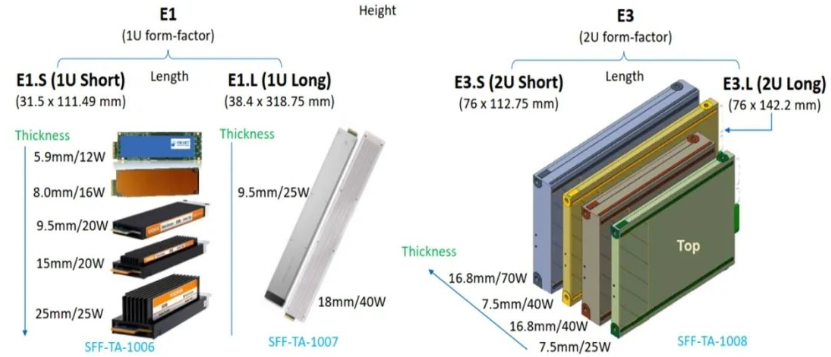
4.3 Reliability, endurance, and radiation tolerance
NAND endurance is finite and cell-type dependent: write/erase cycles range from tens of thousands for SLC down to low thousands for TLC/QLC. SSD controllers manage wear leveling, over-provisioning, and error-correction code (ECC) to extend useful life. For aerospace and defense, the relevant constraints are radiation effects: single-event effects (SEE) and total ionizing dose (TID), which corrupt stored data and degrade cells [24]. This is the area where SanDisk's commercial portfolio is least directly relevant. Space-qualified and radiation-tolerant NAND is supplied by specialists and a small number of merchant memory makers. In July 2025, Micron, the only US-based memory manufacturer to do so, launched the industry's highest-density radiation-tolerant single-level cell (SLC) NAND product at a die capacity of 256 gigabits, screened to NASA's PEM-INST-001 Level 2 flow (including 590 hours of dynamic burn-in) and validated to MIL-STD-883 and JEDEC JESD57; the part is built in Manassas, Virginia and has been deployed in NASA's EMIT mission [25][26]. Specialist integrators such as 3D PLUS and Mercury Systems build radiation-tolerant SSDs and NAND stacks using SLC NAND with sophisticated ECC [24]. Many lower-radiation missions (LEO, some Mars trajectories) can use screened commercial NAND with data scrubbing, but the qualified parts are generally large-geometry SLC, not SanDisk's leading-edge high-layer QLC/TLC [24]. The practical implication: defense and aerospace integrators relying on SanDisk commercial flash must perform their own screening and qualification, or source from radiation-assured specialists.
4.4 Power and energy considerations (battery-technology relevance)
At the single-drive level, SSDs and HDDs consume broadly comparable energy per bit (on the order of about 1 nanojoule per bit on average in commercial drives), and most HDD energy is dissipated in spinning the platters and moving the head [27]. SSDs offer dramatically lower idle power because they have no moving parts, but their active power during heavy read/write can be high; one peer-reviewed study found SSD RAID idle power lower but delta (active minus idle) energy materially higher than HDD RAID under certain workloads [28]. The dimension most relevant to energy systems is system-level efficiency: in dense AI datacenters, high-capacity QLC SSDs deliver better terabytes-per-watt and far higher rack density than nearline HDDs, reducing rack count, cooling load, and the number of supporting components per unit of capacity; vendor and third-party analyses claim all-flash can shrink rack count and power draw substantially for equivalent capacity and throughput, though these comparisons are workload- and density-dependent and at least one analysis found HDDs retaining a power-density advantage in some scenarios [9][29]. For battery-powered and edge devices (smartphones, IoT, automotive, portable instruments), flash energy efficiency directly affects battery life, and SanDisk markets BiCS8's improved energy efficiency on this basis [4]. SanDisk's High Bandwidth Flash (HBF) initiative (Section 5) is explicitly framed around power-constrained AI inference, positioning flash as a lower-power, higher-capacity tier adjacent to HBM [30]. Beyond these touchpoints, SanDisk has no direct involvement in battery chemistry, cells, or energy storage; the relevance is confined to storage energy efficiency.
4.5 Manufacturing and operations
NAND fabrication is among the most capital-intensive activities in manufacturing. SanDisk's model mitigates this by sharing fabs and capital with Kioxia through Flash Ventures, and by funding the JV through yen-denominated loans and wafer purchases rather than fully owning fabs [12]. SanDisk's own purchases of property, plant, and equipment have been modest relative to revenue (net PP&E purchases of roughly $204 million in fiscal 2025 and well under $50 million per quarter in fiscal 2026), and management has emphasized that nodal (technology-node) transitions, rather than greenfield capacity, can deliver bit growth, keeping capex as a percentage of revenue on a declining path [6][34]. Capacity discipline across the industry, with suppliers reallocating wafer capacity toward DRAM and enterprise SSDs and limiting NAND wafer expansion, is the central reason the 2025-2026 shortage has been so acute [7][31]. Yield and the pace of BiCS8 ramp matter: SanDisk reported BiCS8 at 15% of bits shipped in fiscal Q1 2026, expected to reach the majority of bit production exiting fiscal 2026 [15].
5. Economic and Market Dynamics
5.1 The NAND pricing cycle (contested)
NAND is structurally cyclical, and the 2025-2026 environment is an unusually sharp upcycle whose durability is genuinely contested. TrendForce estimated NAND contract prices rose 33% to 38% in 1Q26 (later revised upward to 55% to 60%), then 70% to 75% in 2Q26, the largest increases in roughly a decade, with the supply-demand gap among the widest since 2011 [7][31][32]. The bull case: AI inference deployment is driving structural enterprise-SSD demand, suppliers are exercising capacity discipline, meaningful new capacity is unlikely before late 2027 or 2028, and hyperscalers are locking in multi-year supply [7]. The bear case: NAND is a commodity that has repeatedly punished suppliers; some analysts argue the term "supercycle" is overdone and that high prices will induce their own cure as capacity ramps and buyers balk [33]. Both cases are credible; the report treats the upcycle's durability as an open question and weights the contracted-backlog evidence as a partial, not complete, hedge.
5.2 SanDisk financial profile
SanDisk's standalone financial track record is short, spanning roughly five quarters, which materially limits trend analysis. Fiscal 2025 (ended June 27, 2025) revenue was approximately $7.36 billion with a GAAP net loss of about $1.64 billion (including a $1.83 billion goodwill impairment taken in fiscal Q3 2025) and full-year free cash flow of approximately negative $120 million [5][6][34]. The quarterly trajectory through fiscal 2026 is steep: Q1 (ended October 3, 2025) revenue $2.31 billion; Q2 (ended January 2, 2026) revenue $3.03 billion with non-GAAP gross margin near 51%; Q3 (ended April 3, 2026) revenue $5.95 billion, non-GAAP gross margin 78.4%, GAAP net income $3,615 million ($23.03 diluted net income per share), and non-GAAP diluted EPS $23.41 [6][35][36]. Free cash flow turned strongly positive (Q3 FY26 free cash flow of roughly $2.99 billion), and the company reached a net-cash-positive position ahead of plan, repaying term debt to reach a cash balance of about $3.74 billion by April 3, 2026 [6][36]. Management guided fiscal Q4 2026 revenue to a range of $7.75 billion to $8.25 billion [6]. Capital expenditure has been low relative to revenue, with management framing capex-as-percent-of-revenue as declining; this is forward-looking guidance, not a contractual figure, and management declined to set a firm new numeric target [6].
| Period | Revenue | Non-GAAP gross margin | GAAP net income (loss) |
|---|---|---|---|
| FY2025 (full year) | ~$7.36B | n/a | ~$(1.64)B |
| Q3 FY2025 (Mar 28, 2025) | $1.70B | loss | $(1.93)B (incl. $1.83B impairment) |
| Q4 FY2025 (Jun 27, 2025) | $1.90B | ~31% | $(23)M |
| Q1 FY2026 (Oct 3, 2025) | $2.31B | ~33% | $112M |
| Q2 FY2026 (Jan 2, 2026) | $3.03B | ~51% | $803M |
| Q3 FY2026 (Apr 3, 2026) | $5.95B | 78.4% | $3,615M |
| Q4 FY2026 (guidance) | $7.75B–$8.25B | n/a | n/a |
5.3 Market sizing and share
The NAND flash market was valued at roughly $65 billion in 2024 by one provider, with mid-single-digit long-run CAGR estimates, though the 2025-2026 price surge distorts near-term revenue figures upward [37]. Demand drivers include AI training and inference (the dominant current driver), edge computing, automotive, and the secular HDD-to-SSD transition in datacenters [10][16]. Market-share figures are source-dependent and should be read as proprietary secondary estimates: TrendForce's Q3 2025 revenue-share ranking placed Samsung at 32.3%, SK Hynix 19.3%, Kioxia 15.3%, SanDisk 12.4%, with Micron behind [11]; other providers report the top three (Samsung, SK Hynix, Micron) at over 70% combined using different methodologies and segment definitions [37]. The disagreement reflects differing treatment of captive versus merchant supply, revenue versus bit share, and quarter timing. SanDisk's combined position with Kioxia (the two share fabs but compete in branded products) makes "share" particularly ambiguous depending on whether the JV output is attributed jointly or separately.
5.4 Competitive cost and technology positioning
SanDisk's cost position rests on the Flash Ventures scale and on capex efficiency from CBA bonding and nodal transitions [20]. Its technology positioning is broadly competitive at 218 layers, though it is not the layer-count leader (SK Hynix shipped a 321-layer product and Samsung has discussed 400-plus-layer V-NAND) [16][19]. SanDisk's distinctive bets are UltraQLC for high-capacity enterprise drives and High Bandwidth Flash (HBF), a proposed 16-die-plus-base-die flash stack matching the HBM footprint and targeting AI inference; specifications cited at launch include 256 GB per die (512 GB per 16-high stack) and 1.6 TB/s read bandwidth. SanDisk targets first HBF samples in the second half of 2026 and inference devices in early 2027, and signed a memorandum of understanding with SK Hynix to standardize HBF under the Open Compute Project [30][38]. HBF is a potential differentiator but is early-stage, capital-intensive, and dependent on ecosystem adoption; broad demand is not expected until around 2030 by some accounts [38].
6. Regulatory Landscape
6.1 Export controls and US-China restrictions
US semiconductor export controls administered by the Bureau of Industry and Security (BIS) within the Department of Commerce are central to the NAND supply chain. Since October 7, 2022, BIS has restricted exports of equipment for producing NAND of 128 layers or more to China, alongside controls on advanced logic and DRAM [39][40]. Subsequent rules in December 2024 and January 2025 expanded the Entity List, extended the Foreign Direct Product Rule, and added controls on high-bandwidth memory [40][41]. These controls constrain Chinese NAND producers' access to leading-edge tools and indirectly benefit incumbents like SanDisk by slowing Chinese capacity additions, while also fragmenting the global market and creating compliance complexity for all suppliers [41].
6.2 Industrial policy and subsidies
The US CHIPS and Science Act of 2022 provides direct funding for domestic semiconductor manufacturing; its incentive definitions exclude legacy nodes and define advanced memory partly by NAND layer count (128 layers or more) [42]. Micron received CHIPS Act direct funding (an aggregate of $6.1 billion in grants to its Idaho and New York fab projects as amended in 2025) and announced an approximately $200 billion long-term US investment vision [43]. Japan's industrial policy is directly relevant to SanDisk: Japan's Ministry of Economy, Trade and Industry (METI) provided subsidies to support NAND production in Japan, including up to $644 million in subsidies to Western Digital (now SanDisk's flash franchise) to expand production with its Japanese partner Kioxia [42]. SanDisk's leading-edge fabs sit in Japan, so Japanese rather than US subsidies are most material to its manufacturing footprint.
6.3 Defense and aerospace procurement rules
Components in regulated defense and aerospace systems are subject to the Export Administration Regulations (EAR) and, where defense-specific, the International Traffic in Arms Regulations (ITAR), plus trusted-supply and qualification requirements. Radiation-tolerant memory is qualified against MIL-STD-883, JEDEC JESD57, and NASA standards [25][26]. SanDisk's commercial flash is generally not qualified to these standards; trusted-supply considerations push defense integrators toward US-manufactured or specialist radiation-assured parts (Micron markets itself as a US-based supplier of aerospace and defense memory) [25].

6.4 Competition and antitrust
NAND consolidation has drawn antitrust scrutiny historically; the 2016 Western Digital acquisition of SanDisk required regulatory approvals including from China's MOFCOM. The 2025 separation reversed that integration. Periodic consolidation discussions in the NAND sector (including past reported interest in combinations involving Kioxia) remain subject to multi-jurisdictional review. The current structure, with SanDisk and Kioxia sharing fabs but competing in products, is itself a form of partial integration that has not, to date, triggered adverse antitrust action.
7. Geopolitical and Strategic Dimensions
7.1 Geographic concentration of NAND fabrication
NAND fabrication is concentrated in East Asia: South Korea (Samsung, SK Hynix), Japan (Kioxia/SanDisk), with additional capacity in China and the US. SanDisk's leading-edge supply is concentrated in two Japanese fab complexes (Yokkaichi and Kitakami) [12][13]. This concentration creates exposure to natural disasters (Japan is seismically active), regional geopolitical tension, and single-region policy shifts. Historically, contamination incidents and power outages at the Yokkaichi complex have caused industry-wide supply disruptions, illustrating the systemic risk of concentration.
7.2 US-China decoupling and Chinese NAND
China's YMTC (Yangtze Memory Technologies) is the principal Chinese NAND producer. BIS added YMTC to the Unverified List in October 2022 and to the Entity List in December 2022, restricting its access to US technology and equipment and constraining its ability to advance beyond its 232-layer process [39][44]. This decoupling slows the most plausible source of new low-cost NAND capacity, supporting incumbent pricing power, while also creating a bifurcated market in which Chinese producers serve domestic demand under access constraints [39][44].
 Bryan Poellot and Josephine Aiello LeBeau and Anne E. Seymour
7.3 Supply assurance for defense and aerospace
The tension for defense and aerospace is between commercial flash economics (cheap, dense, abundant, but Japan-concentrated and not radiation-qualified) and mission-assurance requirements (trusted supply, radiation tolerance, long lifecycle support). SanDisk's commercial parts optimize the former. Mission-critical systems require second-source strategies, lifecycle buys, and qualification flows that commercial flash does not provide off the shelf. The named US merchant alternative for space-qualified NAND is Micron, supplemented by specialist integrators [25][24].
7.4 Strategic scenarios
The following scenarios carry explicit uncertainty language and stated assumptions; they are reasoned inferences, not predictions. Base case (most probable on current evidence): the AI-driven shortage persists through 2026 and into 2027, with NAND pricing elevated but decelerating, SanDisk's NBM backlog smoothing revenue, and gross margins normalizing downward from the Q3 FY26 peak as supply eventually catches up. Assumption: AI capital expenditure remains robust and no major demand shock occurs. Upside case (less probable): structural AI inference demand and HBF adoption extend the cycle into the late 2020s with sustained high margins. Assumption: capacity discipline holds and HBF reaches commercial scale. Downside case: an AI capex slowdown or inventory correction triggers a classic NAND reversal, with prices and margins falling sharply; SanDisk's backlog cushions but does not prevent a downturn given customer-concentration and renegotiation risk. The honest position is that the probability mass is spread across these paths and the bear case cannot be dismissed.
8. Strategic Recommendations
8.1 Recommendations for institutional investors and corporate strategists
Treat SanDisk as a high-beta, late-cycle NAND exposure whose multi-year NBM backlog (approximately $42 billion minimum contractual revenue across three contracts, over $11 billion in guarantees across five) partially de-risks fiscal 2026-2027 but does not convert a commodity into an annuity [6][8]. Stage positioning to the cycle: the contracted backlog and net-cash balance sheet justify constructive positioning now, but the 78% gross margin is almost certainly a peak, not a baseline. Key monitoring indicators that should change the thesis: (1) NAND contract-price direction (TrendForce/DRAMeXchange monthly data) turning negative for two consecutive quarters; (2) the share of bits committed under NBMs (management targets over one-third of fiscal 2027 bits, potentially over half) and the customer concentration behind that backlog; (3) industry capacity discipline, especially any large wafer-capacity additions or a shift of capacity back from DRAM to NAND; (4) BiCS8/BiCS9 ramp and yield; and (5) HBF sampling milestones in late 2026. A breakdown in capacity discipline or an AI-capex retrenchment are the clearest signals to reduce exposure.
8.2 Recommendations for defense, aerospace, and industrial supply-chain analysts
Do not assume SanDisk commercial flash is drop-in suitable for radiation or mission-assurance environments; it is generally not qualified to MIL-STD-883, JESD57, or NASA flows [25][26]. For space and high-radiation applications, source radiation-tolerant SLC NAND from qualified merchant suppliers (Micron is the named option) or radiation-assured integrators (3D PLUS, Mercury Systems, and similar), and budget for independent screening of any commercial parts [24][25]. Plan second sources given that SanDisk's leading-edge supply is concentrated in two Japanese fabs [12][13]. For industrial and automotive integrators, the current shortage and supplier prioritization of enterprise allocation mean lead times and prices for embedded flash (eMMC/UFS) are elevated and supply is the lowest-priority category for some suppliers; secure multi-quarter agreements and qualify multiple sources [7]. Treat geographic concentration (Japan), the HDD-to-SSD nearline transition, and export-control shifts as standing risk factors in sourcing models.
8.3 Relevance for battery-technology and energy-systems readers
SanDisk has no involvement in battery chemistry, cells, or grid storage. The touchpoints are (1) storage energy efficiency at the device and system level (terabytes-per-watt, idle versus active power), where flash's low idle power benefits battery-powered and edge devices and where high-capacity QLC SSDs can reduce datacenter power and cooling load relative to HDDs in some workloads [9][27][28]; and (2) HBF's positioning as a power-efficient memory tier for AI inference [30]. Energy-systems readers tracking datacenter power demand should note storage is a minority of datacenter energy (well under a quarter), with most consumption in compute and infrastructure [27].
 John D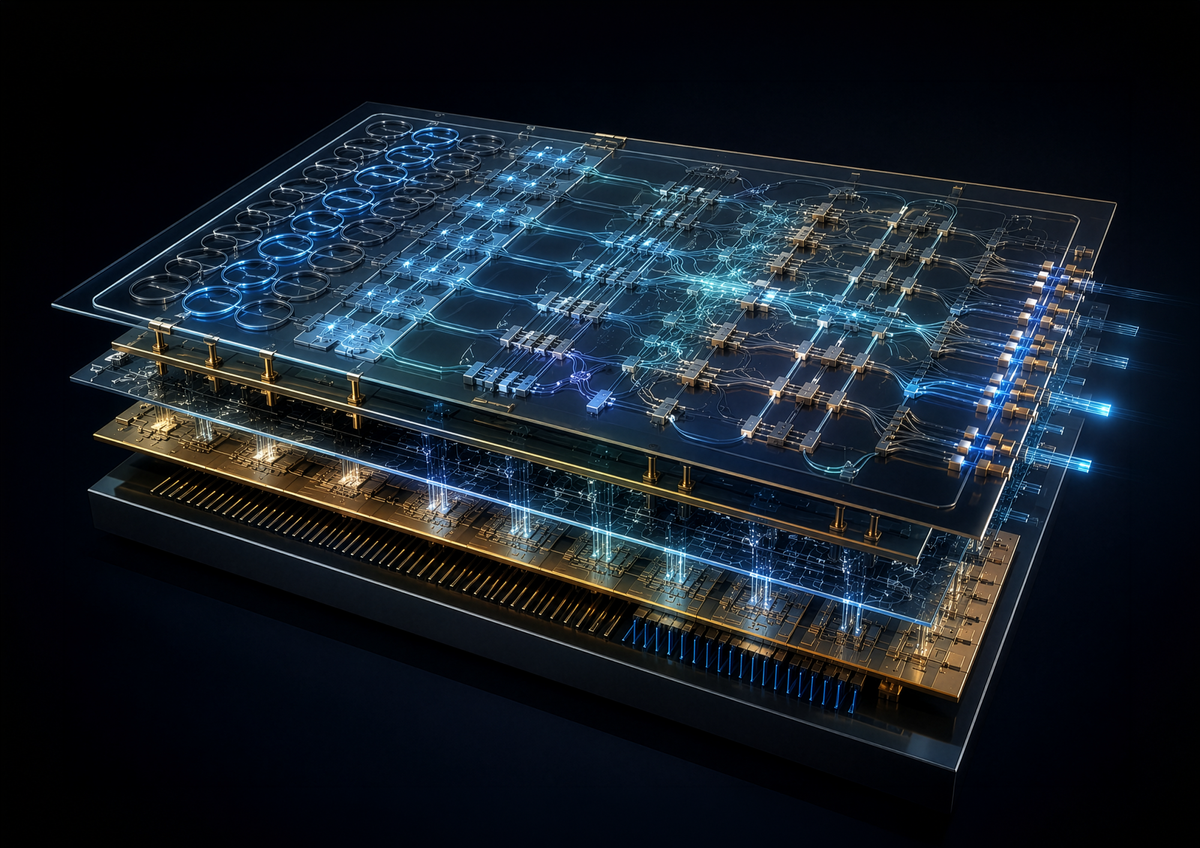
 John D
References
- U.S. Securities and Exchange Commission. 2025. Western Digital Corporation Form 8-K (Separation and Distribution Agreement and Related Agreements). Washington, DC: SEC, February 2025.
- Western Digital Corporation. 2025. "Western Digital Completes Planned Company Separation." Press release (SEC Form 8-K Exhibit 99.1), February 24, 2025.
- SanDisk Corporation. 2025. Annual Report 2025. Milpitas, CA: SanDisk Corporation.
- SanDisk Corporation. 2025. "SanDisk Reports Fiscal Fourth Quarter 2025 Financial Results." Press release, August 14, 2025.
- SanDisk Corporation. 2025. Form DEF 14A (2025 Proxy Statement). Washington, DC: SEC, October 2025.
- SanDisk Corporation. 2026. "Sandisk Reports Fiscal Third Quarter 2026 Financial Results." SEC Form 8-K Exhibit 99.1, April 30, 2026.
- TrendForce. 2026. "AI Server Demand to Drive Memory Contract Price Increases in 2Q26." TrendForce Press Center, March 31, 2026.
- TIKR. 2026. "Sandisk Stock Surged 8% After Q3 2026 Earnings: What a $42 Billion Backlog Means for Investors." TIKR, May 2026.
- IDTechEx. 2025. "QLC vs HDDs: The Battle for High-Capacity Storage." IDTechEx Research Article.
- Global Market Insights. 2025. "NAND Flash Market Size & Share 2025-2034." Global Market Insights.
- TrendForce. 2026. "Second-Tier No More: Kioxia and SanDisk Balance Alliance and Rivalry in AI NAND Race." TrendForce News, January 29, 2026.
- Kioxia Corporation and SanDisk Corporation. 2026. "Kioxia and Sandisk Extend Yokkaichi Joint Venture Agreement Through 2034." Press release, January 29, 2026.
- Kioxia Corporation and SanDisk Corporation. 2025. "Kioxia and Sandisk Announce Beginning of Operation of Fab2 at Kitakami Plant, Japan." Press release, September 29, 2025.
- Evertiq. 2026. "Kioxia and Sandisk extend Yokkaichi joint venture to 2034." Evertiq, February 4, 2026.
- SanDisk Corporation. 2025. "Sandisk Reports Fiscal First Quarter 2026 Financial Results." SEC Form 8-K Exhibit 99.1, November 6, 2025.
- Mordor Intelligence. 2025. "NAND Flash Memory Market Share & Size." Mordor Intelligence.
- Blocks and Files. 2025. "Sandisk investor day outlines roadmap post WD spin-off." Blocks and Files, February 12, 2025.
- Tom's Hardware. 2025. "Kioxia and SanDisk start shipping BiCS9 3D NAND samples." Tom's Hardware.
- Blocks and Files. 2025. "Kioxia, SanDisk tease 332-layer 3D NAND future." Blocks and Files, February 20, 2025.
- SanDisk Corporation. 2025. "NAND Scaling Explained: 4 Vectors Driving the Future of Flash." SanDisk Newsroom Blog.
- Guru3D. 2025. "SanDisk 2025 SSD: New BiCS8 218 Layer NAND Flash Drives Unveiled." Guru3D.
- KIOXIA. 2025. "EDSFF: A New SSD Form Factor for Next Gen Servers." KIOXIA Americas.
- SNIA. 2025. "SSD Form Factors." Storage Networking Industry Association.
- Delkin Devices. n.d. "Use of NAND Flash Based Devices in Aerospace Applications." Delkin Devices.
- Micron Technology. 2025. "Aerospace and defense." Micron Technology.
- TrendForce. 2025. "Micron Unveils First 256Gb Radiation-Hardened Flash Memory with Full Space Certification." TrendForce News, July 29, 2025.
- Jiang, Wentao. 2018. "Energy to Store One Bit." Stanford University Physics 240 course paper.
- Institute of Electrical and Electronics Engineers. 2017. "A Comparative Study of HDD and SSD RAIDs' Impact on Server Energy Consumption." IEEE Conference Publication.
- Solidigm / The Washington Post Creative Group. 2026. "Is 2026 finally the year for data center storage to crossover to SSDs?"
- SanDisk Corporation. 2025. "Scaling the Memory Wall: Behind Sandisk's High Bandwidth Flash for AI Inferencing." SanDisk Newsroom Blog.
- TrendForce. 2026. "Memory Price Outlook for 1Q26 Sharply Upgraded." TrendForce Press Center, February 2, 2026.
- BigGo Finance. 2026. "Memory Chip Shortage Worst in 15 Years, Contract Prices Surge Up to 75% in Q2." BigGo Finance.
- BaCloud. 2026. "When Will RAM Prices Drop? Global Memory Market Outlook 2024-2026." BaCloud.
- SanDisk Corporation. 2025. Form 10-K (Fiscal Year 2025). Washington, DC: SEC, August 2025.
- SanDisk Corporation. 2026. "Sandisk Reports Fiscal Second Quarter 2026 Financial Results." SEC Form 8-K Exhibit 99.1, January 29, 2026.
- Sandisk Corporation. 2026. Form 10-Q (Quarter Ended April 3, 2026). Washington, DC: SEC, May 2026.
- Coherent Market Insights. 2026. "NAND Flash Memory Market Size, Trends & Forecast, 2026-2033." Coherent Market Insights.
- Semiconductor Engineering. 2026. "Flash Getting Stacked High-Bandwidth Version." Semiconductor Engineering.
- Wilson Sonsini Goodrich & Rosati. 2022. "BIS Announces New End-Use Check Policy; Adds YMTC, 30 Additional Chinese Entities to Unverified List."
- Center for Strategic and International Studies. 2025. "Understanding U.S. Allies' Current Legal Authority to Implement AI and Semiconductor Export Controls." CSIS.
- Congressional Research Service. 2025. U.S. Export Controls and China: Advanced Semiconductors (R48642). Washington, DC: Library of Congress.
- Congressional Research Service. 2023. Semiconductors and the CHIPS Act: The Global Context (R47558). Washington, DC: Library of Congress.
- Micron Technology. 2025. "Micron and Trump Administration Announce Expanded U.S. Investments in Leading-Edge DRAM Manufacturing and R&D." SEC Form 8-K Exhibit 99.1, June 12, 2025.
- Blocks and Files. 2022. "US to slap trade restrictions on China's YMTC." Blocks and Files, December 14, 2022.