
The Drone (UAV) Supply Chain in 2026: Components, Bottlenecks, and China's Dominance
DJI holds ~70% of the drone market; China makes 98% of rare earth magnets. A tier-by-tier analysis of UAV supply chain bottlenecks and reshoring.


Drone Supply Chain 2026: Components, Bottlenecks & China Risk
1. Summary
The single most important finding of this report is that the modern UAV supply chain is structurally dependent on the People's Republic of China at every tier that matters for low-cost, high-volume production: small airframes, brushless motors, batteries, magnets, and the rare earth processing that underpins all of them, and that this dependency is now actively weaponized through Chinese export controls, creating an acute industrial-base vulnerability for the United States and its allies precisely as drone warfare has become decisive [1][2][3]
1.1 Core Conclusions
China's dominance is quantifiable and concentrated. Per a Goldman Sachs note circulated in October 2025, China controls 69 percent of global rare earth mining, 92 percent of refining, and 98 percent of magnet manufacturing [7]. In the platform market, Drone Industry Insights and Berg Insight estimate that DJI holds roughly 70 percent of the global drone market as of 2024, while the Special Competitive Studies Project's 2025 analysis places DJI at over 90 percent of the global consumer segment and nearly 70 percent of the overall drone sector [1][4]. Beijing has demonstrated, through its October 2025 export control package and earlier gallium/germanium/antimony bans, that it can throttle these inputs at will; it suspended (but did not repeal) the most expansive measures in November 2025 following the Trump-Xi meeting, leaving the legal architecture intact and reinstatable on short notice [2][3]. The war in Ukraine has validated attritable mass: approximately 2.2 million UAVs of all types were produced in Ukraine in 2024 (of which roughly 1.5 million were FPV drones), with 2025 output projected to exceed 4.5 million, fundamentally reordering Western assumptions about cost, volume, and the centrality of electronic warfare resilience [5][6].
1.2 Key Risks
The highest-severity bottlenecks, ranked, are: (1) rare earth permanent magnet processing, where China holds 98 percent of global magnet manufacturing capacity and where allied heavy rare earth (dysprosium, terbium) processing is effectively non-existent at scale [7][8]; (2) small lithium cell and pack manufacturing, where China dominates all relevant chemistries and where the 2024 Skydio battery episode showed how a single supplier cut-off can halt a leading US manufacturer [9]; (3) flight-controller and edge-AI silicon, concentrated at TSMC in Taiwan; and (4) the small-airframe and propulsion tier, where Shenzhen-based firms supply the overwhelming majority of motors, ESCs, and frames.
1.3 Principal Recommendations
For corporate strategists and investors, the report recommends positioning along the reshoring value chain (magnets, batteries, NDAA-compliant components) while pricing in policy dependency risk and the documented gap between contract announcements and delivered volume. For defense and government industrial-policy stakeholders, it recommends institutionalizing the MP Materials price-floor model across additional choke materials, accelerating Blue UAS component qualification, funding attritable-drone production capacity rather than prototypes, and treating battery and magnet reshoring as a multi-year sovereign capability rather than a procurement line item.
The Modern UAV Supply Chain: Components, Subsystems, Manufacturing Inputs, and Industrial Bottlenecks
1. Summary
- 1.1 Core Conclusions
- 1.2 Key Risks
- 1.3 Principal Recommendations
2. Contextual Background and Market Definition
- 2.1 Scope and Segmentation
- 2.2 Taxonomy of UAV Classes
- 2.3 Historical Evolution
3. Component and Subsystem Architecture
- 3.1 Airframe and Structural Materials
- 3.2 Sensors and Payloads
- 3.3 Propulsion
- 3.4 Energy Storage
- 3.5 Compute and Electronics
- 3.6 Connectivity and Datalinks
- 3.7 Fiber Optics and Tethered Systems
- 3.8 Copper Cabling, Wiring Harnesses, and Connectors
- 3.9 Software and Autonomy Stacks
- 3.10 Manufacturing Inputs and Rare Earth Elements
- 3.11 Assemblers, Integrators, and Contract Manufacturers
- 3.12 Ground Infrastructure, Docking Stations, and Counter-UAS Interaction Points
4. Key Players and Stakeholders
- 4.1 Defense Primes and Tier-One OEMs
- 4.2 Defense-Tech Disruptors: Privately Held
- 4.3 Publicly Traded Small-UAV and Component Specialists
- 4.4 Materials and Magnet Players
- 4.5 Semiconductor and Compute Vendors
- 4.6 Government Actors
5. Technical and Operational Considerations
- 5.1 Performance Constraints and Design Trade-Offs
- 5.2 Integration Challenges
- 5.3 Qualification and Certification Dependencies
6. Economic and Market Dynamics
- 6.1 Market Sizing and Methodology Caveats
- 6.2 Pricing Trends and Cost Structures
- 6.3 Capital Intensity and Investment Flows
- 6.4 M&A and Vertical Integration
7. Regulatory Landscape
- 7.1 FAA and EASA Airworthiness
- 7.2 Export Controls: ITAR and EAR
- 7.3 NDAA Section 848, the American Security Drone Act, and Blue UAS
- 7.4 The DJI Action and the FCC Covered List
8. Geopolitical and Strategic Dimensions
- 8.1 Chinese Industrial Dominance
- 8.2 Rare Earth Dependency and Export Controls
- 8.3 Lessons from Ukraine
- 8.4 The DoD Replicator Initiative
- 8.5 Friend-Shoring and Reshoring
- 8.6 Dual-Use and Defense-Industrial Implications
9. Industrial Bottlenecks and Risk Assessment
- 9.1 Ranked Single Points of Failure
- 9.2 Mitigation Pathways
10. Strategic Recommendations
- 10.1 For Corporate Strategists and Investors
- 10.2 For Defense Procurement and Government Industrial-Policy Stakeholders
References
2. Contextual Background and Market Definition
2.1 Scope and Segmentation
The UAV value chain spans three broad end-use segments: consumer/recreational, commercial/industrial (inspection, mapping, agriculture, delivery, public safety), and defense/government. These segments share a substantial common component base (motors, batteries, flight controllers, sensors) but diverge sharply in qualification, certification, and security requirements. Market-sizing estimates vary widely by segment definition and should be treated as bounded ranges rather than precise figures. Grand View Research estimated the global drone market at approximately 83.8 billion dollars in 2025, projecting roughly 182 billion dollars by 2033 at a 9.5 percent CAGR [10]. Other providers diverge considerably: Fortune Business Insights and Mordor present meaningfully different baselines depending on whether military, consumer, and services revenue are included. The military drone sub-segment alone is sized by MarketsandMarkets at approximately 15.8 billion dollars in 2025 rising to 22.8 billion by 2030, while Grand View Research's military drone figure is far higher at roughly 47 billion dollars in 2025, illustrating how segment boundaries drive order-of-magnitude differences [11][12].
2.2 Taxonomy of UAV Classes
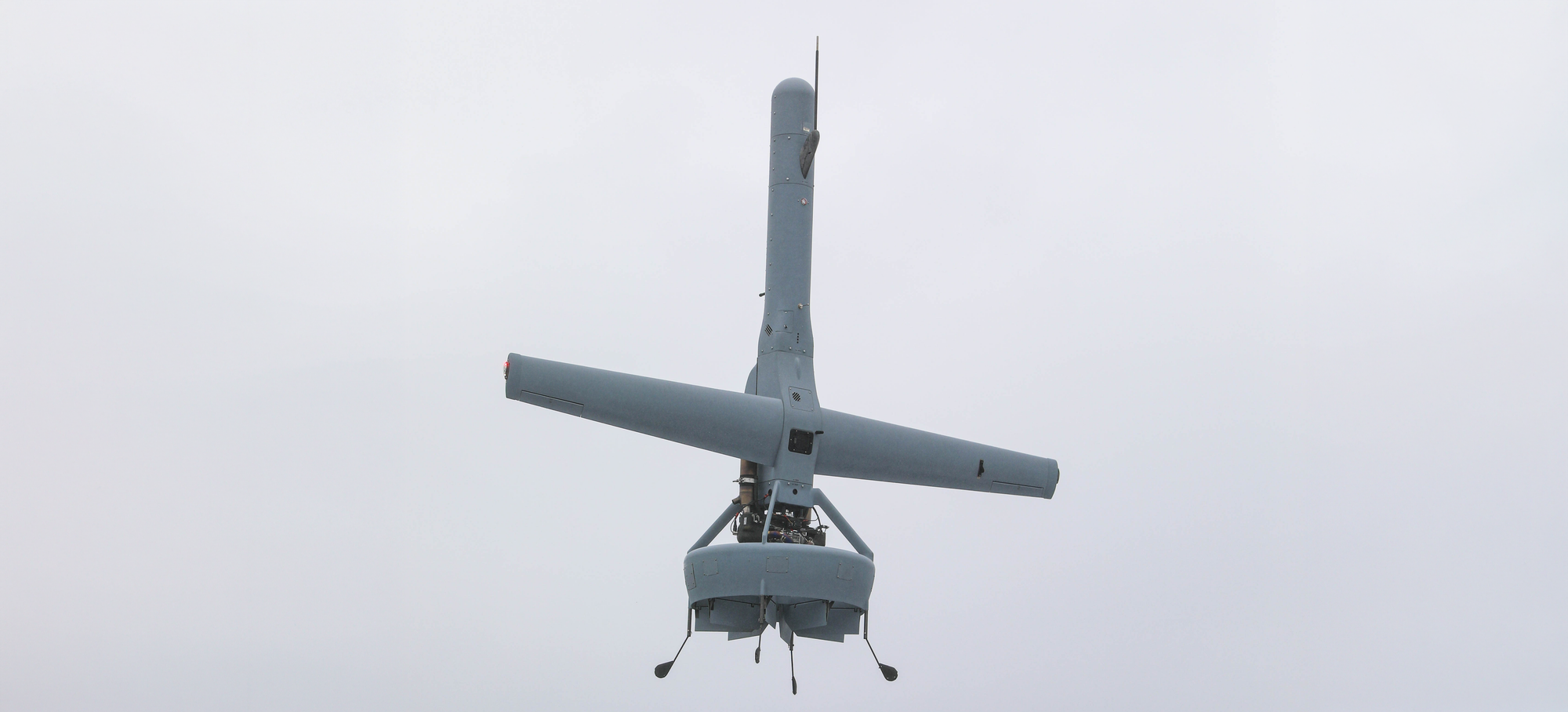
The US Department of Defense Group classification (Groups 1 through 5, by maximum gross takeoff weight and operating altitude) remains the most useful technical taxonomy. Group 1 (under 20 pounds) includes the FPV and small quadcopter class now central to Ukraine; Groups 2 and 3 cover tactical ISR systems such as AeroVironment's Puma and Shield AI's V-BAT; Groups 4 and 5 cover MALE and HALE platforms such as the MQ-9 Reaper and RQ-4 Global Hawk. Commercially, the dominant axis is fixed-wing versus multirotor versus hybrid VTOL, with hybrid platforms forecast to grow fastest as they combine fixed-wing endurance with vertical takeoff.
2.3 Historical Evolution
The industry's center of gravity shifted twice in fifteen years. First, between roughly 2013 and 2020, DJI's vertical integration in Shenzhen collapsed the price of capable consumer and commercial drones, establishing Chinese dominance of small airframes and the component ecosystem feeding them. Second, beginning in 2022, the Russia-Ukraine war demonstrated that mass-produced attritable drones could destroy armored vehicles costing orders of magnitude more, triggering a Western scramble to rebuild a domestic drone industrial base under programs such as the DoD Replicator initiative and the Army's Short-Range Reconnaissance program.
3. Component and Subsystem Architecture
3.1 Airframe and Structural Materials
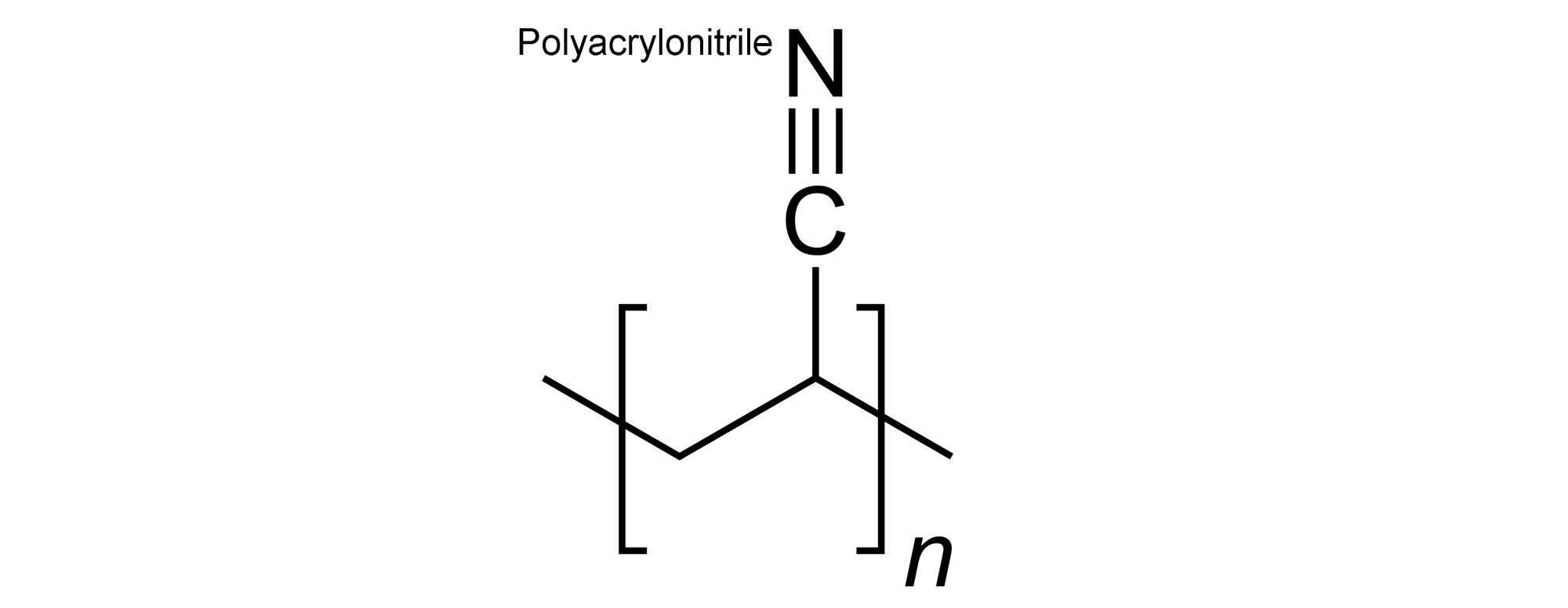
Modern UAV airframes use carbon fiber reinforced polymer (CFRP) composites, aluminum alloys, and increasingly engineered thermoplastics. Aerospace-grade carbon fiber is a concentrated supply tier: a small number of integrated manufacturers, led by Toray Industries (which acquired Zoltek), Teijin (Tenax), Mitsubishi Chemical (Pyrofil), Hexcel, and SGL Carbon, control most global capacity. Toray is the clear market leader, with industry analyses placing its share of global PAN-based capacity at roughly 34 to 36 percent [13]. Polyacrylonitrile (PAN) precursor is the dominant feedstock (roughly 85 percent of carbon fiber) and is itself the dominant cost driver, accounting for a large majority of finished small-tow fiber cost [13][14]. The strategic concern is twofold: PAN precursor capacity is concentrated, and Chinese producers (Jilin Chemical Fiber, Zhongfu Shenying) are expanding aggressively, shifting low-cost capacity toward China even as aerospace-grade qualification remains with Japanese, US, and European incumbents.

3.2 Sensors and Payloads
The sensor tier divides between commoditized navigation sensors and high-value mission payloads. Inertial measurement units (IMUs), GNSS receivers, magnetometers, barometric and ultrasonic sensors are largely commoditized MEMS components. The high-value tier is EO/IR imaging. Cooled detectors use mercury cadmium telluride (MCT) or indium antimonide (InSb) operating at cryogenic temperatures for maximum sensitivity and range; uncooled microbolometers are lighter and cheaper, dominating small-UAS payloads [15]. Teledyne FLIR is the dominant Western merchant supplier of LWIR and MWIR modules, with products such as the Boson, Hadron, and Neutrino lines integrated across defense platforms; Teledyne FLIR's Hadron 640R was selected for Red Cat's Army Black Widow drone [16]. A critical materials linkage: infrared optics require germanium, of which China produces roughly 60 percent globally and which was subject to Chinese export licensing and the December 2024 US ban [17].
3.3 Propulsion
Small-UAV propulsion is built on brushless DC (BLDC) outrunner motors, electronic speed controllers (ESCs), and propellers. This tier is heavily Chinese: T-Motor (Nanchang), Hobbywing, MAD, and a dense ecosystem of FPV motor and ESC makers supply the global market. The motors depend on neodymium-iron-boron (NdFeB) permanent magnets, frequently using high-coercivity grades (N52H and similar) that incorporate dysprosium or terbium for thermal stability, tying propulsion directly to rare earth processing. Larger platforms use small turbine and hybrid powertrains, where Western suppliers (Safran's ENGINeUS, specialist firms) are more competitive but volumes are far lower.
3.4 Energy Storage
Energy storage is among the two or three most acute bottlenecks. Drone propulsion uses lithium-ion and lithium-polymer (LiPo) cells requiring high energy density and high discharge rates. China dominates cell manufacturing across all relevant chemistries; per SNE Research, CATL alone held a 37.9 percent share of the global battery market in 2024, the only supplier above 30 percent, rising to roughly 39 percent in 2025 [18]. The strategic exposure was demonstrated in October 2024 when Skydio, the largest US drone maker, lost access to its sole battery supplier, a TDK subsidiary, after Chinese authorities ordered the cut-off in response to Skydio's Taiwan-related sales [9]. US challengers are emerging: Amprius Technologies (AMPX) manufactures silicon-anode cells delivering up to roughly 450 Wh/kg commercially, and in early 2026 partnered with Nanotech Energy to scale NDAA-compliant domestic production, working to make all 11 of its cell components NDAA-compliant [9][19]. Solid-state cells remain developmental. Fuel cells and battery management systems (BMS) are higher-value sub-tiers with more diversified supply.
 John D
3.5 Compute and Electronics
The compute tier comprises flight controllers (commonly Pixhawk-class running ArduPilot or PX4), system-on-chip (SoC) processors, FPGAs for adaptive signal processing, and GPU/edge-AI accelerators. NVIDIA's Jetson family (Orin, Xavier, Nano) is the de facto standard for onboard AI inference; a downed Russian MS001 strike drone was found to contain an NVIDIA Jetson Orin module alongside FPGA chips and a CRPA anti-spoofing GPS module, illustrating both the centrality of these parts and the porousness of export controls [20]. The deepest dependency is foundry concentration: NVIDIA, AMD/Xilinx (FPGAs), Lattice Semiconductor (FPGAs), and most advanced logic are fabricated by TSMC in Taiwan, creating a single geographic chokepoint that overlaps with the most contested potential conflict zone.
3.6 Connectivity and Datalinks
Connectivity spans RF command-and-control links, video downlinks, SATCOM for beyond-line of-sight operation, mesh networking, and 4G/5G integration. The defense tier is concentrated among primes and specialists (L3Harris, RTX, Leonardo). GPS-denied navigation has become a defining requirement: Russian and Ukrainian electronic warfare degrades GNSS across the battlefield, forcing reliance on visual-inertial navigation, terrain/image matching, and inertial dead-reckoning [21]. Anti-jam techniques include controlled-reception-pattern antennas (CRPA) and visual positioning systems that match live EO/IR imagery against stored maps.
3.7 Fiber Optics and Tethered Systems
The single most important tactical innovation of 2025 was the mass adoption of fiber-optic guided FPV drones, which are immune to RF jamming because command and video travel down a thin unspooling fiber. By 2025, both Russia and Ukraine deployed these at scale; Russia doubled production to more than 50,000 per month by September 2025, operating its own cable plant at Saransk, while Ukraine remained dependent on Chinese cable and spool imports [22][6]. Operational ranges extended from roughly 10 km to as much as 40 to 65 km. This creates a new, narrow bottleneck: fiber-optic cable and precision spools, again concentrated in China.
3.8 Copper Cabling, Wiring Harnesses, and Connectors
Wiring harnesses, copper conductors, and connectors are lower-value but non-trivial; for weight sensitive platforms, silicone-insulated fine-gauge wire and lightweight connectors matter to performance. This tier is broadly commoditized and less of a strategic chokepoint, though it is captured by NDAA component-of-origin rules.
3.9 Software and Autonomy Stacks
The autonomy tier is where Western firms hold genuine advantage. It comprises flight software, ground control stations, mission planning, and AI/ML perception. Key players include Anduril (Lattice OS), Shield AI (Hivemind), Skydio (Skydio Autonomy), Auterion (AuterionOS, built on the open-source PX4 standard created by founder Lorenz Meier), and Palantir (visual navigation, deployed on Red Cat's Black Widow) [23][24]. Auterion is fulfilling a 50 million dollar Pentagon contract to deliver 33,000 AI strike kits to Ukraine [24].
3.10 Manufacturing Inputs and Rare Earth Elements
The foundational input layer is rare earth elements: neodymium and praseodymium (NdPr) for magnets, dysprosium and terbium for thermal stability, plus gallium and germanium for electronics and optics. A single multirotor UAV can contain dozens to hundreds of NdFeB magnets across its motors [25]. As noted, China processes 92 percent of global rare earths and accounts for 98 percent of global magnet manufacturing per Goldman Sachs, with the Federation of American Scientists citing a 91 percent processing share [7][8]. This is the deepest root of UAV supply-chain vulnerability.
3.11 Assemblers, Integrators, and Contract Manufacturers
The integration tier includes OEMs that design and assemble platforms and contract manufacturers that build them. In the US defense space, Red Cat (via Teal Drones), AeroVironment, Skydio, and Anduril integrate platforms; firms such as ESAero provide AS9100 certified contract manufacturing. In the commercial space, DJI's vertical integration in Shenzhen remains the global benchmark for cost and scale.
3.12 Ground Infrastructure, Docking Stations, and Counter-UAS Interaction Points
Ground infrastructure includes ground control stations, autonomous docking/charging stations (Skydio Dock and similar), and launch/recovery systems. Counter-UAS pressure shapes design choices at the interaction point: the proliferation of RF jamming drives fiber-optic and autonomous navigation adoption; the proliferation of EO/IR and radar detection drives low signature design; and kinetic interception drives attritable, low-cost airframes designed to be lost.
4. Key Players and Stakeholders
4.1 Defense Primes and Tier-One OEMs
The traditional primes remain dominant in Groups 4 and 5: Northrop Grumman (NOC), Lockheed Martin (LMT), RTX (RTX), General Atomics (private), and Israel Aerospace Industries. AeroVironment (AVAV) leads the tactical small-UAS and loitering-munition segment (Switchblade, Puma). Kratos (KTOS) leads attritable jet-powered drones (XQ-58 Valkyrie). Teledyne (TDY) is a critical payload and sensor supplier via Teledyne FLIR. L3Harris (LHX) supplies datalinks and is a strategic investor in Shield AI.
4.2 Defense-Tech Disruptors (Privately Held)
Anduril is privately held, valued at roughly 30.5 billion dollars when it raised 2.5 billion dollars in June 2025, with 2025 revenue estimated near 2.1 billion dollars (up from roughly 1 billion in 2024) and reportedly far higher valuations in subsequent rounds [23]. Shield AI is privately held, reaching a 12.7 billion dollar valuation in its March 2026 Series G [23]. Skydio (private) is the leading US small-UAS maker. Auterion (private) supplies open-architecture autonomy. Anduril, Skydio, Shield AI, Auterion, and DJI are all privately held.
4.3 Publicly Traded Small-UAV and Component Specialists
Red Cat (RCAT) won the Army SRR program for its Black Widow; Unusual Machines (UMAC) supplies NDAA-compliant components and motors; Ondas (ONDS) operates in drone platforms and networks. In the eVTOL/advanced air mobility adjacency: Joby (JOBY), Archer (ACHR), and EHang (EH). DJI and Autel are privately held Chinese firms; Autel Robotics is the second major Chinese consumer/commercial maker.
4.4 Materials and Magnet Players
MP Materials (MP) is the sole integrated US rare earth miner-to-magnet producer. USA Rare Earth (USAR) is building magnet capacity in Oklahoma and controls the Round Top heavy-rare earth deposit. Lynas (LYSCF / LYC.AX) is the largest non-Chinese rare earth processor. Privately held magnet specialists include Noveon Magnetics, Vulcan Elements, and VAC
4.5 Semiconductor and Compute Vendors
NVIDIA (NVDA) dominates edge AI; AMD (AMD, which acquired Xilinx) and Lattice Semiconductor (LSCC) supply FPGAs; STMicroelectronics (STM) supplies MEMS and microcontrollers; TSMC (TSM) is the dominant foundry for advanced logic.
4.6 Government Actors
Key government actors include the DoD (Replicator, Defense Innovation Unit, Defense Contract Management Agency now managing Blue UAS), the FAA and EASA (airworthiness), the FCC (Covered List), the Bureau of Industry and Security (export controls), and Congress (NDAA, American Security Drone Act).
5. Technical and Operational Considerations
5.1 Performance Constraints and Design Trade-Offs
UAV design is governed by the SWaP-C triad (size, weight, power, and cost). Every additional gram of payload, sensor, or battery trades against endurance. Energy density is the binding constraint for small electric platforms: silicon-anode cells delivering 450 Wh/kg versus conventional graphite cells around 250 to 300 Wh/kg can extend flight time by a large margin, which is why battery chemistry is strategically decisive [19]. The motor-magnet thermal trade off (high-coercivity dysprosium-bearing magnets resist demagnetization at the elevated temperatures of sustained high-throttle operation) ties performance directly to heavy rare earth supply [25].
5.2 Integration Challenges
Integrating flight controllers with companion compute (e.g., Pixhawk plus Jetson) requires careful partitioning: the flight controller maintains deterministic real-time control while the companion computer handles non-deterministic perception, because a perception-task overload must never destabilize flight [20]. GPS-denied autonomy requires fusing visual, inertial, and map-matching data with low latency on power-constrained edge hardware.
5.3 Qualification and Certification Dependencies
Defense qualification (AS9100, Blue UAS listing, DFARS compliance) and civil airworthiness (FAA Part 107, BVLOS waivers, EASA categories) impose long lead times and supplier traceability requirements. NDAA compliance now requires component-level provenance down to chips and batteries, which is why suppliers like Amprius are working to make every cell component NDAA-compliant [9]. This qualification burden is itself a bottleneck: it slows the substitution of Chinese components even when domestic alternatives exist.
6. Market Sizing
6.1 Methodology Caveats
Market estimates diverge widely and depend heavily on segment definition, making cross provider comparison hazardous. For the total drone market in 2025, published baselines range from roughly 34 billion dollars (IMARC) to roughly 84 billion dollars (Grand View Research), with the divergence driven by inclusion or exclusion of military, services, and consumer revenue [10]. The Teal Group, the most established defense-specific forecaster, projects the US will account for roughly 80 percent of worldwide military UAS RDT&E spending and over half of procurement when classified programs are included [26]. Investors should treat all single-point figures with skepticism and reason in ranges.
6.2 Pricing Trends and Cost Structures
The defining economic fact of the post-2022 era is the collapse of the cost-per-effect of attritable drones. FPV drones costing 200 to 1,000 dollars routinely destroy vehicles worth millions [27]. The Army's Drone Dominance program seeks drones at a unit price not exceeding 5,000 dollars, with a goal of 300,000 munitions-class drones by 2028 [28]. This inverts the traditional defense cost structure and challenges procurement systems built for small numbers of exquisite platforms.
6.3 Capital Intensity and Investment Flows
Defense-tech venture funding reached roughly 29 billion dollars in 2025, nearly triple 2020 levels, per S&P Global Market Intelligence [23]. Capital intensity varies enormously across the chain: software autonomy is capital-light and commands premium multiples, while magnet and battery manufacturing are extraordinarily capital-intensive and policy-dependent, which is why government price floors and loans have been necessary to catalyze them.
6.4 M&A and Vertical Integration
Consolidation is accelerating both horizontally (Red Cat acquiring FlightWave; Shield AI acquiring Aechelon) and vertically (Amprius building domestic cell capacity; ePropelled securing domestic magnets). The strategic logic is supply-chain control and NDAA compliance as much as scale.
7. Regulatory Landscape
7.1 FAA and EASA Airworthiness
The FAA governs US commercial operation via Part 107, with BVLOS and remote-ID rules shaping the addressable market. EASA's category-based framework governs Europe. Airworthiness and spectrum allocation remain gating factors for scaled commercial operation such as delivery.
7.2 Export Controls: ITAR and EAR
Military UAVs and many components fall under ITAR; dual-use items fall under the EAR administered by the Bureau of Industry and Security. The US has restricted advanced chip exports to Russia and China since 2022, though the recovered Jetson Orin in a Russian drone demonstrates the limits of enforcement [20].
7.3 NDAA Section 848, the American Security Drone Act, and Blue UAS
The regulatory architecture restricting Chinese drones built incrementally: FY2020 NDAA Section 848 (DoD-only procurement ban), FY2023 and FY2024 NDAA expansions, and the American Security Drone Act (embedded in the FY2024 NDAA), which extended bans government-wide to all federal agencies, contractors, and grant recipients, with full enforcement beginning December 22, 2025 [29][30]. The Blue UAS Cleared List (now managed by the Defense Contract Management Agency) validates compliant platforms; Green UAS provides a commercial-tier signal.
7.4 The DJI Action and the FCC Covered List
The FY2025 NDAA Section 1709 required a national security agency to review DJI and Autel by December 23, 2025, with automatic Covered List addition if no review occurred. No review was completed. On December 21, 2025, an interagency body issued a National Security Determination finding that all foreign-produced UAS and UAS critical components pose unacceptable risks, and on December 22 the FCC added the entire category to its Covered List, blocking new FCC equipment authorizations for foreign-made drones [30][31]. This went far beyond DJI and Autel, surprising the industry. The FCC issued exemptions in January 2026 for Blue UAS and Buy American domestic end products. Existing authorized DJI hardware can still be operated by non-federal users, but new models cannot enter the US market.
 John D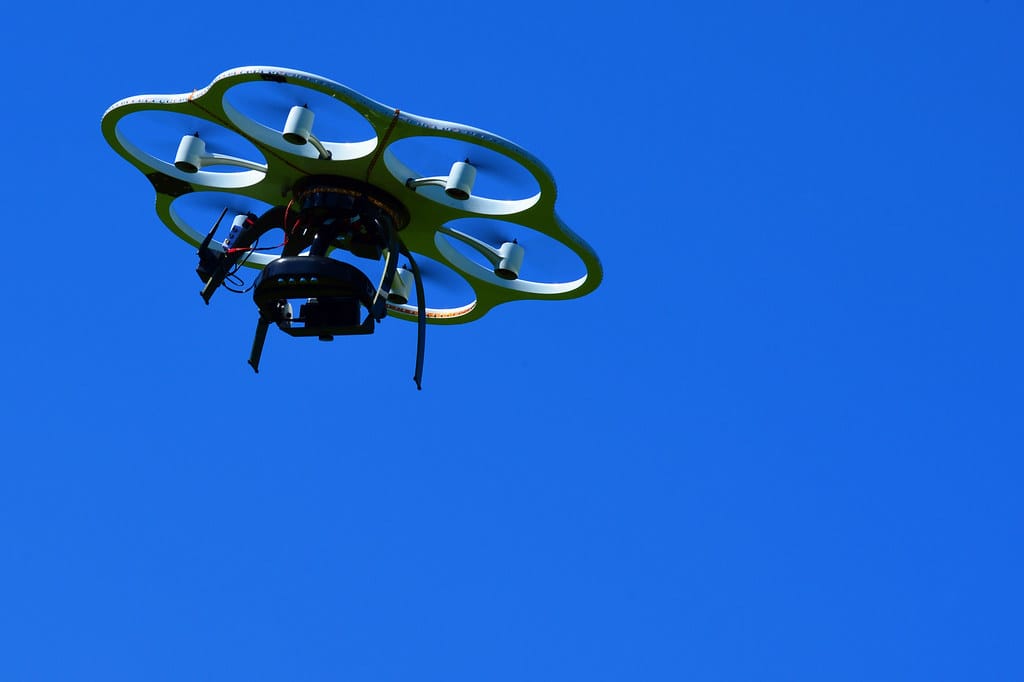
8. Geopolitical and Strategic Dimensions
8.1 Chinese Industrial Dominance
China's dominance is not accidental; it is the product of decades of industrial policy. DJI alone holds an estimated 70 percent of the global drone market and, per the Special Competitive Studies Project, over 90 percent of the global consumer segment, with Shenzhen consumer drone output reported to account for roughly 70 percent of the global market [1][4]. China controls an estimated 80 percent of the global drone component supply chain. This dominance spans the four tiers most relevant to attritable mass: small airframes, motors, batteries, and magnets.
8.2 Rare Earth Dependency and Export Controls
China has progressively weaponized its rare earth and critical-minerals dominance. The timeline: gallium and germanium licensing (July 2023), graphite (October 2023), antimony (August 2024), a December 2024 ban on gallium/germanium/antimony exports to the US and a prohibition on dual-use exports to US military end users, controls on seven medium-and-heavy rare earths including dysprosium and terbium (April 2025), and the sweeping October 9, 2025 package extending controls to rare earth technology, equipment, and even foreign-made products containing Chinese-origin rare earths (extraterritorial reach) [2][3]. Following the October 2025 Trump-Xi meeting, China suspended the most expansive October measures for one year (November 7, 2025 to roughly November 2026) and the US suspended its Affiliates Rule, but the April 2025 rare earth controls and the military-end-use prohibition remain in force [2][3]. Price effects were severe: unwrought gallium exports near zero with European prices up 365 percent, germanium up 400 percent, antimony up 437 percent [32].
8.3 Lessons from Ukraine
Ukraine's war offers the clearest lessons. Production scaled from roughly 800,000 drones in 2023 to approximately 2.2 million UAVs of all types in 2024, with 2025 output projected to exceed 4.5 million (over 2 million of them FPV drones) [5][6]. FPV drones caused the majority of battlefield casualties and destroyed the bulk of armored losses; of 31 US-supplied Abrams tanks lost by Ukraine, 27 were destroyed by drones by early June 2025 [6]. Distributed, workshop-scale production proved resilient. Fiber-optic guidance defeated RF jamming. Electronic warfare became the dominant counter, and the EW-versus-autonomy race now drives design. The lesson for the West: mass, adaptability, and supply-chain sovereignty matter more than exquisite capability.
8.4 The DoD Replicator Initiative
Replicator, launched August 2023 to field thousands of attritable autonomous systems by August 2025, explicitly drew on Ukraine lessons and aimed to offset Chinese mass [33]. It fell short: the Congressional Research Service found only "hundreds" rather than thousands were fielded by the August 2025 target, citing integration problems, immature systems, and software shortfalls [33]. In December 2025, the effort was renamed and refocused under a new structure (reported as DAWG) emphasizing larger Pacific-relevant drones, while a parallel Drone Dominance campaign targets small FPV-class systems [34].
8.5 Friend-Shoring and Reshoring
The US response centers on rebuilding domestic capacity. The landmark is the July 2025 MP Materials-DoD partnership: a 400 million dollar DoD equity investment (making DoD the largest shareholder at roughly 15 percent), a 10-year NdPr price floor of 110 dollars per kilogram (against MP's realized 2024 price of roughly 51 dollars per kilogram), a 150 million dollar loan, a 10-year magnet offtake agreement, and a 1 billion dollar JPMorgan/Goldman loan to build a "10X" facility expanding capacity toward 10,000 metric tons [7][8]. Parallel efforts: Vulcan Elements (620 million dollar DoD loan, 50 million Commerce grant, 10,000 metric ton target), USA Rare Earth (Oklahoma magnet plant, first production targeted first half 2026), Noveon Magnetics (recycling-based, supplying GM), and VAC/e-VAC in South Carolina supplied by Ucore and Lynas [8][35]. Battery reshoring centers on Amprius and its Nanotech Energy and Korea Battery Alliance partnerships [9][19].
8.6 Dual-Use and Defense-Industrial Implications
The core strategic dilemma is that the same Chinese supply chain underpins both commercial and defense drones, and banning Chinese components (the FCC Covered List action) without first building domestic alternatives risks crippling US drone production in the near term. Critics note the contradiction of pursuing "drone dominance" while banning the batteries and components that power drones, with reshoring timelines measured in years.
9. Industrial Bottlenecks and Risk Assessment
9.1 Ranked Single Points of Failure
The bottlenecks, ranked by combined severity and likelihood:
Tier 1 (Critical, high likelihood of disruption): Rare earth permanent magnet processing, especially heavy rare earths (dysprosium, terbium). China holds 98 percent of magnet manufacturing; no allied nation operates heavy rare earth processing at scale independent of Chinese inputs; new-entrant timelines are 3 to 7 years [7][8]. Small lithium cells and packs: China dominates all chemistries; the Skydio precedent proves single-supplier cut-off risk is real and immediate [9].
Tier 2 (Severe, moderate likelihood): Flight-controller and edge-AI silicon concentrated at TSMC in Taiwan, geographically coincident with the most likely great-power conflict. Small airframes, motors, and ESCs concentrated in Shenzhen.
9.2 Mitigation Pathways
Mitigation requires parallel action: price-floor and offtake mechanisms to de-risk capital intensive magnet and battery manufacturing (the MP model); accelerated component qualification to convert reshored capacity into usable supply; stockpiling of choke materials during the November 2025 to 2026 suspension window; allied friend-shoring (Lynas, Korean battery ecosystem, Japanese carbon fiber); and design-for-substitution to reduce heavy-rare-earth intensity. The binding constraint is time: every reshoring project requires multi-year construction and qualification while Chinese leverage is immediate and reinstatable.
10. Strategic Recommendations
10.1 For Corporate Strategists and Investors
First, position along the reshoring value chain but discount policy dependency. Magnet (MP, USAR) and battery (AMPX) plays are underwritten by government price floors and loans whose durability depends on future appropriations and the enforceability of Defense Production Act authority; the MP floor is a bespoke single-company contract, not a market-wide benchmark, so do not extrapolate it to competitors [7][8]. Second, distinguish announced contracts from delivered revenue: the Red Cat SRR case shows a wide gap between management's claimed contract scale and Army-confirmed figures (the LRIP was reported by Army officials at roughly 12.9 million dollars against far larger management framing), and short-seller scrutiny is material [36]. Third, favor autonomy-software exposure (capital-light, premium multiples, genuine Western advantage) over commoditized hardware. Fourth, treat NDAA compliance as a durable competitive moat that is creating a protected domestic market with pricing power. The benchmark that would change this thesis: a durable US-China détente that repeals (not merely suspends) export controls would compress reshoring premiums.
10.2 For Defense Procurement and Government Industrial-Policy Stakeholders
First, institutionalize the price-floor/offtake model across additional choke materials (heavy rare earths, battery anode materials, germanium) rather than relying on bespoke single-company deals, to build a competitive domestic ecosystem rather than a government-anointed monopoly. Second, fund production capacity and qualification throughput, not prototypes: Replicator's shortfall was a transition-to-fielding failure, so appropriations should target manufacturing lines, second sources, and accelerated Blue UAS component qualification [33]. Third, stockpile strategically during the November 2025 to late-2026 suspension window, treating it as a closing arbitrage rather than a resolution [2][3]. Fourth, sequence the Chinese-component ban with domestic capacity: the FCC Covered List action risks near-term production gaps unless battery, motor, and magnet alternatives are qualified in parallel. Fifth, adopt Ukraine's lessons on attritable mass and distributed production: prioritize cost-per-effect, EW resilience (fiber-optic and autonomous navigation), and surge-capable manufacturing over exquisite platforms. The benchmark that would signal success: a domestic capability to produce attritable drones at hundreds of thousands per year with fully NDAA-compliant batteries, motors, and magnets, achieved before a Taiwan contingency disrupts TSMC and Chinese supply simultaneously.
John D
References
[1] Drone Industry Insights / Berg Insight, Connected Commercial Drones, 2025.
[2] Pillsbury Winthrop Shaw Pittman, "China Suspends Export Controls on Certain Critical Minerals and Related Items," 2025.
[3] Global Trade Alert, "A Short History of Chinese Export Controls on Critical Raw Materials," 2025.
[4] Special Competitive Studies Project, Commercial Drones (Gaps Analysis), 2025; MIT Technology Review (Zeyi Yang), "Why China's Dominance in Commercial Drones Has Become a Global Security Matter," 2024.
[5] Center for Strategic and International Studies, "The Russia-Ukraine Drone War: Innovation on the Frontlines and Beyond," 2025.
[6] Ukraine's Arms Monitor, "Drone Warfare in Ukraine: The Interplay of High- and Low-Tech Solutions," 2025; OSW Centre for Eastern Studies, 2025.
[7] Goldman Sachs, rare earth supply note (via Reuters), October 2025; Center on Global Energy Policy, Columbia University, "MP Materials Deal Marks a Significant Shift in US Rare Earths Policy," 2025.
[8] Federation of American Scientists, "Unpacking the DoD and MP Materials Critical Minerals Partnership," 2025.
[9] Manufacturing Dive, "Amprius Technologies Reaches Deal to Scale US Battery Cell Production," 2026.
[10] Grand View Research, "Drone Market Size, Share & Growth Industry Report, 2033," 2025.
[11] MarketsandMarkets, "Military Drone (UAV) Market Report 2025-2030," 2025.
[12] Grand View Research, "Military Drone Market Size, Share Industry Report, 2033," 2025.
[13] Dataintelo, "PAN Based Carbon Fiber Market Research Report 2034," 2025.
[14] PatSnap, "Carbon Fiber Precursor Technology 2026," 2026.
[15] Teledyne FLIR OEM, "Thermal Infrared Sensor Design Considerations for Counter-UAS Defense," 2025.
[16] The Defense Post, "Teledyne FLIR to Supply Thermal Cameras for US Army's Short-Range Recon Drone," 2024.
[17] Z2Data, "5 Critical Minerals Vulnerable Due to China's Production Control," 2025. [18] SNE Research, global battery market share data, 2024-2025.
[19] Amprius Technologies, company technical disclosures, 2025.
[20] Interesting Engineering, "Russian Drone Hunts Like a Predator with Nvidia Supercomputer's Help," 2025.
[21] Defense Advancement, "GNSS/GPS-Denied Navigation for Military Unmanned Systems," 2025.
[22] Ukraine's Arms Monitor, "Drone Warfare in Ukraine: Key Trends of 2025," 2025.
[23] Contrary Research / S&P Global Market Intelligence / CNBC, "Shield AI Business Breakdown" and Anduril funding coverage, 2025-2026.
[24] DroneXL, "Auterion Raises $130M to Scale AI-Powered Drone Swarms for Defense," 2025.
[25] Rare Earth Exchanges, "6 Military Uses of Rare Earth Elements in Defense Technology," 2025.
[26] Teal Group, "2025/2026 World Military Unmanned Aerial Systems Market Profile & Forecast," 2025.
[27] Atlantic Council, "Drone Superpower: Ukrainian Wartime Innovation Offers Lessons for NATO," 2025.
[28] Inside Unmanned Systems, "Beyond the Gauntlet: Drone Dominance and the Lessons of Ukraine's FPV War," 2026.
[29] FlightBrief, "NDAA Compliant Drones: The Complete Guide for 2026," 2026.
[30] Wiley, "In Unexpected, First-of-Its-Kind Action, FCC Adds All Foreign-Produced Uncrewed Aircraft Systems and UAS Critical Components to Covered List," 2025.
[31] DRONELIFE, "FCC Adds Foreign-Made Drones and Components to Covered List, Citing National Security Risks," 2025.
[32] Swedish National China Centre, "China's Mineral Export Restrictions: Market Impacts and Implications," 2025.
[33] Congressional Research Service, "DOD Replicator Initiative: Background and Issues for Congress," 2025.
[34] Breaking Defense, "'It's Alive': Biden-era Replicator Drone Initiative Lives On as DAWG," 2025.
[35] Shanghai Metals Market, "Multiple Countries Continue to Develop Rare Earth Mineral Resources," 2025.
[36] Fuzzy Panda Research / Kerrisdale Capital, Red Cat short reports, 2025