What Is the Voltaic Pile? How the First Chemical Battery Worked
Learn how Alessandro Volta’s voltaic pile worked, how it was built, and why it became the first practical chemical battery.

The Voltaic Pile: The First Chemical Battery
Before the modern battery, electricity was usually produced in brief bursts. Devices such as the Leyden jar could store static electricity, but they did not provide a steady, continuous current. That changed in 1800, when Italian physicist Alessandro Volta introduced the voltaic pile: the first practical chemical battery.
Volta’s invention grew out of a debate with Luigi Galvani, who had observed that frog legs twitched when touched by metal instruments. Galvani believed this was evidence of “animal electricity.” Volta disagreed. He suspected that the electricity came not from the animal tissue itself, but from the contact between two different metals in a moist environment. To prove it, he built an apparatus that produced electricity without any animal tissue at all.
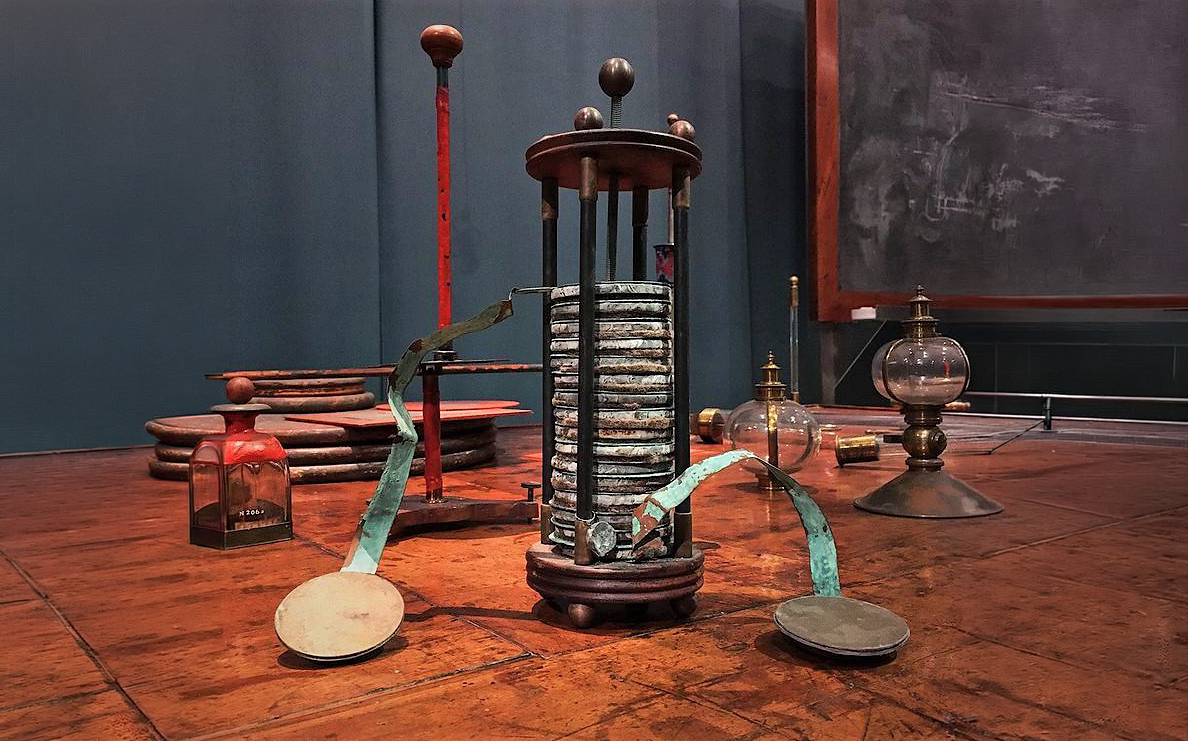
The voltaic pile was made by stacking alternating discs of two different metals, commonly zinc and copper, though Volta also used zinc and silver. Between each metal pair, he placed a piece of cloth, leather, or cardboard soaked in salt water or another electrolyte. A simple stack might look like this:
zinc disc
saltwater-soaked separator
copper disc
zinc disc
saltwater-soaked separator
copper disc
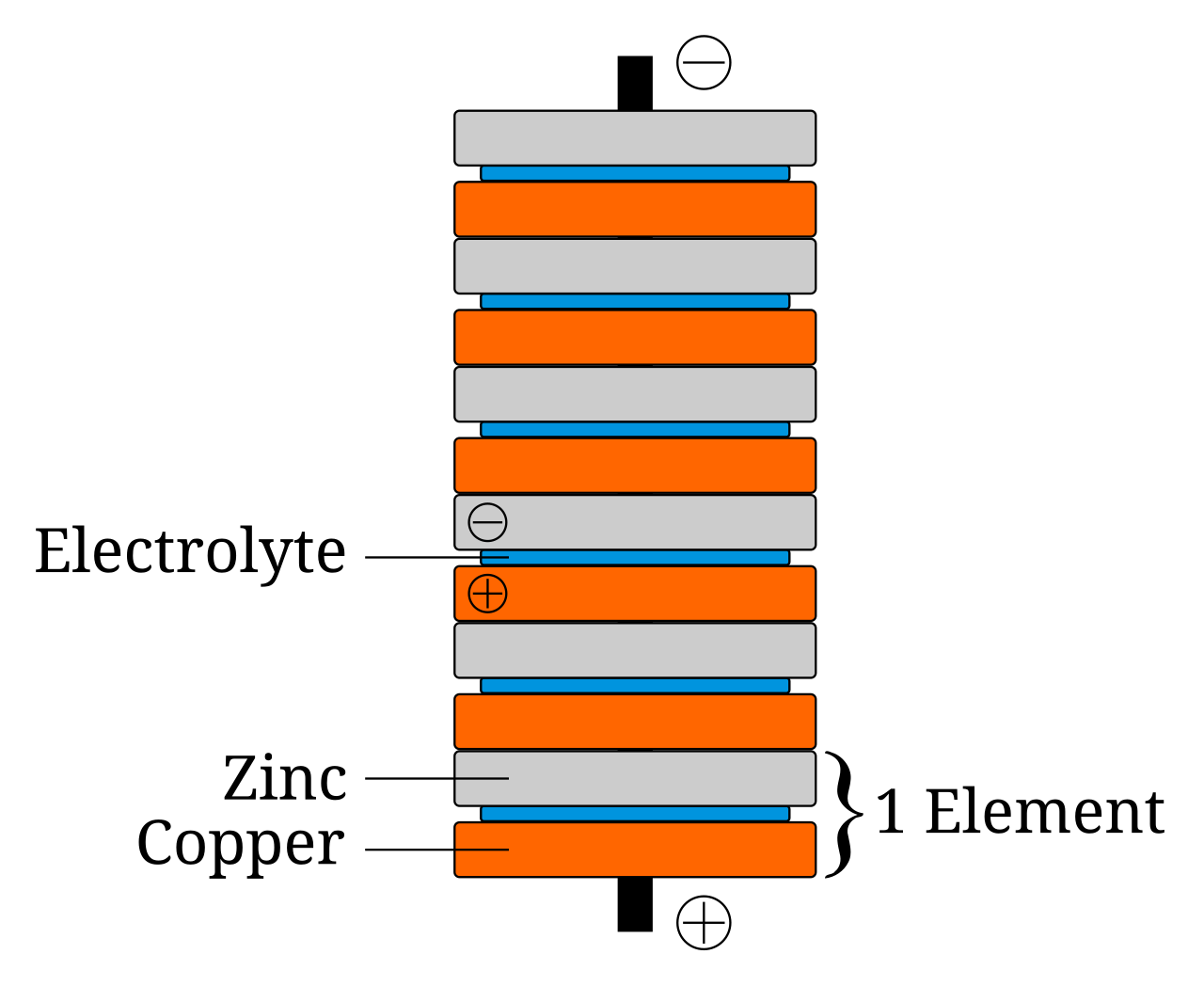
Each zinc-copper pair formed a small electrochemical cell. The zinc acted as the more reactive metal and tended to give up electrons through a chemical reaction. Those electrons could then travel through an external wire toward the copper side, creating an electric current. The wet separator allowed ions to move inside the pile, completing the circuit chemically while the wire completed it electrically.
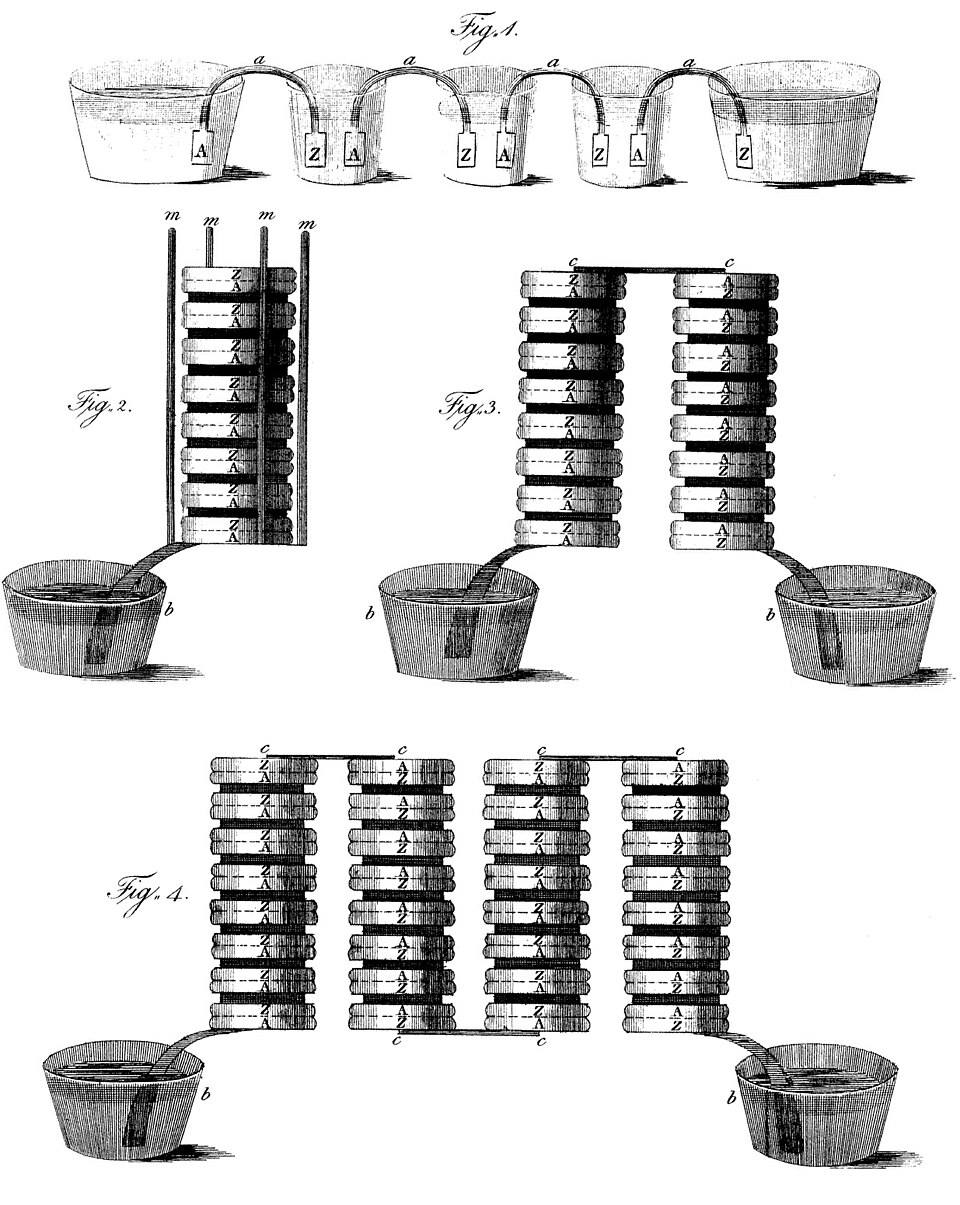
One cell produced only a small voltage. The genius of the voltaic pile was that Volta stacked many cells in series. Each additional metal pair increased the total electrical pressure, making the device more powerful. By connecting wires to the top and bottom of the stack, experimenters could draw a steady current.
The voltaic pile was crude by modern standards. The soaked separators could dry out or leak. The metal discs corroded. Hydrogen bubbles formed on the electrodes, reducing performance. The stack could also become unstable as it grew taller. Still, it was revolutionary. For the first time, scientists had access to a continuous source of electric current.
That changed the history of science almost immediately. In 1800, William Nicholson and Anthony Carlisle used a voltaic pile to split water into hydrogen and oxygen, helping launch the field of electrochemistry. Later batteries improved on Volta’s design, but the basic principle remained the same: chemical reactions could be arranged to produce usable electrical energy.
The voltaic pile matters because it turned electricity from a mysterious spark into a controllable technology. It was the first step toward batteries, electrochemistry, electric telegraphs, portable electronics, electric vehicles, and the modern energy-storage systems that now shape the world.
 John D
 John D
 John D
 John D
 John D
 John D